


 Home
Anthropic Hits $1.5B Copyright Deal to Compensate 500,000 Works
On Monday, a U.S. federal court granted final approval for a $1.5 billion class-action settlement between Anthropic and a coalition of authors and publishers, as reported by Reuters. The deal resolves ongoing litigation regarding Anthropic’s alleged copyright infringement during the training of its AI models, with the company now obligated to begin disbursing compensation to the affected copyright holders.
U.S. District Judge Araceli Martinez-Olguin of the Northern District of California signed the final order ratifying the agreement. This follows a previous provisional approval by retired Judge William Alsup, who had previously determined that Anthropic had unlawfully downloaded and stored millions of copyrighted books.
Under the approved compensation framework, each affected work will receive $3,000 in damages. This figure applies to approximately 500,000 works, with the payouts distributed among the authors and publishers holding the relevant copyrights. The total sum ranks among the largest settlements in the history of U.S. copyright law.
Despite the settlement, legal uncertainties surrounding AI training data persist. Judge Alsup had previously sided with Anthropic on the core legal question, suggesting that using copyrighted texts to train AI models might qualify as "fair use"—a significant potential precedent in AI copyright disputes. However, he also noted that certain methods Anthropic used to acquire this data were illegal.
Anthropic acquired its training data through two primary channels: legally purchased and scanned books, and content scraped from pirate sites like Library Genesis and Pirate Library Mirror. The court ruled the latter approach illegal. To avoid prolonged litigation and the risk of substantial penalties, Anthropic opted for a settlement.
Industry analysts observe that while this agreement closes this specific case, it fails to establish a unified legal standard for the broader AI sector. Because Anthropic settled rather than appealing, Judge Alsup’s prior comments on "fair use" in AI training will not become binding judicial precedent.
Lawsuits concerning the copyright of AI training data remain active, with cases pending against major tech firms including Google, Meta, Midjourney, and OpenAI. Recently, publishers such as Hachette, Cengage, and Elsevier, along with author Scott Turow and the organization SCRIBE, filed a joint lawsuit against Google. They allege that Google used copyrighted works without permission to train its Gemini AI platform.
As generative AI technology advances rapidly, balancing model training requirements with copyright protection has emerged as a critical legal and business challenge for the global AI industry. Although the Anthropic settlement offers one resolution path, long-term guidelines for AI data compliance remain unclear and require further clarification.
Related article
 OpenAI Launches Open-Source Codex Security CLI to Uncover Vulnerabilities in CI
On July 29, OpenAI introduced a specialized security scanning tool for code repositories. Named Codex Security CLI, this open-source command-line utility is designed to help developers scan codebases, detect and verify security vulnerabilities, and s
WeChat WeMM-Embedding Powers Moments Search and Video Highlights With 1 Billion Daily Calls
On September 4, WeChat AI announced the open-source release of its general multimodal embedding model, WeMM-Embedding. Available in 2B, 4B, and 9B versions, the model supports text, images, videos, visual documents, and any interleaved multimodal inp
Xiaohongshu, Peking University, Shanghai Jiao Tong University Unveil HYPIC to Slash First Token Latency by 3.25x in Hybrid Attention Models
The primary focus of large model services is transitioning from single-turn conversations to retrieval-augmented question answering, multi-document summarization, and long-range agents. These emerging workloads share a key trait: a single request's p
Related Special Topic Recommendations
Design & Art
 Top AI Illustration Tools: Create Editorial Scenes and Cover Art Faster
2026 Latest Top-rated AI Illustration Tools: Our curated list features the best powerfully designed tools for creating stunning editorial scenes and eye-catching cover art quickly. Each option has gone through rigorous real-world tests, offering a free vs paid comparison to help you find the perfect match for your workflow. Try these must-try solutions today to unlock your AI edge and boost your creative productivity. Explore now at XIX.AI.
 10 tools
 xix.ai
Education and Learning
Top AI Tutors for Exam Prep: Practice Math, Science, and English
2026 Latest Top-Rated Best AI Tutors for Exam Prep are here on XIX.AI! Our curated list features powerful game-changing tools that offer free vs paid comparison, real-world tests, and weekly updated rankings. They help boost your writing efficiency, simplify complex topic learning, and unlock your academic potential. Explore now to Discover your perfect exam prep tool and Start creating today to Unlock your AI edge!
10 tools
xix.ai
Finance
AI Budget Planning Tools for Personal Money Management
2026 Latest Best Top-Rated AI Budget Planning Tools for Personal Money Management are here on XIX.AI! This curated collection features powerful, game-changing solutions that help you conduct real-world tests, understand spending habits, and create personalized plans to boost productivity. Enjoy a free vs paid comparison along with detailed rankings. Must-try tools designed to simplify money management and unlock your AI edge. Explore now!
11 tools
xix.ai
Health & Wellness
AI Sleep Tracking Assistants: Improve Recovery with Better Bedtime Habits
2026 Latest Best Top-Rated AI Sleep Tracking Assistants curated for ultimate recovery. This fully updated weekly guide features powerful tools that deliver real-world tests, free vs paid comparison, and detailed rankings to help you find the must-try solution that boosts sleep quality and supports better bedtime habits. Explore now at XIX.AI to Unlock your AI edge.
10 tools
xix.ai
Data Analysis
AI SQL Copilots for Product and Revenue Analytics
2026 Latest Best Top-Rated AI SQL Copilots for Product and Revenue Analytics! XIX.AI has curated a powerful, game-changing collection of must-try tools that undergo real-world tests through weekly updated rankings. These tools help users boost productivity significantly by accelerating data analysis, streamlining complex queries, and generating accurate insights to drive smarter business decisions. Explore now to Discover your perfect tool for unlocking your AI edge!
14 tools
xix.ai
Education and Learning
Best AI Homework Helpers That Teach: Learn Concepts, Not Just Answers
2026 Latest Best Top-Rated AI Homework Helpers That Teach Core Concepts Not Just Answers Powerful Tools for Students Must-Try Curated List Weekly Updated Free vs Paid Comparison Real-World Tests Accurate Rankings to Help You Unlock Your Full Learning Potential Explore now to Discover your perfect tool for smarter studying.
10 tools
xix.ai

 Comments (0)
0/500
On Monday, a U.S. federal court granted final approval for a $1.5 billion class-action settlement between Anthropic and a coalition of authors and publishers, as reported by Reuters. The deal resolves ongoing litigation regarding Anthropic’s alleged copyright infringement during the training of its AI models, with the company now obligated to begin disbursing compensation to the affected copyright holders.
U.S. District Judge Araceli Martinez-Olguin of the Northern District of California signed the final order ratifying the agreement. This follows a previous provisional approval by retired Judge William Alsup, who had previously determined that Anthropic had unlawfully downloaded and stored millions of copyrighted books.
Under the approved compensation framework, each affected work will receive $3,000 in damages. This figure applies to approximately 500,000 works, with the payouts distributed among the authors and publishers holding the relevant copyrights. The total sum ranks among the largest settlements in the history of U.S. copyright law.
Despite the settlement, legal uncertainties surrounding AI training data persist. Judge Alsup had previously sided with Anthropic on the core legal question, suggesting that using copyrighted texts to train AI models might qualify as "fair use"—a significant potential precedent in AI copyright disputes. However, he also noted that certain methods Anthropic used to acquire this data were illegal.
Anthropic acquired its training data through two primary channels: legally purchased and scanned books, and content scraped from pirate sites like Library Genesis and Pirate Library Mirror. The court ruled the latter approach illegal. To avoid prolonged litigation and the risk of substantial penalties, Anthropic opted for a settlement.
Industry analysts observe that while this agreement closes this specific case, it fails to establish a unified legal standard for the broader AI sector. Because Anthropic settled rather than appealing, Judge Alsup’s prior comments on "fair use" in AI training will not become binding judicial precedent.
Lawsuits concerning the copyright of AI training data remain active, with cases pending against major tech firms including Google, Meta, Midjourney, and OpenAI. Recently, publishers such as Hachette, Cengage, and Elsevier, along with author Scott Turow and the organization SCRIBE, filed a joint lawsuit against Google. They allege that Google used copyrighted works without permission to train its Gemini AI platform.
As generative AI technology advances rapidly, balancing model training requirements with copyright protection has emerged as a critical legal and business challenge for the global AI industry. Although the Anthropic settlement offers one resolution path, long-term guidelines for AI data compliance remain unclear and require further clarification.








 OpenAI Launches Open-Source Codex Security CLI to Uncover Vulnerabilities in CI
On July 29, OpenAI introduced a specialized security scanning tool for code repositories. Named Codex Security CLI, this open-source command-line utility is designed to help developers scan codebases, detect and verify security vulnerabilities, and s
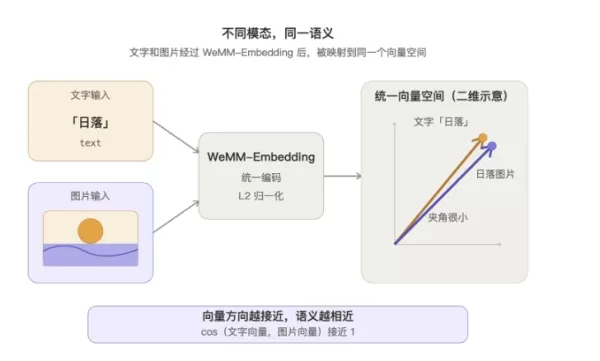 WeChat WeMM-Embedding Powers Moments Search and Video Highlights With 1 Billion Daily Calls
On September 4, WeChat AI announced the open-source release of its general multimodal embedding model, WeMM-Embedding. Available in 2B, 4B, and 9B versions, the model supports text, images, videos, visual documents, and any interleaved multimodal inp
 Xiaohongshu, Peking University, Shanghai Jiao Tong University Unveil HYPIC to Slash First Token Latency by 3.25x in Hybrid Attention Models
The primary focus of large model services is transitioning from single-turn conversations to retrieval-augmented question answering, multi-document summarization, and long-range agents. These emerging workloads share a key trait: a single request's p

2026 Latest Top-rated AI Illustration Tools: Our curated list features the best powerfully designed tools for creating stunning editorial scenes and eye-catching cover art quickly. Each option has gone through rigorous real-world tests, offering a free vs paid comparison to help you find the perfect match for your workflow. Try these must-try solutions today to unlock your AI edge and boost your creative productivity. Explore now at XIX.AI.
10 tools
xix.ai

2026 Latest Top-Rated Best AI Tutors for Exam Prep are here on XIX.AI! Our curated list features powerful game-changing tools that offer free vs paid comparison, real-world tests, and weekly updated rankings. They help boost your writing efficiency, simplify complex topic learning, and unlock your academic potential. Explore now to Discover your perfect exam prep tool and Start creating today to Unlock your AI edge!
10 tools
xix.ai

2026 Latest Best Top-Rated AI Budget Planning Tools for Personal Money Management are here on XIX.AI! This curated collection features powerful, game-changing solutions that help you conduct real-world tests, understand spending habits, and create personalized plans to boost productivity. Enjoy a free vs paid comparison along with detailed rankings. Must-try tools designed to simplify money management and unlock your AI edge. Explore now!
11 tools
xix.ai

2026 Latest Best Top-Rated AI Sleep Tracking Assistants curated for ultimate recovery. This fully updated weekly guide features powerful tools that deliver real-world tests, free vs paid comparison, and detailed rankings to help you find the must-try solution that boosts sleep quality and supports better bedtime habits. Explore now at XIX.AI to Unlock your AI edge.
10 tools
xix.ai

2026 Latest Best Top-Rated AI SQL Copilots for Product and Revenue Analytics! XIX.AI has curated a powerful, game-changing collection of must-try tools that undergo real-world tests through weekly updated rankings. These tools help users boost productivity significantly by accelerating data analysis, streamlining complex queries, and generating accurate insights to drive smarter business decisions. Explore now to Discover your perfect tool for unlocking your AI edge!
14 tools
xix.ai

2026 Latest Best Top-Rated AI Homework Helpers That Teach Core Concepts Not Just Answers Powerful Tools for Students Must-Try Curated List Weekly Updated Free vs Paid Comparison Real-World Tests Accurate Rankings to Help You Unlock Your Full Learning Potential Explore now to Discover your perfect tool for smarter studying.
10 tools
xix.ai












