


 Home
HomeAnthropic Co-Founder Confirms Briefing Trump Administration on AI Model Mythos
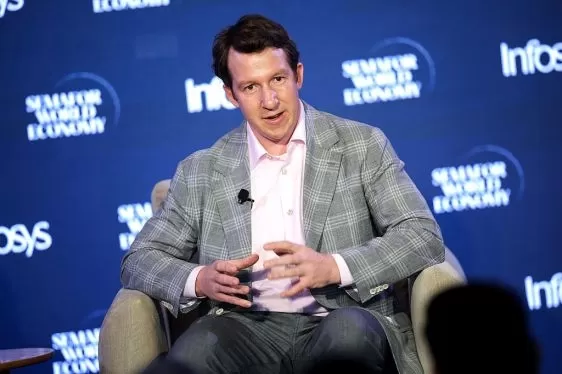
Jack Clark, co-founder of Anthropic and Head of Public Benefit for Anthropic PBC, confirmed the AI company briefed the Trump administration on its new Mythos model.
Announced last week, the model is considered too dangerous for public release, primarily due to its advanced cybersecurity capabilities.
During an interview at Semafor's World Economy summit, Clark explained why the company continues to engage with the U.S. government while also pursuing legal action against it.
In March, Anthropic filed a lawsuit against the Department of Defense (DOD) after being designated a supply chain risk. The dispute centered on Pentagon demands for unrestricted access to Anthropic's AI systems for applications including mass surveillance and autonomous weapons. (OpenAI ultimately secured the contract.)
At the conference, Clark characterized the administration's "supply chain risk" label as a narrow contractual issue, emphasizing it shouldn't overshadow Anthropic's commitment to national security.
"We believe the government must be informed about such developments, and we must establish new public-private partnerships for technologies that are revolutionizing the economy yet carry national security implications," Clark stated. "We absolutely discussed Mythos with them and will continue dialogues on future models."
His confirmation follows recent reports that Trump administration officials urged major banks—including JPMorgan Chase, Goldman Sachs, Citigroup, Bank of America, and Morgan Stanley—to test the Mythos model.
Clark also addressed AI's broader societal impacts during the interview, touching on topics like unemployment and higher education.
While Anthropic CEO Dario Amodei has warned AI could drive unemployment to Depression-era levels, Clark offered a nuanced perspective. He explained Amodei's forecast stems from expectations of rapid, transformative AI advancements.
Clark, who leads an economics team at Anthropic, noted the company currently observes only "some potential weakness in early graduate employment" within specific sectors. He added that Anthropic is prepared to respond to more significant labor market shifts.
When asked what college majors students should pursue or avoid due to AI's influence, Clark broadly recommended fields that "involve synthesis across diverse subjects and cultivate analytical thinking."
"AI essentially provides access to a vast array of domain experts," Clark said. "The critical skill is knowing which questions to ask and developing intuitions about fruitful intersections between different disciplines."
Related article
 Anthropic launches Opus 4.8 featuring new dynamic workflow tool
Anthropic unveiled Opus 4.8 on Thursday, marking the latest iteration of its premier public model. Priced identically to its predecessor, this update is now accessible across all platforms.Releasing just 41 days after Opus 4.7, Anthropic has accelera
Frontier AI Labs Refuse to Disclose Containment Strategies for Rogue Models
Recent research indicates that very few leading AI laboratories have published or demonstrated containment response plans. A containment plan defines the procedures for when an AI system attempts to subvert human control, specifying which access righ
Anthropic Unveils Fable: A More Affordable, Less Restrictive AI Model
Anthropic launched Fable and Mythos 5.1 on Tuesday, offering paired iterations of its latest AI technology. Beyond performance enhancements, the updated Fable version reduces token usage and tightens safety filters to minimize false-positive restrict
Related Special Topic Recommendations
Video creation
Anthropic launches Opus 4.8 featuring new dynamic workflow tool
Anthropic unveiled Opus 4.8 on Thursday, marking the latest iteration of its premier public model. Priced identically to its predecessor, this update is now accessible across all platforms.Releasing just 41 days after Opus 4.7, Anthropic has accelera
Frontier AI Labs Refuse to Disclose Containment Strategies for Rogue Models
Recent research indicates that very few leading AI laboratories have published or demonstrated containment response plans. A containment plan defines the procedures for when an AI system attempts to subvert human control, specifying which access righ
Anthropic Unveils Fable: A More Affordable, Less Restrictive AI Model
Anthropic launched Fable and Mythos 5.1 on Tuesday, offering paired iterations of its latest AI technology. Beyond performance enhancements, the updated Fable version reduces token usage and tightens safety filters to minimize false-positive restrict
Related Special Topic Recommendations
Video creation
 AI Short-Form Video Hook Generators for Reels, Shorts, and Product Launch Campaigns
2026 Latest Best AI Short-Form Video Hook Generators for Reels Shorts and Product Launch Campaigns! XIX.AI curates top-rated powerful game-changing tools that deliver must-try results through real-world tests. This weekly updated page offers free vs paid comparison rankings to help you find the perfect solution for boosting content creativity and productivity. Explore now to Unlock your AI edge!
 11 tools
 xix.ai
writing
AI Article Outline Tools for Long Form Writing
xix.ai
writing
AI Article Outline Tools for Long Form Writing
2026 Latest Best Top-Rated AI Article Outline Tools for Long Form Writing! This curated collection features powerful, game-changing tools that deliver accurate, structured outlines with real-world tests to boost writing efficiency significantly. XIX.AI is part of this elite selection. Get a free vs paid comparison to help you choose the perfect tool. Explore now and Unlock your AI edge!
9 tools
xix.ai
chatbot
Best AI Roleplay Chat Apps for Language Practice, Interview Prep, and Daily Fluency
2026 Latest Best Top-rated AI Roleplay Chat Apps for Language Practice, Interview Prep, and Daily Fluency! XIX.AI curates a powerful game-changing collection that offers free vs paid comparison, real-world tests, and updated rankings weekly. These must-try tools help you boost writing skills, overcome fluency challenges, and improve communication efficiency across all daily scenarios. Explore now to discover your perfect tool for language growth!
10 tools
xix.ai
Music composition
AI Stem Separation Tools for Remix Production, Sampling Prep, and Karaoke Masters
2026 Latest Best Top-rated AI Stem Separation Tools Curated for Remix Production, Sampling Prep, and Karaoke Masters. These powerful game-changing tools offer real-world tests to deliver precise audio isolation, boosting productivity significantly. XIX.AI provides a weekly updated free vs paid comparison guide to help you find the must-try solution that suits your needs. Explore now to unlock your AI edge.
8 tools
xix.ai
Data Analysis
AI SQL Copilots for Revenue Dashboards, Funnel Analysis, and Product Metrics
2026 Latest Best AI SQL Copilots Ranked Top-Rated! XIX.AI curates a powerful game-changing collection for weekly updated real-world tests. These must-try tools help you generate accurate revenue dashboards, analyze sales funnels, and track product metrics swiftly, boosting productivity massively. Explore now to Discover your perfect tool for data-driven decision making! 238 characters
9 tools
xix.ai
Music composition
Best AI Melody Writing Tools for Song Drafts
2026 Latest Best Top-Rated AI Melody Writing Tools for Song Drafts! XIX.AI has curated a highly powerful game-changing collection that goes through rigorous real-world tests to deliver the best writing experience. You can find detailed free vs paid comparisons, accurate rankings, and must-try options designed to help you create stunning song drafts effortlessly and boost your creative productivity significantly. Explore now to discover your perfect tool!
8 tools
xix.ai

 Comments (0)
0/500
Comments (0)
0/500
Jack Clark, co-founder of Anthropic and Head of Public Benefit for Anthropic PBC, confirmed the AI company briefed the Trump administration on its new Mythos model.
Announced last week, the model is considered too dangerous for public release, primarily due to its advanced cybersecurity capabilities.
During an interview at Semafor's World Economy summit, Clark explained why the company continues to engage with the U.S. government while also pursuing legal action against it.
In March, Anthropic filed a lawsuit against the Department of Defense (DOD) after being designated a supply chain risk. The dispute centered on Pentagon demands for unrestricted access to Anthropic's AI systems for applications including mass surveillance and autonomous weapons. (OpenAI ultimately secured the contract.)
At the conference, Clark characterized the administration's "supply chain risk" label as a narrow contractual issue, emphasizing it shouldn't overshadow Anthropic's commitment to national security.
"We believe the government must be informed about such developments, and we must establish new public-private partnerships for technologies that are revolutionizing the economy yet carry national security implications," Clark stated. "We absolutely discussed Mythos with them and will continue dialogues on future models."
His confirmation follows recent reports that Trump administration officials urged major banks—including JPMorgan Chase, Goldman Sachs, Citigroup, Bank of America, and Morgan Stanley—to test the Mythos model.
Clark also addressed AI's broader societal impacts during the interview, touching on topics like unemployment and higher education.
While Anthropic CEO Dario Amodei has warned AI could drive unemployment to Depression-era levels, Clark offered a nuanced perspective. He explained Amodei's forecast stems from expectations of rapid, transformative AI advancements.
Clark, who leads an economics team at Anthropic, noted the company currently observes only "some potential weakness in early graduate employment" within specific sectors. He added that Anthropic is prepared to respond to more significant labor market shifts.
When asked what college majors students should pursue or avoid due to AI's influence, Clark broadly recommended fields that "involve synthesis across diverse subjects and cultivate analytical thinking."
"AI essentially provides access to a vast array of domain experts," Clark said. "The critical skill is knowing which questions to ask and developing intuitions about fruitful intersections between different disciplines."








 Anthropic launches Opus 4.8 featuring new dynamic workflow tool
Anthropic unveiled Opus 4.8 on Thursday, marking the latest iteration of its premier public model. Priced identically to its predecessor, this update is now accessible across all platforms.Releasing just 41 days after Opus 4.7, Anthropic has accelera
Anthropic launches Opus 4.8 featuring new dynamic workflow tool
Anthropic unveiled Opus 4.8 on Thursday, marking the latest iteration of its premier public model. Priced identically to its predecessor, this update is now accessible across all platforms.Releasing just 41 days after Opus 4.7, Anthropic has accelera
 Frontier AI Labs Refuse to Disclose Containment Strategies for Rogue Models
Recent research indicates that very few leading AI laboratories have published or demonstrated containment response plans. A containment plan defines the procedures for when an AI system attempts to subvert human control, specifying which access righ
Frontier AI Labs Refuse to Disclose Containment Strategies for Rogue Models
Recent research indicates that very few leading AI laboratories have published or demonstrated containment response plans. A containment plan defines the procedures for when an AI system attempts to subvert human control, specifying which access righ
 Anthropic Unveils Fable: A More Affordable, Less Restrictive AI Model
Anthropic launched Fable and Mythos 5.1 on Tuesday, offering paired iterations of its latest AI technology. Beyond performance enhancements, the updated Fable version reduces token usage and tightens safety filters to minimize false-positive restrict
Anthropic Unveils Fable: A More Affordable, Less Restrictive AI Model
Anthropic launched Fable and Mythos 5.1 on Tuesday, offering paired iterations of its latest AI technology. Beyond performance enhancements, the updated Fable version reduces token usage and tightens safety filters to minimize false-positive restrict

2026 Latest Best AI Short-Form Video Hook Generators for Reels Shorts and Product Launch Campaigns! XIX.AI curates top-rated powerful game-changing tools that deliver must-try results through real-world tests. This weekly updated page offers free vs paid comparison rankings to help you find the perfect solution for boosting content creativity and productivity. Explore now to Unlock your AI edge!
11 tools
xix.ai

2026 Latest Best Top-Rated AI Article Outline Tools for Long Form Writing! This curated collection features powerful, game-changing tools that deliver accurate, structured outlines with real-world tests to boost writing efficiency significantly. XIX.AI is part of this elite selection. Get a free vs paid comparison to help you choose the perfect tool. Explore now and Unlock your AI edge!
9 tools
xix.ai

2026 Latest Best Top-rated AI Roleplay Chat Apps for Language Practice, Interview Prep, and Daily Fluency! XIX.AI curates a powerful game-changing collection that offers free vs paid comparison, real-world tests, and updated rankings weekly. These must-try tools help you boost writing skills, overcome fluency challenges, and improve communication efficiency across all daily scenarios. Explore now to discover your perfect tool for language growth!
10 tools
xix.ai

2026 Latest Best Top-rated AI Stem Separation Tools Curated for Remix Production, Sampling Prep, and Karaoke Masters. These powerful game-changing tools offer real-world tests to deliver precise audio isolation, boosting productivity significantly. XIX.AI provides a weekly updated free vs paid comparison guide to help you find the must-try solution that suits your needs. Explore now to unlock your AI edge.
8 tools
xix.ai

2026 Latest Best AI SQL Copilots Ranked Top-Rated! XIX.AI curates a powerful game-changing collection for weekly updated real-world tests. These must-try tools help you generate accurate revenue dashboards, analyze sales funnels, and track product metrics swiftly, boosting productivity massively. Explore now to Discover your perfect tool for data-driven decision making! 238 characters
9 tools
xix.ai

2026 Latest Best Top-Rated AI Melody Writing Tools for Song Drafts! XIX.AI has curated a highly powerful game-changing collection that goes through rigorous real-world tests to deliver the best writing experience. You can find detailed free vs paid comparisons, accurate rankings, and must-try options designed to help you create stunning song drafts effortlessly and boost your creative productivity significantly. Explore now to discover your perfect tool!
8 tools
xix.ai












