


 Home
HomeAMD Anticipates $800M Charge Due to U.S. License Requirement for AI Chips
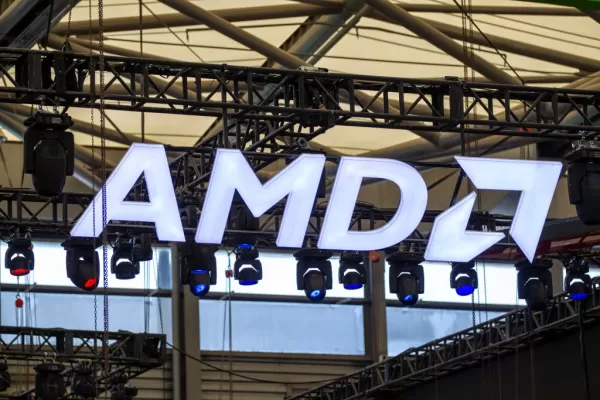
AMD Faces Potential $800 Million Impact from U.S. Export Controls on AI Chips
Advanced Micro Devices (AMD) has warned that the U.S. government's new licensing requirements for exporting AI chips to China and several other countries could significantly affect its financial performance. In a recent SEC filing, AMD disclosed that failing to secure the necessary export licenses could leave the company facing up to $800 million in charges related to inventory, purchase commitments, and reserves. The filing specifically mentions that these new regulations target AMD’s MI308 GPUs.
“On April 15, 2025, [AMD] completed its initial assessment of a new license requirement implemented by the [U.S.] government for the export of certain semiconductor products to China (including Hong Kong and Macau) and D:5 countries,” the company stated. “The [export control] applies to [AMD’s] MI308 products. The company expects to apply for licenses but there is no assurance that licenses will be granted.”
The news led to a noticeable dip in AMD's stock, with shares falling approximately 6% during early trading on Wednesday.
Broader Impact on the Semiconductor Industry
AMD is not the only company feeling the squeeze from these tightened export controls. Its major competitor, Nvidia, also reported potential impacts. In a separate filing, Nvidia revealed it is bracing for charges amounting to $5.5 billion due to these export restrictions for the first quarter ending April 27.
The push for stricter export controls on U.S.-manufactured GPUs, especially those used in AI applications, has been gaining momentum among government officials. They argue that allowing Chinese companies, particularly those in the AI sector, access to these advanced chips could undermine U.S. leadership in AI technology and pose risks to national security.
A spokesperson from the U.S. Commerce Department emphasized the importance of these measures, stating to Reuters, “The license requirement is in service of the President’s directive to safeguard our national and economic security.”
This situation underscores the growing tension between technological advancement and national security concerns, with significant financial implications for leading chip manufacturers like AMD and Nvidia.
Related article
 How Recursive Intelligence Raised $335M at $4B Valuation in 4 Months
The co-founders of startup Ricursive Intelligence seemed destined to be co-founders.Anna Goldie, CEO, and Azalia Mirhoseini, CTO, are so well-known in the AI community that they were among those AI engineers who “got those weird emails from Zuckerber
Nvidia H200 China deal survives Trump-Xi summit, but not as expected
President Trump traveled to Beijing with Jensen Huang joining the delegation at the eleventh hour, departing two days later with vague remarks about potential chip export developments. No deal materialized. Since Trump first authorized sales in Decem
Huawei to launch new AI chip in Q1 2027, challenging Nvidia
Huawei has accelerated the release of its next-generation Ascend 960DT AI processor to Q1 2027, aiming to compete directly with Nvidia, the company revealed at its Huawei Connect event on Thursday.Previously, the Chinese technology leader targeted a
Related Special Topic Recommendations
Design & Art
How Recursive Intelligence Raised $335M at $4B Valuation in 4 Months
The co-founders of startup Ricursive Intelligence seemed destined to be co-founders.Anna Goldie, CEO, and Azalia Mirhoseini, CTO, are so well-known in the AI community that they were among those AI engineers who “got those weird emails from Zuckerber
Nvidia H200 China deal survives Trump-Xi summit, but not as expected
President Trump traveled to Beijing with Jensen Huang joining the delegation at the eleventh hour, departing two days later with vague remarks about potential chip export developments. No deal materialized. Since Trump first authorized sales in Decem
Huawei to launch new AI chip in Q1 2027, challenging Nvidia
Huawei has accelerated the release of its next-generation Ascend 960DT AI processor to Q1 2027, aiming to compete directly with Nvidia, the company revealed at its Huawei Connect event on Thursday.Previously, the Chinese technology leader targeted a
Related Special Topic Recommendations
Design & Art
 Top AI Illustration Tools: Create Editorial Scenes and Cover Art Faster
2026 Latest Top-rated AI Illustration Tools: Our curated list features the best powerfully designed tools for creating stunning editorial scenes and eye-catching cover art quickly. Each option has gone through rigorous real-world tests, offering a free vs paid comparison to help you find the perfect match for your workflow. Try these must-try solutions today to unlock your AI edge and boost your creative productivity. Explore now at XIX.AI.
 10 tools
 xix.ai
Education and Learning
Top AI Tutors for Exam Prep: Practice Math, Science, and English
xix.ai
Education and Learning
Top AI Tutors for Exam Prep: Practice Math, Science, and English
2026 Latest Top-Rated Best AI Tutors for Exam Prep are here on XIX.AI! Our curated list features powerful game-changing tools that offer free vs paid comparison, real-world tests, and weekly updated rankings. They help boost your writing efficiency, simplify complex topic learning, and unlock your academic potential. Explore now to Discover your perfect exam prep tool and Start creating today to Unlock your AI edge!
10 tools
xix.ai
Finance
AI Budget Planning Tools for Personal Money Management
2026 Latest Best Top-Rated AI Budget Planning Tools for Personal Money Management are here on XIX.AI! This curated collection features powerful, game-changing solutions that help you conduct real-world tests, understand spending habits, and create personalized plans to boost productivity. Enjoy a free vs paid comparison along with detailed rankings. Must-try tools designed to simplify money management and unlock your AI edge. Explore now!
11 tools
xix.ai
Health & Wellness
AI Sleep Tracking Assistants: Improve Recovery with Better Bedtime Habits
2026 Latest Best Top-Rated AI Sleep Tracking Assistants curated for ultimate recovery. This fully updated weekly guide features powerful tools that deliver real-world tests, free vs paid comparison, and detailed rankings to help you find the must-try solution that boosts sleep quality and supports better bedtime habits. Explore now at XIX.AI to Unlock your AI edge.
10 tools
xix.ai
Data Analysis
AI SQL Copilots for Product and Revenue Analytics
2026 Latest Best Top-Rated AI SQL Copilots for Product and Revenue Analytics! XIX.AI has curated a powerful, game-changing collection of must-try tools that undergo real-world tests through weekly updated rankings. These tools help users boost productivity significantly by accelerating data analysis, streamlining complex queries, and generating accurate insights to drive smarter business decisions. Explore now to Discover your perfect tool for unlocking your AI edge!
14 tools
xix.ai
Education and Learning
Best AI Homework Helpers That Teach: Learn Concepts, Not Just Answers
2026 Latest Best Top-Rated AI Homework Helpers That Teach Core Concepts Not Just Answers Powerful Tools for Students Must-Try Curated List Weekly Updated Free vs Paid Comparison Real-World Tests Accurate Rankings to Help You Unlock Your Full Learning Potential Explore now to Discover your perfect tool for smarter studying.
10 tools
xix.ai

 Comments (13)
0/500
Comments (13)
0/500
![RonaldNelson]()
Oh great, another $800 million headache for AMD thanks to Uncle Sam's export rules. 🙄 So much for 'free market' when it comes to AI chips. I guess China will just accelerate its own development now, while American companies pay the price. Classic geopolitical game of chicken. 💸
![EricAllen]()
Die Exportkontrollen der USA treffen AMD hart – 800 Millionen Dollar sind kein Pappenstiel. 🧐 Das zeigt mal wieder, wie sehr Tech-Konzerne zwischen geopolitischen Fronten aufgerieben werden. Hoffentlich führt das nicht zu noch mehr Abkopplung der Märkte, am Ende verlieren alle.
![AlbertGonzalez]()
看到這消息有點意外,AMD這次受影響的規模不小啊。美國的出口管制越來越嚴格,對科技公司的全球業務確實是個挑戰。不過這也讓人思考,地緣政治風險是不是已經成為投資半導體股必須考量的常態了?🤔
![StephenDavis]()
AMD這下虧大了...美國的出口管制真的是雙面刃啊,雖然說是為了國家安全,但科技公司的損失誰來補償?😅 這些限制會不會反而讓中國加速自研晶片的進程啊?
![ThomasRoberts]()
Wow, an $800M hit for AMD? That's a huge blow! Makes me wonder how much this will shake up the AI chip market. 🤑
![JasonSanchez]()
Wow, $800M is a huge hit for AMD! 😲 These export controls on AI chips are really shaking things up. Makes me wonder how this’ll impact their competition with Nvidia in the AI race.
AMD Faces Potential $800 Million Impact from U.S. Export Controls on AI Chips
Advanced Micro Devices (AMD) has warned that the U.S. government's new licensing requirements for exporting AI chips to China and several other countries could significantly affect its financial performance. In a recent SEC filing, AMD disclosed that failing to secure the necessary export licenses could leave the company facing up to $800 million in charges related to inventory, purchase commitments, and reserves. The filing specifically mentions that these new regulations target AMD’s MI308 GPUs.
“On April 15, 2025, [AMD] completed its initial assessment of a new license requirement implemented by the [U.S.] government for the export of certain semiconductor products to China (including Hong Kong and Macau) and D:5 countries,” the company stated. “The [export control] applies to [AMD’s] MI308 products. The company expects to apply for licenses but there is no assurance that licenses will be granted.”
The news led to a noticeable dip in AMD's stock, with shares falling approximately 6% during early trading on Wednesday.
Broader Impact on the Semiconductor Industry
AMD is not the only company feeling the squeeze from these tightened export controls. Its major competitor, Nvidia, also reported potential impacts. In a separate filing, Nvidia revealed it is bracing for charges amounting to $5.5 billion due to these export restrictions for the first quarter ending April 27.
The push for stricter export controls on U.S.-manufactured GPUs, especially those used in AI applications, has been gaining momentum among government officials. They argue that allowing Chinese companies, particularly those in the AI sector, access to these advanced chips could undermine U.S. leadership in AI technology and pose risks to national security.
A spokesperson from the U.S. Commerce Department emphasized the importance of these measures, stating to Reuters, “The license requirement is in service of the President’s directive to safeguard our national and economic security.”
This situation underscores the growing tension between technological advancement and national security concerns, with significant financial implications for leading chip manufacturers like AMD and Nvidia.








 How Recursive Intelligence Raised $335M at $4B Valuation in 4 Months
The co-founders of startup Ricursive Intelligence seemed destined to be co-founders.Anna Goldie, CEO, and Azalia Mirhoseini, CTO, are so well-known in the AI community that they were among those AI engineers who “got those weird emails from Zuckerber
How Recursive Intelligence Raised $335M at $4B Valuation in 4 Months
The co-founders of startup Ricursive Intelligence seemed destined to be co-founders.Anna Goldie, CEO, and Azalia Mirhoseini, CTO, are so well-known in the AI community that they were among those AI engineers who “got those weird emails from Zuckerber
 Nvidia H200 China deal survives Trump-Xi summit, but not as expected
President Trump traveled to Beijing with Jensen Huang joining the delegation at the eleventh hour, departing two days later with vague remarks about potential chip export developments. No deal materialized. Since Trump first authorized sales in Decem
Nvidia H200 China deal survives Trump-Xi summit, but not as expected
President Trump traveled to Beijing with Jensen Huang joining the delegation at the eleventh hour, departing two days later with vague remarks about potential chip export developments. No deal materialized. Since Trump first authorized sales in Decem
 Huawei to launch new AI chip in Q1 2027, challenging Nvidia
Huawei has accelerated the release of its next-generation Ascend 960DT AI processor to Q1 2027, aiming to compete directly with Nvidia, the company revealed at its Huawei Connect event on Thursday.Previously, the Chinese technology leader targeted a
Huawei to launch new AI chip in Q1 2027, challenging Nvidia
Huawei has accelerated the release of its next-generation Ascend 960DT AI processor to Q1 2027, aiming to compete directly with Nvidia, the company revealed at its Huawei Connect event on Thursday.Previously, the Chinese technology leader targeted a

2026 Latest Top-rated AI Illustration Tools: Our curated list features the best powerfully designed tools for creating stunning editorial scenes and eye-catching cover art quickly. Each option has gone through rigorous real-world tests, offering a free vs paid comparison to help you find the perfect match for your workflow. Try these must-try solutions today to unlock your AI edge and boost your creative productivity. Explore now at XIX.AI.
10 tools
xix.ai

2026 Latest Top-Rated Best AI Tutors for Exam Prep are here on XIX.AI! Our curated list features powerful game-changing tools that offer free vs paid comparison, real-world tests, and weekly updated rankings. They help boost your writing efficiency, simplify complex topic learning, and unlock your academic potential. Explore now to Discover your perfect exam prep tool and Start creating today to Unlock your AI edge!
10 tools
xix.ai

2026 Latest Best Top-Rated AI Budget Planning Tools for Personal Money Management are here on XIX.AI! This curated collection features powerful, game-changing solutions that help you conduct real-world tests, understand spending habits, and create personalized plans to boost productivity. Enjoy a free vs paid comparison along with detailed rankings. Must-try tools designed to simplify money management and unlock your AI edge. Explore now!
11 tools
xix.ai

2026 Latest Best Top-Rated AI Sleep Tracking Assistants curated for ultimate recovery. This fully updated weekly guide features powerful tools that deliver real-world tests, free vs paid comparison, and detailed rankings to help you find the must-try solution that boosts sleep quality and supports better bedtime habits. Explore now at XIX.AI to Unlock your AI edge.
10 tools
xix.ai

2026 Latest Best Top-Rated AI SQL Copilots for Product and Revenue Analytics! XIX.AI has curated a powerful, game-changing collection of must-try tools that undergo real-world tests through weekly updated rankings. These tools help users boost productivity significantly by accelerating data analysis, streamlining complex queries, and generating accurate insights to drive smarter business decisions. Explore now to Discover your perfect tool for unlocking your AI edge!
14 tools
xix.ai

2026 Latest Best Top-Rated AI Homework Helpers That Teach Core Concepts Not Just Answers Powerful Tools for Students Must-Try Curated List Weekly Updated Free vs Paid Comparison Real-World Tests Accurate Rankings to Help You Unlock Your Full Learning Potential Explore now to Discover your perfect tool for smarter studying.
10 tools
xix.ai

Oh great, another $800 million headache for AMD thanks to Uncle Sam's export rules. 🙄 So much for 'free market' when it comes to AI chips. I guess China will just accelerate its own development now, while American companies pay the price. Classic geopolitical game of chicken. 💸
Die Exportkontrollen der USA treffen AMD hart – 800 Millionen Dollar sind kein Pappenstiel. 🧐 Das zeigt mal wieder, wie sehr Tech-Konzerne zwischen geopolitischen Fronten aufgerieben werden. Hoffentlich führt das nicht zu noch mehr Abkopplung der Märkte, am Ende verlieren alle.
看到這消息有點意外,AMD這次受影響的規模不小啊。美國的出口管制越來越嚴格,對科技公司的全球業務確實是個挑戰。不過這也讓人思考,地緣政治風險是不是已經成為投資半導體股必須考量的常態了?🤔
AMD這下虧大了...美國的出口管制真的是雙面刃啊,雖然說是為了國家安全,但科技公司的損失誰來補償?😅 這些限制會不會反而讓中國加速自研晶片的進程啊?
Wow, an $800M hit for AMD? That's a huge blow! Makes me wonder how much this will shake up the AI chip market. 🤑
Wow, $800M is a huge hit for AMD! 😲 These export controls on AI chips are really shaking things up. Makes me wonder how this’ll impact their competition with Nvidia in the AI race.












