


 Home
Home
Amazon’s Cloud Business Shows Strong Growth, Driving Significant Capital Spending Increases
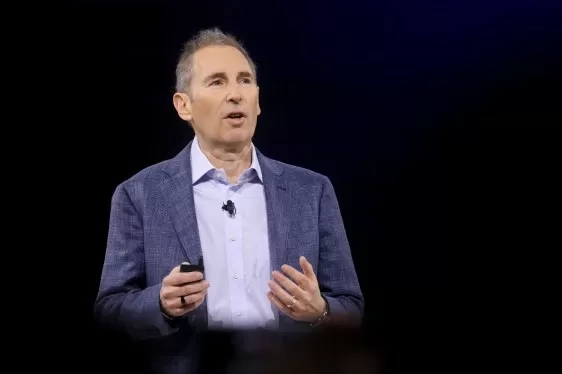
Amazon was among several major technology companies that surpassed Wall Street’s earnings forecasts for the first quarter this Wednesday, providing further evidence that the AI boom continues to benefit firms that supply the essential infrastructure needed to support this technological advancement.
The company’s cloud division serves as a recent illustration of this trend. Amazon Web Services, which plays a pivotal role in driving the AI industry’s growth, reported a 28% year-over-year increase in net sales, reaching $37.6 billion, according to a statement released by the company on Wednesday. Andy Jassy, Amazon’s president and CEO, noted that this represented the fastest growth rate for AWS in 15 consecutive quarters during the company’s earnings call.
Jassy credited AWS’s strong performance to its function of providing computing resources to the AI sector.
Jassy compared the unit’s growth trajectory to that seen during the 2000s. “To give you an idea of just how significant our growth has been, three years after AWS was launched, its revenue run rate was only $58 million. In contrast, during the first three years of this current AI-driven wave, AWS’s AI-related revenue run rate has exceeded $15 billion — nearly 260 times higher than before.”
While substantial funds are flowing into its cloud business, Amazon is also investing heavily in expanding the infrastructure required to support this cloud operations. Jassy indicated on Wednesday that capital expenditure levels are set to remain high in the near term.
Jassy framed these investments as short-term financial outlays that will yield long-term benefits, emphasizing that the capital spent on assets such as data centers — which typically last over 30 years — as well as chips, servers, and networking gear — with a useful life of five to six years — will ultimately support the company’s operations.
He also sought to ease investor concerns about Amazon spending too much on infrastructure, offering some insight into how such expenditures might impact free cash flow.
Amazon’s first-quarter earnings report reflects this pressure on free cash flow. The company reported that its free cash flow for the trailing twelve months dropped to $1.2 billion, primarily due to a year-over-year increase of $59.3 billion in spending on property and equipment — much of which was related to AI initiatives. This represents a 95% decline from the $25.9 billion in free cash flow recorded in the first quarter of 2025.
Meanwhile, Amazon’s overall sales increased by 17% year-over-year to $181.5 billion. The company reported that sales grew by 12% in North America and by 19% across all other regions worldwide.
 How AI and Robotics Are Transforming bp’s Oil Production
Digital twin technology enables bp to simulate energy asset operations, identifying improvement opportunities and predicting failures before they occur. Credit: bpRicky Burns, Transformation & Technology Manager at bp, explains how digital tools help
Toyota’s $6.4bn robotics estimate puts physical AI in focus
Toyota Motor projects that rolling out automation across its manufacturing facilities, subsidiaries, and key suppliers may require approximately 400,000 robots and an annual expenditure of roughly 1 trillion yen ($6.4 billion) starting in 2028.Accord
Friend, the Lonely AI Wearable, Returns With a New Voice and a Much Bigger Price Tag
Two years ago, tech entrepreneur Avi Schiffmann introduced Friend, an AI-powered wearable device designed for conversation and daily text updates. The core concept was to leverage artificial intelligence to alleviate feelings of isolation. This week,
Related Special Topic Recommendations
code
How AI and Robotics Are Transforming bp’s Oil Production
Digital twin technology enables bp to simulate energy asset operations, identifying improvement opportunities and predicting failures before they occur. Credit: bpRicky Burns, Transformation & Technology Manager at bp, explains how digital tools help
Toyota’s $6.4bn robotics estimate puts physical AI in focus
Toyota Motor projects that rolling out automation across its manufacturing facilities, subsidiaries, and key suppliers may require approximately 400,000 robots and an annual expenditure of roughly 1 trillion yen ($6.4 billion) starting in 2028.Accord
Friend, the Lonely AI Wearable, Returns With a New Voice and a Much Bigger Price Tag
Two years ago, tech entrepreneur Avi Schiffmann introduced Friend, an AI-powered wearable device designed for conversation and daily text updates. The core concept was to leverage artificial intelligence to alleviate feelings of isolation. This week,
Related Special Topic Recommendations
code
 Best AI Coding Tools for Python and JavaScript
2026 Latest Best Top-Rated AI Coding Tools for Python and JavaScript are here on XIX.AI’s curated list. These powerful game-changing tools have undergone rigorous real-world tests to deliver exceptional results for writing efficient code, fixing bugs, and boosting productivity. Get a free vs paid comparison and see which options suit your needs. Explore now to Discover your perfect coding tool and Unlock your AI edge.
 10 tools
 xix.ai
Academic Research
Best AI Citation Mapping Tools for Research Discovery
xix.ai
Academic Research
Best AI Citation Mapping Tools for Research Discovery
2026 Latest Best Top-Rated AI Citation Mapping Tools for Research Discovery! XIX.AI has curated a powerful, game-changing collection of must-try tools that go through rigorous real-world tests to deliver accurate results. You’ll find detailed free vs paid comparisons, weekly updated rankings, and insights to help you boost your research efficiency and uncover valuable data faster. Explore now to discover your perfect tool for academic work! 238 characters
11 tools
xix.ai
SEO
AI Meta Tag Tools for Faster On Page SEO
2026 Latest Best Top-rated AI Meta Tag Tools for Faster On Page SEO! XIX.AI has curated a powerful, game-changing collection of highly reliable tools that undergo rigorous real-world tests. You’ll find a free vs paid comparison along with detailed rankings to help you choose the perfect option for boosting your content’s search visibility and improving writing efficiency. Explore now to Unlock your AI edge!
9 tools
xix.ai
Health & Wellness
AI Habit Tracking Tools for Personal Health Goals
2026 Latest Best AI Habit Tracking Tools for Personal Health Goals are here on XIX.AI! Our curated top-rated list includes powerful, game-changing solutions that help you stay consistent with your goals through real-world tests and strict rankings. We also offer a free vs paid comparison to help you choose the perfect fit. Explore now to Unlock your AI edge in achieving better health outcomes.
10 tools
xix.ai
Data Analysis
Best AI Anomaly Detection Tools for Dashboard Monitoring
2026 Latest Best Top-rated AI Anomaly Detection Tools for Dashboard Monitoring are here on XIX.AI! This curated list features powerful, game-changing solutions that deliver accurate real-world tests through weekly updated rankings. You’ll find a free vs paid comparison and insights into how these tools boost productivity by helping users spot issues fast, streamlining workflow efficiency. Discover your perfect tool to unlock your AI edge today. Explore now!
9 tools
xix.ai
Animation Creation
AI Lip-Sync Generators for Dialogue-Driven Character Animation and Motion Scenes
2026 Latest Best AI Lip-Sync Generators for Dialogue-Driven Character Animation and Motion Scenes! XIX.AI has curated a top-rated list of powerful, game-changing tools that deliver flawless synchronized lip movements for animated characters. Each option undergoes rigorous real-world tests to ensure reliability, and our weekly updated rankings help you find the must-try solution that boosts your animation workflow efficiency. Explore now to discover your perfect tool!
9 tools
xix.ai

 Comments (0)
0/500
Comments (0)
0/500
Amazon was among several major technology companies that surpassed Wall Street’s earnings forecasts for the first quarter this Wednesday, providing further evidence that the AI boom continues to benefit firms that supply the essential infrastructure needed to support this technological advancement.
The company’s cloud division serves as a recent illustration of this trend. Amazon Web Services, which plays a pivotal role in driving the AI industry’s growth, reported a 28% year-over-year increase in net sales, reaching $37.6 billion, according to a statement released by the company on Wednesday. Andy Jassy, Amazon’s president and CEO, noted that this represented the fastest growth rate for AWS in 15 consecutive quarters during the company’s earnings call.
Jassy credited AWS’s strong performance to its function of providing computing resources to the AI sector.
Jassy compared the unit’s growth trajectory to that seen during the 2000s. “To give you an idea of just how significant our growth has been, three years after AWS was launched, its revenue run rate was only $58 million. In contrast, during the first three years of this current AI-driven wave, AWS’s AI-related revenue run rate has exceeded $15 billion — nearly 260 times higher than before.”
While substantial funds are flowing into its cloud business, Amazon is also investing heavily in expanding the infrastructure required to support this cloud operations. Jassy indicated on Wednesday that capital expenditure levels are set to remain high in the near term.
Jassy framed these investments as short-term financial outlays that will yield long-term benefits, emphasizing that the capital spent on assets such as data centers — which typically last over 30 years — as well as chips, servers, and networking gear — with a useful life of five to six years — will ultimately support the company’s operations.
He also sought to ease investor concerns about Amazon spending too much on infrastructure, offering some insight into how such expenditures might impact free cash flow.
Amazon’s first-quarter earnings report reflects this pressure on free cash flow. The company reported that its free cash flow for the trailing twelve months dropped to $1.2 billion, primarily due to a year-over-year increase of $59.3 billion in spending on property and equipment — much of which was related to AI initiatives. This represents a 95% decline from the $25.9 billion in free cash flow recorded in the first quarter of 2025.
Meanwhile, Amazon’s overall sales increased by 17% year-over-year to $181.5 billion. The company reported that sales grew by 12% in North America and by 19% across all other regions worldwide.








 How AI and Robotics Are Transforming bp’s Oil Production
Digital twin technology enables bp to simulate energy asset operations, identifying improvement opportunities and predicting failures before they occur. Credit: bpRicky Burns, Transformation & Technology Manager at bp, explains how digital tools help
How AI and Robotics Are Transforming bp’s Oil Production
Digital twin technology enables bp to simulate energy asset operations, identifying improvement opportunities and predicting failures before they occur. Credit: bpRicky Burns, Transformation & Technology Manager at bp, explains how digital tools help
 Toyota’s $6.4bn robotics estimate puts physical AI in focus
Toyota Motor projects that rolling out automation across its manufacturing facilities, subsidiaries, and key suppliers may require approximately 400,000 robots and an annual expenditure of roughly 1 trillion yen ($6.4 billion) starting in 2028.Accord
Toyota’s $6.4bn robotics estimate puts physical AI in focus
Toyota Motor projects that rolling out automation across its manufacturing facilities, subsidiaries, and key suppliers may require approximately 400,000 robots and an annual expenditure of roughly 1 trillion yen ($6.4 billion) starting in 2028.Accord
 Friend, the Lonely AI Wearable, Returns With a New Voice and a Much Bigger Price Tag
Two years ago, tech entrepreneur Avi Schiffmann introduced Friend, an AI-powered wearable device designed for conversation and daily text updates. The core concept was to leverage artificial intelligence to alleviate feelings of isolation. This week,
Friend, the Lonely AI Wearable, Returns With a New Voice and a Much Bigger Price Tag
Two years ago, tech entrepreneur Avi Schiffmann introduced Friend, an AI-powered wearable device designed for conversation and daily text updates. The core concept was to leverage artificial intelligence to alleviate feelings of isolation. This week,

2026 Latest Best Top-Rated AI Coding Tools for Python and JavaScript are here on XIX.AI’s curated list. These powerful game-changing tools have undergone rigorous real-world tests to deliver exceptional results for writing efficient code, fixing bugs, and boosting productivity. Get a free vs paid comparison and see which options suit your needs. Explore now to Discover your perfect coding tool and Unlock your AI edge.
10 tools
xix.ai

2026 Latest Best Top-Rated AI Citation Mapping Tools for Research Discovery! XIX.AI has curated a powerful, game-changing collection of must-try tools that go through rigorous real-world tests to deliver accurate results. You’ll find detailed free vs paid comparisons, weekly updated rankings, and insights to help you boost your research efficiency and uncover valuable data faster. Explore now to discover your perfect tool for academic work! 238 characters
11 tools
xix.ai

2026 Latest Best Top-rated AI Meta Tag Tools for Faster On Page SEO! XIX.AI has curated a powerful, game-changing collection of highly reliable tools that undergo rigorous real-world tests. You’ll find a free vs paid comparison along with detailed rankings to help you choose the perfect option for boosting your content’s search visibility and improving writing efficiency. Explore now to Unlock your AI edge!
9 tools
xix.ai

2026 Latest Best AI Habit Tracking Tools for Personal Health Goals are here on XIX.AI! Our curated top-rated list includes powerful, game-changing solutions that help you stay consistent with your goals through real-world tests and strict rankings. We also offer a free vs paid comparison to help you choose the perfect fit. Explore now to Unlock your AI edge in achieving better health outcomes.
10 tools
xix.ai

2026 Latest Best Top-rated AI Anomaly Detection Tools for Dashboard Monitoring are here on XIX.AI! This curated list features powerful, game-changing solutions that deliver accurate real-world tests through weekly updated rankings. You’ll find a free vs paid comparison and insights into how these tools boost productivity by helping users spot issues fast, streamlining workflow efficiency. Discover your perfect tool to unlock your AI edge today. Explore now!
9 tools
xix.ai

2026 Latest Best AI Lip-Sync Generators for Dialogue-Driven Character Animation and Motion Scenes! XIX.AI has curated a top-rated list of powerful, game-changing tools that deliver flawless synchronized lip movements for animated characters. Each option undergoes rigorous real-world tests to ensure reliability, and our weekly updated rankings help you find the must-try solution that boosts your animation workflow efficiency. Explore now to discover your perfect tool!
9 tools
xix.ai












