


 Home
Alipay Token Pay integrates MiniMax M3, the latest domestic AI model
MiniMax's latest large model, M3, is now fully integrated into Alipay's TokenPay one-stop full-stack solution, allowing enterprises to enjoy bulk purchasing and one-click distribution for managing Token seats. Users can also complete in-app payments through Alipay's AI Pay by simply speaking a command within the Mix Claw service powered by MiniMax Agent.
MiniMax is one of the first global large model developers to embed Token Pay payment capabilities directly into its core subscription system, marking the first large-scale deployment of Alipay's domestic MaaS (Model as a Service) payment solution.
MiniMax is also set to fully integrate with Alipay's full-stack AI payment products in the near future, upgrading the service experience for both developers and individual users, accelerating commercialization, and enabling developers to use natural language to call payment capabilities, making it easier for users to instruct Agents to perform tasks more reliably and obediently.
Enterprise-Grade Token Seat Management
Bulk Purchasing with One-Click Distribution
As large language models become enterprise productivity tools, more companies are buying Token services in bulk. However, in practice, they face several management challenges: determining the right number of seats, selecting the appropriate package for each seat, distributing them efficiently internally, and handling reimbursement.
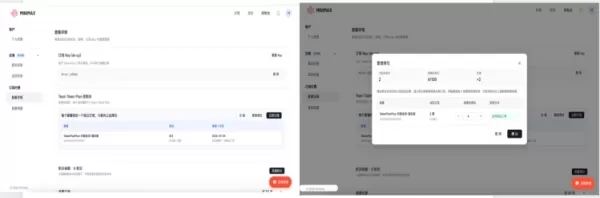
To address these pain points, Token Pay has enhanced its enterprise seat management features, including one-click subscription for enterprise groups, the ability to scale seats up or down, and support for complex scenarios like group management and token allocation. By integrating with MiniMax, this effectively creates a complete payment SaaS system, significantly improving the purchasing experience for enterprise customers.
Deep Integration with Large Language Models
M3 Model Demonstrates Robust Security in Payment Scenarios
This collaboration goes beyond product-level integration, achieving a deep optimization of large model intent understanding and financial-grade payment execution at the foundational level.
On June 1, MiniMax officially launched its new general-purpose model, MiniMax M3, featuring a proprietary sparse attention architecture called MiniMax Sparse Attention (MSA). M3 is the first large model in China to combine three core capabilities: state-of-the-art coding ability, a 1-million-token ultra-long context, and native multimodal support. It is also the only open-source model globally to offer this complete set of features.
During adaptation testing, Alipay observed that M3 excelled in intent recognition accuracy and risk boundary awareness, showing clear advantages in understanding the payment task chain, defining payment security boundaries, and managing engineering complexity. This positions M3 as key infrastructure for achieving a commercial closed loop in AI-native applications.
Low-Code Access
Commercialization Barriers Near Zero
"We've componentized all payment solutions so they are ready to use out of the box," said Zhu Lin, General Manager of Alipay's AI Payment. "In large model commercialization scenarios, developers can apply Alipay's capabilities as needed, allowing them to focus on improving model performance and optimizing underlying computing power."
With low-code integration, various billing models—including subscription, pay-as-you-go, and top-up packages—can be flexibly combined like building blocks. This AI payment solution not only significantly cuts R&D costs for large model companies and boosts payment conversion rates but also serves as a powerful engine for business growth.
A New Payment Paradigm
Becoming the 'Standard Foundation' for Large Model Commercialization
As the number of agents grows exponentially and tokens become the hard currency of the AI economy, the payment paradigm shift is just beginning.
Token Pay's three-layer architecture tackles the core pain points of AI commercialization. The settlement layer ensures agents don't run out of power during task execution. The management layer enables large model makers to purchase and manage tokens for enterprises in a single operation, creating a major efficiency lever. The open layer lowers the access threshold to an extremely low level, allowing various billing models to be flexibly combined like building blocks and accelerating the commercialization process.
Alipay has revealed plans to further explore innovative models like pay-per-performance and dynamic pricing, as well as support unified settlement across agent frameworks. Earlier, Alipay announced a full-stack AI-native payment product system that supports 300 million AI intelligent entities and 95% of general intelligent entity frameworks, making it the world's first large-scale commercial AI-native payment infrastructure.
Related article
 Moonshot: Can China’s 2.8 Trillion Parameter AI Rival US Tech?
In February 2026, Anthropic accused Chinese AI labs DeepSeek, Moonshot and MiniMax of “industrial-scale campaigns” to “illicitly extract Claude’s capabilities to improve their own models”. Credit: Alvan Nee/UnsplashChinese AI firm Moonshot has releas
Cozy 3.0 Launches With Multi-Person and Multi-Agent Collaboration Support
ByteDance has officially released Coze 3.0, introducing a novel approach to Agent creation while delivering major advancements in team collaboration and ecosystem integration.This update prioritizes collaborative efficiency, fully supporting flexible
Microsoft Upgrades Copilot Notebooks With Task Delegation, Office Editing, and Interactive Reports
Microsoft is rolling out key updates to Copilot Notebooks, including task delegation, in-place Office document editing, and interactive reports. This shift transforms the tool from a simple AI organizer into a comprehensive smart workspace for execut
Related Special Topic Recommendations
Design & Art
 Top AI Illustration Tools: Create Editorial Scenes and Cover Art Faster
2026 Latest Top-rated AI Illustration Tools: Our curated list features the best powerfully designed tools for creating stunning editorial scenes and eye-catching cover art quickly. Each option has gone through rigorous real-world tests, offering a free vs paid comparison to help you find the perfect match for your workflow. Try these must-try solutions today to unlock your AI edge and boost your creative productivity. Explore now at XIX.AI.
 10 tools
 xix.ai
Education and Learning
Top AI Tutors for Exam Prep: Practice Math, Science, and English
2026 Latest Top-Rated Best AI Tutors for Exam Prep are here on XIX.AI! Our curated list features powerful game-changing tools that offer free vs paid comparison, real-world tests, and weekly updated rankings. They help boost your writing efficiency, simplify complex topic learning, and unlock your academic potential. Explore now to Discover your perfect exam prep tool and Start creating today to Unlock your AI edge!
10 tools
xix.ai
Finance
AI Budget Planning Tools for Personal Money Management
2026 Latest Best Top-Rated AI Budget Planning Tools for Personal Money Management are here on XIX.AI! This curated collection features powerful, game-changing solutions that help you conduct real-world tests, understand spending habits, and create personalized plans to boost productivity. Enjoy a free vs paid comparison along with detailed rankings. Must-try tools designed to simplify money management and unlock your AI edge. Explore now!
11 tools
xix.ai
Health & Wellness
AI Sleep Tracking Assistants: Improve Recovery with Better Bedtime Habits
2026 Latest Best Top-Rated AI Sleep Tracking Assistants curated for ultimate recovery. This fully updated weekly guide features powerful tools that deliver real-world tests, free vs paid comparison, and detailed rankings to help you find the must-try solution that boosts sleep quality and supports better bedtime habits. Explore now at XIX.AI to Unlock your AI edge.
10 tools
xix.ai
Data Analysis
AI SQL Copilots for Product and Revenue Analytics
2026 Latest Best Top-Rated AI SQL Copilots for Product and Revenue Analytics! XIX.AI has curated a powerful, game-changing collection of must-try tools that undergo real-world tests through weekly updated rankings. These tools help users boost productivity significantly by accelerating data analysis, streamlining complex queries, and generating accurate insights to drive smarter business decisions. Explore now to Discover your perfect tool for unlocking your AI edge!
14 tools
xix.ai
Education and Learning
Best AI Homework Helpers That Teach: Learn Concepts, Not Just Answers
2026 Latest Best Top-Rated AI Homework Helpers That Teach Core Concepts Not Just Answers Powerful Tools for Students Must-Try Curated List Weekly Updated Free vs Paid Comparison Real-World Tests Accurate Rankings to Help You Unlock Your Full Learning Potential Explore now to Discover your perfect tool for smarter studying.
10 tools
xix.ai

 Comments (1)
0/500
![AnthonyHill]()
Alipay ditching the usual suspects for MiniMax M3 is a bold move. TokenPay's bulk purchasing sounds convenient for devs, but I'm skeptical about how well a 'domestic' model handles complex enterprise workflows compared to the giants. 🤔 Still, if it cuts costs, small businesses might rejoice. Let's see if the integration is actually smooth or just another marketing buzzword. 🚀
MiniMax's latest large model, M3, is now fully integrated into Alipay's TokenPay one-stop full-stack solution, allowing enterprises to enjoy bulk purchasing and one-click distribution for managing Token seats. Users can also complete in-app payments through Alipay's AI Pay by simply speaking a command within the Mix Claw service powered by MiniMax Agent.
MiniMax is one of the first global large model developers to embed Token Pay payment capabilities directly into its core subscription system, marking the first large-scale deployment of Alipay's domestic MaaS (Model as a Service) payment solution.
MiniMax is also set to fully integrate with Alipay's full-stack AI payment products in the near future, upgrading the service experience for both developers and individual users, accelerating commercialization, and enabling developers to use natural language to call payment capabilities, making it easier for users to instruct Agents to perform tasks more reliably and obediently.
Enterprise-Grade Token Seat Management
Bulk Purchasing with One-Click Distribution
As large language models become enterprise productivity tools, more companies are buying Token services in bulk. However, in practice, they face several management challenges: determining the right number of seats, selecting the appropriate package for each seat, distributing them efficiently internally, and handling reimbursement.
To address these pain points, Token Pay has enhanced its enterprise seat management features, including one-click subscription for enterprise groups, the ability to scale seats up or down, and support for complex scenarios like group management and token allocation. By integrating with MiniMax, this effectively creates a complete payment SaaS system, significantly improving the purchasing experience for enterprise customers.
Deep Integration with Large Language Models
M3 Model Demonstrates Robust Security in Payment Scenarios
This collaboration goes beyond product-level integration, achieving a deep optimization of large model intent understanding and financial-grade payment execution at the foundational level.
On June 1, MiniMax officially launched its new general-purpose model, MiniMax M3, featuring a proprietary sparse attention architecture called MiniMax Sparse Attention (MSA). M3 is the first large model in China to combine three core capabilities: state-of-the-art coding ability, a 1-million-token ultra-long context, and native multimodal support. It is also the only open-source model globally to offer this complete set of features.
During adaptation testing, Alipay observed that M3 excelled in intent recognition accuracy and risk boundary awareness, showing clear advantages in understanding the payment task chain, defining payment security boundaries, and managing engineering complexity. This positions M3 as key infrastructure for achieving a commercial closed loop in AI-native applications.
Low-Code Access
Commercialization Barriers Near Zero
"We've componentized all payment solutions so they are ready to use out of the box," said Zhu Lin, General Manager of Alipay's AI Payment. "In large model commercialization scenarios, developers can apply Alipay's capabilities as needed, allowing them to focus on improving model performance and optimizing underlying computing power."
With low-code integration, various billing models—including subscription, pay-as-you-go, and top-up packages—can be flexibly combined like building blocks. This AI payment solution not only significantly cuts R&D costs for large model companies and boosts payment conversion rates but also serves as a powerful engine for business growth.
A New Payment Paradigm
Becoming the 'Standard Foundation' for Large Model Commercialization
As the number of agents grows exponentially and tokens become the hard currency of the AI economy, the payment paradigm shift is just beginning.
Token Pay's three-layer architecture tackles the core pain points of AI commercialization. The settlement layer ensures agents don't run out of power during task execution. The management layer enables large model makers to purchase and manage tokens for enterprises in a single operation, creating a major efficiency lever. The open layer lowers the access threshold to an extremely low level, allowing various billing models to be flexibly combined like building blocks and accelerating the commercialization process.
Alipay has revealed plans to further explore innovative models like pay-per-performance and dynamic pricing, as well as support unified settlement across agent frameworks. Earlier, Alipay announced a full-stack AI-native payment product system that supports 300 million AI intelligent entities and 95% of general intelligent entity frameworks, making it the world's first large-scale commercial AI-native payment infrastructure.








 Moonshot: Can China’s 2.8 Trillion Parameter AI Rival US Tech?
In February 2026, Anthropic accused Chinese AI labs DeepSeek, Moonshot and MiniMax of “industrial-scale campaigns” to “illicitly extract Claude’s capabilities to improve their own models”. Credit: Alvan Nee/UnsplashChinese AI firm Moonshot has releas
 Cozy 3.0 Launches With Multi-Person and Multi-Agent Collaboration Support
ByteDance has officially released Coze 3.0, introducing a novel approach to Agent creation while delivering major advancements in team collaboration and ecosystem integration.This update prioritizes collaborative efficiency, fully supporting flexible
 Microsoft Upgrades Copilot Notebooks With Task Delegation, Office Editing, and Interactive Reports
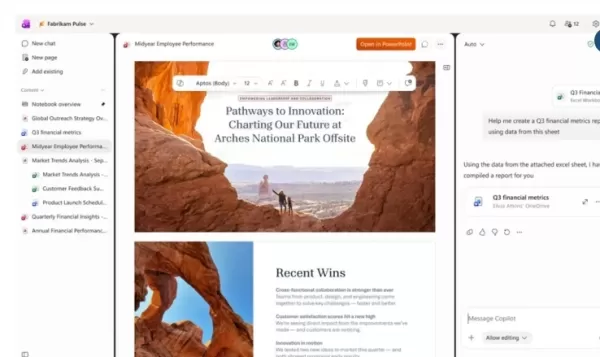
Microsoft is rolling out key updates to Copilot Notebooks, including task delegation, in-place Office document editing, and interactive reports. This shift transforms the tool from a simple AI organizer into a comprehensive smart workspace for execut

2026 Latest Top-rated AI Illustration Tools: Our curated list features the best powerfully designed tools for creating stunning editorial scenes and eye-catching cover art quickly. Each option has gone through rigorous real-world tests, offering a free vs paid comparison to help you find the perfect match for your workflow. Try these must-try solutions today to unlock your AI edge and boost your creative productivity. Explore now at XIX.AI.
10 tools
xix.ai

2026 Latest Top-Rated Best AI Tutors for Exam Prep are here on XIX.AI! Our curated list features powerful game-changing tools that offer free vs paid comparison, real-world tests, and weekly updated rankings. They help boost your writing efficiency, simplify complex topic learning, and unlock your academic potential. Explore now to Discover your perfect exam prep tool and Start creating today to Unlock your AI edge!
10 tools
xix.ai

2026 Latest Best Top-Rated AI Budget Planning Tools for Personal Money Management are here on XIX.AI! This curated collection features powerful, game-changing solutions that help you conduct real-world tests, understand spending habits, and create personalized plans to boost productivity. Enjoy a free vs paid comparison along with detailed rankings. Must-try tools designed to simplify money management and unlock your AI edge. Explore now!
11 tools
xix.ai

2026 Latest Best Top-Rated AI Sleep Tracking Assistants curated for ultimate recovery. This fully updated weekly guide features powerful tools that deliver real-world tests, free vs paid comparison, and detailed rankings to help you find the must-try solution that boosts sleep quality and supports better bedtime habits. Explore now at XIX.AI to Unlock your AI edge.
10 tools
xix.ai

2026 Latest Best Top-Rated AI SQL Copilots for Product and Revenue Analytics! XIX.AI has curated a powerful, game-changing collection of must-try tools that undergo real-world tests through weekly updated rankings. These tools help users boost productivity significantly by accelerating data analysis, streamlining complex queries, and generating accurate insights to drive smarter business decisions. Explore now to Discover your perfect tool for unlocking your AI edge!
14 tools
xix.ai

2026 Latest Best Top-Rated AI Homework Helpers That Teach Core Concepts Not Just Answers Powerful Tools for Students Must-Try Curated List Weekly Updated Free vs Paid Comparison Real-World Tests Accurate Rankings to Help You Unlock Your Full Learning Potential Explore now to Discover your perfect tool for smarter studying.
10 tools
xix.ai

Alipay ditching the usual suspects for MiniMax M3 is a bold move. TokenPay's bulk purchasing sounds convenient for devs, but I'm skeptical about how well a 'domestic' model handles complex enterprise workflows compared to the giants. 🤔 Still, if it cuts costs, small businesses might rejoice. Let's see if the integration is actually smooth or just another marketing buzzword. 🚀












