


 Home
AirTrunk pledges $30B to build 5GW of AI data centers in India
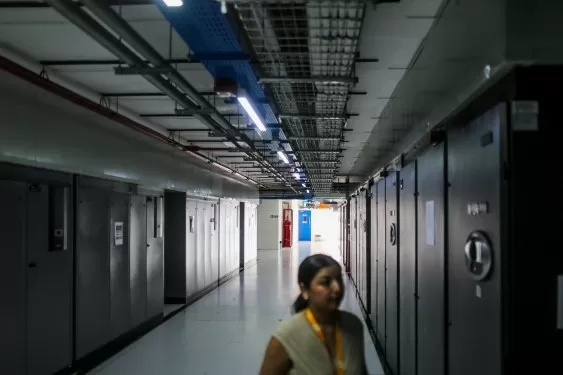
On Thursday, AirTrunk, a data center operator backed by Blackstone, announced plans to invest $30 billion in India by 2030, joining a growing number of technology and infrastructure firms committed to expanding computing capacity in the country.
The Australian firm stated it would build 5 gigawatts of new data center capacity in India, marking one of the biggest commitments to the country's digital infrastructure. AirTrunk first entered the Indian market earlier this year by acquiring Lumina CloudInfra.
AirTrunk's investment highlights India's increasing attractiveness as a hub for AI infrastructure, as technology companies and investors look for new regions to scale computing power. According to research firm Bernstein, India's data center capacity is expected to grow from roughly 1.5GW currently to as much as 8GW by 2030.
The Indian government has also implemented measures to draw investment into AI infrastructure. Earlier this year, New Delhi granted foreign cloud providers tax exemptions until 2047 on services sold abroad, provided those workloads are hosted in Indian data centers.
AirTrunk has already started preparations for its expansion in India. Earlier this week, Maharashtra Chief Minister Devendra Fadnavis posted on X that the state had exchanged a letter of intent for land allocation at the Raigad Pen Growth Center, where AirTrunk plans to build a 3GW data center with an investment of roughly ₹2 trillion (about $21 billion). The company currently has a development pipeline of approximately 600MW across Mumbai, Chennai, and Hyderabad.
AirTrunk declined to answer questions about whether the proposed Raigad project would constitute most of the planned 5GW capacity, or if it intends to pursue additional developments elsewhere in India.
The announcement came after a meeting between AirTrunk CEO Robin Khuda and Prime Minister Narendra Modi. In a post on X, Modi said the planned investment would help solidify India's role as a global center for cloud computing and artificial intelligence.
AirTrunk joins a lengthening roster of companies investing in infrastructure in India. Amazon, Google, Microsoft, OpenAI, and Uber have all announced significant investments in cloud and AI infrastructure, while Indian firms such as Reliance Industries, Adani Group, and TCS have outlined ambitious plans to boost data center capacity.
However, data centers consume enormous amounts of electricity, water, and land. Industry executives and analysts have flagged resource constraints, especially power availability, as a potential bottleneck.
Deloitte estimates that data center construction in the Asia Pacific region could require tens of terawatt-hours of additional electricity by the end of the decade.
Khuda said that AirTrunk's investment thesis is supported by government backing, a large pool of technical talent, and access to renewable energy.
Related article
 Texas suspends new data centers amid governor’s call for audits
Technology firms and software engineers are actively scouting the United States for optimal data center locations, with Texas’s relaxed regulatory framework and seemingly abundant energy supply proving highly attractive. In fact, only Virginia curren
Massachusetts imposes fresh clean power mandates on data centers
Massachusetts has joined the growing list of states requiring data centers to supply their own power, but with a significant caveat. A new state regulation mandates that developers constructing facilities exceeding 25 megawatts must either provide cl
TerraPower’s nuclear reactor emerges as key solution for powering AI data centers
Nuclear power startups are positioning themselves as the solution to AI data centers’ most pressing challenge: reliable, always-on energy. TerraPower, founded by Bill Gates, is the latest entrant, with Bloomberg reporting that the company plans to un
Related Special Topic Recommendations
Design & Art
 Top AI Illustration Tools: Create Editorial Scenes and Cover Art Faster
2026 Latest Top-rated AI Illustration Tools: Our curated list features the best powerfully designed tools for creating stunning editorial scenes and eye-catching cover art quickly. Each option has gone through rigorous real-world tests, offering a free vs paid comparison to help you find the perfect match for your workflow. Try these must-try solutions today to unlock your AI edge and boost your creative productivity. Explore now at XIX.AI.
 10 tools
 xix.ai
Education and Learning
Top AI Tutors for Exam Prep: Practice Math, Science, and English
2026 Latest Top-Rated Best AI Tutors for Exam Prep are here on XIX.AI! Our curated list features powerful game-changing tools that offer free vs paid comparison, real-world tests, and weekly updated rankings. They help boost your writing efficiency, simplify complex topic learning, and unlock your academic potential. Explore now to Discover your perfect exam prep tool and Start creating today to Unlock your AI edge!
10 tools
xix.ai
Finance
AI Budget Planning Tools for Personal Money Management
2026 Latest Best Top-Rated AI Budget Planning Tools for Personal Money Management are here on XIX.AI! This curated collection features powerful, game-changing solutions that help you conduct real-world tests, understand spending habits, and create personalized plans to boost productivity. Enjoy a free vs paid comparison along with detailed rankings. Must-try tools designed to simplify money management and unlock your AI edge. Explore now!
11 tools
xix.ai
Health & Wellness
AI Sleep Tracking Assistants: Improve Recovery with Better Bedtime Habits
2026 Latest Best Top-Rated AI Sleep Tracking Assistants curated for ultimate recovery. This fully updated weekly guide features powerful tools that deliver real-world tests, free vs paid comparison, and detailed rankings to help you find the must-try solution that boosts sleep quality and supports better bedtime habits. Explore now at XIX.AI to Unlock your AI edge.
10 tools
xix.ai
Data Analysis
AI SQL Copilots for Product and Revenue Analytics
2026 Latest Best Top-Rated AI SQL Copilots for Product and Revenue Analytics! XIX.AI has curated a powerful, game-changing collection of must-try tools that undergo real-world tests through weekly updated rankings. These tools help users boost productivity significantly by accelerating data analysis, streamlining complex queries, and generating accurate insights to drive smarter business decisions. Explore now to Discover your perfect tool for unlocking your AI edge!
14 tools
xix.ai
Education and Learning
Best AI Homework Helpers That Teach: Learn Concepts, Not Just Answers
2026 Latest Best Top-Rated AI Homework Helpers That Teach Core Concepts Not Just Answers Powerful Tools for Students Must-Try Curated List Weekly Updated Free vs Paid Comparison Real-World Tests Accurate Rankings to Help You Unlock Your Full Learning Potential Explore now to Discover your perfect tool for smarter studying.
10 tools
xix.ai

 Comments (0)
0/500
On Thursday, AirTrunk, a data center operator backed by Blackstone, announced plans to invest $30 billion in India by 2030, joining a growing number of technology and infrastructure firms committed to expanding computing capacity in the country.
The Australian firm stated it would build 5 gigawatts of new data center capacity in India, marking one of the biggest commitments to the country's digital infrastructure. AirTrunk first entered the Indian market earlier this year by acquiring Lumina CloudInfra.
AirTrunk's investment highlights India's increasing attractiveness as a hub for AI infrastructure, as technology companies and investors look for new regions to scale computing power. According to research firm Bernstein, India's data center capacity is expected to grow from roughly 1.5GW currently to as much as 8GW by 2030.
The Indian government has also implemented measures to draw investment into AI infrastructure. Earlier this year, New Delhi granted foreign cloud providers tax exemptions until 2047 on services sold abroad, provided those workloads are hosted in Indian data centers.
AirTrunk has already started preparations for its expansion in India. Earlier this week, Maharashtra Chief Minister Devendra Fadnavis posted on X that the state had exchanged a letter of intent for land allocation at the Raigad Pen Growth Center, where AirTrunk plans to build a 3GW data center with an investment of roughly ₹2 trillion (about $21 billion). The company currently has a development pipeline of approximately 600MW across Mumbai, Chennai, and Hyderabad.
AirTrunk declined to answer questions about whether the proposed Raigad project would constitute most of the planned 5GW capacity, or if it intends to pursue additional developments elsewhere in India.
The announcement came after a meeting between AirTrunk CEO Robin Khuda and Prime Minister Narendra Modi. In a post on X, Modi said the planned investment would help solidify India's role as a global center for cloud computing and artificial intelligence.
AirTrunk joins a lengthening roster of companies investing in infrastructure in India. Amazon, Google, Microsoft, OpenAI, and Uber have all announced significant investments in cloud and AI infrastructure, while Indian firms such as Reliance Industries, Adani Group, and TCS have outlined ambitious plans to boost data center capacity.
However, data centers consume enormous amounts of electricity, water, and land. Industry executives and analysts have flagged resource constraints, especially power availability, as a potential bottleneck.
Deloitte estimates that data center construction in the Asia Pacific region could require tens of terawatt-hours of additional electricity by the end of the decade.
Khuda said that AirTrunk's investment thesis is supported by government backing, a large pool of technical talent, and access to renewable energy.








 Texas suspends new data centers amid governor’s call for audits
Technology firms and software engineers are actively scouting the United States for optimal data center locations, with Texas’s relaxed regulatory framework and seemingly abundant energy supply proving highly attractive. In fact, only Virginia curren
 Massachusetts imposes fresh clean power mandates on data centers
Massachusetts has joined the growing list of states requiring data centers to supply their own power, but with a significant caveat. A new state regulation mandates that developers constructing facilities exceeding 25 megawatts must either provide cl
 TerraPower’s nuclear reactor emerges as key solution for powering AI data centers
Nuclear power startups are positioning themselves as the solution to AI data centers’ most pressing challenge: reliable, always-on energy. TerraPower, founded by Bill Gates, is the latest entrant, with Bloomberg reporting that the company plans to un

2026 Latest Top-rated AI Illustration Tools: Our curated list features the best powerfully designed tools for creating stunning editorial scenes and eye-catching cover art quickly. Each option has gone through rigorous real-world tests, offering a free vs paid comparison to help you find the perfect match for your workflow. Try these must-try solutions today to unlock your AI edge and boost your creative productivity. Explore now at XIX.AI.
10 tools
xix.ai

2026 Latest Top-Rated Best AI Tutors for Exam Prep are here on XIX.AI! Our curated list features powerful game-changing tools that offer free vs paid comparison, real-world tests, and weekly updated rankings. They help boost your writing efficiency, simplify complex topic learning, and unlock your academic potential. Explore now to Discover your perfect exam prep tool and Start creating today to Unlock your AI edge!
10 tools
xix.ai

2026 Latest Best Top-Rated AI Budget Planning Tools for Personal Money Management are here on XIX.AI! This curated collection features powerful, game-changing solutions that help you conduct real-world tests, understand spending habits, and create personalized plans to boost productivity. Enjoy a free vs paid comparison along with detailed rankings. Must-try tools designed to simplify money management and unlock your AI edge. Explore now!
11 tools
xix.ai

2026 Latest Best Top-Rated AI Sleep Tracking Assistants curated for ultimate recovery. This fully updated weekly guide features powerful tools that deliver real-world tests, free vs paid comparison, and detailed rankings to help you find the must-try solution that boosts sleep quality and supports better bedtime habits. Explore now at XIX.AI to Unlock your AI edge.
10 tools
xix.ai

2026 Latest Best Top-Rated AI SQL Copilots for Product and Revenue Analytics! XIX.AI has curated a powerful, game-changing collection of must-try tools that undergo real-world tests through weekly updated rankings. These tools help users boost productivity significantly by accelerating data analysis, streamlining complex queries, and generating accurate insights to drive smarter business decisions. Explore now to Discover your perfect tool for unlocking your AI edge!
14 tools
xix.ai

2026 Latest Best Top-Rated AI Homework Helpers That Teach Core Concepts Not Just Answers Powerful Tools for Students Must-Try Curated List Weekly Updated Free vs Paid Comparison Real-World Tests Accurate Rankings to Help You Unlock Your Full Learning Potential Explore now to Discover your perfect tool for smarter studying.
10 tools
xix.ai












