


 Home
Texas suspends new data centers amid governor’s call for audits
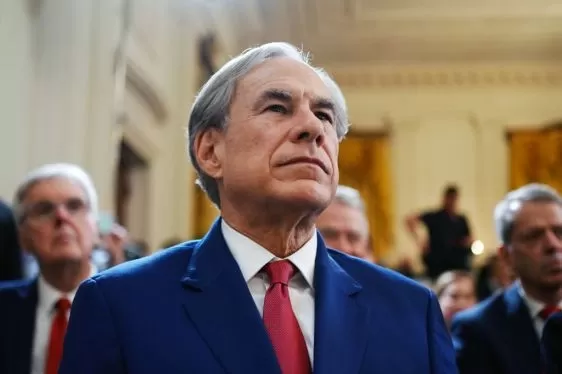
Technology firms and software engineers are actively scouting the United States for optimal data center locations, with Texas’s relaxed regulatory framework and seemingly abundant energy supply proving highly attractive. In fact, only Virginia currently hosts more data centers than Texas.
However, even Texas faces capacity limits. Governor Greg Abbott announced on Monday that all new data center initiatives must undergo audits by both the Public Utility Commission of Texas (PUCT) and the state’s grid operator, the Electric Reliability Council of Texas (ERCOT).
ERCOT’s interconnection queue has expanded significantly this year. At the start of January, the grid operator reported 233 gigawatts of projects awaiting connection. Within six months, that number more than doubled, reaching 474 gigawatts in new connection requests, according to Abbott’s office. The grid operator notes that approximately 90% of these requests originate from data center developers.
Many of these proposals remain conceptual at this stage. Due to lengthy grid connection wait times, developers often join the queue as a preliminary step, though numerous projects eventually fail to materialize.
If even a portion of these proposed projects are completed, they could strain the Texas grid. The current interconnection queue exceeds ERCOT’s total peak demand by more than five times.
According to the Energy Information Administration (EIA), while major operators like Google and Microsoft are attracted to Texas for its natural gas reserves, wind and solar energy have helped ERCOT meet rising electricity demand. Utility-scale solar capacity quadrupled between 2021 and 2025, and electricity prices remained relatively stable or declined during much of that period, per an Amperon report.
Although Texas electricity rates are generally lower than in other states, they have been increasing. The EIA attributes this rise partly to the energy demands of data centers and cryptocurrency mining facilities.
Governor Abbott aims to prevent further price hikes. He has instructed PUCT and ERCOT to gather detailed information on proposed data centers, including electricity and water usage, noise and light mitigation strategies, tax incentive utilization, and ownership structures.
Texas has traditionally favored lighter regulations compared to other states, exemplified by Houston’s lack of zoning codes and the state’s business-friendly environment. However, data centers have become a contentious issue nationwide, including in Texas. Abbott previously attempted to encourage voluntary data sharing, but with low participation, he is now enforcing stricter compliance measures.
Depending on the audit findings, Texas’s status as a premier data center hub may soon be challenged.
Related article
 Massachusetts imposes fresh clean power mandates on data centers
Massachusetts has joined the growing list of states requiring data centers to supply their own power, but with a significant caveat. A new state regulation mandates that developers constructing facilities exceeding 25 megawatts must either provide cl
TerraPower’s nuclear reactor emerges as key solution for powering AI data centers
Nuclear power startups are positioning themselves as the solution to AI data centers’ most pressing challenge: reliable, always-on energy. TerraPower, founded by Bill Gates, is the latest entrant, with Bloomberg reporting that the company plans to un
US data centers may outpace Germany and Japan in natural gas use by 2035
The AI arms race has intensified to such a degree that U.S. data centers are projected to consume more natural gas than Germany and Japan combined by 2035.Over the next decade, data centers are expected to become the second-largest driver of natural
Related Special Topic Recommendations
Design & Art
 Top AI Illustration Tools: Create Editorial Scenes and Cover Art Faster
2026 Latest Top-rated AI Illustration Tools: Our curated list features the best powerfully designed tools for creating stunning editorial scenes and eye-catching cover art quickly. Each option has gone through rigorous real-world tests, offering a free vs paid comparison to help you find the perfect match for your workflow. Try these must-try solutions today to unlock your AI edge and boost your creative productivity. Explore now at XIX.AI.
 10 tools
 xix.ai
Education and Learning
Top AI Tutors for Exam Prep: Practice Math, Science, and English
2026 Latest Top-Rated Best AI Tutors for Exam Prep are here on XIX.AI! Our curated list features powerful game-changing tools that offer free vs paid comparison, real-world tests, and weekly updated rankings. They help boost your writing efficiency, simplify complex topic learning, and unlock your academic potential. Explore now to Discover your perfect exam prep tool and Start creating today to Unlock your AI edge!
10 tools
xix.ai
Finance
AI Budget Planning Tools for Personal Money Management
2026 Latest Best Top-Rated AI Budget Planning Tools for Personal Money Management are here on XIX.AI! This curated collection features powerful, game-changing solutions that help you conduct real-world tests, understand spending habits, and create personalized plans to boost productivity. Enjoy a free vs paid comparison along with detailed rankings. Must-try tools designed to simplify money management and unlock your AI edge. Explore now!
11 tools
xix.ai
Health & Wellness
AI Sleep Tracking Assistants: Improve Recovery with Better Bedtime Habits
2026 Latest Best Top-Rated AI Sleep Tracking Assistants curated for ultimate recovery. This fully updated weekly guide features powerful tools that deliver real-world tests, free vs paid comparison, and detailed rankings to help you find the must-try solution that boosts sleep quality and supports better bedtime habits. Explore now at XIX.AI to Unlock your AI edge.
10 tools
xix.ai
Data Analysis
AI SQL Copilots for Product and Revenue Analytics
2026 Latest Best Top-Rated AI SQL Copilots for Product and Revenue Analytics! XIX.AI has curated a powerful, game-changing collection of must-try tools that undergo real-world tests through weekly updated rankings. These tools help users boost productivity significantly by accelerating data analysis, streamlining complex queries, and generating accurate insights to drive smarter business decisions. Explore now to Discover your perfect tool for unlocking your AI edge!
14 tools
xix.ai
Education and Learning
Best AI Homework Helpers That Teach: Learn Concepts, Not Just Answers
2026 Latest Best Top-Rated AI Homework Helpers That Teach Core Concepts Not Just Answers Powerful Tools for Students Must-Try Curated List Weekly Updated Free vs Paid Comparison Real-World Tests Accurate Rankings to Help You Unlock Your Full Learning Potential Explore now to Discover your perfect tool for smarter studying.
10 tools
xix.ai

 Comments (0)
0/500
Technology firms and software engineers are actively scouting the United States for optimal data center locations, with Texas’s relaxed regulatory framework and seemingly abundant energy supply proving highly attractive. In fact, only Virginia currently hosts more data centers than Texas.
However, even Texas faces capacity limits. Governor Greg Abbott announced on Monday that all new data center initiatives must undergo audits by both the Public Utility Commission of Texas (PUCT) and the state’s grid operator, the Electric Reliability Council of Texas (ERCOT).
ERCOT’s interconnection queue has expanded significantly this year. At the start of January, the grid operator reported 233 gigawatts of projects awaiting connection. Within six months, that number more than doubled, reaching 474 gigawatts in new connection requests, according to Abbott’s office. The grid operator notes that approximately 90% of these requests originate from data center developers.
Many of these proposals remain conceptual at this stage. Due to lengthy grid connection wait times, developers often join the queue as a preliminary step, though numerous projects eventually fail to materialize.
If even a portion of these proposed projects are completed, they could strain the Texas grid. The current interconnection queue exceeds ERCOT’s total peak demand by more than five times.
According to the Energy Information Administration (EIA), while major operators like Google and Microsoft are attracted to Texas for its natural gas reserves, wind and solar energy have helped ERCOT meet rising electricity demand. Utility-scale solar capacity quadrupled between 2021 and 2025, and electricity prices remained relatively stable or declined during much of that period, per an Amperon report.
Although Texas electricity rates are generally lower than in other states, they have been increasing. The EIA attributes this rise partly to the energy demands of data centers and cryptocurrency mining facilities.
Governor Abbott aims to prevent further price hikes. He has instructed PUCT and ERCOT to gather detailed information on proposed data centers, including electricity and water usage, noise and light mitigation strategies, tax incentive utilization, and ownership structures.
Texas has traditionally favored lighter regulations compared to other states, exemplified by Houston’s lack of zoning codes and the state’s business-friendly environment. However, data centers have become a contentious issue nationwide, including in Texas. Abbott previously attempted to encourage voluntary data sharing, but with low participation, he is now enforcing stricter compliance measures.
Depending on the audit findings, Texas’s status as a premier data center hub may soon be challenged.








 Massachusetts imposes fresh clean power mandates on data centers
Massachusetts has joined the growing list of states requiring data centers to supply their own power, but with a significant caveat. A new state regulation mandates that developers constructing facilities exceeding 25 megawatts must either provide cl
 TerraPower’s nuclear reactor emerges as key solution for powering AI data centers
Nuclear power startups are positioning themselves as the solution to AI data centers’ most pressing challenge: reliable, always-on energy. TerraPower, founded by Bill Gates, is the latest entrant, with Bloomberg reporting that the company plans to un
 US data centers may outpace Germany and Japan in natural gas use by 2035
The AI arms race has intensified to such a degree that U.S. data centers are projected to consume more natural gas than Germany and Japan combined by 2035.Over the next decade, data centers are expected to become the second-largest driver of natural

2026 Latest Top-rated AI Illustration Tools: Our curated list features the best powerfully designed tools for creating stunning editorial scenes and eye-catching cover art quickly. Each option has gone through rigorous real-world tests, offering a free vs paid comparison to help you find the perfect match for your workflow. Try these must-try solutions today to unlock your AI edge and boost your creative productivity. Explore now at XIX.AI.
10 tools
xix.ai

2026 Latest Top-Rated Best AI Tutors for Exam Prep are here on XIX.AI! Our curated list features powerful game-changing tools that offer free vs paid comparison, real-world tests, and weekly updated rankings. They help boost your writing efficiency, simplify complex topic learning, and unlock your academic potential. Explore now to Discover your perfect exam prep tool and Start creating today to Unlock your AI edge!
10 tools
xix.ai

2026 Latest Best Top-Rated AI Budget Planning Tools for Personal Money Management are here on XIX.AI! This curated collection features powerful, game-changing solutions that help you conduct real-world tests, understand spending habits, and create personalized plans to boost productivity. Enjoy a free vs paid comparison along with detailed rankings. Must-try tools designed to simplify money management and unlock your AI edge. Explore now!
11 tools
xix.ai

2026 Latest Best Top-Rated AI Sleep Tracking Assistants curated for ultimate recovery. This fully updated weekly guide features powerful tools that deliver real-world tests, free vs paid comparison, and detailed rankings to help you find the must-try solution that boosts sleep quality and supports better bedtime habits. Explore now at XIX.AI to Unlock your AI edge.
10 tools
xix.ai

2026 Latest Best Top-Rated AI SQL Copilots for Product and Revenue Analytics! XIX.AI has curated a powerful, game-changing collection of must-try tools that undergo real-world tests through weekly updated rankings. These tools help users boost productivity significantly by accelerating data analysis, streamlining complex queries, and generating accurate insights to drive smarter business decisions. Explore now to Discover your perfect tool for unlocking your AI edge!
14 tools
xix.ai

2026 Latest Best Top-Rated AI Homework Helpers That Teach Core Concepts Not Just Answers Powerful Tools for Students Must-Try Curated List Weekly Updated Free vs Paid Comparison Real-World Tests Accurate Rankings to Help You Unlock Your Full Learning Potential Explore now to Discover your perfect tool for smarter studying.
10 tools
xix.ai












