


 Home
HomeMoonvalley Raises $53M in Funding for AI Video Platform
Moonvalley, an LA-based startup creating AI tools for video generation, has secured additional funding just about a month after announcing it raised $43 million, according to an SEC filing.
The Thursday filing indicates Moonvalley has actually raised approximately $53 million in total so far, contributed by 14 undisclosed investors.
This filing represents an extra $10 million in capital, not a completely new funding round. PitchBook estimates the company's total funding now stands at roughly $124 million, following its $70 million seed round last November. Moonvalley has declined to provide further comment.
The proliferation of accessible video generation tools has resulted in a crowded marketplace with a surge of new providers. Startups including Runway, Lightricks, Genmo, Pika, Higgsfield, Kling, and Luma, alongside major tech players like OpenAI, Alibaba, and Google, are rapidly releasing new models. Often, it's difficult to tell one model apart from another.
Moonvalley's Marey model, developed in partnership with a new AI animation studio named Asteria, provides customization features such as detailed camera and motion controls. It can produce "HD" video clips lasting up to 30 seconds. Moonvalley also states its model presents a lower legal risk compared to some other video-generation systems.
However, Moonvalley aims to stand out—and attract significant venture capital interest—through the unique data it uses for training its models and the safety features integrated into its video creation platform.
Numerous generative video companies train their AI on publicly available data, some of which is copyrighted. These firms typically defend the practice under fair-use doctrines, though this hasn't prevented rights holders from raising objections and issuing legal demands to stop.
Techcrunch event Save $200+ on your TechCrunch All Stage pass
Build smarter. Scale faster. Connect deeper. Join visionaries from Precursor Ventures, NEA, Index Ventures, Underscore VC, and beyond for a day packed with strategies, workshops, and meaningful connections.
Save $200+ on your TechCrunch All Stage pass
Build smarter. Scale faster. Connect deeper. Join visionaries from Precursor Ventures, NEA, Index Ventures, Underscore VC, and beyond for a day packed with strategies, workshops, and meaningful connections.
Boston, MA | July 15 REGISTER NOW Moonvalley reports it is collaborating with partners to manage licensing agreements and compile videos into curated datasets, which the company then acquires. This strategy mirrors approaches taken by Bria and Adobe, the latter of which sources training content from creators via its Adobe Stock service.
Moonvalley is also developing an interface for its model. The company's software, yet to be shown publicly, includes tools for storyboarding and making detailed clip adjustments, as shared by its co-founders in recent interviews. They claim Marey can create videos not only from text descriptions but also from sketches, photographs, and existing video clips.
Naeem Talukdar, formerly in charge of product growth at Zapier, established Moonvalley with ex-DeepMind researchers Mateusz Malinowski and Mik Binkowski. John Thomas joined as COO; he and Talukdar had previously co-founded another startup named Draft. Bryn Mooser, the head of Asteria, is also listed as a co-founder.
Artists and creators have legitimate concerns about video generators, as this technology has the potential to significantly disrupt the film and television sectors. A 2024 study commissioned by the Animation Guild, a union for Hollywood animators and cartoonists, predicts over 100,000 jobs in the U.S. film, TV, and animation industries could be impacted by AI by 2026.
Moonvalley plans to let creators ask for their content to be excluded from its training data, enable customers to delete their information anytime, and provide an indemnity policy to safeguard users from potential copyright disputes.
In contrast to some "unfiltered" video models that can easily incorporate a person's likeness, Moonvalley is dedicated to implementing strong safety measures. Similar to OpenAI's Sora, Moonvalley's systems will filter out specific content, such as NSFW language, and will not permit users to generate videos featuring identifiable individuals or celebrities.
"We started Moonvalley to develop generative video technology that truly serves filmmakers and creative professionals," the company stated in a March blog post. "This involves tackling both the technical limitations that prevent AI from being a practical production tool and addressing the underlying fear and distrust in the industry."
Related article
 Former OpenAI Researcher Barrett Zoph Returns to Google to Support Gemini Development
Barret Zoph, who previously abruptly left and joined OpenAI due to a disagreement with Thinking Machines Lab CEO Miriam Mularati, has once again changed employers. Alphabet's Google announced that Zoph will return as Vice President of Research, bring
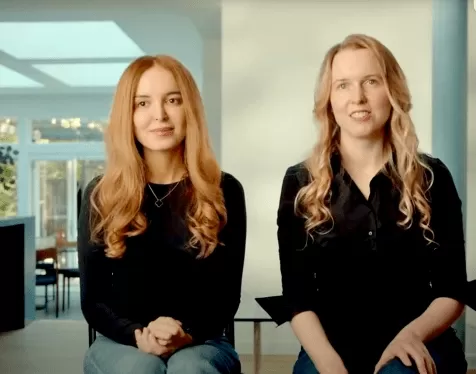
How Recursive Intelligence Raised $335M at $4B Valuation in 4 Months
The co-founders of startup Ricursive Intelligence seemed destined to be co-founders.Anna Goldie, CEO, and Azalia Mirhoseini, CTO, are so well-known in the AI community that they were among those AI engineers who “got those weird emails from Zuckerber
AI race won’t wait, nor will this TechCrunch Disrupt 25% discount
Every founder building in AI right now is asking the same question: Are we moving fast enough, and effectively enough? TechCrunch Disrupt 2026 puts you in the same room as the people wrestling with that existential question at the highest levels. Fro
Related Special Topic Recommendations
Design & Art
Former OpenAI Researcher Barrett Zoph Returns to Google to Support Gemini Development
Barret Zoph, who previously abruptly left and joined OpenAI due to a disagreement with Thinking Machines Lab CEO Miriam Mularati, has once again changed employers. Alphabet's Google announced that Zoph will return as Vice President of Research, bring
How Recursive Intelligence Raised $335M at $4B Valuation in 4 Months
The co-founders of startup Ricursive Intelligence seemed destined to be co-founders.Anna Goldie, CEO, and Azalia Mirhoseini, CTO, are so well-known in the AI community that they were among those AI engineers who “got those weird emails from Zuckerber
AI race won’t wait, nor will this TechCrunch Disrupt 25% discount
Every founder building in AI right now is asking the same question: Are we moving fast enough, and effectively enough? TechCrunch Disrupt 2026 puts you in the same room as the people wrestling with that existential question at the highest levels. Fro
Related Special Topic Recommendations
Design & Art
 Top AI Illustration Tools: Create Editorial Scenes and Cover Art Faster
2026 Latest Top-rated AI Illustration Tools: Our curated list features the best powerfully designed tools for creating stunning editorial scenes and eye-catching cover art quickly. Each option has gone through rigorous real-world tests, offering a free vs paid comparison to help you find the perfect match for your workflow. Try these must-try solutions today to unlock your AI edge and boost your creative productivity. Explore now at XIX.AI.
 10 tools
 xix.ai
Education and Learning
Top AI Tutors for Exam Prep: Practice Math, Science, and English
xix.ai
Education and Learning
Top AI Tutors for Exam Prep: Practice Math, Science, and English
2026 Latest Top-Rated Best AI Tutors for Exam Prep are here on XIX.AI! Our curated list features powerful game-changing tools that offer free vs paid comparison, real-world tests, and weekly updated rankings. They help boost your writing efficiency, simplify complex topic learning, and unlock your academic potential. Explore now to Discover your perfect exam prep tool and Start creating today to Unlock your AI edge!
10 tools
xix.ai
Finance
AI Budget Planning Tools for Personal Money Management
2026 Latest Best Top-Rated AI Budget Planning Tools for Personal Money Management are here on XIX.AI! This curated collection features powerful, game-changing solutions that help you conduct real-world tests, understand spending habits, and create personalized plans to boost productivity. Enjoy a free vs paid comparison along with detailed rankings. Must-try tools designed to simplify money management and unlock your AI edge. Explore now!
11 tools
xix.ai
Health & Wellness
AI Sleep Tracking Assistants: Improve Recovery with Better Bedtime Habits
2026 Latest Best Top-Rated AI Sleep Tracking Assistants curated for ultimate recovery. This fully updated weekly guide features powerful tools that deliver real-world tests, free vs paid comparison, and detailed rankings to help you find the must-try solution that boosts sleep quality and supports better bedtime habits. Explore now at XIX.AI to Unlock your AI edge.
10 tools
xix.ai
Data Analysis
AI SQL Copilots for Product and Revenue Analytics
2026 Latest Best Top-Rated AI SQL Copilots for Product and Revenue Analytics! XIX.AI has curated a powerful, game-changing collection of must-try tools that undergo real-world tests through weekly updated rankings. These tools help users boost productivity significantly by accelerating data analysis, streamlining complex queries, and generating accurate insights to drive smarter business decisions. Explore now to Discover your perfect tool for unlocking your AI edge!
14 tools
xix.ai
Education and Learning
Best AI Homework Helpers That Teach: Learn Concepts, Not Just Answers
2026 Latest Best Top-Rated AI Homework Helpers That Teach Core Concepts Not Just Answers Powerful Tools for Students Must-Try Curated List Weekly Updated Free vs Paid Comparison Real-World Tests Accurate Rankings to Help You Unlock Your Full Learning Potential Explore now to Discover your perfect tool for smarter studying.
10 tools
xix.ai

 Comments (2)
0/500
Comments (2)
0/500
![JerryGonzalez]()
Another $53M? 🤔 With so many AI video startups popping up, I wonder how Moonvalley plans to stand out. The funding rounds are getting crazy fast! 🚀
![StevenWalker]()
Снова финансирование? 🤔 Всего месяц назад они собрали 43 миллиона, а теперь уже 53. Интересно, куда они тратят все эти деньги? Может быть, это очередной пузырь в сфере ИИ? Хотелось бы увидеть реальные продукты, а не просто анонсы о финансировании. Кстати, кто-нибудь уже пробовал их видеогенератор?
Moonvalley, an LA-based startup creating AI tools for video generation, has secured additional funding just about a month after announcing it raised $43 million, according to an SEC filing.
The Thursday filing indicates Moonvalley has actually raised approximately $53 million in total so far, contributed by 14 undisclosed investors.
This filing represents an extra $10 million in capital, not a completely new funding round. PitchBook estimates the company's total funding now stands at roughly $124 million, following its $70 million seed round last November. Moonvalley has declined to provide further comment.
The proliferation of accessible video generation tools has resulted in a crowded marketplace with a surge of new providers. Startups including Runway, Lightricks, Genmo, Pika, Higgsfield, Kling, and Luma, alongside major tech players like OpenAI, Alibaba, and Google, are rapidly releasing new models. Often, it's difficult to tell one model apart from another.
Moonvalley's Marey model, developed in partnership with a new AI animation studio named Asteria, provides customization features such as detailed camera and motion controls. It can produce "HD" video clips lasting up to 30 seconds. Moonvalley also states its model presents a lower legal risk compared to some other video-generation systems.
However, Moonvalley aims to stand out—and attract significant venture capital interest—through the unique data it uses for training its models and the safety features integrated into its video creation platform.
Numerous generative video companies train their AI on publicly available data, some of which is copyrighted. These firms typically defend the practice under fair-use doctrines, though this hasn't prevented rights holders from raising objections and issuing legal demands to stop.
Techcrunch eventSave $200+ on your TechCrunch All Stage pass
Build smarter. Scale faster. Connect deeper. Join visionaries from Precursor Ventures, NEA, Index Ventures, Underscore VC, and beyond for a day packed with strategies, workshops, and meaningful connections.
Save $200+ on your TechCrunch All Stage pass
Build smarter. Scale faster. Connect deeper. Join visionaries from Precursor Ventures, NEA, Index Ventures, Underscore VC, and beyond for a day packed with strategies, workshops, and meaningful connections.
Boston, MA | July 15 REGISTER NOWMoonvalley reports it is collaborating with partners to manage licensing agreements and compile videos into curated datasets, which the company then acquires. This strategy mirrors approaches taken by Bria and Adobe, the latter of which sources training content from creators via its Adobe Stock service.
Moonvalley is also developing an interface for its model. The company's software, yet to be shown publicly, includes tools for storyboarding and making detailed clip adjustments, as shared by its co-founders in recent interviews. They claim Marey can create videos not only from text descriptions but also from sketches, photographs, and existing video clips.
Naeem Talukdar, formerly in charge of product growth at Zapier, established Moonvalley with ex-DeepMind researchers Mateusz Malinowski and Mik Binkowski. John Thomas joined as COO; he and Talukdar had previously co-founded another startup named Draft. Bryn Mooser, the head of Asteria, is also listed as a co-founder.
Artists and creators have legitimate concerns about video generators, as this technology has the potential to significantly disrupt the film and television sectors. A 2024 study commissioned by the Animation Guild, a union for Hollywood animators and cartoonists, predicts over 100,000 jobs in the U.S. film, TV, and animation industries could be impacted by AI by 2026.
Moonvalley plans to let creators ask for their content to be excluded from its training data, enable customers to delete their information anytime, and provide an indemnity policy to safeguard users from potential copyright disputes.
In contrast to some "unfiltered" video models that can easily incorporate a person's likeness, Moonvalley is dedicated to implementing strong safety measures. Similar to OpenAI's Sora, Moonvalley's systems will filter out specific content, such as NSFW language, and will not permit users to generate videos featuring identifiable individuals or celebrities.
"We started Moonvalley to develop generative video technology that truly serves filmmakers and creative professionals," the company stated in a March blog post. "This involves tackling both the technical limitations that prevent AI from being a practical production tool and addressing the underlying fear and distrust in the industry."








 Former OpenAI Researcher Barrett Zoph Returns to Google to Support Gemini Development
Barret Zoph, who previously abruptly left and joined OpenAI due to a disagreement with Thinking Machines Lab CEO Miriam Mularati, has once again changed employers. Alphabet's Google announced that Zoph will return as Vice President of Research, bring
Former OpenAI Researcher Barrett Zoph Returns to Google to Support Gemini Development
Barret Zoph, who previously abruptly left and joined OpenAI due to a disagreement with Thinking Machines Lab CEO Miriam Mularati, has once again changed employers. Alphabet's Google announced that Zoph will return as Vice President of Research, bring
 How Recursive Intelligence Raised $335M at $4B Valuation in 4 Months
The co-founders of startup Ricursive Intelligence seemed destined to be co-founders.Anna Goldie, CEO, and Azalia Mirhoseini, CTO, are so well-known in the AI community that they were among those AI engineers who “got those weird emails from Zuckerber
How Recursive Intelligence Raised $335M at $4B Valuation in 4 Months
The co-founders of startup Ricursive Intelligence seemed destined to be co-founders.Anna Goldie, CEO, and Azalia Mirhoseini, CTO, are so well-known in the AI community that they were among those AI engineers who “got those weird emails from Zuckerber
 AI race won’t wait, nor will this TechCrunch Disrupt 25% discount
Every founder building in AI right now is asking the same question: Are we moving fast enough, and effectively enough? TechCrunch Disrupt 2026 puts you in the same room as the people wrestling with that existential question at the highest levels. Fro
AI race won’t wait, nor will this TechCrunch Disrupt 25% discount
Every founder building in AI right now is asking the same question: Are we moving fast enough, and effectively enough? TechCrunch Disrupt 2026 puts you in the same room as the people wrestling with that existential question at the highest levels. Fro
2026 Latest Top-rated AI Illustration Tools: Our curated list features the best powerfully designed tools for creating stunning editorial scenes and eye-catching cover art quickly. Each option has gone through rigorous real-world tests, offering a free vs paid comparison to help you find the perfect match for your workflow. Try these must-try solutions today to unlock your AI edge and boost your creative productivity. Explore now at XIX.AI.
10 tools
xix.ai

2026 Latest Top-Rated Best AI Tutors for Exam Prep are here on XIX.AI! Our curated list features powerful game-changing tools that offer free vs paid comparison, real-world tests, and weekly updated rankings. They help boost your writing efficiency, simplify complex topic learning, and unlock your academic potential. Explore now to Discover your perfect exam prep tool and Start creating today to Unlock your AI edge!
10 tools
xix.ai

2026 Latest Best Top-Rated AI Budget Planning Tools for Personal Money Management are here on XIX.AI! This curated collection features powerful, game-changing solutions that help you conduct real-world tests, understand spending habits, and create personalized plans to boost productivity. Enjoy a free vs paid comparison along with detailed rankings. Must-try tools designed to simplify money management and unlock your AI edge. Explore now!
11 tools
xix.ai

2026 Latest Best Top-Rated AI Sleep Tracking Assistants curated for ultimate recovery. This fully updated weekly guide features powerful tools that deliver real-world tests, free vs paid comparison, and detailed rankings to help you find the must-try solution that boosts sleep quality and supports better bedtime habits. Explore now at XIX.AI to Unlock your AI edge.
10 tools
xix.ai

2026 Latest Best Top-Rated AI SQL Copilots for Product and Revenue Analytics! XIX.AI has curated a powerful, game-changing collection of must-try tools that undergo real-world tests through weekly updated rankings. These tools help users boost productivity significantly by accelerating data analysis, streamlining complex queries, and generating accurate insights to drive smarter business decisions. Explore now to Discover your perfect tool for unlocking your AI edge!
14 tools
xix.ai

2026 Latest Best Top-Rated AI Homework Helpers That Teach Core Concepts Not Just Answers Powerful Tools for Students Must-Try Curated List Weekly Updated Free vs Paid Comparison Real-World Tests Accurate Rankings to Help You Unlock Your Full Learning Potential Explore now to Discover your perfect tool for smarter studying.
10 tools
xix.ai

Another $53M? 🤔 With so many AI video startups popping up, I wonder how Moonvalley plans to stand out. The funding rounds are getting crazy fast! 🚀
Снова финансирование? 🤔 Всего месяц назад они собрали 43 миллиона, а теперь уже 53. Интересно, куда они тратят все эти деньги? Может быть, это очередной пузырь в сфере ИИ? Хотелось бы увидеть реальные продукты, а не просто анонсы о финансировании. Кстати, кто-нибудь уже пробовал их видеогенератор?












