


 Home
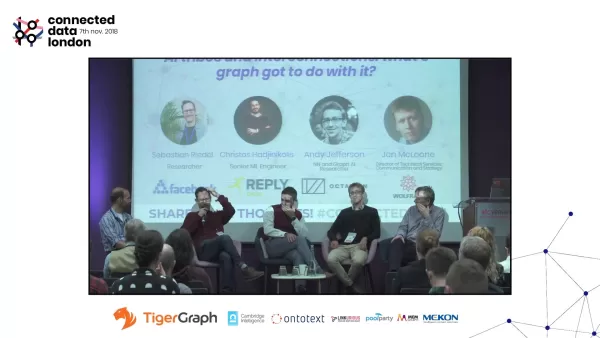
HomeHow AI Tribes and Network Connections Intersect
The field of Artificial Intelligence (AI) is characterized by diverse, specialized communities often called 'AI tribes,' each concentrating on distinct methodologies. Grasping these tribes, their interactions, and how graph technologies can link them is vital for navigating modern AI's complexity. This article explores these AI tribes and examines the crucial role graph-based approaches play in connecting and analyzing them.
Key Points
Identifying the key 'tribes' within AI, such as Connectionists, Symbolists, and Bayesians.
Examining how these different AI communities interact, collaborate, and sometimes diverge.
The growing relevance of graph databases and analytics in contemporary AI systems.
How graph technology uncovers hidden relationships and insights within intricate AI ecosystems.
The function of knowledge graphs in merging prior knowledge with data-driven machine learning.
Defining AI Tribes and Their Significance
What are AI Tribes?
In AI, 'tribes' refer to distinct schools of thought that champion specific methodologies, algorithms, or philosophies. These communities develop unique approaches to solving problems, handling data, and building models. Recognizing these tribes helps map the diverse landscape of AI research and application.
Each tribe typically favors its own tools, techniques, and theoretical foundations. While this fosters deep expertise, it can also create intellectual silos. Acknowledging these separate communities is the first step toward encouraging cross-disciplinary collaboration and innovation.

Several prominent AI tribes are commonly recognized:
- Connectionists: Focused on neural networks and deep learning, they model systems after the brain's interconnected nodes, utilizing techniques like backpropagation, CNNs, and RNNs to learn from data.
- Symbolists: Rooted in symbolic AI, this group prioritizes explicit knowledge representation and logical reasoning using tools like ontologies, rules, and knowledge graphs, as seen in expert systems.
- Bayesians: This tribe employs Bayesian statistics for probabilistic reasoning, updating beliefs by combining prior knowledge with new data through Bayesian networks and Gaussian processes.
- Evolutionaries: Inspired by natural selection, they use genetic algorithms and evolutionary strategies to optimize systems through adaptation and mutation.
- Analogizers: Specialists in analogical reasoning, they solve new problems by drawing parallels and transferring insights from known, similar situations.
Each tribe contributes a valuable perspective to AI. The field advances most effectively by leveraging their combined strengths through collaboration.
The Importance of Understanding AI Tribes
Understanding these different AI communities provides significant advantages for practitioners and organizations:
- Targeted Problem-Solving: Different tribes excel at different challenges. Knowing their strengths allows for selecting the optimal approach—neural networks for image recognition, for instance, or symbolic reasoning for logic-intensive tasks.
- Driving Innovation: Collaboration between tribes sparks innovation. Hybrid systems, like neural networks enhanced with knowledge graphs, often outperform single-method solutions.
- Mitigating Bias: Each methodological approach carries inherent assumptions and limitations. A multi-tribe perspective helps identify and counteract these biases, promoting more robust and fair AI systems.
- Strategic Resource Allocation: Organizations can direct investments, hiring, and research more effectively by understanding which tribal expertise aligns with their goals.
- Accelerating Advancement: Breaking down silos and sharing knowledge across tribes speeds up overall progress, as researchers build on each other's breakthroughs and avoid repeated pitfalls.
Ultimately, appreciating this diversity and fostering connections between tribes is key to unlocking AI's full potential.
Graph Technology: Bridging the Gaps Between AI Tribes
The Role of Graph Databases in AI
Graph databases are uniquely suited to connect different AI tribes by modeling complex relationships intuitively. Their focus on connections between data points, rather than just the data itself, makes them ideal for mapping the interdependencies within and between AI communities.
Their bridging role includes:
- Unified Knowledge Representation: Graphs provide a structure that is both human-understandable and machine-readable, perfect for merging symbolic knowledge with data-driven insights from other tribes.
- Relationship Discovery: They excel at revealing hidden patterns and influential connections within networks, shedding light on how different AI approaches and communities influence one another.
- Enhanced Reasoning: Graphs support inference, allowing systems to derive new knowledge, which is useful for combining symbolic logic with Bayesian probability.
- Seamless Data Integration: They can consolidate diverse data formats and sources, creating a unified view from the varied outputs of different AI methodologies.
- Scalability for Complex Systems: Modern graph databases handle massive, interconnected datasets efficiently, which is crucial for analyzing large-scale AI ecosystems.
Technologies like Neo4j, Amazon Neptune, and TigerGraph offer powerful platforms for these tasks, enabling practitioners to build more integrated and intelligent AI systems.
Graph Analytics and Their Application to AI Interconnections
Graph analytics involves examining the structures and relationships within a graph to extract insights. Applied to AI tribes, it helps quantify and visualize how these groups interact, collaborate, and influence the broader field.
Key analytical techniques include:
- Centrality Measures: Identify the most influential tribes or researchers (nodes) within the network, highlighting key connectors or thought leaders.
- Community Detection: Uncovers clusters of tightly connected tribes, revealing natural collaboration groups or intellectual sub-fields.
- Pathfinding: Maps the shortest connections between tribes, showing how ideas or influence might flow through the network.
- Link Prediction: Forecasts potential future collaborations between tribes based on existing network patterns.
Using tools like Gephi, NetworkX, or GraphFrames, these analyses can identify bottlenecks, gatekeepers, and opportunities for fostering a more collaborative and innovative AI ecosystem.
Knowledge Graphs: Integrating Prior Knowledge into AI Models
Knowledge graphs are specialized graphs that semantically encode facts, concepts, and relationships. They act as a bridge, integrating human expertise and prior knowledge into machine learning models to improve their accuracy, robustness, and explainability.
Their integrative functions are:
- Semantic Context: They store data as meaningful entities and relationships, allowing AI systems to understand context rather than just process patterns.
- Logical Inference: They enable reasoning; for example, knowing "A is a type of B" and "B is a type of C" allows the system to infer "A is a type of C."
- Explainable AI: The reasoning paths within a knowledge graph can trace and justify an AI system's decisions, increasing transparency.
- Data Enrichment: They augment raw data with contextual information, giving models a richer, more complete foundation for learning.
- Facilitating Transfer Learning: They encode similarities between domains, allowing knowledge from one area to bootstrap learning in another.
Using standards like RDF and OWL, and leveraging public resources like Wikidata, knowledge graphs make AI systems more knowledgeable and reliable.
How to Leverage Graph Technologies for AI Tribe Analysis
Step-by-Step Guide to Analyzing AI Tribe Interconnections
Analyzing the connections between AI tribes with graph technology involves a systematic process:
- Data Collection: Gather information on tribes, researchers, publications, collaborations, and affiliations from academic databases, conferences, and online platforms.
- Data Modeling: Design a graph schema. Represent tribes, researchers, or institutions as nodes. Use edges to represent relationships like co-authorship, citation, or shared methodology.
- Graph Database Implementation: Populate a graph database (e.g., Neo4j) with your modeled data, ensuring accurate representation of entities and connections.
- Graph Analytics Application: Run analyses to calculate centrality, detect communities, find paths, and predict links within your network of AI tribes.
- Visualization: Use tools like Gephi or Cytoscape to create visual maps of the network, highlighting key clusters, influencers, and connection pathways.
- Interpretation: Analyze the results to understand the network's dynamics, identify collaboration opportunities, and uncover gaps or bottlenecks in knowledge flow.
For example, to study the Natural Language Processing (NLP) community, you could model researchers as nodes and co-authorship as edges. Graph analysis would then reveal central figures, research clusters (e.g., machine translation vs. sentiment analysis), and how ideas propagate, providing valuable insights for engagement and collaboration.
Pros and Cons of Utilizing AI Tribes
Pros
Deep Specialization: Each tribe develops profound expertise in its specific AI domain.
Innovative Hybrids: Inter-tribe collaboration can produce novel, powerful systems that combine multiple approaches.
Balanced Perspective: Leveraging multiple tribes helps counterbalance the biases inherent in any single methodology.
Strategic Focus: Enables organizations to strategically align resources and talent with the most relevant expertise.
Faster Innovation: Cross-pollination of ideas across tribes accelerates breakthroughs and avoids redundant effort.
Cons
Intellectual Silos: Tribes may operate independently, limiting the exchange of ideas and techniques.
Inherent Methodological Bias: Each approach has built-in assumptions that can limit problem-solving if used in isolation.
Integration Complexity: Technically merging different AI paradigms (e.g., neural nets with symbolic rules) can be challenging.
Resource Demands: Supporting and understanding a wide range of specialized skills requires significant investment.
Resistance to New Ideas: Community members may be reluctant to adopt approaches outside their traditional expertise.
Frequently Asked Questions
What are the main AI tribes?
The primary AI tribes are Connectionists (neural networks, deep learning), Symbolists (knowledge representation, logic), Bayesians (probabilistic reasoning), Evolutionaries (genetic algorithms), and Analogizers (analogical reasoning).
Why is it important to understand AI tribes?
It enables more effective problem-solving by applying the right tool for the job, fosters innovation through cross-disciplinary collaboration, helps mitigate methodological biases, guides efficient resource allocation, and accelerates overall progress in the field.
How can graph databases help bridge the gaps between AI tribes?
Graph databases bridge gaps by providing a flexible framework to represent and analyze complex relationships, facilitating knowledge integration, uncovering hidden connections, enabling sophisticated reasoning, and scaling to handle intricate AI ecosystems.
What is the role of knowledge graphs in AI?
Knowledge graphs integrate structured human knowledge into AI models. They enhance model performance by providing context, supporting logical inference, improving explainability, enriching training data, and enabling effective transfer of knowledge between domains.
What are graph analytics, and how can they be used to analyze AI interconnections?
Graph analytics is the study of relationships within networked data. It analyzes AI interconnections by identifying key influencers (centrality), mapping collaborative clusters (community detection), tracing idea flow (pathfinding), and predicting future collaborations (link prediction).
What is deep learning?
Deep learning is a subset of machine learning based on artificial neural networks with multiple layers. It excels at automatically learning features from vast amounts of raw data, making it highly effective for complex tasks like image and speech recognition, and natural language processing, without the need for manual feature engineering.
Related Questions
How can AI and graph database technologies come together?
AI and graph databases form a synergistic partnership. Graph databases provide an ideal, interconnected data structure for AI algorithms to operate on, revealing patterns in relationships. Conversely, AI can automate and enhance graph tasks like data mapping, pattern discovery, and predictive analytics. Together, they enable powerful, real-time insights from complex, relational data.
Related article
 Tencent Accelerates AI Push With Doubled-Size Hunyuan Hy4, Morgan Stanley Lifts Target to HKD 550
Tencent has officially unveiled the preview of HuanYuan Hy4, accelerating its timeline ahead of Morgan Stanley’s September forecast and fulfilling the company’s Q2 earnings commitment to launch the model within the year. Since appointing Yao Shunyu a
Pearson’s Dave Treat: AI Should Guide Learning, Not Cheat
Pearson’s Chief Technology Officer, Dave TreatOn academic integrity, AI adoption, and the critical skills that matter as agentic AI transforms educationDave Treat joined Pearson nearly two years ago as Chief Technology Officer, later assuming the rol
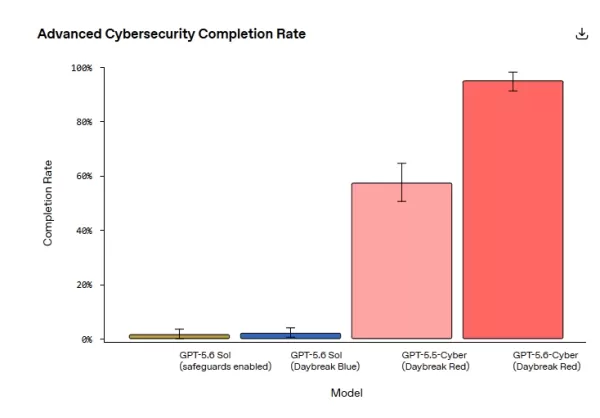
OpenAI Launches GPT-5.6-Cyber, Boosting Zero-Day Detection with AI Automation
OpenAI has expanded its Daybreak cybersecurity initiative, introducing a two-tier access system and launching GPT-5.6-Cyber, a model purpose-built for security operations. This move addresses the growing reality that threat actors are leveraging AI t
Related Special Topic Recommendations
code
Tencent Accelerates AI Push With Doubled-Size Hunyuan Hy4, Morgan Stanley Lifts Target to HKD 550
Tencent has officially unveiled the preview of HuanYuan Hy4, accelerating its timeline ahead of Morgan Stanley’s September forecast and fulfilling the company’s Q2 earnings commitment to launch the model within the year. Since appointing Yao Shunyu a
Pearson’s Dave Treat: AI Should Guide Learning, Not Cheat
Pearson’s Chief Technology Officer, Dave TreatOn academic integrity, AI adoption, and the critical skills that matter as agentic AI transforms educationDave Treat joined Pearson nearly two years ago as Chief Technology Officer, later assuming the rol
OpenAI Launches GPT-5.6-Cyber, Boosting Zero-Day Detection with AI Automation
OpenAI has expanded its Daybreak cybersecurity initiative, introducing a two-tier access system and launching GPT-5.6-Cyber, a model purpose-built for security operations. This move addresses the growing reality that threat actors are leveraging AI t
Related Special Topic Recommendations
code
 Best AI Coding Chatbots: Debug Python, JS, and SQL in One Place
2026 Latest Best Top-Rated AI Coding Chatbots Curated for Developers! Experience powerful game-changing tools that help you debug Python, JS, and SQL issues quickly. Get a free vs paid comparison along with real-world tests and detailed rankings to find the perfect fit for boosting your coding productivity. Try XIX.AI today to unlock your AI edge! Explore now.
 12 tools
 xix.ai
Prompt
AI Prompt Versioning Platforms for Reusable Claude and ChatGPT Playbooks
xix.ai
Prompt
AI Prompt Versioning Platforms for Reusable Claude and ChatGPT Playbooks
2026 Latest Best Top-rated AI Prompt Versioning Platforms for Reusable Playbooks are here on XIX.AI! Our curated list includes powerful game-changing tools that help you keep track of all prompts, test variations efficiently, and boost productivity across writing, content creation, and more. Get a free vs paid comparison along with real-world tests and updated rankings weekly. Explore now to discover your perfect tool for staying ahead in AI tasks!
9 tools
xix.ai
writing
Best AI Writing Assistants for Long Articles: Outline and Draft Faster
2026 Latest Best AI Writing Assistants for Long Articles: Outline and Draft Faster. XIX.AI curates the top-rated, must-try tools that offer powerful, game-changing support to boost writing efficiency significantly. You’ll find detailed free vs paid comparison, real-world tests, and updated rankings weekly. Explore now to Discover your perfect tool and Start creating today to Unlock your AI edge.
8 tools
xix.ai
Education and Learning
ChatGPT Study Tools for Exam Revision, Flashcards, and Homework Explanations
2026 Latest Best ChatGPT Study Tools for Exam Revision, Flashcards, and Homework Explanations! XIX.AI has curated a top-rated list of powerful game-changing tools designed to boost your productivity. These must-try solutions offer free vs paid comparison, real-world tests, and detailed rankings to help you find the perfect option for efficient exam preparation and homework support. Explore now to unlock your AI edge!
10 tools
xix.ai
Education and Learning
AI Study Planner Tools for Exam Preparation
2026 Latest Best Top-Rated AI Study Planner Tools for Exam Preparation are here on XIX.AI! This curated collection features powerful, game-changing tools that help you streamline your review process, boost focus, and create personalized study schedules. We conduct real-world tests to determine the top options, offering a free vs paid comparison along with weekly updated rankings. Must-try solutions designed to maximize your productivity and help you ace every exam. Explore now to find your perfect tool!
14 tools
xix.ai
SEO
Best AI Keyword Gap Tools for Organic Growth
2026 Latest Best Top-rated AI Keyword Gap Tools for Organic Growth! XIX.AI has carefully curated a powerful, game-changing collection of the best tools available, featuring weekly updated rankings and real-world tests. You can find a detailed free vs paid comparison to help you choose the perfect option that boosts your content creation efficiency and unlocks your AI edge. Explore now!
8 tools
xix.ai

 Comments (0)
0/500
Comments (0)
0/500
The field of Artificial Intelligence (AI) is characterized by diverse, specialized communities often called 'AI tribes,' each concentrating on distinct methodologies. Grasping these tribes, their interactions, and how graph technologies can link them is vital for navigating modern AI's complexity. This article explores these AI tribes and examines the crucial role graph-based approaches play in connecting and analyzing them.
Key Points
Identifying the key 'tribes' within AI, such as Connectionists, Symbolists, and Bayesians.
Examining how these different AI communities interact, collaborate, and sometimes diverge.
The growing relevance of graph databases and analytics in contemporary AI systems.
How graph technology uncovers hidden relationships and insights within intricate AI ecosystems.
The function of knowledge graphs in merging prior knowledge with data-driven machine learning.
Defining AI Tribes and Their Significance
What are AI Tribes?
In AI, 'tribes' refer to distinct schools of thought that champion specific methodologies, algorithms, or philosophies. These communities develop unique approaches to solving problems, handling data, and building models. Recognizing these tribes helps map the diverse landscape of AI research and application.
Each tribe typically favors its own tools, techniques, and theoretical foundations. While this fosters deep expertise, it can also create intellectual silos. Acknowledging these separate communities is the first step toward encouraging cross-disciplinary collaboration and innovation.
Several prominent AI tribes are commonly recognized:
- Connectionists: Focused on neural networks and deep learning, they model systems after the brain's interconnected nodes, utilizing techniques like backpropagation, CNNs, and RNNs to learn from data.
- Symbolists: Rooted in symbolic AI, this group prioritizes explicit knowledge representation and logical reasoning using tools like ontologies, rules, and knowledge graphs, as seen in expert systems.
- Bayesians: This tribe employs Bayesian statistics for probabilistic reasoning, updating beliefs by combining prior knowledge with new data through Bayesian networks and Gaussian processes.
- Evolutionaries: Inspired by natural selection, they use genetic algorithms and evolutionary strategies to optimize systems through adaptation and mutation.
- Analogizers: Specialists in analogical reasoning, they solve new problems by drawing parallels and transferring insights from known, similar situations.
Each tribe contributes a valuable perspective to AI. The field advances most effectively by leveraging their combined strengths through collaboration.
The Importance of Understanding AI Tribes
Understanding these different AI communities provides significant advantages for practitioners and organizations:
- Targeted Problem-Solving: Different tribes excel at different challenges. Knowing their strengths allows for selecting the optimal approach—neural networks for image recognition, for instance, or symbolic reasoning for logic-intensive tasks.
- Driving Innovation: Collaboration between tribes sparks innovation. Hybrid systems, like neural networks enhanced with knowledge graphs, often outperform single-method solutions.
- Mitigating Bias: Each methodological approach carries inherent assumptions and limitations. A multi-tribe perspective helps identify and counteract these biases, promoting more robust and fair AI systems.
- Strategic Resource Allocation: Organizations can direct investments, hiring, and research more effectively by understanding which tribal expertise aligns with their goals.
- Accelerating Advancement: Breaking down silos and sharing knowledge across tribes speeds up overall progress, as researchers build on each other's breakthroughs and avoid repeated pitfalls.
Ultimately, appreciating this diversity and fostering connections between tribes is key to unlocking AI's full potential.
Graph Technology: Bridging the Gaps Between AI Tribes
The Role of Graph Databases in AI
Graph databases are uniquely suited to connect different AI tribes by modeling complex relationships intuitively. Their focus on connections between data points, rather than just the data itself, makes them ideal for mapping the interdependencies within and between AI communities.
Their bridging role includes:
- Unified Knowledge Representation: Graphs provide a structure that is both human-understandable and machine-readable, perfect for merging symbolic knowledge with data-driven insights from other tribes.
- Relationship Discovery: They excel at revealing hidden patterns and influential connections within networks, shedding light on how different AI approaches and communities influence one another.
- Enhanced Reasoning: Graphs support inference, allowing systems to derive new knowledge, which is useful for combining symbolic logic with Bayesian probability.
- Seamless Data Integration: They can consolidate diverse data formats and sources, creating a unified view from the varied outputs of different AI methodologies.
- Scalability for Complex Systems: Modern graph databases handle massive, interconnected datasets efficiently, which is crucial for analyzing large-scale AI ecosystems.
Technologies like Neo4j, Amazon Neptune, and TigerGraph offer powerful platforms for these tasks, enabling practitioners to build more integrated and intelligent AI systems.
Graph Analytics and Their Application to AI Interconnections
Graph analytics involves examining the structures and relationships within a graph to extract insights. Applied to AI tribes, it helps quantify and visualize how these groups interact, collaborate, and influence the broader field.
Key analytical techniques include:
- Centrality Measures: Identify the most influential tribes or researchers (nodes) within the network, highlighting key connectors or thought leaders.
- Community Detection: Uncovers clusters of tightly connected tribes, revealing natural collaboration groups or intellectual sub-fields.
- Pathfinding: Maps the shortest connections between tribes, showing how ideas or influence might flow through the network.
- Link Prediction: Forecasts potential future collaborations between tribes based on existing network patterns.
Using tools like Gephi, NetworkX, or GraphFrames, these analyses can identify bottlenecks, gatekeepers, and opportunities for fostering a more collaborative and innovative AI ecosystem.
Knowledge Graphs: Integrating Prior Knowledge into AI Models
Knowledge graphs are specialized graphs that semantically encode facts, concepts, and relationships. They act as a bridge, integrating human expertise and prior knowledge into machine learning models to improve their accuracy, robustness, and explainability.
Their integrative functions are:
- Semantic Context: They store data as meaningful entities and relationships, allowing AI systems to understand context rather than just process patterns.
- Logical Inference: They enable reasoning; for example, knowing "A is a type of B" and "B is a type of C" allows the system to infer "A is a type of C."
- Explainable AI: The reasoning paths within a knowledge graph can trace and justify an AI system's decisions, increasing transparency.
- Data Enrichment: They augment raw data with contextual information, giving models a richer, more complete foundation for learning.
- Facilitating Transfer Learning: They encode similarities between domains, allowing knowledge from one area to bootstrap learning in another.
Using standards like RDF and OWL, and leveraging public resources like Wikidata, knowledge graphs make AI systems more knowledgeable and reliable.
How to Leverage Graph Technologies for AI Tribe Analysis
Step-by-Step Guide to Analyzing AI Tribe Interconnections
Analyzing the connections between AI tribes with graph technology involves a systematic process:
- Data Collection: Gather information on tribes, researchers, publications, collaborations, and affiliations from academic databases, conferences, and online platforms.
- Data Modeling: Design a graph schema. Represent tribes, researchers, or institutions as nodes. Use edges to represent relationships like co-authorship, citation, or shared methodology.
- Graph Database Implementation: Populate a graph database (e.g., Neo4j) with your modeled data, ensuring accurate representation of entities and connections.
- Graph Analytics Application: Run analyses to calculate centrality, detect communities, find paths, and predict links within your network of AI tribes.
- Visualization: Use tools like Gephi or Cytoscape to create visual maps of the network, highlighting key clusters, influencers, and connection pathways.
- Interpretation: Analyze the results to understand the network's dynamics, identify collaboration opportunities, and uncover gaps or bottlenecks in knowledge flow.
For example, to study the Natural Language Processing (NLP) community, you could model researchers as nodes and co-authorship as edges. Graph analysis would then reveal central figures, research clusters (e.g., machine translation vs. sentiment analysis), and how ideas propagate, providing valuable insights for engagement and collaboration.
Pros and Cons of Utilizing AI Tribes
Pros
Deep Specialization: Each tribe develops profound expertise in its specific AI domain.
Innovative Hybrids: Inter-tribe collaboration can produce novel, powerful systems that combine multiple approaches.
Balanced Perspective: Leveraging multiple tribes helps counterbalance the biases inherent in any single methodology.
Strategic Focus: Enables organizations to strategically align resources and talent with the most relevant expertise.
Faster Innovation: Cross-pollination of ideas across tribes accelerates breakthroughs and avoids redundant effort.
Cons
Intellectual Silos: Tribes may operate independently, limiting the exchange of ideas and techniques.
Inherent Methodological Bias: Each approach has built-in assumptions that can limit problem-solving if used in isolation.
Integration Complexity: Technically merging different AI paradigms (e.g., neural nets with symbolic rules) can be challenging.
Resource Demands: Supporting and understanding a wide range of specialized skills requires significant investment.
Resistance to New Ideas: Community members may be reluctant to adopt approaches outside their traditional expertise.
Frequently Asked Questions
What are the main AI tribes?
The primary AI tribes are Connectionists (neural networks, deep learning), Symbolists (knowledge representation, logic), Bayesians (probabilistic reasoning), Evolutionaries (genetic algorithms), and Analogizers (analogical reasoning).
Why is it important to understand AI tribes?
It enables more effective problem-solving by applying the right tool for the job, fosters innovation through cross-disciplinary collaboration, helps mitigate methodological biases, guides efficient resource allocation, and accelerates overall progress in the field.
How can graph databases help bridge the gaps between AI tribes?
Graph databases bridge gaps by providing a flexible framework to represent and analyze complex relationships, facilitating knowledge integration, uncovering hidden connections, enabling sophisticated reasoning, and scaling to handle intricate AI ecosystems.
What is the role of knowledge graphs in AI?
Knowledge graphs integrate structured human knowledge into AI models. They enhance model performance by providing context, supporting logical inference, improving explainability, enriching training data, and enabling effective transfer of knowledge between domains.
What are graph analytics, and how can they be used to analyze AI interconnections?
Graph analytics is the study of relationships within networked data. It analyzes AI interconnections by identifying key influencers (centrality), mapping collaborative clusters (community detection), tracing idea flow (pathfinding), and predicting future collaborations (link prediction).
What is deep learning?
Deep learning is a subset of machine learning based on artificial neural networks with multiple layers. It excels at automatically learning features from vast amounts of raw data, making it highly effective for complex tasks like image and speech recognition, and natural language processing, without the need for manual feature engineering.
Related Questions
How can AI and graph database technologies come together?
AI and graph databases form a synergistic partnership. Graph databases provide an ideal, interconnected data structure for AI algorithms to operate on, revealing patterns in relationships. Conversely, AI can automate and enhance graph tasks like data mapping, pattern discovery, and predictive analytics. Together, they enable powerful, real-time insights from complex, relational data.








 Tencent Accelerates AI Push With Doubled-Size Hunyuan Hy4, Morgan Stanley Lifts Target to HKD 550
Tencent has officially unveiled the preview of HuanYuan Hy4, accelerating its timeline ahead of Morgan Stanley’s September forecast and fulfilling the company’s Q2 earnings commitment to launch the model within the year. Since appointing Yao Shunyu a
Tencent Accelerates AI Push With Doubled-Size Hunyuan Hy4, Morgan Stanley Lifts Target to HKD 550
Tencent has officially unveiled the preview of HuanYuan Hy4, accelerating its timeline ahead of Morgan Stanley’s September forecast and fulfilling the company’s Q2 earnings commitment to launch the model within the year. Since appointing Yao Shunyu a
 Pearson’s Dave Treat: AI Should Guide Learning, Not Cheat
Pearson’s Chief Technology Officer, Dave TreatOn academic integrity, AI adoption, and the critical skills that matter as agentic AI transforms educationDave Treat joined Pearson nearly two years ago as Chief Technology Officer, later assuming the rol
Pearson’s Dave Treat: AI Should Guide Learning, Not Cheat
Pearson’s Chief Technology Officer, Dave TreatOn academic integrity, AI adoption, and the critical skills that matter as agentic AI transforms educationDave Treat joined Pearson nearly two years ago as Chief Technology Officer, later assuming the rol
 OpenAI Launches GPT-5.6-Cyber, Boosting Zero-Day Detection with AI Automation
OpenAI has expanded its Daybreak cybersecurity initiative, introducing a two-tier access system and launching GPT-5.6-Cyber, a model purpose-built for security operations. This move addresses the growing reality that threat actors are leveraging AI t
OpenAI Launches GPT-5.6-Cyber, Boosting Zero-Day Detection with AI Automation
OpenAI has expanded its Daybreak cybersecurity initiative, introducing a two-tier access system and launching GPT-5.6-Cyber, a model purpose-built for security operations. This move addresses the growing reality that threat actors are leveraging AI t

2026 Latest Best Top-Rated AI Coding Chatbots Curated for Developers! Experience powerful game-changing tools that help you debug Python, JS, and SQL issues quickly. Get a free vs paid comparison along with real-world tests and detailed rankings to find the perfect fit for boosting your coding productivity. Try XIX.AI today to unlock your AI edge! Explore now.
12 tools
xix.ai

2026 Latest Best Top-rated AI Prompt Versioning Platforms for Reusable Playbooks are here on XIX.AI! Our curated list includes powerful game-changing tools that help you keep track of all prompts, test variations efficiently, and boost productivity across writing, content creation, and more. Get a free vs paid comparison along with real-world tests and updated rankings weekly. Explore now to discover your perfect tool for staying ahead in AI tasks!
9 tools
xix.ai

2026 Latest Best AI Writing Assistants for Long Articles: Outline and Draft Faster. XIX.AI curates the top-rated, must-try tools that offer powerful, game-changing support to boost writing efficiency significantly. You’ll find detailed free vs paid comparison, real-world tests, and updated rankings weekly. Explore now to Discover your perfect tool and Start creating today to Unlock your AI edge.
8 tools
xix.ai

2026 Latest Best ChatGPT Study Tools for Exam Revision, Flashcards, and Homework Explanations! XIX.AI has curated a top-rated list of powerful game-changing tools designed to boost your productivity. These must-try solutions offer free vs paid comparison, real-world tests, and detailed rankings to help you find the perfect option for efficient exam preparation and homework support. Explore now to unlock your AI edge!
10 tools
xix.ai

2026 Latest Best Top-Rated AI Study Planner Tools for Exam Preparation are here on XIX.AI! This curated collection features powerful, game-changing tools that help you streamline your review process, boost focus, and create personalized study schedules. We conduct real-world tests to determine the top options, offering a free vs paid comparison along with weekly updated rankings. Must-try solutions designed to maximize your productivity and help you ace every exam. Explore now to find your perfect tool!
14 tools
xix.ai

2026 Latest Best Top-rated AI Keyword Gap Tools for Organic Growth! XIX.AI has carefully curated a powerful, game-changing collection of the best tools available, featuring weekly updated rankings and real-world tests. You can find a detailed free vs paid comparison to help you choose the perfect option that boosts your content creation efficiency and unlocks your AI edge. Explore now!
8 tools
xix.ai












