


 Home
HomeAI Makes Hollywood-Style Editing Accessible: Upload Clips, Chat to Create Viral Videos.
As AI shifts from simply "writing code" to truly "understanding the vibe," a novel method of video creation known as Vibe Editing is quickly gaining traction across social media and creator circles. While "Vibe Coding" helps programmers write code using natural language, Vibe Editing is built for a broader audience: coding novices, office workers, and social media users.
It empowers anyone to produce videos without learning complex editing software, dealing with timelines, or mastering transition effects. Simply upload a collection of random travel snaps, party clips, or selfies, then describe your vision in plain, conversational language. The AI takes over, handling smart cuts, mood-based color grading, music synchronization, B-roll insertion, and pace control—ultimately delivering a polished short video ready for platforms like WeChat Moments, Douyin, Xiaohongshu, and Instagram.
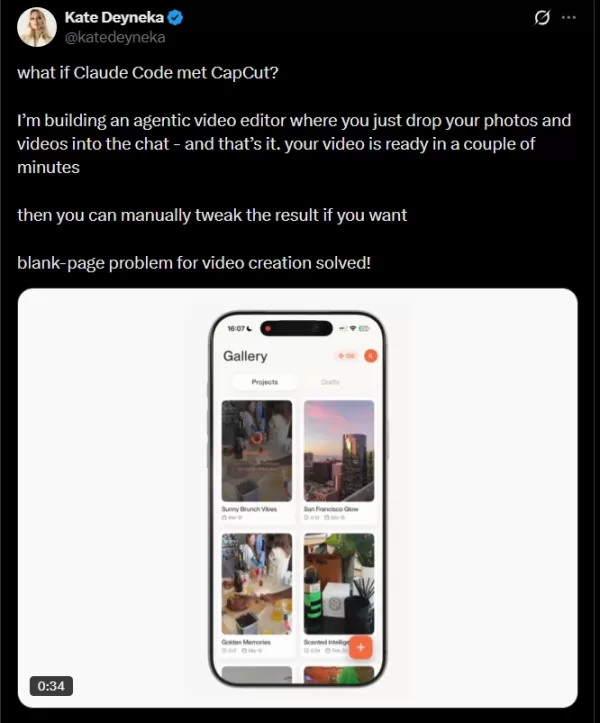
What makes Vibe Editing so powerful?
Traditional video editing presents a steep learning curve for non-professionals. Tools like Premiere and CapCut demand mastery of intricate operations, leaving many people with countless unedited clips languishing in their camera rolls. While some AI tools offer "auto-highlight reels" or "subtitle generation," they often fail to capture the specific emotional tone—whether warm and healing, cinematic, fast-paced and funny, or retro Instagram-style—that users desire. Vibe Editing directly tackles the twin challenges of "facing a blank page" and "controlling the style," returning creative control to the simplicity of human language.
Core workflow: Direct through conversation, and the AI grasps your "vibe"
The latest popular Vibe Editing tools typically follow this straightforward process:
Zero-friction upload: Simply drag and drop photos, videos, or even live-stream recordings.
Natural language commands: Type instructions like, "Create a warm, healing travel vlog with a film filter and lo-fi music," "Highlight the funny moments with my best friend in a fast-paced edit," or "Give it a cinematic slow-motion look with a dreamy soundtrack." The AI interprets the desired emotion, rhythm, and visual style.
Real-time iteration: Not satisfied? Keep chatting. Request to "slow down the opening," "switch to a more upbeat track," or "add some text overlays." The AI adjusts instantly.
One-click export: Generate a finished vertical or horizontal short video complete with subtitles, transitions, and sound effects, ready to publish on social platforms.
This "conversational directing" model drastically lowers the barrier to creation. Many users report, "What used to take me 2 hours to edit now takes just 5 minutes."
Key tools and industry movements
Descript's AI Agent pioneered the Vibe Editing feature, automating tasks like audio cleanup, filler word removal, B-roll addition, and even eye-contact correction. It sparked intense discussion among creators, being dubbed the "Cursor of the video world."
New platforms such as Topview, Mobbi AI, and editwithvibe.com focus on no-code, browser-based Vibe Editing. They support dynamic video generation akin to Remotion, targeting marketing, product demos, and social content.
Meta quietly launched its Vibes feature in 2025, supporting generation from scratch or remixing existing footage. It integrates advanced AI models with a strong emphasis on short-form video for social sharing.
Independent developer communities are also buzzing with similar projects, like the open-source Flow AI editor and various agentic video tools, all racing toward the goal of "editing everything through chat."
The community consensus is clear: whoever truly masters the "vibe" will capture the next generation of content creation tools.
AIbase comments
Related article
 Stripe to Acquire OpenRouter as AI Model Routing Gains Momentum
Stripe has agreed to acquire OpenRouter, an AI model-routing platform that gives developers access to hundreds of models through a single interface. The deal adds model selection and routing to Stripe’s existing work around AI usage and token-based b
Former OpenAI Researcher Barrett Zoph Returns to Google to Support Gemini Development
Barret Zoph, who previously abruptly left and joined OpenAI due to a disagreement with Thinking Machines Lab CEO Miriam Mularati, has once again changed employers. Alphabet's Google announced that Zoph will return as Vice President of Research, bring
How Recursive Intelligence Raised $335M at $4B Valuation in 4 Months
The co-founders of startup Ricursive Intelligence seemed destined to be co-founders.Anna Goldie, CEO, and Azalia Mirhoseini, CTO, are so well-known in the AI community that they were among those AI engineers who “got those weird emails from Zuckerber
Related Special Topic Recommendations
Design & Art
Stripe to Acquire OpenRouter as AI Model Routing Gains Momentum
Stripe has agreed to acquire OpenRouter, an AI model-routing platform that gives developers access to hundreds of models through a single interface. The deal adds model selection and routing to Stripe’s existing work around AI usage and token-based b
Former OpenAI Researcher Barrett Zoph Returns to Google to Support Gemini Development
Barret Zoph, who previously abruptly left and joined OpenAI due to a disagreement with Thinking Machines Lab CEO Miriam Mularati, has once again changed employers. Alphabet's Google announced that Zoph will return as Vice President of Research, bring
How Recursive Intelligence Raised $335M at $4B Valuation in 4 Months
The co-founders of startup Ricursive Intelligence seemed destined to be co-founders.Anna Goldie, CEO, and Azalia Mirhoseini, CTO, are so well-known in the AI community that they were among those AI engineers who “got those weird emails from Zuckerber
Related Special Topic Recommendations
Design & Art
 Top AI Illustration Tools: Create Editorial Scenes and Cover Art Faster
2026 Latest Top-rated AI Illustration Tools: Our curated list features the best powerfully designed tools for creating stunning editorial scenes and eye-catching cover art quickly. Each option has gone through rigorous real-world tests, offering a free vs paid comparison to help you find the perfect match for your workflow. Try these must-try solutions today to unlock your AI edge and boost your creative productivity. Explore now at XIX.AI.
 10 tools
 xix.ai
Education and Learning
Top AI Tutors for Exam Prep: Practice Math, Science, and English
xix.ai
Education and Learning
Top AI Tutors for Exam Prep: Practice Math, Science, and English
2026 Latest Top-Rated Best AI Tutors for Exam Prep are here on XIX.AI! Our curated list features powerful game-changing tools that offer free vs paid comparison, real-world tests, and weekly updated rankings. They help boost your writing efficiency, simplify complex topic learning, and unlock your academic potential. Explore now to Discover your perfect exam prep tool and Start creating today to Unlock your AI edge!
10 tools
xix.ai
Finance
AI Budget Planning Tools for Personal Money Management
2026 Latest Best Top-Rated AI Budget Planning Tools for Personal Money Management are here on XIX.AI! This curated collection features powerful, game-changing solutions that help you conduct real-world tests, understand spending habits, and create personalized plans to boost productivity. Enjoy a free vs paid comparison along with detailed rankings. Must-try tools designed to simplify money management and unlock your AI edge. Explore now!
11 tools
xix.ai
Health & Wellness
AI Sleep Tracking Assistants: Improve Recovery with Better Bedtime Habits
2026 Latest Best Top-Rated AI Sleep Tracking Assistants curated for ultimate recovery. This fully updated weekly guide features powerful tools that deliver real-world tests, free vs paid comparison, and detailed rankings to help you find the must-try solution that boosts sleep quality and supports better bedtime habits. Explore now at XIX.AI to Unlock your AI edge.
10 tools
xix.ai
Data Analysis
AI SQL Copilots for Product and Revenue Analytics
2026 Latest Best Top-Rated AI SQL Copilots for Product and Revenue Analytics! XIX.AI has curated a powerful, game-changing collection of must-try tools that undergo real-world tests through weekly updated rankings. These tools help users boost productivity significantly by accelerating data analysis, streamlining complex queries, and generating accurate insights to drive smarter business decisions. Explore now to Discover your perfect tool for unlocking your AI edge!
14 tools
xix.ai
Education and Learning
Best AI Homework Helpers That Teach: Learn Concepts, Not Just Answers
2026 Latest Best Top-Rated AI Homework Helpers That Teach Core Concepts Not Just Answers Powerful Tools for Students Must-Try Curated List Weekly Updated Free vs Paid Comparison Real-World Tests Accurate Rankings to Help You Unlock Your Full Learning Potential Explore now to Discover your perfect tool for smarter studying.
10 tools
xix.ai

 Comments (0)
0/500
Comments (0)
0/500
As AI shifts from simply "writing code" to truly "understanding the vibe," a novel method of video creation known as Vibe Editing is quickly gaining traction across social media and creator circles. While "Vibe Coding" helps programmers write code using natural language, Vibe Editing is built for a broader audience: coding novices, office workers, and social media users.
It empowers anyone to produce videos without learning complex editing software, dealing with timelines, or mastering transition effects. Simply upload a collection of random travel snaps, party clips, or selfies, then describe your vision in plain, conversational language. The AI takes over, handling smart cuts, mood-based color grading, music synchronization, B-roll insertion, and pace control—ultimately delivering a polished short video ready for platforms like WeChat Moments, Douyin, Xiaohongshu, and Instagram.
What makes Vibe Editing so powerful?
Traditional video editing presents a steep learning curve for non-professionals. Tools like Premiere and CapCut demand mastery of intricate operations, leaving many people with countless unedited clips languishing in their camera rolls. While some AI tools offer "auto-highlight reels" or "subtitle generation," they often fail to capture the specific emotional tone—whether warm and healing, cinematic, fast-paced and funny, or retro Instagram-style—that users desire. Vibe Editing directly tackles the twin challenges of "facing a blank page" and "controlling the style," returning creative control to the simplicity of human language.
Core workflow: Direct through conversation, and the AI grasps your "vibe"
The latest popular Vibe Editing tools typically follow this straightforward process:
Zero-friction upload: Simply drag and drop photos, videos, or even live-stream recordings.
Natural language commands: Type instructions like, "Create a warm, healing travel vlog with a film filter and lo-fi music," "Highlight the funny moments with my best friend in a fast-paced edit," or "Give it a cinematic slow-motion look with a dreamy soundtrack." The AI interprets the desired emotion, rhythm, and visual style.
Real-time iteration: Not satisfied? Keep chatting. Request to "slow down the opening," "switch to a more upbeat track," or "add some text overlays." The AI adjusts instantly.
One-click export: Generate a finished vertical or horizontal short video complete with subtitles, transitions, and sound effects, ready to publish on social platforms.
This "conversational directing" model drastically lowers the barrier to creation. Many users report, "What used to take me 2 hours to edit now takes just 5 minutes."
Key tools and industry movements
Descript's AI Agent pioneered the Vibe Editing feature, automating tasks like audio cleanup, filler word removal, B-roll addition, and even eye-contact correction. It sparked intense discussion among creators, being dubbed the "Cursor of the video world."
New platforms such as Topview, Mobbi AI, and editwithvibe.com focus on no-code, browser-based Vibe Editing. They support dynamic video generation akin to Remotion, targeting marketing, product demos, and social content.
Meta quietly launched its Vibes feature in 2025, supporting generation from scratch or remixing existing footage. It integrates advanced AI models with a strong emphasis on short-form video for social sharing.
Independent developer communities are also buzzing with similar projects, like the open-source Flow AI editor and various agentic video tools, all racing toward the goal of "editing everything through chat."
The community consensus is clear: whoever truly masters the "vibe" will capture the next generation of content creation tools.
AIbase comments








 Stripe to Acquire OpenRouter as AI Model Routing Gains Momentum
Stripe has agreed to acquire OpenRouter, an AI model-routing platform that gives developers access to hundreds of models through a single interface. The deal adds model selection and routing to Stripe’s existing work around AI usage and token-based b
Stripe to Acquire OpenRouter as AI Model Routing Gains Momentum
Stripe has agreed to acquire OpenRouter, an AI model-routing platform that gives developers access to hundreds of models through a single interface. The deal adds model selection and routing to Stripe’s existing work around AI usage and token-based b
 Former OpenAI Researcher Barrett Zoph Returns to Google to Support Gemini Development
Barret Zoph, who previously abruptly left and joined OpenAI due to a disagreement with Thinking Machines Lab CEO Miriam Mularati, has once again changed employers. Alphabet's Google announced that Zoph will return as Vice President of Research, bring
Former OpenAI Researcher Barrett Zoph Returns to Google to Support Gemini Development
Barret Zoph, who previously abruptly left and joined OpenAI due to a disagreement with Thinking Machines Lab CEO Miriam Mularati, has once again changed employers. Alphabet's Google announced that Zoph will return as Vice President of Research, bring
 How Recursive Intelligence Raised $335M at $4B Valuation in 4 Months
The co-founders of startup Ricursive Intelligence seemed destined to be co-founders.Anna Goldie, CEO, and Azalia Mirhoseini, CTO, are so well-known in the AI community that they were among those AI engineers who “got those weird emails from Zuckerber
How Recursive Intelligence Raised $335M at $4B Valuation in 4 Months
The co-founders of startup Ricursive Intelligence seemed destined to be co-founders.Anna Goldie, CEO, and Azalia Mirhoseini, CTO, are so well-known in the AI community that they were among those AI engineers who “got those weird emails from Zuckerber

2026 Latest Top-rated AI Illustration Tools: Our curated list features the best powerfully designed tools for creating stunning editorial scenes and eye-catching cover art quickly. Each option has gone through rigorous real-world tests, offering a free vs paid comparison to help you find the perfect match for your workflow. Try these must-try solutions today to unlock your AI edge and boost your creative productivity. Explore now at XIX.AI.
10 tools
xix.ai

2026 Latest Top-Rated Best AI Tutors for Exam Prep are here on XIX.AI! Our curated list features powerful game-changing tools that offer free vs paid comparison, real-world tests, and weekly updated rankings. They help boost your writing efficiency, simplify complex topic learning, and unlock your academic potential. Explore now to Discover your perfect exam prep tool and Start creating today to Unlock your AI edge!
10 tools
xix.ai

2026 Latest Best Top-Rated AI Budget Planning Tools for Personal Money Management are here on XIX.AI! This curated collection features powerful, game-changing solutions that help you conduct real-world tests, understand spending habits, and create personalized plans to boost productivity. Enjoy a free vs paid comparison along with detailed rankings. Must-try tools designed to simplify money management and unlock your AI edge. Explore now!
11 tools
xix.ai

2026 Latest Best Top-Rated AI Sleep Tracking Assistants curated for ultimate recovery. This fully updated weekly guide features powerful tools that deliver real-world tests, free vs paid comparison, and detailed rankings to help you find the must-try solution that boosts sleep quality and supports better bedtime habits. Explore now at XIX.AI to Unlock your AI edge.
10 tools
xix.ai

2026 Latest Best Top-Rated AI SQL Copilots for Product and Revenue Analytics! XIX.AI has curated a powerful, game-changing collection of must-try tools that undergo real-world tests through weekly updated rankings. These tools help users boost productivity significantly by accelerating data analysis, streamlining complex queries, and generating accurate insights to drive smarter business decisions. Explore now to Discover your perfect tool for unlocking your AI edge!
14 tools
xix.ai

2026 Latest Best Top-Rated AI Homework Helpers That Teach Core Concepts Not Just Answers Powerful Tools for Students Must-Try Curated List Weekly Updated Free vs Paid Comparison Real-World Tests Accurate Rankings to Help You Unlock Your Full Learning Potential Explore now to Discover your perfect tool for smarter studying.
10 tools
xix.ai












