


 Home
HomeAI in Email Marketing: 7 Strategies to Drive Revenue and Reduce Customer Turnover
Artificial intelligence (AI) is revolutionizing email marketing, unlocking new ways to increase revenue and minimize customer churn. This blog outlines seven essential strategies marketers can adopt to effectively leverage AI. Moving from personalized content to optimized send times, AI enables a more precise, streamlined, and impactful email marketing approach. Discover how to transition from traditional tactics to AI-driven methods for stronger outcomes and sustained growth in your campaigns. Implementing these approaches can deepen customer relationships, boost return on investment, and keep your business competitive in the digital marketplace. Let’s dive into the ways AI can redefine your email marketing.
Key Points
AI analyzes large datasets to generate deeply personalized email content.
AI fine-tunes send times to improve open and click-through rates.
AI predictive analytics pinpoint customers likely to churn for proactive retention.
AI-powered segmentation ensures email campaigns are highly relevant.
AI automates A/B testing to constantly enhance email performance.
AI boosts deliverability by filtering out inactive subscribers.
AI chatbots offer instant support, reducing churn and raising satisfaction.
Unlocking the Power of AI in Email Marketing
The Perception vs. Reality of AI
What do you picture when you hear “artificial intelligence”? Many imagine sentient machines from science fiction, but that’s far from today’s marketing reality. Actual AI involves using data and algorithms to make email campaigns more intelligent, effective, and profitable.
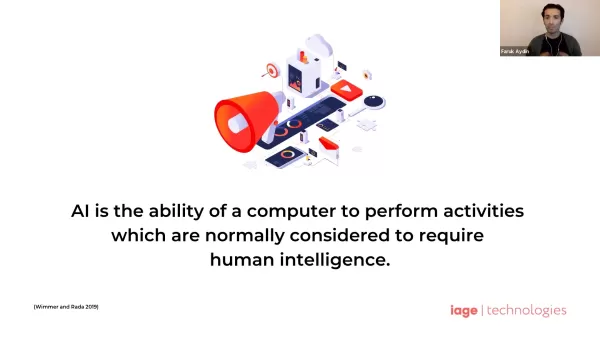
Clarifying these misconceptions helps us grasp AI’s practical applications. It serves as a powerful tool to enhance efficiency and deepen customer connections.
Defining AI: The Core of Modern Marketing
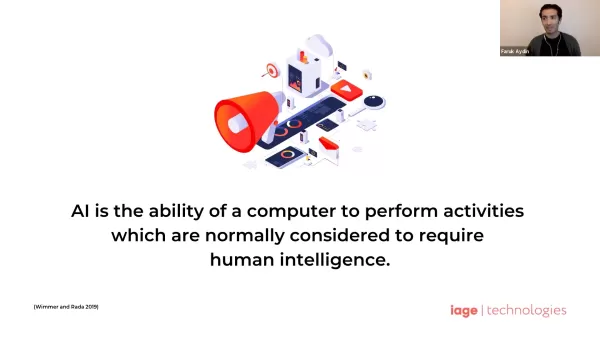
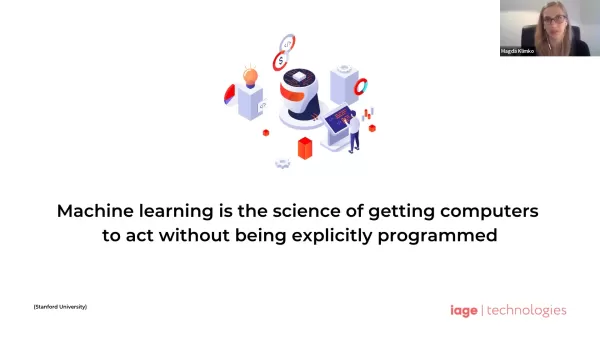
So what is artificial intelligence? Simply put, AI enables computers to undertake tasks that typically demand human intelligence—like learning, reasoning, and recognizing patterns. A major component is machine learning, where systems learn from data without direct programming. Essentially, AI converts raw data into useful insights and automated workflows. For marketers, it means using AI to interpret customer actions, forecast trends, and refine campaigns—not replacing human skill, but enhancing it and freeing up time for creative strategy.
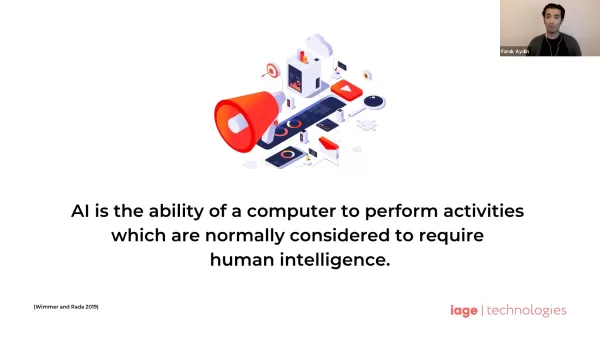
As the 20th-century philosopher Marshall McLuhan noted, technology acts as an extension of ourselves. Consider these examples:
- Cars extend our ability to travel beyond walking distance.
- Phones carry our voices across great distances.
Why Should Marketers Care About AI?
Why does AI matter for marketers? It’s already reshaping marketing outcomes. AI enables hyper-personalization at scale, predicts churn, and automates optimizations—helping you make faster, data-backed decisions. By automating routine work, AI gives marketers more time for strategy and creativity.
Weighing the Advantages and Disadvantages of AI in Email Marketing
Pros
Enhanced personalization and targeting
Improved email deliverability and engagement
Automated A/B testing and optimization
Increased ROI and revenue generation
Reduced customer churn through predictive analytics
Cons
High initial investment and implementation costs
Complexity in data integration and management
Potential for data privacy and ethical concerns
Dependence on data quality and accuracy
Need for skilled professionals to manage and interpret AI insights
How AI Transforms Email Marketing: 7 Key Strategies
Data Management
Data drives marketing success. AI’s capacity to manage and analyze data gives marketers the tools to achieve stronger outcomes. Data aggregation: AI consolidates all customer data into a single source. Machine learning algorithms: automatically cluster data into meaningful audience segments. Personalized outreach: uses individualized data to send relevant messages to the right people at the optimal time. Real-world applications show revenue increases of over 10%, with some campaigns gaining 30–40%.
Lookalike Audiences
Machine learning enables the creation of lookalike audiences—groups resembling your best customers. By analyzing CRM data such as age, location, spending, and recent purchases, AI identifies prospects with similar traits. Case studies show AI can boost ROI from 70% to over 110%.
Creating Single Customer Profiles
AI-powered customer profiles enable true one-to-one marketing. Communication schedules and content are tailored using individual data points:
- Demographics
- Lifetime attributes
- Interests and engagement patterns
- Behavioral data
- Past interactions
- Preferred channels
- Device usage
This human-centered method makes email marketing more personal and effective.
Frequently Asked Questions
How can AI personalization improve email marketing?
AI personalization uses customer data to customize content, offers, and timing, which boosts engagement and conversions. By aligning messages with individual preferences, AI drives higher open rates, click-throughs, and satisfaction—strengthening customer loyalty and increasing revenue.
What is AI predictive analytics, and how does it reduce customer churn?
AI predictive analytics applies machine learning to detect customers likely to churn. By examining behavior, engagement, and purchase history, AI flags at-risk subscribers. Marketers can then engage these customers with tailored incentives and support to improve retention and lifetime value.
Can AI really automate A/B testing in email marketing?
Absolutely. AI automates A/B testing by continually evaluating different email components—subject lines, content, CTAs—and adjusting them in real time for optimal performance. This saves time and drives ongoing campaign improvements.
Related Questions
What are the major challenges in adopting AI for email marketing?
Key challenges include integrating scattered data sources, since AI relies on clean and unified data. Implementation complexity and the need for specialized skills are also hurdles. Data privacy and GDPR compliance must be carefully managed. Success requires solid data infrastructure and ethical AI practices.
How does AI impact the role of email marketers?
AI shifts email marketers from hands-on managers to strategic leaders. Automating tasks like segmentation and testing allows more focus on creativity and strategy. Marketers will need skills in data analysis and AI tools, working alongside AI to achieve better results.
Related article
 Ctrip Business Travel Unveils AI Ecosystem with 7 Industry Agents and 17 Core Capabilities
Ctrip Business Travel has officially unveiled the "Ctrip Business Travel AI Ecosystem," leveraging large language models to fundamentally restructure corporate travel management. This comprehensive ecosystem addresses four core scenarios: travel arra
Stripe to Acquire OpenRouter as AI Model Routing Gains Momentum
Stripe has agreed to acquire OpenRouter, an AI model-routing platform that gives developers access to hundreds of models through a single interface. The deal adds model selection and routing to Stripe’s existing work around AI usage and token-based b
Former OpenAI Researcher Barrett Zoph Returns to Google to Support Gemini Development
Barret Zoph, who previously abruptly left and joined OpenAI due to a disagreement with Thinking Machines Lab CEO Miriam Mularati, has once again changed employers. Alphabet's Google announced that Zoph will return as Vice President of Research, bring
Related Special Topic Recommendations
Design & Art
Ctrip Business Travel Unveils AI Ecosystem with 7 Industry Agents and 17 Core Capabilities
Ctrip Business Travel has officially unveiled the "Ctrip Business Travel AI Ecosystem," leveraging large language models to fundamentally restructure corporate travel management. This comprehensive ecosystem addresses four core scenarios: travel arra
Stripe to Acquire OpenRouter as AI Model Routing Gains Momentum
Stripe has agreed to acquire OpenRouter, an AI model-routing platform that gives developers access to hundreds of models through a single interface. The deal adds model selection and routing to Stripe’s existing work around AI usage and token-based b
Former OpenAI Researcher Barrett Zoph Returns to Google to Support Gemini Development
Barret Zoph, who previously abruptly left and joined OpenAI due to a disagreement with Thinking Machines Lab CEO Miriam Mularati, has once again changed employers. Alphabet's Google announced that Zoph will return as Vice President of Research, bring
Related Special Topic Recommendations
Design & Art
 Top AI Illustration Tools: Create Editorial Scenes and Cover Art Faster
2026 Latest Top-rated AI Illustration Tools: Our curated list features the best powerfully designed tools for creating stunning editorial scenes and eye-catching cover art quickly. Each option has gone through rigorous real-world tests, offering a free vs paid comparison to help you find the perfect match for your workflow. Try these must-try solutions today to unlock your AI edge and boost your creative productivity. Explore now at XIX.AI.
 10 tools
 xix.ai
Education and Learning
Top AI Tutors for Exam Prep: Practice Math, Science, and English
xix.ai
Education and Learning
Top AI Tutors for Exam Prep: Practice Math, Science, and English
2026 Latest Top-Rated Best AI Tutors for Exam Prep are here on XIX.AI! Our curated list features powerful game-changing tools that offer free vs paid comparison, real-world tests, and weekly updated rankings. They help boost your writing efficiency, simplify complex topic learning, and unlock your academic potential. Explore now to Discover your perfect exam prep tool and Start creating today to Unlock your AI edge!
10 tools
xix.ai
Finance
AI Budget Planning Tools for Personal Money Management
2026 Latest Best Top-Rated AI Budget Planning Tools for Personal Money Management are here on XIX.AI! This curated collection features powerful, game-changing solutions that help you conduct real-world tests, understand spending habits, and create personalized plans to boost productivity. Enjoy a free vs paid comparison along with detailed rankings. Must-try tools designed to simplify money management and unlock your AI edge. Explore now!
11 tools
xix.ai
Health & Wellness
AI Sleep Tracking Assistants: Improve Recovery with Better Bedtime Habits
2026 Latest Best Top-Rated AI Sleep Tracking Assistants curated for ultimate recovery. This fully updated weekly guide features powerful tools that deliver real-world tests, free vs paid comparison, and detailed rankings to help you find the must-try solution that boosts sleep quality and supports better bedtime habits. Explore now at XIX.AI to Unlock your AI edge.
10 tools
xix.ai
Data Analysis
AI SQL Copilots for Product and Revenue Analytics
2026 Latest Best Top-Rated AI SQL Copilots for Product and Revenue Analytics! XIX.AI has curated a powerful, game-changing collection of must-try tools that undergo real-world tests through weekly updated rankings. These tools help users boost productivity significantly by accelerating data analysis, streamlining complex queries, and generating accurate insights to drive smarter business decisions. Explore now to Discover your perfect tool for unlocking your AI edge!
14 tools
xix.ai
Education and Learning
Best AI Homework Helpers That Teach: Learn Concepts, Not Just Answers
2026 Latest Best Top-Rated AI Homework Helpers That Teach Core Concepts Not Just Answers Powerful Tools for Students Must-Try Curated List Weekly Updated Free vs Paid Comparison Real-World Tests Accurate Rankings to Help You Unlock Your Full Learning Potential Explore now to Discover your perfect tool for smarter studying.
10 tools
xix.ai

 Comments (3)
0/500
Comments (3)
0/500
![FrankLopez]()
Honestly, another 'AI will save your business' article? 🙄 I've seen enough churned customers to know that no algorithm fixes bad product-market fit. Still, the personalization angle is interesting if they actually respect privacy. Let's see if this works or just adds more noise to my inbox. 📧
![WilliamRamirez]()
I'm a bit skeptical about AI taking over email marketing... but these strategies sound promising! 😅 Will definitely try personalization at scale.
![NicholasLewis]()
Man hört so viel von KI im Marketing, aber die konkrete Anwendung in E-Mails ist wirklich spannend. Besonders die Vorstellung, dass KI helfen kann, Abwanderung zu reduzieren, finde ich wichtig. Wird das nur für große Unternehmen praktikabel sein, oder gibt es auch bezahlbare Lösungen für Mittelständler? Die ethischen Grenzen beim extrem personalisierten Targeting wären auch mal ein interessantes Thema für einen Folgeartikel. 😊
Artificial intelligence (AI) is revolutionizing email marketing, unlocking new ways to increase revenue and minimize customer churn. This blog outlines seven essential strategies marketers can adopt to effectively leverage AI. Moving from personalized content to optimized send times, AI enables a more precise, streamlined, and impactful email marketing approach. Discover how to transition from traditional tactics to AI-driven methods for stronger outcomes and sustained growth in your campaigns. Implementing these approaches can deepen customer relationships, boost return on investment, and keep your business competitive in the digital marketplace. Let’s dive into the ways AI can redefine your email marketing.
Key Points
AI analyzes large datasets to generate deeply personalized email content.
AI fine-tunes send times to improve open and click-through rates.
AI predictive analytics pinpoint customers likely to churn for proactive retention.
AI-powered segmentation ensures email campaigns are highly relevant.
AI automates A/B testing to constantly enhance email performance.
AI boosts deliverability by filtering out inactive subscribers.
AI chatbots offer instant support, reducing churn and raising satisfaction.
Unlocking the Power of AI in Email Marketing
The Perception vs. Reality of AI
What do you picture when you hear “artificial intelligence”? Many imagine sentient machines from science fiction, but that’s far from today’s marketing reality. Actual AI involves using data and algorithms to make email campaigns more intelligent, effective, and profitable.
Clarifying these misconceptions helps us grasp AI’s practical applications. It serves as a powerful tool to enhance efficiency and deepen customer connections.
Defining AI: The Core of Modern Marketing
So what is artificial intelligence? Simply put, AI enables computers to undertake tasks that typically demand human intelligence—like learning, reasoning, and recognizing patterns. A major component is machine learning, where systems learn from data without direct programming. Essentially, AI converts raw data into useful insights and automated workflows. For marketers, it means using AI to interpret customer actions, forecast trends, and refine campaigns—not replacing human skill, but enhancing it and freeing up time for creative strategy.
As the 20th-century philosopher Marshall McLuhan noted, technology acts as an extension of ourselves. Consider these examples:
- Cars extend our ability to travel beyond walking distance.
- Phones carry our voices across great distances.
Why Should Marketers Care About AI?
Why does AI matter for marketers? It’s already reshaping marketing outcomes. AI enables hyper-personalization at scale, predicts churn, and automates optimizations—helping you make faster, data-backed decisions. By automating routine work, AI gives marketers more time for strategy and creativity.
Weighing the Advantages and Disadvantages of AI in Email Marketing
Pros
Enhanced personalization and targeting
Improved email deliverability and engagement
Automated A/B testing and optimization
Increased ROI and revenue generation
Reduced customer churn through predictive analytics
Cons
High initial investment and implementation costs
Complexity in data integration and management
Potential for data privacy and ethical concerns
Dependence on data quality and accuracy
Need for skilled professionals to manage and interpret AI insights
How AI Transforms Email Marketing: 7 Key Strategies
Data Management
Data drives marketing success. AI’s capacity to manage and analyze data gives marketers the tools to achieve stronger outcomes. Data aggregation: AI consolidates all customer data into a single source. Machine learning algorithms: automatically cluster data into meaningful audience segments. Personalized outreach: uses individualized data to send relevant messages to the right people at the optimal time. Real-world applications show revenue increases of over 10%, with some campaigns gaining 30–40%.
Lookalike Audiences
Machine learning enables the creation of lookalike audiences—groups resembling your best customers. By analyzing CRM data such as age, location, spending, and recent purchases, AI identifies prospects with similar traits. Case studies show AI can boost ROI from 70% to over 110%.
Creating Single Customer Profiles
AI-powered customer profiles enable true one-to-one marketing. Communication schedules and content are tailored using individual data points:
- Demographics
- Lifetime attributes
- Interests and engagement patterns
- Behavioral data
- Past interactions
- Preferred channels
- Device usage
This human-centered method makes email marketing more personal and effective.
Frequently Asked Questions
How can AI personalization improve email marketing?
AI personalization uses customer data to customize content, offers, and timing, which boosts engagement and conversions. By aligning messages with individual preferences, AI drives higher open rates, click-throughs, and satisfaction—strengthening customer loyalty and increasing revenue.
What is AI predictive analytics, and how does it reduce customer churn?
AI predictive analytics applies machine learning to detect customers likely to churn. By examining behavior, engagement, and purchase history, AI flags at-risk subscribers. Marketers can then engage these customers with tailored incentives and support to improve retention and lifetime value.
Can AI really automate A/B testing in email marketing?
Absolutely. AI automates A/B testing by continually evaluating different email components—subject lines, content, CTAs—and adjusting them in real time for optimal performance. This saves time and drives ongoing campaign improvements.
Related Questions
What are the major challenges in adopting AI for email marketing?
Key challenges include integrating scattered data sources, since AI relies on clean and unified data. Implementation complexity and the need for specialized skills are also hurdles. Data privacy and GDPR compliance must be carefully managed. Success requires solid data infrastructure and ethical AI practices.
How does AI impact the role of email marketers?
AI shifts email marketers from hands-on managers to strategic leaders. Automating tasks like segmentation and testing allows more focus on creativity and strategy. Marketers will need skills in data analysis and AI tools, working alongside AI to achieve better results.








 Ctrip Business Travel Unveils AI Ecosystem with 7 Industry Agents and 17 Core Capabilities
Ctrip Business Travel has officially unveiled the "Ctrip Business Travel AI Ecosystem," leveraging large language models to fundamentally restructure corporate travel management. This comprehensive ecosystem addresses four core scenarios: travel arra
Ctrip Business Travel Unveils AI Ecosystem with 7 Industry Agents and 17 Core Capabilities
Ctrip Business Travel has officially unveiled the "Ctrip Business Travel AI Ecosystem," leveraging large language models to fundamentally restructure corporate travel management. This comprehensive ecosystem addresses four core scenarios: travel arra
 Stripe to Acquire OpenRouter as AI Model Routing Gains Momentum
Stripe has agreed to acquire OpenRouter, an AI model-routing platform that gives developers access to hundreds of models through a single interface. The deal adds model selection and routing to Stripe’s existing work around AI usage and token-based b
Stripe to Acquire OpenRouter as AI Model Routing Gains Momentum
Stripe has agreed to acquire OpenRouter, an AI model-routing platform that gives developers access to hundreds of models through a single interface. The deal adds model selection and routing to Stripe’s existing work around AI usage and token-based b
 Former OpenAI Researcher Barrett Zoph Returns to Google to Support Gemini Development
Barret Zoph, who previously abruptly left and joined OpenAI due to a disagreement with Thinking Machines Lab CEO Miriam Mularati, has once again changed employers. Alphabet's Google announced that Zoph will return as Vice President of Research, bring
Former OpenAI Researcher Barrett Zoph Returns to Google to Support Gemini Development
Barret Zoph, who previously abruptly left and joined OpenAI due to a disagreement with Thinking Machines Lab CEO Miriam Mularati, has once again changed employers. Alphabet's Google announced that Zoph will return as Vice President of Research, bring

2026 Latest Top-rated AI Illustration Tools: Our curated list features the best powerfully designed tools for creating stunning editorial scenes and eye-catching cover art quickly. Each option has gone through rigorous real-world tests, offering a free vs paid comparison to help you find the perfect match for your workflow. Try these must-try solutions today to unlock your AI edge and boost your creative productivity. Explore now at XIX.AI.
10 tools
xix.ai

2026 Latest Top-Rated Best AI Tutors for Exam Prep are here on XIX.AI! Our curated list features powerful game-changing tools that offer free vs paid comparison, real-world tests, and weekly updated rankings. They help boost your writing efficiency, simplify complex topic learning, and unlock your academic potential. Explore now to Discover your perfect exam prep tool and Start creating today to Unlock your AI edge!
10 tools
xix.ai

2026 Latest Best Top-Rated AI Budget Planning Tools for Personal Money Management are here on XIX.AI! This curated collection features powerful, game-changing solutions that help you conduct real-world tests, understand spending habits, and create personalized plans to boost productivity. Enjoy a free vs paid comparison along with detailed rankings. Must-try tools designed to simplify money management and unlock your AI edge. Explore now!
11 tools
xix.ai

2026 Latest Best Top-Rated AI Sleep Tracking Assistants curated for ultimate recovery. This fully updated weekly guide features powerful tools that deliver real-world tests, free vs paid comparison, and detailed rankings to help you find the must-try solution that boosts sleep quality and supports better bedtime habits. Explore now at XIX.AI to Unlock your AI edge.
10 tools
xix.ai

2026 Latest Best Top-Rated AI SQL Copilots for Product and Revenue Analytics! XIX.AI has curated a powerful, game-changing collection of must-try tools that undergo real-world tests through weekly updated rankings. These tools help users boost productivity significantly by accelerating data analysis, streamlining complex queries, and generating accurate insights to drive smarter business decisions. Explore now to Discover your perfect tool for unlocking your AI edge!
14 tools
xix.ai

2026 Latest Best Top-Rated AI Homework Helpers That Teach Core Concepts Not Just Answers Powerful Tools for Students Must-Try Curated List Weekly Updated Free vs Paid Comparison Real-World Tests Accurate Rankings to Help You Unlock Your Full Learning Potential Explore now to Discover your perfect tool for smarter studying.
10 tools
xix.ai

Honestly, another 'AI will save your business' article? 🙄 I've seen enough churned customers to know that no algorithm fixes bad product-market fit. Still, the personalization angle is interesting if they actually respect privacy. Let's see if this works or just adds more noise to my inbox. 📧
I'm a bit skeptical about AI taking over email marketing... but these strategies sound promising! 😅 Will definitely try personalization at scale.
Man hört so viel von KI im Marketing, aber die konkrete Anwendung in E-Mails ist wirklich spannend. Besonders die Vorstellung, dass KI helfen kann, Abwanderung zu reduzieren, finde ich wichtig. Wird das nur für große Unternehmen praktikabel sein, oder gibt es auch bezahlbare Lösungen für Mittelständler? Die ethischen Grenzen beim extrem personalisierten Targeting wären auch mal ein interessantes Thema für einen Folgeartikel. 😊












