


 Home
HomeHasbro CEO Defends D&D AI Plans Amid Fan Backlash
The CEO of Hasbro, a leading company in the tabletop role-playing game (TTRPG) industry, is championing the use of Artificial Intelligence (AI) in Dungeons & Dragons (D&D). This proposal has ignited intense discussion among D&D enthusiasts, prompting questions about the future of storytelling, content development, and the collaborative nature of the game itself. This article explores the details of Hasbro's AI strategy, analyzes its potential advantages and disadvantages, and considers the community's apprehension about this technological evolution. Is AI a resource that can elevate the D&D experience, or does it endanger the game's creative core?
Key Points
Hasbro CEO Chris Cocks is advocating for AI integration into D&D.
There is rising concern about AI's effect on creative professions and the authenticity of narratives.
Wizards of the Coast is already using AI internally for D&D development.
The central debate is whether AI will improve or hinder the player experience.
The future direction of D&D depends heavily on the implementation and governance of AI.
The AI Revolution in Dungeons & Dragons: A Double-Edged Sword
Hasbro's Vision: AI as the Future of D&D
Hasbro's CEO, Chris Cocks, has publicly expressed his conviction that AI is the future of D&D, foreseeing its application in numerous game elements, from narrative design to content production.

His drive for AI integration originates from his personal D&D gaming group, which he says already employs AI tools such as ChatGPT and Bing Image Creator. He contends that AI can optimize workflows, boost user-generated content, and facilitate more captivating storylines. Nonetheless, his statements have been met with doubt and unease from many in the D&D community. A critical question persists: Is this vision truly in harmony with the soul of D&D? Will it improve the game or devalue the creative contributions of Dungeon Masters (DMs) and content creators?
Community Backlash: Concerns About Authenticity and Job Security
Cocks' announcements have provoked significant criticism from the D&D community. Many players and creators are concerned that depending on AI for narratives and content will marginalize human ingenuity and result in a standardized D&D experience. There are apprehensions that AI-generated stories will be devoid of the subtlety, complexity, and emotional depth found in those created by human DMs. Furthermore, professional D&D writers and artists are anxious about the possibility of job losses as Hasbro turns more to AI for content. The community emphasizes that human creativity and teamwork are vital to preserving the distinctive charm and appeal of D&D.
AI Implementation: What Wizards of the Coast is Already Doing Behind the Scenes
As stated by Cocks, Wizards of the Coast (WotC), the Hasbro subsidiary that manages D&D, is already applying AI internally in the game's development. He notes that this AI is mainly based on machine learning or is proprietary, as opposed to using publicly available tools like ChatGPT. Although the specifics of this application are still unclear, Cocks indicates that AI is functioning as an 'assistant for knowledge workers and a development tool.' The community is concerned about the scope of this internal use, its impact on human employees, and how to ensure fair compensation for all content creators whose work contributes to the datasets or other assets used to train such AI.
This brings up issues of transparency and oversight regarding AI's function in D&D's progression. How can the community be confident that AI is applied responsibly and ethically, without devaluing the creative input of human designers and storytellers?
The Allure of AI: User-Generated Content and New Player Introduction
A primary attraction of AI, from Cocks' perspective, is its capacity to enable user-generated content (UGC).
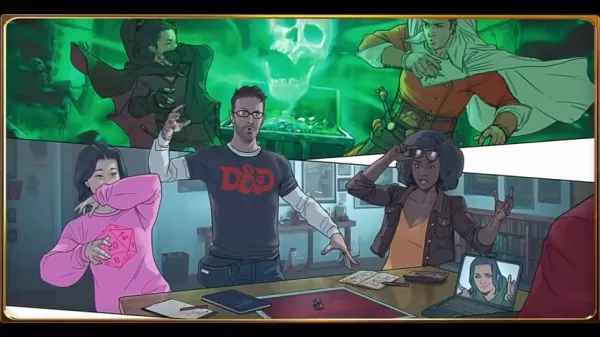
By equipping players with AI-driven tools, Hasbro aims to promote a more vibrant and interactive creative environment. AI could help players design unique adventures, characters, and world-building features. This might cultivate a greater sense of ownership and involvement with the game. Another promising area for AI is in simplifying the onboarding process for new players. AI-guided tutorials, character creation aids, and adaptive game mechanics could help lower the barrier to entry for beginners, broadening D&D's appeal. The fundamental issue is whether this is a mutually beneficial scenario, or if the possible hazards of AI integration surpass its benefits.
Kara-Tur: A Case Study in Cultural Sensitivity and AI?
The Forgotten Realms' Oriental Adventures Setting
The discussion references Cocks' personal use of the Kara-Tur setting in his home games, a realm inspired by East Asian cultures. This highlighted some underlying cultural sensitivity issues
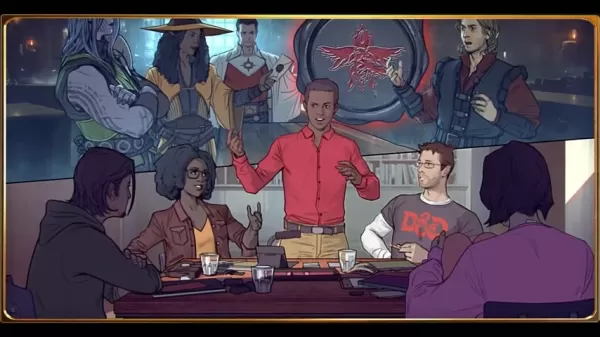
. Some commentators found the setting problematic because of its stereotypical depiction of Asian cultures. With AI's proposed role in D&D's future, it is imperative to approach content creation with care. It is important to recognize and avoid harmful stereotypes and to encourage respectful and precise portrayals of diverse cultures, ensuring no one feels misrepresented or insulted.
AI in D&D: Weighing the Benefits and Risks
Pros
Faster content creation with greater output.
Opportunity for customized and responsive gameplay.
Improved accessibility for novice players.
Support for user-generated content.
Possible automation of routine DM tasks.
Cons
Undermining of human creativity and professional skill.
Danger of producing uniform and unoriginal content.
Possible loss of employment for D&D writers and artists.
Issues related to ethics and cultural awareness.
Overreliance on AI could weaken D&D's collaborative essence.
Frequently Asked Questions
What specific AI tools are being considered for D&D?
While Hasbro has not named specific AI tools, references to ChatGPT and Bing Image Creator indicate an interest in natural language processing and image generation technologies. The company is also probably creating its own proprietary AI systems designed specifically for D&D's requirements.
How will AI-generated content be regulated to ensure quality and avoid copyright issues?
This is still a significant concern. Hasbro will probably have to establish standards and oversight procedures to guarantee that AI-generated content adheres to quality benchmarks and does not violate existing copyrights.
What measures will be taken to protect the jobs of D&D writers and artists?
Hasbro has acknowledged the need to pay content creators for their contributions, but concrete details are not yet available. Potential approaches could include reskilling initiatives, shifting focus to roles that work alongside AI, or developing new compensation frameworks for human creators.
Related Questions
Will AI replace Dungeon Masters?
It is improbable that AI will completely replace DMs. Although AI can help with specific DM duties, like creating encounters and handling rules, it cannot emulate the human capacity for creativity, improvisation, and emotional engagement that are crucial to a memorable D&D session. DMs are narrators, game coordinators, and social moderators—roles that are difficult for an impersonal AI to fulfill. AI is more likely to develop into a supportive tool that assists DMs and simplifies game management.
How will AI impact the cost of D&D content?
The effect on content pricing is unpredictable. AI might lower production expenses, resulting in more affordable content for players. However, these savings could be counterbalanced by the investment in building and maintaining AI infrastructure, or by the necessity to remunerate human creators for their input into AI-generated content.
Could AI be used to personalize D&D campaigns to individual player preferences?
Yes, this is a potentially promising use of AI. By evaluating player actions and preferences, AI could customize campaigns to suit individual styles, leading to more absorbing and satisfying adventures. Nevertheless, this introduces worries about data privacy and the risk of algorithmic prejudice.
Related article
 Apple Smart Glasses Could Debut at WWDC27, Highlighting Privacy Protection
Bloomberg’s Mark Gurman reports that Apple’s smart glasses, codenamed N50, are slated for a WWDC27 debut in June 2027, with a retail launch expected in autumn 2027. Originally targeted for late this year and early 2027, the device’s release has been
Inside Details Exposed About Next-Gen Gemini: Strained Computing Power, Internal Teams Disagreed on Development Priorities and Resource Allocation
Reports indicate that the launch of Google’s highly anticipated next-generation Gemini model has been pushed back. Internal disagreements over development priorities and resource allocation, combined with limited computing capacity and complex approv
OpenAI Dismisses Growth Slowdown Concerns, Says Multiple Business Units Accelerating
In response to external scrutiny regarding decelerating sales growth and missed internal benchmarks, AI leader OpenAI issued a confident statement on Tuesday, April 28. The company clarified that its consumer products and enterprise services are adva
Related Special Topic Recommendations
Data Analysis
Apple Smart Glasses Could Debut at WWDC27, Highlighting Privacy Protection
Bloomberg’s Mark Gurman reports that Apple’s smart glasses, codenamed N50, are slated for a WWDC27 debut in June 2027, with a retail launch expected in autumn 2027. Originally targeted for late this year and early 2027, the device’s release has been
Inside Details Exposed About Next-Gen Gemini: Strained Computing Power, Internal Teams Disagreed on Development Priorities and Resource Allocation
Reports indicate that the launch of Google’s highly anticipated next-generation Gemini model has been pushed back. Internal disagreements over development priorities and resource allocation, combined with limited computing capacity and complex approv
OpenAI Dismisses Growth Slowdown Concerns, Says Multiple Business Units Accelerating
In response to external scrutiny regarding decelerating sales growth and missed internal benchmarks, AI leader OpenAI issued a confident statement on Tuesday, April 28. The company clarified that its consumer products and enterprise services are adva
Related Special Topic Recommendations
Data Analysis
 AI SQL Copilots for Revenue Dashboards, Funnel Analysis, and Product Metrics
2026 Latest Best AI SQL Copilots Ranked Top-Rated! XIX.AI curates a powerful game-changing collection for weekly updated real-world tests. These must-try tools help you generate accurate revenue dashboards, analyze sales funnels, and track product metrics swiftly, boosting productivity massively. Explore now to Discover your perfect tool for data-driven decision making! 238 characters
 9 tools
 xix.ai
Music composition
Best AI Melody Writing Tools for Song Drafts
xix.ai
Music composition
Best AI Melody Writing Tools for Song Drafts
2026 Latest Best Top-Rated AI Melody Writing Tools for Song Drafts! XIX.AI has curated a highly powerful game-changing collection that goes through rigorous real-world tests to deliver the best writing experience. You can find detailed free vs paid comparisons, accurate rankings, and must-try options designed to help you create stunning song drafts effortlessly and boost your creative productivity significantly. Explore now to discover your perfect tool!
8 tools
xix.ai
chatbot
Best AI Conversation Trainer Tools for Interview Practice
2026 Latest Best Top-rated AI Conversation Trainer Tools for Interview Practice are here on XIX.AI! This curated collection features powerful, game-changing tools that go through rigorous real-world tests to deliver accurate feedback. You’ll find a free vs paid comparison and detailed rankings to help you choose the must-try option that boosts your confidence and skills. Explore now to Discover your perfect tool for interview success!
12 tools
xix.ai
Design & Art
Best AI Style Transfer Tools for Creative Experiments
2026 Latest Best Top-rated AI Style Transfer Tools for Creative Experiments! XIX.AI has curated a powerful, game-changing collection of must-try tools that deliver exceptional results through real-world tests and rigorous rankings. These top solutions help creatives boost productivity significantly by accelerating content creation and unlocking endless creative possibilities. Explore now to discover your perfect tool and start creating today!
9 tools
xix.ai
Comic Creation
Best AI Dialogue Bubble Tools for Visual Storytelling
2026 Latest Best Top-Rated AI Dialogue Bubble Tools for Visual Storytelling are here on XIX.AI! This curated collection features powerful, game-changing tools that help creators boost productivity and overcome creative bottlenecks. Get a free vs paid comparison, see real-world tests, and check the latest rankings to find the must-try solutions perfect for crafting engaging visual narratives. Explore now to discover your ideal tool!
10 tools
xix.ai
Meeting Assistant
Top AI Meeting Summary Tools: Track Decisions and Follow-Ups Clearly
2026 Latest Top-Rated Best AI Meeting Summary Tools for Clear Decision Tracking and Effortless Follow-Ups. This curated list showcases powerful, game-changing solutions that boost productivity dramatically by automating meeting notes, identifying key action items, and streamlining team coordination across all projects. Get a free vs paid comparison along with real-world tests and weekly updated rankings to help you find the perfect tool. Explore now to unlock your AI edge!
9 tools
xix.ai

 Comments (4)
0/500
Comments (4)
0/500
![TimothyAllen]()
Honestly, the idea of AI running D&D campaigns feels like a betrayal of the soul of the game. 🎲 The DM's intuition and ability to improvise based on player quirks are things no algorithm can replicate. Hasbro needs to listen to the community instead of chasing tech trends. Let humans be human, and dice be dice. #SaveDnD
![JustinWhite]()
AI跑團?創意會不會被演算法限制啊...雖然能幫新手快速上手是好事,但老玩家最愛的不就是人類DM那些天馬行空的臨場發揮嗎?希望別變成罐頭劇情生成器😅
![PaulTaylor]()
As a longtime D&D player, I'm honestly torn. AI tools for DM prep or generating random encounters could be amazing for busy folks, but the soul of the game is human creativity and shared storytelling. If it's just used for marketing or cheap content, that's a real bummer. Hope they listen to the community on this one. 🤔
![TerryAdams]()
Alors utiliser l'IA pour des scénarios de D&D... ça sonne un peu comme remplacer le Maître de Donjon par un robot, non ? 😅 Sur le fond, je comprends l'envie d'aider les MJ débutants, mais où est la magie de l'improvisation humaine ? En plus, avec la tendance actuelle, on risque de se retrouver avec des quêtes génériques générées par algo. Hasbro ferait mieux d'écouter sa communauté, qui est le cœur de ce jeu, avant de tout automatiser.
The CEO of Hasbro, a leading company in the tabletop role-playing game (TTRPG) industry, is championing the use of Artificial Intelligence (AI) in Dungeons & Dragons (D&D). This proposal has ignited intense discussion among D&D enthusiasts, prompting questions about the future of storytelling, content development, and the collaborative nature of the game itself. This article explores the details of Hasbro's AI strategy, analyzes its potential advantages and disadvantages, and considers the community's apprehension about this technological evolution. Is AI a resource that can elevate the D&D experience, or does it endanger the game's creative core?
Key Points
Hasbro CEO Chris Cocks is advocating for AI integration into D&D.
There is rising concern about AI's effect on creative professions and the authenticity of narratives.
Wizards of the Coast is already using AI internally for D&D development.
The central debate is whether AI will improve or hinder the player experience.
The future direction of D&D depends heavily on the implementation and governance of AI.
The AI Revolution in Dungeons & Dragons: A Double-Edged Sword
Hasbro's Vision: AI as the Future of D&D
Hasbro's CEO, Chris Cocks, has publicly expressed his conviction that AI is the future of D&D, foreseeing its application in numerous game elements, from narrative design to content production.
His drive for AI integration originates from his personal D&D gaming group, which he says already employs AI tools such as ChatGPT and Bing Image Creator. He contends that AI can optimize workflows, boost user-generated content, and facilitate more captivating storylines. Nonetheless, his statements have been met with doubt and unease from many in the D&D community. A critical question persists: Is this vision truly in harmony with the soul of D&D? Will it improve the game or devalue the creative contributions of Dungeon Masters (DMs) and content creators?
Community Backlash: Concerns About Authenticity and Job Security
Cocks' announcements have provoked significant criticism from the D&D community. Many players and creators are concerned that depending on AI for narratives and content will marginalize human ingenuity and result in a standardized D&D experience. There are apprehensions that AI-generated stories will be devoid of the subtlety, complexity, and emotional depth found in those created by human DMs. Furthermore, professional D&D writers and artists are anxious about the possibility of job losses as Hasbro turns more to AI for content. The community emphasizes that human creativity and teamwork are vital to preserving the distinctive charm and appeal of D&D.
AI Implementation: What Wizards of the Coast is Already Doing Behind the Scenes
As stated by Cocks, Wizards of the Coast (WotC), the Hasbro subsidiary that manages D&D, is already applying AI internally in the game's development. He notes that this AI is mainly based on machine learning or is proprietary, as opposed to using publicly available tools like ChatGPT. Although the specifics of this application are still unclear, Cocks indicates that AI is functioning as an 'assistant for knowledge workers and a development tool.' The community is concerned about the scope of this internal use, its impact on human employees, and how to ensure fair compensation for all content creators whose work contributes to the datasets or other assets used to train such AI.
This brings up issues of transparency and oversight regarding AI's function in D&D's progression. How can the community be confident that AI is applied responsibly and ethically, without devaluing the creative input of human designers and storytellers?
The Allure of AI: User-Generated Content and New Player Introduction
A primary attraction of AI, from Cocks' perspective, is its capacity to enable user-generated content (UGC).
By equipping players with AI-driven tools, Hasbro aims to promote a more vibrant and interactive creative environment. AI could help players design unique adventures, characters, and world-building features. This might cultivate a greater sense of ownership and involvement with the game. Another promising area for AI is in simplifying the onboarding process for new players. AI-guided tutorials, character creation aids, and adaptive game mechanics could help lower the barrier to entry for beginners, broadening D&D's appeal. The fundamental issue is whether this is a mutually beneficial scenario, or if the possible hazards of AI integration surpass its benefits.
Kara-Tur: A Case Study in Cultural Sensitivity and AI?
The Forgotten Realms' Oriental Adventures Setting
The discussion references Cocks' personal use of the Kara-Tur setting in his home games, a realm inspired by East Asian cultures. This highlighted some underlying cultural sensitivity issues
. Some commentators found the setting problematic because of its stereotypical depiction of Asian cultures. With AI's proposed role in D&D's future, it is imperative to approach content creation with care. It is important to recognize and avoid harmful stereotypes and to encourage respectful and precise portrayals of diverse cultures, ensuring no one feels misrepresented or insulted.
AI in D&D: Weighing the Benefits and Risks
Pros
Faster content creation with greater output.
Opportunity for customized and responsive gameplay.
Improved accessibility for novice players.
Support for user-generated content.
Possible automation of routine DM tasks.
Cons
Undermining of human creativity and professional skill.
Danger of producing uniform and unoriginal content.
Possible loss of employment for D&D writers and artists.
Issues related to ethics and cultural awareness.
Overreliance on AI could weaken D&D's collaborative essence.
Frequently Asked Questions
What specific AI tools are being considered for D&D?
While Hasbro has not named specific AI tools, references to ChatGPT and Bing Image Creator indicate an interest in natural language processing and image generation technologies. The company is also probably creating its own proprietary AI systems designed specifically for D&D's requirements.
How will AI-generated content be regulated to ensure quality and avoid copyright issues?
This is still a significant concern. Hasbro will probably have to establish standards and oversight procedures to guarantee that AI-generated content adheres to quality benchmarks and does not violate existing copyrights.
What measures will be taken to protect the jobs of D&D writers and artists?
Hasbro has acknowledged the need to pay content creators for their contributions, but concrete details are not yet available. Potential approaches could include reskilling initiatives, shifting focus to roles that work alongside AI, or developing new compensation frameworks for human creators.
Related Questions
Will AI replace Dungeon Masters?
It is improbable that AI will completely replace DMs. Although AI can help with specific DM duties, like creating encounters and handling rules, it cannot emulate the human capacity for creativity, improvisation, and emotional engagement that are crucial to a memorable D&D session. DMs are narrators, game coordinators, and social moderators—roles that are difficult for an impersonal AI to fulfill. AI is more likely to develop into a supportive tool that assists DMs and simplifies game management.
How will AI impact the cost of D&D content?
The effect on content pricing is unpredictable. AI might lower production expenses, resulting in more affordable content for players. However, these savings could be counterbalanced by the investment in building and maintaining AI infrastructure, or by the necessity to remunerate human creators for their input into AI-generated content.
Could AI be used to personalize D&D campaigns to individual player preferences?
Yes, this is a potentially promising use of AI. By evaluating player actions and preferences, AI could customize campaigns to suit individual styles, leading to more absorbing and satisfying adventures. Nevertheless, this introduces worries about data privacy and the risk of algorithmic prejudice.








 Apple Smart Glasses Could Debut at WWDC27, Highlighting Privacy Protection
Bloomberg’s Mark Gurman reports that Apple’s smart glasses, codenamed N50, are slated for a WWDC27 debut in June 2027, with a retail launch expected in autumn 2027. Originally targeted for late this year and early 2027, the device’s release has been
Apple Smart Glasses Could Debut at WWDC27, Highlighting Privacy Protection
Bloomberg’s Mark Gurman reports that Apple’s smart glasses, codenamed N50, are slated for a WWDC27 debut in June 2027, with a retail launch expected in autumn 2027. Originally targeted for late this year and early 2027, the device’s release has been
 Inside Details Exposed About Next-Gen Gemini: Strained Computing Power, Internal Teams Disagreed on Development Priorities and Resource Allocation
Reports indicate that the launch of Google’s highly anticipated next-generation Gemini model has been pushed back. Internal disagreements over development priorities and resource allocation, combined with limited computing capacity and complex approv
Inside Details Exposed About Next-Gen Gemini: Strained Computing Power, Internal Teams Disagreed on Development Priorities and Resource Allocation
Reports indicate that the launch of Google’s highly anticipated next-generation Gemini model has been pushed back. Internal disagreements over development priorities and resource allocation, combined with limited computing capacity and complex approv
 OpenAI Dismisses Growth Slowdown Concerns, Says Multiple Business Units Accelerating
In response to external scrutiny regarding decelerating sales growth and missed internal benchmarks, AI leader OpenAI issued a confident statement on Tuesday, April 28. The company clarified that its consumer products and enterprise services are adva
OpenAI Dismisses Growth Slowdown Concerns, Says Multiple Business Units Accelerating
In response to external scrutiny regarding decelerating sales growth and missed internal benchmarks, AI leader OpenAI issued a confident statement on Tuesday, April 28. The company clarified that its consumer products and enterprise services are adva

2026 Latest Best AI SQL Copilots Ranked Top-Rated! XIX.AI curates a powerful game-changing collection for weekly updated real-world tests. These must-try tools help you generate accurate revenue dashboards, analyze sales funnels, and track product metrics swiftly, boosting productivity massively. Explore now to Discover your perfect tool for data-driven decision making! 238 characters
9 tools
xix.ai
2026 Latest Best Top-Rated AI Melody Writing Tools for Song Drafts! XIX.AI has curated a highly powerful game-changing collection that goes through rigorous real-world tests to deliver the best writing experience. You can find detailed free vs paid comparisons, accurate rankings, and must-try options designed to help you create stunning song drafts effortlessly and boost your creative productivity significantly. Explore now to discover your perfect tool!
8 tools
xix.ai

2026 Latest Best Top-rated AI Conversation Trainer Tools for Interview Practice are here on XIX.AI! This curated collection features powerful, game-changing tools that go through rigorous real-world tests to deliver accurate feedback. You’ll find a free vs paid comparison and detailed rankings to help you choose the must-try option that boosts your confidence and skills. Explore now to Discover your perfect tool for interview success!
12 tools
xix.ai

2026 Latest Best Top-rated AI Style Transfer Tools for Creative Experiments! XIX.AI has curated a powerful, game-changing collection of must-try tools that deliver exceptional results through real-world tests and rigorous rankings. These top solutions help creatives boost productivity significantly by accelerating content creation and unlocking endless creative possibilities. Explore now to discover your perfect tool and start creating today!
9 tools
xix.ai

2026 Latest Best Top-Rated AI Dialogue Bubble Tools for Visual Storytelling are here on XIX.AI! This curated collection features powerful, game-changing tools that help creators boost productivity and overcome creative bottlenecks. Get a free vs paid comparison, see real-world tests, and check the latest rankings to find the must-try solutions perfect for crafting engaging visual narratives. Explore now to discover your ideal tool!
10 tools
xix.ai
2026 Latest Top-Rated Best AI Meeting Summary Tools for Clear Decision Tracking and Effortless Follow-Ups. This curated list showcases powerful, game-changing solutions that boost productivity dramatically by automating meeting notes, identifying key action items, and streamlining team coordination across all projects. Get a free vs paid comparison along with real-world tests and weekly updated rankings to help you find the perfect tool. Explore now to unlock your AI edge!
9 tools
xix.ai

Honestly, the idea of AI running D&D campaigns feels like a betrayal of the soul of the game. 🎲 The DM's intuition and ability to improvise based on player quirks are things no algorithm can replicate. Hasbro needs to listen to the community instead of chasing tech trends. Let humans be human, and dice be dice. #SaveDnD
AI跑團?創意會不會被演算法限制啊...雖然能幫新手快速上手是好事,但老玩家最愛的不就是人類DM那些天馬行空的臨場發揮嗎?希望別變成罐頭劇情生成器😅
As a longtime D&D player, I'm honestly torn. AI tools for DM prep or generating random encounters could be amazing for busy folks, but the soul of the game is human creativity and shared storytelling. If it's just used for marketing or cheap content, that's a real bummer. Hope they listen to the community on this one. 🤔
Alors utiliser l'IA pour des scénarios de D&D... ça sonne un peu comme remplacer le Maître de Donjon par un robot, non ? 😅 Sur le fond, je comprends l'envie d'aider les MJ débutants, mais où est la magie de l'improvisation humaine ? En plus, avec la tendance actuelle, on risque de se retrouver avec des quêtes génériques générées par algo. Hasbro ferait mieux d'écouter sa communauté, qui est le cœur de ce jeu, avant de tout automatiser.












