


 Home
HomeAI coding tools pivot toward development in the terminal
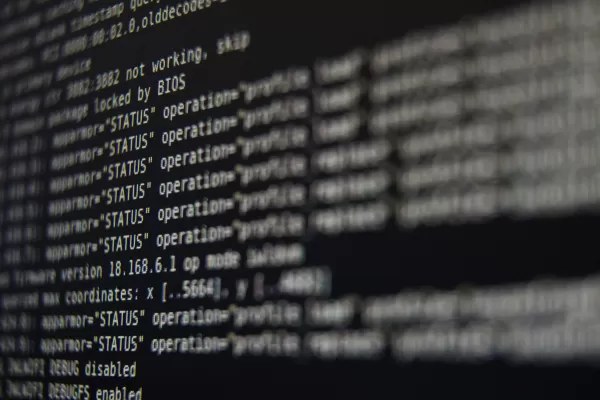
For years, AI-enhanced code editors like Cursor, Windsurf, and GitHub Copilot have set the standard for software development. However, as agentic AI grows more capable and a more intuitive "vibe-coding" approach gains traction, a quiet evolution is reshaping how these systems operate. Rather than solely manipulating code, they are increasingly engaging directly with the system's command-line shell. This marks a fundamental shift in AI-assisted development—a subtle but potentially transformative move for the industry's future direction.
The terminal, often reminiscent of the stark black-and-white screens from 90s hacker films, is a classic interface for executing programs and managing data. While less visually polished than modern code editors, it remains an immensely powerful tool in skilled hands. Although code-centric agents can write and debug programs, terminal-based utilities are frequently essential for turning written code into a functional, deployable application.
The move toward the terminal is most evident from leading AI labs. Since February, Anthropic, DeepMind, and OpenAI have each launched command-line coding tools (Claude Code, Gemini CLI, and CLI Codex, respectively), which have quickly become some of their most popular offerings. This transition is easy to overlook, as these tools often share branding with their predecessors. Yet, fundamentally, how AI agents interact with computers—both online and off—has changed. Many believe this is just the beginning.
"Our core hypothesis is that in the future, roughly 95% of LLM-computer interaction will occur through a terminal-like interface," says Alex Shaw, co-creator of the prominent terminal-focused benchmark, TerminalBench.
Terminal-based tools are gaining prominence just as some established code-focused platforms face instability. The AI code editor Windsurf, for instance, has been fragmented by competing acquisitions, with senior leaders recruited by Google and the remaining company bought by Cognition—casting doubt on the consumer product's long-term viability.
Simultaneously, new research suggests developers might overestimate the productivity benefits of traditional tools. A METR study evaluating Cursor Pro, Windsurf's primary rival, found that while developers predicted a 20-30% speed increase, the observed process was nearly 20% slower. In essence, the code assistant was, in some cases, costing programmers time.
This has created an opportunity for companies like Warp, which currently leads the TerminalBench rankings. Warp describes itself as an "agentic development environment," bridging the gap between full IDEs and command-line tools like Claude Code. Founder Zach Lloyd remains optimistic about the terminal's potential, viewing it as a way to solve problems beyond the scope of a traditional code editor like Cursor.
Techcrunch event LIVE NOW! TechCrunch All Stage
Build smarter. Scale faster. Connect deeper. Join visionaries from Precursor Ventures, NEA, Index Ventures, Underscore VC, and beyond for a day packed with strategies, workshops, and meaningful connections.
Save $450 on your TechCrunch All Stage pass
Build smarter. Scale faster. Connect deeper. Join visionaries from Precursor Ventures, NEA, Index Ventures, Underscore VC, and beyond for a day packed with strategies, workshops, and meaningful connections.
Boston, MA | July 15 REGISTER NOW "The terminal sits at a very foundational layer in the developer stack, making it the most versatile place to run AI agents," Lloyd explains.
To grasp how this new approach differs, consider the benchmarks used to evaluate them. The previous generation of code-based tools was measured on solving GitHub issues, the foundation of the SWE-Bench test. Each SWE-Bench problem is an open GitHub issue—a piece of malfunctioning code. Models iteratively refine the code until it works. While integrated products like Cursor have developed more sophisticated methods, the core GitHub/SWE-Bench model remains: start with broken code and fix it.
Terminal-based tools adopt a broader perspective, considering the entire environment a program runs in, not just the code. This encompasses coding as well as DevOps-oriented tasks like configuring a Git server or diagnosing why a script fails. One TerminalBench challenge provides a decompression program and a target text file, tasking the agent with reverse-engineering a matching compression algorithm. Another asks the agent to build the Linux kernel from source, without mentioning it must first obtain the source code. Solving these requires the persistent, creative problem-solving intrinsic to programming.
"What makes TerminalBench difficult isn't just the questions we pose to the agents," says Shaw, "it's the complex environments we place them in."
Critically, this new method involves tackling problems through sequential, reasoned steps—the same capability that makes agentic AI so powerful. Yet, even cutting-edge agentic models struggle in some of these environments. Warp achieved its top TerminalBench score by solving just over half of the problems, highlighting both the benchmark's difficulty and the work still needed to realize the terminal's full potential.
Nevertheless, Lloyd contends we've reached a point where terminal-based tools can reliably manage a significant portion of a developer's non-coding workload—an offer that's difficult to refuse.
"Consider the daily work of setting up a new project, figuring out dependencies, and making it runnable—Warp can largely handle that autonomously," says Lloyd. "And if it can't, it will tell you exactly why."
Related article
 Qualcomm launches new program to accelerate personal AI device development as smart glasses emerge as early beneficiaries
Qualcomm, a global semiconductor leader, unveiled Snapdragon START at AWE USA 2026. This Scalable One-Stop AI-Ready Toolkit empowers brands to launch innovative personal AI devices faster and with greater flexibility, breaking hardware barriers and a
Mozilla Partners with Mistral to Bring AI Models to Firefox Smart Window
Mozilla has partnered with French AI startup Mistral to integrate the Mistral model into Firefox, enhancing the experimental "Firefox Smart Window" browsing experience.Designed for complex, multi-tab tasks, the Smart Window helps users analyze search
OpenAI reportedly exploring smartphone with AI agents replacing traditional apps
Speculation regarding OpenAI’s hardware strategy has intensified, with recent reports pointing toward the development of a dedicated smartphone. Industry analyst Ming-Chi Kuo indicates that the AI firm is collaborating with chipmakers MediaTek and Qu
Related Special Topic Recommendations
Marketing
Qualcomm launches new program to accelerate personal AI device development as smart glasses emerge as early beneficiaries
Qualcomm, a global semiconductor leader, unveiled Snapdragon START at AWE USA 2026. This Scalable One-Stop AI-Ready Toolkit empowers brands to launch innovative personal AI devices faster and with greater flexibility, breaking hardware barriers and a
Mozilla Partners with Mistral to Bring AI Models to Firefox Smart Window
Mozilla has partnered with French AI startup Mistral to integrate the Mistral model into Firefox, enhancing the experimental "Firefox Smart Window" browsing experience.Designed for complex, multi-tab tasks, the Smart Window helps users analyze search
OpenAI reportedly exploring smartphone with AI agents replacing traditional apps
Speculation regarding OpenAI’s hardware strategy has intensified, with recent reports pointing toward the development of a dedicated smartphone. Industry analyst Ming-Chi Kuo indicates that the AI firm is collaborating with chipmakers MediaTek and Qu
Related Special Topic Recommendations
Marketing
 ChatGPT Ad Copy Tools for Meta Campaigns, Landing Pages, and Creative Testing
2026 Latest Best ChatGPT Ad Copy Tools Reviewed! This curated top-rated list offers powerful game-changing solutions to help you craft high-converting copy for Meta campaigns, landing pages, and creative testing. Get a free vs paid comparison along with real-world tests and detailed rankings to find the must-try tool that boosts your productivity significantly. Explore now at XIX.AI to unlock your AI edge!
 11 tools
 xix.ai
Business
Best AI Pricing Strategy Tools for Market Testing
xix.ai
Business
Best AI Pricing Strategy Tools for Market Testing
2026 Latest Best Top-rated AI Pricing Strategy Tools for Market Testing! XIX.AI has curated a powerful game-changing collection of must-try tools, featuring weekly updated rankings and free vs paid comparison. These top-rated solutions help businesses run real-world tests, boost productivity, and discover the perfect pricing model to stand out in competitive markets. Explore now to Unlock your AI edge!
9 tools
xix.ai
Academic Research
AI PDF Citation Extractors for Journal Articles, Methods Sections, and References
2026 Latest Best Top-rated AI PDF Citation Extractors for Journal Articles, Methods Sections, and References are here on XIX.AI. This curated list features powerful game-changing tools that go through real-world tests to deliver accurate results every time. You can find a free vs paid comparison along with detailed rankings to help you choose the must-try option that boosts your research efficiency significantly. Explore now to discover your perfect tool for faster academic work!
9 tools
xix.ai
Design & Art
Canva AI Brand Kit Assistants for Social Creatives, Decks, and Campaign Assets
2026 Latest Best Canva AI Brand Kit Assistants for Social Creatives, Decks, and Campaign Assets! This curated top-rated list features powerful game-changing tools that help social creatives streamline content creation, boost writing efficiency, and produce high-quality assets fast through real-world tests. XIX.AI offers a free vs paid comparison to help you find the perfect fit. Explore now to unlock your AI edge!
12 tools
xix.ai
automation
AI Integration Tools for No Code Automation Teams
2026 Latest Best AI Integration Tools for No Code Automation Teams are here on XIX.AI! This curated list features top-rated, powerful solutions that help teams streamline workflows, boost productivity, and tackle complex automation tasks with ease. We conduct real-world tests to deliver accurate rankings and a free vs paid comparison, making it simple to find the must-try option that fits your needs. Explore now to uncover your perfect tool for seamless no code integration!
8 tools
xix.ai
Video creation
Best AI Screen Recording Editors for Product Demos, Walkthroughs, and Training Clips
2026 Latest Best Top-rated AI screen recording editors curated by XIX.AI for product demos, walkthroughs, and training clips. These powerful game-changing tools offer real-world tests, free vs paid comparison, and weekly updated rankings to help you boost productivity significantly. Explore now to Discover your perfect tool for streamlining creative workflows! 238 characters
10 tools
xix.ai

 Comments (3)
0/500
Comments (3)
0/500
![RogerGonzález]()
終端開發回歸?這波AI工具轉向有點意思。以前總覺得GUI編輯器更方便,但現在想想,直接在terminal裡用AI補全,說不定更貼近原始碼的『氣場』呢。不過指令記憶體會不會不夠用啊?🤔
![AlbertEvans]()
Interessant, dass sich die KI-Coding-Tools jetzt auf das Terminal konzentrieren. Ich habe Cursor und Copilot im Editor benutzt, aber die Idee, direkt in der Kommandozeile zu arbeiten, klingt nach einem logischen nächsten Schritt für mehr Effizienz. Hoffentlich bleibt die Bedienung trotzdem intuitiv – sonst wird das nichts mit dem 'Vibe-Coding' 😅. Mal sehen, wie sich das gegen die etablierten Editoren durchsetzt.
![RoyLopez]()
이번 기사 정말 흥미롭네요! 터미널에서 점점 더 많은 AI 개발 도구가 등장한다니... GUI 환경에 익숙한 저는 조금 두렵기도 하면서, 한편으로는 코딩 과정이 더욱 직관적으로 변할 수 있을 거란 기대도 됩니다. 하지만 터미널에서의 '코딩 분위기'란 게 대체 무엇일까요? 🤔 직접 사용해보기 전엔 잘 모르겠네요.
For years, AI-enhanced code editors like Cursor, Windsurf, and GitHub Copilot have set the standard for software development. However, as agentic AI grows more capable and a more intuitive "vibe-coding" approach gains traction, a quiet evolution is reshaping how these systems operate. Rather than solely manipulating code, they are increasingly engaging directly with the system's command-line shell. This marks a fundamental shift in AI-assisted development—a subtle but potentially transformative move for the industry's future direction.
The terminal, often reminiscent of the stark black-and-white screens from 90s hacker films, is a classic interface for executing programs and managing data. While less visually polished than modern code editors, it remains an immensely powerful tool in skilled hands. Although code-centric agents can write and debug programs, terminal-based utilities are frequently essential for turning written code into a functional, deployable application.
The move toward the terminal is most evident from leading AI labs. Since February, Anthropic, DeepMind, and OpenAI have each launched command-line coding tools (Claude Code, Gemini CLI, and CLI Codex, respectively), which have quickly become some of their most popular offerings. This transition is easy to overlook, as these tools often share branding with their predecessors. Yet, fundamentally, how AI agents interact with computers—both online and off—has changed. Many believe this is just the beginning.
"Our core hypothesis is that in the future, roughly 95% of LLM-computer interaction will occur through a terminal-like interface," says Alex Shaw, co-creator of the prominent terminal-focused benchmark, TerminalBench.
Terminal-based tools are gaining prominence just as some established code-focused platforms face instability. The AI code editor Windsurf, for instance, has been fragmented by competing acquisitions, with senior leaders recruited by Google and the remaining company bought by Cognition—casting doubt on the consumer product's long-term viability.
Simultaneously, new research suggests developers might overestimate the productivity benefits of traditional tools. A METR study evaluating Cursor Pro, Windsurf's primary rival, found that while developers predicted a 20-30% speed increase, the observed process was nearly 20% slower. In essence, the code assistant was, in some cases, costing programmers time.
This has created an opportunity for companies like Warp, which currently leads the TerminalBench rankings. Warp describes itself as an "agentic development environment," bridging the gap between full IDEs and command-line tools like Claude Code. Founder Zach Lloyd remains optimistic about the terminal's potential, viewing it as a way to solve problems beyond the scope of a traditional code editor like Cursor.
Techcrunch eventLIVE NOW! TechCrunch All Stage
Build smarter. Scale faster. Connect deeper. Join visionaries from Precursor Ventures, NEA, Index Ventures, Underscore VC, and beyond for a day packed with strategies, workshops, and meaningful connections.
Save $450 on your TechCrunch All Stage pass
Build smarter. Scale faster. Connect deeper. Join visionaries from Precursor Ventures, NEA, Index Ventures, Underscore VC, and beyond for a day packed with strategies, workshops, and meaningful connections.
Boston, MA | July 15 REGISTER NOW"The terminal sits at a very foundational layer in the developer stack, making it the most versatile place to run AI agents," Lloyd explains.
To grasp how this new approach differs, consider the benchmarks used to evaluate them. The previous generation of code-based tools was measured on solving GitHub issues, the foundation of the SWE-Bench test. Each SWE-Bench problem is an open GitHub issue—a piece of malfunctioning code. Models iteratively refine the code until it works. While integrated products like Cursor have developed more sophisticated methods, the core GitHub/SWE-Bench model remains: start with broken code and fix it.
Terminal-based tools adopt a broader perspective, considering the entire environment a program runs in, not just the code. This encompasses coding as well as DevOps-oriented tasks like configuring a Git server or diagnosing why a script fails. One TerminalBench challenge provides a decompression program and a target text file, tasking the agent with reverse-engineering a matching compression algorithm. Another asks the agent to build the Linux kernel from source, without mentioning it must first obtain the source code. Solving these requires the persistent, creative problem-solving intrinsic to programming.
"What makes TerminalBench difficult isn't just the questions we pose to the agents," says Shaw, "it's the complex environments we place them in."
Critically, this new method involves tackling problems through sequential, reasoned steps—the same capability that makes agentic AI so powerful. Yet, even cutting-edge agentic models struggle in some of these environments. Warp achieved its top TerminalBench score by solving just over half of the problems, highlighting both the benchmark's difficulty and the work still needed to realize the terminal's full potential.
Nevertheless, Lloyd contends we've reached a point where terminal-based tools can reliably manage a significant portion of a developer's non-coding workload—an offer that's difficult to refuse.
"Consider the daily work of setting up a new project, figuring out dependencies, and making it runnable—Warp can largely handle that autonomously," says Lloyd. "And if it can't, it will tell you exactly why."








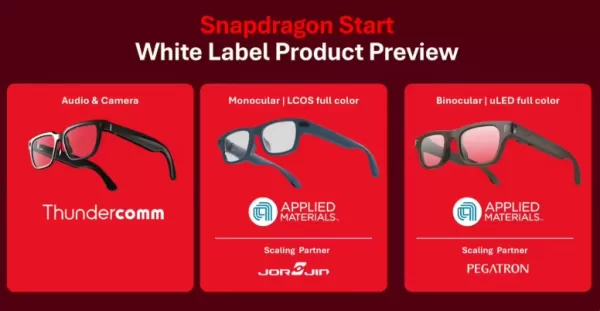 Qualcomm launches new program to accelerate personal AI device development as smart glasses emerge as early beneficiaries
Qualcomm, a global semiconductor leader, unveiled Snapdragon START at AWE USA 2026. This Scalable One-Stop AI-Ready Toolkit empowers brands to launch innovative personal AI devices faster and with greater flexibility, breaking hardware barriers and a
Qualcomm launches new program to accelerate personal AI device development as smart glasses emerge as early beneficiaries
Qualcomm, a global semiconductor leader, unveiled Snapdragon START at AWE USA 2026. This Scalable One-Stop AI-Ready Toolkit empowers brands to launch innovative personal AI devices faster and with greater flexibility, breaking hardware barriers and a
 Mozilla Partners with Mistral to Bring AI Models to Firefox Smart Window
Mozilla has partnered with French AI startup Mistral to integrate the Mistral model into Firefox, enhancing the experimental "Firefox Smart Window" browsing experience.Designed for complex, multi-tab tasks, the Smart Window helps users analyze search
Mozilla Partners with Mistral to Bring AI Models to Firefox Smart Window
Mozilla has partnered with French AI startup Mistral to integrate the Mistral model into Firefox, enhancing the experimental "Firefox Smart Window" browsing experience.Designed for complex, multi-tab tasks, the Smart Window helps users analyze search
 OpenAI reportedly exploring smartphone with AI agents replacing traditional apps
Speculation regarding OpenAI’s hardware strategy has intensified, with recent reports pointing toward the development of a dedicated smartphone. Industry analyst Ming-Chi Kuo indicates that the AI firm is collaborating with chipmakers MediaTek and Qu
OpenAI reportedly exploring smartphone with AI agents replacing traditional apps
Speculation regarding OpenAI’s hardware strategy has intensified, with recent reports pointing toward the development of a dedicated smartphone. Industry analyst Ming-Chi Kuo indicates that the AI firm is collaborating with chipmakers MediaTek and Qu

2026 Latest Best ChatGPT Ad Copy Tools Reviewed! This curated top-rated list offers powerful game-changing solutions to help you craft high-converting copy for Meta campaigns, landing pages, and creative testing. Get a free vs paid comparison along with real-world tests and detailed rankings to find the must-try tool that boosts your productivity significantly. Explore now at XIX.AI to unlock your AI edge!
11 tools
xix.ai

2026 Latest Best Top-rated AI Pricing Strategy Tools for Market Testing! XIX.AI has curated a powerful game-changing collection of must-try tools, featuring weekly updated rankings and free vs paid comparison. These top-rated solutions help businesses run real-world tests, boost productivity, and discover the perfect pricing model to stand out in competitive markets. Explore now to Unlock your AI edge!
9 tools
xix.ai

2026 Latest Best Top-rated AI PDF Citation Extractors for Journal Articles, Methods Sections, and References are here on XIX.AI. This curated list features powerful game-changing tools that go through real-world tests to deliver accurate results every time. You can find a free vs paid comparison along with detailed rankings to help you choose the must-try option that boosts your research efficiency significantly. Explore now to discover your perfect tool for faster academic work!
9 tools
xix.ai
2026 Latest Best Canva AI Brand Kit Assistants for Social Creatives, Decks, and Campaign Assets! This curated top-rated list features powerful game-changing tools that help social creatives streamline content creation, boost writing efficiency, and produce high-quality assets fast through real-world tests. XIX.AI offers a free vs paid comparison to help you find the perfect fit. Explore now to unlock your AI edge!
12 tools
xix.ai
2026 Latest Best AI Integration Tools for No Code Automation Teams are here on XIX.AI! This curated list features top-rated, powerful solutions that help teams streamline workflows, boost productivity, and tackle complex automation tasks with ease. We conduct real-world tests to deliver accurate rankings and a free vs paid comparison, making it simple to find the must-try option that fits your needs. Explore now to uncover your perfect tool for seamless no code integration!
8 tools
xix.ai

2026 Latest Best Top-rated AI screen recording editors curated by XIX.AI for product demos, walkthroughs, and training clips. These powerful game-changing tools offer real-world tests, free vs paid comparison, and weekly updated rankings to help you boost productivity significantly. Explore now to Discover your perfect tool for streamlining creative workflows! 238 characters
10 tools
xix.ai

終端開發回歸?這波AI工具轉向有點意思。以前總覺得GUI編輯器更方便,但現在想想,直接在terminal裡用AI補全,說不定更貼近原始碼的『氣場』呢。不過指令記憶體會不會不夠用啊?🤔
Interessant, dass sich die KI-Coding-Tools jetzt auf das Terminal konzentrieren. Ich habe Cursor und Copilot im Editor benutzt, aber die Idee, direkt in der Kommandozeile zu arbeiten, klingt nach einem logischen nächsten Schritt für mehr Effizienz. Hoffentlich bleibt die Bedienung trotzdem intuitiv – sonst wird das nichts mit dem 'Vibe-Coding' 😅. Mal sehen, wie sich das gegen die etablierten Editoren durchsetzt.
이번 기사 정말 흥미롭네요! 터미널에서 점점 더 많은 AI 개발 도구가 등장한다니... GUI 환경에 익숙한 저는 조금 두렵기도 하면서, 한편으로는 코딩 과정이 더욱 직관적으로 변할 수 있을 거란 기대도 됩니다. 하지만 터미널에서의 '코딩 분위기'란 게 대체 무엇일까요? 🤔 직접 사용해보기 전엔 잘 모르겠네요.












