


 Home
HomeCorporate Investment Risks Emerge Amid AI Bubble Concerns
The surge in artificial intelligence is generating tremendous excitement across the business landscape, prompting significant corporate investment. Yet, analysts caution that this fervor may be excessive, potentially inflating a market bubble. This article explores the core arguments in this debate, evaluating whether current AI spending reflects substantive innovation or unsustainable hype, and what this means for companies involved.
Key Points
The AI boom is fueling major investments and optimism, alongside growing warnings of a potential market bubble.
Behavioral economics helps explain how market enthusiasm—and what some call "natural stupidity"—can distort investment choices.
Stocks of firms supplying AI hardware and software are rising, while those perceived as vulnerable to AI disruption face market pressure.
The market may be correctly pricing future AI revenues, or it could be swayed by irrational exuberance and fear of missing out (FOMO).
Investors should proceed with caution and recognize the possibility of excessive enthusiasm in the AI sector.
The AI Investment Landscape: Boom or Bubble?
Assessing the AI Enthusiasm
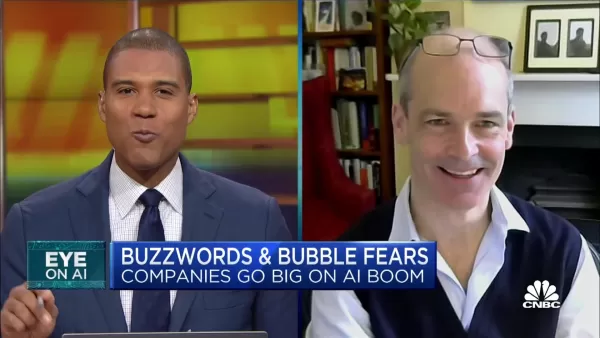
The current AI hype is unmistakable. Businesses in every sector are scrambling to adopt AI, aiming to boost efficiency, develop new offerings, and secure a competitive advantage. The critical question is whether this investment wave rests on solid fundamentals or is propelled by hype and a fear of falling behind.
The debate hinges on whether the market is rationally valuing AI's future earnings potential or building an unsustainable bubble. Some argue prices reflect a prudent discounting of future profits, while others point to irrational exuberance and overinflated valuations.
For investors, grasping the true nature of this enthusiasm is key to navigating the AI sector.
Key Considerations:
- Is the current level of AI investment sustainable?
- Are companies genuinely ready to implement AI effectively?
- Have the promised benefits of AI been overstated?
The Danger of 'Natural Stupidity' in AI Investments
The behavioral economics concept of “natural stupidity” provides a useful framework for analyzing investment trends. As pioneer Amos Tversky noted, while some study artificial intelligence, others study natural stupidity.
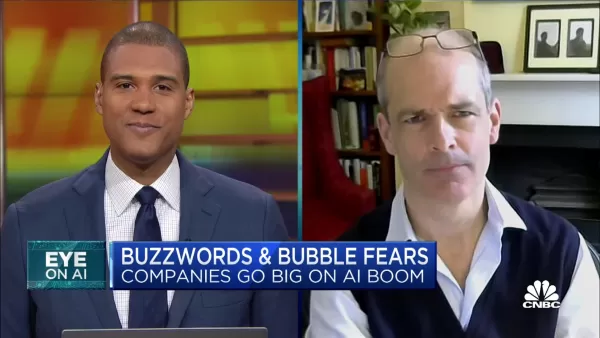
Tversky observed that people often act on irrational exuberance rather than careful analysis. In the AI context, this means companies may leap into investments without fully grasping the technology's limitations, costs, or strategic fit.
Behavioral economics reminds us that markets are not perfectly efficient. Fear of missing out (FOMO) and herd behavior can push asset prices well beyond their intrinsic value. This risk is especially pronounced in the AI space, where the potential rewards—and risks—are enormous. Investors must be alert to the pitfalls of “natural stupidity” and base decisions on rigorous analysis.
Potential Issues:
- Overestimating what AI can currently achieve
- Underestimating the difficulty and cost of implementation
- Overlooking ethical and societal ramifications
- Investing based on trends rather than company fundamentals
Winners and Losers in the AI Revolution
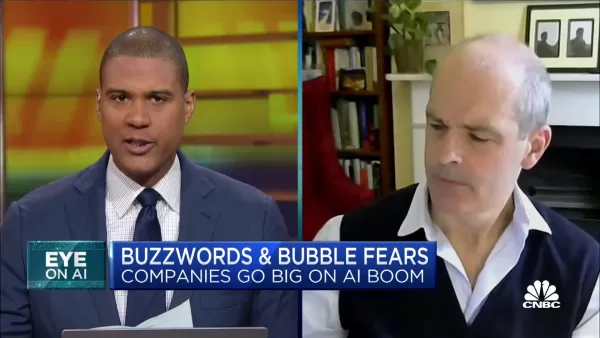
The AI revolution is already creating distinct winners and losers. Firms that supply the essential infrastructure and tools for AI development, like Alphabet and Nvidia, are seeing substantial growth.
Nvidia is a leading provider of the advanced hardware that powers AI systems.
Microsoft is aggressively integrating AI across its product suite.
Conversely, companies with business models seen as vulnerable to AI disruption are under pressure.
Chegg serves as an example of a company whose stock has fallen on concerns that AI could undermine its core services.
This divide underscores AI's transformative power. Businesses that strategically adopt and adapt to AI are better positioned for long-term success. Those that ignore or underestimate its impact risk obsolescence.
Companies Leveraging and Impacted by AI
C3.ai: A Case Study
C3.ai, a provider of enterprise AI software, illustrates the market's complex dynamics. Its stock has been highly volatile, soaring on investor optimism while also attracting significant short interest, which signals deep skepticism about its future.

Current Status:
- Shares have risen over 100% year-to-date.
- AI is central to its brand identity.
- Short interest exceeds 30%.
This stark contrast in market opinion highlights the uncertainty plaguing AI investments. Some investors back C3.ai's promise to deliver AI solutions to enterprises, while others doubt its valuation, competitive edge, or business model sustainability.
Understanding these market dynamics is critical. Investors must scrutinize the company's financials, competitive position, and technology before committing capital. The high level of short interest is a clear warning sign of perceived risk and the necessity for thorough due diligence.
Key Takeaways:
- Extreme volatility points to major uncertainty.
- High short interest can indicate underlying weaknesses.
- In-depth research is non-negotiable for sound investment choices.
Kindleberger's Displacement Theory and the AI Bubble
Charles Kindleberger, author of Manias, Panics, and Crashes, provides a classic model for understanding speculative bubbles. He posits that all bubbles start with a "displacement"—a genuine innovation or economic shift that alters expectations and opens new profit opportunities.
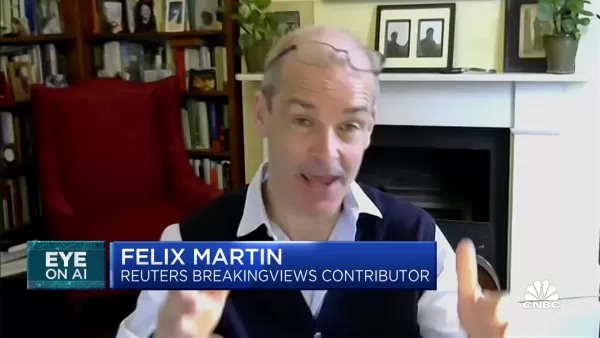
In today's context, the rapid advancement and adoption of AI technologies constitute this displacement.
However, Kindleberger warns that displacement can trigger irrational exuberance and rampant speculation. Investors, driven by excitement and FOMO, may overestimate benefits and ignore risks, inflating prices to unsustainable levels and setting the stage for a correction.
Kindleberger's theory is a crucial reminder: even amidst genuine innovation, maintaining a rational perspective is vital to avoid being caught in market mania. Investors should prioritize fundamental analysis, weigh risks carefully, and brace for volatility.
Here's a breakdown in a table:
Element Description Displacement A real innovation or economic change that creates new opportunities and reshapes expectations. Exuberance A rise in speculative activity and asset prices, fueled by optimism and anticipation of future profits. Mania A phase of intense speculation, often driven by herd behavior and fear of missing out (FOMO). Crisis A triggering event that causes investors to reassess, leading to a sharp drop in asset prices. Discredit The widespread realization that assets were overvalued, resulting in further declines and lost market confidence.
Analyzing the AI Investment Landscape
Pros
Potential for exceptional growth and returns
Exposure to genuinely transformative technology
Access to innovative and evolving business models
Gaining a competitive edge through AI-powered solutions
Cons
Risk of a market bubble and severely inflated valuations
Uncertainty about AI's ultimate economic impact and timeline
Potential for rapid technological shifts that render investments obsolete
Significant ethical, regulatory, and societal challenges
FAQ
Is the AI boom a genuine revolution or a speculative bubble?
The reality contains elements of both. AI is a powerful, transformative force, but distinguishing between its real-world applications and mere hype is essential. A major risk is capital allocation driven by market excitement rather than sound business fundamentals.
What's “natural stupidity” and how does it relate to AI investments?
In behavioral economics, “natural stupidity” refers to the irrational financial decisions often driven by emotion, crowd-following, or cognitive biases. In AI investing, this can manifest as overpaying for assets based on trendiness rather than tangible value, creating fragile market conditions.
Which companies are most likely to benefit from the AI boom?
The primary beneficiaries are likely the "picks and shovels" providers—companies building the essential AI hardware, software, and cloud infrastructure. Success also depends on a firm's ability to integrate AI strategically into its operations and products.
What are the risks for companies that don't adopt AI?
Companies slow to adapt risk disruption from more agile, AI-enabled competitors. They may face declining efficiency, loss of market relevance, and an inability to innovate at the required pace, threatening their long-term survival.
How can investors assess the risks and opportunities in the AI market?
Investors should conduct rigorous fundamental analysis, scrutinizing business models, financial health, and competitive moats. It's critical to maintain a healthy skepticism toward hype, avoid overconcentration, and employ prudent risk management strategies.
Related Questions
What role will AI play in the future of business and society?
AI is set to reshape industries by automating processes, enhancing analytics, and enabling new capabilities. Its societal impact, including workforce changes and ethical dilemmas, requires proactive management through thoughtful policy and long-term planning.
Related article
 Stripe to Acquire OpenRouter as AI Model Routing Gains Momentum
Stripe has agreed to acquire OpenRouter, an AI model-routing platform that gives developers access to hundreds of models through a single interface. The deal adds model selection and routing to Stripe’s existing work around AI usage and token-based b
Former OpenAI Researcher Barrett Zoph Returns to Google to Support Gemini Development
Barret Zoph, who previously abruptly left and joined OpenAI due to a disagreement with Thinking Machines Lab CEO Miriam Mularati, has once again changed employers. Alphabet's Google announced that Zoph will return as Vice President of Research, bring
How Recursive Intelligence Raised $335M at $4B Valuation in 4 Months
The co-founders of startup Ricursive Intelligence seemed destined to be co-founders.Anna Goldie, CEO, and Azalia Mirhoseini, CTO, are so well-known in the AI community that they were among those AI engineers who “got those weird emails from Zuckerber
Related Special Topic Recommendations
Design & Art
Stripe to Acquire OpenRouter as AI Model Routing Gains Momentum
Stripe has agreed to acquire OpenRouter, an AI model-routing platform that gives developers access to hundreds of models through a single interface. The deal adds model selection and routing to Stripe’s existing work around AI usage and token-based b
Former OpenAI Researcher Barrett Zoph Returns to Google to Support Gemini Development
Barret Zoph, who previously abruptly left and joined OpenAI due to a disagreement with Thinking Machines Lab CEO Miriam Mularati, has once again changed employers. Alphabet's Google announced that Zoph will return as Vice President of Research, bring
How Recursive Intelligence Raised $335M at $4B Valuation in 4 Months
The co-founders of startup Ricursive Intelligence seemed destined to be co-founders.Anna Goldie, CEO, and Azalia Mirhoseini, CTO, are so well-known in the AI community that they were among those AI engineers who “got those weird emails from Zuckerber
Related Special Topic Recommendations
Design & Art
 Top AI Illustration Tools: Create Editorial Scenes and Cover Art Faster
2026 Latest Top-rated AI Illustration Tools: Our curated list features the best powerfully designed tools for creating stunning editorial scenes and eye-catching cover art quickly. Each option has gone through rigorous real-world tests, offering a free vs paid comparison to help you find the perfect match for your workflow. Try these must-try solutions today to unlock your AI edge and boost your creative productivity. Explore now at XIX.AI.
 10 tools
 xix.ai
Education and Learning
Top AI Tutors for Exam Prep: Practice Math, Science, and English
xix.ai
Education and Learning
Top AI Tutors for Exam Prep: Practice Math, Science, and English
2026 Latest Top-Rated Best AI Tutors for Exam Prep are here on XIX.AI! Our curated list features powerful game-changing tools that offer free vs paid comparison, real-world tests, and weekly updated rankings. They help boost your writing efficiency, simplify complex topic learning, and unlock your academic potential. Explore now to Discover your perfect exam prep tool and Start creating today to Unlock your AI edge!
10 tools
xix.ai
Finance
AI Budget Planning Tools for Personal Money Management
2026 Latest Best Top-Rated AI Budget Planning Tools for Personal Money Management are here on XIX.AI! This curated collection features powerful, game-changing solutions that help you conduct real-world tests, understand spending habits, and create personalized plans to boost productivity. Enjoy a free vs paid comparison along with detailed rankings. Must-try tools designed to simplify money management and unlock your AI edge. Explore now!
11 tools
xix.ai
Health & Wellness
AI Sleep Tracking Assistants: Improve Recovery with Better Bedtime Habits
2026 Latest Best Top-Rated AI Sleep Tracking Assistants curated for ultimate recovery. This fully updated weekly guide features powerful tools that deliver real-world tests, free vs paid comparison, and detailed rankings to help you find the must-try solution that boosts sleep quality and supports better bedtime habits. Explore now at XIX.AI to Unlock your AI edge.
10 tools
xix.ai
Data Analysis
AI SQL Copilots for Product and Revenue Analytics
2026 Latest Best Top-Rated AI SQL Copilots for Product and Revenue Analytics! XIX.AI has curated a powerful, game-changing collection of must-try tools that undergo real-world tests through weekly updated rankings. These tools help users boost productivity significantly by accelerating data analysis, streamlining complex queries, and generating accurate insights to drive smarter business decisions. Explore now to Discover your perfect tool for unlocking your AI edge!
14 tools
xix.ai
Education and Learning
Best AI Homework Helpers That Teach: Learn Concepts, Not Just Answers
2026 Latest Best Top-Rated AI Homework Helpers That Teach Core Concepts Not Just Answers Powerful Tools for Students Must-Try Curated List Weekly Updated Free vs Paid Comparison Real-World Tests Accurate Rankings to Help You Unlock Your Full Learning Potential Explore now to Discover your perfect tool for smarter studying.
10 tools
xix.ai

 Comments (3)
0/500
Comments (3)
0/500
![RichardSmith]()
AI hype is real, but are we buying vaporware? 🎈 Companies are throwing billions at LLMs, yet profit models remain fuzzy. It feels like the dot-com era all over again, except now the 'dot' has a billion parameters. 🤖💸 I'm skeptical about valuations when most use cases are just fancy chatbots. Let's see who survives the winter, not just the spring. #AIbubble #Skeptical
![KennethMartin]()
Honestly, watching companies throw billions at AI while ignoring the classic warning signs of a bubble feels like watching someone run towards a cliff because they saw a mirage of water. Sure, the tech is cool, but when your CFO starts talking about "synergistic AI integration" in quarterly reports more than actual revenue, I start checking under the hood for smoke. 📉
![MarkJohnson]()
Honestly, the AI hype feels a bit like the dot-com bubble all over again. Everyone's rushing in, but how many of these 'revolutionary' AI tools will actually have sustainable business models in 5 years? 🤔 Makes me wonder if my own company's 'digital transformation' budget is being spent wisely...
The surge in artificial intelligence is generating tremendous excitement across the business landscape, prompting significant corporate investment. Yet, analysts caution that this fervor may be excessive, potentially inflating a market bubble. This article explores the core arguments in this debate, evaluating whether current AI spending reflects substantive innovation or unsustainable hype, and what this means for companies involved.
Key Points
The AI boom is fueling major investments and optimism, alongside growing warnings of a potential market bubble.
Behavioral economics helps explain how market enthusiasm—and what some call "natural stupidity"—can distort investment choices.
Stocks of firms supplying AI hardware and software are rising, while those perceived as vulnerable to AI disruption face market pressure.
The market may be correctly pricing future AI revenues, or it could be swayed by irrational exuberance and fear of missing out (FOMO).
Investors should proceed with caution and recognize the possibility of excessive enthusiasm in the AI sector.
The AI Investment Landscape: Boom or Bubble?
Assessing the AI Enthusiasm
The current AI hype is unmistakable. Businesses in every sector are scrambling to adopt AI, aiming to boost efficiency, develop new offerings, and secure a competitive advantage. The critical question is whether this investment wave rests on solid fundamentals or is propelled by hype and a fear of falling behind.
The debate hinges on whether the market is rationally valuing AI's future earnings potential or building an unsustainable bubble. Some argue prices reflect a prudent discounting of future profits, while others point to irrational exuberance and overinflated valuations.
For investors, grasping the true nature of this enthusiasm is key to navigating the AI sector.
Key Considerations:
- Is the current level of AI investment sustainable?
- Are companies genuinely ready to implement AI effectively?
- Have the promised benefits of AI been overstated?
The Danger of 'Natural Stupidity' in AI Investments
The behavioral economics concept of “natural stupidity” provides a useful framework for analyzing investment trends. As pioneer Amos Tversky noted, while some study artificial intelligence, others study natural stupidity.
Tversky observed that people often act on irrational exuberance rather than careful analysis. In the AI context, this means companies may leap into investments without fully grasping the technology's limitations, costs, or strategic fit.
Behavioral economics reminds us that markets are not perfectly efficient. Fear of missing out (FOMO) and herd behavior can push asset prices well beyond their intrinsic value. This risk is especially pronounced in the AI space, where the potential rewards—and risks—are enormous. Investors must be alert to the pitfalls of “natural stupidity” and base decisions on rigorous analysis.
Potential Issues:
- Overestimating what AI can currently achieve
- Underestimating the difficulty and cost of implementation
- Overlooking ethical and societal ramifications
- Investing based on trends rather than company fundamentals
Winners and Losers in the AI Revolution
The AI revolution is already creating distinct winners and losers. Firms that supply the essential infrastructure and tools for AI development, like Alphabet and Nvidia, are seeing substantial growth.
Nvidia is a leading provider of the advanced hardware that powers AI systems.
Microsoft is aggressively integrating AI across its product suite.
Conversely, companies with business models seen as vulnerable to AI disruption are under pressure.
Chegg serves as an example of a company whose stock has fallen on concerns that AI could undermine its core services.
This divide underscores AI's transformative power. Businesses that strategically adopt and adapt to AI are better positioned for long-term success. Those that ignore or underestimate its impact risk obsolescence.
Companies Leveraging and Impacted by AI
C3.ai: A Case Study
C3.ai, a provider of enterprise AI software, illustrates the market's complex dynamics. Its stock has been highly volatile, soaring on investor optimism while also attracting significant short interest, which signals deep skepticism about its future.
Current Status:
- Shares have risen over 100% year-to-date.
- AI is central to its brand identity.
- Short interest exceeds 30%.
This stark contrast in market opinion highlights the uncertainty plaguing AI investments. Some investors back C3.ai's promise to deliver AI solutions to enterprises, while others doubt its valuation, competitive edge, or business model sustainability.
Understanding these market dynamics is critical. Investors must scrutinize the company's financials, competitive position, and technology before committing capital. The high level of short interest is a clear warning sign of perceived risk and the necessity for thorough due diligence.
Key Takeaways:
- Extreme volatility points to major uncertainty.
- High short interest can indicate underlying weaknesses.
- In-depth research is non-negotiable for sound investment choices.
Kindleberger's Displacement Theory and the AI Bubble
Charles Kindleberger, author of Manias, Panics, and Crashes, provides a classic model for understanding speculative bubbles. He posits that all bubbles start with a "displacement"—a genuine innovation or economic shift that alters expectations and opens new profit opportunities.
In today's context, the rapid advancement and adoption of AI technologies constitute this displacement.
However, Kindleberger warns that displacement can trigger irrational exuberance and rampant speculation. Investors, driven by excitement and FOMO, may overestimate benefits and ignore risks, inflating prices to unsustainable levels and setting the stage for a correction.
Kindleberger's theory is a crucial reminder: even amidst genuine innovation, maintaining a rational perspective is vital to avoid being caught in market mania. Investors should prioritize fundamental analysis, weigh risks carefully, and brace for volatility.
Here's a breakdown in a table:
| Element | Description |
|---|---|
| Displacement | A real innovation or economic change that creates new opportunities and reshapes expectations. |
| Exuberance | A rise in speculative activity and asset prices, fueled by optimism and anticipation of future profits. |
| Mania | A phase of intense speculation, often driven by herd behavior and fear of missing out (FOMO). |
| Crisis | A triggering event that causes investors to reassess, leading to a sharp drop in asset prices. |
| Discredit | The widespread realization that assets were overvalued, resulting in further declines and lost market confidence. |
Analyzing the AI Investment Landscape
Pros
Potential for exceptional growth and returns
Exposure to genuinely transformative technology
Access to innovative and evolving business models
Gaining a competitive edge through AI-powered solutions
Cons
Risk of a market bubble and severely inflated valuations
Uncertainty about AI's ultimate economic impact and timeline
Potential for rapid technological shifts that render investments obsolete
Significant ethical, regulatory, and societal challenges
FAQ
Is the AI boom a genuine revolution or a speculative bubble?
The reality contains elements of both. AI is a powerful, transformative force, but distinguishing between its real-world applications and mere hype is essential. A major risk is capital allocation driven by market excitement rather than sound business fundamentals.
What's “natural stupidity” and how does it relate to AI investments?
In behavioral economics, “natural stupidity” refers to the irrational financial decisions often driven by emotion, crowd-following, or cognitive biases. In AI investing, this can manifest as overpaying for assets based on trendiness rather than tangible value, creating fragile market conditions.
Which companies are most likely to benefit from the AI boom?
The primary beneficiaries are likely the "picks and shovels" providers—companies building the essential AI hardware, software, and cloud infrastructure. Success also depends on a firm's ability to integrate AI strategically into its operations and products.
What are the risks for companies that don't adopt AI?
Companies slow to adapt risk disruption from more agile, AI-enabled competitors. They may face declining efficiency, loss of market relevance, and an inability to innovate at the required pace, threatening their long-term survival.
How can investors assess the risks and opportunities in the AI market?
Investors should conduct rigorous fundamental analysis, scrutinizing business models, financial health, and competitive moats. It's critical to maintain a healthy skepticism toward hype, avoid overconcentration, and employ prudent risk management strategies.
Related Questions
What role will AI play in the future of business and society?
AI is set to reshape industries by automating processes, enhancing analytics, and enabling new capabilities. Its societal impact, including workforce changes and ethical dilemmas, requires proactive management through thoughtful policy and long-term planning.








 Stripe to Acquire OpenRouter as AI Model Routing Gains Momentum
Stripe has agreed to acquire OpenRouter, an AI model-routing platform that gives developers access to hundreds of models through a single interface. The deal adds model selection and routing to Stripe’s existing work around AI usage and token-based b
Stripe to Acquire OpenRouter as AI Model Routing Gains Momentum
Stripe has agreed to acquire OpenRouter, an AI model-routing platform that gives developers access to hundreds of models through a single interface. The deal adds model selection and routing to Stripe’s existing work around AI usage and token-based b
 Former OpenAI Researcher Barrett Zoph Returns to Google to Support Gemini Development
Barret Zoph, who previously abruptly left and joined OpenAI due to a disagreement with Thinking Machines Lab CEO Miriam Mularati, has once again changed employers. Alphabet's Google announced that Zoph will return as Vice President of Research, bring
Former OpenAI Researcher Barrett Zoph Returns to Google to Support Gemini Development
Barret Zoph, who previously abruptly left and joined OpenAI due to a disagreement with Thinking Machines Lab CEO Miriam Mularati, has once again changed employers. Alphabet's Google announced that Zoph will return as Vice President of Research, bring
 How Recursive Intelligence Raised $335M at $4B Valuation in 4 Months
The co-founders of startup Ricursive Intelligence seemed destined to be co-founders.Anna Goldie, CEO, and Azalia Mirhoseini, CTO, are so well-known in the AI community that they were among those AI engineers who “got those weird emails from Zuckerber
How Recursive Intelligence Raised $335M at $4B Valuation in 4 Months
The co-founders of startup Ricursive Intelligence seemed destined to be co-founders.Anna Goldie, CEO, and Azalia Mirhoseini, CTO, are so well-known in the AI community that they were among those AI engineers who “got those weird emails from Zuckerber

2026 Latest Top-rated AI Illustration Tools: Our curated list features the best powerfully designed tools for creating stunning editorial scenes and eye-catching cover art quickly. Each option has gone through rigorous real-world tests, offering a free vs paid comparison to help you find the perfect match for your workflow. Try these must-try solutions today to unlock your AI edge and boost your creative productivity. Explore now at XIX.AI.
10 tools
xix.ai

2026 Latest Top-Rated Best AI Tutors for Exam Prep are here on XIX.AI! Our curated list features powerful game-changing tools that offer free vs paid comparison, real-world tests, and weekly updated rankings. They help boost your writing efficiency, simplify complex topic learning, and unlock your academic potential. Explore now to Discover your perfect exam prep tool and Start creating today to Unlock your AI edge!
10 tools
xix.ai

2026 Latest Best Top-Rated AI Budget Planning Tools for Personal Money Management are here on XIX.AI! This curated collection features powerful, game-changing solutions that help you conduct real-world tests, understand spending habits, and create personalized plans to boost productivity. Enjoy a free vs paid comparison along with detailed rankings. Must-try tools designed to simplify money management and unlock your AI edge. Explore now!
11 tools
xix.ai

2026 Latest Best Top-Rated AI Sleep Tracking Assistants curated for ultimate recovery. This fully updated weekly guide features powerful tools that deliver real-world tests, free vs paid comparison, and detailed rankings to help you find the must-try solution that boosts sleep quality and supports better bedtime habits. Explore now at XIX.AI to Unlock your AI edge.
10 tools
xix.ai

2026 Latest Best Top-Rated AI SQL Copilots for Product and Revenue Analytics! XIX.AI has curated a powerful, game-changing collection of must-try tools that undergo real-world tests through weekly updated rankings. These tools help users boost productivity significantly by accelerating data analysis, streamlining complex queries, and generating accurate insights to drive smarter business decisions. Explore now to Discover your perfect tool for unlocking your AI edge!
14 tools
xix.ai

2026 Latest Best Top-Rated AI Homework Helpers That Teach Core Concepts Not Just Answers Powerful Tools for Students Must-Try Curated List Weekly Updated Free vs Paid Comparison Real-World Tests Accurate Rankings to Help You Unlock Your Full Learning Potential Explore now to Discover your perfect tool for smarter studying.
10 tools
xix.ai

AI hype is real, but are we buying vaporware? 🎈 Companies are throwing billions at LLMs, yet profit models remain fuzzy. It feels like the dot-com era all over again, except now the 'dot' has a billion parameters. 🤖💸 I'm skeptical about valuations when most use cases are just fancy chatbots. Let's see who survives the winter, not just the spring. #AIbubble #Skeptical
Honestly, watching companies throw billions at AI while ignoring the classic warning signs of a bubble feels like watching someone run towards a cliff because they saw a mirage of water. Sure, the tech is cool, but when your CFO starts talking about "synergistic AI integration" in quarterly reports more than actual revenue, I start checking under the hood for smoke. 📉
Honestly, the AI hype feels a bit like the dot-com bubble all over again. Everyone's rushing in, but how many of these 'revolutionary' AI tools will actually have sustainable business models in 5 years? 🤔 Makes me wonder if my own company's 'digital transformation' budget is being spent wisely...












