


 Home
HomeAI Shifts from Hype to Practical Use by 2026
If 2025 served as a reality check for AI, 2026 will be the year the technology becomes genuinely useful. The focus is shifting from creating increasingly large language models to the more challenging task of making AI practical. This means deploying smaller models where they fit best, embedding intelligence into physical devices, and designing systems that seamlessly integrate into human workflows.
Experts interviewed by TechCrunch view 2026 as a transitional period—moving from brute-force scaling to exploring new architectures, from impressive demos to targeted implementations, and from agents that claim autonomy to those that genuinely enhance human productivity.
The celebration isn't over, but the industry is beginning to get serious.
Scaling laws won’t cut it
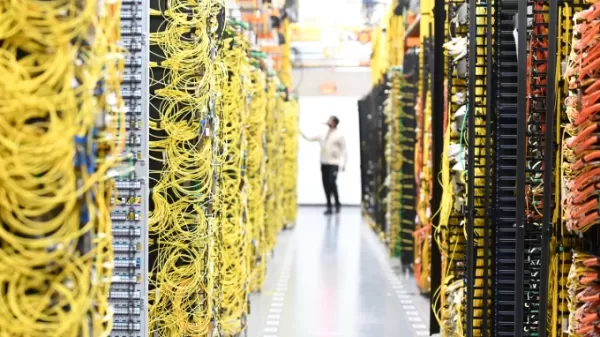
Image Credits:Amazon In 2012, the AlexNet paper by Alex Krizhevsky, Ilya Sutskever, and Geoffrey Hinton demonstrated how AI systems could learn to recognize objects in images by analyzing millions of examples. This approach was computationally intensive but became feasible with GPUs, sparking a decade of dedicated AI research as scientists developed new architectures for various tasks.
This culminated around 2020 with the launch of OpenAI's GPT-3, which showed that simply scaling a model 100 times larger could unlock capabilities like coding and reasoning without explicit training. This marked the beginning of what Kian Katanforoosh, CEO and founder of the AI agent platform Workera, calls the "age of scaling"—a period defined by the belief that more computing power, more data, and larger transformer models would inevitably lead to the next major AI breakthroughs.
Today, many researchers believe the AI industry is approaching the limits of scaling laws and is poised to enter a new era focused on research and innovation.
Yann LeCun, Meta's former chief AI scientist, has long criticized the over-reliance on scaling and emphasized the need for better architectures. Similarly, Sutskever noted in a recent interview that current models are reaching a plateau, with pre-training results leveling off, signaling a need for fresh ideas.
Techcrunch event Join the Disrupt 2026 Waitlist
Join the Disrupt 2026 waitlist to get early access when Early Bird tickets become available. Previous Disrupt events have featured leaders from Google Cloud, Netflix, Microsoft, Box, Phia, a16z, ElevenLabs, Wayve, Hugging Face, Elad Gil, and Vinod Khosla—part of over 250 industry experts leading 200+ sessions designed to accelerate your growth and sharpen your competitive edge. You'll also have the chance to connect with hundreds of startups driving innovation across various sectors.
Join the Disrupt 2026 Waitlist
Join the Disrupt 2026 waitlist to get early access when Early Bird tickets become available. Previous Disrupt events have featured leaders from Google Cloud, Netflix, Microsoft, Box, Phia, a16z, ElevenLabs, Wayve, Hugging Face, Elad Gil, and Vinod Khosla—part of over 250 industry experts leading 200+ sessions designed to accelerate your growth and sharpen your competitive edge. You'll also have the chance to connect with hundreds of startups driving innovation across various sectors.
San Francisco | October 13-15, 2026 WAITLIST NOW "I believe that within the next five years, we are likely to discover a better architecture that represents a significant improvement over transformers," Katanforoosh said. "If we don't, we shouldn't expect substantial progress in model capabilities."
Sometimes less is more
While large language models excel at general knowledge, many experts predict the next wave of enterprise AI adoption will be driven by smaller, more agile language models that can be fine-tuned for specific domain applications.
"Fine-tuned SLMs will become a major trend and a staple for mature AI enterprises in 2026, as their cost and performance advantages make them more appealing than off-the-shelf LLMs," Andy Markus, AT&T's chief data officer, told TechCrunch. "We're already seeing businesses increasingly rely on SLMs because, when properly fine-tuned, they match the accuracy of larger, general models for enterprise applications while offering superior cost-efficiency and speed."
This argument has been made before by French open-weight AI startup Mistral, which claims its small models outperform larger ones on several benchmarks after fine-tuning.
"The efficiency, cost-effectiveness, and adaptability of SLMs make them ideal for tailored applications where precision is critical," said Jon Knisley, an AI strategist at ABBYY, an enterprise AI company based in Austin.
While Markus believes SLMs will play a key role in the agentic era, Knisley points out that their compact nature makes them better suited for deployment on local devices—a trend accelerated by advancements in edge computing.
Learning through experience
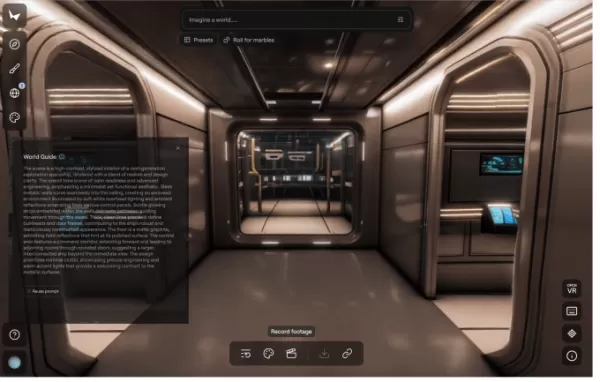
Space ship environment created in Marble with text prompt overlayed. Note how the lights are realistically reflected in the hub’s walls.Image Credits:World Labs/TechCrunch Humans learn not only through language but also by interacting with the world. LLMs, however, don't truly understand the world; they simply predict the next word or concept. This is why many researchers believe the next major advancement will come from world models—AI systems that learn how objects move and interact in 3D spaces, enabling them to make predictions and take actions.
There are growing indications that 2026 will be a pivotal year for world models. LeCun left Meta to start his own world model lab and is reportedly seeking a $5 billion valuation. Google's DeepMind has been developing Genie and, in August, launched its latest model capable of building real-time interactive general-purpose world models. Alongside demos from startups like Decart and Odyssey, Fei-Fei Li's World Labs has released its first commercial world model, Marble. New entrants like General Intuition secured a $134 million seed round in October to teach agents spatial reasoning, and video generation startup Runway released its first world model, GWM-1, in December.
Although researchers see long-term potential in robotics and autonomy, the near-term impact is expected to be most visible in video games. PitchBook forecasts that the market for world models in gaming could grow from $1.2 billion between 2022 and 2025 to $276 billion by 2030, driven by the technology's ability to generate interactive environments and more realistic non-player characters.
Pim de Witte, founder of General Intuition, told TechCrunch that virtual environments could not only transform gaming but also serve as crucial testing grounds for the next generation of foundation models.
Agentic nation
AI agents fell short of expectations in 2025, largely because integrating them into actual work systems proved difficult. Without access to tools and context, most agents were confined to pilot workflows.
Anthropic's Model Context Protocol (MCP), described as a "USB-C for AI," allows AI agents to communicate with external tools like databases, search engines, and APIs. This missing link is quickly becoming the standard, with OpenAI and Microsoft publicly endorsing MCP. Anthropic recently donated the protocol to the Linux Foundation's new Agentic AI Foundation, which aims to standardize open-source agentic tools. Google has also begun setting up its own managed MCP servers to connect AI agents to its products and services.
With MCP reducing the friction of connecting agents to real systems, 2026 is likely to be the year when agentic workflows move from demonstrations to everyday practice.
Rajeev Dham, a partner at Sapphire Ventures, believes these advancements will lead to agent-first solutions taking on "system-of-record roles" across various industries.
"As voice agents handle more end-to-end tasks such as intake and customer communication, they will also begin to form the core underlying systems," Dham said. "We expect to see this trend in sectors like home services, property technology, and healthcare, as well as in horizontal functions such as sales, IT, and support."
Augmentation, not automation

Image Credits:Photo by Igor Omilaev on Unsplash While the rise of agentic workflows may raise concerns about job losses, Katanforoosh of Workera isn't convinced that's the message for 2026.
"2026 will be the year of the humans," he said.
In 2024, many AI companies predicted they would automate jobs to eliminate the need for human workers. However, the technology isn't yet capable of that, and in an unstable economy, such rhetoric isn't popular. Katanforoosh suggests that next year, we'll realize that "AI hasn't worked as autonomously as we expected," and the conversation will shift toward how AI can augment human workflows rather than replace them.
"I also think many companies will start hiring again," he added, noting that he anticipates new roles in AI governance, transparency, safety, and data management. "I'm fairly optimistic that unemployment will average below 4% next year."
"People want to be above the API, not below it, and I believe 2026 will be a crucial year for this shift," de Witte added.
Getting physical

Mark Zuckerberg wears a pair of Meta Oakley Vanguard AI glasses during the Meta Connect event, Sept. 17, 2025. Image Credits:David Paul Morris/Bloomberg / Getty Images Advancements in small models, world models, and edge computing will enable more physical applications of machine learning, according to experts.
"Physical AI will go mainstream in 2026 as new categories of AI-powered devices—including robotics, autonomous vehicles, drones, and wearables—begin entering the market," Vikram Taneja, head of AT&T Ventures, told TechCrunch.
While autonomous vehicles and robotics are obvious use cases for physical AI and will continue to grow in 2026, the required training and deployment remain expensive. Wearables, on the other hand, offer a more affordable entry point with consumer appeal. Smart glasses like Meta's Ray-Bans are starting to include assistants that can answer questions about what you're looking at, and new form factors like AI-powered health rings and smart watches are making always-on, on-body inference more common.
"Connectivity providers will work to optimize their network infrastructure to support this new wave of devices, and those with flexible connectivity options will be best positioned to succeed," Taneja said.
Related article
 Indian Tech Tycoon Invests $30M in AI Rival to Microsoft Office
Serial entrepreneur Bhavin Turakhia is investing $30 million of his own capital, betting that the enterprise AI sector still has room for new players. His latest startup, Neo, operates on a core belief: legacy workplace software cannot simply be patc
Former OpenAI Chief Scientist Ilya’s SSI Unveils First Model
AI has achieved another major milestone. Following his departure from OpenAI, former chief scientist Ilya Sutskever established Safe Superintelligence Inc. (SSI), which has recently unveiled details regarding its inaugural model. Reports from oversea
Lovable Leads Atech's Seed Round as AI Ambient Coding Officially Enters the Hardware Field
On May 14, 2026, AI application development platform Lovable announced its participation in the $800,000 seed funding round for Danish hardware startup Atech. Led by Lovable, the round attracted top-tier venture capital firms including the a16z Scout
Related Special Topic Recommendations
chatbot
Indian Tech Tycoon Invests $30M in AI Rival to Microsoft Office
Serial entrepreneur Bhavin Turakhia is investing $30 million of his own capital, betting that the enterprise AI sector still has room for new players. His latest startup, Neo, operates on a core belief: legacy workplace software cannot simply be patc
Former OpenAI Chief Scientist Ilya’s SSI Unveils First Model
AI has achieved another major milestone. Following his departure from OpenAI, former chief scientist Ilya Sutskever established Safe Superintelligence Inc. (SSI), which has recently unveiled details regarding its inaugural model. Reports from oversea
Lovable Leads Atech's Seed Round as AI Ambient Coding Officially Enters the Hardware Field
On May 14, 2026, AI application development platform Lovable announced its participation in the $800,000 seed funding round for Danish hardware startup Atech. Led by Lovable, the round attracted top-tier venture capital firms including the a16z Scout
Related Special Topic Recommendations
chatbot
 Best AI Conversation Trainer Tools for Interview Practice
2026 Latest Best Top-rated AI Conversation Trainer Tools for Interview Practice are here on XIX.AI! This curated collection features powerful, game-changing tools that go through rigorous real-world tests to deliver accurate feedback. You’ll find a free vs paid comparison and detailed rankings to help you choose the must-try option that boosts your confidence and skills. Explore now to Discover your perfect tool for interview success!
 12 tools
 xix.ai
Design & Art
Best AI Style Transfer Tools for Creative Experiments
xix.ai
Design & Art
Best AI Style Transfer Tools for Creative Experiments
2026 Latest Best Top-rated AI Style Transfer Tools for Creative Experiments! XIX.AI has curated a powerful, game-changing collection of must-try tools that deliver exceptional results through real-world tests and rigorous rankings. These top solutions help creatives boost productivity significantly by accelerating content creation and unlocking endless creative possibilities. Explore now to discover your perfect tool and start creating today!
9 tools
xix.ai
Comic Creation
Best AI Dialogue Bubble Tools for Visual Storytelling
2026 Latest Best Top-Rated AI Dialogue Bubble Tools for Visual Storytelling are here on XIX.AI! This curated collection features powerful, game-changing tools that help creators boost productivity and overcome creative bottlenecks. Get a free vs paid comparison, see real-world tests, and check the latest rankings to find the must-try solutions perfect for crafting engaging visual narratives. Explore now to discover your ideal tool!
10 tools
xix.ai
Meeting Assistant
Top AI Meeting Summary Tools: Track Decisions and Follow-Ups Clearly
2026 Latest Top-Rated Best AI Meeting Summary Tools for Clear Decision Tracking and Effortless Follow-Ups. This curated list showcases powerful, game-changing solutions that boost productivity dramatically by automating meeting notes, identifying key action items, and streamlining team coordination across all projects. Get a free vs paid comparison along with real-world tests and weekly updated rankings to help you find the perfect tool. Explore now to unlock your AI edge!
9 tools
xix.ai
Data Analysis
Best AI Data Cleaning Tools: Fix Missing Values and Duplicates Fast
2026 Latest Best Top-rated AI Data Cleaning Tools for quick fixing of missing values and duplicates. This curated list showcases powerful, game-changing solutions that boost productivity significantly. Each option has undergone rigorous real-world tests to ensure reliability. Get a free vs paid comparison and discover the must-try tool that fits your needs best. Explore now at XIX.AI to Unlock your AI edge.
11 tools
xix.ai
Design & Art
Best AI Creative Ideation Tools for Artists: Break Through Visual Blocks
2026 Latest Best Top-Rated AI Creative Ideation Tools for Artists are curated by XIX.AI to help creators break through visual blocks and boost creativity instantly. These powerful game-changing tools offer real-world tests, detailed free vs paid comparison, and weekly updated rankings. Discover your perfect tool to accelerate content creation and unlock your AI edge today. Explore now!
14 tools
xix.ai

 Comments (1)
0/500
Comments (1)
0/500
![AlbertGarcía]()
Spannend! Gerade die 'praktische Anwendung' sehe ich als große Hürde. In meiner Firma wird noch wild mit LLM-APIs experimentiert, aber kaum jemand weiß, wie man diese wirklich in Workflows integriert, ohne Chaos zu stiften. Bin gespannt, ob die Hersteller 2026 endlich brauchbare Best Practices liefern, oder ob das wie so oft ein leeres Versprechen bleibt. 🤔
If 2025 served as a reality check for AI, 2026 will be the year the technology becomes genuinely useful. The focus is shifting from creating increasingly large language models to the more challenging task of making AI practical. This means deploying smaller models where they fit best, embedding intelligence into physical devices, and designing systems that seamlessly integrate into human workflows.
Experts interviewed by TechCrunch view 2026 as a transitional period—moving from brute-force scaling to exploring new architectures, from impressive demos to targeted implementations, and from agents that claim autonomy to those that genuinely enhance human productivity.
The celebration isn't over, but the industry is beginning to get serious.
Scaling laws won’t cut it
In 2012, the AlexNet paper by Alex Krizhevsky, Ilya Sutskever, and Geoffrey Hinton demonstrated how AI systems could learn to recognize objects in images by analyzing millions of examples. This approach was computationally intensive but became feasible with GPUs, sparking a decade of dedicated AI research as scientists developed new architectures for various tasks.
This culminated around 2020 with the launch of OpenAI's GPT-3, which showed that simply scaling a model 100 times larger could unlock capabilities like coding and reasoning without explicit training. This marked the beginning of what Kian Katanforoosh, CEO and founder of the AI agent platform Workera, calls the "age of scaling"—a period defined by the belief that more computing power, more data, and larger transformer models would inevitably lead to the next major AI breakthroughs.
Today, many researchers believe the AI industry is approaching the limits of scaling laws and is poised to enter a new era focused on research and innovation.
Yann LeCun, Meta's former chief AI scientist, has long criticized the over-reliance on scaling and emphasized the need for better architectures. Similarly, Sutskever noted in a recent interview that current models are reaching a plateau, with pre-training results leveling off, signaling a need for fresh ideas.
Techcrunch eventJoin the Disrupt 2026 Waitlist
Join the Disrupt 2026 waitlist to get early access when Early Bird tickets become available. Previous Disrupt events have featured leaders from Google Cloud, Netflix, Microsoft, Box, Phia, a16z, ElevenLabs, Wayve, Hugging Face, Elad Gil, and Vinod Khosla—part of over 250 industry experts leading 200+ sessions designed to accelerate your growth and sharpen your competitive edge. You'll also have the chance to connect with hundreds of startups driving innovation across various sectors.
Join the Disrupt 2026 Waitlist
Join the Disrupt 2026 waitlist to get early access when Early Bird tickets become available. Previous Disrupt events have featured leaders from Google Cloud, Netflix, Microsoft, Box, Phia, a16z, ElevenLabs, Wayve, Hugging Face, Elad Gil, and Vinod Khosla—part of over 250 industry experts leading 200+ sessions designed to accelerate your growth and sharpen your competitive edge. You'll also have the chance to connect with hundreds of startups driving innovation across various sectors.
San Francisco | October 13-15, 2026 WAITLIST NOW"I believe that within the next five years, we are likely to discover a better architecture that represents a significant improvement over transformers," Katanforoosh said. "If we don't, we shouldn't expect substantial progress in model capabilities."
Sometimes less is more
While large language models excel at general knowledge, many experts predict the next wave of enterprise AI adoption will be driven by smaller, more agile language models that can be fine-tuned for specific domain applications.
"Fine-tuned SLMs will become a major trend and a staple for mature AI enterprises in 2026, as their cost and performance advantages make them more appealing than off-the-shelf LLMs," Andy Markus, AT&T's chief data officer, told TechCrunch. "We're already seeing businesses increasingly rely on SLMs because, when properly fine-tuned, they match the accuracy of larger, general models for enterprise applications while offering superior cost-efficiency and speed."
This argument has been made before by French open-weight AI startup Mistral, which claims its small models outperform larger ones on several benchmarks after fine-tuning.
"The efficiency, cost-effectiveness, and adaptability of SLMs make them ideal for tailored applications where precision is critical," said Jon Knisley, an AI strategist at ABBYY, an enterprise AI company based in Austin.
While Markus believes SLMs will play a key role in the agentic era, Knisley points out that their compact nature makes them better suited for deployment on local devices—a trend accelerated by advancements in edge computing.
Learning through experience
Humans learn not only through language but also by interacting with the world. LLMs, however, don't truly understand the world; they simply predict the next word or concept. This is why many researchers believe the next major advancement will come from world models—AI systems that learn how objects move and interact in 3D spaces, enabling them to make predictions and take actions.
There are growing indications that 2026 will be a pivotal year for world models. LeCun left Meta to start his own world model lab and is reportedly seeking a $5 billion valuation. Google's DeepMind has been developing Genie and, in August, launched its latest model capable of building real-time interactive general-purpose world models. Alongside demos from startups like Decart and Odyssey, Fei-Fei Li's World Labs has released its first commercial world model, Marble. New entrants like General Intuition secured a $134 million seed round in October to teach agents spatial reasoning, and video generation startup Runway released its first world model, GWM-1, in December.
Although researchers see long-term potential in robotics and autonomy, the near-term impact is expected to be most visible in video games. PitchBook forecasts that the market for world models in gaming could grow from $1.2 billion between 2022 and 2025 to $276 billion by 2030, driven by the technology's ability to generate interactive environments and more realistic non-player characters.
Pim de Witte, founder of General Intuition, told TechCrunch that virtual environments could not only transform gaming but also serve as crucial testing grounds for the next generation of foundation models.
Agentic nation
AI agents fell short of expectations in 2025, largely because integrating them into actual work systems proved difficult. Without access to tools and context, most agents were confined to pilot workflows.
Anthropic's Model Context Protocol (MCP), described as a "USB-C for AI," allows AI agents to communicate with external tools like databases, search engines, and APIs. This missing link is quickly becoming the standard, with OpenAI and Microsoft publicly endorsing MCP. Anthropic recently donated the protocol to the Linux Foundation's new Agentic AI Foundation, which aims to standardize open-source agentic tools. Google has also begun setting up its own managed MCP servers to connect AI agents to its products and services.
With MCP reducing the friction of connecting agents to real systems, 2026 is likely to be the year when agentic workflows move from demonstrations to everyday practice.
Rajeev Dham, a partner at Sapphire Ventures, believes these advancements will lead to agent-first solutions taking on "system-of-record roles" across various industries.
"As voice agents handle more end-to-end tasks such as intake and customer communication, they will also begin to form the core underlying systems," Dham said. "We expect to see this trend in sectors like home services, property technology, and healthcare, as well as in horizontal functions such as sales, IT, and support."
Augmentation, not automation
While the rise of agentic workflows may raise concerns about job losses, Katanforoosh of Workera isn't convinced that's the message for 2026.
"2026 will be the year of the humans," he said.
In 2024, many AI companies predicted they would automate jobs to eliminate the need for human workers. However, the technology isn't yet capable of that, and in an unstable economy, such rhetoric isn't popular. Katanforoosh suggests that next year, we'll realize that "AI hasn't worked as autonomously as we expected," and the conversation will shift toward how AI can augment human workflows rather than replace them.
"I also think many companies will start hiring again," he added, noting that he anticipates new roles in AI governance, transparency, safety, and data management. "I'm fairly optimistic that unemployment will average below 4% next year."
"People want to be above the API, not below it, and I believe 2026 will be a crucial year for this shift," de Witte added.
Getting physical
Advancements in small models, world models, and edge computing will enable more physical applications of machine learning, according to experts.
"Physical AI will go mainstream in 2026 as new categories of AI-powered devices—including robotics, autonomous vehicles, drones, and wearables—begin entering the market," Vikram Taneja, head of AT&T Ventures, told TechCrunch.
While autonomous vehicles and robotics are obvious use cases for physical AI and will continue to grow in 2026, the required training and deployment remain expensive. Wearables, on the other hand, offer a more affordable entry point with consumer appeal. Smart glasses like Meta's Ray-Bans are starting to include assistants that can answer questions about what you're looking at, and new form factors like AI-powered health rings and smart watches are making always-on, on-body inference more common.
"Connectivity providers will work to optimize their network infrastructure to support this new wave of devices, and those with flexible connectivity options will be best positioned to succeed," Taneja said.








 Indian Tech Tycoon Invests $30M in AI Rival to Microsoft Office
Serial entrepreneur Bhavin Turakhia is investing $30 million of his own capital, betting that the enterprise AI sector still has room for new players. His latest startup, Neo, operates on a core belief: legacy workplace software cannot simply be patc
Indian Tech Tycoon Invests $30M in AI Rival to Microsoft Office
Serial entrepreneur Bhavin Turakhia is investing $30 million of his own capital, betting that the enterprise AI sector still has room for new players. His latest startup, Neo, operates on a core belief: legacy workplace software cannot simply be patc
 Former OpenAI Chief Scientist Ilya’s SSI Unveils First Model
AI has achieved another major milestone. Following his departure from OpenAI, former chief scientist Ilya Sutskever established Safe Superintelligence Inc. (SSI), which has recently unveiled details regarding its inaugural model. Reports from oversea
Former OpenAI Chief Scientist Ilya’s SSI Unveils First Model
AI has achieved another major milestone. Following his departure from OpenAI, former chief scientist Ilya Sutskever established Safe Superintelligence Inc. (SSI), which has recently unveiled details regarding its inaugural model. Reports from oversea
 Lovable Leads Atech's Seed Round as AI Ambient Coding Officially Enters the Hardware Field
On May 14, 2026, AI application development platform Lovable announced its participation in the $800,000 seed funding round for Danish hardware startup Atech. Led by Lovable, the round attracted top-tier venture capital firms including the a16z Scout
Lovable Leads Atech's Seed Round as AI Ambient Coding Officially Enters the Hardware Field
On May 14, 2026, AI application development platform Lovable announced its participation in the $800,000 seed funding round for Danish hardware startup Atech. Led by Lovable, the round attracted top-tier venture capital firms including the a16z Scout

2026 Latest Best Top-rated AI Conversation Trainer Tools for Interview Practice are here on XIX.AI! This curated collection features powerful, game-changing tools that go through rigorous real-world tests to deliver accurate feedback. You’ll find a free vs paid comparison and detailed rankings to help you choose the must-try option that boosts your confidence and skills. Explore now to Discover your perfect tool for interview success!
12 tools
xix.ai

2026 Latest Best Top-rated AI Style Transfer Tools for Creative Experiments! XIX.AI has curated a powerful, game-changing collection of must-try tools that deliver exceptional results through real-world tests and rigorous rankings. These top solutions help creatives boost productivity significantly by accelerating content creation and unlocking endless creative possibilities. Explore now to discover your perfect tool and start creating today!
9 tools
xix.ai

2026 Latest Best Top-Rated AI Dialogue Bubble Tools for Visual Storytelling are here on XIX.AI! This curated collection features powerful, game-changing tools that help creators boost productivity and overcome creative bottlenecks. Get a free vs paid comparison, see real-world tests, and check the latest rankings to find the must-try solutions perfect for crafting engaging visual narratives. Explore now to discover your ideal tool!
10 tools
xix.ai

2026 Latest Top-Rated Best AI Meeting Summary Tools for Clear Decision Tracking and Effortless Follow-Ups. This curated list showcases powerful, game-changing solutions that boost productivity dramatically by automating meeting notes, identifying key action items, and streamlining team coordination across all projects. Get a free vs paid comparison along with real-world tests and weekly updated rankings to help you find the perfect tool. Explore now to unlock your AI edge!
9 tools
xix.ai

2026 Latest Best Top-rated AI Data Cleaning Tools for quick fixing of missing values and duplicates. This curated list showcases powerful, game-changing solutions that boost productivity significantly. Each option has undergone rigorous real-world tests to ensure reliability. Get a free vs paid comparison and discover the must-try tool that fits your needs best. Explore now at XIX.AI to Unlock your AI edge.
11 tools
xix.ai

2026 Latest Best Top-Rated AI Creative Ideation Tools for Artists are curated by XIX.AI to help creators break through visual blocks and boost creativity instantly. These powerful game-changing tools offer real-world tests, detailed free vs paid comparison, and weekly updated rankings. Discover your perfect tool to accelerate content creation and unlock your AI edge today. Explore now!
14 tools
xix.ai

Spannend! Gerade die 'praktische Anwendung' sehe ich als große Hürde. In meiner Firma wird noch wild mit LLM-APIs experimentiert, aber kaum jemand weiß, wie man diese wirklich in Workflows integriert, ohne Chaos zu stiften. Bin gespannt, ob die Hersteller 2026 endlich brauchbare Best Practices liefern, oder ob das wie so oft ein leeres Versprechen bleibt. 🤔












