


 Home
HomeTop 10 Python Libraries for Machine Learning and AI Development
Python has emerged as the leading programming language for machine learning and artificial intelligence, surpassing older industry standards with its superior efficiency. Its intuitive, English-like syntax lowers the barrier to entry while remaining powerful enough for advanced applications.
The language's extensive ecosystem of open-source libraries empowers developers at all skill levels to tackle complex tasks in ML/AI, data science, and computational processing with remarkable ease.
What Makes Python Ideal for ML and AI Development?
Beyond its rich library collection, Python's true strength lies in its exceptional versatility. The language seamlessly integrates with other programming environments while maintaining compatibility across operating systems and platforms.
For developing neural networks and ML algorithms, Python significantly reduces implementation time through specialized packages. Its object-oriented nature enables efficient data handling and organization - critical capabilities for modern AI applications.
Python's vibrant, rapidly expanding community provides unparalleled support resources. As adoption grows across industries, developers continuously innovate new business solutions using Python's powerful toolkit.
Discover the 10 most essential Python libraries accelerating ML and AI advancements:
1. NumPy
NumPy stands as the foundational numerical computing library for Python's scientific ecosystem. Its array objects enable high-performance mathematical operations while conserving memory compared to standard Python lists.
The library revolutionizes matrix manipulation - allowing data transposition, reshaping, and computation optimization critical for building efficient machine learning models.
Core NumPy capabilities:
- High-performance multidimensional array objects.
- Advanced array manipulation operations.
- Sophisticated data processing functions.
- Comprehensive linear algebra and statistical methods.
2. SciPy
Built upon NumPy's foundation, SciPy extends scientific computing capabilities with specialized modules for technical applications. It transforms raw numerical functions into practical scientific tools.
The library excels at processing large datasets and provides essential image manipulation capabilities alongside fundamental mathematical functions.
SciPy's distinguishing features:
- Intuitive scientific computing interface.
- Advanced data visualization and processing.
- Engineering-grade computation tools.
- Optimized large-scale data handling.
3. Theano
This specialized numerical computation library optimizes matrix operations specifically for machine learning applications. Theano enables efficient dimensional array construction for developing deep learning architectures.
When leveraging GPU acceleration, Theano achieves processing speeds up to 140x faster than conventional CPU implementations.
Theano's technical advantages:
- Integrated validation and testing frameworks.
- Rapid, stable numerical evaluations.
- High-performance computational models.
- Advanced mathematical optimization.
4. Pandas
Pandas revolutionizes data analysis through its efficient DataFrame structure, enabling sophisticated manipulation of structured data and time-series information.
The library's Series and DataFrame objects provide intuitive yet powerful interfaces for exploring and transforming complex datasets.
Essential Pandas functionality:
- Intelligent data indexing.
- Advanced alignment operations.
- Dataset merging capabilities.
- Comprehensive data analysis tools.
5. TensorFlow
This differentiable programming framework provides comprehensive tools for constructing deep learning models and neural networks. TensorFlow's adaptable architecture supports deployment across CPU, GPU, and TPU environments.
The library excels at implementing reinforcement learning systems and enables direct model visualization throughout the development process.
TensorFlow's core benefits:
- Cross-platform computational architecture.
- Multi-device operational flexibility.
- Advanced abstraction layers.
- Sophisticated neural network management.
6. Keras
Keras simplifies neural network development with its high-level API, running seamlessly on TensorFlow and Theano backends. Its modular design allows rapid prototyping with minimal code.
The framework supports extensive customization through configurable layers, objectives, and optimization functions across diverse computing environments.
Key Keras attributes:
- Efficient data pooling.
- Flexible neural layer construction.
- Deep learning model architecture.
- Customizable activation functions.
7. PyTorch
Combining Torch's computational framework with Python's accessibility, PyTorch enables dynamic graph computation essential for NLP and computer vision applications.
The library delivers exceptional performance across processor architectures while offering extensible APIs through its native development toolkit.
PyTorch's distinguishing features:
- Advanced statistical operations.
- Granular dataset control.
- Deep learning architecture development.
- Cross-platform adaptability.
8. Scikit-Learn
This comprehensive machine learning toolkit powers diverse applications from image recognition to predictive analytics. Scikit-learn's standardized interface simplifies data sharing and algorithm implementation.
The library integrates seamlessly with SciPy's ecosystem while maintaining enterprise-grade stability.
Scikit-learn's core capabilities:
- Sophisticated classification systems.
- Production-grade ML pipelines.
- Data preprocessing tools.
- Model evaluation frameworks.
9. Matplotlib
Matplotlib delivers MATLAB-quality visualization capabilities within Python's open-source ecosystem. The library generates publication-ready static, animated, and interactive data representations.
Its object-oriented API enables extensive customization while maintaining compatibility with Python GUI frameworks.
Matplotlib's visualization strengths:
- Professional-grade plotting.
- Custom visual styling options.
- Multi-format export capabilities.
- Interactive data exploration.
10. Plotly
Plotly completes Python's visualization toolkit with enterprise-grade dashboards and charts. Built on web technologies, it enables immersive visual analytics across data platforms.
The library excels at creating presentation-ready interactive graphics while simplifying complex dataset integration.
Plotly's visualization advantages:
- Professional dashboard creation.
- Dynamic visualization engine.
- Large-scale data processing.
- Seamless data importing.
Related article
 Claude’s Cowork feature now recalls your past chat instructions
Anthropic’s update to Claude’s memory system removes a major friction point in using AI agents: the repetitive need to re-explain context that the AI already retains. By merging the memory architectures of standard chat and Claude Cowork, Claude now
Gemini faces branding challenges, as does the wider AI industry
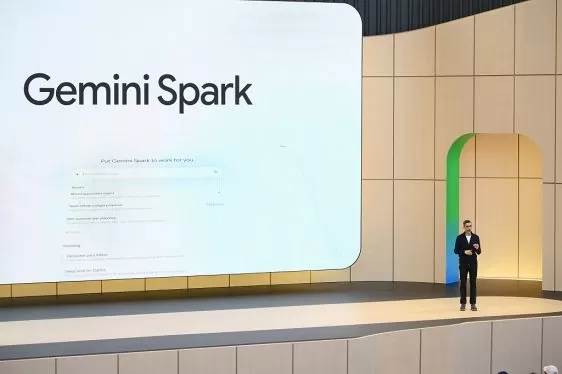
Google’s Wednesday announcement regarding new Gemini Live voice features makes a valid point: “You shouldn’t have to guess whether a task requires Spark, a Daily Brief, or a quick inbox search.” While Google presents this as a commitment to handling
Apple Watch’s New AI Features Normalize Always-Listening Tech
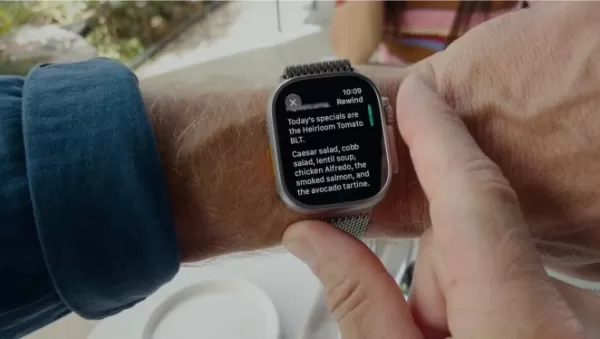
Apple is pushing consumers to embrace a new norm: your devices are constantly listening.During Wednesday’s “Surprise and Shine” iPhone launch, which unveiled the latest hardware, the true revelation wasn’t the rumored foldable iPhone, but rather how
Related Special Topic Recommendations
Design & Art
Claude’s Cowork feature now recalls your past chat instructions
Anthropic’s update to Claude’s memory system removes a major friction point in using AI agents: the repetitive need to re-explain context that the AI already retains. By merging the memory architectures of standard chat and Claude Cowork, Claude now
Gemini faces branding challenges, as does the wider AI industry
Google’s Wednesday announcement regarding new Gemini Live voice features makes a valid point: “You shouldn’t have to guess whether a task requires Spark, a Daily Brief, or a quick inbox search.” While Google presents this as a commitment to handling
Apple Watch’s New AI Features Normalize Always-Listening Tech
Apple is pushing consumers to embrace a new norm: your devices are constantly listening.During Wednesday’s “Surprise and Shine” iPhone launch, which unveiled the latest hardware, the true revelation wasn’t the rumored foldable iPhone, but rather how
Related Special Topic Recommendations
Design & Art
 Top AI Illustration Tools: Create Editorial Scenes and Cover Art Faster
2026 Latest Top-rated AI Illustration Tools: Our curated list features the best powerfully designed tools for creating stunning editorial scenes and eye-catching cover art quickly. Each option has gone through rigorous real-world tests, offering a free vs paid comparison to help you find the perfect match for your workflow. Try these must-try solutions today to unlock your AI edge and boost your creative productivity. Explore now at XIX.AI.
 10 tools
 xix.ai
Education and Learning
Top AI Tutors for Exam Prep: Practice Math, Science, and English
xix.ai
Education and Learning
Top AI Tutors for Exam Prep: Practice Math, Science, and English
2026 Latest Top-Rated Best AI Tutors for Exam Prep are here on XIX.AI! Our curated list features powerful game-changing tools that offer free vs paid comparison, real-world tests, and weekly updated rankings. They help boost your writing efficiency, simplify complex topic learning, and unlock your academic potential. Explore now to Discover your perfect exam prep tool and Start creating today to Unlock your AI edge!
10 tools
xix.ai
Finance
AI Budget Planning Tools for Personal Money Management
2026 Latest Best Top-Rated AI Budget Planning Tools for Personal Money Management are here on XIX.AI! This curated collection features powerful, game-changing solutions that help you conduct real-world tests, understand spending habits, and create personalized plans to boost productivity. Enjoy a free vs paid comparison along with detailed rankings. Must-try tools designed to simplify money management and unlock your AI edge. Explore now!
11 tools
xix.ai
Health & Wellness
AI Sleep Tracking Assistants: Improve Recovery with Better Bedtime Habits
2026 Latest Best Top-Rated AI Sleep Tracking Assistants curated for ultimate recovery. This fully updated weekly guide features powerful tools that deliver real-world tests, free vs paid comparison, and detailed rankings to help you find the must-try solution that boosts sleep quality and supports better bedtime habits. Explore now at XIX.AI to Unlock your AI edge.
10 tools
xix.ai
Data Analysis
AI SQL Copilots for Product and Revenue Analytics
2026 Latest Best Top-Rated AI SQL Copilots for Product and Revenue Analytics! XIX.AI has curated a powerful, game-changing collection of must-try tools that undergo real-world tests through weekly updated rankings. These tools help users boost productivity significantly by accelerating data analysis, streamlining complex queries, and generating accurate insights to drive smarter business decisions. Explore now to Discover your perfect tool for unlocking your AI edge!
14 tools
xix.ai
Education and Learning
Best AI Homework Helpers That Teach: Learn Concepts, Not Just Answers
2026 Latest Best Top-Rated AI Homework Helpers That Teach Core Concepts Not Just Answers Powerful Tools for Students Must-Try Curated List Weekly Updated Free vs Paid Comparison Real-World Tests Accurate Rankings to Help You Unlock Your Full Learning Potential Explore now to Discover your perfect tool for smarter studying.
10 tools
xix.ai

 Comments (3)
0/500
Comments (3)
0/500
![ThomasRoberts]()
Scikit-learn is my go-to for quick prototyping, but I'm curious about newer libraries like JAX. Anyone tried it for production models? The ecosystem moves so fast! 🤔
![OliviaBaker]()
Scikit-learn is my go-to, but honestly, I spend half my time just trying to figure out which library to use for what. The ecosystem is amazing, but a bit overwhelming for beginners. Anyone else feel this way? 😅
![WillieJackson]()
Excelente compilación para principiantes. Personalmente uso Scikit-learn en varios proyectos universitarios y no puedo creer lo sencillo que lo hace todo. Aunque a veces TensorFlow me parece un monstruo complicado 😅 ¿Alguien más ha probado PyTorch recientemente? Dicen que es más flexible.
Python has emerged as the leading programming language for machine learning and artificial intelligence, surpassing older industry standards with its superior efficiency. Its intuitive, English-like syntax lowers the barrier to entry while remaining powerful enough for advanced applications.
The language's extensive ecosystem of open-source libraries empowers developers at all skill levels to tackle complex tasks in ML/AI, data science, and computational processing with remarkable ease.
What Makes Python Ideal for ML and AI Development?
Beyond its rich library collection, Python's true strength lies in its exceptional versatility. The language seamlessly integrates with other programming environments while maintaining compatibility across operating systems and platforms.
For developing neural networks and ML algorithms, Python significantly reduces implementation time through specialized packages. Its object-oriented nature enables efficient data handling and organization - critical capabilities for modern AI applications.
Python's vibrant, rapidly expanding community provides unparalleled support resources. As adoption grows across industries, developers continuously innovate new business solutions using Python's powerful toolkit.
Discover the 10 most essential Python libraries accelerating ML and AI advancements:
1. NumPy
NumPy stands as the foundational numerical computing library for Python's scientific ecosystem. Its array objects enable high-performance mathematical operations while conserving memory compared to standard Python lists.
The library revolutionizes matrix manipulation - allowing data transposition, reshaping, and computation optimization critical for building efficient machine learning models.
Core NumPy capabilities:
- High-performance multidimensional array objects.
- Advanced array manipulation operations.
- Sophisticated data processing functions.
- Comprehensive linear algebra and statistical methods.
2. SciPy
Built upon NumPy's foundation, SciPy extends scientific computing capabilities with specialized modules for technical applications. It transforms raw numerical functions into practical scientific tools.
The library excels at processing large datasets and provides essential image manipulation capabilities alongside fundamental mathematical functions.
SciPy's distinguishing features:
- Intuitive scientific computing interface.
- Advanced data visualization and processing.
- Engineering-grade computation tools.
- Optimized large-scale data handling.
3. Theano
This specialized numerical computation library optimizes matrix operations specifically for machine learning applications. Theano enables efficient dimensional array construction for developing deep learning architectures.
When leveraging GPU acceleration, Theano achieves processing speeds up to 140x faster than conventional CPU implementations.
Theano's technical advantages:
- Integrated validation and testing frameworks.
- Rapid, stable numerical evaluations.
- High-performance computational models.
- Advanced mathematical optimization.
4. Pandas
Pandas revolutionizes data analysis through its efficient DataFrame structure, enabling sophisticated manipulation of structured data and time-series information.
The library's Series and DataFrame objects provide intuitive yet powerful interfaces for exploring and transforming complex datasets.
Essential Pandas functionality:
- Intelligent data indexing.
- Advanced alignment operations.
- Dataset merging capabilities.
- Comprehensive data analysis tools.
5. TensorFlow
This differentiable programming framework provides comprehensive tools for constructing deep learning models and neural networks. TensorFlow's adaptable architecture supports deployment across CPU, GPU, and TPU environments.
The library excels at implementing reinforcement learning systems and enables direct model visualization throughout the development process.
TensorFlow's core benefits:
- Cross-platform computational architecture.
- Multi-device operational flexibility.
- Advanced abstraction layers.
- Sophisticated neural network management.
6. Keras
Keras simplifies neural network development with its high-level API, running seamlessly on TensorFlow and Theano backends. Its modular design allows rapid prototyping with minimal code.
The framework supports extensive customization through configurable layers, objectives, and optimization functions across diverse computing environments.
Key Keras attributes:
- Efficient data pooling.
- Flexible neural layer construction.
- Deep learning model architecture.
- Customizable activation functions.
7. PyTorch
Combining Torch's computational framework with Python's accessibility, PyTorch enables dynamic graph computation essential for NLP and computer vision applications.
The library delivers exceptional performance across processor architectures while offering extensible APIs through its native development toolkit.
PyTorch's distinguishing features:
- Advanced statistical operations.
- Granular dataset control.
- Deep learning architecture development.
- Cross-platform adaptability.
8. Scikit-Learn
This comprehensive machine learning toolkit powers diverse applications from image recognition to predictive analytics. Scikit-learn's standardized interface simplifies data sharing and algorithm implementation.
The library integrates seamlessly with SciPy's ecosystem while maintaining enterprise-grade stability.
Scikit-learn's core capabilities:
- Sophisticated classification systems.
- Production-grade ML pipelines.
- Data preprocessing tools.
- Model evaluation frameworks.
9. Matplotlib
Matplotlib delivers MATLAB-quality visualization capabilities within Python's open-source ecosystem. The library generates publication-ready static, animated, and interactive data representations.
Its object-oriented API enables extensive customization while maintaining compatibility with Python GUI frameworks.
Matplotlib's visualization strengths:
- Professional-grade plotting.
- Custom visual styling options.
- Multi-format export capabilities.
- Interactive data exploration.
10. Plotly
Plotly completes Python's visualization toolkit with enterprise-grade dashboards and charts. Built on web technologies, it enables immersive visual analytics across data platforms.
The library excels at creating presentation-ready interactive graphics while simplifying complex dataset integration.
Plotly's visualization advantages:
- Professional dashboard creation.
- Dynamic visualization engine.
- Large-scale data processing.
- Seamless data importing.








 Claude’s Cowork feature now recalls your past chat instructions
Anthropic’s update to Claude’s memory system removes a major friction point in using AI agents: the repetitive need to re-explain context that the AI already retains. By merging the memory architectures of standard chat and Claude Cowork, Claude now
Claude’s Cowork feature now recalls your past chat instructions
Anthropic’s update to Claude’s memory system removes a major friction point in using AI agents: the repetitive need to re-explain context that the AI already retains. By merging the memory architectures of standard chat and Claude Cowork, Claude now
 Gemini faces branding challenges, as does the wider AI industry
Google’s Wednesday announcement regarding new Gemini Live voice features makes a valid point: “You shouldn’t have to guess whether a task requires Spark, a Daily Brief, or a quick inbox search.” While Google presents this as a commitment to handling
Gemini faces branding challenges, as does the wider AI industry
Google’s Wednesday announcement regarding new Gemini Live voice features makes a valid point: “You shouldn’t have to guess whether a task requires Spark, a Daily Brief, or a quick inbox search.” While Google presents this as a commitment to handling
 Apple Watch’s New AI Features Normalize Always-Listening Tech
Apple is pushing consumers to embrace a new norm: your devices are constantly listening.During Wednesday’s “Surprise and Shine” iPhone launch, which unveiled the latest hardware, the true revelation wasn’t the rumored foldable iPhone, but rather how
Apple Watch’s New AI Features Normalize Always-Listening Tech
Apple is pushing consumers to embrace a new norm: your devices are constantly listening.During Wednesday’s “Surprise and Shine” iPhone launch, which unveiled the latest hardware, the true revelation wasn’t the rumored foldable iPhone, but rather how

2026 Latest Top-rated AI Illustration Tools: Our curated list features the best powerfully designed tools for creating stunning editorial scenes and eye-catching cover art quickly. Each option has gone through rigorous real-world tests, offering a free vs paid comparison to help you find the perfect match for your workflow. Try these must-try solutions today to unlock your AI edge and boost your creative productivity. Explore now at XIX.AI.
10 tools
xix.ai

2026 Latest Top-Rated Best AI Tutors for Exam Prep are here on XIX.AI! Our curated list features powerful game-changing tools that offer free vs paid comparison, real-world tests, and weekly updated rankings. They help boost your writing efficiency, simplify complex topic learning, and unlock your academic potential. Explore now to Discover your perfect exam prep tool and Start creating today to Unlock your AI edge!
10 tools
xix.ai

2026 Latest Best Top-Rated AI Budget Planning Tools for Personal Money Management are here on XIX.AI! This curated collection features powerful, game-changing solutions that help you conduct real-world tests, understand spending habits, and create personalized plans to boost productivity. Enjoy a free vs paid comparison along with detailed rankings. Must-try tools designed to simplify money management and unlock your AI edge. Explore now!
11 tools
xix.ai

2026 Latest Best Top-Rated AI Sleep Tracking Assistants curated for ultimate recovery. This fully updated weekly guide features powerful tools that deliver real-world tests, free vs paid comparison, and detailed rankings to help you find the must-try solution that boosts sleep quality and supports better bedtime habits. Explore now at XIX.AI to Unlock your AI edge.
10 tools
xix.ai

2026 Latest Best Top-Rated AI SQL Copilots for Product and Revenue Analytics! XIX.AI has curated a powerful, game-changing collection of must-try tools that undergo real-world tests through weekly updated rankings. These tools help users boost productivity significantly by accelerating data analysis, streamlining complex queries, and generating accurate insights to drive smarter business decisions. Explore now to Discover your perfect tool for unlocking your AI edge!
14 tools
xix.ai

2026 Latest Best Top-Rated AI Homework Helpers That Teach Core Concepts Not Just Answers Powerful Tools for Students Must-Try Curated List Weekly Updated Free vs Paid Comparison Real-World Tests Accurate Rankings to Help You Unlock Your Full Learning Potential Explore now to Discover your perfect tool for smarter studying.
10 tools
xix.ai

Scikit-learn is my go-to for quick prototyping, but I'm curious about newer libraries like JAX. Anyone tried it for production models? The ecosystem moves so fast! 🤔
Scikit-learn is my go-to, but honestly, I spend half my time just trying to figure out which library to use for what. The ecosystem is amazing, but a bit overwhelming for beginners. Anyone else feel this way? 😅
Excelente compilación para principiantes. Personalmente uso Scikit-learn en varios proyectos universitarios y no puedo creer lo sencillo que lo hace todo. Aunque a veces TensorFlow me parece un monstruo complicado 😅 ¿Alguien más ha probado PyTorch recientemente? Dicen que es más flexible.












