Discover quality AI tools
Bring together the world’s leading artificial intelligence tools to help improve work efficiency

Articles published by RalphBaker
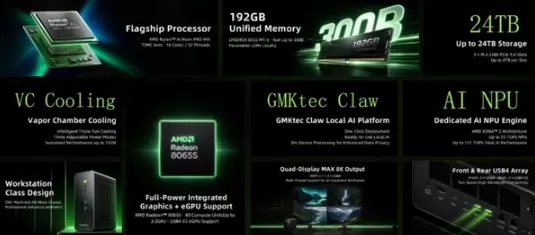
E-MoKe launches EVO-X5Pro mini PC at IFA 2026 featuring AMD Ryzen AI Max+ PRO495 chip with 131TOPS total compute. It supports 192GB LPDDR5X memory, enabling local 300B LLM inference. Equipped with VC cooling and USB4 ports, the device targets high-performance edge AI. Expected release in October 2026, price TBD.
E-MoKe launches EVO-X5Pro mini PC at IFA 2026 featuring AMD Ryzen AI Max+ PRO495 chip with 131TOPS total compute. It supports 192GB LPDDR5X memory, enabling local 300B LLM inference. Equipped with VC cooling and USB4 ports, the device targets high-performance edge AI. Expected release in October 2026, price TBD.
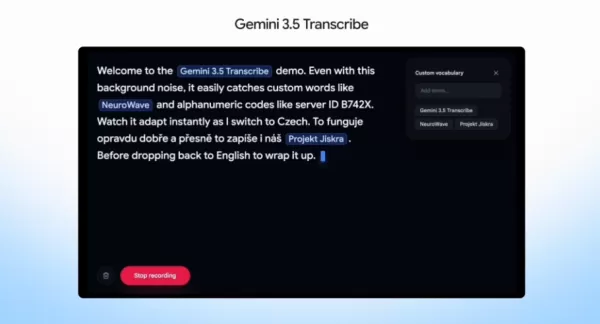
Google launched Gemini 3.5 Transcribe, its most accurate speech-to-text model, now open to developers and users. It achieves a 2.6% word error rate in non-streaming scenarios, excelling in noisy environments and complex terminology. Key features include noise filtering, filler word removal, and multi-model task delegation. Supporting 85 languages with speaker identification, it integrates into Android, macOS, and Chrome. This release strengthens Google's AI ecosystem alongside Gemini 3.7 Flash and Waymo integration, offering robust voice recognition for diverse applications.
Google launched Gemini 3.5 Transcribe, its most accurate speech-to-text model, now open to developers and users. It achieves a 2.6% word error rate in non-streaming scenarios, excelling in noisy environments and complex terminology. Key features include noise filtering, filler word removal, and multi-model task delegation. Supporting 85 languages with speaker identification, it integrates into Android, macOS, and Chrome. This release strengthens Google's AI ecosystem alongside Gemini 3.7 Flash and Waymo integration, offering robust voice recognition for diverse applications.
In a US government test, Anthropic's Mythos AI model identified multiple vulnerabilities in highly classified systems within hours, far outperforming manual methods. However, the White House ordered Anthropic to restrict foreign access to its latest models, citing security risks. Over 100 companies, including Adobe and NVIDIA, urged the government to revoke the directive, warning it could benefit adversaries.
In a US government test, Anthropic's Mythos AI model identified multiple vulnerabilities in highly classified systems within hours, far outperforming manual methods. However, the White House ordered Anthropic to restrict foreign access to its latest models, citing security risks. Over 100 companies, including Adobe and NVIDIA, urged the government to revoke the directive, warning it could benefit adversaries.

Alibaba launches Qwen3.7-Plus, a new multimodal agent model integrating advanced vision-language capabilities with strong agent skills for coding, tool use, and workflows. This iteration signals the shift toward embodied intelligence and enterprise-level automation in the large model race.
Alibaba launches Qwen3.7-Plus, a new multimodal agent model integrating advanced vision-language capabilities with strong agent skills for coding, tool use, and workflows. This iteration signals the shift toward embodied intelligence and enterprise-level automation in the large model race.
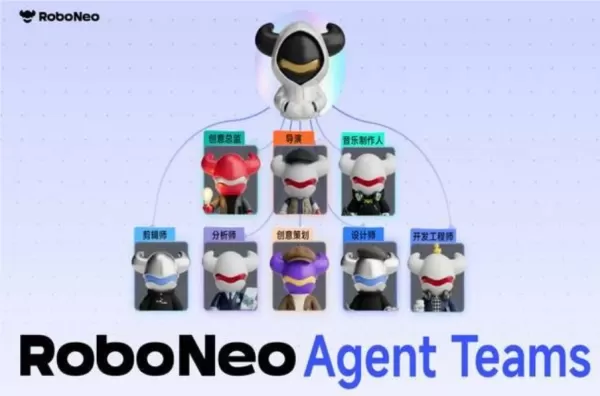
Meitu’s AI tool RoboNeo has launched an Image Creation Agent Teams model shifting AI from a single tool to a multi role creative team The upgrade introduces role based AI agents that handle tasks from concept to refinement enabling users to generate branded content via natural language It reportedly cuts video production time sharply such as reducing cross border e commerce video replication from hours to minutes and supports full chain automation for short videos The update integrates Seedance 2 0 for better visual consistency and adds a memory library to help brands accumulate and reuse digital assets
Meitu’s AI tool RoboNeo has launched an Image Creation Agent Teams model shifting AI from a single tool to a multi role creative team The upgrade introduces role based AI agents that handle tasks from concept to refinement enabling users to generate branded content via natural language It reportedly cuts video production time sharply such as reducing cross border e commerce video replication from hours to minutes and supports full chain automation for short videos The update integrates Seedance 2 0 for better visual consistency and adds a memory library to help brands accumulate and reuse digital assets
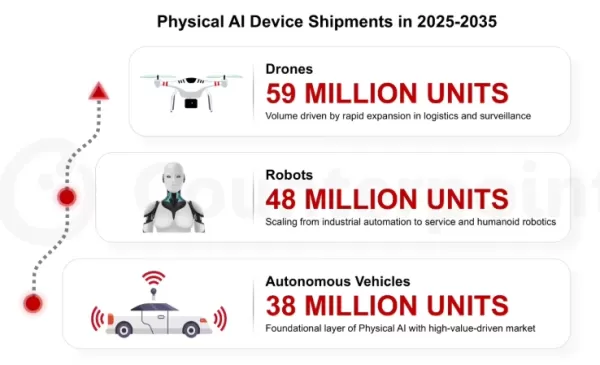
Counterpoint Research forecasts 145 million physical AI device shipments from 2025-2035, led by drones (59M units), robots (48M), and autonomous vehicles (38M). Humanoid robots are the fastest-growing segment, with installations projected to surpass 100,000 by 2028, a sevenfold increase from 2025. Drones are noted as an early large-scale application, seeing strong demand in logistics and surveillance.
Counterpoint Research forecasts 145 million physical AI device shipments from 2025-2035, led by drones (59M units), robots (48M), and autonomous vehicles (38M). Humanoid robots are the fastest-growing segment, with installations projected to surpass 100,000 by 2028, a sevenfold increase from 2025. Drones are noted as an early large-scale application, seeing strong demand in logistics and surveillance.
Zhipu AI launched GLM-5V-Turbo, a multimodal coding model for visual programming. It interprets images, design drafts, and documents to generate functional front-end code. The model features a 200k context window and leads in benchmarks for multimodal coding and GUI agents. It also enhances Zhipus AutoClaw agent, enabling visual data analysis and report generation.
Zhipu AI launched GLM-5V-Turbo, a multimodal coding model for visual programming. It interprets images, design drafts, and documents to generate functional front-end code. The model features a 200k context window and leads in benchmarks for multimodal coding and GUI agents. It also enhances Zhipus AutoClaw agent, enabling visual data analysis and report generation.
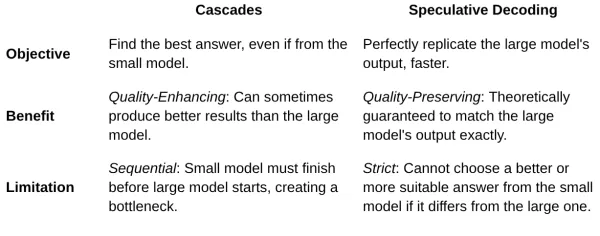
Researchers propose "speculative cascades," merging speculative decoding and standard cascades to improve LLM efficiency. The method uses a smaller model to draft outputs and a deferral rule to decide whether to accept or pass tasks to a larger model. Tests show it achieves better speed-quality trade-offs than standalone techniques, optimizing cost and performance across tasks like summarization, reasoning, and coding.
Researchers propose "speculative cascades," merging speculative decoding and standard cascades to improve LLM efficiency. The method uses a smaller model to draft outputs and a deferral rule to decide whether to accept or pass tasks to a larger model. Tests show it achieves better speed-quality trade-offs than standalone techniques, optimizing cost and performance across tasks like summarization, reasoning, and coding.