


 Home
xAI Lost $6.4B Last Year, SpaceX Prospectus Reveals

According to a recent IPO prospectus filed by SpaceX with the U.S. Securities and Exchange Commission, Elon Musk’s AI company xAI has disclosed its financial figures for the first time. The data shows that the company’s losses widened sharply in 2025, with an operating loss of $6.4 billion against revenue of just $3.2 billion for the same period.
Deepening Losses and a Surge in Parameters
This figure highlights that the gap between xAI’s revenue and expenses is growing even wider. Compared to a loss of $1.56 billion in 2024, the company’s spending pace is striking. However, SpaceX noted in the filing that this investment will not slow down, and it plans to scale the parameter count of its AI assistant Grok into the trillions.
To support that ambition, xAI’s investment in computing infrastructure is expanding at an exponential rate. In the first quarter of 2026 alone, capital expenditures in this area reached $7.7 billion, equating to an annualized spend of over $30.8 billion.
Limited Users and Computing Power in Space
Despite the massive investment, current commercial returns and user adoption remain low. As of March 2026, Grok had only 117 million monthly active users, and out of the 550 million monthly active users on the X platform, only one in five actually used the AI features.
To present a future profit outlook to investors, SpaceX proposed a highly ambitious solution in the prospectus. The company plans to begin deploying orbital AI computing satellites as early as 2028, aiming to significantly reduce the high costs of ground-based data centers by moving large model training and inference into space.
Related article
 Fortinet’s Virtue AI Deal Bolsters Agentic AI Security
Ken Xie, Founder and CEO of Fortinet | Credit: FortinetFortinet acquires Virtue AI to strengthen runtime protection and automated validation for AI systems as enterprises scale deployment of agents and modelsFortinet has acquired Virtue AI, a company
xAI Unveils Early Grok Beta for Complex Programming Tasks
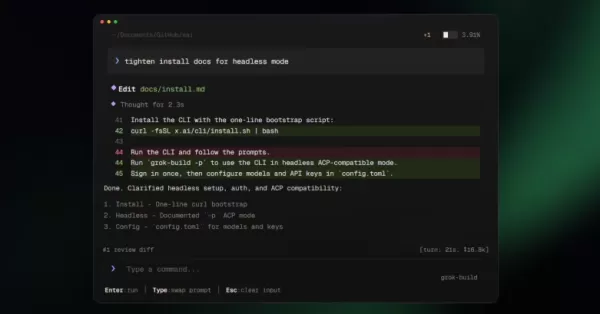
On May 14, Elon Musk’s AI venture xAI launched an early beta of a coding assistant named Grok Build. Currently restricted to SuperGrok subscribers, the platform is designed to streamline software engineering and handle intricate programming workflows
Anthropic CEO Outlines Plan To Pace The Frontier
AI researchers have issued increasingly urgent warnings about artificial intelligence risks, with OpenAI CEO Sam Altman suggesting it may be time to “pace” development. But what would that actually entail?In a recent blog post, Anthropic CEO Dario Am
Related Special Topic Recommendations
Design & Art
 Top AI Illustration Tools: Create Editorial Scenes and Cover Art Faster
2026 Latest Top-rated AI Illustration Tools: Our curated list features the best powerfully designed tools for creating stunning editorial scenes and eye-catching cover art quickly. Each option has gone through rigorous real-world tests, offering a free vs paid comparison to help you find the perfect match for your workflow. Try these must-try solutions today to unlock your AI edge and boost your creative productivity. Explore now at XIX.AI.
 10 tools
 xix.ai
Education and Learning
Top AI Tutors for Exam Prep: Practice Math, Science, and English
2026 Latest Top-Rated Best AI Tutors for Exam Prep are here on XIX.AI! Our curated list features powerful game-changing tools that offer free vs paid comparison, real-world tests, and weekly updated rankings. They help boost your writing efficiency, simplify complex topic learning, and unlock your academic potential. Explore now to Discover your perfect exam prep tool and Start creating today to Unlock your AI edge!
10 tools
xix.ai
Finance
AI Budget Planning Tools for Personal Money Management
2026 Latest Best Top-Rated AI Budget Planning Tools for Personal Money Management are here on XIX.AI! This curated collection features powerful, game-changing solutions that help you conduct real-world tests, understand spending habits, and create personalized plans to boost productivity. Enjoy a free vs paid comparison along with detailed rankings. Must-try tools designed to simplify money management and unlock your AI edge. Explore now!
11 tools
xix.ai
Health & Wellness
AI Sleep Tracking Assistants: Improve Recovery with Better Bedtime Habits
2026 Latest Best Top-Rated AI Sleep Tracking Assistants curated for ultimate recovery. This fully updated weekly guide features powerful tools that deliver real-world tests, free vs paid comparison, and detailed rankings to help you find the must-try solution that boosts sleep quality and supports better bedtime habits. Explore now at XIX.AI to Unlock your AI edge.
10 tools
xix.ai
Data Analysis
AI SQL Copilots for Product and Revenue Analytics
2026 Latest Best Top-Rated AI SQL Copilots for Product and Revenue Analytics! XIX.AI has curated a powerful, game-changing collection of must-try tools that undergo real-world tests through weekly updated rankings. These tools help users boost productivity significantly by accelerating data analysis, streamlining complex queries, and generating accurate insights to drive smarter business decisions. Explore now to Discover your perfect tool for unlocking your AI edge!
14 tools
xix.ai
Education and Learning
Best AI Homework Helpers That Teach: Learn Concepts, Not Just Answers
2026 Latest Best Top-Rated AI Homework Helpers That Teach Core Concepts Not Just Answers Powerful Tools for Students Must-Try Curated List Weekly Updated Free vs Paid Comparison Real-World Tests Accurate Rankings to Help You Unlock Your Full Learning Potential Explore now to Discover your perfect tool for smarter studying.
10 tools
xix.ai

 Comments (0)
0/500
According to a recent IPO prospectus filed by SpaceX with the U.S. Securities and Exchange Commission, Elon Musk’s AI company xAI has disclosed its financial figures for the first time. The data shows that the company’s losses widened sharply in 2025, with an operating loss of $6.4 billion against revenue of just $3.2 billion for the same period.
Deepening Losses and a Surge in Parameters
This figure highlights that the gap between xAI’s revenue and expenses is growing even wider. Compared to a loss of $1.56 billion in 2024, the company’s spending pace is striking. However, SpaceX noted in the filing that this investment will not slow down, and it plans to scale the parameter count of its AI assistant Grok into the trillions.
To support that ambition, xAI’s investment in computing infrastructure is expanding at an exponential rate. In the first quarter of 2026 alone, capital expenditures in this area reached $7.7 billion, equating to an annualized spend of over $30.8 billion.
Limited Users and Computing Power in Space
Despite the massive investment, current commercial returns and user adoption remain low. As of March 2026, Grok had only 117 million monthly active users, and out of the 550 million monthly active users on the X platform, only one in five actually used the AI features.
To present a future profit outlook to investors, SpaceX proposed a highly ambitious solution in the prospectus. The company plans to begin deploying orbital AI computing satellites as early as 2028, aiming to significantly reduce the high costs of ground-based data centers by moving large model training and inference into space.








 Fortinet’s Virtue AI Deal Bolsters Agentic AI Security
Ken Xie, Founder and CEO of Fortinet | Credit: FortinetFortinet acquires Virtue AI to strengthen runtime protection and automated validation for AI systems as enterprises scale deployment of agents and modelsFortinet has acquired Virtue AI, a company
 xAI Unveils Early Grok Beta for Complex Programming Tasks
On May 14, Elon Musk’s AI venture xAI launched an early beta of a coding assistant named Grok Build. Currently restricted to SuperGrok subscribers, the platform is designed to streamline software engineering and handle intricate programming workflows
 Anthropic CEO Outlines Plan To Pace The Frontier
AI researchers have issued increasingly urgent warnings about artificial intelligence risks, with OpenAI CEO Sam Altman suggesting it may be time to “pace” development. But what would that actually entail?In a recent blog post, Anthropic CEO Dario Am

2026 Latest Top-rated AI Illustration Tools: Our curated list features the best powerfully designed tools for creating stunning editorial scenes and eye-catching cover art quickly. Each option has gone through rigorous real-world tests, offering a free vs paid comparison to help you find the perfect match for your workflow. Try these must-try solutions today to unlock your AI edge and boost your creative productivity. Explore now at XIX.AI.
10 tools
xix.ai

2026 Latest Top-Rated Best AI Tutors for Exam Prep are here on XIX.AI! Our curated list features powerful game-changing tools that offer free vs paid comparison, real-world tests, and weekly updated rankings. They help boost your writing efficiency, simplify complex topic learning, and unlock your academic potential. Explore now to Discover your perfect exam prep tool and Start creating today to Unlock your AI edge!
10 tools
xix.ai

2026 Latest Best Top-Rated AI Budget Planning Tools for Personal Money Management are here on XIX.AI! This curated collection features powerful, game-changing solutions that help you conduct real-world tests, understand spending habits, and create personalized plans to boost productivity. Enjoy a free vs paid comparison along with detailed rankings. Must-try tools designed to simplify money management and unlock your AI edge. Explore now!
11 tools
xix.ai

2026 Latest Best Top-Rated AI Sleep Tracking Assistants curated for ultimate recovery. This fully updated weekly guide features powerful tools that deliver real-world tests, free vs paid comparison, and detailed rankings to help you find the must-try solution that boosts sleep quality and supports better bedtime habits. Explore now at XIX.AI to Unlock your AI edge.
10 tools
xix.ai

2026 Latest Best Top-Rated AI SQL Copilots for Product and Revenue Analytics! XIX.AI has curated a powerful, game-changing collection of must-try tools that undergo real-world tests through weekly updated rankings. These tools help users boost productivity significantly by accelerating data analysis, streamlining complex queries, and generating accurate insights to drive smarter business decisions. Explore now to Discover your perfect tool for unlocking your AI edge!
14 tools
xix.ai

2026 Latest Best Top-Rated AI Homework Helpers That Teach Core Concepts Not Just Answers Powerful Tools for Students Must-Try Curated List Weekly Updated Free vs Paid Comparison Real-World Tests Accurate Rankings to Help You Unlock Your Full Learning Potential Explore now to Discover your perfect tool for smarter studying.
10 tools
xix.ai












