


 Home
HomeWorried about a $2,300 iPhone? How US tariffs are causing tech buyers to scramble
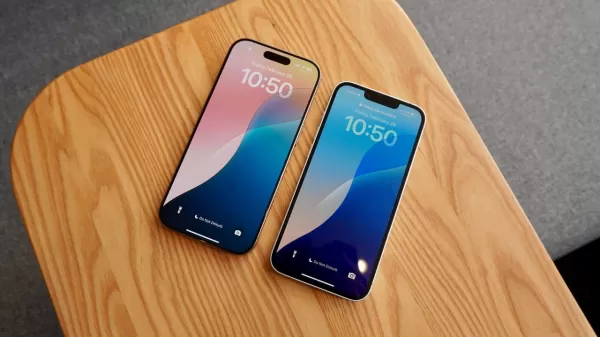
Technology is woven into the fabric of our daily lives, from the smartphones we use to the AI systems that power our devices. Yet, a significant portion of this tech, including the critical chips and processors, is manufactured overseas and then shipped to the U.S. This reliance on international production has become a hot topic, especially with the Trump administration's recent tariff policies targeting foreign trade partners. These tariffs are set to shake up the prices of the tech products we rely on.
If you're thinking about upgrading your phone or buying new tech, you might want to do it sooner rather than later. Here's why.
The Tariff Impact
Tariffs mean higher costs for goods imported into the U.S., and this directly affects companies that import tech parts or finished devices. How these increased costs translate to consumer prices depends on how companies decide to handle them. They might absorb the costs, pass them on to you through higher prices, or use a mix of both strategies.
Some tech giants have already hinted at price increases. For instance, Acer's CEO Jason Chen told The Telegraph in February that they would hike prices by 10% to cover tariff costs. Meanwhile, Best Buy's CEO Corie Barry mentioned during a March earnings call that price increases for American consumers were "highly likely."
Other companies are adjusting their operations in response. Nintendo delayed preorders for its new Switch 2 in the U.S. shortly after its public launch, likely due to reevaluating costs. Apple, according to a Wall Street Journal report, was considering shifting more iPhone production to India to dodge high tariffs on China. However, with the latest round of tariffs now hitting India and Vietnam, where Apple also has manufacturing facilities, the situation has become even more complex.
A $2,300 iPhone?
You might have come across headlines suggesting that the iPhone could cost up to $2,300. While Apple hasn't confirmed any specific price hikes, a Reuters report, citing Rosenblatt Securities analysts, suggested that a 43% increase could be on the cards if Apple passes on higher component costs to consumers. This would push the price of the iPhone 16 Pro Max, with its 6.9-inch display and 1TB of storage, from $1,599 to a staggering $2,300.
Another example comes from a TechInsights analyst who told The WSJ that the hardware cost of the iPhone 16 Pro (256GB) is around $550, with a consumer price of $1,100. Tariffs could increase that hardware cost to $850, potentially raising the overall price by about $300 if Apple maintains its profit margins.
Customers are already responding to these looming price hikes. A Bloomberg report noted a surge in panic-buying at Apple Stores across the country over the weekend, as people rushed to buy iPhones before prices go up.
Beyond iPhones, tariffs will likely affect a wide range of tech products. CBS News has created a price tracker with graphs showing potential price impacts on various products, including fruits and vegetables, cars and trucks, and raw materials like aluminum, which are often used in tech.
Should You Buy Tech Now?
Deciding when to buy tech is a personal choice influenced by your needs and budget. Given the expected price increases, if you need a new device, now might be a good time to buy.
Another option is to consider refurbished products. These are already in the U.S. and often come with significant discounts. Popular sites like Gazelle and BackMarket offer a range of refurbished devices.
Stay updated with the latest tech news by subscribing to our Tech Today newsletter, delivered to your inbox every morning.
Related article
 Apple Smart Glasses Could Debut at WWDC27, Highlighting Privacy Protection
Bloomberg’s Mark Gurman reports that Apple’s smart glasses, codenamed N50, are slated for a WWDC27 debut in June 2027, with a retail launch expected in autumn 2027. Originally targeted for late this year and early 2027, the device’s release has been
Inside Details Exposed About Next-Gen Gemini: Strained Computing Power, Internal Teams Disagreed on Development Priorities and Resource Allocation
Reports indicate that the launch of Google’s highly anticipated next-generation Gemini model has been pushed back. Internal disagreements over development priorities and resource allocation, combined with limited computing capacity and complex approv
OpenAI Dismisses Growth Slowdown Concerns, Says Multiple Business Units Accelerating
In response to external scrutiny regarding decelerating sales growth and missed internal benchmarks, AI leader OpenAI issued a confident statement on Tuesday, April 28. The company clarified that its consumer products and enterprise services are adva
Related Special Topic Recommendations
Data Analysis
Apple Smart Glasses Could Debut at WWDC27, Highlighting Privacy Protection
Bloomberg’s Mark Gurman reports that Apple’s smart glasses, codenamed N50, are slated for a WWDC27 debut in June 2027, with a retail launch expected in autumn 2027. Originally targeted for late this year and early 2027, the device’s release has been
Inside Details Exposed About Next-Gen Gemini: Strained Computing Power, Internal Teams Disagreed on Development Priorities and Resource Allocation
Reports indicate that the launch of Google’s highly anticipated next-generation Gemini model has been pushed back. Internal disagreements over development priorities and resource allocation, combined with limited computing capacity and complex approv
OpenAI Dismisses Growth Slowdown Concerns, Says Multiple Business Units Accelerating
In response to external scrutiny regarding decelerating sales growth and missed internal benchmarks, AI leader OpenAI issued a confident statement on Tuesday, April 28. The company clarified that its consumer products and enterprise services are adva
Related Special Topic Recommendations
Data Analysis
 AI SQL Copilots for Revenue Dashboards, Funnel Analysis, and Product Metrics
2026 Latest Best AI SQL Copilots Ranked Top-Rated! XIX.AI curates a powerful game-changing collection for weekly updated real-world tests. These must-try tools help you generate accurate revenue dashboards, analyze sales funnels, and track product metrics swiftly, boosting productivity massively. Explore now to Discover your perfect tool for data-driven decision making! 238 characters
 9 tools
 xix.ai
Music composition
Best AI Melody Writing Tools for Song Drafts
xix.ai
Music composition
Best AI Melody Writing Tools for Song Drafts
2026 Latest Best Top-Rated AI Melody Writing Tools for Song Drafts! XIX.AI has curated a highly powerful game-changing collection that goes through rigorous real-world tests to deliver the best writing experience. You can find detailed free vs paid comparisons, accurate rankings, and must-try options designed to help you create stunning song drafts effortlessly and boost your creative productivity significantly. Explore now to discover your perfect tool!
8 tools
xix.ai
chatbot
Best AI Conversation Trainer Tools for Interview Practice
2026 Latest Best Top-rated AI Conversation Trainer Tools for Interview Practice are here on XIX.AI! This curated collection features powerful, game-changing tools that go through rigorous real-world tests to deliver accurate feedback. You’ll find a free vs paid comparison and detailed rankings to help you choose the must-try option that boosts your confidence and skills. Explore now to Discover your perfect tool for interview success!
12 tools
xix.ai
Design & Art
Best AI Style Transfer Tools for Creative Experiments
2026 Latest Best Top-rated AI Style Transfer Tools for Creative Experiments! XIX.AI has curated a powerful, game-changing collection of must-try tools that deliver exceptional results through real-world tests and rigorous rankings. These top solutions help creatives boost productivity significantly by accelerating content creation and unlocking endless creative possibilities. Explore now to discover your perfect tool and start creating today!
9 tools
xix.ai
Comic Creation
Best AI Dialogue Bubble Tools for Visual Storytelling
2026 Latest Best Top-Rated AI Dialogue Bubble Tools for Visual Storytelling are here on XIX.AI! This curated collection features powerful, game-changing tools that help creators boost productivity and overcome creative bottlenecks. Get a free vs paid comparison, see real-world tests, and check the latest rankings to find the must-try solutions perfect for crafting engaging visual narratives. Explore now to discover your ideal tool!
10 tools
xix.ai
Meeting Assistant
Top AI Meeting Summary Tools: Track Decisions and Follow-Ups Clearly
2026 Latest Top-Rated Best AI Meeting Summary Tools for Clear Decision Tracking and Effortless Follow-Ups. This curated list showcases powerful, game-changing solutions that boost productivity dramatically by automating meeting notes, identifying key action items, and streamlining team coordination across all projects. Get a free vs paid comparison along with real-world tests and weekly updated rankings to help you find the perfect tool. Explore now to unlock your AI edge!
9 tools
xix.ai

 Comments (20)
0/500
Comments (20)
0/500
![ThomasRoberts]()
As if iPhones weren't already expensive enough... $2,300 for a phone? That's just insane. 😅 Guess I'll be sticking with my old model for a few more years.
![HarryRoberts]()
So a $2,300 iPhone is supposedly around the corner because of tariffs? Guess I'll be holding onto my SE for another decade 💀 Seriously though, this reliance on overseas chips is a ticking time bomb for consumers.
![JamesJones]()
Tariffs driving up iPhone prices to $2,300? That's wild! I'm already saving up, but it feels like tech is becoming a luxury. Maybe it's time to stick with my old phone a bit longer. 📱😅
![BrianLewis]()
Wow, a $2,300 iPhone? That’s wild! Tariffs are really shaking things up. I’m curious if this’ll push Apple to make more stuff in the US or just make us pay more. Either way, my wallet’s already crying 😅
![PatrickGarcia]()
The $2,300 iPhone price tag is wild! 😱 Tariffs are making us rethink every tech purchase. I wonder if this pushes more companies to manufacture locally?
![PatrickEvans]()
Preocupado com um iPhone de $2.300? Pois é, eu também! Esses tarifas dos EUA estão bagunçando os preços da tecnologia. Parece que estamos jogando um jogo de 'quem compra tecnologia mais rápido' antes que os preços subam ainda mais! 😅 Alguém mais sentindo o aperto ou é só eu? Talvez devêssemos começar um clube de economia de tecnologia!
Technology is woven into the fabric of our daily lives, from the smartphones we use to the AI systems that power our devices. Yet, a significant portion of this tech, including the critical chips and processors, is manufactured overseas and then shipped to the U.S. This reliance on international production has become a hot topic, especially with the Trump administration's recent tariff policies targeting foreign trade partners. These tariffs are set to shake up the prices of the tech products we rely on.
If you're thinking about upgrading your phone or buying new tech, you might want to do it sooner rather than later. Here's why.
The Tariff Impact
Tariffs mean higher costs for goods imported into the U.S., and this directly affects companies that import tech parts or finished devices. How these increased costs translate to consumer prices depends on how companies decide to handle them. They might absorb the costs, pass them on to you through higher prices, or use a mix of both strategies.
Some tech giants have already hinted at price increases. For instance, Acer's CEO Jason Chen told The Telegraph in February that they would hike prices by 10% to cover tariff costs. Meanwhile, Best Buy's CEO Corie Barry mentioned during a March earnings call that price increases for American consumers were "highly likely."
Other companies are adjusting their operations in response. Nintendo delayed preorders for its new Switch 2 in the U.S. shortly after its public launch, likely due to reevaluating costs. Apple, according to a Wall Street Journal report, was considering shifting more iPhone production to India to dodge high tariffs on China. However, with the latest round of tariffs now hitting India and Vietnam, where Apple also has manufacturing facilities, the situation has become even more complex.
A $2,300 iPhone?
You might have come across headlines suggesting that the iPhone could cost up to $2,300. While Apple hasn't confirmed any specific price hikes, a Reuters report, citing Rosenblatt Securities analysts, suggested that a 43% increase could be on the cards if Apple passes on higher component costs to consumers. This would push the price of the iPhone 16 Pro Max, with its 6.9-inch display and 1TB of storage, from $1,599 to a staggering $2,300.
Another example comes from a TechInsights analyst who told The WSJ that the hardware cost of the iPhone 16 Pro (256GB) is around $550, with a consumer price of $1,100. Tariffs could increase that hardware cost to $850, potentially raising the overall price by about $300 if Apple maintains its profit margins.
Customers are already responding to these looming price hikes. A Bloomberg report noted a surge in panic-buying at Apple Stores across the country over the weekend, as people rushed to buy iPhones before prices go up.
Beyond iPhones, tariffs will likely affect a wide range of tech products. CBS News has created a price tracker with graphs showing potential price impacts on various products, including fruits and vegetables, cars and trucks, and raw materials like aluminum, which are often used in tech.
Should You Buy Tech Now?
Deciding when to buy tech is a personal choice influenced by your needs and budget. Given the expected price increases, if you need a new device, now might be a good time to buy.
Another option is to consider refurbished products. These are already in the U.S. and often come with significant discounts. Popular sites like Gazelle and BackMarket offer a range of refurbished devices.
Stay updated with the latest tech news by subscribing to our Tech Today newsletter, delivered to your inbox every morning.








 Apple Smart Glasses Could Debut at WWDC27, Highlighting Privacy Protection
Bloomberg’s Mark Gurman reports that Apple’s smart glasses, codenamed N50, are slated for a WWDC27 debut in June 2027, with a retail launch expected in autumn 2027. Originally targeted for late this year and early 2027, the device’s release has been
Apple Smart Glasses Could Debut at WWDC27, Highlighting Privacy Protection
Bloomberg’s Mark Gurman reports that Apple’s smart glasses, codenamed N50, are slated for a WWDC27 debut in June 2027, with a retail launch expected in autumn 2027. Originally targeted for late this year and early 2027, the device’s release has been
 Inside Details Exposed About Next-Gen Gemini: Strained Computing Power, Internal Teams Disagreed on Development Priorities and Resource Allocation
Reports indicate that the launch of Google’s highly anticipated next-generation Gemini model has been pushed back. Internal disagreements over development priorities and resource allocation, combined with limited computing capacity and complex approv
Inside Details Exposed About Next-Gen Gemini: Strained Computing Power, Internal Teams Disagreed on Development Priorities and Resource Allocation
Reports indicate that the launch of Google’s highly anticipated next-generation Gemini model has been pushed back. Internal disagreements over development priorities and resource allocation, combined with limited computing capacity and complex approv
 OpenAI Dismisses Growth Slowdown Concerns, Says Multiple Business Units Accelerating
In response to external scrutiny regarding decelerating sales growth and missed internal benchmarks, AI leader OpenAI issued a confident statement on Tuesday, April 28. The company clarified that its consumer products and enterprise services are adva
OpenAI Dismisses Growth Slowdown Concerns, Says Multiple Business Units Accelerating
In response to external scrutiny regarding decelerating sales growth and missed internal benchmarks, AI leader OpenAI issued a confident statement on Tuesday, April 28. The company clarified that its consumer products and enterprise services are adva

2026 Latest Best AI SQL Copilots Ranked Top-Rated! XIX.AI curates a powerful game-changing collection for weekly updated real-world tests. These must-try tools help you generate accurate revenue dashboards, analyze sales funnels, and track product metrics swiftly, boosting productivity massively. Explore now to Discover your perfect tool for data-driven decision making! 238 characters
9 tools
xix.ai

2026 Latest Best Top-Rated AI Melody Writing Tools for Song Drafts! XIX.AI has curated a highly powerful game-changing collection that goes through rigorous real-world tests to deliver the best writing experience. You can find detailed free vs paid comparisons, accurate rankings, and must-try options designed to help you create stunning song drafts effortlessly and boost your creative productivity significantly. Explore now to discover your perfect tool!
8 tools
xix.ai

2026 Latest Best Top-rated AI Conversation Trainer Tools for Interview Practice are here on XIX.AI! This curated collection features powerful, game-changing tools that go through rigorous real-world tests to deliver accurate feedback. You’ll find a free vs paid comparison and detailed rankings to help you choose the must-try option that boosts your confidence and skills. Explore now to Discover your perfect tool for interview success!
12 tools
xix.ai

2026 Latest Best Top-rated AI Style Transfer Tools for Creative Experiments! XIX.AI has curated a powerful, game-changing collection of must-try tools that deliver exceptional results through real-world tests and rigorous rankings. These top solutions help creatives boost productivity significantly by accelerating content creation and unlocking endless creative possibilities. Explore now to discover your perfect tool and start creating today!
9 tools
xix.ai

2026 Latest Best Top-Rated AI Dialogue Bubble Tools for Visual Storytelling are here on XIX.AI! This curated collection features powerful, game-changing tools that help creators boost productivity and overcome creative bottlenecks. Get a free vs paid comparison, see real-world tests, and check the latest rankings to find the must-try solutions perfect for crafting engaging visual narratives. Explore now to discover your ideal tool!
10 tools
xix.ai

2026 Latest Top-Rated Best AI Meeting Summary Tools for Clear Decision Tracking and Effortless Follow-Ups. This curated list showcases powerful, game-changing solutions that boost productivity dramatically by automating meeting notes, identifying key action items, and streamlining team coordination across all projects. Get a free vs paid comparison along with real-world tests and weekly updated rankings to help you find the perfect tool. Explore now to unlock your AI edge!
9 tools
xix.ai

As if iPhones weren't already expensive enough... $2,300 for a phone? That's just insane. 😅 Guess I'll be sticking with my old model for a few more years.
So a $2,300 iPhone is supposedly around the corner because of tariffs? Guess I'll be holding onto my SE for another decade 💀 Seriously though, this reliance on overseas chips is a ticking time bomb for consumers.
Tariffs driving up iPhone prices to $2,300? That's wild! I'm already saving up, but it feels like tech is becoming a luxury. Maybe it's time to stick with my old phone a bit longer. 📱😅
Wow, a $2,300 iPhone? That’s wild! Tariffs are really shaking things up. I’m curious if this’ll push Apple to make more stuff in the US or just make us pay more. Either way, my wallet’s already crying 😅
The $2,300 iPhone price tag is wild! 😱 Tariffs are making us rethink every tech purchase. I wonder if this pushes more companies to manufacture locally?
Preocupado com um iPhone de $2.300? Pois é, eu também! Esses tarifas dos EUA estão bagunçando os preços da tecnologia. Parece que estamos jogando um jogo de 'quem compra tecnologia mais rápido' antes que os preços subam ainda mais! 😅 Alguém mais sentindo o aperto ou é só eu? Talvez devêssemos começar um clube de economia de tecnologia!












