


 Home
HomeWorld, Sam Altman's venture, expands human verification to Tinder.
At a stylish venue near San Francisco's pier, Sam Altman's identity verification initiative, World, marked its next phase of evolution and a significant expansion of its goals. And it's starting with Tinder.
Tools for Humanity (TFH), the company behind World, announced plans on Friday to integrate its verification technology into dating apps, event ticketing systems, business platforms, email services, and other areas of public life.
"The world is approaching the era of very powerful AI, which is enabling many wonderful things," Altman told the packed crowd at The Midway. "We are also moving toward a future where more content will be generated by AI than by humans," he added. "I'm sure many of you have wondered, 'Am I interacting with an AI or a person, or a mix of both, and how can I be sure?'"
World (formerly Worldcoin) sets itself apart from other ID verification services by confirming that a real, living person is using a digital service while still protecting their anonymity. This relies on sophisticated cryptographic techniques (specifically, "zero-knowledge proof-based authentication"). The result is what the company calls "proof of human" tools—mechanisms designed to verify human activity in a world increasingly populated by AI agents and bots.
Its primary verification tool is a spherical digital scanner called the Orb, which examines a user's eyes and converts their iris pattern into a unique, anonymous cryptographic identifier (known as a verified World ID). This ID can be used to access World's services, though users can also use the app without it.
Altman kept his comments brief on Friday (noting that TFH's co-founder and CEO, Alex Blania, was absent due to unexpected hand surgery). He then handed the presentation over to World's chief product officer, Tiago Sada, and his team.
Sada explained that World was launching the latest version of its app (the previous version debuted at an event in December), along with a wide array of new technology integrations.
World has been preparing for some time to offer a verification service for dating apps, most notably Tinder. Last year, Tinder initiated a World ID pilot program in Japan. That trial proved successful, leading to the announcement that Tinder will roll out its verification integration globally, including in the U.S. The program adds a World ID badge to the profiles of users who complete its verification process, confirming they are real people.
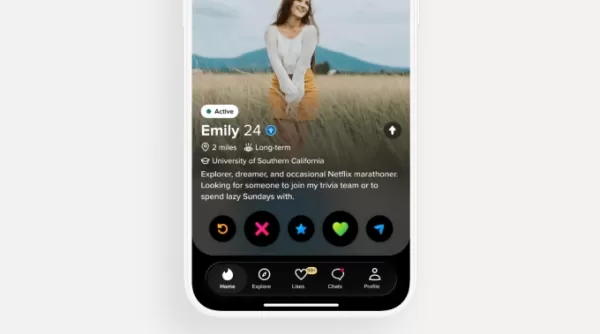
Image Credits:World
World is also engaging the entertainment industry with a new feature called Concert Kit, which allows artists to reserve a portion of concert tickets exclusively for users verified with a World ID. This aims to protect fans from scalpers who often use automated bots to buy up tickets. Concert Kit works with major ticketing platforms like Ticketmaster and Eventbrite. The company is promoting it through partnerships with artists such as 30 Seconds to Mars and Bruno Mars, both of whom plan to use it for their upcoming tours.
The event featured numerous other announcements, including several targeting businesses. A Zoom/World ID integration aims to combat potential deepfake threats on business calls, while a partnership with Docusign is designed to ensure signatures come from verified users.
In anticipation of a future web dominated by AI agents, the company is developing features like "agent delegation," which allows a person to authorize an AI agent to act online on their behalf using their World ID. A collaboration with authentication firm Okta has also produced a system (currently in beta) that verifies when an agent is acting for a human. As Okta's chief product officer, Gareth Davies, explained at the event, this system links a World ID to a specific agent, so when that agent operates online, websites can recognize that a verified person is behind the actions.
Scaling has been a challenge for World, largely due to the verification process itself. For much of the company's history, obtaining its highest verification level required visiting an office to have your eyes scanned by an Orb—a process that is both inconvenient and unusual.
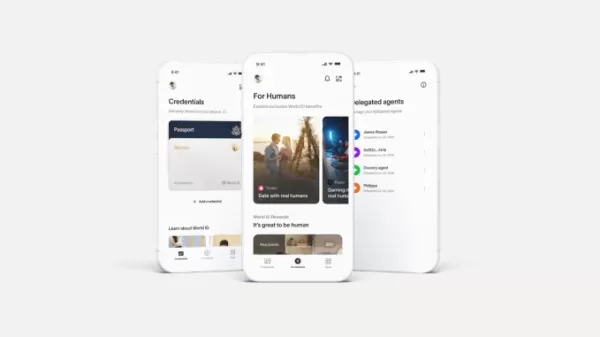
Image Credits:World
However, World has consistently worked to make verification easier and more rewarding. It previously offered its cryptocurrency, Worldcoin, to some early members and has placed Orbs in major retail chains so people can verify themselves while shopping or getting coffee. Now, the company is significantly increasing the number of Orbs available in New York, Los Angeles, and San Francisco. It is also promoting a service where an Orb can be brought to a user's location for remote verification.
In a conversation with TechCrunch, Sada shared that World addresses the scaling issue by offering different verification tiers. The highest tier is Orb verification. A mid-level tier, previously offered, uses an anonymized scan of a government ID via the card's NFC chip.
The company has now introduced a basic tier, which Sada called "low friction"—implying it requires minimal effort but offers lower security—that involves simply taking a selfie.
Selfie Check, demonstrated by Sada's team during the event, is designed with user privacy in mind.
"Selfie is private by design," said Daniel Shorr, a TFH executive, during the presentation. "This means we maximize the processing done locally on your device, so your images remain yours."
Selfie verification is not new, and fraudsters have found ways to bypass it. "We obviously do our best, and it's one of the best systems available for this purpose. But it has its limits," Sada told TechCrunch. He noted that developers integrating World's services can choose from the three verification tiers based on the level of security they require.
Related article
 Sam Altman Sparks Debate Over AI's Deceleration
Listen onApple PodcastsListen onSpotifyOpenAI CEO Sam Altman recently suggested that it may be time to “pace the rate of AI development” to allow society to “harden around some of these new capability levels.”On the latest episode of TechCrunch’s Equ
White House Urges OpenAI to Delay Launch of New Model Due to Safety Concerns
According to reports from The Information, OpenAI is set to release its latest model, GPT 5.6, in a manner that differs significantly from previous versions. Rather than making it available to the general public, the company intends to share it solel
OpenAI unveils GPT-5.6, the newest addition to its model family
OpenAI launched its latest model family on Thursday, introducing powerful new options into an increasingly competitive AI landscape.GPT-5.6 comes in three variants: Sol (designed as the primary workhorse), Terra (a mid-range option), and Luna (the bu
Related Special Topic Recommendations
Design & Art
Sam Altman Sparks Debate Over AI's Deceleration
Listen onApple PodcastsListen onSpotifyOpenAI CEO Sam Altman recently suggested that it may be time to “pace the rate of AI development” to allow society to “harden around some of these new capability levels.”On the latest episode of TechCrunch’s Equ
White House Urges OpenAI to Delay Launch of New Model Due to Safety Concerns
According to reports from The Information, OpenAI is set to release its latest model, GPT 5.6, in a manner that differs significantly from previous versions. Rather than making it available to the general public, the company intends to share it solel
OpenAI unveils GPT-5.6, the newest addition to its model family
OpenAI launched its latest model family on Thursday, introducing powerful new options into an increasingly competitive AI landscape.GPT-5.6 comes in three variants: Sol (designed as the primary workhorse), Terra (a mid-range option), and Luna (the bu
Related Special Topic Recommendations
Design & Art
 Top AI Illustration Tools: Create Editorial Scenes and Cover Art Faster
2026 Latest Top-rated AI Illustration Tools: Our curated list features the best powerfully designed tools for creating stunning editorial scenes and eye-catching cover art quickly. Each option has gone through rigorous real-world tests, offering a free vs paid comparison to help you find the perfect match for your workflow. Try these must-try solutions today to unlock your AI edge and boost your creative productivity. Explore now at XIX.AI.
 10 tools
 xix.ai
Education and Learning
Top AI Tutors for Exam Prep: Practice Math, Science, and English
xix.ai
Education and Learning
Top AI Tutors for Exam Prep: Practice Math, Science, and English
2026 Latest Top-Rated Best AI Tutors for Exam Prep are here on XIX.AI! Our curated list features powerful game-changing tools that offer free vs paid comparison, real-world tests, and weekly updated rankings. They help boost your writing efficiency, simplify complex topic learning, and unlock your academic potential. Explore now to Discover your perfect exam prep tool and Start creating today to Unlock your AI edge!
10 tools
xix.ai
Finance
AI Budget Planning Tools for Personal Money Management
2026 Latest Best Top-Rated AI Budget Planning Tools for Personal Money Management are here on XIX.AI! This curated collection features powerful, game-changing solutions that help you conduct real-world tests, understand spending habits, and create personalized plans to boost productivity. Enjoy a free vs paid comparison along with detailed rankings. Must-try tools designed to simplify money management and unlock your AI edge. Explore now!
11 tools
xix.ai
Health & Wellness
AI Sleep Tracking Assistants: Improve Recovery with Better Bedtime Habits
2026 Latest Best Top-Rated AI Sleep Tracking Assistants curated for ultimate recovery. This fully updated weekly guide features powerful tools that deliver real-world tests, free vs paid comparison, and detailed rankings to help you find the must-try solution that boosts sleep quality and supports better bedtime habits. Explore now at XIX.AI to Unlock your AI edge.
10 tools
xix.ai
Data Analysis
AI SQL Copilots for Product and Revenue Analytics
2026 Latest Best Top-Rated AI SQL Copilots for Product and Revenue Analytics! XIX.AI has curated a powerful, game-changing collection of must-try tools that undergo real-world tests through weekly updated rankings. These tools help users boost productivity significantly by accelerating data analysis, streamlining complex queries, and generating accurate insights to drive smarter business decisions. Explore now to Discover your perfect tool for unlocking your AI edge!
14 tools
xix.ai
Education and Learning
Best AI Homework Helpers That Teach: Learn Concepts, Not Just Answers
2026 Latest Best Top-Rated AI Homework Helpers That Teach Core Concepts Not Just Answers Powerful Tools for Students Must-Try Curated List Weekly Updated Free vs Paid Comparison Real-World Tests Accurate Rankings to Help You Unlock Your Full Learning Potential Explore now to Discover your perfect tool for smarter studying.
10 tools
xix.ai

 Comments (0)
0/500
Comments (0)
0/500
At a stylish venue near San Francisco's pier, Sam Altman's identity verification initiative, World, marked its next phase of evolution and a significant expansion of its goals. And it's starting with Tinder.
Tools for Humanity (TFH), the company behind World, announced plans on Friday to integrate its verification technology into dating apps, event ticketing systems, business platforms, email services, and other areas of public life.
"The world is approaching the era of very powerful AI, which is enabling many wonderful things," Altman told the packed crowd at The Midway. "We are also moving toward a future where more content will be generated by AI than by humans," he added. "I'm sure many of you have wondered, 'Am I interacting with an AI or a person, or a mix of both, and how can I be sure?'"
World (formerly Worldcoin) sets itself apart from other ID verification services by confirming that a real, living person is using a digital service while still protecting their anonymity. This relies on sophisticated cryptographic techniques (specifically, "zero-knowledge proof-based authentication"). The result is what the company calls "proof of human" tools—mechanisms designed to verify human activity in a world increasingly populated by AI agents and bots.
Its primary verification tool is a spherical digital scanner called the Orb, which examines a user's eyes and converts their iris pattern into a unique, anonymous cryptographic identifier (known as a verified World ID). This ID can be used to access World's services, though users can also use the app without it.
Altman kept his comments brief on Friday (noting that TFH's co-founder and CEO, Alex Blania, was absent due to unexpected hand surgery). He then handed the presentation over to World's chief product officer, Tiago Sada, and his team.
Sada explained that World was launching the latest version of its app (the previous version debuted at an event in December), along with a wide array of new technology integrations.
World has been preparing for some time to offer a verification service for dating apps, most notably Tinder. Last year, Tinder initiated a World ID pilot program in Japan. That trial proved successful, leading to the announcement that Tinder will roll out its verification integration globally, including in the U.S. The program adds a World ID badge to the profiles of users who complete its verification process, confirming they are real people.
Image Credits:World
World is also engaging the entertainment industry with a new feature called Concert Kit, which allows artists to reserve a portion of concert tickets exclusively for users verified with a World ID. This aims to protect fans from scalpers who often use automated bots to buy up tickets. Concert Kit works with major ticketing platforms like Ticketmaster and Eventbrite. The company is promoting it through partnerships with artists such as 30 Seconds to Mars and Bruno Mars, both of whom plan to use it for their upcoming tours.
The event featured numerous other announcements, including several targeting businesses. A Zoom/World ID integration aims to combat potential deepfake threats on business calls, while a partnership with Docusign is designed to ensure signatures come from verified users.
In anticipation of a future web dominated by AI agents, the company is developing features like "agent delegation," which allows a person to authorize an AI agent to act online on their behalf using their World ID. A collaboration with authentication firm Okta has also produced a system (currently in beta) that verifies when an agent is acting for a human. As Okta's chief product officer, Gareth Davies, explained at the event, this system links a World ID to a specific agent, so when that agent operates online, websites can recognize that a verified person is behind the actions.
Scaling has been a challenge for World, largely due to the verification process itself. For much of the company's history, obtaining its highest verification level required visiting an office to have your eyes scanned by an Orb—a process that is both inconvenient and unusual.
Image Credits:World
However, World has consistently worked to make verification easier and more rewarding. It previously offered its cryptocurrency, Worldcoin, to some early members and has placed Orbs in major retail chains so people can verify themselves while shopping or getting coffee. Now, the company is significantly increasing the number of Orbs available in New York, Los Angeles, and San Francisco. It is also promoting a service where an Orb can be brought to a user's location for remote verification.
In a conversation with TechCrunch, Sada shared that World addresses the scaling issue by offering different verification tiers. The highest tier is Orb verification. A mid-level tier, previously offered, uses an anonymized scan of a government ID via the card's NFC chip.
The company has now introduced a basic tier, which Sada called "low friction"—implying it requires minimal effort but offers lower security—that involves simply taking a selfie.
Selfie Check, demonstrated by Sada's team during the event, is designed with user privacy in mind.
"Selfie is private by design," said Daniel Shorr, a TFH executive, during the presentation. "This means we maximize the processing done locally on your device, so your images remain yours."
Selfie verification is not new, and fraudsters have found ways to bypass it. "We obviously do our best, and it's one of the best systems available for this purpose. But it has its limits," Sada told TechCrunch. He noted that developers integrating World's services can choose from the three verification tiers based on the level of security they require.








 Sam Altman Sparks Debate Over AI's Deceleration
Listen onApple PodcastsListen onSpotifyOpenAI CEO Sam Altman recently suggested that it may be time to “pace the rate of AI development” to allow society to “harden around some of these new capability levels.”On the latest episode of TechCrunch’s Equ
Sam Altman Sparks Debate Over AI's Deceleration
Listen onApple PodcastsListen onSpotifyOpenAI CEO Sam Altman recently suggested that it may be time to “pace the rate of AI development” to allow society to “harden around some of these new capability levels.”On the latest episode of TechCrunch’s Equ
 White House Urges OpenAI to Delay Launch of New Model Due to Safety Concerns
According to reports from The Information, OpenAI is set to release its latest model, GPT 5.6, in a manner that differs significantly from previous versions. Rather than making it available to the general public, the company intends to share it solel
White House Urges OpenAI to Delay Launch of New Model Due to Safety Concerns
According to reports from The Information, OpenAI is set to release its latest model, GPT 5.6, in a manner that differs significantly from previous versions. Rather than making it available to the general public, the company intends to share it solel
 OpenAI unveils GPT-5.6, the newest addition to its model family
OpenAI launched its latest model family on Thursday, introducing powerful new options into an increasingly competitive AI landscape.GPT-5.6 comes in three variants: Sol (designed as the primary workhorse), Terra (a mid-range option), and Luna (the bu
OpenAI unveils GPT-5.6, the newest addition to its model family
OpenAI launched its latest model family on Thursday, introducing powerful new options into an increasingly competitive AI landscape.GPT-5.6 comes in three variants: Sol (designed as the primary workhorse), Terra (a mid-range option), and Luna (the bu

2026 Latest Top-rated AI Illustration Tools: Our curated list features the best powerfully designed tools for creating stunning editorial scenes and eye-catching cover art quickly. Each option has gone through rigorous real-world tests, offering a free vs paid comparison to help you find the perfect match for your workflow. Try these must-try solutions today to unlock your AI edge and boost your creative productivity. Explore now at XIX.AI.
10 tools
xix.ai

2026 Latest Top-Rated Best AI Tutors for Exam Prep are here on XIX.AI! Our curated list features powerful game-changing tools that offer free vs paid comparison, real-world tests, and weekly updated rankings. They help boost your writing efficiency, simplify complex topic learning, and unlock your academic potential. Explore now to Discover your perfect exam prep tool and Start creating today to Unlock your AI edge!
10 tools
xix.ai

2026 Latest Best Top-Rated AI Budget Planning Tools for Personal Money Management are here on XIX.AI! This curated collection features powerful, game-changing solutions that help you conduct real-world tests, understand spending habits, and create personalized plans to boost productivity. Enjoy a free vs paid comparison along with detailed rankings. Must-try tools designed to simplify money management and unlock your AI edge. Explore now!
11 tools
xix.ai

2026 Latest Best Top-Rated AI Sleep Tracking Assistants curated for ultimate recovery. This fully updated weekly guide features powerful tools that deliver real-world tests, free vs paid comparison, and detailed rankings to help you find the must-try solution that boosts sleep quality and supports better bedtime habits. Explore now at XIX.AI to Unlock your AI edge.
10 tools
xix.ai

2026 Latest Best Top-Rated AI SQL Copilots for Product and Revenue Analytics! XIX.AI has curated a powerful, game-changing collection of must-try tools that undergo real-world tests through weekly updated rankings. These tools help users boost productivity significantly by accelerating data analysis, streamlining complex queries, and generating accurate insights to drive smarter business decisions. Explore now to Discover your perfect tool for unlocking your AI edge!
14 tools
xix.ai

2026 Latest Best Top-Rated AI Homework Helpers That Teach Core Concepts Not Just Answers Powerful Tools for Students Must-Try Curated List Weekly Updated Free vs Paid Comparison Real-World Tests Accurate Rankings to Help You Unlock Your Full Learning Potential Explore now to Discover your perfect tool for smarter studying.
10 tools
xix.ai












