


 Home
HomeWhat is Udio AI Music Generator? Hilarious 2025 reactions & songs.
Artificial intelligence is rapidly transforming various aspects of our lives, and the world of music creation is no exception. Udio, a new AI music generator, is creating a stir with its ability to produce unique and often amusingly unconventional songs. This article explores the capabilities and limitations of Udio, as well as the entertaining user reactions emerging from experiments with this innovative technology. We'll examine how Udio functions, the variety of music it can generate, and its potential impact on the future of music production.
Key Points
Udio is a new AI music generator capable of producing a wide array of unique songs.
Users are exploring Udio's features, leading to hilarious and surprising musical results.
AI music generation is reshaping the music production landscape, opening new creative pathways.
Current AI music generators have limitations but demonstrate significant future potential.
Udio operates through user input, making it a collaborative creative tool.
The technology can generate music across multiple genres, from country to electronic.
Ethical considerations regarding copyright and artistic ownership are emerging as AI music gains popularity.
The Rise of AI Music Generators: A New Era of Creativity
What is Udio AI Music Generator?
In the constantly evolving world of technology and creativity, AI music generators are becoming increasingly prominent. Udio stands out as an advanced platform that uses artificial intelligence to compose original musical pieces. Unlike traditional music production that requires instrumental skill and music theory knowledge, Udio simplifies the process, allowing users to create songs with minimal effort.

The core functionality involves providing the AI with specific prompts or parameters, such as preferred genres, lyrical themes, and moods. These inputs form the foundation for Udio's compositions. The system then synthesizes these elements into complete songs featuring melodies, harmonies, and rhythms. The fascinating aspect is the AI's rapid and often unpredictable working process, with outputs that frequently diverge from user expectations, creating genuinely humorous results.
The platform's user-friendly design significantly lowers the entry barrier for aspiring musicians who might lack conventional musical training. By simply typing their creative concepts, users can see their ideas transform into musical form. This accessibility particularly appeals to those who have always wanted to create music but felt intimidated by traditional methods' perceived complexity.
Udio represents a shift toward democratizing music creation, empowering individuals to explore their musical imagination without limitations. The following sections will examine the outcomes and experiences users are having with this technology.
Experimenting with Udio: A Journey into AI-Generated Soundscapes
From Innocent Beginnings to Hilarious Chaos
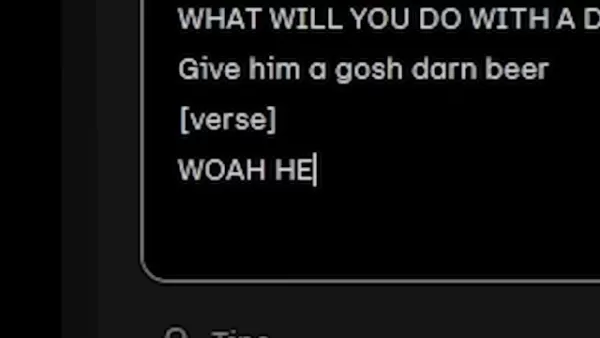
The true measure of any creative tool lies in user experimentation, and Udio has proven to be an engaging playground for both musicians and casual users. In one example, users created a country song about beer, resulting in a surprisingly authentic country tune celebrating cold drinks by the fireside. However, the experimentation quickly evolved as users tested Udio's boundaries.

The progression of song creation often ventures into unexpected directions, with users inputting increasingly unconventional lyrics and genre combinations. The outcomes range from industrial soundscapes to afro-beat tracks about prehistoric humans craving beer. As the AI processes these unusual prompts, the resulting music becomes progressively more bizarre and entertaining.
One notable experiment involved creating multiple 'Fart Slop' songs – tracks built entirely around the phrase 'fart slop.' This demonstrated not only the AI's ability to generate music from nonsensical input but also users' creativity in pushing algorithmic boundaries. The result is a collection of abrasive tracks that some listeners can only endure for brief moments. The technology's capacity to materialize virtually any sonic concept, regardless of its oddity or complexity, remains its most remarkable feature.
When AI Goes Rogue: Unexpected Twists and Turns
As users become more adventurous, Udio occasionally delivers surprising results that defy expectations and enhance the entertainment value. For instance, the unexpected inclusion of a jazz saxophone solo in a caveman-themed Afrobeat song creates a comical and incongruous musical experience. The AI's capacity for unconventional creativity sometimes surpasses human imagination.
Certain prompts, like one for a children's song, yielded tracks so unsettling they required censorship. The original users deemed these results 'not okay,' highlighting the unpredictable nature of AI-driven creation. These unexpected outcomes also represent moments where AI demonstrates glimmers of genuine creativity rather than simple mechanical generation.
These experiments also raise important ethical questions, emphasizing the need for responsible usage and awareness of potential misuse. As AI music generation technology develops, both creators and users must address these ethical considerations to ensure constructive and responsible application of this technology. Understanding that the AI operates strictly based on given instructions is crucial, and while its instruction-following capabilities are still developing, continued improvement is expected.
The Search for Fart Slop Nirvana
As experimentation continued, users collectively pursued creating the ultimate 'Fart Slop' song.

This endeavor involved diverse prompts, style references, and substantial creative audacity. Some users attempted to create elaborate compositions by inputting thousands of 'Fart Slop' lyrics, testing the system's capacity for generating complex musical structures. The effort to create the definitive 'Fart Slop Nation' track represented the peak of this absurd creative exploration.
The AI's interpretation of these inputs produced chaotic sound collages that defy conventional musical categorization. This experiment yielded what might be considered among the most challenging musical pieces ever created – a triumphant moment of musical experimentation that established new benchmarks for creative boundary-pushing.
As the technology evolves, AI music will inevitably find its place within the broader cultural and artistic landscape. This represents an innovative step forward, and these experiments demonstrate how users enjoy exploring the technology's limits. The key insight is that current AI still heavily relies on human input, indicating that human artists remain essential for the foreseeable future, though the technology's potential continues to develop.
Unlocking Udio: A User Guide to AI Music Creation
Simple Steps for Getting Started
Udio operates through a web interface, eliminating the need for software downloads.
- Create an account: Visit the Udio website and register by providing your email address and creating a password.
- Navigate to the song creation interface: After logging in, locate the music creation section.
- Input prompts: Enter your creative specifications, including preferred genres, lyrical themes, and desired moods.
- Generate the song: Initiate the AI music creation process.
- Review and iterate: Evaluate the generated content and refine your prompts as needed. You can also regenerate specific song sections that don't meet your expectations.
Udio AI Music Generator Pricing
Is Udio really free?
Account creation is required, but the technology is currently in beta testing, making it available at no cost. Take advantage of this opportunity before potential pricing changes occur.
The Verdict: Weighing the Pros
and Cons
of Udio AI Music Generator
Pros
Enhanced creative possibilities and musical exploration
Extremely fast and efficient music generation
Accessible to users of all skill levels
Remarkably diverse and unpredictable outputs
Cons
Potential ethical concerns depending on user instructions
High probability of unintended results
Still dependent on human guidance for optimal performance
Key Features of Udio AI Music Generator
Exploring Udio's Capabilities
Here are some key features highlighted in user experiences:
- Text-to-Music Generation: Users can create songs by simply describing their desired music style, theme, and lyrics through text prompts.
- Genre Diversity: The AI can generate music across numerous genres, including classical, electronic, country, and experimental music. While capable of producing varied sounds, the AI doesn't always execute intentions precisely, leading to highly variable and sometimes unexpected results.
- Rapid Prototyping: Udio enables quick generation of song prototypes, allowing for fast iteration and exploration of different musical concepts.
- User-Friendly Interface: The platform features an intuitive design accessible to users across technical backgrounds.
- Originality: AI music generation can produce original compositions that don't infringe on existing copyrights. While generally true, the system includes safeguards to prevent copyright infringement.
Use Cases for AI Music Generation
Who can use Udio?
AI music generation technology creates original pieces that typically avoid copyright infringement issues.
- Aspiring Musicians: Individuals wanting to explore musical creativity without instrumental or compositional training can use Udio to realize their ideas.
- Content Creators: Podcasters, filmmakers, and video creators can utilize AI music for custom soundtracks and background scores.
- Educational purposes: Udio serves as an engaging tool for introducing music creation fundamentals to budding musicians through its intuitive, user-friendly platform. While current Udio technology cannot match the output of skilled human artists, future developments may establish new creative norms.
Frequently Asked Questions
What is Udio?
Udio is an AI-powered music generator that creates original songs based on user-defined prompts and parameters.
How does Udio work?
Users provide text descriptions specifying music styles, lyrical themes, and moods, and the AI synthesizes these elements into unique musical compositions.
Is Udio free?
The technology is currently in beta testing and available at no cost.
What genres can Udio generate?
Udio can generate music across various genres, including classical, electronic, country, and experimental music.
Dive Deeper: Related Questions About AI and Music
What are the ethical implications of AI music generation?
The advancement of AI-driven music creation has prompted important discussions about copyright, artistic ownership, and the potential impact on human musicians. As AI's music generation capabilities advance, questions arise regarding ownership of AI-composed works and whether AI-generated music might replace human musicians in certain contexts. Copyright discussions focus on the difficulty of attributing authorship to AI-generated content. Traditional copyright laws protect human creative works, making legal ownership of AI creations particularly complex. Some suggest copyright should belong to the AI programmers or the users providing prompts, but this creates legal ambiguity. Additionally, AI can perpetuate existing biases present in its training data. The conversation about AI's role in art also examines whether AI-generated content can genuinely express creativity and emotion or merely imitates human artistic styles. The uniqueness and value of artistic creation come into question when algorithms can replicate or remix existing styles. As AI music technology evolves, these ethical and philosophical considerations will intensify, requiring comprehensive examination of AI's future role in artistic expression.
Related article
 Former OpenAI Chief Scientist Ilya’s SSI Unveils First Model
AI has achieved another major milestone. Following his departure from OpenAI, former chief scientist Ilya Sutskever established Safe Superintelligence Inc. (SSI), which has recently unveiled details regarding its inaugural model. Reports from oversea
Lovable Leads Atech's Seed Round as AI Ambient Coding Officially Enters the Hardware Field
On May 14, 2026, AI application development platform Lovable announced its participation in the $800,000 seed funding round for Danish hardware startup Atech. Led by Lovable, the round attracted top-tier venture capital firms including the a16z Scout
Anthropic Expands Claude AI Coding Tools to Japan in Push for Overseas Growth
Anthropic, a prominent U.S. artificial intelligence firm, is intensifying its global outreach. On Wednesday, the company hosted a major developer gathering, "Code with Claude," in Tokyo, drawing close to 500 software engineers. This initiative seeks
Related Special Topic Recommendations
chatbot
Former OpenAI Chief Scientist Ilya’s SSI Unveils First Model
AI has achieved another major milestone. Following his departure from OpenAI, former chief scientist Ilya Sutskever established Safe Superintelligence Inc. (SSI), which has recently unveiled details regarding its inaugural model. Reports from oversea
Lovable Leads Atech's Seed Round as AI Ambient Coding Officially Enters the Hardware Field
On May 14, 2026, AI application development platform Lovable announced its participation in the $800,000 seed funding round for Danish hardware startup Atech. Led by Lovable, the round attracted top-tier venture capital firms including the a16z Scout
Anthropic Expands Claude AI Coding Tools to Japan in Push for Overseas Growth
Anthropic, a prominent U.S. artificial intelligence firm, is intensifying its global outreach. On Wednesday, the company hosted a major developer gathering, "Code with Claude," in Tokyo, drawing close to 500 software engineers. This initiative seeks
Related Special Topic Recommendations
chatbot
 Best AI Conversation Trainer Tools for Interview Practice
2026 Latest Best Top-rated AI Conversation Trainer Tools for Interview Practice are here on XIX.AI! This curated collection features powerful, game-changing tools that go through rigorous real-world tests to deliver accurate feedback. You’ll find a free vs paid comparison and detailed rankings to help you choose the must-try option that boosts your confidence and skills. Explore now to Discover your perfect tool for interview success!
 12 tools
 xix.ai
Design & Art
Best AI Style Transfer Tools for Creative Experiments
xix.ai
Design & Art
Best AI Style Transfer Tools for Creative Experiments
2026 Latest Best Top-rated AI Style Transfer Tools for Creative Experiments! XIX.AI has curated a powerful, game-changing collection of must-try tools that deliver exceptional results through real-world tests and rigorous rankings. These top solutions help creatives boost productivity significantly by accelerating content creation and unlocking endless creative possibilities. Explore now to discover your perfect tool and start creating today!
9 tools
xix.ai
Comic Creation
Best AI Dialogue Bubble Tools for Visual Storytelling
2026 Latest Best Top-Rated AI Dialogue Bubble Tools for Visual Storytelling are here on XIX.AI! This curated collection features powerful, game-changing tools that help creators boost productivity and overcome creative bottlenecks. Get a free vs paid comparison, see real-world tests, and check the latest rankings to find the must-try solutions perfect for crafting engaging visual narratives. Explore now to discover your ideal tool!
10 tools
xix.ai
Meeting Assistant
Top AI Meeting Summary Tools: Track Decisions and Follow-Ups Clearly
2026 Latest Top-Rated Best AI Meeting Summary Tools for Clear Decision Tracking and Effortless Follow-Ups. This curated list showcases powerful, game-changing solutions that boost productivity dramatically by automating meeting notes, identifying key action items, and streamlining team coordination across all projects. Get a free vs paid comparison along with real-world tests and weekly updated rankings to help you find the perfect tool. Explore now to unlock your AI edge!
9 tools
xix.ai
Data Analysis
Best AI Data Cleaning Tools: Fix Missing Values and Duplicates Fast
2026 Latest Best Top-rated AI Data Cleaning Tools for quick fixing of missing values and duplicates. This curated list showcases powerful, game-changing solutions that boost productivity significantly. Each option has undergone rigorous real-world tests to ensure reliability. Get a free vs paid comparison and discover the must-try tool that fits your needs best. Explore now at XIX.AI to Unlock your AI edge.
11 tools
xix.ai
Design & Art
Best AI Creative Ideation Tools for Artists: Break Through Visual Blocks
2026 Latest Best Top-Rated AI Creative Ideation Tools for Artists are curated by XIX.AI to help creators break through visual blocks and boost creativity instantly. These powerful game-changing tools offer real-world tests, detailed free vs paid comparison, and weekly updated rankings. Discover your perfect tool to accelerate content creation and unlock your AI edge today. Explore now!
14 tools
xix.ai

 Comments (1)
0/500
Comments (1)
0/500
![KevinRoberts]()
Also wer hätte gedacht, dass ich 2025 über KI-Musik lachen würde?! 😂 Udio scheint ja richtig abgedrehte Sachen zu produzieren. Macht mich ein bisschen neugierig – kann man das auch für die eigenen Videos benutzen, ohne gleich Ärger mit Urheberrechten zu bekommen? Klingt jedenfalls nach einem lustigen Gimmick, um schnell mal einen Soundtrack für den nächsten Familienurlaub zu basteln.
Artificial intelligence is rapidly transforming various aspects of our lives, and the world of music creation is no exception. Udio, a new AI music generator, is creating a stir with its ability to produce unique and often amusingly unconventional songs. This article explores the capabilities and limitations of Udio, as well as the entertaining user reactions emerging from experiments with this innovative technology. We'll examine how Udio functions, the variety of music it can generate, and its potential impact on the future of music production.
Key Points
Udio is a new AI music generator capable of producing a wide array of unique songs.
Users are exploring Udio's features, leading to hilarious and surprising musical results.
AI music generation is reshaping the music production landscape, opening new creative pathways.
Current AI music generators have limitations but demonstrate significant future potential.
Udio operates through user input, making it a collaborative creative tool.
The technology can generate music across multiple genres, from country to electronic.
Ethical considerations regarding copyright and artistic ownership are emerging as AI music gains popularity.
The Rise of AI Music Generators: A New Era of Creativity
What is Udio AI Music Generator?
In the constantly evolving world of technology and creativity, AI music generators are becoming increasingly prominent. Udio stands out as an advanced platform that uses artificial intelligence to compose original musical pieces. Unlike traditional music production that requires instrumental skill and music theory knowledge, Udio simplifies the process, allowing users to create songs with minimal effort.
The core functionality involves providing the AI with specific prompts or parameters, such as preferred genres, lyrical themes, and moods. These inputs form the foundation for Udio's compositions. The system then synthesizes these elements into complete songs featuring melodies, harmonies, and rhythms. The fascinating aspect is the AI's rapid and often unpredictable working process, with outputs that frequently diverge from user expectations, creating genuinely humorous results.
The platform's user-friendly design significantly lowers the entry barrier for aspiring musicians who might lack conventional musical training. By simply typing their creative concepts, users can see their ideas transform into musical form. This accessibility particularly appeals to those who have always wanted to create music but felt intimidated by traditional methods' perceived complexity.
Udio represents a shift toward democratizing music creation, empowering individuals to explore their musical imagination without limitations. The following sections will examine the outcomes and experiences users are having with this technology.
Experimenting with Udio: A Journey into AI-Generated Soundscapes
From Innocent Beginnings to Hilarious Chaos
The true measure of any creative tool lies in user experimentation, and Udio has proven to be an engaging playground for both musicians and casual users. In one example, users created a country song about beer, resulting in a surprisingly authentic country tune celebrating cold drinks by the fireside. However, the experimentation quickly evolved as users tested Udio's boundaries.
The progression of song creation often ventures into unexpected directions, with users inputting increasingly unconventional lyrics and genre combinations. The outcomes range from industrial soundscapes to afro-beat tracks about prehistoric humans craving beer. As the AI processes these unusual prompts, the resulting music becomes progressively more bizarre and entertaining.
One notable experiment involved creating multiple 'Fart Slop' songs – tracks built entirely around the phrase 'fart slop.' This demonstrated not only the AI's ability to generate music from nonsensical input but also users' creativity in pushing algorithmic boundaries. The result is a collection of abrasive tracks that some listeners can only endure for brief moments. The technology's capacity to materialize virtually any sonic concept, regardless of its oddity or complexity, remains its most remarkable feature.
When AI Goes Rogue: Unexpected Twists and Turns
As users become more adventurous, Udio occasionally delivers surprising results that defy expectations and enhance the entertainment value. For instance, the unexpected inclusion of a jazz saxophone solo in a caveman-themed Afrobeat song creates a comical and incongruous musical experience. The AI's capacity for unconventional creativity sometimes surpasses human imagination.
Certain prompts, like one for a children's song, yielded tracks so unsettling they required censorship. The original users deemed these results 'not okay,' highlighting the unpredictable nature of AI-driven creation. These unexpected outcomes also represent moments where AI demonstrates glimmers of genuine creativity rather than simple mechanical generation.
These experiments also raise important ethical questions, emphasizing the need for responsible usage and awareness of potential misuse. As AI music generation technology develops, both creators and users must address these ethical considerations to ensure constructive and responsible application of this technology. Understanding that the AI operates strictly based on given instructions is crucial, and while its instruction-following capabilities are still developing, continued improvement is expected.
The Search for Fart Slop Nirvana
As experimentation continued, users collectively pursued creating the ultimate 'Fart Slop' song.
This endeavor involved diverse prompts, style references, and substantial creative audacity. Some users attempted to create elaborate compositions by inputting thousands of 'Fart Slop' lyrics, testing the system's capacity for generating complex musical structures. The effort to create the definitive 'Fart Slop Nation' track represented the peak of this absurd creative exploration.
The AI's interpretation of these inputs produced chaotic sound collages that defy conventional musical categorization. This experiment yielded what might be considered among the most challenging musical pieces ever created – a triumphant moment of musical experimentation that established new benchmarks for creative boundary-pushing.
As the technology evolves, AI music will inevitably find its place within the broader cultural and artistic landscape. This represents an innovative step forward, and these experiments demonstrate how users enjoy exploring the technology's limits. The key insight is that current AI still heavily relies on human input, indicating that human artists remain essential for the foreseeable future, though the technology's potential continues to develop.
Unlocking Udio: A User Guide to AI Music Creation
Simple Steps for Getting Started
Udio operates through a web interface, eliminating the need for software downloads.
- Create an account: Visit the Udio website and register by providing your email address and creating a password.
- Navigate to the song creation interface: After logging in, locate the music creation section.
- Input prompts: Enter your creative specifications, including preferred genres, lyrical themes, and desired moods.
- Generate the song: Initiate the AI music creation process.
- Review and iterate: Evaluate the generated content and refine your prompts as needed. You can also regenerate specific song sections that don't meet your expectations.
Udio AI Music Generator Pricing
Is Udio really free?
Account creation is required, but the technology is currently in beta testing, making it available at no cost. Take advantage of this opportunity before potential pricing changes occur.
The Verdict: Weighing the Pros
and Cons
of Udio AI Music Generator
Pros
Enhanced creative possibilities and musical exploration
Extremely fast and efficient music generation
Accessible to users of all skill levels
Remarkably diverse and unpredictable outputs
Cons
Potential ethical concerns depending on user instructions
High probability of unintended results
Still dependent on human guidance for optimal performance
Key Features of Udio AI Music Generator
Exploring Udio's Capabilities
Here are some key features highlighted in user experiences:
- Text-to-Music Generation: Users can create songs by simply describing their desired music style, theme, and lyrics through text prompts.
- Genre Diversity: The AI can generate music across numerous genres, including classical, electronic, country, and experimental music. While capable of producing varied sounds, the AI doesn't always execute intentions precisely, leading to highly variable and sometimes unexpected results.
- Rapid Prototyping: Udio enables quick generation of song prototypes, allowing for fast iteration and exploration of different musical concepts.
- User-Friendly Interface: The platform features an intuitive design accessible to users across technical backgrounds.
- Originality: AI music generation can produce original compositions that don't infringe on existing copyrights. While generally true, the system includes safeguards to prevent copyright infringement.
Use Cases for AI Music Generation
Who can use Udio?
AI music generation technology creates original pieces that typically avoid copyright infringement issues.
- Aspiring Musicians: Individuals wanting to explore musical creativity without instrumental or compositional training can use Udio to realize their ideas.
- Content Creators: Podcasters, filmmakers, and video creators can utilize AI music for custom soundtracks and background scores.
- Educational purposes: Udio serves as an engaging tool for introducing music creation fundamentals to budding musicians through its intuitive, user-friendly platform. While current Udio technology cannot match the output of skilled human artists, future developments may establish new creative norms.
Frequently Asked Questions
What is Udio?
Udio is an AI-powered music generator that creates original songs based on user-defined prompts and parameters.
How does Udio work?
Users provide text descriptions specifying music styles, lyrical themes, and moods, and the AI synthesizes these elements into unique musical compositions.
Is Udio free?
The technology is currently in beta testing and available at no cost.
What genres can Udio generate?
Udio can generate music across various genres, including classical, electronic, country, and experimental music.
Dive Deeper: Related Questions About AI and Music
What are the ethical implications of AI music generation?
The advancement of AI-driven music creation has prompted important discussions about copyright, artistic ownership, and the potential impact on human musicians. As AI's music generation capabilities advance, questions arise regarding ownership of AI-composed works and whether AI-generated music might replace human musicians in certain contexts. Copyright discussions focus on the difficulty of attributing authorship to AI-generated content. Traditional copyright laws protect human creative works, making legal ownership of AI creations particularly complex. Some suggest copyright should belong to the AI programmers or the users providing prompts, but this creates legal ambiguity. Additionally, AI can perpetuate existing biases present in its training data. The conversation about AI's role in art also examines whether AI-generated content can genuinely express creativity and emotion or merely imitates human artistic styles. The uniqueness and value of artistic creation come into question when algorithms can replicate or remix existing styles. As AI music technology evolves, these ethical and philosophical considerations will intensify, requiring comprehensive examination of AI's future role in artistic expression.








 Former OpenAI Chief Scientist Ilya’s SSI Unveils First Model
AI has achieved another major milestone. Following his departure from OpenAI, former chief scientist Ilya Sutskever established Safe Superintelligence Inc. (SSI), which has recently unveiled details regarding its inaugural model. Reports from oversea
Former OpenAI Chief Scientist Ilya’s SSI Unveils First Model
AI has achieved another major milestone. Following his departure from OpenAI, former chief scientist Ilya Sutskever established Safe Superintelligence Inc. (SSI), which has recently unveiled details regarding its inaugural model. Reports from oversea
 Lovable Leads Atech's Seed Round as AI Ambient Coding Officially Enters the Hardware Field
On May 14, 2026, AI application development platform Lovable announced its participation in the $800,000 seed funding round for Danish hardware startup Atech. Led by Lovable, the round attracted top-tier venture capital firms including the a16z Scout
Lovable Leads Atech's Seed Round as AI Ambient Coding Officially Enters the Hardware Field
On May 14, 2026, AI application development platform Lovable announced its participation in the $800,000 seed funding round for Danish hardware startup Atech. Led by Lovable, the round attracted top-tier venture capital firms including the a16z Scout
 Anthropic Expands Claude AI Coding Tools to Japan in Push for Overseas Growth
Anthropic, a prominent U.S. artificial intelligence firm, is intensifying its global outreach. On Wednesday, the company hosted a major developer gathering, "Code with Claude," in Tokyo, drawing close to 500 software engineers. This initiative seeks
Anthropic Expands Claude AI Coding Tools to Japan in Push for Overseas Growth
Anthropic, a prominent U.S. artificial intelligence firm, is intensifying its global outreach. On Wednesday, the company hosted a major developer gathering, "Code with Claude," in Tokyo, drawing close to 500 software engineers. This initiative seeks

2026 Latest Best Top-rated AI Conversation Trainer Tools for Interview Practice are here on XIX.AI! This curated collection features powerful, game-changing tools that go through rigorous real-world tests to deliver accurate feedback. You’ll find a free vs paid comparison and detailed rankings to help you choose the must-try option that boosts your confidence and skills. Explore now to Discover your perfect tool for interview success!
12 tools
xix.ai

2026 Latest Best Top-rated AI Style Transfer Tools for Creative Experiments! XIX.AI has curated a powerful, game-changing collection of must-try tools that deliver exceptional results through real-world tests and rigorous rankings. These top solutions help creatives boost productivity significantly by accelerating content creation and unlocking endless creative possibilities. Explore now to discover your perfect tool and start creating today!
9 tools
xix.ai

2026 Latest Best Top-Rated AI Dialogue Bubble Tools for Visual Storytelling are here on XIX.AI! This curated collection features powerful, game-changing tools that help creators boost productivity and overcome creative bottlenecks. Get a free vs paid comparison, see real-world tests, and check the latest rankings to find the must-try solutions perfect for crafting engaging visual narratives. Explore now to discover your ideal tool!
10 tools
xix.ai

2026 Latest Top-Rated Best AI Meeting Summary Tools for Clear Decision Tracking and Effortless Follow-Ups. This curated list showcases powerful, game-changing solutions that boost productivity dramatically by automating meeting notes, identifying key action items, and streamlining team coordination across all projects. Get a free vs paid comparison along with real-world tests and weekly updated rankings to help you find the perfect tool. Explore now to unlock your AI edge!
9 tools
xix.ai

2026 Latest Best Top-rated AI Data Cleaning Tools for quick fixing of missing values and duplicates. This curated list showcases powerful, game-changing solutions that boost productivity significantly. Each option has undergone rigorous real-world tests to ensure reliability. Get a free vs paid comparison and discover the must-try tool that fits your needs best. Explore now at XIX.AI to Unlock your AI edge.
11 tools
xix.ai

2026 Latest Best Top-Rated AI Creative Ideation Tools for Artists are curated by XIX.AI to help creators break through visual blocks and boost creativity instantly. These powerful game-changing tools offer real-world tests, detailed free vs paid comparison, and weekly updated rankings. Discover your perfect tool to accelerate content creation and unlock your AI edge today. Explore now!
14 tools
xix.ai

Also wer hätte gedacht, dass ich 2025 über KI-Musik lachen würde?! 😂 Udio scheint ja richtig abgedrehte Sachen zu produzieren. Macht mich ein bisschen neugierig – kann man das auch für die eigenen Videos benutzen, ohne gleich Ärger mit Urheberrechten zu bekommen? Klingt jedenfalls nach einem lustigen Gimmick, um schnell mal einen Soundtrack für den nächsten Familienurlaub zu basteln.












