


 Home
HomeTopaz Photo AI 3 Review: Are the Issues Resolved?
Topaz Labs has been making waves in the world of AI-powered image enhancement for quite some time now. Their promise to revolutionize photo editing has intrigued both professionals and hobbyists alike. But with the release of Topaz Photo AI 3, the big question on everyone's mind is: does it really meet the high expectations set by its predecessors? Let's dive into a thorough review to see if this latest iteration lives up to the hype, focusing on its features, usability, and whether it's resolved the issues that affected earlier versions.
Key Highlights
- Topaz Photo AI 3 comes with a revamped interface and a more streamlined workflow.
- The software integrates denoising, sharpening, and upscaling into one comprehensive tool.
- There are some challenges with processing RAW files, especially from Fujifilm X-Trans sensors.
- Accuracy in AI-powered masking and color rendition is crucial for user satisfaction.
- The overall experience with the software is a mixed bag.
Topaz Photo AI 3: An In-Depth Look
What Exactly is Topaz Photo AI 3?
Topaz Photo AI 3 is the newest version of Topaz Labs' all-in-one photo enhancement tool. It's designed to make photo editing easier by combining denoising, sharpening, and upscaling into one AI-driven workflow. The goal is to automatically detect and correct image flaws, saving photographers valuable time and effort. For those who've used earlier Topaz Labs products like DeNoise AI, Sharpen AI, and Gigapixel AI, Photo AI 3 merges the best of these into a single, more convenient package. It not only tackles denoising, sharpening, and upscaling but also aims to improve lighting, recover facial details, and even offers a generative removal tool.
Key Features at a Glance
- AI-Powered Denoising: It reduces noise while keeping the image details intact.
- AI-Driven Sharpening: Enhances image sharpness and corrects blur for clearer results.
- Upscaling: Boosts image resolution without the worry of artifacts.
- Automated Workflow: The software assesses images and automatically applies the necessary enhancements.
- RAW File Processing: Compatible with a variety of camera RAW formats.
The Role of AI in Modern Photography
The incorporation of artificial intelligence into photography has been nothing short of revolutionary, offering the promise of automating time-consuming tasks and boosting image quality. AI tools, trained on vast image datasets, can spot and fix imperfections with impressive accuracy. From denoising to sharpening and upscaling, AI has opened up new avenues for photographers to refine their craft. Yet, the true challenge is ensuring these tools perform consistently across different shooting scenarios and camera types. Topaz Photo AI 3 strives to offer this consistency through a streamlined, AI-enhanced workflow, with the claim of turning any photo into a perfect shot.
Getting Started with Topaz Photo AI 3
Exploring the Interface and Help Bar
First things first, you'll need to download and install Topaz Photo AI 3 from the Topaz Labs website. Once you launch the app, you're met with a refreshed interface that includes a handy help and tips bar. This bar is a treasure trove of resources:
- Getting Started Guide: A thorough walkthrough of the software's capabilities and how to use them.
- User Guides: Detailed manuals covering everything you need to know about Topaz Photo AI 3.
- Feature Information: In-depth descriptions of the software's core functions.
- Integration Guide: Step-by-step instructions on integrating Photo AI with your editing workflow.
Importing Your Photos
Topaz Photo AI 3 supports a wide array of RAW and standard image formats. Importing is as simple as dragging and dropping files into the app or selecting 'Browse Images'. Be ready for some initial downloads as the software fetches the latest models to process your images.
Checking Camera Compatibility
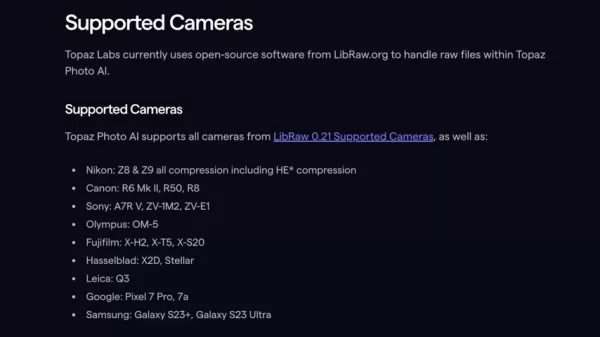
Before you start editing, it's wise to verify if your camera is supported by Topaz Photo AI 3. You can find a full list of compatible cameras on the Topaz Labs website. Fujifilm users, take note: the unique X-Trans sensor may limit your options. The guide specifies that Fujifilm X-Trans cameras can't utilize the RAW Remove Noise models and will instead use the Remove Noise - Linear model.
The Importance of DeNoise, Sharpen, and Upscale
These three functions are at the heart of the Photo AI 3 experience. They work together to enhance your photos, alongside additional features like lighting adjustments, face recovery, and object removal.
Weighing the Pros and Cons
Advantages
- A streamlined workflow that integrates multiple features.
- AI automation that simplifies the editing process.
- An improved user interface and overall experience.
- Effective sharpening and upscaling capabilities.
Drawbacks
- Challenges with denoising Fujifilm RAW files, often resulting in grid patterns.
- Issues with the accuracy of AI-powered masking and color rendition.
- A slow generative removal tool.
- Limited options for adjusting lighting and color.
Exploring the Core Features of Photo AI 3
The Essential DeNoise Feature
The heart of Photo AI 3 lies in its DeNoise, Sharpen, and Upscale tools, familiar to users of the earlier standalone apps. Many have found these tools to be intuitive and user-friendly, enhancing their photo editing experience significantly.
Understanding the Limitations with RAW Support
The guide highlights that Fujifilm X-Trans cameras are a special case, unable to use the RAW Remove Noise models and instead directed to the linear model, which might not yield the best results.
Frequently Asked Questions
Is Topaz Photo AI 3 Suitable for Professional Photographers?
While it offers a range of useful features, its limitations might make it less suitable for professional workflows that demand precise control over image adjustments.
How Well Does Topaz Photo AI 3 Handle Fujifilm X-Trans RAW Files?
Unfortunately, it struggles. The software isn't optimized for Fujifilm X-Trans RAW files, making it a challenging choice for users of these cameras.
Should You Choose the Original Products or Stick with Photo AI 3?
If you're looking for an all-in-one solution, Topaz Photo AI 3 might be appealing, but its current drawbacks could be a deal-breaker for some.
Related Queries
Is Topaz Photo AI 3 an Upgrade from Previous Versions?
It's definitely a step forward from its predecessors, but there's still room for improvement.
What Warnings Come with Using Generated Images?
The developers caution that generating changes might take several minutes, which is something to keep in mind when using the product.
Related article
 Former OpenAI Researcher Barrett Zoph Returns to Google to Support Gemini Development
Barret Zoph, who previously abruptly left and joined OpenAI due to a disagreement with Thinking Machines Lab CEO Miriam Mularati, has once again changed employers. Alphabet's Google announced that Zoph will return as Vice President of Research, bring
How Recursive Intelligence Raised $335M at $4B Valuation in 4 Months
The co-founders of startup Ricursive Intelligence seemed destined to be co-founders.Anna Goldie, CEO, and Azalia Mirhoseini, CTO, are so well-known in the AI community that they were among those AI engineers who “got those weird emails from Zuckerber
AI race won’t wait, nor will this TechCrunch Disrupt 25% discount
Every founder building in AI right now is asking the same question: Are we moving fast enough, and effectively enough? TechCrunch Disrupt 2026 puts you in the same room as the people wrestling with that existential question at the highest levels. Fro
Related Special Topic Recommendations
Design & Art
Former OpenAI Researcher Barrett Zoph Returns to Google to Support Gemini Development
Barret Zoph, who previously abruptly left and joined OpenAI due to a disagreement with Thinking Machines Lab CEO Miriam Mularati, has once again changed employers. Alphabet's Google announced that Zoph will return as Vice President of Research, bring
How Recursive Intelligence Raised $335M at $4B Valuation in 4 Months
The co-founders of startup Ricursive Intelligence seemed destined to be co-founders.Anna Goldie, CEO, and Azalia Mirhoseini, CTO, are so well-known in the AI community that they were among those AI engineers who “got those weird emails from Zuckerber
AI race won’t wait, nor will this TechCrunch Disrupt 25% discount
Every founder building in AI right now is asking the same question: Are we moving fast enough, and effectively enough? TechCrunch Disrupt 2026 puts you in the same room as the people wrestling with that existential question at the highest levels. Fro
Related Special Topic Recommendations
Design & Art
 Top AI Illustration Tools: Create Editorial Scenes and Cover Art Faster
2026 Latest Top-rated AI Illustration Tools: Our curated list features the best powerfully designed tools for creating stunning editorial scenes and eye-catching cover art quickly. Each option has gone through rigorous real-world tests, offering a free vs paid comparison to help you find the perfect match for your workflow. Try these must-try solutions today to unlock your AI edge and boost your creative productivity. Explore now at XIX.AI.
 10 tools
 xix.ai
Education and Learning
Top AI Tutors for Exam Prep: Practice Math, Science, and English
xix.ai
Education and Learning
Top AI Tutors for Exam Prep: Practice Math, Science, and English
2026 Latest Top-Rated Best AI Tutors for Exam Prep are here on XIX.AI! Our curated list features powerful game-changing tools that offer free vs paid comparison, real-world tests, and weekly updated rankings. They help boost your writing efficiency, simplify complex topic learning, and unlock your academic potential. Explore now to Discover your perfect exam prep tool and Start creating today to Unlock your AI edge!
10 tools
xix.ai
Finance
AI Budget Planning Tools for Personal Money Management
2026 Latest Best Top-Rated AI Budget Planning Tools for Personal Money Management are here on XIX.AI! This curated collection features powerful, game-changing solutions that help you conduct real-world tests, understand spending habits, and create personalized plans to boost productivity. Enjoy a free vs paid comparison along with detailed rankings. Must-try tools designed to simplify money management and unlock your AI edge. Explore now!
11 tools
xix.ai
Health & Wellness
AI Sleep Tracking Assistants: Improve Recovery with Better Bedtime Habits
2026 Latest Best Top-Rated AI Sleep Tracking Assistants curated for ultimate recovery. This fully updated weekly guide features powerful tools that deliver real-world tests, free vs paid comparison, and detailed rankings to help you find the must-try solution that boosts sleep quality and supports better bedtime habits. Explore now at XIX.AI to Unlock your AI edge.
10 tools
xix.ai
Data Analysis
AI SQL Copilots for Product and Revenue Analytics
2026 Latest Best Top-Rated AI SQL Copilots for Product and Revenue Analytics! XIX.AI has curated a powerful, game-changing collection of must-try tools that undergo real-world tests through weekly updated rankings. These tools help users boost productivity significantly by accelerating data analysis, streamlining complex queries, and generating accurate insights to drive smarter business decisions. Explore now to Discover your perfect tool for unlocking your AI edge!
14 tools
xix.ai
Education and Learning
Best AI Homework Helpers That Teach: Learn Concepts, Not Just Answers
2026 Latest Best Top-Rated AI Homework Helpers That Teach Core Concepts Not Just Answers Powerful Tools for Students Must-Try Curated List Weekly Updated Free vs Paid Comparison Real-World Tests Accurate Rankings to Help You Unlock Your Full Learning Potential Explore now to Discover your perfect tool for smarter studying.
10 tools
xix.ai

 Comments (6)
0/500
Comments (6)
0/500
![JosephGreen]()
I've been using Topaz Photo AI since v2, and v3 finally fixes the weird artifacts in low-light shots. Still wish they'd speed up the processing though. 😅
![BrianBaker]()
Interesting review! I've been considering upgrading to version 3 for my workflow. The noise reduction seems promising, but I still find myself switching back to DxO PureRAW sometimes for certain shots. 🤔 Would love to see a direct comparison with On1's latest AI tools.
![JonathanKing]()
¿Ya probaste la denoise? Mejoró bastante pero a veces sigue 'sobresuavizando' texturas, sobre todo en fondos. A ver si le dan más opciones manuales en el siguiente parche 🤔
![BrianBaker]()
Still waiting for them to finally fix the batch processing lag! The noise reduction is pretty impressive, but honestly, I've lost count of how many versions they've released that claim to 'resolve issues' 😅. Wish they'd focus less on new features and more on core stability for once.
![BruceSmith]()
¿De verdad han solucionado los problemas de las versiones anteriores? 🤔 No estaba muy convencido con la versión 2 después de probarla, así que espero que esta lo haya hecho mejor. ¡Los usuarios merecemos productos que realmente funcionen sin tener que perder tanto tiempo arreglando errores!
![NicholasRoberts]()
Topaz Photo AI 3 sounds like a game-changer for editing! I tried it on some old blurry shots, and the results were mind-blowing. Still, I wonder if it’s worth the price for casual users like me. Anyone else think it’s a bit steep? 😅
Topaz Labs has been making waves in the world of AI-powered image enhancement for quite some time now. Their promise to revolutionize photo editing has intrigued both professionals and hobbyists alike. But with the release of Topaz Photo AI 3, the big question on everyone's mind is: does it really meet the high expectations set by its predecessors? Let's dive into a thorough review to see if this latest iteration lives up to the hype, focusing on its features, usability, and whether it's resolved the issues that affected earlier versions.
Key Highlights
- Topaz Photo AI 3 comes with a revamped interface and a more streamlined workflow.
- The software integrates denoising, sharpening, and upscaling into one comprehensive tool.
- There are some challenges with processing RAW files, especially from Fujifilm X-Trans sensors.
- Accuracy in AI-powered masking and color rendition is crucial for user satisfaction.
- The overall experience with the software is a mixed bag.
Topaz Photo AI 3: An In-Depth Look
What Exactly is Topaz Photo AI 3?
Topaz Photo AI 3 is the newest version of Topaz Labs' all-in-one photo enhancement tool. It's designed to make photo editing easier by combining denoising, sharpening, and upscaling into one AI-driven workflow. The goal is to automatically detect and correct image flaws, saving photographers valuable time and effort. For those who've used earlier Topaz Labs products like DeNoise AI, Sharpen AI, and Gigapixel AI, Photo AI 3 merges the best of these into a single, more convenient package. It not only tackles denoising, sharpening, and upscaling but also aims to improve lighting, recover facial details, and even offers a generative removal tool.
Key Features at a Glance
- AI-Powered Denoising: It reduces noise while keeping the image details intact.
- AI-Driven Sharpening: Enhances image sharpness and corrects blur for clearer results.
- Upscaling: Boosts image resolution without the worry of artifacts.
- Automated Workflow: The software assesses images and automatically applies the necessary enhancements.
- RAW File Processing: Compatible with a variety of camera RAW formats.
The Role of AI in Modern Photography
The incorporation of artificial intelligence into photography has been nothing short of revolutionary, offering the promise of automating time-consuming tasks and boosting image quality. AI tools, trained on vast image datasets, can spot and fix imperfections with impressive accuracy. From denoising to sharpening and upscaling, AI has opened up new avenues for photographers to refine their craft. Yet, the true challenge is ensuring these tools perform consistently across different shooting scenarios and camera types. Topaz Photo AI 3 strives to offer this consistency through a streamlined, AI-enhanced workflow, with the claim of turning any photo into a perfect shot.
Getting Started with Topaz Photo AI 3
Exploring the Interface and Help Bar
First things first, you'll need to download and install Topaz Photo AI 3 from the Topaz Labs website. Once you launch the app, you're met with a refreshed interface that includes a handy help and tips bar. This bar is a treasure trove of resources:
- Getting Started Guide: A thorough walkthrough of the software's capabilities and how to use them.
- User Guides: Detailed manuals covering everything you need to know about Topaz Photo AI 3.
- Feature Information: In-depth descriptions of the software's core functions.
- Integration Guide: Step-by-step instructions on integrating Photo AI with your editing workflow.
Importing Your Photos
Topaz Photo AI 3 supports a wide array of RAW and standard image formats. Importing is as simple as dragging and dropping files into the app or selecting 'Browse Images'. Be ready for some initial downloads as the software fetches the latest models to process your images.
Checking Camera Compatibility
Before you start editing, it's wise to verify if your camera is supported by Topaz Photo AI 3. You can find a full list of compatible cameras on the Topaz Labs website. Fujifilm users, take note: the unique X-Trans sensor may limit your options. The guide specifies that Fujifilm X-Trans cameras can't utilize the RAW Remove Noise models and will instead use the Remove Noise - Linear model.
The Importance of DeNoise, Sharpen, and Upscale
These three functions are at the heart of the Photo AI 3 experience. They work together to enhance your photos, alongside additional features like lighting adjustments, face recovery, and object removal.
Weighing the Pros and Cons
Advantages
- A streamlined workflow that integrates multiple features.
- AI automation that simplifies the editing process.
- An improved user interface and overall experience.
- Effective sharpening and upscaling capabilities.
Drawbacks
- Challenges with denoising Fujifilm RAW files, often resulting in grid patterns.
- Issues with the accuracy of AI-powered masking and color rendition.
- A slow generative removal tool.
- Limited options for adjusting lighting and color.
Exploring the Core Features of Photo AI 3
The Essential DeNoise Feature
The heart of Photo AI 3 lies in its DeNoise, Sharpen, and Upscale tools, familiar to users of the earlier standalone apps. Many have found these tools to be intuitive and user-friendly, enhancing their photo editing experience significantly.
Understanding the Limitations with RAW Support
The guide highlights that Fujifilm X-Trans cameras are a special case, unable to use the RAW Remove Noise models and instead directed to the linear model, which might not yield the best results.
Frequently Asked Questions
Is Topaz Photo AI 3 Suitable for Professional Photographers?
While it offers a range of useful features, its limitations might make it less suitable for professional workflows that demand precise control over image adjustments.
How Well Does Topaz Photo AI 3 Handle Fujifilm X-Trans RAW Files?
Unfortunately, it struggles. The software isn't optimized for Fujifilm X-Trans RAW files, making it a challenging choice for users of these cameras.
Should You Choose the Original Products or Stick with Photo AI 3?
If you're looking for an all-in-one solution, Topaz Photo AI 3 might be appealing, but its current drawbacks could be a deal-breaker for some.
Related Queries
Is Topaz Photo AI 3 an Upgrade from Previous Versions?
It's definitely a step forward from its predecessors, but there's still room for improvement.
What Warnings Come with Using Generated Images?
The developers caution that generating changes might take several minutes, which is something to keep in mind when using the product.








 Former OpenAI Researcher Barrett Zoph Returns to Google to Support Gemini Development
Barret Zoph, who previously abruptly left and joined OpenAI due to a disagreement with Thinking Machines Lab CEO Miriam Mularati, has once again changed employers. Alphabet's Google announced that Zoph will return as Vice President of Research, bring
Former OpenAI Researcher Barrett Zoph Returns to Google to Support Gemini Development
Barret Zoph, who previously abruptly left and joined OpenAI due to a disagreement with Thinking Machines Lab CEO Miriam Mularati, has once again changed employers. Alphabet's Google announced that Zoph will return as Vice President of Research, bring
 How Recursive Intelligence Raised $335M at $4B Valuation in 4 Months
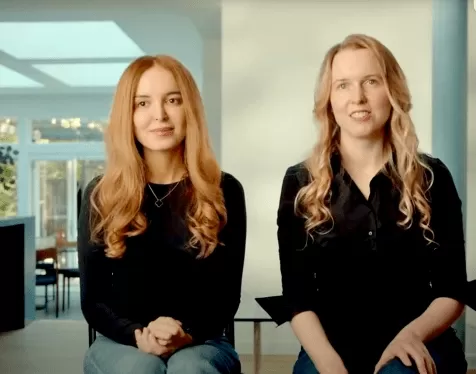
The co-founders of startup Ricursive Intelligence seemed destined to be co-founders.Anna Goldie, CEO, and Azalia Mirhoseini, CTO, are so well-known in the AI community that they were among those AI engineers who “got those weird emails from Zuckerber
How Recursive Intelligence Raised $335M at $4B Valuation in 4 Months
The co-founders of startup Ricursive Intelligence seemed destined to be co-founders.Anna Goldie, CEO, and Azalia Mirhoseini, CTO, are so well-known in the AI community that they were among those AI engineers who “got those weird emails from Zuckerber
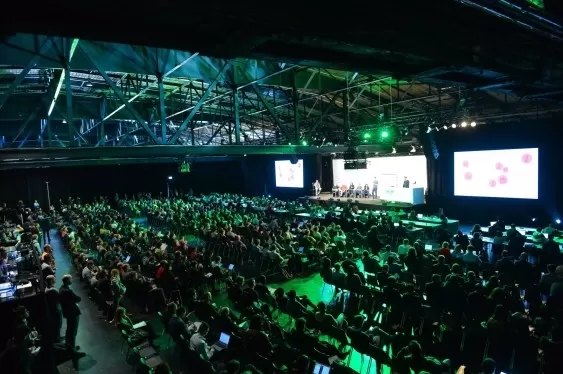 AI race won’t wait, nor will this TechCrunch Disrupt 25% discount
Every founder building in AI right now is asking the same question: Are we moving fast enough, and effectively enough? TechCrunch Disrupt 2026 puts you in the same room as the people wrestling with that existential question at the highest levels. Fro
AI race won’t wait, nor will this TechCrunch Disrupt 25% discount
Every founder building in AI right now is asking the same question: Are we moving fast enough, and effectively enough? TechCrunch Disrupt 2026 puts you in the same room as the people wrestling with that existential question at the highest levels. Fro
2026 Latest Top-rated AI Illustration Tools: Our curated list features the best powerfully designed tools for creating stunning editorial scenes and eye-catching cover art quickly. Each option has gone through rigorous real-world tests, offering a free vs paid comparison to help you find the perfect match for your workflow. Try these must-try solutions today to unlock your AI edge and boost your creative productivity. Explore now at XIX.AI.
10 tools
xix.ai

2026 Latest Top-Rated Best AI Tutors for Exam Prep are here on XIX.AI! Our curated list features powerful game-changing tools that offer free vs paid comparison, real-world tests, and weekly updated rankings. They help boost your writing efficiency, simplify complex topic learning, and unlock your academic potential. Explore now to Discover your perfect exam prep tool and Start creating today to Unlock your AI edge!
10 tools
xix.ai
2026 Latest Best Top-Rated AI Budget Planning Tools for Personal Money Management are here on XIX.AI! This curated collection features powerful, game-changing solutions that help you conduct real-world tests, understand spending habits, and create personalized plans to boost productivity. Enjoy a free vs paid comparison along with detailed rankings. Must-try tools designed to simplify money management and unlock your AI edge. Explore now!
11 tools
xix.ai

2026 Latest Best Top-Rated AI Sleep Tracking Assistants curated for ultimate recovery. This fully updated weekly guide features powerful tools that deliver real-world tests, free vs paid comparison, and detailed rankings to help you find the must-try solution that boosts sleep quality and supports better bedtime habits. Explore now at XIX.AI to Unlock your AI edge.
10 tools
xix.ai
2026 Latest Best Top-Rated AI SQL Copilots for Product and Revenue Analytics! XIX.AI has curated a powerful, game-changing collection of must-try tools that undergo real-world tests through weekly updated rankings. These tools help users boost productivity significantly by accelerating data analysis, streamlining complex queries, and generating accurate insights to drive smarter business decisions. Explore now to Discover your perfect tool for unlocking your AI edge!
14 tools
xix.ai

2026 Latest Best Top-Rated AI Homework Helpers That Teach Core Concepts Not Just Answers Powerful Tools for Students Must-Try Curated List Weekly Updated Free vs Paid Comparison Real-World Tests Accurate Rankings to Help You Unlock Your Full Learning Potential Explore now to Discover your perfect tool for smarter studying.
10 tools
xix.ai

I've been using Topaz Photo AI since v2, and v3 finally fixes the weird artifacts in low-light shots. Still wish they'd speed up the processing though. 😅
Interesting review! I've been considering upgrading to version 3 for my workflow. The noise reduction seems promising, but I still find myself switching back to DxO PureRAW sometimes for certain shots. 🤔 Would love to see a direct comparison with On1's latest AI tools.
¿Ya probaste la denoise? Mejoró bastante pero a veces sigue 'sobresuavizando' texturas, sobre todo en fondos. A ver si le dan más opciones manuales en el siguiente parche 🤔
Still waiting for them to finally fix the batch processing lag! The noise reduction is pretty impressive, but honestly, I've lost count of how many versions they've released that claim to 'resolve issues' 😅. Wish they'd focus less on new features and more on core stability for once.
¿De verdad han solucionado los problemas de las versiones anteriores? 🤔 No estaba muy convencido con la versión 2 después de probarla, así que espero que esta lo haya hecho mejor. ¡Los usuarios merecemos productos que realmente funcionen sin tener que perder tanto tiempo arreglando errores!
Topaz Photo AI 3 sounds like a game-changer for editing! I tried it on some old blurry shots, and the results were mind-blowing. Still, I wonder if it’s worth the price for casual users like me. Anyone else think it’s a bit steep? 😅












