


 Home
HomeTonic Security Secures $7M Funding for Agentic AI to Combat Cybersecurity Threats
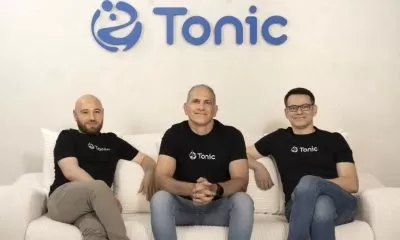
Amid escalating cyber threats, one cybersecurity startup believes contextual intelligence—not just threat detection—holds the key to effective digital defense. Tonic Security emerges from stealth today with $7 million in seed capital from Hetz Ventures, Vesey Ventures, and prominent cybersecurity investors, offering a paradigm-shifting approach to threat prioritization.
The company's AI-powered platform leverages proprietary agentic AI and a security-specific Data Fabric to cut through alert fatigue, providing security teams with business-relevant context for every potential threat. Founded by elite cybersecurity veterans—CEO Sharon Isaaci (Sygnia alum and former IDF intelligence officer), CPO David Warshavski (ex-Sygnia red team lead), and CTO Greg Ainbinder (founder of IDF 8200's AI division)—Tonic redefines how enterprises separate critical risks from background noise.
Addressing Cybersecurity's Information Overload Crisis
Modern security teams drown in alerts—96% of which prove irrelevant according to recent studies—while actual threats hide unnoticed. With data breach costs averaging $4.88 million and global cybercrime poised to cost $10.5 trillion annually by 2025, organizations desperately need solutions that transcend traditional detection tools.
Tonic revolutionizes threat analysis by correlating vulnerabilities with internal business context—ticket systems, communications, infrastructure documentation—then applying AI to assess exploit probability, operational impact, ownership, and remediation feasibility. This methodology enables teams to focus exclusively on threats carrying tangible business risk.
"The real security gap isn't detection—it's prioritization," explains CEO Sharon Isaaci. "Most breaches exploit known vulnerabilities that weren't fixed because no one understood their actual business implications. We change that equation fundamentally."
Real-World Impact Metrics
Early adopters report dramatic efficiency gains:
- 50% faster remediation of critical exposures
- 90% reduction in actionable alerts
- 20% decrease in analyst investigation time
A top financial sector CISO noted: "Previously identifying vulnerable assets took days of investigation. Tonic delivers answers with business context in minutes."
The Urgent Need for Contextual Security
Several converging trends make Tonic's launch particularly timely:
- AI-driven attacks shrinking vulnerability-to-exploit windows
- Expanding attack surfaces from cloud migration and remote work
- Strengthening global regulations (NIS2, SEC mandates, DORA) demanding real-time risk intelligence
- Enterprise boards requiring concrete business impact assessments
Traditional reactive security approaches crumble under these pressures, fueling explosive growth in continuous exposure management—a $20 billion market by 2032.
Redefining Cybersecurity Operations
Tonic's debut signals a fundamental shift in security operations philosophy. As threat volumes explode and infrastructure complexity grows, legacy tools relying on manual processes and generic risk scoring become dangerously inadequate.
The future demands systems capable of autonomous reasoning—answering critical questions:
- Does this vulnerability actually matter?
- What business functions are at risk?
- Who owns mitigation?
- What's the optimal remediation path?
By combining organizational knowledge with external threat intelligence through AI agents, Tonic provides a working model for next-generation cybersecurity—transitioning from reactive monitoring to proactive, business-aware protection. As enterprises increasingly adopt AI, security platforms must evolve complementary autonomous capabilities that filter routine risks, reserving human attention for truly strategic threats.
Tonic Security isn't merely solving today's alert fatigue—it's architecting tomorrow's intelligent defense infrastructure where contextual understanding and automated judgment become fundamental security capabilities.
Related article
 ElevenLabs brings on BlackRock, Jamie Foxx and Longoria as new investors
ElevenLabs, a leader in Voice AI, has announced new participants in its $500 million Series D funding round, initially revealed in February. The investor roster now features major institutions like BlackRock, Wellington, D.E. Shaw, and Schroders, alo
Neko Health raises $700 million to expand AI body scans in the US
Neko Health has secured $700 million in funding to roll out its AI-driven body scans across the United States, kicking off with a flagship clinic in New York. This preventive screening platform integrates medical imaging, blood analysis, proprietary
Video generation startup PixVerse raises $439M, valuation tops $2B
PixVerse, a Singapore-based video generation startup, announced today the close of its Series C extension, raising a total of $439 million in the round. According to the company, this new funding brings its valuation to over $2 billion. The capital w
Related Special Topic Recommendations
Design & Art
ElevenLabs brings on BlackRock, Jamie Foxx and Longoria as new investors
ElevenLabs, a leader in Voice AI, has announced new participants in its $500 million Series D funding round, initially revealed in February. The investor roster now features major institutions like BlackRock, Wellington, D.E. Shaw, and Schroders, alo
Neko Health raises $700 million to expand AI body scans in the US
Neko Health has secured $700 million in funding to roll out its AI-driven body scans across the United States, kicking off with a flagship clinic in New York. This preventive screening platform integrates medical imaging, blood analysis, proprietary
Video generation startup PixVerse raises $439M, valuation tops $2B
PixVerse, a Singapore-based video generation startup, announced today the close of its Series C extension, raising a total of $439 million in the round. According to the company, this new funding brings its valuation to over $2 billion. The capital w
Related Special Topic Recommendations
Design & Art
 Top AI Illustration Tools: Create Editorial Scenes and Cover Art Faster
2026 Latest Top-rated AI Illustration Tools: Our curated list features the best powerfully designed tools for creating stunning editorial scenes and eye-catching cover art quickly. Each option has gone through rigorous real-world tests, offering a free vs paid comparison to help you find the perfect match for your workflow. Try these must-try solutions today to unlock your AI edge and boost your creative productivity. Explore now at XIX.AI.
 10 tools
 xix.ai
Education and Learning
Top AI Tutors for Exam Prep: Practice Math, Science, and English
xix.ai
Education and Learning
Top AI Tutors for Exam Prep: Practice Math, Science, and English
2026 Latest Top-Rated Best AI Tutors for Exam Prep are here on XIX.AI! Our curated list features powerful game-changing tools that offer free vs paid comparison, real-world tests, and weekly updated rankings. They help boost your writing efficiency, simplify complex topic learning, and unlock your academic potential. Explore now to Discover your perfect exam prep tool and Start creating today to Unlock your AI edge!
10 tools
xix.ai
Finance
AI Budget Planning Tools for Personal Money Management
2026 Latest Best Top-Rated AI Budget Planning Tools for Personal Money Management are here on XIX.AI! This curated collection features powerful, game-changing solutions that help you conduct real-world tests, understand spending habits, and create personalized plans to boost productivity. Enjoy a free vs paid comparison along with detailed rankings. Must-try tools designed to simplify money management and unlock your AI edge. Explore now!
11 tools
xix.ai
Health & Wellness
AI Sleep Tracking Assistants: Improve Recovery with Better Bedtime Habits
2026 Latest Best Top-Rated AI Sleep Tracking Assistants curated for ultimate recovery. This fully updated weekly guide features powerful tools that deliver real-world tests, free vs paid comparison, and detailed rankings to help you find the must-try solution that boosts sleep quality and supports better bedtime habits. Explore now at XIX.AI to Unlock your AI edge.
10 tools
xix.ai
Data Analysis
AI SQL Copilots for Product and Revenue Analytics
2026 Latest Best Top-Rated AI SQL Copilots for Product and Revenue Analytics! XIX.AI has curated a powerful, game-changing collection of must-try tools that undergo real-world tests through weekly updated rankings. These tools help users boost productivity significantly by accelerating data analysis, streamlining complex queries, and generating accurate insights to drive smarter business decisions. Explore now to Discover your perfect tool for unlocking your AI edge!
14 tools
xix.ai
Education and Learning
Best AI Homework Helpers That Teach: Learn Concepts, Not Just Answers
2026 Latest Best Top-Rated AI Homework Helpers That Teach Core Concepts Not Just Answers Powerful Tools for Students Must-Try Curated List Weekly Updated Free vs Paid Comparison Real-World Tests Accurate Rankings to Help You Unlock Your Full Learning Potential Explore now to Discover your perfect tool for smarter studying.
10 tools
xix.ai

 Comments (4)
0/500
Comments (4)
0/500
![GregoryBaker]()
Finally, someone gets it! Detection is old news; context is king. 🛡️ $7M well spent if they actually deliver on agentic AI that thinks, not just reacts. Can't wait to see if this beats the usual noisy alerts.
![FrankRodriguez]()
Agentic AI for cybersecurity? Sounds like a plot twist in a sci-fi movie. But honestly, contextual intelligence might actually be the game-changer we need. $7M seed is a solid start, hope they deliver more than just hype. 🔐
![AnthonyPerez]()
¿Cómo puede un AI diferenciar entre un fallo del sistema y un ataque real? Este artículo me recuerda a que cada vez confiamos más en la automatización, pero si el atacante también usa IA, ¿seremos capaces de mantenernos un paso adelante? El financiamiento es impresionante, pero ¿la inteligencia contextual resolverá los problemas que ni los humanos pueden ver claramente? 🤨
![WalterWalker]()
これって本当に効果あるの?AIを使ったサイバーセキュリティって、結局は新しい攻撃手法を学ぶのに時間がかかりそうだけど。防御側も、攻撃側もAIが進化すれば、イタチごっこみたいになるんじゃ?🤔 でも、700万ドルって資金調達はすごいね。投資家もリスクをとってチャレンジしてるんだな。
Amid escalating cyber threats, one cybersecurity startup believes contextual intelligence—not just threat detection—holds the key to effective digital defense. Tonic Security emerges from stealth today with $7 million in seed capital from Hetz Ventures, Vesey Ventures, and prominent cybersecurity investors, offering a paradigm-shifting approach to threat prioritization.
The company's AI-powered platform leverages proprietary agentic AI and a security-specific Data Fabric to cut through alert fatigue, providing security teams with business-relevant context for every potential threat. Founded by elite cybersecurity veterans—CEO Sharon Isaaci (Sygnia alum and former IDF intelligence officer), CPO David Warshavski (ex-Sygnia red team lead), and CTO Greg Ainbinder (founder of IDF 8200's AI division)—Tonic redefines how enterprises separate critical risks from background noise.
Addressing Cybersecurity's Information Overload Crisis
Modern security teams drown in alerts—96% of which prove irrelevant according to recent studies—while actual threats hide unnoticed. With data breach costs averaging $4.88 million and global cybercrime poised to cost $10.5 trillion annually by 2025, organizations desperately need solutions that transcend traditional detection tools.
Tonic revolutionizes threat analysis by correlating vulnerabilities with internal business context—ticket systems, communications, infrastructure documentation—then applying AI to assess exploit probability, operational impact, ownership, and remediation feasibility. This methodology enables teams to focus exclusively on threats carrying tangible business risk.
"The real security gap isn't detection—it's prioritization," explains CEO Sharon Isaaci. "Most breaches exploit known vulnerabilities that weren't fixed because no one understood their actual business implications. We change that equation fundamentally."
Real-World Impact Metrics
Early adopters report dramatic efficiency gains:
- 50% faster remediation of critical exposures
- 90% reduction in actionable alerts
- 20% decrease in analyst investigation time
A top financial sector CISO noted: "Previously identifying vulnerable assets took days of investigation. Tonic delivers answers with business context in minutes."
The Urgent Need for Contextual Security
Several converging trends make Tonic's launch particularly timely:
- AI-driven attacks shrinking vulnerability-to-exploit windows
- Expanding attack surfaces from cloud migration and remote work
- Strengthening global regulations (NIS2, SEC mandates, DORA) demanding real-time risk intelligence
- Enterprise boards requiring concrete business impact assessments
Traditional reactive security approaches crumble under these pressures, fueling explosive growth in continuous exposure management—a $20 billion market by 2032.
Redefining Cybersecurity Operations
Tonic's debut signals a fundamental shift in security operations philosophy. As threat volumes explode and infrastructure complexity grows, legacy tools relying on manual processes and generic risk scoring become dangerously inadequate.
The future demands systems capable of autonomous reasoning—answering critical questions:
- Does this vulnerability actually matter?
- What business functions are at risk?
- Who owns mitigation?
- What's the optimal remediation path?
By combining organizational knowledge with external threat intelligence through AI agents, Tonic provides a working model for next-generation cybersecurity—transitioning from reactive monitoring to proactive, business-aware protection. As enterprises increasingly adopt AI, security platforms must evolve complementary autonomous capabilities that filter routine risks, reserving human attention for truly strategic threats.
Tonic Security isn't merely solving today's alert fatigue—it's architecting tomorrow's intelligent defense infrastructure where contextual understanding and automated judgment become fundamental security capabilities.








 ElevenLabs brings on BlackRock, Jamie Foxx and Longoria as new investors
ElevenLabs, a leader in Voice AI, has announced new participants in its $500 million Series D funding round, initially revealed in February. The investor roster now features major institutions like BlackRock, Wellington, D.E. Shaw, and Schroders, alo
ElevenLabs brings on BlackRock, Jamie Foxx and Longoria as new investors
ElevenLabs, a leader in Voice AI, has announced new participants in its $500 million Series D funding round, initially revealed in February. The investor roster now features major institutions like BlackRock, Wellington, D.E. Shaw, and Schroders, alo
 Neko Health raises $700 million to expand AI body scans in the US
Neko Health has secured $700 million in funding to roll out its AI-driven body scans across the United States, kicking off with a flagship clinic in New York. This preventive screening platform integrates medical imaging, blood analysis, proprietary
Neko Health raises $700 million to expand AI body scans in the US
Neko Health has secured $700 million in funding to roll out its AI-driven body scans across the United States, kicking off with a flagship clinic in New York. This preventive screening platform integrates medical imaging, blood analysis, proprietary
 Video generation startup PixVerse raises $439M, valuation tops $2B
PixVerse, a Singapore-based video generation startup, announced today the close of its Series C extension, raising a total of $439 million in the round. According to the company, this new funding brings its valuation to over $2 billion. The capital w
Video generation startup PixVerse raises $439M, valuation tops $2B
PixVerse, a Singapore-based video generation startup, announced today the close of its Series C extension, raising a total of $439 million in the round. According to the company, this new funding brings its valuation to over $2 billion. The capital w

2026 Latest Top-rated AI Illustration Tools: Our curated list features the best powerfully designed tools for creating stunning editorial scenes and eye-catching cover art quickly. Each option has gone through rigorous real-world tests, offering a free vs paid comparison to help you find the perfect match for your workflow. Try these must-try solutions today to unlock your AI edge and boost your creative productivity. Explore now at XIX.AI.
10 tools
xix.ai

2026 Latest Top-Rated Best AI Tutors for Exam Prep are here on XIX.AI! Our curated list features powerful game-changing tools that offer free vs paid comparison, real-world tests, and weekly updated rankings. They help boost your writing efficiency, simplify complex topic learning, and unlock your academic potential. Explore now to Discover your perfect exam prep tool and Start creating today to Unlock your AI edge!
10 tools
xix.ai

2026 Latest Best Top-Rated AI Budget Planning Tools for Personal Money Management are here on XIX.AI! This curated collection features powerful, game-changing solutions that help you conduct real-world tests, understand spending habits, and create personalized plans to boost productivity. Enjoy a free vs paid comparison along with detailed rankings. Must-try tools designed to simplify money management and unlock your AI edge. Explore now!
11 tools
xix.ai

2026 Latest Best Top-Rated AI Sleep Tracking Assistants curated for ultimate recovery. This fully updated weekly guide features powerful tools that deliver real-world tests, free vs paid comparison, and detailed rankings to help you find the must-try solution that boosts sleep quality and supports better bedtime habits. Explore now at XIX.AI to Unlock your AI edge.
10 tools
xix.ai

2026 Latest Best Top-Rated AI SQL Copilots for Product and Revenue Analytics! XIX.AI has curated a powerful, game-changing collection of must-try tools that undergo real-world tests through weekly updated rankings. These tools help users boost productivity significantly by accelerating data analysis, streamlining complex queries, and generating accurate insights to drive smarter business decisions. Explore now to Discover your perfect tool for unlocking your AI edge!
14 tools
xix.ai

2026 Latest Best Top-Rated AI Homework Helpers That Teach Core Concepts Not Just Answers Powerful Tools for Students Must-Try Curated List Weekly Updated Free vs Paid Comparison Real-World Tests Accurate Rankings to Help You Unlock Your Full Learning Potential Explore now to Discover your perfect tool for smarter studying.
10 tools
xix.ai

Finally, someone gets it! Detection is old news; context is king. 🛡️ $7M well spent if they actually deliver on agentic AI that thinks, not just reacts. Can't wait to see if this beats the usual noisy alerts.
Agentic AI for cybersecurity? Sounds like a plot twist in a sci-fi movie. But honestly, contextual intelligence might actually be the game-changer we need. $7M seed is a solid start, hope they deliver more than just hype. 🔐
¿Cómo puede un AI diferenciar entre un fallo del sistema y un ataque real? Este artículo me recuerda a que cada vez confiamos más en la automatización, pero si el atacante también usa IA, ¿seremos capaces de mantenernos un paso adelante? El financiamiento es impresionante, pero ¿la inteligencia contextual resolverá los problemas que ni los humanos pueden ver claramente? 🤨
これって本当に効果あるの?AIを使ったサイバーセキュリティって、結局は新しい攻撃手法を学ぶのに時間がかかりそうだけど。防御側も、攻撃側もAIが進化すれば、イタチごっこみたいになるんじゃ?🤔 でも、700万ドルって資金調達はすごいね。投資家もリスクをとってチャレンジしてるんだな。












