


 Home
HomeFuture Top Developers Will Curate, Coordinate, and Lead AI, Not Just Code

As artificial intelligence steadily masters new skills, the traditional junior coding role is quickly becoming obsolete. Routine tasks that once formed the core of a junior developer's work—repetitive scripting, HTML layout, or basic DevOps configurations—are now capably managed by AI assistants like ChatGPT, GitHub Copilot, and Amazon CodeWhisperer.
This represents more than just a boost in speed and productivity; it signals a significant structural transformation. So what does this mean for those just starting their careers? And, on a broader scale, what does it imply for the software industry?
The Disappearing Entry-Level Role
For years, the software engineering field followed a well-defined progression: start with fundamentals, create simple web pages, write test scripts, and fix minor errors. As expertise grew, professionals would advance to system architecture and product ownership.
Today, AI is dramatically reshaping the foundational stages of this path, as it independently handles many tasks traditionally assigned to beginners.
Consequently, newcomers are now expected to contribute at a level that previously required years of experience. Modern development involves more than coding—it demands system comprehension, problem structuring, and seamless collaboration with AI tools. This is a substantial challenge. Still, a viable path exists, beginning with a shift in our learning methods.
If you're new to programming, resist over-relying on AI to complete tasks. While convenient, this habit can hinder long-term growth. Skipping hands-on practice means missing essential insights into software mechanics—insights vital for evolving into a developer who leads, architects, and directs AI rather than being displaced by it.
In my view, the most valuable tech professionals of the near future won't be those who write flawless code. They will be the ones who understand what to build, why it matters, and how to leverage AI systems for clean, efficient execution. Tomorrow's coder will resemble a product manager with strong technical skills.
Evolving Team Structures
Given these shifts, it's important to note that not only individuals but entire teams are transforming. Roles once clearly separated—front-end developer, back-end specialist, DevOps engineer, QA tester—will soon give way to developers managing entire workflows with AI support.
AI-enhanced developers will accomplish what previously required large teams. This shift brings clear advantages: streamlined communication, faster delivery, and expanded individual capabilities.
Of course, teams won't vanish entirely. Instead, their focus will shift toward strategic planning, product coherence, and ensuring responsible, effective AI application. Human involvement will center on guidance rather than implementation.
AI's New Professional Pathway
Looking five to seven years ahead, today's concept of a "developer" will likely evolve into something entirely different. We'll see more hybrid roles—combining development, design, and product thinking. As noted, the central task won't be writing code, but translating concepts into functional software using AI as the primary tool—or even as a creative partner.
Technical proficiency will remain essential, but coding knowledge alone won't suffice. Success will require product insight, user empathy, and the ability to manage AI output. The emphasis will be on system design and strategic direction.
While some may find this daunting, others will discover new opportunities. Creative problem-solvers will find abundant possibilities ahead.
The landscape is undeniably changing—but for those ready to adapt, this change may work to their advantage. The decline of junior coding doesn't signal the end of learning. It highlights the need to reconsider which skills we cultivate, how we organize teams, and what truly defines an exceptional developer.
Rather than lamenting the automation of basic tasks, the industry should concentrate on developing capabilities that resist automation—at least for now. This means adopting integrated approaches and learning to collaborate with AI as a partner, not a rival.
Roman Eloshvili is founder of ComplyControl.
Related article
 Google Gemini Deeply Integrated with Google Photos for Personalized AI Image Generation
Google has recently rolled out a significant update to its AI assistant, Gemini, by deeply integrating it with Google Photos. This enhancement allows Gemini to directly access visual data from your photo library, enabling the creation of more persona
Reddit Masterpiece Makes Claude Interact with You Through Handwriting in Real Time, Providing an Immersive Learning Experience That Is Simply Outstanding
A Reddit developer has launched a new interactive handwriting app that lets users converse with Claude AI in real time. By mimicking the magical, two-way exchange of Tom Riddle’s diary from Harry Potter, the tool transforms digital note-taking into a
Adobe Acquires Topaz Labs to Bolster Firefly AI Video and Image Tools
Adobe officially announced on Thursday its acquisition of Topaz Labs, a well-established image and video enhancement artificial intelligence model developer with over two decades of history, and will fully integrate it into its creative business segm
Related Special Topic Recommendations
Health & Wellness
Google Gemini Deeply Integrated with Google Photos for Personalized AI Image Generation
Google has recently rolled out a significant update to its AI assistant, Gemini, by deeply integrating it with Google Photos. This enhancement allows Gemini to directly access visual data from your photo library, enabling the creation of more persona
Reddit Masterpiece Makes Claude Interact with You Through Handwriting in Real Time, Providing an Immersive Learning Experience That Is Simply Outstanding
A Reddit developer has launched a new interactive handwriting app that lets users converse with Claude AI in real time. By mimicking the magical, two-way exchange of Tom Riddle’s diary from Harry Potter, the tool transforms digital note-taking into a
Adobe Acquires Topaz Labs to Bolster Firefly AI Video and Image Tools
Adobe officially announced on Thursday its acquisition of Topaz Labs, a well-established image and video enhancement artificial intelligence model developer with over two decades of history, and will fully integrate it into its creative business segm
Related Special Topic Recommendations
Health & Wellness
 AI Sleep Tracking Assistants: Improve Recovery with Better Bedtime Habits
2026 Latest Best Top-Rated AI Sleep Tracking Assistants curated for ultimate recovery. This fully updated weekly guide features powerful tools that deliver real-world tests, free vs paid comparison, and detailed rankings to help you find the must-try solution that boosts sleep quality and supports better bedtime habits. Explore now at XIX.AI to Unlock your AI edge.
 10 tools
 xix.ai
Data Analysis
AI SQL Copilots for Product and Revenue Analytics
xix.ai
Data Analysis
AI SQL Copilots for Product and Revenue Analytics
2026 Latest Best Top-Rated AI SQL Copilots for Product and Revenue Analytics! XIX.AI has curated a powerful, game-changing collection of must-try tools that undergo real-world tests through weekly updated rankings. These tools help users boost productivity significantly by accelerating data analysis, streamlining complex queries, and generating accurate insights to drive smarter business decisions. Explore now to Discover your perfect tool for unlocking your AI edge!
14 tools
xix.ai
Education and Learning
Best AI Homework Helpers That Teach: Learn Concepts, Not Just Answers
2026 Latest Best Top-Rated AI Homework Helpers That Teach Core Concepts Not Just Answers Powerful Tools for Students Must-Try Curated List Weekly Updated Free vs Paid Comparison Real-World Tests Accurate Rankings to Help You Unlock Your Full Learning Potential Explore now to Discover your perfect tool for smarter studying.
10 tools
xix.ai
Marketing
ChatGPT Ad Copy Tools for Meta Campaigns, Landing Pages, and Creative Testing
2026 Latest Best ChatGPT Ad Copy Tools Reviewed! This curated top-rated list offers powerful game-changing solutions to help you craft high-converting copy for Meta campaigns, landing pages, and creative testing. Get a free vs paid comparison along with real-world tests and detailed rankings to find the must-try tool that boosts your productivity significantly. Explore now at XIX.AI to unlock your AI edge!
11 tools
xix.ai
Business
Best AI Pricing Strategy Tools for Market Testing
2026 Latest Best Top-rated AI Pricing Strategy Tools for Market Testing! XIX.AI has curated a powerful game-changing collection of must-try tools, featuring weekly updated rankings and free vs paid comparison. These top-rated solutions help businesses run real-world tests, boost productivity, and discover the perfect pricing model to stand out in competitive markets. Explore now to Unlock your AI edge!
9 tools
xix.ai
Academic Research
AI PDF Citation Extractors for Journal Articles, Methods Sections, and References
2026 Latest Best Top-rated AI PDF Citation Extractors for Journal Articles, Methods Sections, and References are here on XIX.AI. This curated list features powerful game-changing tools that go through real-world tests to deliver accurate results every time. You can find a free vs paid comparison along with detailed rankings to help you choose the must-try option that boosts your research efficiency significantly. Explore now to discover your perfect tool for faster academic work!
9 tools
xix.ai

 Comments (1)
0/500
Comments (1)
0/500
![ArthurYoung]()
Honestly, this shift is both exciting and a bit scary. The thought of AI phasing out those entry-level coding grunt jobs makes me nervous for new grads – how do you even break into the industry now? Makes me wonder if universities need a massive curriculum overhaul, and fast. 🤔
As artificial intelligence steadily masters new skills, the traditional junior coding role is quickly becoming obsolete. Routine tasks that once formed the core of a junior developer's work—repetitive scripting, HTML layout, or basic DevOps configurations—are now capably managed by AI assistants like ChatGPT, GitHub Copilot, and Amazon CodeWhisperer.
This represents more than just a boost in speed and productivity; it signals a significant structural transformation. So what does this mean for those just starting their careers? And, on a broader scale, what does it imply for the software industry?
The Disappearing Entry-Level Role
For years, the software engineering field followed a well-defined progression: start with fundamentals, create simple web pages, write test scripts, and fix minor errors. As expertise grew, professionals would advance to system architecture and product ownership.
Today, AI is dramatically reshaping the foundational stages of this path, as it independently handles many tasks traditionally assigned to beginners.
Consequently, newcomers are now expected to contribute at a level that previously required years of experience. Modern development involves more than coding—it demands system comprehension, problem structuring, and seamless collaboration with AI tools. This is a substantial challenge. Still, a viable path exists, beginning with a shift in our learning methods.
If you're new to programming, resist over-relying on AI to complete tasks. While convenient, this habit can hinder long-term growth. Skipping hands-on practice means missing essential insights into software mechanics—insights vital for evolving into a developer who leads, architects, and directs AI rather than being displaced by it.
In my view, the most valuable tech professionals of the near future won't be those who write flawless code. They will be the ones who understand what to build, why it matters, and how to leverage AI systems for clean, efficient execution. Tomorrow's coder will resemble a product manager with strong technical skills.
Evolving Team Structures
Given these shifts, it's important to note that not only individuals but entire teams are transforming. Roles once clearly separated—front-end developer, back-end specialist, DevOps engineer, QA tester—will soon give way to developers managing entire workflows with AI support.
AI-enhanced developers will accomplish what previously required large teams. This shift brings clear advantages: streamlined communication, faster delivery, and expanded individual capabilities.
Of course, teams won't vanish entirely. Instead, their focus will shift toward strategic planning, product coherence, and ensuring responsible, effective AI application. Human involvement will center on guidance rather than implementation.
AI's New Professional Pathway
Looking five to seven years ahead, today's concept of a "developer" will likely evolve into something entirely different. We'll see more hybrid roles—combining development, design, and product thinking. As noted, the central task won't be writing code, but translating concepts into functional software using AI as the primary tool—or even as a creative partner.
Technical proficiency will remain essential, but coding knowledge alone won't suffice. Success will require product insight, user empathy, and the ability to manage AI output. The emphasis will be on system design and strategic direction.
While some may find this daunting, others will discover new opportunities. Creative problem-solvers will find abundant possibilities ahead.
The landscape is undeniably changing—but for those ready to adapt, this change may work to their advantage. The decline of junior coding doesn't signal the end of learning. It highlights the need to reconsider which skills we cultivate, how we organize teams, and what truly defines an exceptional developer.
Rather than lamenting the automation of basic tasks, the industry should concentrate on developing capabilities that resist automation—at least for now. This means adopting integrated approaches and learning to collaborate with AI as a partner, not a rival.
Roman Eloshvili is founder of ComplyControl.








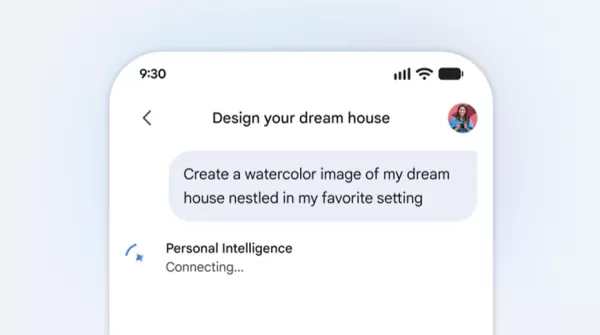 Google Gemini Deeply Integrated with Google Photos for Personalized AI Image Generation
Google has recently rolled out a significant update to its AI assistant, Gemini, by deeply integrating it with Google Photos. This enhancement allows Gemini to directly access visual data from your photo library, enabling the creation of more persona
Google Gemini Deeply Integrated with Google Photos for Personalized AI Image Generation
Google has recently rolled out a significant update to its AI assistant, Gemini, by deeply integrating it with Google Photos. This enhancement allows Gemini to directly access visual data from your photo library, enabling the creation of more persona
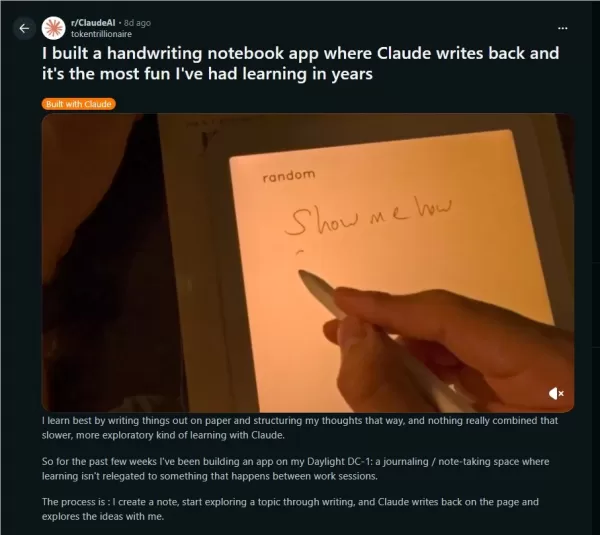 Reddit Masterpiece Makes Claude Interact with You Through Handwriting in Real Time, Providing an Immersive Learning Experience That Is Simply Outstanding
A Reddit developer has launched a new interactive handwriting app that lets users converse with Claude AI in real time. By mimicking the magical, two-way exchange of Tom Riddle’s diary from Harry Potter, the tool transforms digital note-taking into a
Reddit Masterpiece Makes Claude Interact with You Through Handwriting in Real Time, Providing an Immersive Learning Experience That Is Simply Outstanding
A Reddit developer has launched a new interactive handwriting app that lets users converse with Claude AI in real time. By mimicking the magical, two-way exchange of Tom Riddle’s diary from Harry Potter, the tool transforms digital note-taking into a
 Adobe Acquires Topaz Labs to Bolster Firefly AI Video and Image Tools
Adobe officially announced on Thursday its acquisition of Topaz Labs, a well-established image and video enhancement artificial intelligence model developer with over two decades of history, and will fully integrate it into its creative business segm
Adobe Acquires Topaz Labs to Bolster Firefly AI Video and Image Tools
Adobe officially announced on Thursday its acquisition of Topaz Labs, a well-established image and video enhancement artificial intelligence model developer with over two decades of history, and will fully integrate it into its creative business segm

2026 Latest Best Top-Rated AI Sleep Tracking Assistants curated for ultimate recovery. This fully updated weekly guide features powerful tools that deliver real-world tests, free vs paid comparison, and detailed rankings to help you find the must-try solution that boosts sleep quality and supports better bedtime habits. Explore now at XIX.AI to Unlock your AI edge.
10 tools
xix.ai

2026 Latest Best Top-Rated AI SQL Copilots for Product and Revenue Analytics! XIX.AI has curated a powerful, game-changing collection of must-try tools that undergo real-world tests through weekly updated rankings. These tools help users boost productivity significantly by accelerating data analysis, streamlining complex queries, and generating accurate insights to drive smarter business decisions. Explore now to Discover your perfect tool for unlocking your AI edge!
14 tools
xix.ai

2026 Latest Best Top-Rated AI Homework Helpers That Teach Core Concepts Not Just Answers Powerful Tools for Students Must-Try Curated List Weekly Updated Free vs Paid Comparison Real-World Tests Accurate Rankings to Help You Unlock Your Full Learning Potential Explore now to Discover your perfect tool for smarter studying.
10 tools
xix.ai

2026 Latest Best ChatGPT Ad Copy Tools Reviewed! This curated top-rated list offers powerful game-changing solutions to help you craft high-converting copy for Meta campaigns, landing pages, and creative testing. Get a free vs paid comparison along with real-world tests and detailed rankings to find the must-try tool that boosts your productivity significantly. Explore now at XIX.AI to unlock your AI edge!
11 tools
xix.ai

2026 Latest Best Top-rated AI Pricing Strategy Tools for Market Testing! XIX.AI has curated a powerful game-changing collection of must-try tools, featuring weekly updated rankings and free vs paid comparison. These top-rated solutions help businesses run real-world tests, boost productivity, and discover the perfect pricing model to stand out in competitive markets. Explore now to Unlock your AI edge!
9 tools
xix.ai

2026 Latest Best Top-rated AI PDF Citation Extractors for Journal Articles, Methods Sections, and References are here on XIX.AI. This curated list features powerful game-changing tools that go through real-world tests to deliver accurate results every time. You can find a free vs paid comparison along with detailed rankings to help you choose the must-try option that boosts your research efficiency significantly. Explore now to discover your perfect tool for faster academic work!
9 tools
xix.ai

Honestly, this shift is both exciting and a bit scary. The thought of AI phasing out those entry-level coding grunt jobs makes me nervous for new grads – how do you even break into the industry now? Makes me wonder if universities need a massive curriculum overhaul, and fast. 🤔












