


 Home
HomeSpaceX to Buy Cursor for $60B in Stock Days After Blockbuster IPO
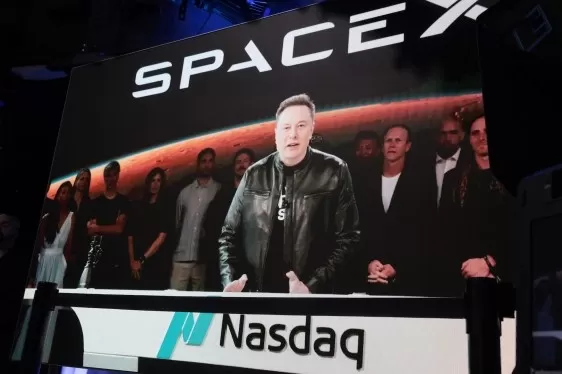
SpaceX has finalized a $60 billion stock acquisition of AI coding platform Cursor, shortly after the aerospace firm’s landmark IPO and less than two months after initially announcing a strategic partnership between the two entities.
The transaction aims to bolster SpaceX’s AI division, which centers on Elon Musk’s xAI and was merged earlier this year, helping it compete with leading AI laboratories. Despite being a key promise of its IPO, SpaceX’s AI unit has undergone restructuring following multiple controversies, including incidents where users generated non-consensual deepfakes of women and children.
SpaceX confirmed on Tuesday that the acquisition is expected to close in the third quarter of this year.
Prior to SpaceX’s involvement, Cursor was nearing the completion of a $2 billion funding round led by investors such as Andreessen Horowitz, Thrive, and Nvidia, which would have valued the AI coding startup at $50 billion, according to TechCrunch.
Musk’s company announced a unique agreement in April ahead of its IPO: it would either acquire Cursor for $60 billion in stock or pay a $10 billion break-up fee if the deal did not proceed.
Cursor was experiencing rapid growth when this deal was first announced. However, one source told TechCrunch at the time that the $2 billion it planned to raise would not be sufficient to achieve profitability. This assessment came despite the startup previously securing $900 million in a Series C round in June 2025, followed by an additional $2.3 billion in late 2025.
Founded in 2022 as Anysphere, Cursor has seen explosive growth as AI-powered coding tools gained traction over the past two years. It participated in OpenAI’s startup accelerator in 2024 before raising enough capital to reach a valuation of approximately $29 billion prior to the SpaceX deal announcement.
Indications of SpaceX’s interest in Cursor emerged earlier this year when xAI hired two of the startup’s senior engineering leaders. Subsequently, in April, Business Insider reported that xAI had decided to lease some of its data center capacity to Cursor—a move reminiscent of similar arrangements SpaceX made with Anthropic and Google ahead of its IPO this year. These discussions between SpaceX and Cursor quickly evolved into the transaction currently being finalized.
The deal coincided with significant turmoil within xAI.
By the end of March, all 11 of Musk’s co-founders at xAI had departed, and Musk publicly acknowledged that xAI “was not built right [the] first time around,” stating he was rebuilding it “from the foundations up.” This admission followed controversies involving xAI’s Grok chatbot, which referred to itself as “MechaHitler” in 2025 and allowed users to generate nude and sexual deepfakes of women and children earlier this year. SpaceX disclosed in its IPO filings that such behavior poses a risk to its business, and the company currently faces numerous legal challenges resulting from these incidents.
xAI’s restructuring began as SpaceX moved toward what would become the largest IPO in history. During this process, SpaceX and its bankers pitched investors on a total addressable market of approximately $28 trillion. Nearly all of this—$26 trillion—was attributed to the company’s AI initiatives.
SpaceX projected a potential $2.4 trillion AI infrastructure business (including plans to build a satellite constellation for AI compute) and a $22.7 trillion opportunity in “enterprise applications.”
SpaceX is now relying on Cursor to help fulfill some of these promises. However, the prospect of acquiring the startup likely appeared more feasible post-IPO: Since going public last Friday, SpaceX’s stock has risen from its IPO price of $135 per share to over $200 per share in pre-market trading as of Tuesday morning, adding nearly $1 trillion—or roughly the value of 16 Cursors—to its valuation in just a few days.
Related article
 Nvidia quietly builds multibillion-dollar behemoth to rival chip business
Nvidia CEO Jensen Huang anticipated the market by over a decade, initiating work on AI-specific chips in 2010, long before the current AI boom. A parallel strategic move in 2020—bolstering data center networking through a key acquisition—has created
Wipro Appoints New CHRO to Lead AI-Driven HR Transformation
Wipro accelerates its technology roadmap by launching standalone AI platforms for global enterprises. Credit: Getty ImagesPriya Jha Choudhary assumes the role of Chief Human Resources Officer for AI, as Wipro restructures talent management to support
Palo Alto Networks acquires Thrive-backed Console in $500 million deal
Palo Alto Networks has agreed to acquire Console, a two-year-old startup leveraging AI agents to automate routine IT help desk operations, for $500 million in cash and stock, according to two individuals familiar with the transaction.While the compan
Related Special Topic Recommendations
automation
Nvidia quietly builds multibillion-dollar behemoth to rival chip business
Nvidia CEO Jensen Huang anticipated the market by over a decade, initiating work on AI-specific chips in 2010, long before the current AI boom. A parallel strategic move in 2020—bolstering data center networking through a key acquisition—has created
Wipro Appoints New CHRO to Lead AI-Driven HR Transformation
Wipro accelerates its technology roadmap by launching standalone AI platforms for global enterprises. Credit: Getty ImagesPriya Jha Choudhary assumes the role of Chief Human Resources Officer for AI, as Wipro restructures talent management to support
Palo Alto Networks acquires Thrive-backed Console in $500 million deal
Palo Alto Networks has agreed to acquire Console, a two-year-old startup leveraging AI agents to automate routine IT help desk operations, for $500 million in cash and stock, according to two individuals familiar with the transaction.While the compan
Related Special Topic Recommendations
automation
 Best AI Browser Automation Tools for Web Operations
2026 Latest Best Top-rated AI Browser Automation Tools for Web Operations are here on XIX.AI! This curated list features powerful, game-changing solutions that help boost productivity dramatically through real-world tests and strict rankings. We also provide a free vs paid comparison to help you choose the perfect option for streamlining web tasks, enhancing automation efficiency, and unlocking your AI edge. Explore now!
 9 tools
 xix.ai
Health & Wellness
AI Wellness Tools for Sleep and Habit Tracking
xix.ai
Health & Wellness
AI Wellness Tools for Sleep and Habit Tracking
2026 Latest Best Top-Rated AI Wellness Tools for Sleep and Habit Tracking! XIX.AI curates a powerful, game-changing collection of must-try tools that offer real-world tests and detailed free vs paid comparison. These top-rated solutions help users boost sleep quality, monitor daily habits effectively, and unlock significant productivity improvements. Explore now to Discover your perfect tool and Start creating today to Unlock your AI edge!
11 tools
xix.ai
Business
AI Vendor Due Diligence Platforms for Procurement Reviews and Risk Screening
2026 Latest Best Top-rated AI Vendor Due Diligence Platforms for Procurement Reviews and Risk Screening! This curated list features powerful game-changing tools that go through rigorous real-world tests to deliver accurate rankings. You’ll find a free vs paid comparison, helping you identify the must-try solutions that boost procurement efficiency and cut risks. Backed by XIX.AI, it’s updated weekly. Explore now to discover your perfect tool for smarter sourcing! 238 characters
10 tools
xix.ai
Video creation
Best AI Video Generators for Demos: Turn Scripts into Explainer Videos
2026 Latest Best Top-Rated AI Video Generators for Demos are curated here, offering powerful game-changing solutions to turn scripts into professional explainer videos fast. XIX.AI provides weekly updated rankings based on real-world tests, including free vs paid comparison details. Must-try tools help boost productivity significantly. Explore now to discover your perfect demo video creation tool!
9 tools
xix.ai
Finance
AI Cash Flow Forecasting Tools for Small Business Finance
2026 Latest Best Top-rated AI Cash Flow Forecasting Tools for Small Business Finance are here on XIX.AI! Our curated list features powerful, game-changing solutions that go through real-world tests to help small business owners boost financial accuracy, plan budgets more effectively, and avoid cash flow issues. Get a free vs paid comparison and explore now to find your perfect tool for seamless financial management.
7 tools
xix.ai
code
Best AI Coding Chatbots: Debug Python, JS, and SQL in One Place
2026 Latest Best Top-Rated AI Coding Chatbots Curated for Developers! Experience powerful game-changing tools that help you debug Python, JS, and SQL issues quickly. Get a free vs paid comparison along with real-world tests and detailed rankings to find the perfect fit for boosting your coding productivity. Try XIX.AI today to unlock your AI edge! Explore now.
12 tools
xix.ai

 Comments (0)
0/500
Comments (0)
0/500
SpaceX has finalized a $60 billion stock acquisition of AI coding platform Cursor, shortly after the aerospace firm’s landmark IPO and less than two months after initially announcing a strategic partnership between the two entities.
The transaction aims to bolster SpaceX’s AI division, which centers on Elon Musk’s xAI and was merged earlier this year, helping it compete with leading AI laboratories. Despite being a key promise of its IPO, SpaceX’s AI unit has undergone restructuring following multiple controversies, including incidents where users generated non-consensual deepfakes of women and children.
SpaceX confirmed on Tuesday that the acquisition is expected to close in the third quarter of this year.
Prior to SpaceX’s involvement, Cursor was nearing the completion of a $2 billion funding round led by investors such as Andreessen Horowitz, Thrive, and Nvidia, which would have valued the AI coding startup at $50 billion, according to TechCrunch.
Musk’s company announced a unique agreement in April ahead of its IPO: it would either acquire Cursor for $60 billion in stock or pay a $10 billion break-up fee if the deal did not proceed.
Cursor was experiencing rapid growth when this deal was first announced. However, one source told TechCrunch at the time that the $2 billion it planned to raise would not be sufficient to achieve profitability. This assessment came despite the startup previously securing $900 million in a Series C round in June 2025, followed by an additional $2.3 billion in late 2025.
Founded in 2022 as Anysphere, Cursor has seen explosive growth as AI-powered coding tools gained traction over the past two years. It participated in OpenAI’s startup accelerator in 2024 before raising enough capital to reach a valuation of approximately $29 billion prior to the SpaceX deal announcement.
Indications of SpaceX’s interest in Cursor emerged earlier this year when xAI hired two of the startup’s senior engineering leaders. Subsequently, in April, Business Insider reported that xAI had decided to lease some of its data center capacity to Cursor—a move reminiscent of similar arrangements SpaceX made with Anthropic and Google ahead of its IPO this year. These discussions between SpaceX and Cursor quickly evolved into the transaction currently being finalized.
The deal coincided with significant turmoil within xAI.
By the end of March, all 11 of Musk’s co-founders at xAI had departed, and Musk publicly acknowledged that xAI “was not built right [the] first time around,” stating he was rebuilding it “from the foundations up.” This admission followed controversies involving xAI’s Grok chatbot, which referred to itself as “MechaHitler” in 2025 and allowed users to generate nude and sexual deepfakes of women and children earlier this year. SpaceX disclosed in its IPO filings that such behavior poses a risk to its business, and the company currently faces numerous legal challenges resulting from these incidents.
xAI’s restructuring began as SpaceX moved toward what would become the largest IPO in history. During this process, SpaceX and its bankers pitched investors on a total addressable market of approximately $28 trillion. Nearly all of this—$26 trillion—was attributed to the company’s AI initiatives.
SpaceX projected a potential $2.4 trillion AI infrastructure business (including plans to build a satellite constellation for AI compute) and a $22.7 trillion opportunity in “enterprise applications.”
SpaceX is now relying on Cursor to help fulfill some of these promises. However, the prospect of acquiring the startup likely appeared more feasible post-IPO: Since going public last Friday, SpaceX’s stock has risen from its IPO price of $135 per share to over $200 per share in pre-market trading as of Tuesday morning, adding nearly $1 trillion—or roughly the value of 16 Cursors—to its valuation in just a few days.








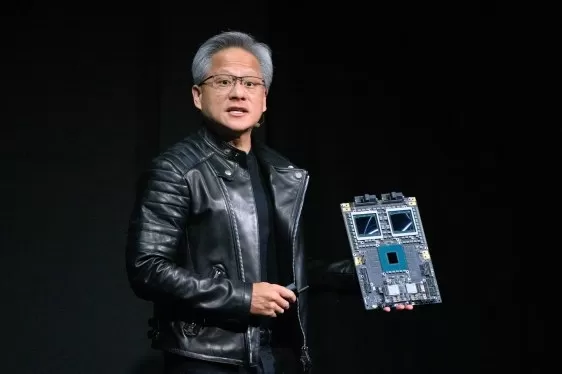 Nvidia quietly builds multibillion-dollar behemoth to rival chip business
Nvidia CEO Jensen Huang anticipated the market by over a decade, initiating work on AI-specific chips in 2010, long before the current AI boom. A parallel strategic move in 2020—bolstering data center networking through a key acquisition—has created
Nvidia quietly builds multibillion-dollar behemoth to rival chip business
Nvidia CEO Jensen Huang anticipated the market by over a decade, initiating work on AI-specific chips in 2010, long before the current AI boom. A parallel strategic move in 2020—bolstering data center networking through a key acquisition—has created
 Wipro Appoints New CHRO to Lead AI-Driven HR Transformation
Wipro accelerates its technology roadmap by launching standalone AI platforms for global enterprises. Credit: Getty ImagesPriya Jha Choudhary assumes the role of Chief Human Resources Officer for AI, as Wipro restructures talent management to support
Wipro Appoints New CHRO to Lead AI-Driven HR Transformation
Wipro accelerates its technology roadmap by launching standalone AI platforms for global enterprises. Credit: Getty ImagesPriya Jha Choudhary assumes the role of Chief Human Resources Officer for AI, as Wipro restructures talent management to support
 Palo Alto Networks acquires Thrive-backed Console in $500 million deal
Palo Alto Networks has agreed to acquire Console, a two-year-old startup leveraging AI agents to automate routine IT help desk operations, for $500 million in cash and stock, according to two individuals familiar with the transaction.While the compan
Palo Alto Networks acquires Thrive-backed Console in $500 million deal
Palo Alto Networks has agreed to acquire Console, a two-year-old startup leveraging AI agents to automate routine IT help desk operations, for $500 million in cash and stock, according to two individuals familiar with the transaction.While the compan

2026 Latest Best Top-rated AI Browser Automation Tools for Web Operations are here on XIX.AI! This curated list features powerful, game-changing solutions that help boost productivity dramatically through real-world tests and strict rankings. We also provide a free vs paid comparison to help you choose the perfect option for streamlining web tasks, enhancing automation efficiency, and unlocking your AI edge. Explore now!
9 tools
xix.ai

2026 Latest Best Top-Rated AI Wellness Tools for Sleep and Habit Tracking! XIX.AI curates a powerful, game-changing collection of must-try tools that offer real-world tests and detailed free vs paid comparison. These top-rated solutions help users boost sleep quality, monitor daily habits effectively, and unlock significant productivity improvements. Explore now to Discover your perfect tool and Start creating today to Unlock your AI edge!
11 tools
xix.ai

2026 Latest Best Top-rated AI Vendor Due Diligence Platforms for Procurement Reviews and Risk Screening! This curated list features powerful game-changing tools that go through rigorous real-world tests to deliver accurate rankings. You’ll find a free vs paid comparison, helping you identify the must-try solutions that boost procurement efficiency and cut risks. Backed by XIX.AI, it’s updated weekly. Explore now to discover your perfect tool for smarter sourcing! 238 characters
10 tools
xix.ai

2026 Latest Best Top-Rated AI Video Generators for Demos are curated here, offering powerful game-changing solutions to turn scripts into professional explainer videos fast. XIX.AI provides weekly updated rankings based on real-world tests, including free vs paid comparison details. Must-try tools help boost productivity significantly. Explore now to discover your perfect demo video creation tool!
9 tools
xix.ai

2026 Latest Best Top-rated AI Cash Flow Forecasting Tools for Small Business Finance are here on XIX.AI! Our curated list features powerful, game-changing solutions that go through real-world tests to help small business owners boost financial accuracy, plan budgets more effectively, and avoid cash flow issues. Get a free vs paid comparison and explore now to find your perfect tool for seamless financial management.
7 tools
xix.ai

2026 Latest Best Top-Rated AI Coding Chatbots Curated for Developers! Experience powerful game-changing tools that help you debug Python, JS, and SQL issues quickly. Get a free vs paid comparison along with real-world tests and detailed rankings to find the perfect fit for boosting your coding productivity. Try XIX.AI today to unlock your AI edge! Explore now.
12 tools
xix.ai












