


 Home
Home5 Key Security Principles Powering Scalable Open Source Security Apps

VB Insight: Louis will moderate a cybersecurity innovation panel featuring industry leaders at VB Transform this month. Secure your spot today.
The cybersecurity landscape is undergoing revolutionary transformation through open-source AI, with adoption accelerating across startups and enterprises alike. Cisco's Foundation-Sec-8B model exemplifies this momentum, achieving 18,000+ downloads in 30 days and 40,000+ since release.
VentureBeat research reveals cybersecurity startups are increasingly leveraging open-source AI to shrink development cycles and rapidly convert prototypes into commercial products. Through extensive founder interviews, we've documented how these tools have become essential for accelerating time-to-market.
The Databricks-Noma Security partnership showcases how open-source adoption disrupts legacy vendors by enabling unprecedented agility. As Cisco's Jeetu Patel observed at RSAC 2025: "AI redefines cybersecurity challenges—today's threats operate at machine scale, demanding AI-powered defenses."
Our executive interviews demonstrate how open-source AI helps startups pinpoint unmet enterprise needs while navigating the growing tension between rapid innovation and security/compliance requirements. The most successful companies uncover unexpected product strengths while implementing robust governance frameworks.
Leading cybersecurity ventures share three strategic priorities: maximizing automation, building sustainable contributor communities, and maintaining product flexibility through open-source foundations.
Navigating the Open-Source Paradox
While open-source AI delivers undeniable innovation velocity, it creates complex challenges around security, compliance and business model sustainability. Gartner's 2024 Open-Source Hype Cycle reveals concerning trends: unpatched vulnerabilities now persist nearly three years on average, with high-risk exposures growing 26% annually.
Protect AI CTO Diana Kelly warned at RSAC 2025: "Enterprises routinely deploy open-source models without proper security vetting, creating systemic risks."
Regulatory pressures compound these challenges, particularly with the EU AI Act's accelerated enforcement timeline. As Prompt Security CEO Itamar Golan explained: "AI compliance will eclipse GDPR's market impact by 2028. Organizations need tools to navigate these frameworks while maintaining innovation pace."
Building Through Contribution
Consistent with our five years of founder interviews, today's cybersecurity leaders view open-source contribution as strategic imperative rather than obligation. Cisco's Foundation-Sec-8B model (18,278 monthly downloads) demonstrates how targeted tools enhance ecosystem resilience.
Noma Security CEO Niv Braun epitomizes this philosophy: "Sustainable community value outweighs short-term revenue metrics. Our long-term differentiation stems from the trust we build."
Five Strategic Imperatives
Analysis of 15+ executive interviews reveals these critical success factors:
- Strategic Governance Integration - Centralize oversight through Open Source Program Offices while embedding compliance visibility into products
- AI-Powered Security Automation - Leverage generative AI for vulnerability detection, remediation and threat response
- Purpose-Built Community Contributions - Develop specialized tools addressing specific cybersecurity gaps
- Transparent TCO Management - Proactively address cost considerations throughout customer lifecycles
- Proactive Risk Mitigation - Implement continuous scanning and automated compliance documentation
The Path Forward
For cybersecurity innovators, open-source AI presents both unprecedented opportunities and complex challenges. By implementing these strategic approaches, startups can position themselves as industry leaders while driving meaningful security transformation.
As Patel concluded at RSAC: "Our shared adversary—not competitors—demands collective open-source innovation to secure the digital future."
Join the Discussion at VB Transform
Dive deeper into these insights during our "Building Cybersecurity Apps with Open Source" roundtable at VentureBeat Transform 2025 (June 24-25, San Francisco). This annual executive summit delivers practical AI strategies through keynotes, workshops and networking with industry leaders. Register today to secure your participation.
Related article
 Anthropic Hits $1.5B Copyright Deal to Compensate 500,000 Works
On Monday, a U.S. federal court granted final approval for a $1.5 billion class-action settlement between Anthropic and a coalition of authors and publishers, as reported by Reuters. The deal resolves ongoing litigation regarding Anthropic’s alleged
WeChat WeMM-Embedding Powers Moments Search and Video Highlights With 1 Billion Daily Calls
On September 4, WeChat AI announced the open-source release of its general multimodal embedding model, WeMM-Embedding. Available in 2B, 4B, and 9B versions, the model supports text, images, videos, visual documents, and any interleaved multimodal inp
Xiaohongshu, Peking University, Shanghai Jiao Tong University Unveil HYPIC to Slash First Token Latency by 3.25x in Hybrid Attention Models
The primary focus of large model services is transitioning from single-turn conversations to retrieval-augmented question answering, multi-document summarization, and long-range agents. These emerging workloads share a key trait: a single request's p
Related Special Topic Recommendations
Design & Art
Anthropic Hits $1.5B Copyright Deal to Compensate 500,000 Works
On Monday, a U.S. federal court granted final approval for a $1.5 billion class-action settlement between Anthropic and a coalition of authors and publishers, as reported by Reuters. The deal resolves ongoing litigation regarding Anthropic’s alleged
WeChat WeMM-Embedding Powers Moments Search and Video Highlights With 1 Billion Daily Calls
On September 4, WeChat AI announced the open-source release of its general multimodal embedding model, WeMM-Embedding. Available in 2B, 4B, and 9B versions, the model supports text, images, videos, visual documents, and any interleaved multimodal inp
Xiaohongshu, Peking University, Shanghai Jiao Tong University Unveil HYPIC to Slash First Token Latency by 3.25x in Hybrid Attention Models
The primary focus of large model services is transitioning from single-turn conversations to retrieval-augmented question answering, multi-document summarization, and long-range agents. These emerging workloads share a key trait: a single request's p
Related Special Topic Recommendations
Design & Art
 Top AI Illustration Tools: Create Editorial Scenes and Cover Art Faster
2026 Latest Top-rated AI Illustration Tools: Our curated list features the best powerfully designed tools for creating stunning editorial scenes and eye-catching cover art quickly. Each option has gone through rigorous real-world tests, offering a free vs paid comparison to help you find the perfect match for your workflow. Try these must-try solutions today to unlock your AI edge and boost your creative productivity. Explore now at XIX.AI.
 10 tools
 xix.ai
Education and Learning
Top AI Tutors for Exam Prep: Practice Math, Science, and English
xix.ai
Education and Learning
Top AI Tutors for Exam Prep: Practice Math, Science, and English
2026 Latest Top-Rated Best AI Tutors for Exam Prep are here on XIX.AI! Our curated list features powerful game-changing tools that offer free vs paid comparison, real-world tests, and weekly updated rankings. They help boost your writing efficiency, simplify complex topic learning, and unlock your academic potential. Explore now to Discover your perfect exam prep tool and Start creating today to Unlock your AI edge!
10 tools
xix.ai
Finance
AI Budget Planning Tools for Personal Money Management
2026 Latest Best Top-Rated AI Budget Planning Tools for Personal Money Management are here on XIX.AI! This curated collection features powerful, game-changing solutions that help you conduct real-world tests, understand spending habits, and create personalized plans to boost productivity. Enjoy a free vs paid comparison along with detailed rankings. Must-try tools designed to simplify money management and unlock your AI edge. Explore now!
11 tools
xix.ai
Health & Wellness
AI Sleep Tracking Assistants: Improve Recovery with Better Bedtime Habits
2026 Latest Best Top-Rated AI Sleep Tracking Assistants curated for ultimate recovery. This fully updated weekly guide features powerful tools that deliver real-world tests, free vs paid comparison, and detailed rankings to help you find the must-try solution that boosts sleep quality and supports better bedtime habits. Explore now at XIX.AI to Unlock your AI edge.
10 tools
xix.ai
Data Analysis
AI SQL Copilots for Product and Revenue Analytics
2026 Latest Best Top-Rated AI SQL Copilots for Product and Revenue Analytics! XIX.AI has curated a powerful, game-changing collection of must-try tools that undergo real-world tests through weekly updated rankings. These tools help users boost productivity significantly by accelerating data analysis, streamlining complex queries, and generating accurate insights to drive smarter business decisions. Explore now to Discover your perfect tool for unlocking your AI edge!
14 tools
xix.ai
Education and Learning
Best AI Homework Helpers That Teach: Learn Concepts, Not Just Answers
2026 Latest Best Top-Rated AI Homework Helpers That Teach Core Concepts Not Just Answers Powerful Tools for Students Must-Try Curated List Weekly Updated Free vs Paid Comparison Real-World Tests Accurate Rankings to Help You Unlock Your Full Learning Potential Explore now to Discover your perfect tool for smarter studying.
10 tools
xix.ai

 Comments (2)
0/500
Comments (2)
0/500
![WilliamLewis]()
I just read the article about open source security apps and found it super interesting! It made me realize how much potential these tools have to cut down on security costs for small businesses. I wonder if more companies will start leveraging them instead of relying solely on proprietary solutions.
![WilliamGonzalez]()
Interesting read! The focus on open-source AI for security is timely, but I'm curious about how smaller teams can realistically implement these principles without massive resources. The panel sounds promising though! 🤔
VB Insight: Louis will moderate a cybersecurity innovation panel featuring industry leaders at VB Transform this month. Secure your spot today.
The cybersecurity landscape is undergoing revolutionary transformation through open-source AI, with adoption accelerating across startups and enterprises alike. Cisco's Foundation-Sec-8B model exemplifies this momentum, achieving 18,000+ downloads in 30 days and 40,000+ since release.
VentureBeat research reveals cybersecurity startups are increasingly leveraging open-source AI to shrink development cycles and rapidly convert prototypes into commercial products. Through extensive founder interviews, we've documented how these tools have become essential for accelerating time-to-market.
The Databricks-Noma Security partnership showcases how open-source adoption disrupts legacy vendors by enabling unprecedented agility. As Cisco's Jeetu Patel observed at RSAC 2025: "AI redefines cybersecurity challenges—today's threats operate at machine scale, demanding AI-powered defenses."
Our executive interviews demonstrate how open-source AI helps startups pinpoint unmet enterprise needs while navigating the growing tension between rapid innovation and security/compliance requirements. The most successful companies uncover unexpected product strengths while implementing robust governance frameworks.
Leading cybersecurity ventures share three strategic priorities: maximizing automation, building sustainable contributor communities, and maintaining product flexibility through open-source foundations.
Navigating the Open-Source Paradox
While open-source AI delivers undeniable innovation velocity, it creates complex challenges around security, compliance and business model sustainability. Gartner's 2024 Open-Source Hype Cycle reveals concerning trends: unpatched vulnerabilities now persist nearly three years on average, with high-risk exposures growing 26% annually.
Protect AI CTO Diana Kelly warned at RSAC 2025: "Enterprises routinely deploy open-source models without proper security vetting, creating systemic risks."
Regulatory pressures compound these challenges, particularly with the EU AI Act's accelerated enforcement timeline. As Prompt Security CEO Itamar Golan explained: "AI compliance will eclipse GDPR's market impact by 2028. Organizations need tools to navigate these frameworks while maintaining innovation pace."
Building Through Contribution
Consistent with our five years of founder interviews, today's cybersecurity leaders view open-source contribution as strategic imperative rather than obligation. Cisco's Foundation-Sec-8B model (18,278 monthly downloads) demonstrates how targeted tools enhance ecosystem resilience.
Noma Security CEO Niv Braun epitomizes this philosophy: "Sustainable community value outweighs short-term revenue metrics. Our long-term differentiation stems from the trust we build."
Five Strategic Imperatives
Analysis of 15+ executive interviews reveals these critical success factors:
- Strategic Governance Integration - Centralize oversight through Open Source Program Offices while embedding compliance visibility into products
- AI-Powered Security Automation - Leverage generative AI for vulnerability detection, remediation and threat response
- Purpose-Built Community Contributions - Develop specialized tools addressing specific cybersecurity gaps
- Transparent TCO Management - Proactively address cost considerations throughout customer lifecycles
- Proactive Risk Mitigation - Implement continuous scanning and automated compliance documentation
The Path Forward
For cybersecurity innovators, open-source AI presents both unprecedented opportunities and complex challenges. By implementing these strategic approaches, startups can position themselves as industry leaders while driving meaningful security transformation.
As Patel concluded at RSAC: "Our shared adversary—not competitors—demands collective open-source innovation to secure the digital future."
Join the Discussion at VB Transform
Dive deeper into these insights during our "Building Cybersecurity Apps with Open Source" roundtable at VentureBeat Transform 2025 (June 24-25, San Francisco). This annual executive summit delivers practical AI strategies through keynotes, workshops and networking with industry leaders. Register today to secure your participation.








 Anthropic Hits $1.5B Copyright Deal to Compensate 500,000 Works
On Monday, a U.S. federal court granted final approval for a $1.5 billion class-action settlement between Anthropic and a coalition of authors and publishers, as reported by Reuters. The deal resolves ongoing litigation regarding Anthropic’s alleged
Anthropic Hits $1.5B Copyright Deal to Compensate 500,000 Works
On Monday, a U.S. federal court granted final approval for a $1.5 billion class-action settlement between Anthropic and a coalition of authors and publishers, as reported by Reuters. The deal resolves ongoing litigation regarding Anthropic’s alleged
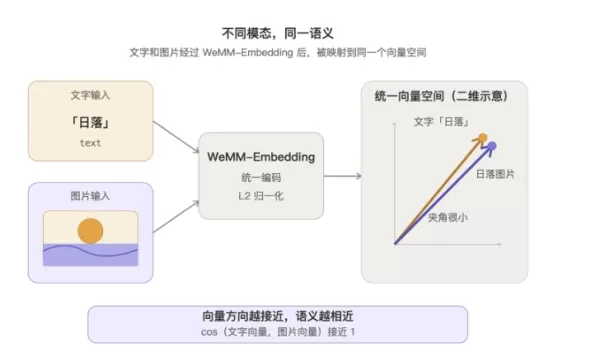 WeChat WeMM-Embedding Powers Moments Search and Video Highlights With 1 Billion Daily Calls
On September 4, WeChat AI announced the open-source release of its general multimodal embedding model, WeMM-Embedding. Available in 2B, 4B, and 9B versions, the model supports text, images, videos, visual documents, and any interleaved multimodal inp
WeChat WeMM-Embedding Powers Moments Search and Video Highlights With 1 Billion Daily Calls
On September 4, WeChat AI announced the open-source release of its general multimodal embedding model, WeMM-Embedding. Available in 2B, 4B, and 9B versions, the model supports text, images, videos, visual documents, and any interleaved multimodal inp
 Xiaohongshu, Peking University, Shanghai Jiao Tong University Unveil HYPIC to Slash First Token Latency by 3.25x in Hybrid Attention Models
The primary focus of large model services is transitioning from single-turn conversations to retrieval-augmented question answering, multi-document summarization, and long-range agents. These emerging workloads share a key trait: a single request's p
Xiaohongshu, Peking University, Shanghai Jiao Tong University Unveil HYPIC to Slash First Token Latency by 3.25x in Hybrid Attention Models
The primary focus of large model services is transitioning from single-turn conversations to retrieval-augmented question answering, multi-document summarization, and long-range agents. These emerging workloads share a key trait: a single request's p

2026 Latest Top-rated AI Illustration Tools: Our curated list features the best powerfully designed tools for creating stunning editorial scenes and eye-catching cover art quickly. Each option has gone through rigorous real-world tests, offering a free vs paid comparison to help you find the perfect match for your workflow. Try these must-try solutions today to unlock your AI edge and boost your creative productivity. Explore now at XIX.AI.
10 tools
xix.ai

2026 Latest Top-Rated Best AI Tutors for Exam Prep are here on XIX.AI! Our curated list features powerful game-changing tools that offer free vs paid comparison, real-world tests, and weekly updated rankings. They help boost your writing efficiency, simplify complex topic learning, and unlock your academic potential. Explore now to Discover your perfect exam prep tool and Start creating today to Unlock your AI edge!
10 tools
xix.ai

2026 Latest Best Top-Rated AI Budget Planning Tools for Personal Money Management are here on XIX.AI! This curated collection features powerful, game-changing solutions that help you conduct real-world tests, understand spending habits, and create personalized plans to boost productivity. Enjoy a free vs paid comparison along with detailed rankings. Must-try tools designed to simplify money management and unlock your AI edge. Explore now!
11 tools
xix.ai

2026 Latest Best Top-Rated AI Sleep Tracking Assistants curated for ultimate recovery. This fully updated weekly guide features powerful tools that deliver real-world tests, free vs paid comparison, and detailed rankings to help you find the must-try solution that boosts sleep quality and supports better bedtime habits. Explore now at XIX.AI to Unlock your AI edge.
10 tools
xix.ai

2026 Latest Best Top-Rated AI SQL Copilots for Product and Revenue Analytics! XIX.AI has curated a powerful, game-changing collection of must-try tools that undergo real-world tests through weekly updated rankings. These tools help users boost productivity significantly by accelerating data analysis, streamlining complex queries, and generating accurate insights to drive smarter business decisions. Explore now to Discover your perfect tool for unlocking your AI edge!
14 tools
xix.ai

2026 Latest Best Top-Rated AI Homework Helpers That Teach Core Concepts Not Just Answers Powerful Tools for Students Must-Try Curated List Weekly Updated Free vs Paid Comparison Real-World Tests Accurate Rankings to Help You Unlock Your Full Learning Potential Explore now to Discover your perfect tool for smarter studying.
10 tools
xix.ai

I just read the article about open source security apps and found it super interesting! It made me realize how much potential these tools have to cut down on security costs for small businesses. I wonder if more companies will start leveraging them instead of relying solely on proprietary solutions.
Interesting read! The focus on open-source AI for security is timely, but I'm curious about how smaller teams can realistically implement these principles without massive resources. The panel sounds promising though! 🤔












