


 Home
HomeScite.ai Transforms Scientific Research Through Intelligent Citation Analysis and AI
The scientific research landscape is constantly evolving, requiring innovative tools that simplify the process of discovery and evaluation. Scite.ai stands out as a groundbreaking platform, using artificial intelligence to fundamentally change how researchers engage with scientific literature. Through its AI-powered smart citations, Scite.ai introduces a novel method for accessing and evaluating the credibility of research findings. This article explores the platform's features, benefits, and limitations, offering a thorough guide for researchers aiming to optimize their workflow and achieve better research outcomes.
Key Points
Scite.ai employs AI-powered smart citations to classify how scientific articles reference one another, categorizing each citation as supporting, contrasting, or merely mentioning the original claim.
Its browser extension integrates Scite.ai's functionality directly into your daily workflow, offering instant citation analysis as you browse.
The platform's AI assistant delivers quick answers to complex research questions, all based on actual published findings.
An advanced citation search feature lets you filter results by criteria like publication year, journal, author, and more.
Interactive visualizations provide clear representations of research trends, aiding in the identification of correlations and outliers.
Despite its many advantages, Scite.ai is a subscription-based service, and access to full-text articles depends on agreements with publishers.
Understanding Scite.ai: An AI-Powered Research Platform
What is Scite.ai?
Scite.ai is an advanced research platform built to transform the way scientists discover and assess academic articles. Its foundational technology uses AI-driven smart citations to give researchers a detailed view of the relationships between scientific publications.
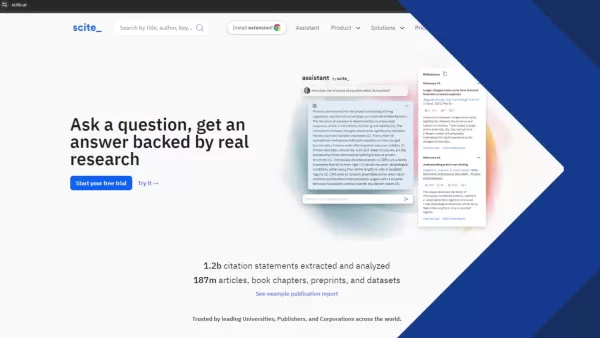
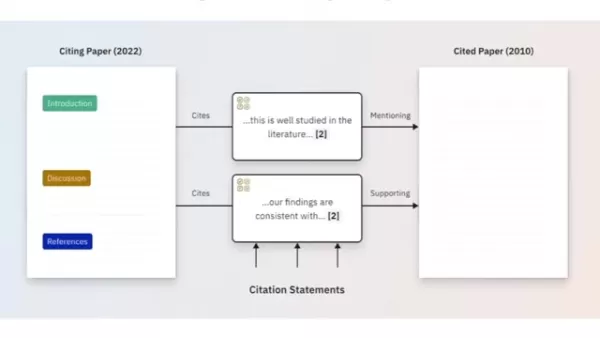
Unlike traditional citation counts, Scite.ai classifies each citation to indicate whether it supports, contrasts with, or simply mentions the cited claim. This allows researchers to rapidly evaluate an article's credibility and impact, pinpoint relevant and conflicting evidence, and ultimately enhance their research results.
By examining citation contexts, Scite.ai offers a deeper comprehension of the scientific landscape, supporting more informed research decisions. The platform includes a suite of tools designed to streamline research, such as a browser extension, an AI assistant, sophisticated citation search, and dynamic visualizations. Scite.ai helps researchers track emerging trends, formulate new hypotheses, and adopt innovative problem-solving methods, leading to higher-quality research output. It is trusted by top universities, publishers, and corporations worldwide, establishing itself as an essential tool across numerous academic fields.
How to Leverage Scite.ai for Your Research
Installing the Browser Extension
Visit the Scite.ai Website: Start by going to the official Scite.ai website in your web browser.
Find the Browser Extension: Look for the installation link for the browser extension, usually located in the main menu or on the homepage.
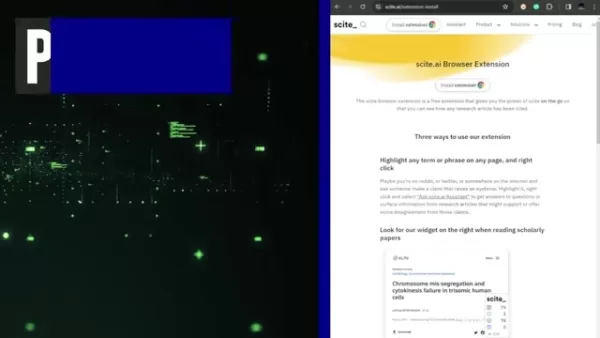
Choose Your Browser: Select the version of the extension that matches your browser (e.g., Chrome, Firefox, Safari).
Install the Extension: Follow the displayed instructions to add the extension to your browser, typically by clicking an 'Add to Chrome' or equivalent button.
Activate the Extension: After installation, make sure the extension is enabled in your browser's extension management settings. A browser restart may be required.
Using the AI-Powered Assistant
Open the AI Assistant: Click on the 'Assistant' tab at the top of the Scite.ai interface.

Enter Your Question: Type your research question or topic into the provided text box.
Analyze the Response: The AI assistant will provide a succinct answer accompanied by a list of relevant sources. Carefully review the answer, source list, and citations to enhance your research efficiency.
Conducting a Citation Search
- Go to Citation Search: Select the 'Search' function from the Scite.ai homepage.
- Input Search Terms: Enter keywords, phrases, or specific article titles related to your research interest.
- Apply Filters: Use the available filters to narrow your results by publication year, journal, author, and other parameters.
- Review Citation Statements: Examine the citation statements to understand how various articles relate to your topic.
Verifying References
- Find the Reference Check: When viewing an article, locate the Scite.ai badge or widget, which displays information about the article's citations.
- Analyze Citation Context: Check the context of each citation to see if it supports, mentions, or disagrees with the original claim.
- Assess Credibility: Use this analysis to judge the reliability and validity of the referenced materials.
Exploring Visualizations
- Access Visualizations: Look for the visualization option within your search results or on an article's detail page.
- Interact with the Charts: Explore the interactive charts that represent research trends and patterns.
- Identify Patterns and Outliers: Look for correlations, clusters, or anomalies in the data to gain new insights into your field.
Scite.ai Pricing: Subscription Options for Researchers
Understanding the Subscription Model
Scite.ai uses a subscription-based pricing structure, with several plans designed to meet different research needs and budgets. These subscriptions grant access to features like smart citations, the AI assistant, the browser extension, and interactive visualizations. While exact prices can change, it's important to review the available options to select the plan that aligns with your research goals.
Although a free plan is not available, Scite.ai often provides free trials, allowing potential users to test the platform before subscribing. Always check the Scite.ai website for the latest pricing details, including options for individuals, teams, and institutions. Assess your specific research requirements to choose a subscription that provides the necessary tools and access for your projects.
Scite.ai: Weighing the Pros and Cons
Pros
AI-driven smart citations offer a nuanced understanding of research impact.
The browser extension allows for seamless integration into your existing workflow.
The AI assistant provides instant, evidence-based answers to research queries.
Advanced citation search enables a thorough literature review.
Interactive visualizations make exploring research trends intuitive.
The reference check feature helps validate the credibility of sources.
Enhances the overall impact and quality of research output.
Cons
The subscription model may be cost-prohibitive for some individuals.
The absence of a free plan limits access for occasional users.
Full-text access is contingent on publisher agreements, which can restrict available content.
These agreements can sometimes lead to inconsistencies in journal coverage.
Certain features depend on publisher permissions, which may limit functionality.
Exploring Scite.ai's Standout Core Features
Browser Extension: Seamless Integration
A key feature of Scite.ai is its browser extension. This tool integrates smoothly into your web browser, enabling you to analyze citations and discover related research without leaving the page. A single click provides immediate access to smart citations, AI-generated summaries, and reference checks. This eliminates the need to toggle between different applications, boosting research efficiency and saving time. The extension puts a wealth of information at your fingertips, helping you make informed judgments about the scientific content you find online. By embedding Scite.ai into your browsing routine, you can streamline your research process and gain a more profound understanding of the scientific literature.
AI-Powered Assistant: Instant Answers
Scite.ai's AI-powered assistant acts as an intelligent search engine that rapidly answers complicated research questions using real scientific data.
Just enter your query, and the assistant will produce a concise answer along with a list of supporting sources. This feature drastically cuts down the time needed for manual searches and data compilation. By harnessing AI, Scite.ai enables you to find answers more quickly and efficiently, freeing up time for other research activities. The assistant is an invaluable resource for researchers needing fast access to information and insights on diverse topics.
Citation Search: Find and Compare Statements
Scite.ai's citation search function lets you easily find and compare statements on specific topics across a vast library of research papers. You can filter results by publication year, journal, author, and other factors to ensure you get the most current and relevant information. This feature helps you stay updated on emerging trends and advancements in your field, keeping you at the cutting edge. The citation search provides a comprehensive summary of the literature on any given topic, helping you quickly identify supporting and contradictory evidence. By applying filters, you can concentrate on the most significant research and develop a clearer picture of the scientific consensus.
Reference Check: Verify Credibility
Scite.ai's reference check feature allows you to verify the reliability of reference materials by examining their connections to other sources. The platform's algorithm assesses the relationship between two publications, indicating whether one supports, mentions, or contradicts the other. This empowers you to critically evaluate literature and make well-founded decisions for your own research. The reference check offers valuable insight into the scientific consensus around a particular claim, helping you assess source reliability and avoid unsubstantiated findings. By verifying your references, you ensure the integrity and rigor of your research work.
Visualizations: Interactive Exploration
Scite.ai provides interactive visual representations of research trends and patterns, offering deeper insights into the connections between ideas. These visualizations help you easily spot correlations, identify clusters, and detect anomalies within large datasets. This facilitates the development of new hypotheses and encourages innovative problem-solving approaches. The visualizations give a high-level overview of the scientific landscape, helping you identify key contributors, emerging trends, and potential areas for future investigation. By exploring these visual data representations, you can gain an intuitive understanding of complex relationships and generate fresh insights in your field.
Frequently Asked Questions About Scite.ai
What types of sources does Scite.ai cover?
Scite.ai indexes a wide array of scholarly sources, including journal articles, book chapters, preprints, and datasets. Its coverage spans numerous academic disciplines, making it a flexible resource for researchers in many fields.
How does Scite.ai classify citations?
Scite.ai's AI algorithms analyze the textual context of citations to classify them as supporting, contrasting, or mentioning the cited claim. This classification is based on the language used and the sentiment expressed toward the original work.
Can I use Scite.ai for systematic reviews?
Yes, Scite.ai's advanced search and filtering capabilities make it an excellent tool for conducting systematic reviews. Researchers can use it to identify pertinent studies, evaluate evidence credibility, and synthesize findings from multiple sources.
Is Scite.ai suitable for undergraduate students?
Scite.ai is a valuable resource for undergraduate students engaged in research projects, literature reviews, or thesis writing. It helps students critically assess sources and develop a deeper understanding of academic literature.
Does Scite.ai integrate with reference management software?
Scite.ai offers integrations with popular reference management tools like Zotero and Mendeley, allowing for smooth import and export of citations.
Explore Related Questions on Scite.ai
How does Scite.ai compare to traditional citation indexes?
Traditional citation indexes, such as Web of Science and Scopus, mainly track how many times an article has been cited. While citation counts offer a basic measure of influence, they reveal little about the nature of those citations. Scite.ai goes further by classifying citations to show whether they support, contrast with, or mention the original claim, providing a more detailed understanding of scholarly relationships. This allows researchers to quickly gauge an article's credibility and impact, identify relevant and contradictory evidence, and improve their research outcomes. In summary, Scite.ai offers a more sophisticated and informative approach to citation analysis than traditional indexes.
What are the ethical considerations of using AI in research evaluation?
Using AI for research evaluation introduces several ethical considerations. Potential biases in AI algorithms are a significant concern, as they could reinforce existing inequalities in research funding, publishing, and recognition. Transparency and explainability are also critical; the assessment criteria must be clear so users understand how the AI reaches its conclusions. Furthermore, AI evaluations should complement, not replace, human judgment. Developing ethical guidelines is essential to ensure AI is used responsibly and fairly in the evaluation of research.
What is the future of AI-powered research tools?
The future for AI-powered research tools is exceptionally promising, with AI set to continue revolutionizing scientific research. We anticipate the development of even more advanced AI algorithms capable of analyzing massive datasets, generating insights, and assisting with experimental design. These tools will likely become deeply integrated into research workflows, helping scientists identify patterns, test hypotheses, and accelerate discovery. However, it remains crucial to use these tools critically and ensure their ethical application. As AI technology evolves, it holds the potential to profoundly transform the practice of scientific research.
Related article
 Apple Smart Glasses Could Debut at WWDC27, Highlighting Privacy Protection
Bloomberg’s Mark Gurman reports that Apple’s smart glasses, codenamed N50, are slated for a WWDC27 debut in June 2027, with a retail launch expected in autumn 2027. Originally targeted for late this year and early 2027, the device’s release has been
Inside Details Exposed About Next-Gen Gemini: Strained Computing Power, Internal Teams Disagreed on Development Priorities and Resource Allocation
Reports indicate that the launch of Google’s highly anticipated next-generation Gemini model has been pushed back. Internal disagreements over development priorities and resource allocation, combined with limited computing capacity and complex approv
OpenAI Dismisses Growth Slowdown Concerns, Says Multiple Business Units Accelerating
In response to external scrutiny regarding decelerating sales growth and missed internal benchmarks, AI leader OpenAI issued a confident statement on Tuesday, April 28. The company clarified that its consumer products and enterprise services are adva
Related Special Topic Recommendations
Data Analysis
Apple Smart Glasses Could Debut at WWDC27, Highlighting Privacy Protection
Bloomberg’s Mark Gurman reports that Apple’s smart glasses, codenamed N50, are slated for a WWDC27 debut in June 2027, with a retail launch expected in autumn 2027. Originally targeted for late this year and early 2027, the device’s release has been
Inside Details Exposed About Next-Gen Gemini: Strained Computing Power, Internal Teams Disagreed on Development Priorities and Resource Allocation
Reports indicate that the launch of Google’s highly anticipated next-generation Gemini model has been pushed back. Internal disagreements over development priorities and resource allocation, combined with limited computing capacity and complex approv
OpenAI Dismisses Growth Slowdown Concerns, Says Multiple Business Units Accelerating
In response to external scrutiny regarding decelerating sales growth and missed internal benchmarks, AI leader OpenAI issued a confident statement on Tuesday, April 28. The company clarified that its consumer products and enterprise services are adva
Related Special Topic Recommendations
Data Analysis
 AI SQL Copilots for Revenue Dashboards, Funnel Analysis, and Product Metrics
2026 Latest Best AI SQL Copilots Ranked Top-Rated! XIX.AI curates a powerful game-changing collection for weekly updated real-world tests. These must-try tools help you generate accurate revenue dashboards, analyze sales funnels, and track product metrics swiftly, boosting productivity massively. Explore now to Discover your perfect tool for data-driven decision making! 238 characters
 9 tools
 xix.ai
Music composition
Best AI Melody Writing Tools for Song Drafts
xix.ai
Music composition
Best AI Melody Writing Tools for Song Drafts
2026 Latest Best Top-Rated AI Melody Writing Tools for Song Drafts! XIX.AI has curated a highly powerful game-changing collection that goes through rigorous real-world tests to deliver the best writing experience. You can find detailed free vs paid comparisons, accurate rankings, and must-try options designed to help you create stunning song drafts effortlessly and boost your creative productivity significantly. Explore now to discover your perfect tool!
8 tools
xix.ai
chatbot
Best AI Conversation Trainer Tools for Interview Practice
2026 Latest Best Top-rated AI Conversation Trainer Tools for Interview Practice are here on XIX.AI! This curated collection features powerful, game-changing tools that go through rigorous real-world tests to deliver accurate feedback. You’ll find a free vs paid comparison and detailed rankings to help you choose the must-try option that boosts your confidence and skills. Explore now to Discover your perfect tool for interview success!
12 tools
xix.ai
Design & Art
Best AI Style Transfer Tools for Creative Experiments
2026 Latest Best Top-rated AI Style Transfer Tools for Creative Experiments! XIX.AI has curated a powerful, game-changing collection of must-try tools that deliver exceptional results through real-world tests and rigorous rankings. These top solutions help creatives boost productivity significantly by accelerating content creation and unlocking endless creative possibilities. Explore now to discover your perfect tool and start creating today!
9 tools
xix.ai
Comic Creation
Best AI Dialogue Bubble Tools for Visual Storytelling
2026 Latest Best Top-Rated AI Dialogue Bubble Tools for Visual Storytelling are here on XIX.AI! This curated collection features powerful, game-changing tools that help creators boost productivity and overcome creative bottlenecks. Get a free vs paid comparison, see real-world tests, and check the latest rankings to find the must-try solutions perfect for crafting engaging visual narratives. Explore now to discover your ideal tool!
10 tools
xix.ai
Meeting Assistant
Top AI Meeting Summary Tools: Track Decisions and Follow-Ups Clearly
2026 Latest Top-Rated Best AI Meeting Summary Tools for Clear Decision Tracking and Effortless Follow-Ups. This curated list showcases powerful, game-changing solutions that boost productivity dramatically by automating meeting notes, identifying key action items, and streamlining team coordination across all projects. Get a free vs paid comparison along with real-world tests and weekly updated rankings to help you find the perfect tool. Explore now to unlock your AI edge!
9 tools
xix.ai

 Comments (2)
0/500
Comments (2)
0/500
![TerryHernández]()
Also das klingt ja nach einem echt cleveren Ansatz! Endlich mal ein Tool, das nicht nur Zitate zählt, sondern auch deren Kontext und Aussagekraft analysiert. Ich frage mich, ob das in der Praxis wirklich so gut funktioniert und wie es mit der Abdeckung von Nischengebieten aussieht. Könnte ein echter Gamechanger für die Literaturrecherche sein, wenn die Datenbasis stimmt. 🤔
![RalphGarcia]()
Scite.aiの仕組み、具体的にどうやっているんだろう?単純に引用を数えるのと違って、内容まで分析して支持か反駁か判断するってすごいけど、精度は大丈夫なのかな。研究の信頼性ビジネスはこれからも盛り上がりそう。🔥
The scientific research landscape is constantly evolving, requiring innovative tools that simplify the process of discovery and evaluation. Scite.ai stands out as a groundbreaking platform, using artificial intelligence to fundamentally change how researchers engage with scientific literature. Through its AI-powered smart citations, Scite.ai introduces a novel method for accessing and evaluating the credibility of research findings. This article explores the platform's features, benefits, and limitations, offering a thorough guide for researchers aiming to optimize their workflow and achieve better research outcomes.
Key Points
Scite.ai employs AI-powered smart citations to classify how scientific articles reference one another, categorizing each citation as supporting, contrasting, or merely mentioning the original claim.
Its browser extension integrates Scite.ai's functionality directly into your daily workflow, offering instant citation analysis as you browse.
The platform's AI assistant delivers quick answers to complex research questions, all based on actual published findings.
An advanced citation search feature lets you filter results by criteria like publication year, journal, author, and more.
Interactive visualizations provide clear representations of research trends, aiding in the identification of correlations and outliers.
Despite its many advantages, Scite.ai is a subscription-based service, and access to full-text articles depends on agreements with publishers.
Understanding Scite.ai: An AI-Powered Research Platform
What is Scite.ai?
Scite.ai is an advanced research platform built to transform the way scientists discover and assess academic articles. Its foundational technology uses AI-driven smart citations to give researchers a detailed view of the relationships between scientific publications.
Unlike traditional citation counts, Scite.ai classifies each citation to indicate whether it supports, contrasts with, or simply mentions the cited claim. This allows researchers to rapidly evaluate an article's credibility and impact, pinpoint relevant and conflicting evidence, and ultimately enhance their research results.
By examining citation contexts, Scite.ai offers a deeper comprehension of the scientific landscape, supporting more informed research decisions. The platform includes a suite of tools designed to streamline research, such as a browser extension, an AI assistant, sophisticated citation search, and dynamic visualizations. Scite.ai helps researchers track emerging trends, formulate new hypotheses, and adopt innovative problem-solving methods, leading to higher-quality research output. It is trusted by top universities, publishers, and corporations worldwide, establishing itself as an essential tool across numerous academic fields.
How to Leverage Scite.ai for Your Research
Installing the Browser Extension
Visit the Scite.ai Website: Start by going to the official Scite.ai website in your web browser.
Find the Browser Extension: Look for the installation link for the browser extension, usually located in the main menu or on the homepage.
Choose Your Browser: Select the version of the extension that matches your browser (e.g., Chrome, Firefox, Safari).
Install the Extension: Follow the displayed instructions to add the extension to your browser, typically by clicking an 'Add to Chrome' or equivalent button.
Activate the Extension: After installation, make sure the extension is enabled in your browser's extension management settings. A browser restart may be required.
Using the AI-Powered Assistant
Open the AI Assistant: Click on the 'Assistant' tab at the top of the Scite.ai interface.
Enter Your Question: Type your research question or topic into the provided text box.
Analyze the Response: The AI assistant will provide a succinct answer accompanied by a list of relevant sources. Carefully review the answer, source list, and citations to enhance your research efficiency.
Conducting a Citation Search
- Go to Citation Search: Select the 'Search' function from the Scite.ai homepage.
- Input Search Terms: Enter keywords, phrases, or specific article titles related to your research interest.
- Apply Filters: Use the available filters to narrow your results by publication year, journal, author, and other parameters.
- Review Citation Statements: Examine the citation statements to understand how various articles relate to your topic.
Verifying References
- Find the Reference Check: When viewing an article, locate the Scite.ai badge or widget, which displays information about the article's citations.
- Analyze Citation Context: Check the context of each citation to see if it supports, mentions, or disagrees with the original claim.
- Assess Credibility: Use this analysis to judge the reliability and validity of the referenced materials.
Exploring Visualizations
- Access Visualizations: Look for the visualization option within your search results or on an article's detail page.
- Interact with the Charts: Explore the interactive charts that represent research trends and patterns.
- Identify Patterns and Outliers: Look for correlations, clusters, or anomalies in the data to gain new insights into your field.
Scite.ai Pricing: Subscription Options for Researchers
Understanding the Subscription Model
Scite.ai uses a subscription-based pricing structure, with several plans designed to meet different research needs and budgets. These subscriptions grant access to features like smart citations, the AI assistant, the browser extension, and interactive visualizations. While exact prices can change, it's important to review the available options to select the plan that aligns with your research goals.
Although a free plan is not available, Scite.ai often provides free trials, allowing potential users to test the platform before subscribing. Always check the Scite.ai website for the latest pricing details, including options for individuals, teams, and institutions. Assess your specific research requirements to choose a subscription that provides the necessary tools and access for your projects.
Scite.ai: Weighing the Pros and Cons
Pros
AI-driven smart citations offer a nuanced understanding of research impact.
The browser extension allows for seamless integration into your existing workflow.
The AI assistant provides instant, evidence-based answers to research queries.
Advanced citation search enables a thorough literature review.
Interactive visualizations make exploring research trends intuitive.
The reference check feature helps validate the credibility of sources.
Enhances the overall impact and quality of research output.
Cons
The subscription model may be cost-prohibitive for some individuals.
The absence of a free plan limits access for occasional users.
Full-text access is contingent on publisher agreements, which can restrict available content.
These agreements can sometimes lead to inconsistencies in journal coverage.
Certain features depend on publisher permissions, which may limit functionality.
Exploring Scite.ai's Standout Core Features
Browser Extension: Seamless Integration
A key feature of Scite.ai is its browser extension. This tool integrates smoothly into your web browser, enabling you to analyze citations and discover related research without leaving the page. A single click provides immediate access to smart citations, AI-generated summaries, and reference checks. This eliminates the need to toggle between different applications, boosting research efficiency and saving time. The extension puts a wealth of information at your fingertips, helping you make informed judgments about the scientific content you find online. By embedding Scite.ai into your browsing routine, you can streamline your research process and gain a more profound understanding of the scientific literature.
AI-Powered Assistant: Instant Answers
Scite.ai's AI-powered assistant acts as an intelligent search engine that rapidly answers complicated research questions using real scientific data.
Just enter your query, and the assistant will produce a concise answer along with a list of supporting sources. This feature drastically cuts down the time needed for manual searches and data compilation. By harnessing AI, Scite.ai enables you to find answers more quickly and efficiently, freeing up time for other research activities. The assistant is an invaluable resource for researchers needing fast access to information and insights on diverse topics.
Citation Search: Find and Compare Statements
Scite.ai's citation search function lets you easily find and compare statements on specific topics across a vast library of research papers. You can filter results by publication year, journal, author, and other factors to ensure you get the most current and relevant information. This feature helps you stay updated on emerging trends and advancements in your field, keeping you at the cutting edge. The citation search provides a comprehensive summary of the literature on any given topic, helping you quickly identify supporting and contradictory evidence. By applying filters, you can concentrate on the most significant research and develop a clearer picture of the scientific consensus.
Reference Check: Verify Credibility
Scite.ai's reference check feature allows you to verify the reliability of reference materials by examining their connections to other sources. The platform's algorithm assesses the relationship between two publications, indicating whether one supports, mentions, or contradicts the other. This empowers you to critically evaluate literature and make well-founded decisions for your own research. The reference check offers valuable insight into the scientific consensus around a particular claim, helping you assess source reliability and avoid unsubstantiated findings. By verifying your references, you ensure the integrity and rigor of your research work.
Visualizations: Interactive Exploration
Scite.ai provides interactive visual representations of research trends and patterns, offering deeper insights into the connections between ideas. These visualizations help you easily spot correlations, identify clusters, and detect anomalies within large datasets. This facilitates the development of new hypotheses and encourages innovative problem-solving approaches. The visualizations give a high-level overview of the scientific landscape, helping you identify key contributors, emerging trends, and potential areas for future investigation. By exploring these visual data representations, you can gain an intuitive understanding of complex relationships and generate fresh insights in your field.
Frequently Asked Questions About Scite.ai
What types of sources does Scite.ai cover?
Scite.ai indexes a wide array of scholarly sources, including journal articles, book chapters, preprints, and datasets. Its coverage spans numerous academic disciplines, making it a flexible resource for researchers in many fields.
How does Scite.ai classify citations?
Scite.ai's AI algorithms analyze the textual context of citations to classify them as supporting, contrasting, or mentioning the cited claim. This classification is based on the language used and the sentiment expressed toward the original work.
Can I use Scite.ai for systematic reviews?
Yes, Scite.ai's advanced search and filtering capabilities make it an excellent tool for conducting systematic reviews. Researchers can use it to identify pertinent studies, evaluate evidence credibility, and synthesize findings from multiple sources.
Is Scite.ai suitable for undergraduate students?
Scite.ai is a valuable resource for undergraduate students engaged in research projects, literature reviews, or thesis writing. It helps students critically assess sources and develop a deeper understanding of academic literature.
Does Scite.ai integrate with reference management software?
Scite.ai offers integrations with popular reference management tools like Zotero and Mendeley, allowing for smooth import and export of citations.
Explore Related Questions on Scite.ai
How does Scite.ai compare to traditional citation indexes?
Traditional citation indexes, such as Web of Science and Scopus, mainly track how many times an article has been cited. While citation counts offer a basic measure of influence, they reveal little about the nature of those citations. Scite.ai goes further by classifying citations to show whether they support, contrast with, or mention the original claim, providing a more detailed understanding of scholarly relationships. This allows researchers to quickly gauge an article's credibility and impact, identify relevant and contradictory evidence, and improve their research outcomes. In summary, Scite.ai offers a more sophisticated and informative approach to citation analysis than traditional indexes.
What are the ethical considerations of using AI in research evaluation?
Using AI for research evaluation introduces several ethical considerations. Potential biases in AI algorithms are a significant concern, as they could reinforce existing inequalities in research funding, publishing, and recognition. Transparency and explainability are also critical; the assessment criteria must be clear so users understand how the AI reaches its conclusions. Furthermore, AI evaluations should complement, not replace, human judgment. Developing ethical guidelines is essential to ensure AI is used responsibly and fairly in the evaluation of research.
What is the future of AI-powered research tools?
The future for AI-powered research tools is exceptionally promising, with AI set to continue revolutionizing scientific research. We anticipate the development of even more advanced AI algorithms capable of analyzing massive datasets, generating insights, and assisting with experimental design. These tools will likely become deeply integrated into research workflows, helping scientists identify patterns, test hypotheses, and accelerate discovery. However, it remains crucial to use these tools critically and ensure their ethical application. As AI technology evolves, it holds the potential to profoundly transform the practice of scientific research.








 Apple Smart Glasses Could Debut at WWDC27, Highlighting Privacy Protection
Bloomberg’s Mark Gurman reports that Apple’s smart glasses, codenamed N50, are slated for a WWDC27 debut in June 2027, with a retail launch expected in autumn 2027. Originally targeted for late this year and early 2027, the device’s release has been
Apple Smart Glasses Could Debut at WWDC27, Highlighting Privacy Protection
Bloomberg’s Mark Gurman reports that Apple’s smart glasses, codenamed N50, are slated for a WWDC27 debut in June 2027, with a retail launch expected in autumn 2027. Originally targeted for late this year and early 2027, the device’s release has been
 Inside Details Exposed About Next-Gen Gemini: Strained Computing Power, Internal Teams Disagreed on Development Priorities and Resource Allocation
Reports indicate that the launch of Google’s highly anticipated next-generation Gemini model has been pushed back. Internal disagreements over development priorities and resource allocation, combined with limited computing capacity and complex approv
Inside Details Exposed About Next-Gen Gemini: Strained Computing Power, Internal Teams Disagreed on Development Priorities and Resource Allocation
Reports indicate that the launch of Google’s highly anticipated next-generation Gemini model has been pushed back. Internal disagreements over development priorities and resource allocation, combined with limited computing capacity and complex approv
 OpenAI Dismisses Growth Slowdown Concerns, Says Multiple Business Units Accelerating
In response to external scrutiny regarding decelerating sales growth and missed internal benchmarks, AI leader OpenAI issued a confident statement on Tuesday, April 28. The company clarified that its consumer products and enterprise services are adva
OpenAI Dismisses Growth Slowdown Concerns, Says Multiple Business Units Accelerating
In response to external scrutiny regarding decelerating sales growth and missed internal benchmarks, AI leader OpenAI issued a confident statement on Tuesday, April 28. The company clarified that its consumer products and enterprise services are adva

2026 Latest Best AI SQL Copilots Ranked Top-Rated! XIX.AI curates a powerful game-changing collection for weekly updated real-world tests. These must-try tools help you generate accurate revenue dashboards, analyze sales funnels, and track product metrics swiftly, boosting productivity massively. Explore now to Discover your perfect tool for data-driven decision making! 238 characters
9 tools
xix.ai

2026 Latest Best Top-Rated AI Melody Writing Tools for Song Drafts! XIX.AI has curated a highly powerful game-changing collection that goes through rigorous real-world tests to deliver the best writing experience. You can find detailed free vs paid comparisons, accurate rankings, and must-try options designed to help you create stunning song drafts effortlessly and boost your creative productivity significantly. Explore now to discover your perfect tool!
8 tools
xix.ai

2026 Latest Best Top-rated AI Conversation Trainer Tools for Interview Practice are here on XIX.AI! This curated collection features powerful, game-changing tools that go through rigorous real-world tests to deliver accurate feedback. You’ll find a free vs paid comparison and detailed rankings to help you choose the must-try option that boosts your confidence and skills. Explore now to Discover your perfect tool for interview success!
12 tools
xix.ai

2026 Latest Best Top-rated AI Style Transfer Tools for Creative Experiments! XIX.AI has curated a powerful, game-changing collection of must-try tools that deliver exceptional results through real-world tests and rigorous rankings. These top solutions help creatives boost productivity significantly by accelerating content creation and unlocking endless creative possibilities. Explore now to discover your perfect tool and start creating today!
9 tools
xix.ai

2026 Latest Best Top-Rated AI Dialogue Bubble Tools for Visual Storytelling are here on XIX.AI! This curated collection features powerful, game-changing tools that help creators boost productivity and overcome creative bottlenecks. Get a free vs paid comparison, see real-world tests, and check the latest rankings to find the must-try solutions perfect for crafting engaging visual narratives. Explore now to discover your ideal tool!
10 tools
xix.ai
2026 Latest Top-Rated Best AI Meeting Summary Tools for Clear Decision Tracking and Effortless Follow-Ups. This curated list showcases powerful, game-changing solutions that boost productivity dramatically by automating meeting notes, identifying key action items, and streamlining team coordination across all projects. Get a free vs paid comparison along with real-world tests and weekly updated rankings to help you find the perfect tool. Explore now to unlock your AI edge!
9 tools
xix.ai

Also das klingt ja nach einem echt cleveren Ansatz! Endlich mal ein Tool, das nicht nur Zitate zählt, sondern auch deren Kontext und Aussagekraft analysiert. Ich frage mich, ob das in der Praxis wirklich so gut funktioniert und wie es mit der Abdeckung von Nischengebieten aussieht. Könnte ein echter Gamechanger für die Literaturrecherche sein, wenn die Datenbasis stimmt. 🤔
Scite.aiの仕組み、具体的にどうやっているんだろう?単純に引用を数えるのと違って、内容まで分析して支持か反駁か判断するってすごいけど、精度は大丈夫なのかな。研究の信頼性ビジネスはこれからも盛り上がりそう。🔥












