


 Home
HomeScale AI Cold Calling: Multi-Number Strategies for Success
Navigating AI-driven outbound campaigns requires careful strategy to avoid common pitfalls. Businesses using AI phone calling systems often struggle with failures tied to caller reputation and rate limits. This guide explores a core concept for scaling your outreach effectively while sidestepping these obstacles. Learn how multi-number AI strategies can optimize outbound calls—a critical factor for growing your agency or business.
Key Points
Understand why caller reputation is vital for AI phone calling success.
Manage rate limits to prevent your campaigns from failing.
Build scalable outbound campaigns using multiple phone numbers.
Use voice AI to maintain a competitive edge.
Map your AI cold‑call infrastructure visually for better clarity.
Deploy multi‑number AI callers to maximize outbound performance.
Manage campaigns with tools like Vapi, Make.com, and Google Sheets.
Explore how an AI agency can leverage voice AI for greater impact.
Understanding the Challenges of AI Outbound Calling
The Importance of Avoiding Pitfalls in AI Phone Calling
Building AI phone calling systems for outbound outreach demands careful planning. Overlooking key details can dramatically raise the risk of campaign failure. This isn’t just theory—many businesses face real setbacks when their AI‑driven campaigns aren’t properly configured or managed.
Why does this happen? A major reason is exposure to factors like caller reputation and rate limits. If these aren’t handled correctly, they can cause serious issues as you scale your agency or business. Caller reputation, for instance, directly affects your call‑answer rates. If your numbers are marked as potential spam, outreach efforts will stall.
Rate limits, enforced by carriers, cap how many calls you can place in a given period. Exceeding them can get your numbers temporarily or permanently blocked, halting your campaigns entirely. Numerous hidden limits also pose risks, especially during scaling. Recognizing and mitigating these issues is essential for a successful AI outbound strategy.
Caller Reputation and Its Impact on Campaign Success
A key challenge in AI outbound calling is preserving a positive caller reputation. Think of your phone number as your business’s calling card—if it has a poor reputation, people are far less likely to answer, undercutting your campaign’s effectiveness.
Caller reputation depends on several factors:
- Call frequency: Placing too many calls in a short span can flag your number as spam.
- Call duration: Extremely brief calls, especially unanswered ones, may suggest robocalling.
- Recipient feedback: If people report your calls as spam, your reputation suffers.
To maintain a good reputation, adopt strategies such as:
- Warming up numbers: Gradually increase call volume from new numbers.
- Monitoring call stats: Track answer rates and call duration to spot issues early.
- Addressing feedback: Manage online reputation proactively and respond to complaints.
Rate Limits and How They Can Cripple Your Campaigns
Rate limits are another critical factor that can undermine AI outbound campaigns. Carriers impose these limits to curb spam and robocalls, but they also affect legitimate businesses.
Managing rate limits effectively involves:
- Knowing the limits: Research carrier‑specific limits in your target regions.
- Pacing your calls: Spread calls evenly throughout the day to avoid hitting ceilings.
- Using multiple numbers: Distribute call volume across several numbers to stay within limits while maintaining outreach.
Violating rate limits can lead to numbers being blocked or flagged. With careful planning of call volume and distribution, you can reduce these risks and keep campaigns running smoothly.
Optimizing AI Outbound Campaigns with Multi-Number Strategies
The Power of Multi-Number AI Callers
The core solution is building voice assistant systems—AI callers—capable of placing calls from multiple phone numbers.

This approach offers several advantages. First, it helps avoid caller‑reputation issues, since you aren’t relying on a single number that could be flagged. Second, it lets you navigate rate limits more effectively, ensuring campaigns can scale without being blocked.
Distributing calls across multiple numbers lowers the risk of any one number being flagged or blocked. This not only improves deliverability but also provides greater flexibility in call volume and frequency. The outcome is a more resilient, scalable outbound system that adapts to changing conditions and reaches your audience more reliably.
This is about scalability and future‑proofing your outreach—enabling growth without being limited by technical or reputation barriers. A well‑executed multi‑number AI caller strategy makes that possible.
Building Your AI Cold Call Infrastructure
To bring this concept to life, let’s examine the infrastructure of an AI cold‑call campaign, step by step. At the center of the system is the user
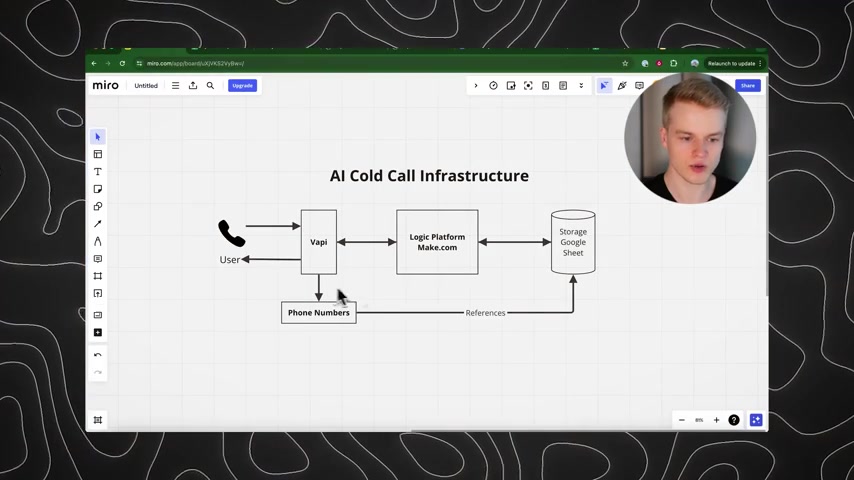
—the person supplying the phone‑call data the system will use.
The first tool needed is Vapi, an AI‑powered voice platform for automated calls. Vapi interfaces with a pool of phone numbers, selecting which number to use for each lead. Once the recipient engages, the conversation feeds into a logic platform like Make.com, a no‑code automation tool. Make.com automates the transfer of call data into a storage database—something simple and accessible like Google Sheets. The Google Sheet database then references phone numbers to optimize the calling system. This ensures numbers are continuously updated and rotated, preventing overuse of any single line.
Creating a Multi-Number AI Calling System: A Step-by-Step Guide
Step 1: Setting Up Your Phone Number Pool
The foundation of a multi‑number AI calling system is a diverse set of phone numbers. Here’s how to build it:
- Acquire Multiple Numbers: Purchase numbers from various providers to diversify sources and reduce the risk of simultaneous flagging.
- Categorize and Track: Organize numbers in a spreadsheet or database, noting their source, usage stats, and reputation scores.
- Number Rotation: Implement a rotation schedule to prevent overuse and potential spam flags.
- Warm‑Up Strategy: Before full deployment, warm up new numbers by making a few calls to trusted contacts to build positive initial reputation.
- Monitoring and Management: Continuously track each number’s performance—call completion rates, duration, spam reports—to catch issues early.
Step 2: Integrating AI Voice Platforms
Integrate an AI voice platform like Vapi to power your automated calls:
- Choose the Right Platform: Select a platform that supports multiple phone numbers and offers dynamic number insertion and call routing.
- API Integration: Use the platform’s API to connect your number pool, enabling the AI to call from different numbers dynamically.
- AI Training: Train the AI with appropriate scripts and responses to ensure natural, engaging conversations.
- Number Selection Logic: Implement logic to pick the best number for each call based on recipient location, time of day, and current reputation.
- A/B Testing: Run A/B tests with different scripts and numbers to refine your strategy.
Step 3: Setting Up Logic Platforms and Storage
Use a logic platform like Make.com and storage like Google Sheets to automate and store call data:
- Choose a Logic Platform: Pick a platform that automates data flow. Make.com can transfer call data into a storage database
- Choose a Storage Platform: Select a simple storage solution for logs and references. Google Sheets is easy to use.
- Store Relevant Phone Call Data: Maintain references to phone numbers to optimize the system. This ensures numbers are regularly updated and rotated, preventing overuse.
Pricing for Multi-Number AI Calling Solutions
Costs Associated with Implementing a Multi-Number System
Implementing a multi‑number AI calling system involves several costs:
- Phone Number Acquisition: Costs vary by provider and number type (local, toll‑free, etc.).
- AI Voice Platform Subscription: Typically subscription‑based, pricing depends on usage, features, and API‑call volume.
- Logic Platform Subscription: Tools like Make.com offer tiered subscriptions based on usage and features.
- Software and Development: If building a custom system, factor in software licenses, development time, and maintenance.
- Data Storage: Storage costs depend on the volume of call data retained.
Evaluate these costs against the potential ROI of your AI outbound campaigns. A well‑optimized multi‑number system can significantly boost lead generation and conversions, justifying the investment.
Pros and Cons of Using Multi-Number AI Calling Systems
Pros
Improved Deliverability: Spreading calls across multiple numbers reduces the risk of any single number being marked as spam.
Enhanced Scalability: Multi‑number systems let you scale outreach without hitting rate‑limit barriers.
Greater Flexibility: Adjust call volume and frequency based on circumstances and audience preferences.
Better Reputation Management: Rotating numbers and monitoring performance helps proactively manage caller reputation.
Reduced Risk of Blocking: Distributing volume minimizes the chance of carrier‑level blocking.
Cons
Increased Complexity: Managing multiple numbers is more complex than using a single line.
Higher Costs: Acquiring and maintaining multiple numbers raises expenses.
Potential for Confusion: Poorly managed multi‑number use can confuse recipients and harm brand perception.
Monitoring Challenges: Tracking performance across many numbers requires robust analytics.
Compliance Requirements: Ensure your system meets all relevant regulations and guidelines.
Core Features of an Effective AI Outbound Calling System
Essential Capabilities for Campaign Success
An effective AI outbound calling system should include these core features:
- Multi‑Number Support: Ability to integrate and manage multiple phone numbers.
- Dynamic Number Insertion: Automatically select the best number for each call.
- AI‑Powered Voice Conversations: Natural, context‑aware dialogues with recipients.
- Call Routing and Management: Intelligent routing to connect prospects with appropriate agents.
- Call Logging and Analytics: Comprehensive tracking to measure performance and optimize campaigns.
- Integration with CRM and Marketing Automation: Seamless connection with CRM and marketing tools for streamlined lead follow‑up.
Incorporating these features will significantly improve campaign effectiveness and results.
Use Cases for Multi-Number AI Calling Systems
Applications Across Industries
Multi‑number AI calling systems apply to various industries and use cases:
- Lead Generation: AI can call prospects, qualify them, and schedule appointments for sales teams.
- Customer Service: Handle routine inquiries, provide support, and escalate complex issues to human agents.
- Appointment Reminders: Send automated reminders to reduce no‑shows and improve satisfaction.
- Market Research: Conduct automated surveys and gather customer feedback for insights.
- Debt Collection: Send payment reminders and negotiate repayment plans.
The key is tailoring your AI calling system to your industry and specific needs. Understanding your audience allows you to create AI conversations that deliver value and drive results.
FAQ
What is caller reputation?
Caller reputation is a score assigned to your phone number based on call frequency, duration, and recipient feedback. A good reputation increases the chance your calls will be answered.
What are rate limits?
Rate limits are restrictions phone carriers place on the number of calls you can make within a set timeframe. Exceeding them can lead to temporary or permanent blocking of your numbers.
How does a multi-number AI calling system help?
A multi‑number AI calling system spreads call volume across multiple lines, reducing the risk of any single number being flagged or blocked. This improves deliverability and provides greater flexibility.
Related Questions
How do I warm up a new phone number for outbound calling?
Warm up a new number by gradually increasing call volume. Start with a few calls to trusted contacts, then slowly raise volume while monitoring answer rates and call duration. This builds a positive initial reputation.
What are some best practices for creating AI-powered voice conversations?
Focus on natural language, context awareness, and personalization. Use clear, jargon‑free language, offer easy opt‑out or escalation options, and continually refine scripts based on performance data and feedback.
Related article
 Indian Tech Tycoon Invests $30M in AI Rival to Microsoft Office
Serial entrepreneur Bhavin Turakhia is investing $30 million of his own capital, betting that the enterprise AI sector still has room for new players. His latest startup, Neo, operates on a core belief: legacy workplace software cannot simply be patc
Former OpenAI Chief Scientist Ilya’s SSI Unveils First Model
AI has achieved another major milestone. Following his departure from OpenAI, former chief scientist Ilya Sutskever established Safe Superintelligence Inc. (SSI), which has recently unveiled details regarding its inaugural model. Reports from oversea
Lovable Leads Atech's Seed Round as AI Ambient Coding Officially Enters the Hardware Field
On May 14, 2026, AI application development platform Lovable announced its participation in the $800,000 seed funding round for Danish hardware startup Atech. Led by Lovable, the round attracted top-tier venture capital firms including the a16z Scout
Related Special Topic Recommendations
chatbot
Indian Tech Tycoon Invests $30M in AI Rival to Microsoft Office
Serial entrepreneur Bhavin Turakhia is investing $30 million of his own capital, betting that the enterprise AI sector still has room for new players. His latest startup, Neo, operates on a core belief: legacy workplace software cannot simply be patc
Former OpenAI Chief Scientist Ilya’s SSI Unveils First Model
AI has achieved another major milestone. Following his departure from OpenAI, former chief scientist Ilya Sutskever established Safe Superintelligence Inc. (SSI), which has recently unveiled details regarding its inaugural model. Reports from oversea
Lovable Leads Atech's Seed Round as AI Ambient Coding Officially Enters the Hardware Field
On May 14, 2026, AI application development platform Lovable announced its participation in the $800,000 seed funding round for Danish hardware startup Atech. Led by Lovable, the round attracted top-tier venture capital firms including the a16z Scout
Related Special Topic Recommendations
chatbot
 Best AI Conversation Trainer Tools for Interview Practice
2026 Latest Best Top-rated AI Conversation Trainer Tools for Interview Practice are here on XIX.AI! This curated collection features powerful, game-changing tools that go through rigorous real-world tests to deliver accurate feedback. You’ll find a free vs paid comparison and detailed rankings to help you choose the must-try option that boosts your confidence and skills. Explore now to Discover your perfect tool for interview success!
 12 tools
 xix.ai
Design & Art
Best AI Style Transfer Tools for Creative Experiments
xix.ai
Design & Art
Best AI Style Transfer Tools for Creative Experiments
2026 Latest Best Top-rated AI Style Transfer Tools for Creative Experiments! XIX.AI has curated a powerful, game-changing collection of must-try tools that deliver exceptional results through real-world tests and rigorous rankings. These top solutions help creatives boost productivity significantly by accelerating content creation and unlocking endless creative possibilities. Explore now to discover your perfect tool and start creating today!
9 tools
xix.ai
Comic Creation
Best AI Dialogue Bubble Tools for Visual Storytelling
2026 Latest Best Top-Rated AI Dialogue Bubble Tools for Visual Storytelling are here on XIX.AI! This curated collection features powerful, game-changing tools that help creators boost productivity and overcome creative bottlenecks. Get a free vs paid comparison, see real-world tests, and check the latest rankings to find the must-try solutions perfect for crafting engaging visual narratives. Explore now to discover your ideal tool!
10 tools
xix.ai
Meeting Assistant
Top AI Meeting Summary Tools: Track Decisions and Follow-Ups Clearly
2026 Latest Top-Rated Best AI Meeting Summary Tools for Clear Decision Tracking and Effortless Follow-Ups. This curated list showcases powerful, game-changing solutions that boost productivity dramatically by automating meeting notes, identifying key action items, and streamlining team coordination across all projects. Get a free vs paid comparison along with real-world tests and weekly updated rankings to help you find the perfect tool. Explore now to unlock your AI edge!
9 tools
xix.ai
Data Analysis
Best AI Data Cleaning Tools: Fix Missing Values and Duplicates Fast
2026 Latest Best Top-rated AI Data Cleaning Tools for quick fixing of missing values and duplicates. This curated list showcases powerful, game-changing solutions that boost productivity significantly. Each option has undergone rigorous real-world tests to ensure reliability. Get a free vs paid comparison and discover the must-try tool that fits your needs best. Explore now at XIX.AI to Unlock your AI edge.
11 tools
xix.ai
Design & Art
Best AI Creative Ideation Tools for Artists: Break Through Visual Blocks
2026 Latest Best Top-Rated AI Creative Ideation Tools for Artists are curated by XIX.AI to help creators break through visual blocks and boost creativity instantly. These powerful game-changing tools offer real-world tests, detailed free vs paid comparison, and weekly updated rankings. Discover your perfect tool to accelerate content creation and unlock your AI edge today. Explore now!
14 tools
xix.ai

 Comments (0)
0/500
Comments (0)
0/500
Navigating AI-driven outbound campaigns requires careful strategy to avoid common pitfalls. Businesses using AI phone calling systems often struggle with failures tied to caller reputation and rate limits. This guide explores a core concept for scaling your outreach effectively while sidestepping these obstacles. Learn how multi-number AI strategies can optimize outbound calls—a critical factor for growing your agency or business.
Key Points
Understand why caller reputation is vital for AI phone calling success.
Manage rate limits to prevent your campaigns from failing.
Build scalable outbound campaigns using multiple phone numbers.
Use voice AI to maintain a competitive edge.
Map your AI cold‑call infrastructure visually for better clarity.
Deploy multi‑number AI callers to maximize outbound performance.
Manage campaigns with tools like Vapi, Make.com, and Google Sheets.
Explore how an AI agency can leverage voice AI for greater impact.
Understanding the Challenges of AI Outbound Calling
The Importance of Avoiding Pitfalls in AI Phone Calling
Building AI phone calling systems for outbound outreach demands careful planning. Overlooking key details can dramatically raise the risk of campaign failure. This isn’t just theory—many businesses face real setbacks when their AI‑driven campaigns aren’t properly configured or managed.
Why does this happen? A major reason is exposure to factors like caller reputation and rate limits. If these aren’t handled correctly, they can cause serious issues as you scale your agency or business. Caller reputation, for instance, directly affects your call‑answer rates. If your numbers are marked as potential spam, outreach efforts will stall.
Rate limits, enforced by carriers, cap how many calls you can place in a given period. Exceeding them can get your numbers temporarily or permanently blocked, halting your campaigns entirely. Numerous hidden limits also pose risks, especially during scaling. Recognizing and mitigating these issues is essential for a successful AI outbound strategy.
Caller Reputation and Its Impact on Campaign Success
A key challenge in AI outbound calling is preserving a positive caller reputation. Think of your phone number as your business’s calling card—if it has a poor reputation, people are far less likely to answer, undercutting your campaign’s effectiveness.
Caller reputation depends on several factors:
- Call frequency: Placing too many calls in a short span can flag your number as spam.
- Call duration: Extremely brief calls, especially unanswered ones, may suggest robocalling.
- Recipient feedback: If people report your calls as spam, your reputation suffers.
To maintain a good reputation, adopt strategies such as:
- Warming up numbers: Gradually increase call volume from new numbers.
- Monitoring call stats: Track answer rates and call duration to spot issues early.
- Addressing feedback: Manage online reputation proactively and respond to complaints.
Rate Limits and How They Can Cripple Your Campaigns
Rate limits are another critical factor that can undermine AI outbound campaigns. Carriers impose these limits to curb spam and robocalls, but they also affect legitimate businesses.
Managing rate limits effectively involves:
- Knowing the limits: Research carrier‑specific limits in your target regions.
- Pacing your calls: Spread calls evenly throughout the day to avoid hitting ceilings.
- Using multiple numbers: Distribute call volume across several numbers to stay within limits while maintaining outreach.
Violating rate limits can lead to numbers being blocked or flagged. With careful planning of call volume and distribution, you can reduce these risks and keep campaigns running smoothly.
Optimizing AI Outbound Campaigns with Multi-Number Strategies
The Power of Multi-Number AI Callers
The core solution is building voice assistant systems—AI callers—capable of placing calls from multiple phone numbers.
This approach offers several advantages. First, it helps avoid caller‑reputation issues, since you aren’t relying on a single number that could be flagged. Second, it lets you navigate rate limits more effectively, ensuring campaigns can scale without being blocked.
Distributing calls across multiple numbers lowers the risk of any one number being flagged or blocked. This not only improves deliverability but also provides greater flexibility in call volume and frequency. The outcome is a more resilient, scalable outbound system that adapts to changing conditions and reaches your audience more reliably.
This is about scalability and future‑proofing your outreach—enabling growth without being limited by technical or reputation barriers. A well‑executed multi‑number AI caller strategy makes that possible.
Building Your AI Cold Call Infrastructure
To bring this concept to life, let’s examine the infrastructure of an AI cold‑call campaign, step by step. At the center of the system is the user
—the person supplying the phone‑call data the system will use.
The first tool needed is Vapi, an AI‑powered voice platform for automated calls. Vapi interfaces with a pool of phone numbers, selecting which number to use for each lead. Once the recipient engages, the conversation feeds into a logic platform like Make.com, a no‑code automation tool. Make.com automates the transfer of call data into a storage database—something simple and accessible like Google Sheets. The Google Sheet database then references phone numbers to optimize the calling system. This ensures numbers are continuously updated and rotated, preventing overuse of any single line.
Creating a Multi-Number AI Calling System: A Step-by-Step Guide
Step 1: Setting Up Your Phone Number Pool
The foundation of a multi‑number AI calling system is a diverse set of phone numbers. Here’s how to build it:
- Acquire Multiple Numbers: Purchase numbers from various providers to diversify sources and reduce the risk of simultaneous flagging.
- Categorize and Track: Organize numbers in a spreadsheet or database, noting their source, usage stats, and reputation scores.
- Number Rotation: Implement a rotation schedule to prevent overuse and potential spam flags.
- Warm‑Up Strategy: Before full deployment, warm up new numbers by making a few calls to trusted contacts to build positive initial reputation.
- Monitoring and Management: Continuously track each number’s performance—call completion rates, duration, spam reports—to catch issues early.
Step 2: Integrating AI Voice Platforms
Integrate an AI voice platform like Vapi to power your automated calls:
- Choose the Right Platform: Select a platform that supports multiple phone numbers and offers dynamic number insertion and call routing.
- API Integration: Use the platform’s API to connect your number pool, enabling the AI to call from different numbers dynamically.
- AI Training: Train the AI with appropriate scripts and responses to ensure natural, engaging conversations.
- Number Selection Logic: Implement logic to pick the best number for each call based on recipient location, time of day, and current reputation.
- A/B Testing: Run A/B tests with different scripts and numbers to refine your strategy.
Step 3: Setting Up Logic Platforms and Storage
Use a logic platform like Make.com and storage like Google Sheets to automate and store call data:
- Choose a Logic Platform: Pick a platform that automates data flow. Make.com can transfer call data into a storage database
- Choose a Storage Platform: Select a simple storage solution for logs and references. Google Sheets is easy to use.
- Store Relevant Phone Call Data: Maintain references to phone numbers to optimize the system. This ensures numbers are regularly updated and rotated, preventing overuse.
Pricing for Multi-Number AI Calling Solutions
Costs Associated with Implementing a Multi-Number System
Implementing a multi‑number AI calling system involves several costs:
- Phone Number Acquisition: Costs vary by provider and number type (local, toll‑free, etc.).
- AI Voice Platform Subscription: Typically subscription‑based, pricing depends on usage, features, and API‑call volume.
- Logic Platform Subscription: Tools like Make.com offer tiered subscriptions based on usage and features.
- Software and Development: If building a custom system, factor in software licenses, development time, and maintenance.
- Data Storage: Storage costs depend on the volume of call data retained.
Evaluate these costs against the potential ROI of your AI outbound campaigns. A well‑optimized multi‑number system can significantly boost lead generation and conversions, justifying the investment.
Pros and Cons of Using Multi-Number AI Calling Systems
Pros
Improved Deliverability: Spreading calls across multiple numbers reduces the risk of any single number being marked as spam.
Enhanced Scalability: Multi‑number systems let you scale outreach without hitting rate‑limit barriers.
Greater Flexibility: Adjust call volume and frequency based on circumstances and audience preferences.
Better Reputation Management: Rotating numbers and monitoring performance helps proactively manage caller reputation.
Reduced Risk of Blocking: Distributing volume minimizes the chance of carrier‑level blocking.
Cons
Increased Complexity: Managing multiple numbers is more complex than using a single line.
Higher Costs: Acquiring and maintaining multiple numbers raises expenses.
Potential for Confusion: Poorly managed multi‑number use can confuse recipients and harm brand perception.
Monitoring Challenges: Tracking performance across many numbers requires robust analytics.
Compliance Requirements: Ensure your system meets all relevant regulations and guidelines.
Core Features of an Effective AI Outbound Calling System
Essential Capabilities for Campaign Success
An effective AI outbound calling system should include these core features:
- Multi‑Number Support: Ability to integrate and manage multiple phone numbers.
- Dynamic Number Insertion: Automatically select the best number for each call.
- AI‑Powered Voice Conversations: Natural, context‑aware dialogues with recipients.
- Call Routing and Management: Intelligent routing to connect prospects with appropriate agents.
- Call Logging and Analytics: Comprehensive tracking to measure performance and optimize campaigns.
- Integration with CRM and Marketing Automation: Seamless connection with CRM and marketing tools for streamlined lead follow‑up.
Incorporating these features will significantly improve campaign effectiveness and results.
Use Cases for Multi-Number AI Calling Systems
Applications Across Industries
Multi‑number AI calling systems apply to various industries and use cases:
- Lead Generation: AI can call prospects, qualify them, and schedule appointments for sales teams.
- Customer Service: Handle routine inquiries, provide support, and escalate complex issues to human agents.
- Appointment Reminders: Send automated reminders to reduce no‑shows and improve satisfaction.
- Market Research: Conduct automated surveys and gather customer feedback for insights.
- Debt Collection: Send payment reminders and negotiate repayment plans.
The key is tailoring your AI calling system to your industry and specific needs. Understanding your audience allows you to create AI conversations that deliver value and drive results.
FAQ
What is caller reputation?
Caller reputation is a score assigned to your phone number based on call frequency, duration, and recipient feedback. A good reputation increases the chance your calls will be answered.
What are rate limits?
Rate limits are restrictions phone carriers place on the number of calls you can make within a set timeframe. Exceeding them can lead to temporary or permanent blocking of your numbers.
How does a multi-number AI calling system help?
A multi‑number AI calling system spreads call volume across multiple lines, reducing the risk of any single number being flagged or blocked. This improves deliverability and provides greater flexibility.
Related Questions
How do I warm up a new phone number for outbound calling?
Warm up a new number by gradually increasing call volume. Start with a few calls to trusted contacts, then slowly raise volume while monitoring answer rates and call duration. This builds a positive initial reputation.
What are some best practices for creating AI-powered voice conversations?
Focus on natural language, context awareness, and personalization. Use clear, jargon‑free language, offer easy opt‑out or escalation options, and continually refine scripts based on performance data and feedback.








 Indian Tech Tycoon Invests $30M in AI Rival to Microsoft Office
Serial entrepreneur Bhavin Turakhia is investing $30 million of his own capital, betting that the enterprise AI sector still has room for new players. His latest startup, Neo, operates on a core belief: legacy workplace software cannot simply be patc
Indian Tech Tycoon Invests $30M in AI Rival to Microsoft Office
Serial entrepreneur Bhavin Turakhia is investing $30 million of his own capital, betting that the enterprise AI sector still has room for new players. His latest startup, Neo, operates on a core belief: legacy workplace software cannot simply be patc
 Former OpenAI Chief Scientist Ilya’s SSI Unveils First Model
AI has achieved another major milestone. Following his departure from OpenAI, former chief scientist Ilya Sutskever established Safe Superintelligence Inc. (SSI), which has recently unveiled details regarding its inaugural model. Reports from oversea
Former OpenAI Chief Scientist Ilya’s SSI Unveils First Model
AI has achieved another major milestone. Following his departure from OpenAI, former chief scientist Ilya Sutskever established Safe Superintelligence Inc. (SSI), which has recently unveiled details regarding its inaugural model. Reports from oversea
 Lovable Leads Atech's Seed Round as AI Ambient Coding Officially Enters the Hardware Field
On May 14, 2026, AI application development platform Lovable announced its participation in the $800,000 seed funding round for Danish hardware startup Atech. Led by Lovable, the round attracted top-tier venture capital firms including the a16z Scout
Lovable Leads Atech's Seed Round as AI Ambient Coding Officially Enters the Hardware Field
On May 14, 2026, AI application development platform Lovable announced its participation in the $800,000 seed funding round for Danish hardware startup Atech. Led by Lovable, the round attracted top-tier venture capital firms including the a16z Scout

2026 Latest Best Top-rated AI Conversation Trainer Tools for Interview Practice are here on XIX.AI! This curated collection features powerful, game-changing tools that go through rigorous real-world tests to deliver accurate feedback. You’ll find a free vs paid comparison and detailed rankings to help you choose the must-try option that boosts your confidence and skills. Explore now to Discover your perfect tool for interview success!
12 tools
xix.ai

2026 Latest Best Top-rated AI Style Transfer Tools for Creative Experiments! XIX.AI has curated a powerful, game-changing collection of must-try tools that deliver exceptional results through real-world tests and rigorous rankings. These top solutions help creatives boost productivity significantly by accelerating content creation and unlocking endless creative possibilities. Explore now to discover your perfect tool and start creating today!
9 tools
xix.ai

2026 Latest Best Top-Rated AI Dialogue Bubble Tools for Visual Storytelling are here on XIX.AI! This curated collection features powerful, game-changing tools that help creators boost productivity and overcome creative bottlenecks. Get a free vs paid comparison, see real-world tests, and check the latest rankings to find the must-try solutions perfect for crafting engaging visual narratives. Explore now to discover your ideal tool!
10 tools
xix.ai
2026 Latest Top-Rated Best AI Meeting Summary Tools for Clear Decision Tracking and Effortless Follow-Ups. This curated list showcases powerful, game-changing solutions that boost productivity dramatically by automating meeting notes, identifying key action items, and streamlining team coordination across all projects. Get a free vs paid comparison along with real-world tests and weekly updated rankings to help you find the perfect tool. Explore now to unlock your AI edge!
9 tools
xix.ai

2026 Latest Best Top-rated AI Data Cleaning Tools for quick fixing of missing values and duplicates. This curated list showcases powerful, game-changing solutions that boost productivity significantly. Each option has undergone rigorous real-world tests to ensure reliability. Get a free vs paid comparison and discover the must-try tool that fits your needs best. Explore now at XIX.AI to Unlock your AI edge.
11 tools
xix.ai

2026 Latest Best Top-Rated AI Creative Ideation Tools for Artists are curated by XIX.AI to help creators break through visual blocks and boost creativity instantly. These powerful game-changing tools offer real-world tests, detailed free vs paid comparison, and weekly updated rankings. Discover your perfect tool to accelerate content creation and unlock your AI edge today. Explore now!
14 tools
xix.ai












