


 Home
HomeOpenAI, Google staff rush to defend Anthropic in DOD lawsuit
According to court filings, more than 30 employees from OpenAI and Google DeepMind filed a statement on Monday supporting Anthropic’s lawsuit against the U.S. Defense Department after the federal agency designated the AI company as a supply chain risk.
The brief, signed by Google DeepMind chief scientist Jeff Dean among others, states: “The government’s designation of Anthropic as a supply chain risk was an improper and arbitrary exercise of authority that carries serious consequences for our industry.”
Late last week, the Pentagon labeled Anthropic a supply chain risk — a designation usually reserved for foreign adversaries — after the AI firm refused to allow the Department of Defense to use its technology for mass surveillance of Americans or autonomous weapons deployment. The DOD had argued that it should be allowed to use AI for any “lawful” purpose without being constrained by a private contractor.
The amicus brief supporting Anthropic appeared on the docket just a few hours after the Claude maker filed two lawsuits against the DOD and other federal agencies. Wired was the first to report the story.
In the court filing, the Google and OpenAI employees argue that if the Pentagon was “no longer satisfied with the agreed-upon terms of its contract with Anthropic,” the agency could have “simply canceled the contract and purchased the services of another leading AI company.”
The DOD did, in fact, sign a deal with OpenAI shortly after designating Anthropic as a supply chain risk — a move that many of the ChatGPT maker’s employees protested.
The brief continues: “If allowed to proceed, this effort to penalize one of the leading U.S. AI companies will undoubtedly have consequences for the United States’ industrial and scientific competitiveness in artificial intelligence and beyond. And it will chill open deliberation in our field about the risks and benefits of today’s AI systems.”
The filing also affirms that Anthropic’s stated red lines are legitimate concerns requiring strong guardrails. Without public law governing AI use, it argues, the contractual and technical restrictions developers impose on their systems serve as a critical safeguard against catastrophic misuse.
Many of the employees who signed the statement also added their names to open letters in recent weeks, urging the DOD to withdraw the label and calling on their company leaders to support Anthropic and refuse unilateral use of their AI systems.
Related article
 Anthropic launches Opus 4.8 featuring new dynamic workflow tool
Anthropic unveiled Opus 4.8 on Thursday, marking the latest iteration of its premier public model. Priced identically to its predecessor, this update is now accessible across all platforms.Releasing just 41 days after Opus 4.7, Anthropic has accelera
OpenAI launches safer ChatGPT for teens years after they started using it
Following a series of lawsuits regarding the absence of safety protocols in AI chatbots—which contributed to teen suicides and other mental health crises—OpenAI unveiled ChatGPT for Teens on Monday. This new offering incorporates enhanced safety feat
Google rolls out fake call detection to protect against AI deepfake impersonation scams
Google announced on Tuesday that Android is launching fake call detection to protect against AI deepfake impersonation scams. The feature is rolling out globally in Phone by Google to Android 12+ devices this month, starting with Pixel devices.As peo
Related Special Topic Recommendations
Video creation
Anthropic launches Opus 4.8 featuring new dynamic workflow tool
Anthropic unveiled Opus 4.8 on Thursday, marking the latest iteration of its premier public model. Priced identically to its predecessor, this update is now accessible across all platforms.Releasing just 41 days after Opus 4.7, Anthropic has accelera
OpenAI launches safer ChatGPT for teens years after they started using it
Following a series of lawsuits regarding the absence of safety protocols in AI chatbots—which contributed to teen suicides and other mental health crises—OpenAI unveiled ChatGPT for Teens on Monday. This new offering incorporates enhanced safety feat
Google rolls out fake call detection to protect against AI deepfake impersonation scams
Google announced on Tuesday that Android is launching fake call detection to protect against AI deepfake impersonation scams. The feature is rolling out globally in Phone by Google to Android 12+ devices this month, starting with Pixel devices.As peo
Related Special Topic Recommendations
Video creation
 AI Short-Form Video Hook Generators for Reels, Shorts, and Product Launch Campaigns
2026 Latest Best AI Short-Form Video Hook Generators for Reels Shorts and Product Launch Campaigns! XIX.AI curates top-rated powerful game-changing tools that deliver must-try results through real-world tests. This weekly updated page offers free vs paid comparison rankings to help you find the perfect solution for boosting content creativity and productivity. Explore now to Unlock your AI edge!
 11 tools
 xix.ai
writing
AI Article Outline Tools for Long Form Writing
xix.ai
writing
AI Article Outline Tools for Long Form Writing
2026 Latest Best Top-Rated AI Article Outline Tools for Long Form Writing! This curated collection features powerful, game-changing tools that deliver accurate, structured outlines with real-world tests to boost writing efficiency significantly. XIX.AI is part of this elite selection. Get a free vs paid comparison to help you choose the perfect tool. Explore now and Unlock your AI edge!
9 tools
xix.ai
chatbot
Best AI Roleplay Chat Apps for Language Practice, Interview Prep, and Daily Fluency
2026 Latest Best Top-rated AI Roleplay Chat Apps for Language Practice, Interview Prep, and Daily Fluency! XIX.AI curates a powerful game-changing collection that offers free vs paid comparison, real-world tests, and updated rankings weekly. These must-try tools help you boost writing skills, overcome fluency challenges, and improve communication efficiency across all daily scenarios. Explore now to discover your perfect tool for language growth!
10 tools
xix.ai
Music composition
AI Stem Separation Tools for Remix Production, Sampling Prep, and Karaoke Masters
2026 Latest Best Top-rated AI Stem Separation Tools Curated for Remix Production, Sampling Prep, and Karaoke Masters. These powerful game-changing tools offer real-world tests to deliver precise audio isolation, boosting productivity significantly. XIX.AI provides a weekly updated free vs paid comparison guide to help you find the must-try solution that suits your needs. Explore now to unlock your AI edge.
8 tools
xix.ai
Data Analysis
AI SQL Copilots for Revenue Dashboards, Funnel Analysis, and Product Metrics
2026 Latest Best AI SQL Copilots Ranked Top-Rated! XIX.AI curates a powerful game-changing collection for weekly updated real-world tests. These must-try tools help you generate accurate revenue dashboards, analyze sales funnels, and track product metrics swiftly, boosting productivity massively. Explore now to Discover your perfect tool for data-driven decision making! 238 characters
9 tools
xix.ai
Music composition
Best AI Melody Writing Tools for Song Drafts
2026 Latest Best Top-Rated AI Melody Writing Tools for Song Drafts! XIX.AI has curated a highly powerful game-changing collection that goes through rigorous real-world tests to deliver the best writing experience. You can find detailed free vs paid comparisons, accurate rankings, and must-try options designed to help you create stunning song drafts effortlessly and boost your creative productivity significantly. Explore now to discover your perfect tool!
8 tools
xix.ai

 Comments (0)
0/500
Comments (0)
0/500
According to court filings, more than 30 employees from OpenAI and Google DeepMind filed a statement on Monday supporting Anthropic’s lawsuit against the U.S. Defense Department after the federal agency designated the AI company as a supply chain risk.
The brief, signed by Google DeepMind chief scientist Jeff Dean among others, states: “The government’s designation of Anthropic as a supply chain risk was an improper and arbitrary exercise of authority that carries serious consequences for our industry.”
Late last week, the Pentagon labeled Anthropic a supply chain risk — a designation usually reserved for foreign adversaries — after the AI firm refused to allow the Department of Defense to use its technology for mass surveillance of Americans or autonomous weapons deployment. The DOD had argued that it should be allowed to use AI for any “lawful” purpose without being constrained by a private contractor.
The amicus brief supporting Anthropic appeared on the docket just a few hours after the Claude maker filed two lawsuits against the DOD and other federal agencies. Wired was the first to report the story.
In the court filing, the Google and OpenAI employees argue that if the Pentagon was “no longer satisfied with the agreed-upon terms of its contract with Anthropic,” the agency could have “simply canceled the contract and purchased the services of another leading AI company.”
The DOD did, in fact, sign a deal with OpenAI shortly after designating Anthropic as a supply chain risk — a move that many of the ChatGPT maker’s employees protested.
The brief continues: “If allowed to proceed, this effort to penalize one of the leading U.S. AI companies will undoubtedly have consequences for the United States’ industrial and scientific competitiveness in artificial intelligence and beyond. And it will chill open deliberation in our field about the risks and benefits of today’s AI systems.”
The filing also affirms that Anthropic’s stated red lines are legitimate concerns requiring strong guardrails. Without public law governing AI use, it argues, the contractual and technical restrictions developers impose on their systems serve as a critical safeguard against catastrophic misuse.
Many of the employees who signed the statement also added their names to open letters in recent weeks, urging the DOD to withdraw the label and calling on their company leaders to support Anthropic and refuse unilateral use of their AI systems.








 Anthropic launches Opus 4.8 featuring new dynamic workflow tool
Anthropic unveiled Opus 4.8 on Thursday, marking the latest iteration of its premier public model. Priced identically to its predecessor, this update is now accessible across all platforms.Releasing just 41 days after Opus 4.7, Anthropic has accelera
Anthropic launches Opus 4.8 featuring new dynamic workflow tool
Anthropic unveiled Opus 4.8 on Thursday, marking the latest iteration of its premier public model. Priced identically to its predecessor, this update is now accessible across all platforms.Releasing just 41 days after Opus 4.7, Anthropic has accelera
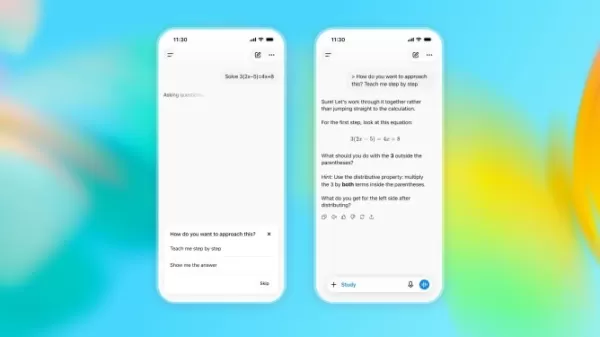 OpenAI launches safer ChatGPT for teens years after they started using it
Following a series of lawsuits regarding the absence of safety protocols in AI chatbots—which contributed to teen suicides and other mental health crises—OpenAI unveiled ChatGPT for Teens on Monday. This new offering incorporates enhanced safety feat
OpenAI launches safer ChatGPT for teens years after they started using it
Following a series of lawsuits regarding the absence of safety protocols in AI chatbots—which contributed to teen suicides and other mental health crises—OpenAI unveiled ChatGPT for Teens on Monday. This new offering incorporates enhanced safety feat
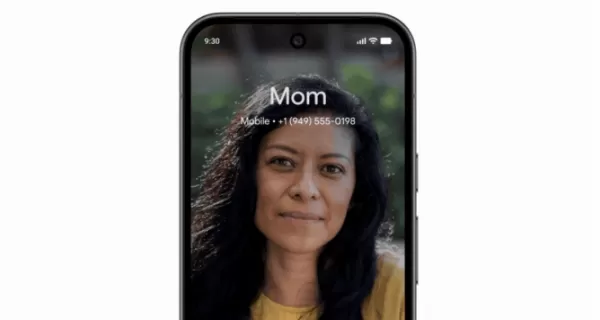 Google rolls out fake call detection to protect against AI deepfake impersonation scams
Google announced on Tuesday that Android is launching fake call detection to protect against AI deepfake impersonation scams. The feature is rolling out globally in Phone by Google to Android 12+ devices this month, starting with Pixel devices.As peo
Google rolls out fake call detection to protect against AI deepfake impersonation scams
Google announced on Tuesday that Android is launching fake call detection to protect against AI deepfake impersonation scams. The feature is rolling out globally in Phone by Google to Android 12+ devices this month, starting with Pixel devices.As peo

2026 Latest Best AI Short-Form Video Hook Generators for Reels Shorts and Product Launch Campaigns! XIX.AI curates top-rated powerful game-changing tools that deliver must-try results through real-world tests. This weekly updated page offers free vs paid comparison rankings to help you find the perfect solution for boosting content creativity and productivity. Explore now to Unlock your AI edge!
11 tools
xix.ai

2026 Latest Best Top-Rated AI Article Outline Tools for Long Form Writing! This curated collection features powerful, game-changing tools that deliver accurate, structured outlines with real-world tests to boost writing efficiency significantly. XIX.AI is part of this elite selection. Get a free vs paid comparison to help you choose the perfect tool. Explore now and Unlock your AI edge!
9 tools
xix.ai

2026 Latest Best Top-rated AI Roleplay Chat Apps for Language Practice, Interview Prep, and Daily Fluency! XIX.AI curates a powerful game-changing collection that offers free vs paid comparison, real-world tests, and updated rankings weekly. These must-try tools help you boost writing skills, overcome fluency challenges, and improve communication efficiency across all daily scenarios. Explore now to discover your perfect tool for language growth!
10 tools
xix.ai

2026 Latest Best Top-rated AI Stem Separation Tools Curated for Remix Production, Sampling Prep, and Karaoke Masters. These powerful game-changing tools offer real-world tests to deliver precise audio isolation, boosting productivity significantly. XIX.AI provides a weekly updated free vs paid comparison guide to help you find the must-try solution that suits your needs. Explore now to unlock your AI edge.
8 tools
xix.ai

2026 Latest Best AI SQL Copilots Ranked Top-Rated! XIX.AI curates a powerful game-changing collection for weekly updated real-world tests. These must-try tools help you generate accurate revenue dashboards, analyze sales funnels, and track product metrics swiftly, boosting productivity massively. Explore now to Discover your perfect tool for data-driven decision making! 238 characters
9 tools
xix.ai

2026 Latest Best Top-Rated AI Melody Writing Tools for Song Drafts! XIX.AI has curated a highly powerful game-changing collection that goes through rigorous real-world tests to deliver the best writing experience. You can find detailed free vs paid comparisons, accurate rankings, and must-try options designed to help you create stunning song drafts effortlessly and boost your creative productivity significantly. Explore now to discover your perfect tool!
8 tools
xix.ai












