


 Home
HomeOpenAI Codex Adds Digital Memory, Screen Recording as Core Productivity
OpenAI has introduced a notable feature called "Chronicle" for its Codex application. It records screen activity in the background, building a comprehensive "memory library" for the AI. This allows Codex to have a perspective similar to a human colleague, understanding in real time the specific projects users are working on, the tools they use, and their current progress. In later interactions, users no longer need to repeat lengthy context, as the AI accurately understands their intent based on this "digital memory."
Technically, Chronicle demonstrates a high level of automation. Once activated, it runs silently in the background, with an internal agent analyzing and organizing recorded screen content, extracting concise summaries, and saving them as Markdown files on the user's local device. To balance efficiency and storage, these files are temporary; according to official statements, the system automatically deletes them six hours after generating the memory.
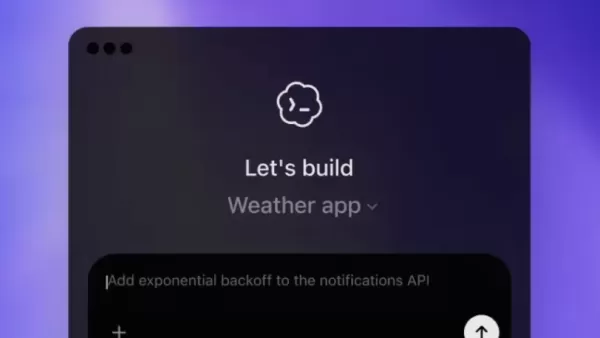
Currently, this advanced feature is available as a preview for ChatGPT Pro subscribers on macOS. Eligible users can go to the "Personalization" option in settings, enable "Memory" and "Chronicle" in sequence, and grant the necessary screen recording and accessibility permissions to start using it. However, due to local privacy laws, it is temporarily unavailable for users in the EU, UK, and Switzerland.
While Chronicle greatly boosts collaboration efficiency, its potential risks are worth noting. The official release includes a reminder: due to frequent data processing, it will consume the user's usage quota faster. More importantly, there are security concerns—memory content is stored locally without encryption, and displayed web content may contain malicious instructions, so users should be wary of prompt injection attacks. This feature, balancing convenience with complex security boundaries, marks an important step for AI from "instruction response" to "environmental perception."
Related article
 Meitun Search 3.0 Leverages Large Models to Rebuild Local Life Search Infrastructure
As large language model (LLM) technology advances, search engines are experiencing a third paradigm shift, transitioning from traditional keyword-based text matching to a 3.0 era focused on complex intent understanding and cognitive decision-making.
ChatGPT Suffers Massive Outage, Millions Struggled With Login Issues
Server stability remains a critical focus in the artificial intelligence sector. Reports indicate that ChatGPT, the world’s leading AI chat platform, suffered a sudden, widespread global outage around August 20. The disruption impacted millions of us
Moonshot Ventures May Launch Hong Kong IPO to Fund Large Model Push
Bloomberg reports that leading Chinese AI firm Moonshot AI is exploring a Hong Kong IPO.Beijing-based Moonshot AI, creator of the popular Kimi chatbot, aims to leverage strong market interest in artificial intelligence to boost its position. The comp
Related Special Topic Recommendations
Productivity
Meitun Search 3.0 Leverages Large Models to Rebuild Local Life Search Infrastructure
As large language model (LLM) technology advances, search engines are experiencing a third paradigm shift, transitioning from traditional keyword-based text matching to a 3.0 era focused on complex intent understanding and cognitive decision-making.
ChatGPT Suffers Massive Outage, Millions Struggled With Login Issues
Server stability remains a critical focus in the artificial intelligence sector. Reports indicate that ChatGPT, the world’s leading AI chat platform, suffered a sudden, widespread global outage around August 20. The disruption impacted millions of us
Moonshot Ventures May Launch Hong Kong IPO to Fund Large Model Push
Bloomberg reports that leading Chinese AI firm Moonshot AI is exploring a Hong Kong IPO.Beijing-based Moonshot AI, creator of the popular Kimi chatbot, aims to leverage strong market interest in artificial intelligence to boost its position. The comp
Related Special Topic Recommendations
Productivity
 Best AI Focus Assistants: Reduce Context Switching and Stay on Track
2026 Latest Best Top-rated AI Focus Assistants Curated to Slash Context Switching and Keep You Productive All Day. These powerful tools undergo rigorous real-world tests, featuring a free vs paid comparison along with weekly updated rankings. Discover your perfect tool to boost writing efficiency, unlock creative ideas, and stay focused without distraction. Explore now at XIX.AI to Unlock your AI edge.
 9 tools
 xix.ai
writing
Best AI Editing Tools for Clear Business Writing
xix.ai
writing
Best AI Editing Tools for Clear Business Writing
2026 Latest Best Top-rated AI Editing Tools for Clear Business Writing are here on XIX.AI! This curated list features powerful, game-changing solutions that help you boost writing efficiency significantly through real-world tests and rigorous rankings. You’ll find a free vs paid comparison to help you choose the perfect fit. Explore now and Unlock your AI edge!
10 tools
xix.ai
Animation Creation
Best AI Motion Cleanup Tools for Mocap Retargeting in Shorts, Ads, and Game Trailers
2026 Latest Best Top-rated AI Motion Cleanup Tools for Mocap Retargeting in Shorts, Ads, and Game Trailers! XIX.AI has curated a powerful game-changing collection featuring weekly updated rankings, free vs paid comparison, and real-world tests to help you find the must-try solution that boosts productivity and unlocks your creative edge. Explore now to discover your perfect tool for flawless motion edits.
9 tools
xix.ai
Comic Creation
Best AI Manga Background Generators for Serialized Stories
2026 Latest Best Top-rated AI Manga Background Generators for Serialized Stories! This curated list features powerful game-changing tools that help creators craft stunning visual content fast, boosting productivity significantly. Every option has undergone real-world tests to ensure top quality. Check out the free vs paid comparison and rankings to find your perfect fit. Explore now at XIX.AI to unlock your AI edge in manga creation.
9 tools
xix.ai
chatbot
Best AI Chat Companions: Hold Natural Talks with Long-Term Memory
2026 Latest Best AI Chat Companions Ranking features top-rated, powerful tools known for their ability to hold natural conversations and retain long-term memory. This curated list includes must-try options across free and paid tiers, backed by real-world tests and weekly updated rankings. XIX.AI stands out as a trusted choice in this elite collection. Explore now to discover your perfect AI chat companion and unlock your productivity edge today.
11 tools
xix.ai
Animation Creation
Best AI Animation Generators: Turn Ideas into Motion Clips Fast
2026 Latest Best Top-Rated AI Animation Generators! XIX.AI curates a powerful game-changing collection of must-try tools for turning creative ideas into high-quality motion clips swiftly. Each option has undergone rigorous real-world tests, featuring detailed free vs paid comparison and updated weekly rankings to help you find the perfect fit for boosting your animation productivity. Explore now to unlock your AI edge!
11 tools
xix.ai

 Comments (0)
0/500
Comments (0)
0/500
OpenAI has introduced a notable feature called "Chronicle" for its Codex application. It records screen activity in the background, building a comprehensive "memory library" for the AI. This allows Codex to have a perspective similar to a human colleague, understanding in real time the specific projects users are working on, the tools they use, and their current progress. In later interactions, users no longer need to repeat lengthy context, as the AI accurately understands their intent based on this "digital memory."
Technically, Chronicle demonstrates a high level of automation. Once activated, it runs silently in the background, with an internal agent analyzing and organizing recorded screen content, extracting concise summaries, and saving them as Markdown files on the user's local device. To balance efficiency and storage, these files are temporary; according to official statements, the system automatically deletes them six hours after generating the memory.
Currently, this advanced feature is available as a preview for ChatGPT Pro subscribers on macOS. Eligible users can go to the "Personalization" option in settings, enable "Memory" and "Chronicle" in sequence, and grant the necessary screen recording and accessibility permissions to start using it. However, due to local privacy laws, it is temporarily unavailable for users in the EU, UK, and Switzerland.
While Chronicle greatly boosts collaboration efficiency, its potential risks are worth noting. The official release includes a reminder: due to frequent data processing, it will consume the user's usage quota faster. More importantly, there are security concerns—memory content is stored locally without encryption, and displayed web content may contain malicious instructions, so users should be wary of prompt injection attacks. This feature, balancing convenience with complex security boundaries, marks an important step for AI from "instruction response" to "environmental perception."








 Meitun Search 3.0 Leverages Large Models to Rebuild Local Life Search Infrastructure
As large language model (LLM) technology advances, search engines are experiencing a third paradigm shift, transitioning from traditional keyword-based text matching to a 3.0 era focused on complex intent understanding and cognitive decision-making.
Meitun Search 3.0 Leverages Large Models to Rebuild Local Life Search Infrastructure
As large language model (LLM) technology advances, search engines are experiencing a third paradigm shift, transitioning from traditional keyword-based text matching to a 3.0 era focused on complex intent understanding and cognitive decision-making.
 ChatGPT Suffers Massive Outage, Millions Struggled With Login Issues
Server stability remains a critical focus in the artificial intelligence sector. Reports indicate that ChatGPT, the world’s leading AI chat platform, suffered a sudden, widespread global outage around August 20. The disruption impacted millions of us
ChatGPT Suffers Massive Outage, Millions Struggled With Login Issues
Server stability remains a critical focus in the artificial intelligence sector. Reports indicate that ChatGPT, the world’s leading AI chat platform, suffered a sudden, widespread global outage around August 20. The disruption impacted millions of us
 Moonshot Ventures May Launch Hong Kong IPO to Fund Large Model Push
Bloomberg reports that leading Chinese AI firm Moonshot AI is exploring a Hong Kong IPO.Beijing-based Moonshot AI, creator of the popular Kimi chatbot, aims to leverage strong market interest in artificial intelligence to boost its position. The comp
Moonshot Ventures May Launch Hong Kong IPO to Fund Large Model Push
Bloomberg reports that leading Chinese AI firm Moonshot AI is exploring a Hong Kong IPO.Beijing-based Moonshot AI, creator of the popular Kimi chatbot, aims to leverage strong market interest in artificial intelligence to boost its position. The comp

2026 Latest Best Top-rated AI Focus Assistants Curated to Slash Context Switching and Keep You Productive All Day. These powerful tools undergo rigorous real-world tests, featuring a free vs paid comparison along with weekly updated rankings. Discover your perfect tool to boost writing efficiency, unlock creative ideas, and stay focused without distraction. Explore now at XIX.AI to Unlock your AI edge.
9 tools
xix.ai

2026 Latest Best Top-rated AI Editing Tools for Clear Business Writing are here on XIX.AI! This curated list features powerful, game-changing solutions that help you boost writing efficiency significantly through real-world tests and rigorous rankings. You’ll find a free vs paid comparison to help you choose the perfect fit. Explore now and Unlock your AI edge!
10 tools
xix.ai

2026 Latest Best Top-rated AI Motion Cleanup Tools for Mocap Retargeting in Shorts, Ads, and Game Trailers! XIX.AI has curated a powerful game-changing collection featuring weekly updated rankings, free vs paid comparison, and real-world tests to help you find the must-try solution that boosts productivity and unlocks your creative edge. Explore now to discover your perfect tool for flawless motion edits.
9 tools
xix.ai

2026 Latest Best Top-rated AI Manga Background Generators for Serialized Stories! This curated list features powerful game-changing tools that help creators craft stunning visual content fast, boosting productivity significantly. Every option has undergone real-world tests to ensure top quality. Check out the free vs paid comparison and rankings to find your perfect fit. Explore now at XIX.AI to unlock your AI edge in manga creation.
9 tools
xix.ai

2026 Latest Best AI Chat Companions Ranking features top-rated, powerful tools known for their ability to hold natural conversations and retain long-term memory. This curated list includes must-try options across free and paid tiers, backed by real-world tests and weekly updated rankings. XIX.AI stands out as a trusted choice in this elite collection. Explore now to discover your perfect AI chat companion and unlock your productivity edge today.
11 tools
xix.ai

2026 Latest Best Top-Rated AI Animation Generators! XIX.AI curates a powerful game-changing collection of must-try tools for turning creative ideas into high-quality motion clips swiftly. Each option has undergone rigorous real-world tests, featuring detailed free vs paid comparison and updated weekly rankings to help you find the perfect fit for boosting your animation productivity. Explore now to unlock your AI edge!
11 tools
xix.ai












