


 Home
HomeNvidia's Trillion-Dollar Rise Fueled by Modest Research Lab
In 2009, when Bill Dally joined Nvidia's research division, it was a small team of about a dozen people focused primarily on ray tracing for computer graphics.
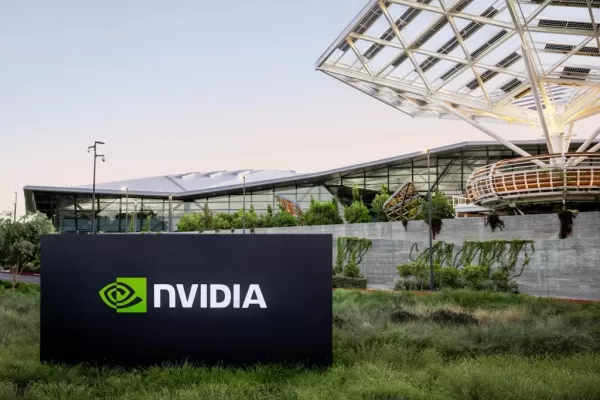
That modest research group has since grown to over 400 employees, playing a pivotal role in Nvidia's evolution from a 1990s gaming GPU startup into a $4 trillion company at the heart of the artificial intelligence revolution.
The lab's focus has now shifted to developing the foundational technology for robotics and AI, with some of its work already reaching the market. On Monday, the company introduced a new suite of world AI models, libraries, and developer infrastructure for robotics.
Dally, now Nvidia's chief scientist, first consulted for the company in 2003 while at Stanford. Years later, as he prepared to step down as chair of Stanford's computer science department for a sabbatical, Nvidia had other plans for him.

Bill DallyImage Credits:Nvidia David Kirk, then head of research, and CEO Jensen Huang believed a permanent role at the lab was a better fit. Dally told TechCrunch the pair mounted a "full-court press" to convince him to join, and they eventually succeeded.
"It turned out to be a perfect match for my interests and skills," Dally said. "Everyone searches for where they can make their greatest contribution. For me, that place is undoubtedly Nvidia."
When Dally assumed leadership of the lab in 2009, expansion was the immediate priority. The team quickly branched out from ray tracing into new areas like circuit design and VLSI (very-large-scale integration), the process of embedding millions of transistors onto a single chip.
The research lab has been growing ever since.
Techcrunch event Tech and VC heavyweights join the Disrupt 2025 agenda
Netflix, ElevenLabs, Wayve, Sequoia Capital, Elad Gil — just a few of the heavy hitters joining the Disrupt 2025 agenda. They’re here to deliver the insights that fuel startup growth and sharpen your edge. Don’t miss the 20th anniversary of TechCrunch Disrupt, and a chance to learn from the top voices in tech — grab your ticket now and save up to $600+ before prices rise.
Tech and VC heavyweights join the Disrupt 2025 agenda
Netflix, ElevenLabs, Wayve, Sequoia Capital — just a few of the heavy hitters joining the Disrupt 2025 agenda. They’re here to deliver the insights that fuel startup growth and sharpen your edge. Don’t miss the 20th anniversary of TechCrunch Disrupt, and a chance to learn from the top voices in tech — grab your ticket now and save up to $675 before prices rise.
San Francisco | October 27-29, 2025 REGISTER NOW "We aim to identify what will have the greatest positive impact for the company," Dally said. "We constantly explore exciting new areas, but with some, it's difficult to predict if we'll achieve wild success, even with excellent work."
For a significant period, that focus was on building superior GPUs for artificial intelligence. Nvidia anticipated the AI boom early, beginning to develop AI GPU concepts in 2010—over a decade before the current frenzy.
"We recognized this was revolutionary and would change the world," Dally recalled. "We had to double down. Jensen believed me when I told him. We started specializing our GPUs for AI, developing extensive software, and engaging with global researchers long before its relevance was obvious."
Physical AI focus
Now, with a commanding lead in the AI GPU market, Nvidia is exploring new demand areas beyond AI data centers, leading them to physical AI and robotics.
"Robots will eventually become a massive global industry, and we aim to provide the brains for all of them," Dally said. "To achieve that, we need to develop the core technologies now."
This is where Sanja Fidler, Nvidia's vice president of AI research, enters the picture. Fidler joined the research lab in 2018, bringing expertise from her work on robot simulation models with a student team at MIT. When she discussed her research with Huang at a reception, he was immediately intrigued.
"I couldn't resist joining," Fidler told TechCrunch. "It was a perfect topic and cultural fit. Jensen's invitation was personal—'come work with me,' not just for the company."
She joined Nvidia and established a Toronto research lab focused on Omniverse, a platform dedicated to building simulations for physical AI.

Sanja FidlerImage Credits:Nvidia Fidler stated the first major challenge was sourcing the necessary 3D data. This involved finding sufficient image volumes and creating the technology to convert these images into usable 3D models for simulators.
"We invested in a technology called differentiable rendering, which makes rendering compatible with AI," Fidler explained. "Traditional rendering goes from 3D to image. We needed to invert that process."
World models
Omniverse launched its first image-to-3D model, GANverse3D, in 2021. The team then tackled the same process for video. Using footage from robots and self-driving cars, they created 3D models and simulations via the NeRF (Neural Reconstruction Engine), announced in 2022.
Fidler noted these technologies form the foundation of the company's Cosmos family of world AI models, unveiled at CES in January.
The lab's current priority is increasing the speed of these models. For robots and simulations, response times must be real-time, Fidler emphasized, and for robotics, they aim for even faster reaction capabilities.
"A robot doesn't need to perceive the world at the same speed we do," Fidler said. "It can process information 100 times faster. Significantly accelerating these models will make them immensely useful for robotic and physical AI applications."
The company is advancing toward this goal. At the SIGGRAPH computer graphics conference on Monday, Nvidia announced a new fleet of world AI models for generating synthetic data to train robots, along with new libraries and infrastructure software for robotics developers.
Despite the progress—and the current hype around robots, particularly humanoids—the Nvidia research team remains pragmatic.
Both Dally and Fidler estimate the industry is still several years away from practical home humanoid robots, with Fidler comparing the timeline to that of autonomous vehicles.
"We're making tremendous progress, and AI has been the key enabler," Dally said. "It started with visual AI for robot perception, and now generative AI is proving immensely valuable for task planning, motion planning, and manipulation. As we solve each sub-problem and our training datasets expand, these robots will continue to evolve."
We're always working to improve. Sharing your perspective and feedback on TechCrunch's coverage and events can help us evolve. Fill out this survey to let us know how we're doing—you'll also have a chance to win a prize!
Related article
 Nvidia H200 China deal survives Trump-Xi summit, but not as expected
President Trump traveled to Beijing with Jensen Huang joining the delegation at the eleventh hour, departing two days later with vague remarks about potential chip export developments. No deal materialized. Since Trump first authorized sales in Decem
Nvidia to Derive 25% of Next Year’s Revenue from Funded Labs
Nvidia has deployed nearly US$50 billion into AI labs purchasing its chips, securing commitments for over $500 billion in total.On August 26, CFO Colette Kress informed analysts that these labs, backed by Nvidia’s balance sheet, will account for roug
ElevenLabs brings on BlackRock, Jamie Foxx and Longoria as new investors
ElevenLabs, a leader in Voice AI, has announced new participants in its $500 million Series D funding round, initially revealed in February. The investor roster now features major institutions like BlackRock, Wellington, D.E. Shaw, and Schroders, alo
Related Special Topic Recommendations
Design & Art
Nvidia H200 China deal survives Trump-Xi summit, but not as expected
President Trump traveled to Beijing with Jensen Huang joining the delegation at the eleventh hour, departing two days later with vague remarks about potential chip export developments. No deal materialized. Since Trump first authorized sales in Decem
Nvidia to Derive 25% of Next Year’s Revenue from Funded Labs
Nvidia has deployed nearly US$50 billion into AI labs purchasing its chips, securing commitments for over $500 billion in total.On August 26, CFO Colette Kress informed analysts that these labs, backed by Nvidia’s balance sheet, will account for roug
ElevenLabs brings on BlackRock, Jamie Foxx and Longoria as new investors
ElevenLabs, a leader in Voice AI, has announced new participants in its $500 million Series D funding round, initially revealed in February. The investor roster now features major institutions like BlackRock, Wellington, D.E. Shaw, and Schroders, alo
Related Special Topic Recommendations
Design & Art
 Top AI Illustration Tools: Create Editorial Scenes and Cover Art Faster
2026 Latest Top-rated AI Illustration Tools: Our curated list features the best powerfully designed tools for creating stunning editorial scenes and eye-catching cover art quickly. Each option has gone through rigorous real-world tests, offering a free vs paid comparison to help you find the perfect match for your workflow. Try these must-try solutions today to unlock your AI edge and boost your creative productivity. Explore now at XIX.AI.
 10 tools
 xix.ai
Education and Learning
Top AI Tutors for Exam Prep: Practice Math, Science, and English
xix.ai
Education and Learning
Top AI Tutors for Exam Prep: Practice Math, Science, and English
2026 Latest Top-Rated Best AI Tutors for Exam Prep are here on XIX.AI! Our curated list features powerful game-changing tools that offer free vs paid comparison, real-world tests, and weekly updated rankings. They help boost your writing efficiency, simplify complex topic learning, and unlock your academic potential. Explore now to Discover your perfect exam prep tool and Start creating today to Unlock your AI edge!
10 tools
xix.ai
Finance
AI Budget Planning Tools for Personal Money Management
2026 Latest Best Top-Rated AI Budget Planning Tools for Personal Money Management are here on XIX.AI! This curated collection features powerful, game-changing solutions that help you conduct real-world tests, understand spending habits, and create personalized plans to boost productivity. Enjoy a free vs paid comparison along with detailed rankings. Must-try tools designed to simplify money management and unlock your AI edge. Explore now!
11 tools
xix.ai
Health & Wellness
AI Sleep Tracking Assistants: Improve Recovery with Better Bedtime Habits
2026 Latest Best Top-Rated AI Sleep Tracking Assistants curated for ultimate recovery. This fully updated weekly guide features powerful tools that deliver real-world tests, free vs paid comparison, and detailed rankings to help you find the must-try solution that boosts sleep quality and supports better bedtime habits. Explore now at XIX.AI to Unlock your AI edge.
10 tools
xix.ai
Data Analysis
AI SQL Copilots for Product and Revenue Analytics
2026 Latest Best Top-Rated AI SQL Copilots for Product and Revenue Analytics! XIX.AI has curated a powerful, game-changing collection of must-try tools that undergo real-world tests through weekly updated rankings. These tools help users boost productivity significantly by accelerating data analysis, streamlining complex queries, and generating accurate insights to drive smarter business decisions. Explore now to Discover your perfect tool for unlocking your AI edge!
14 tools
xix.ai
Education and Learning
Best AI Homework Helpers That Teach: Learn Concepts, Not Just Answers
2026 Latest Best Top-Rated AI Homework Helpers That Teach Core Concepts Not Just Answers Powerful Tools for Students Must-Try Curated List Weekly Updated Free vs Paid Comparison Real-World Tests Accurate Rankings to Help You Unlock Your Full Learning Potential Explore now to Discover your perfect tool for smarter studying.
10 tools
xix.ai

 Comments (2)
0/500
Comments (2)
0/500
![DanielMiller]()
Who would've thought that a tiny ray-tracing lab would turn into Nvidia's secret weapon? 🚀 The AI boom really changed the game.
![JeffreyThomas]()
Es increíble cómo un pequeño laboratorio de investigación puede convertirse en el motor de una empresa billonaria. 🤯 Me pregunto cuántas otras empresas están en una situación similar, con equipos pequeños que están revolucionando tecnologías clave. Este caso de NVIDIA demuestra que la inversión sostenida en investigación básica realmente paga, al contrario de lo que muchos piensan. ¡Gran historia para compartir con mi equipo!
In 2009, when Bill Dally joined Nvidia's research division, it was a small team of about a dozen people focused primarily on ray tracing for computer graphics.
That modest research group has since grown to over 400 employees, playing a pivotal role in Nvidia's evolution from a 1990s gaming GPU startup into a $4 trillion company at the heart of the artificial intelligence revolution.
The lab's focus has now shifted to developing the foundational technology for robotics and AI, with some of its work already reaching the market. On Monday, the company introduced a new suite of world AI models, libraries, and developer infrastructure for robotics.
Dally, now Nvidia's chief scientist, first consulted for the company in 2003 while at Stanford. Years later, as he prepared to step down as chair of Stanford's computer science department for a sabbatical, Nvidia had other plans for him.
David Kirk, then head of research, and CEO Jensen Huang believed a permanent role at the lab was a better fit. Dally told TechCrunch the pair mounted a "full-court press" to convince him to join, and they eventually succeeded.
"It turned out to be a perfect match for my interests and skills," Dally said. "Everyone searches for where they can make their greatest contribution. For me, that place is undoubtedly Nvidia."
When Dally assumed leadership of the lab in 2009, expansion was the immediate priority. The team quickly branched out from ray tracing into new areas like circuit design and VLSI (very-large-scale integration), the process of embedding millions of transistors onto a single chip.
The research lab has been growing ever since.
Techcrunch eventTech and VC heavyweights join the Disrupt 2025 agenda
Netflix, ElevenLabs, Wayve, Sequoia Capital, Elad Gil — just a few of the heavy hitters joining the Disrupt 2025 agenda. They’re here to deliver the insights that fuel startup growth and sharpen your edge. Don’t miss the 20th anniversary of TechCrunch Disrupt, and a chance to learn from the top voices in tech — grab your ticket now and save up to $600+ before prices rise.
Tech and VC heavyweights join the Disrupt 2025 agenda
Netflix, ElevenLabs, Wayve, Sequoia Capital — just a few of the heavy hitters joining the Disrupt 2025 agenda. They’re here to deliver the insights that fuel startup growth and sharpen your edge. Don’t miss the 20th anniversary of TechCrunch Disrupt, and a chance to learn from the top voices in tech — grab your ticket now and save up to $675 before prices rise.
San Francisco | October 27-29, 2025 REGISTER NOW"We aim to identify what will have the greatest positive impact for the company," Dally said. "We constantly explore exciting new areas, but with some, it's difficult to predict if we'll achieve wild success, even with excellent work."
For a significant period, that focus was on building superior GPUs for artificial intelligence. Nvidia anticipated the AI boom early, beginning to develop AI GPU concepts in 2010—over a decade before the current frenzy.
"We recognized this was revolutionary and would change the world," Dally recalled. "We had to double down. Jensen believed me when I told him. We started specializing our GPUs for AI, developing extensive software, and engaging with global researchers long before its relevance was obvious."
Physical AI focus
Now, with a commanding lead in the AI GPU market, Nvidia is exploring new demand areas beyond AI data centers, leading them to physical AI and robotics.
"Robots will eventually become a massive global industry, and we aim to provide the brains for all of them," Dally said. "To achieve that, we need to develop the core technologies now."
This is where Sanja Fidler, Nvidia's vice president of AI research, enters the picture. Fidler joined the research lab in 2018, bringing expertise from her work on robot simulation models with a student team at MIT. When she discussed her research with Huang at a reception, he was immediately intrigued.
"I couldn't resist joining," Fidler told TechCrunch. "It was a perfect topic and cultural fit. Jensen's invitation was personal—'come work with me,' not just for the company."
She joined Nvidia and established a Toronto research lab focused on Omniverse, a platform dedicated to building simulations for physical AI.
Fidler stated the first major challenge was sourcing the necessary 3D data. This involved finding sufficient image volumes and creating the technology to convert these images into usable 3D models for simulators.
"We invested in a technology called differentiable rendering, which makes rendering compatible with AI," Fidler explained. "Traditional rendering goes from 3D to image. We needed to invert that process."
World models
Omniverse launched its first image-to-3D model, GANverse3D, in 2021. The team then tackled the same process for video. Using footage from robots and self-driving cars, they created 3D models and simulations via the NeRF (Neural Reconstruction Engine), announced in 2022.
Fidler noted these technologies form the foundation of the company's Cosmos family of world AI models, unveiled at CES in January.
The lab's current priority is increasing the speed of these models. For robots and simulations, response times must be real-time, Fidler emphasized, and for robotics, they aim for even faster reaction capabilities.
"A robot doesn't need to perceive the world at the same speed we do," Fidler said. "It can process information 100 times faster. Significantly accelerating these models will make them immensely useful for robotic and physical AI applications."
The company is advancing toward this goal. At the SIGGRAPH computer graphics conference on Monday, Nvidia announced a new fleet of world AI models for generating synthetic data to train robots, along with new libraries and infrastructure software for robotics developers.
Despite the progress—and the current hype around robots, particularly humanoids—the Nvidia research team remains pragmatic.
Both Dally and Fidler estimate the industry is still several years away from practical home humanoid robots, with Fidler comparing the timeline to that of autonomous vehicles.
"We're making tremendous progress, and AI has been the key enabler," Dally said. "It started with visual AI for robot perception, and now generative AI is proving immensely valuable for task planning, motion planning, and manipulation. As we solve each sub-problem and our training datasets expand, these robots will continue to evolve."
We're always working to improve. Sharing your perspective and feedback on TechCrunch's coverage and events can help us evolve. Fill out this survey to let us know how we're doing—you'll also have a chance to win a prize!








 Nvidia H200 China deal survives Trump-Xi summit, but not as expected
President Trump traveled to Beijing with Jensen Huang joining the delegation at the eleventh hour, departing two days later with vague remarks about potential chip export developments. No deal materialized. Since Trump first authorized sales in Decem
Nvidia H200 China deal survives Trump-Xi summit, but not as expected
President Trump traveled to Beijing with Jensen Huang joining the delegation at the eleventh hour, departing two days later with vague remarks about potential chip export developments. No deal materialized. Since Trump first authorized sales in Decem
 Nvidia to Derive 25% of Next Year’s Revenue from Funded Labs
Nvidia has deployed nearly US$50 billion into AI labs purchasing its chips, securing commitments for over $500 billion in total.On August 26, CFO Colette Kress informed analysts that these labs, backed by Nvidia’s balance sheet, will account for roug
Nvidia to Derive 25% of Next Year’s Revenue from Funded Labs
Nvidia has deployed nearly US$50 billion into AI labs purchasing its chips, securing commitments for over $500 billion in total.On August 26, CFO Colette Kress informed analysts that these labs, backed by Nvidia’s balance sheet, will account for roug
 ElevenLabs brings on BlackRock, Jamie Foxx and Longoria as new investors
ElevenLabs, a leader in Voice AI, has announced new participants in its $500 million Series D funding round, initially revealed in February. The investor roster now features major institutions like BlackRock, Wellington, D.E. Shaw, and Schroders, alo
ElevenLabs brings on BlackRock, Jamie Foxx and Longoria as new investors
ElevenLabs, a leader in Voice AI, has announced new participants in its $500 million Series D funding round, initially revealed in February. The investor roster now features major institutions like BlackRock, Wellington, D.E. Shaw, and Schroders, alo

2026 Latest Top-rated AI Illustration Tools: Our curated list features the best powerfully designed tools for creating stunning editorial scenes and eye-catching cover art quickly. Each option has gone through rigorous real-world tests, offering a free vs paid comparison to help you find the perfect match for your workflow. Try these must-try solutions today to unlock your AI edge and boost your creative productivity. Explore now at XIX.AI.
10 tools
xix.ai

2026 Latest Top-Rated Best AI Tutors for Exam Prep are here on XIX.AI! Our curated list features powerful game-changing tools that offer free vs paid comparison, real-world tests, and weekly updated rankings. They help boost your writing efficiency, simplify complex topic learning, and unlock your academic potential. Explore now to Discover your perfect exam prep tool and Start creating today to Unlock your AI edge!
10 tools
xix.ai

2026 Latest Best Top-Rated AI Budget Planning Tools for Personal Money Management are here on XIX.AI! This curated collection features powerful, game-changing solutions that help you conduct real-world tests, understand spending habits, and create personalized plans to boost productivity. Enjoy a free vs paid comparison along with detailed rankings. Must-try tools designed to simplify money management and unlock your AI edge. Explore now!
11 tools
xix.ai

2026 Latest Best Top-Rated AI Sleep Tracking Assistants curated for ultimate recovery. This fully updated weekly guide features powerful tools that deliver real-world tests, free vs paid comparison, and detailed rankings to help you find the must-try solution that boosts sleep quality and supports better bedtime habits. Explore now at XIX.AI to Unlock your AI edge.
10 tools
xix.ai

2026 Latest Best Top-Rated AI SQL Copilots for Product and Revenue Analytics! XIX.AI has curated a powerful, game-changing collection of must-try tools that undergo real-world tests through weekly updated rankings. These tools help users boost productivity significantly by accelerating data analysis, streamlining complex queries, and generating accurate insights to drive smarter business decisions. Explore now to Discover your perfect tool for unlocking your AI edge!
14 tools
xix.ai

2026 Latest Best Top-Rated AI Homework Helpers That Teach Core Concepts Not Just Answers Powerful Tools for Students Must-Try Curated List Weekly Updated Free vs Paid Comparison Real-World Tests Accurate Rankings to Help You Unlock Your Full Learning Potential Explore now to Discover your perfect tool for smarter studying.
10 tools
xix.ai

Who would've thought that a tiny ray-tracing lab would turn into Nvidia's secret weapon? 🚀 The AI boom really changed the game.
Es increíble cómo un pequeño laboratorio de investigación puede convertirse en el motor de una empresa billonaria. 🤯 Me pregunto cuántas otras empresas están en una situación similar, con equipos pequeños que están revolucionando tecnologías clave. Este caso de NVIDIA demuestra que la inversión sostenida en investigación básica realmente paga, al contrario de lo que muchos piensan. ¡Gran historia para compartir con mi equipo!












