


 Home
HomeNvidia AI Model Accurately Predicted Storm Weeks in Advance

As the winter storm battered much of the United States, weather forecasts for certain regions showed significant discrepancies, with snowfall predictions varying widely.
The timing of Nvidia's new Earth-2 weather forecasting models couldn't be more perfect. Or perhaps, given the claimed accuracy of these models, the company had advance insight into the weather conditions?
These new AI models are designed to deliver faster and more precise weather forecasts. Nvidia states that one specific model, Earth-2 Medium Range, outperforms Google DeepMind's AI weather model, GenCast, across more than 70 variables. GenCast, released by Google in December 2024, had already demonstrated superior accuracy compared to existing weather models capable of generating forecasts up to 15 days in advance.
Nvidia introduced these new tools on Monday at the American Meteorological Society meeting in Houston.
"From a philosophical and scientific standpoint, this represents a return to simplicity," Mike Pritchard, Nvidia's director of climate simulation, explained to reporters before the meeting. "We're transitioning away from specialized, handcrafted AI architectures and embracing the future of straightforward, scalable transformer-based systems."
Conventional weather forecasting primarily relies on physics-based simulations of real-world observations. AI models are a more recent development in this field. The Earth-2 Medium Range model is built on a new Nvidia architecture called Atlas, with further details scheduled for release on Monday.
In addition to Medium Range, Nvidia's Earth-2 suite includes a Nowcasting model and a Global Data Assimilation model.
Techcrunch event Disrupt 2026 Tickets: One-time offer
Tickets are now available! Secure savings of up to $680 during this limited-time offer, and be among the first 500 registrants to receive 50% off your +1 pass. TechCrunch Disrupt features industry leaders from Google Cloud, Netflix, Microsoft, Box, a16z, Hugging Face, and many others across 250+ sessions focused on driving growth and enhancing your competitive advantage. Engage with hundreds of innovative startups and participate in curated networking opportunities that facilitate deals, provide valuable insights, and spark inspiration.
Disrupt 2026 Tickets: One-time offer
Tickets are now available! Secure savings of up to $680 during this limited-time offer, and be among the first 500 registrants to receive 50% off your +1 pass. TechCrunch Disrupt features industry leaders from Google Cloud, Netflix, Microsoft, Box, a16z, Hugging Face, and many others across 250+ sessions focused on driving growth and enhancing your competitive advantage. Engage with hundreds of innovative startups and participate in curated networking opportunities that facilitate deals, provide valuable insights, and spark inspiration.
San Francisco | October 13-15, 2026 REGISTER NOW Nowcasting generates short-term weather predictions from zero to six hours ahead, helping meteorologists assess the potential impacts of storms and other hazardous weather conditions.
"Since this model is trained directly on globally available geostationary satellite data rather than region-specific physics model outputs, Nowcasting can be adapted to any location with adequate satellite coverage," Pritchard noted. This capability should assist state governments and smaller nations in understanding how severe weather systems could affect their regions.
The Global Data Assimilation model processes data from sources including weather stations and balloons to create continuous snapshots of weather conditions at thousands of global locations. These snapshots serve as starting points for weather models to generate their forecasts.
Traditionally, producing these snapshots demanded enormous computing resources before forecasting could commence. "This process typically consumes about 50% of the total supercomputing capacity used in traditional weather forecasting," Pritchard explained. "Our model can accomplish this in minutes using GPUs instead of the hours required by supercomputers."
These three new models join two existing ones: CorrDiff, which uses coarse-grained forecasts to rapidly generate high-resolution predictions, and FourCastNet 3, which models individual weather variables such as temperature, wind, and humidity.
According to Pritchard, these new models should democratize access to advanced weather forecasting tools, which have historically been available mainly to wealthier nations and large corporations that can afford expensive supercomputer time.
"These tools provide fundamental building blocks for everyone in the ecosystem—national meteorological services, financial firms, energy companies—any organization interested in developing and refining weather forecasting models," Pritchard stated. Some tools are already operational, with meteorologists in Israel and Taiwan using Earth-2 CorrDiff, while The Weather Company and Total Energies are evaluating Nowcasting.
"While some users may prefer subscribing to centralized enterprise weather forecasting systems, others, particularly countries, prioritize sovereignty," Pritchard emphasized. "Weather represents a national security concern, making sovereignty and weather forecasting inherently interconnected."
Related article
 Former OpenAI Researcher Barrett Zoph Returns to Google to Support Gemini Development
Barret Zoph, who previously abruptly left and joined OpenAI due to a disagreement with Thinking Machines Lab CEO Miriam Mularati, has once again changed employers. Alphabet's Google announced that Zoph will return as Vice President of Research, bring
How Recursive Intelligence Raised $335M at $4B Valuation in 4 Months
The co-founders of startup Ricursive Intelligence seemed destined to be co-founders.Anna Goldie, CEO, and Azalia Mirhoseini, CTO, are so well-known in the AI community that they were among those AI engineers who “got those weird emails from Zuckerber
AI race won’t wait, nor will this TechCrunch Disrupt 25% discount
Every founder building in AI right now is asking the same question: Are we moving fast enough, and effectively enough? TechCrunch Disrupt 2026 puts you in the same room as the people wrestling with that existential question at the highest levels. Fro
Related Special Topic Recommendations
Design & Art
Former OpenAI Researcher Barrett Zoph Returns to Google to Support Gemini Development
Barret Zoph, who previously abruptly left and joined OpenAI due to a disagreement with Thinking Machines Lab CEO Miriam Mularati, has once again changed employers. Alphabet's Google announced that Zoph will return as Vice President of Research, bring
How Recursive Intelligence Raised $335M at $4B Valuation in 4 Months
The co-founders of startup Ricursive Intelligence seemed destined to be co-founders.Anna Goldie, CEO, and Azalia Mirhoseini, CTO, are so well-known in the AI community that they were among those AI engineers who “got those weird emails from Zuckerber
AI race won’t wait, nor will this TechCrunch Disrupt 25% discount
Every founder building in AI right now is asking the same question: Are we moving fast enough, and effectively enough? TechCrunch Disrupt 2026 puts you in the same room as the people wrestling with that existential question at the highest levels. Fro
Related Special Topic Recommendations
Design & Art
 Top AI Illustration Tools: Create Editorial Scenes and Cover Art Faster
2026 Latest Top-rated AI Illustration Tools: Our curated list features the best powerfully designed tools for creating stunning editorial scenes and eye-catching cover art quickly. Each option has gone through rigorous real-world tests, offering a free vs paid comparison to help you find the perfect match for your workflow. Try these must-try solutions today to unlock your AI edge and boost your creative productivity. Explore now at XIX.AI.
 10 tools
 xix.ai
Education and Learning
Top AI Tutors for Exam Prep: Practice Math, Science, and English
xix.ai
Education and Learning
Top AI Tutors for Exam Prep: Practice Math, Science, and English
2026 Latest Top-Rated Best AI Tutors for Exam Prep are here on XIX.AI! Our curated list features powerful game-changing tools that offer free vs paid comparison, real-world tests, and weekly updated rankings. They help boost your writing efficiency, simplify complex topic learning, and unlock your academic potential. Explore now to Discover your perfect exam prep tool and Start creating today to Unlock your AI edge!
10 tools
xix.ai
Finance
AI Budget Planning Tools for Personal Money Management
2026 Latest Best Top-Rated AI Budget Planning Tools for Personal Money Management are here on XIX.AI! This curated collection features powerful, game-changing solutions that help you conduct real-world tests, understand spending habits, and create personalized plans to boost productivity. Enjoy a free vs paid comparison along with detailed rankings. Must-try tools designed to simplify money management and unlock your AI edge. Explore now!
11 tools
xix.ai
Health & Wellness
AI Sleep Tracking Assistants: Improve Recovery with Better Bedtime Habits
2026 Latest Best Top-Rated AI Sleep Tracking Assistants curated for ultimate recovery. This fully updated weekly guide features powerful tools that deliver real-world tests, free vs paid comparison, and detailed rankings to help you find the must-try solution that boosts sleep quality and supports better bedtime habits. Explore now at XIX.AI to Unlock your AI edge.
10 tools
xix.ai
Data Analysis
AI SQL Copilots for Product and Revenue Analytics
2026 Latest Best Top-Rated AI SQL Copilots for Product and Revenue Analytics! XIX.AI has curated a powerful, game-changing collection of must-try tools that undergo real-world tests through weekly updated rankings. These tools help users boost productivity significantly by accelerating data analysis, streamlining complex queries, and generating accurate insights to drive smarter business decisions. Explore now to Discover your perfect tool for unlocking your AI edge!
14 tools
xix.ai
Education and Learning
Best AI Homework Helpers That Teach: Learn Concepts, Not Just Answers
2026 Latest Best Top-Rated AI Homework Helpers That Teach Core Concepts Not Just Answers Powerful Tools for Students Must-Try Curated List Weekly Updated Free vs Paid Comparison Real-World Tests Accurate Rankings to Help You Unlock Your Full Learning Potential Explore now to Discover your perfect tool for smarter studying.
10 tools
xix.ai

 Comments (1)
0/500
Comments (1)
0/500
![RobertMartin]()
NvidiaのEarth-2、気象予測の精度がすごいね。今回の米国冬嵐で予測が分かれた地域でも、数週間前に正確に的中させたなんて、技術の進歩は本当に目を見張るものがある。気象庁の予測とどう違うのか気になるけど、災害対策に役立つなら大歓迎だ。🌪️🤖 #AI #気象予測
As the winter storm battered much of the United States, weather forecasts for certain regions showed significant discrepancies, with snowfall predictions varying widely.
The timing of Nvidia's new Earth-2 weather forecasting models couldn't be more perfect. Or perhaps, given the claimed accuracy of these models, the company had advance insight into the weather conditions?
These new AI models are designed to deliver faster and more precise weather forecasts. Nvidia states that one specific model, Earth-2 Medium Range, outperforms Google DeepMind's AI weather model, GenCast, across more than 70 variables. GenCast, released by Google in December 2024, had already demonstrated superior accuracy compared to existing weather models capable of generating forecasts up to 15 days in advance.
Nvidia introduced these new tools on Monday at the American Meteorological Society meeting in Houston.
"From a philosophical and scientific standpoint, this represents a return to simplicity," Mike Pritchard, Nvidia's director of climate simulation, explained to reporters before the meeting. "We're transitioning away from specialized, handcrafted AI architectures and embracing the future of straightforward, scalable transformer-based systems."
Conventional weather forecasting primarily relies on physics-based simulations of real-world observations. AI models are a more recent development in this field. The Earth-2 Medium Range model is built on a new Nvidia architecture called Atlas, with further details scheduled for release on Monday.
In addition to Medium Range, Nvidia's Earth-2 suite includes a Nowcasting model and a Global Data Assimilation model.
Techcrunch eventDisrupt 2026 Tickets: One-time offer
Tickets are now available! Secure savings of up to $680 during this limited-time offer, and be among the first 500 registrants to receive 50% off your +1 pass. TechCrunch Disrupt features industry leaders from Google Cloud, Netflix, Microsoft, Box, a16z, Hugging Face, and many others across 250+ sessions focused on driving growth and enhancing your competitive advantage. Engage with hundreds of innovative startups and participate in curated networking opportunities that facilitate deals, provide valuable insights, and spark inspiration.
Disrupt 2026 Tickets: One-time offer
Tickets are now available! Secure savings of up to $680 during this limited-time offer, and be among the first 500 registrants to receive 50% off your +1 pass. TechCrunch Disrupt features industry leaders from Google Cloud, Netflix, Microsoft, Box, a16z, Hugging Face, and many others across 250+ sessions focused on driving growth and enhancing your competitive advantage. Engage with hundreds of innovative startups and participate in curated networking opportunities that facilitate deals, provide valuable insights, and spark inspiration.
San Francisco | October 13-15, 2026 REGISTER NOWNowcasting generates short-term weather predictions from zero to six hours ahead, helping meteorologists assess the potential impacts of storms and other hazardous weather conditions.
"Since this model is trained directly on globally available geostationary satellite data rather than region-specific physics model outputs, Nowcasting can be adapted to any location with adequate satellite coverage," Pritchard noted. This capability should assist state governments and smaller nations in understanding how severe weather systems could affect their regions.
The Global Data Assimilation model processes data from sources including weather stations and balloons to create continuous snapshots of weather conditions at thousands of global locations. These snapshots serve as starting points for weather models to generate their forecasts.
Traditionally, producing these snapshots demanded enormous computing resources before forecasting could commence. "This process typically consumes about 50% of the total supercomputing capacity used in traditional weather forecasting," Pritchard explained. "Our model can accomplish this in minutes using GPUs instead of the hours required by supercomputers."
These three new models join two existing ones: CorrDiff, which uses coarse-grained forecasts to rapidly generate high-resolution predictions, and FourCastNet 3, which models individual weather variables such as temperature, wind, and humidity.
According to Pritchard, these new models should democratize access to advanced weather forecasting tools, which have historically been available mainly to wealthier nations and large corporations that can afford expensive supercomputer time.
"These tools provide fundamental building blocks for everyone in the ecosystem—national meteorological services, financial firms, energy companies—any organization interested in developing and refining weather forecasting models," Pritchard stated. Some tools are already operational, with meteorologists in Israel and Taiwan using Earth-2 CorrDiff, while The Weather Company and Total Energies are evaluating Nowcasting.
"While some users may prefer subscribing to centralized enterprise weather forecasting systems, others, particularly countries, prioritize sovereignty," Pritchard emphasized. "Weather represents a national security concern, making sovereignty and weather forecasting inherently interconnected."








 Former OpenAI Researcher Barrett Zoph Returns to Google to Support Gemini Development
Barret Zoph, who previously abruptly left and joined OpenAI due to a disagreement with Thinking Machines Lab CEO Miriam Mularati, has once again changed employers. Alphabet's Google announced that Zoph will return as Vice President of Research, bring
Former OpenAI Researcher Barrett Zoph Returns to Google to Support Gemini Development
Barret Zoph, who previously abruptly left and joined OpenAI due to a disagreement with Thinking Machines Lab CEO Miriam Mularati, has once again changed employers. Alphabet's Google announced that Zoph will return as Vice President of Research, bring
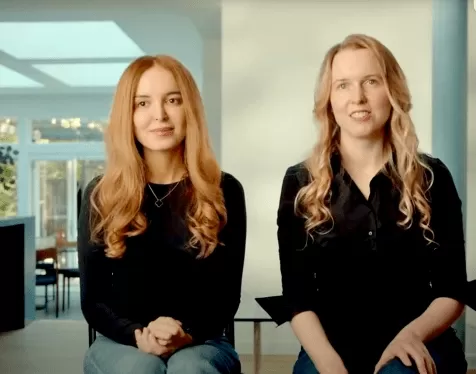 How Recursive Intelligence Raised $335M at $4B Valuation in 4 Months
The co-founders of startup Ricursive Intelligence seemed destined to be co-founders.Anna Goldie, CEO, and Azalia Mirhoseini, CTO, are so well-known in the AI community that they were among those AI engineers who “got those weird emails from Zuckerber
How Recursive Intelligence Raised $335M at $4B Valuation in 4 Months
The co-founders of startup Ricursive Intelligence seemed destined to be co-founders.Anna Goldie, CEO, and Azalia Mirhoseini, CTO, are so well-known in the AI community that they were among those AI engineers who “got those weird emails from Zuckerber
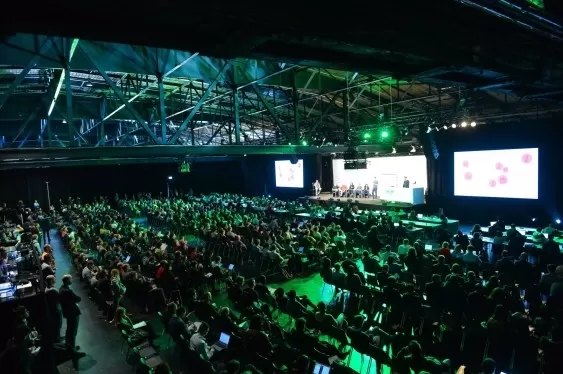 AI race won’t wait, nor will this TechCrunch Disrupt 25% discount
Every founder building in AI right now is asking the same question: Are we moving fast enough, and effectively enough? TechCrunch Disrupt 2026 puts you in the same room as the people wrestling with that existential question at the highest levels. Fro
AI race won’t wait, nor will this TechCrunch Disrupt 25% discount
Every founder building in AI right now is asking the same question: Are we moving fast enough, and effectively enough? TechCrunch Disrupt 2026 puts you in the same room as the people wrestling with that existential question at the highest levels. Fro
2026 Latest Top-rated AI Illustration Tools: Our curated list features the best powerfully designed tools for creating stunning editorial scenes and eye-catching cover art quickly. Each option has gone through rigorous real-world tests, offering a free vs paid comparison to help you find the perfect match for your workflow. Try these must-try solutions today to unlock your AI edge and boost your creative productivity. Explore now at XIX.AI.
10 tools
xix.ai
2026 Latest Top-Rated Best AI Tutors for Exam Prep are here on XIX.AI! Our curated list features powerful game-changing tools that offer free vs paid comparison, real-world tests, and weekly updated rankings. They help boost your writing efficiency, simplify complex topic learning, and unlock your academic potential. Explore now to Discover your perfect exam prep tool and Start creating today to Unlock your AI edge!
10 tools
xix.ai

2026 Latest Best Top-Rated AI Budget Planning Tools for Personal Money Management are here on XIX.AI! This curated collection features powerful, game-changing solutions that help you conduct real-world tests, understand spending habits, and create personalized plans to boost productivity. Enjoy a free vs paid comparison along with detailed rankings. Must-try tools designed to simplify money management and unlock your AI edge. Explore now!
11 tools
xix.ai

2026 Latest Best Top-Rated AI Sleep Tracking Assistants curated for ultimate recovery. This fully updated weekly guide features powerful tools that deliver real-world tests, free vs paid comparison, and detailed rankings to help you find the must-try solution that boosts sleep quality and supports better bedtime habits. Explore now at XIX.AI to Unlock your AI edge.
10 tools
xix.ai
2026 Latest Best Top-Rated AI SQL Copilots for Product and Revenue Analytics! XIX.AI has curated a powerful, game-changing collection of must-try tools that undergo real-world tests through weekly updated rankings. These tools help users boost productivity significantly by accelerating data analysis, streamlining complex queries, and generating accurate insights to drive smarter business decisions. Explore now to Discover your perfect tool for unlocking your AI edge!
14 tools
xix.ai

2026 Latest Best Top-Rated AI Homework Helpers That Teach Core Concepts Not Just Answers Powerful Tools for Students Must-Try Curated List Weekly Updated Free vs Paid Comparison Real-World Tests Accurate Rankings to Help You Unlock Your Full Learning Potential Explore now to Discover your perfect tool for smarter studying.
10 tools
xix.ai

NvidiaのEarth-2、気象予測の精度がすごいね。今回の米国冬嵐で予測が分かれた地域でも、数週間前に正確に的中させたなんて、技術の進歩は本当に目を見張るものがある。気象庁の予測とどう違うのか気になるけど、災害対策に役立つなら大歓迎だ。🌪️🤖 #AI #気象予測












