


 Home
HomeNvidia CEO Criticizes U.S. Policy Halting AI Chip Exports to China
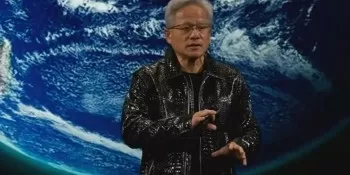
In a rare foray into political discourse, NVIDIA CEO Jensen Huang critiqued U.S. export policies that have blocked the sale of its advanced semiconductors to China.
This move followed a significant $4.5 billion charge against NVIDIA’s first-quarter earnings, stemming from the abrupt halt of H20 AI chip shipments to China in April. The restrictions were enacted by the Trump administration as part of broader trade tensions and tariff disputes with China and other nations.
“Let me address the frequent questions on export controls,” Huang stated. “China represents one of the world’s largest AI markets and serves as a critical launchpad for global innovation, home to roughly half of the world’s AI researchers. The platform that succeeds in China is positioned for global leadership. However, the $50 billion Chinese market is now largely inaccessible to U.S. firms. The H20 export ban has effectively terminated our Hopper data center business in China. To comply, we have ceased further Hopper production. Consequently, we are writing off billions in inventory that cannot be sold or repurposed. We are investigating limited avenues for competition, but Hopper is no longer viable there.”
Huang emphasized that China will continue advancing its AI capabilities regardless of access to U.S. chips, needing computational power to train and deploy sophisticated models.
“The issue isn’t whether China will possess this technology—it already does,” he noted. “The real question is whether one of the planet’s largest AI markets will operate on American technology platforms. Shielding Chinese chipmakers from U.S. competition only fortifies their international standing and undermines America’s strategic position.”
He added, “Export restrictions have inadvertently accelerated China’s competitive drive. This race extends beyond semiconductors; it’s about which technological stack powers the world as it expands. Global infrastructure leadership is on the line. U.S. policy has been predicated on the belief that China cannot manufacture advanced chips. That assumption was always debatable and is now demonstrably incorrect. China possesses immense manufacturing capacity. Ultimately, the platform that wins over AI developers will dominate the AI landscape. Export controls should be designed to strengthen U.S. platforms, not to drive half the world’s AI talent to other regions.”
While critical of certain policies, Huang welcomed one recent change: “It is very encouraging to see the AI Diffusion Rule rescinded. President Trump is focused on American success and recognizes we are not alone in this technological race. He understands the necessity of propagating the American technology stack worldwide.”
Huang referred to the Biden-era AI Diffusion Rule, revoked in May 2025 before its implementation. The Biden administration had sought to impose export controls on AI model weights and advanced computing integrated circuits, which could have limited the global spread of AI technology.
The Trump administration contended that such a rule would hinder American AI innovation.
The rule's revocation may benefit nations like Saudi Arabia and U.S. AI firms by relaxing AI export barriers. However, the Trump administration signaled its intent to promote American AI technology collaboratively with trusted allies while continuing to deny access to geopolitical rivals.
“The President has a clear plan and vision, and I have confidence in his approach,” Huang concluded. “Nevertheless, these new restrictions mark the definitive end for our Hopper platform in that market.”
Related article
 Nvidia H200 China deal survives Trump-Xi summit, but not as expected
President Trump traveled to Beijing with Jensen Huang joining the delegation at the eleventh hour, departing two days later with vague remarks about potential chip export developments. No deal materialized. Since Trump first authorized sales in Decem
Nvidia to Derive 25% of Next Year’s Revenue from Funded Labs
Nvidia has deployed nearly US$50 billion into AI labs purchasing its chips, securing commitments for over $500 billion in total.On August 26, CFO Colette Kress informed analysts that these labs, backed by Nvidia’s balance sheet, will account for roug
ElevenLabs brings on BlackRock, Jamie Foxx and Longoria as new investors
ElevenLabs, a leader in Voice AI, has announced new participants in its $500 million Series D funding round, initially revealed in February. The investor roster now features major institutions like BlackRock, Wellington, D.E. Shaw, and Schroders, alo
Related Special Topic Recommendations
Design & Art
Nvidia H200 China deal survives Trump-Xi summit, but not as expected
President Trump traveled to Beijing with Jensen Huang joining the delegation at the eleventh hour, departing two days later with vague remarks about potential chip export developments. No deal materialized. Since Trump first authorized sales in Decem
Nvidia to Derive 25% of Next Year’s Revenue from Funded Labs
Nvidia has deployed nearly US$50 billion into AI labs purchasing its chips, securing commitments for over $500 billion in total.On August 26, CFO Colette Kress informed analysts that these labs, backed by Nvidia’s balance sheet, will account for roug
ElevenLabs brings on BlackRock, Jamie Foxx and Longoria as new investors
ElevenLabs, a leader in Voice AI, has announced new participants in its $500 million Series D funding round, initially revealed in February. The investor roster now features major institutions like BlackRock, Wellington, D.E. Shaw, and Schroders, alo
Related Special Topic Recommendations
Design & Art
 Top AI Illustration Tools: Create Editorial Scenes and Cover Art Faster
2026 Latest Top-rated AI Illustration Tools: Our curated list features the best powerfully designed tools for creating stunning editorial scenes and eye-catching cover art quickly. Each option has gone through rigorous real-world tests, offering a free vs paid comparison to help you find the perfect match for your workflow. Try these must-try solutions today to unlock your AI edge and boost your creative productivity. Explore now at XIX.AI.
 10 tools
 xix.ai
Education and Learning
Top AI Tutors for Exam Prep: Practice Math, Science, and English
xix.ai
Education and Learning
Top AI Tutors for Exam Prep: Practice Math, Science, and English
2026 Latest Top-Rated Best AI Tutors for Exam Prep are here on XIX.AI! Our curated list features powerful game-changing tools that offer free vs paid comparison, real-world tests, and weekly updated rankings. They help boost your writing efficiency, simplify complex topic learning, and unlock your academic potential. Explore now to Discover your perfect exam prep tool and Start creating today to Unlock your AI edge!
10 tools
xix.ai
Finance
AI Budget Planning Tools for Personal Money Management
2026 Latest Best Top-Rated AI Budget Planning Tools for Personal Money Management are here on XIX.AI! This curated collection features powerful, game-changing solutions that help you conduct real-world tests, understand spending habits, and create personalized plans to boost productivity. Enjoy a free vs paid comparison along with detailed rankings. Must-try tools designed to simplify money management and unlock your AI edge. Explore now!
11 tools
xix.ai
Health & Wellness
AI Sleep Tracking Assistants: Improve Recovery with Better Bedtime Habits
2026 Latest Best Top-Rated AI Sleep Tracking Assistants curated for ultimate recovery. This fully updated weekly guide features powerful tools that deliver real-world tests, free vs paid comparison, and detailed rankings to help you find the must-try solution that boosts sleep quality and supports better bedtime habits. Explore now at XIX.AI to Unlock your AI edge.
10 tools
xix.ai
Data Analysis
AI SQL Copilots for Product and Revenue Analytics
2026 Latest Best Top-Rated AI SQL Copilots for Product and Revenue Analytics! XIX.AI has curated a powerful, game-changing collection of must-try tools that undergo real-world tests through weekly updated rankings. These tools help users boost productivity significantly by accelerating data analysis, streamlining complex queries, and generating accurate insights to drive smarter business decisions. Explore now to Discover your perfect tool for unlocking your AI edge!
14 tools
xix.ai
Education and Learning
Best AI Homework Helpers That Teach: Learn Concepts, Not Just Answers
2026 Latest Best Top-Rated AI Homework Helpers That Teach Core Concepts Not Just Answers Powerful Tools for Students Must-Try Curated List Weekly Updated Free vs Paid Comparison Real-World Tests Accurate Rankings to Help You Unlock Your Full Learning Potential Explore now to Discover your perfect tool for smarter studying.
10 tools
xix.ai

 Comments (2)
0/500
Comments (2)
0/500
![JuanLewis]()
The business and politics of tech are so tangled these days... It's interesting to see Jensen Huang speaking out directly like this. The $4.5B hit is massive, makes you wonder about the long-term impact on supply chains and global collaboration in AI research. 🤔 While I understand security concerns, these kind of restrictions seem like a blunt tool.
![RichardJohnson]()
한국어 주제로 하신 글 잘 읽었어요. 갈수록 AI 분야의 글로벌 보안과 국가 정책 간의 충돌이 심해지고 있는 것 같아요. 반도체 수출 통제가 기술 보호와 경제적 이익 사이에서 어떻게 균형을 잡을지 궁금하네요 ㅠㅠ 삼성과 SK하이닉스 같은 한국 기업들에 미칠 영향도 생각해보게 됩니다. AI 칩 시장의 급격한 변화가 경쟁과 협력 모두에 어떤 파장을 줄지 주목해보겠습니다!
In a rare foray into political discourse, NVIDIA CEO Jensen Huang critiqued U.S. export policies that have blocked the sale of its advanced semiconductors to China.
This move followed a significant $4.5 billion charge against NVIDIA’s first-quarter earnings, stemming from the abrupt halt of H20 AI chip shipments to China in April. The restrictions were enacted by the Trump administration as part of broader trade tensions and tariff disputes with China and other nations.
“Let me address the frequent questions on export controls,” Huang stated. “China represents one of the world’s largest AI markets and serves as a critical launchpad for global innovation, home to roughly half of the world’s AI researchers. The platform that succeeds in China is positioned for global leadership. However, the $50 billion Chinese market is now largely inaccessible to U.S. firms. The H20 export ban has effectively terminated our Hopper data center business in China. To comply, we have ceased further Hopper production. Consequently, we are writing off billions in inventory that cannot be sold or repurposed. We are investigating limited avenues for competition, but Hopper is no longer viable there.”
Huang emphasized that China will continue advancing its AI capabilities regardless of access to U.S. chips, needing computational power to train and deploy sophisticated models.
“The issue isn’t whether China will possess this technology—it already does,” he noted. “The real question is whether one of the planet’s largest AI markets will operate on American technology platforms. Shielding Chinese chipmakers from U.S. competition only fortifies their international standing and undermines America’s strategic position.”
He added, “Export restrictions have inadvertently accelerated China’s competitive drive. This race extends beyond semiconductors; it’s about which technological stack powers the world as it expands. Global infrastructure leadership is on the line. U.S. policy has been predicated on the belief that China cannot manufacture advanced chips. That assumption was always debatable and is now demonstrably incorrect. China possesses immense manufacturing capacity. Ultimately, the platform that wins over AI developers will dominate the AI landscape. Export controls should be designed to strengthen U.S. platforms, not to drive half the world’s AI talent to other regions.”
While critical of certain policies, Huang welcomed one recent change: “It is very encouraging to see the AI Diffusion Rule rescinded. President Trump is focused on American success and recognizes we are not alone in this technological race. He understands the necessity of propagating the American technology stack worldwide.”
Huang referred to the Biden-era AI Diffusion Rule, revoked in May 2025 before its implementation. The Biden administration had sought to impose export controls on AI model weights and advanced computing integrated circuits, which could have limited the global spread of AI technology.
The Trump administration contended that such a rule would hinder American AI innovation.
The rule's revocation may benefit nations like Saudi Arabia and U.S. AI firms by relaxing AI export barriers. However, the Trump administration signaled its intent to promote American AI technology collaboratively with trusted allies while continuing to deny access to geopolitical rivals.
“The President has a clear plan and vision, and I have confidence in his approach,” Huang concluded. “Nevertheless, these new restrictions mark the definitive end for our Hopper platform in that market.”








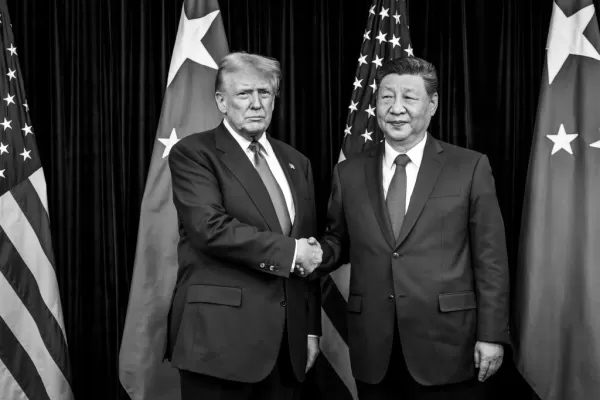 Nvidia H200 China deal survives Trump-Xi summit, but not as expected
President Trump traveled to Beijing with Jensen Huang joining the delegation at the eleventh hour, departing two days later with vague remarks about potential chip export developments. No deal materialized. Since Trump first authorized sales in Decem
Nvidia H200 China deal survives Trump-Xi summit, but not as expected
President Trump traveled to Beijing with Jensen Huang joining the delegation at the eleventh hour, departing two days later with vague remarks about potential chip export developments. No deal materialized. Since Trump first authorized sales in Decem
 Nvidia to Derive 25% of Next Year’s Revenue from Funded Labs
Nvidia has deployed nearly US$50 billion into AI labs purchasing its chips, securing commitments for over $500 billion in total.On August 26, CFO Colette Kress informed analysts that these labs, backed by Nvidia’s balance sheet, will account for roug
Nvidia to Derive 25% of Next Year’s Revenue from Funded Labs
Nvidia has deployed nearly US$50 billion into AI labs purchasing its chips, securing commitments for over $500 billion in total.On August 26, CFO Colette Kress informed analysts that these labs, backed by Nvidia’s balance sheet, will account for roug
 ElevenLabs brings on BlackRock, Jamie Foxx and Longoria as new investors
ElevenLabs, a leader in Voice AI, has announced new participants in its $500 million Series D funding round, initially revealed in February. The investor roster now features major institutions like BlackRock, Wellington, D.E. Shaw, and Schroders, alo
ElevenLabs brings on BlackRock, Jamie Foxx and Longoria as new investors
ElevenLabs, a leader in Voice AI, has announced new participants in its $500 million Series D funding round, initially revealed in February. The investor roster now features major institutions like BlackRock, Wellington, D.E. Shaw, and Schroders, alo

2026 Latest Top-rated AI Illustration Tools: Our curated list features the best powerfully designed tools for creating stunning editorial scenes and eye-catching cover art quickly. Each option has gone through rigorous real-world tests, offering a free vs paid comparison to help you find the perfect match for your workflow. Try these must-try solutions today to unlock your AI edge and boost your creative productivity. Explore now at XIX.AI.
10 tools
xix.ai

2026 Latest Top-Rated Best AI Tutors for Exam Prep are here on XIX.AI! Our curated list features powerful game-changing tools that offer free vs paid comparison, real-world tests, and weekly updated rankings. They help boost your writing efficiency, simplify complex topic learning, and unlock your academic potential. Explore now to Discover your perfect exam prep tool and Start creating today to Unlock your AI edge!
10 tools
xix.ai

2026 Latest Best Top-Rated AI Budget Planning Tools for Personal Money Management are here on XIX.AI! This curated collection features powerful, game-changing solutions that help you conduct real-world tests, understand spending habits, and create personalized plans to boost productivity. Enjoy a free vs paid comparison along with detailed rankings. Must-try tools designed to simplify money management and unlock your AI edge. Explore now!
11 tools
xix.ai

2026 Latest Best Top-Rated AI Sleep Tracking Assistants curated for ultimate recovery. This fully updated weekly guide features powerful tools that deliver real-world tests, free vs paid comparison, and detailed rankings to help you find the must-try solution that boosts sleep quality and supports better bedtime habits. Explore now at XIX.AI to Unlock your AI edge.
10 tools
xix.ai

2026 Latest Best Top-Rated AI SQL Copilots for Product and Revenue Analytics! XIX.AI has curated a powerful, game-changing collection of must-try tools that undergo real-world tests through weekly updated rankings. These tools help users boost productivity significantly by accelerating data analysis, streamlining complex queries, and generating accurate insights to drive smarter business decisions. Explore now to Discover your perfect tool for unlocking your AI edge!
14 tools
xix.ai

2026 Latest Best Top-Rated AI Homework Helpers That Teach Core Concepts Not Just Answers Powerful Tools for Students Must-Try Curated List Weekly Updated Free vs Paid Comparison Real-World Tests Accurate Rankings to Help You Unlock Your Full Learning Potential Explore now to Discover your perfect tool for smarter studying.
10 tools
xix.ai

The business and politics of tech are so tangled these days... It's interesting to see Jensen Huang speaking out directly like this. The $4.5B hit is massive, makes you wonder about the long-term impact on supply chains and global collaboration in AI research. 🤔 While I understand security concerns, these kind of restrictions seem like a blunt tool.
한국어 주제로 하신 글 잘 읽었어요. 갈수록 AI 분야의 글로벌 보안과 국가 정책 간의 충돌이 심해지고 있는 것 같아요. 반도체 수출 통제가 기술 보호와 경제적 이익 사이에서 어떻게 균형을 잡을지 궁금하네요 ㅠㅠ 삼성과 SK하이닉스 같은 한국 기업들에 미칠 영향도 생각해보게 됩니다. AI 칩 시장의 급격한 변화가 경쟁과 협력 모두에 어떤 파장을 줄지 주목해보겠습니다!












