


 Home
Nvidia CEO Jensen Huang Dismisses AI Apocalypse Claims, Says 2030 Doomsday Probability Is Zero
In a recent CBS News interview, NVIDIA co-founder and CEO Jensen Huang dismissed warnings from certain researchers that artificial intelligence could lead to human extinction within a few years, labeling such apocalyptic narratives as exaggerated.
“2030 will not be the end of the world,” Huang stated. “The probability is zero percent. It is irresponsible and unnecessary to instill fear.”
Addressing Coxon’s Claims: A Lack of Scientific Foundation
Huang’s comments were a direct response to former Anthropic researcher Jacob Coxon, who argued that companies like Anthropic and OpenAI are recklessly racing to build self-improving super-intelligent systems, thereby endangering humanity. This perspective has ignited a broader debate, prompting AI leaders such as Dario Amodei and Sam Altman to advocate for a pause in the development of advanced AI models.
However, Huang contends that these predictions lack a scientific basis. As a primary provider of computing infrastructure for major AI firms, NVIDIA has a vested interest in this discussion. Driven by surging demand for its chips, NVIDIA’s market capitalization recently hit $5.3 trillion (approximately 35.61 trillion Chinese yuan), making it the world’s most valuable company. Huang emphasized, “Our success depends on our products, services, and secure deployment. If we fail to maintain safety standards, our value will suffer.”
He argued that existing U.S. product liability laws and regulations against unauthorized network intrusions are sufficient to govern AI developers, suggesting that no new legislation is required. Aligning with the administration’s stance, Huang believes the AI sector does not need additional regulatory burdens. “Cybersecurity and damage liability laws already cover these scenarios; the priority should be enforcing them. We must not allow apocalyptic narratives to serve as an excuse for evading current legal obligations.”
“I Find Great Satisfaction in Paying Higher Taxes”
Regarding the AI rivalry between the United States and China, Huang asserted that American technology should primarily benefit U.S. citizens, yet he strongly opposed government bans on exporting American tech to China. “Every chip company should operate globally and compete in the global market. That is the American way,” he said.
According to the Bloomberg Billionaires Index, Huang’s net worth stands at $182 billion (approximately 1.22 trillion Chinese yuan), placing him eighth among the world’s wealthiest individuals. With California set to vote on a proposed “billionaire tax” this fall, which would impose a one-time 5% levy on residents with net worths exceeding $1 billion, Huang remains supportive of the measure despite criticism from other wealthy Californians. “I can comfortably pay $8 billion (approximately 53.747 billion Chinese yuan) in taxes over five years. It is both a privilege and a responsibility, and there is nothing I enjoy more than paying higher taxes. I fear poverty, not taxation.”
Related article
 OpenAI launches GPT-Live-1 API with interruption handling, tool calls and phone agents
OpenAI has officially launched GPT-Live-1, a new API model designed to empower developers building full-duplex, real-time voice applications. This release signals a major shift in AI voice interaction, moving beyond traditional segmented processing t
Moonshot: Can China’s 2.8 Trillion Parameter AI Rival US Tech?
In February 2026, Anthropic accused Chinese AI labs DeepSeek, Moonshot and MiniMax of “industrial-scale campaigns” to “illicitly extract Claude’s capabilities to improve their own models”. Credit: Alvan Nee/UnsplashChinese AI firm Moonshot has releas
Cozy 3.0 Launches With Multi-Person and Multi-Agent Collaboration Support
ByteDance has officially released Coze 3.0, introducing a novel approach to Agent creation while delivering major advancements in team collaboration and ecosystem integration.This update prioritizes collaborative efficiency, fully supporting flexible
Related Special Topic Recommendations
Design & Art
 Top AI Illustration Tools: Create Editorial Scenes and Cover Art Faster
2026 Latest Top-rated AI Illustration Tools: Our curated list features the best powerfully designed tools for creating stunning editorial scenes and eye-catching cover art quickly. Each option has gone through rigorous real-world tests, offering a free vs paid comparison to help you find the perfect match for your workflow. Try these must-try solutions today to unlock your AI edge and boost your creative productivity. Explore now at XIX.AI.
 10 tools
 xix.ai
Education and Learning
Top AI Tutors for Exam Prep: Practice Math, Science, and English
2026 Latest Top-Rated Best AI Tutors for Exam Prep are here on XIX.AI! Our curated list features powerful game-changing tools that offer free vs paid comparison, real-world tests, and weekly updated rankings. They help boost your writing efficiency, simplify complex topic learning, and unlock your academic potential. Explore now to Discover your perfect exam prep tool and Start creating today to Unlock your AI edge!
10 tools
xix.ai
Finance
AI Budget Planning Tools for Personal Money Management
2026 Latest Best Top-Rated AI Budget Planning Tools for Personal Money Management are here on XIX.AI! This curated collection features powerful, game-changing solutions that help you conduct real-world tests, understand spending habits, and create personalized plans to boost productivity. Enjoy a free vs paid comparison along with detailed rankings. Must-try tools designed to simplify money management and unlock your AI edge. Explore now!
11 tools
xix.ai
Health & Wellness
AI Sleep Tracking Assistants: Improve Recovery with Better Bedtime Habits
2026 Latest Best Top-Rated AI Sleep Tracking Assistants curated for ultimate recovery. This fully updated weekly guide features powerful tools that deliver real-world tests, free vs paid comparison, and detailed rankings to help you find the must-try solution that boosts sleep quality and supports better bedtime habits. Explore now at XIX.AI to Unlock your AI edge.
10 tools
xix.ai
Data Analysis
AI SQL Copilots for Product and Revenue Analytics
2026 Latest Best Top-Rated AI SQL Copilots for Product and Revenue Analytics! XIX.AI has curated a powerful, game-changing collection of must-try tools that undergo real-world tests through weekly updated rankings. These tools help users boost productivity significantly by accelerating data analysis, streamlining complex queries, and generating accurate insights to drive smarter business decisions. Explore now to Discover your perfect tool for unlocking your AI edge!
14 tools
xix.ai
Education and Learning
Best AI Homework Helpers That Teach: Learn Concepts, Not Just Answers
2026 Latest Best Top-Rated AI Homework Helpers That Teach Core Concepts Not Just Answers Powerful Tools for Students Must-Try Curated List Weekly Updated Free vs Paid Comparison Real-World Tests Accurate Rankings to Help You Unlock Your Full Learning Potential Explore now to Discover your perfect tool for smarter studying.
10 tools
xix.ai

 Comments (0)
0/500
In a recent CBS News interview, NVIDIA co-founder and CEO Jensen Huang dismissed warnings from certain researchers that artificial intelligence could lead to human extinction within a few years, labeling such apocalyptic narratives as exaggerated.
“2030 will not be the end of the world,” Huang stated. “The probability is zero percent. It is irresponsible and unnecessary to instill fear.”
Addressing Coxon’s Claims: A Lack of Scientific Foundation
Huang’s comments were a direct response to former Anthropic researcher Jacob Coxon, who argued that companies like Anthropic and OpenAI are recklessly racing to build self-improving super-intelligent systems, thereby endangering humanity. This perspective has ignited a broader debate, prompting AI leaders such as Dario Amodei and Sam Altman to advocate for a pause in the development of advanced AI models.
However, Huang contends that these predictions lack a scientific basis. As a primary provider of computing infrastructure for major AI firms, NVIDIA has a vested interest in this discussion. Driven by surging demand for its chips, NVIDIA’s market capitalization recently hit $5.3 trillion (approximately 35.61 trillion Chinese yuan), making it the world’s most valuable company. Huang emphasized, “Our success depends on our products, services, and secure deployment. If we fail to maintain safety standards, our value will suffer.”
He argued that existing U.S. product liability laws and regulations against unauthorized network intrusions are sufficient to govern AI developers, suggesting that no new legislation is required. Aligning with the administration’s stance, Huang believes the AI sector does not need additional regulatory burdens. “Cybersecurity and damage liability laws already cover these scenarios; the priority should be enforcing them. We must not allow apocalyptic narratives to serve as an excuse for evading current legal obligations.”
“I Find Great Satisfaction in Paying Higher Taxes”
Regarding the AI rivalry between the United States and China, Huang asserted that American technology should primarily benefit U.S. citizens, yet he strongly opposed government bans on exporting American tech to China. “Every chip company should operate globally and compete in the global market. That is the American way,” he said.
According to the Bloomberg Billionaires Index, Huang’s net worth stands at $182 billion (approximately 1.22 trillion Chinese yuan), placing him eighth among the world’s wealthiest individuals. With California set to vote on a proposed “billionaire tax” this fall, which would impose a one-time 5% levy on residents with net worths exceeding $1 billion, Huang remains supportive of the measure despite criticism from other wealthy Californians. “I can comfortably pay $8 billion (approximately 53.747 billion Chinese yuan) in taxes over five years. It is both a privilege and a responsibility, and there is nothing I enjoy more than paying higher taxes. I fear poverty, not taxation.”








 OpenAI launches GPT-Live-1 API with interruption handling, tool calls and phone agents
OpenAI has officially launched GPT-Live-1, a new API model designed to empower developers building full-duplex, real-time voice applications. This release signals a major shift in AI voice interaction, moving beyond traditional segmented processing t
 Moonshot: Can China’s 2.8 Trillion Parameter AI Rival US Tech?
In February 2026, Anthropic accused Chinese AI labs DeepSeek, Moonshot and MiniMax of “industrial-scale campaigns” to “illicitly extract Claude’s capabilities to improve their own models”. Credit: Alvan Nee/UnsplashChinese AI firm Moonshot has releas
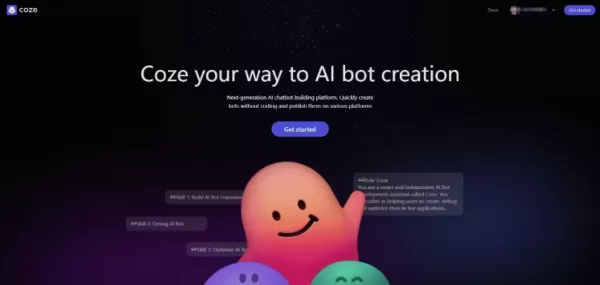 Cozy 3.0 Launches With Multi-Person and Multi-Agent Collaboration Support
ByteDance has officially released Coze 3.0, introducing a novel approach to Agent creation while delivering major advancements in team collaboration and ecosystem integration.This update prioritizes collaborative efficiency, fully supporting flexible

2026 Latest Top-rated AI Illustration Tools: Our curated list features the best powerfully designed tools for creating stunning editorial scenes and eye-catching cover art quickly. Each option has gone through rigorous real-world tests, offering a free vs paid comparison to help you find the perfect match for your workflow. Try these must-try solutions today to unlock your AI edge and boost your creative productivity. Explore now at XIX.AI.
10 tools
xix.ai

2026 Latest Top-Rated Best AI Tutors for Exam Prep are here on XIX.AI! Our curated list features powerful game-changing tools that offer free vs paid comparison, real-world tests, and weekly updated rankings. They help boost your writing efficiency, simplify complex topic learning, and unlock your academic potential. Explore now to Discover your perfect exam prep tool and Start creating today to Unlock your AI edge!
10 tools
xix.ai

2026 Latest Best Top-Rated AI Budget Planning Tools for Personal Money Management are here on XIX.AI! This curated collection features powerful, game-changing solutions that help you conduct real-world tests, understand spending habits, and create personalized plans to boost productivity. Enjoy a free vs paid comparison along with detailed rankings. Must-try tools designed to simplify money management and unlock your AI edge. Explore now!
11 tools
xix.ai

2026 Latest Best Top-Rated AI Sleep Tracking Assistants curated for ultimate recovery. This fully updated weekly guide features powerful tools that deliver real-world tests, free vs paid comparison, and detailed rankings to help you find the must-try solution that boosts sleep quality and supports better bedtime habits. Explore now at XIX.AI to Unlock your AI edge.
10 tools
xix.ai

2026 Latest Best Top-Rated AI SQL Copilots for Product and Revenue Analytics! XIX.AI has curated a powerful, game-changing collection of must-try tools that undergo real-world tests through weekly updated rankings. These tools help users boost productivity significantly by accelerating data analysis, streamlining complex queries, and generating accurate insights to drive smarter business decisions. Explore now to Discover your perfect tool for unlocking your AI edge!
14 tools
xix.ai

2026 Latest Best Top-Rated AI Homework Helpers That Teach Core Concepts Not Just Answers Powerful Tools for Students Must-Try Curated List Weekly Updated Free vs Paid Comparison Real-World Tests Accurate Rankings to Help You Unlock Your Full Learning Potential Explore now to Discover your perfect tool for smarter studying.
10 tools
xix.ai












