


 Home
HomeNvidia Announces Plans to Produce AI Chips in the US
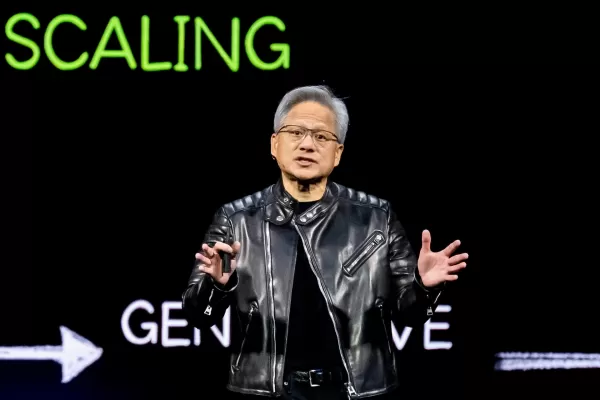
Nvidia Ramps Up AI Chip Manufacturing in the U.S.
Nvidia announced on Monday that it is expanding its AI chip production in the United States, with over a million square feet of manufacturing space now dedicated to building and testing AI chips in Arizona and Texas. This move is part of Nvidia's strategy to shift a significant portion of its production to the U.S.
The production of Nvidia's Blackwell chips has already begun at TSMC’s facilities in Phoenix, Arizona. Additionally, Nvidia is setting up "supercomputer" manufacturing plants in Texas, partnering with Foxconn in Houston and Wistron in Dallas. In Arizona, Nvidia is collaborating with Amkor and SPIL for the packaging and testing of these chips.
According to Nvidia, mass production at the Houston and Dallas facilities is expected to start within the next 12-15 months. The company has ambitious plans to produce up to half-a-trillion dollars worth of AI infrastructure in the U.S. within the next four years.
Nvidia's CEO on U.S. Manufacturing
Nvidia CEO Jensen Huang emphasized the significance of this move, stating, “The engines of the world’s AI infrastructure are being built in the United States for the first time. Adding American manufacturing helps us better meet the incredible and growing demand for AI chips and supercomputers, strengthens our supply chain, and boosts our resiliency.”
This announcement follows closely on the heels of Nvidia's successful negotiation to avoid export controls on its H20 chip by committing to invest in U.S.-based AI data centers. According to NPR, this deal with the Trump administration allowed the H20, Nvidia's most advanced exportable chip to China, to remain unrestricted.
Broader Industry Trends
Nvidia's move aligns with a broader trend among AI companies to embrace the Trump administration's "America-first" approach. For instance, OpenAI partnered with SoftBank and Oracle in January for the $500 billion Stargate Project, aimed at building U.S. data centers. Similarly, Microsoft committed $80 billion for AI data centers in its 2025 fiscal year, with half of that investment targeted for the U.S.
Trump's influence has been evident in recent months, as he reportedly pressured TSMC to build new chip factories in the U.S., threatening a tax of up to 100% if they refused.
Economic Impact and Challenges
Nvidia claims that its U.S. manufacturing initiatives could lead to the creation of "hundreds of thousands" of jobs and drive "trillions of dollars" in economic activity over the coming decades. However, expanding domestic chip production faces significant hurdles.
Retaliatory tariffs and trade restrictions from China could disrupt the supply of essential raw materials needed for chip manufacturing. Additionally, there is a severe shortage of skilled workers required for chip assembly. The Trump administration's efforts to undermine the Chips Act, which was designed to provide billions in grants to chipmakers, might also discourage future investments from major semiconductor companies.
Related article
 Nvidia H200 China deal survives Trump-Xi summit, but not as expected
President Trump traveled to Beijing with Jensen Huang joining the delegation at the eleventh hour, departing two days later with vague remarks about potential chip export developments. No deal materialized. Since Trump first authorized sales in Decem
Nvidia to Derive 25% of Next Year’s Revenue from Funded Labs
Nvidia has deployed nearly US$50 billion into AI labs purchasing its chips, securing commitments for over $500 billion in total.On August 26, CFO Colette Kress informed analysts that these labs, backed by Nvidia’s balance sheet, will account for roug
ElevenLabs brings on BlackRock, Jamie Foxx and Longoria as new investors
ElevenLabs, a leader in Voice AI, has announced new participants in its $500 million Series D funding round, initially revealed in February. The investor roster now features major institutions like BlackRock, Wellington, D.E. Shaw, and Schroders, alo
Related Special Topic Recommendations
Design & Art
Nvidia H200 China deal survives Trump-Xi summit, but not as expected
President Trump traveled to Beijing with Jensen Huang joining the delegation at the eleventh hour, departing two days later with vague remarks about potential chip export developments. No deal materialized. Since Trump first authorized sales in Decem
Nvidia to Derive 25% of Next Year’s Revenue from Funded Labs
Nvidia has deployed nearly US$50 billion into AI labs purchasing its chips, securing commitments for over $500 billion in total.On August 26, CFO Colette Kress informed analysts that these labs, backed by Nvidia’s balance sheet, will account for roug
ElevenLabs brings on BlackRock, Jamie Foxx and Longoria as new investors
ElevenLabs, a leader in Voice AI, has announced new participants in its $500 million Series D funding round, initially revealed in February. The investor roster now features major institutions like BlackRock, Wellington, D.E. Shaw, and Schroders, alo
Related Special Topic Recommendations
Design & Art
 Top AI Illustration Tools: Create Editorial Scenes and Cover Art Faster
2026 Latest Top-rated AI Illustration Tools: Our curated list features the best powerfully designed tools for creating stunning editorial scenes and eye-catching cover art quickly. Each option has gone through rigorous real-world tests, offering a free vs paid comparison to help you find the perfect match for your workflow. Try these must-try solutions today to unlock your AI edge and boost your creative productivity. Explore now at XIX.AI.
 10 tools
 xix.ai
Education and Learning
Top AI Tutors for Exam Prep: Practice Math, Science, and English
xix.ai
Education and Learning
Top AI Tutors for Exam Prep: Practice Math, Science, and English
2026 Latest Top-Rated Best AI Tutors for Exam Prep are here on XIX.AI! Our curated list features powerful game-changing tools that offer free vs paid comparison, real-world tests, and weekly updated rankings. They help boost your writing efficiency, simplify complex topic learning, and unlock your academic potential. Explore now to Discover your perfect exam prep tool and Start creating today to Unlock your AI edge!
10 tools
xix.ai
Finance
AI Budget Planning Tools for Personal Money Management
2026 Latest Best Top-Rated AI Budget Planning Tools for Personal Money Management are here on XIX.AI! This curated collection features powerful, game-changing solutions that help you conduct real-world tests, understand spending habits, and create personalized plans to boost productivity. Enjoy a free vs paid comparison along with detailed rankings. Must-try tools designed to simplify money management and unlock your AI edge. Explore now!
11 tools
xix.ai
Health & Wellness
AI Sleep Tracking Assistants: Improve Recovery with Better Bedtime Habits
2026 Latest Best Top-Rated AI Sleep Tracking Assistants curated for ultimate recovery. This fully updated weekly guide features powerful tools that deliver real-world tests, free vs paid comparison, and detailed rankings to help you find the must-try solution that boosts sleep quality and supports better bedtime habits. Explore now at XIX.AI to Unlock your AI edge.
10 tools
xix.ai
Data Analysis
AI SQL Copilots for Product and Revenue Analytics
2026 Latest Best Top-Rated AI SQL Copilots for Product and Revenue Analytics! XIX.AI has curated a powerful, game-changing collection of must-try tools that undergo real-world tests through weekly updated rankings. These tools help users boost productivity significantly by accelerating data analysis, streamlining complex queries, and generating accurate insights to drive smarter business decisions. Explore now to Discover your perfect tool for unlocking your AI edge!
14 tools
xix.ai
Education and Learning
Best AI Homework Helpers That Teach: Learn Concepts, Not Just Answers
2026 Latest Best Top-Rated AI Homework Helpers That Teach Core Concepts Not Just Answers Powerful Tools for Students Must-Try Curated List Weekly Updated Free vs Paid Comparison Real-World Tests Accurate Rankings to Help You Unlock Your Full Learning Potential Explore now to Discover your perfect tool for smarter studying.
10 tools
xix.ai

 Comments (12)
0/500
Comments (12)
0/500
![CarlLopez]()
About time! The US needs more chip manufacturing 🇺🇸 But will this actually reduce costs or just make Nvidia even richer? Their GPUs are already priced like luxury cars 🚗💰
![ChristopherHarris]()
Nvidia's going all-in on U.S. AI chip production? That's a bold move! Excited to see how this shakes up the tech scene, but I wonder if they can keep up with the global demand. 🇺🇸💻
![BrianThomas]()
Nvidia aumentando a produção de chips de IA nos EUA? Isso é enorme! Mais empregos, mais tecnologia, e espero que chips mais baratos. Mas cara, aquelas fábricas no Arizona e no Texas vão ser quentes! 🔥 Espero que mantenham o ar-condicionado ligado. Ansioso para ver o que vai sair disso!
![AnthonyPerez]()
¿Nvidia aumentando la producción de chips de IA en EE.UU.? ¡Eso es enorme! Más empleos, más tecnología, y espero que chips más baratos. Pero hombre, esas fábricas en Arizona y Texas van a estar calientes! 🔥 Espero que mantengan el aire acondicionado funcionando. ¡Emocionado por ver qué sale de esto!
![LawrenceJones]()
Es genial que Nvidia esté invirtiendo en la fabricación de chips de IA en EE.UU., pero esperemos que esto no aumente demasiado el costo final. Me preocupa también el impacto ambiental 💚
![JohnYoung]()
미국에서의 AI 칩 생산 증대는 정말 환영할 만한 소식입니다! 하지만 환경적 영향은 꼭 고려해야겠죠. 지속 가능한 방식으로 진행되길 바랍니다 😊
Nvidia Ramps Up AI Chip Manufacturing in the U.S.
Nvidia announced on Monday that it is expanding its AI chip production in the United States, with over a million square feet of manufacturing space now dedicated to building and testing AI chips in Arizona and Texas. This move is part of Nvidia's strategy to shift a significant portion of its production to the U.S.
The production of Nvidia's Blackwell chips has already begun at TSMC’s facilities in Phoenix, Arizona. Additionally, Nvidia is setting up "supercomputer" manufacturing plants in Texas, partnering with Foxconn in Houston and Wistron in Dallas. In Arizona, Nvidia is collaborating with Amkor and SPIL for the packaging and testing of these chips.
According to Nvidia, mass production at the Houston and Dallas facilities is expected to start within the next 12-15 months. The company has ambitious plans to produce up to half-a-trillion dollars worth of AI infrastructure in the U.S. within the next four years.
Nvidia's CEO on U.S. Manufacturing
Nvidia CEO Jensen Huang emphasized the significance of this move, stating, “The engines of the world’s AI infrastructure are being built in the United States for the first time. Adding American manufacturing helps us better meet the incredible and growing demand for AI chips and supercomputers, strengthens our supply chain, and boosts our resiliency.”
This announcement follows closely on the heels of Nvidia's successful negotiation to avoid export controls on its H20 chip by committing to invest in U.S.-based AI data centers. According to NPR, this deal with the Trump administration allowed the H20, Nvidia's most advanced exportable chip to China, to remain unrestricted.
Broader Industry Trends
Nvidia's move aligns with a broader trend among AI companies to embrace the Trump administration's "America-first" approach. For instance, OpenAI partnered with SoftBank and Oracle in January for the $500 billion Stargate Project, aimed at building U.S. data centers. Similarly, Microsoft committed $80 billion for AI data centers in its 2025 fiscal year, with half of that investment targeted for the U.S.
Trump's influence has been evident in recent months, as he reportedly pressured TSMC to build new chip factories in the U.S., threatening a tax of up to 100% if they refused.
Economic Impact and Challenges
Nvidia claims that its U.S. manufacturing initiatives could lead to the creation of "hundreds of thousands" of jobs and drive "trillions of dollars" in economic activity over the coming decades. However, expanding domestic chip production faces significant hurdles.
Retaliatory tariffs and trade restrictions from China could disrupt the supply of essential raw materials needed for chip manufacturing. Additionally, there is a severe shortage of skilled workers required for chip assembly. The Trump administration's efforts to undermine the Chips Act, which was designed to provide billions in grants to chipmakers, might also discourage future investments from major semiconductor companies.








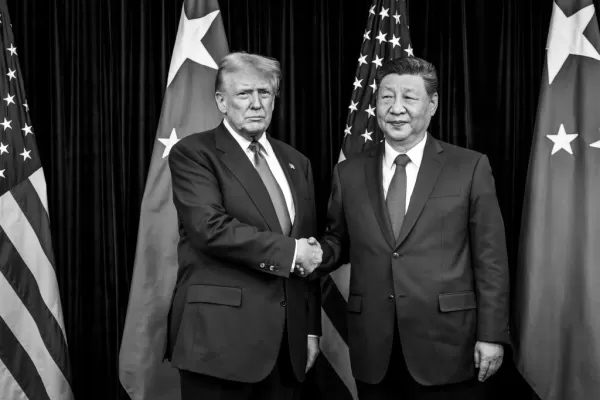 Nvidia H200 China deal survives Trump-Xi summit, but not as expected
President Trump traveled to Beijing with Jensen Huang joining the delegation at the eleventh hour, departing two days later with vague remarks about potential chip export developments. No deal materialized. Since Trump first authorized sales in Decem
Nvidia H200 China deal survives Trump-Xi summit, but not as expected
President Trump traveled to Beijing with Jensen Huang joining the delegation at the eleventh hour, departing two days later with vague remarks about potential chip export developments. No deal materialized. Since Trump first authorized sales in Decem
 Nvidia to Derive 25% of Next Year’s Revenue from Funded Labs
Nvidia has deployed nearly US$50 billion into AI labs purchasing its chips, securing commitments for over $500 billion in total.On August 26, CFO Colette Kress informed analysts that these labs, backed by Nvidia’s balance sheet, will account for roug
Nvidia to Derive 25% of Next Year’s Revenue from Funded Labs
Nvidia has deployed nearly US$50 billion into AI labs purchasing its chips, securing commitments for over $500 billion in total.On August 26, CFO Colette Kress informed analysts that these labs, backed by Nvidia’s balance sheet, will account for roug
 ElevenLabs brings on BlackRock, Jamie Foxx and Longoria as new investors
ElevenLabs, a leader in Voice AI, has announced new participants in its $500 million Series D funding round, initially revealed in February. The investor roster now features major institutions like BlackRock, Wellington, D.E. Shaw, and Schroders, alo
ElevenLabs brings on BlackRock, Jamie Foxx and Longoria as new investors
ElevenLabs, a leader in Voice AI, has announced new participants in its $500 million Series D funding round, initially revealed in February. The investor roster now features major institutions like BlackRock, Wellington, D.E. Shaw, and Schroders, alo

2026 Latest Top-rated AI Illustration Tools: Our curated list features the best powerfully designed tools for creating stunning editorial scenes and eye-catching cover art quickly. Each option has gone through rigorous real-world tests, offering a free vs paid comparison to help you find the perfect match for your workflow. Try these must-try solutions today to unlock your AI edge and boost your creative productivity. Explore now at XIX.AI.
10 tools
xix.ai

2026 Latest Top-Rated Best AI Tutors for Exam Prep are here on XIX.AI! Our curated list features powerful game-changing tools that offer free vs paid comparison, real-world tests, and weekly updated rankings. They help boost your writing efficiency, simplify complex topic learning, and unlock your academic potential. Explore now to Discover your perfect exam prep tool and Start creating today to Unlock your AI edge!
10 tools
xix.ai

2026 Latest Best Top-Rated AI Budget Planning Tools for Personal Money Management are here on XIX.AI! This curated collection features powerful, game-changing solutions that help you conduct real-world tests, understand spending habits, and create personalized plans to boost productivity. Enjoy a free vs paid comparison along with detailed rankings. Must-try tools designed to simplify money management and unlock your AI edge. Explore now!
11 tools
xix.ai

2026 Latest Best Top-Rated AI Sleep Tracking Assistants curated for ultimate recovery. This fully updated weekly guide features powerful tools that deliver real-world tests, free vs paid comparison, and detailed rankings to help you find the must-try solution that boosts sleep quality and supports better bedtime habits. Explore now at XIX.AI to Unlock your AI edge.
10 tools
xix.ai

2026 Latest Best Top-Rated AI SQL Copilots for Product and Revenue Analytics! XIX.AI has curated a powerful, game-changing collection of must-try tools that undergo real-world tests through weekly updated rankings. These tools help users boost productivity significantly by accelerating data analysis, streamlining complex queries, and generating accurate insights to drive smarter business decisions. Explore now to Discover your perfect tool for unlocking your AI edge!
14 tools
xix.ai

2026 Latest Best Top-Rated AI Homework Helpers That Teach Core Concepts Not Just Answers Powerful Tools for Students Must-Try Curated List Weekly Updated Free vs Paid Comparison Real-World Tests Accurate Rankings to Help You Unlock Your Full Learning Potential Explore now to Discover your perfect tool for smarter studying.
10 tools
xix.ai

About time! The US needs more chip manufacturing 🇺🇸 But will this actually reduce costs or just make Nvidia even richer? Their GPUs are already priced like luxury cars 🚗💰
Nvidia's going all-in on U.S. AI chip production? That's a bold move! Excited to see how this shakes up the tech scene, but I wonder if they can keep up with the global demand. 🇺🇸💻
Nvidia aumentando a produção de chips de IA nos EUA? Isso é enorme! Mais empregos, mais tecnologia, e espero que chips mais baratos. Mas cara, aquelas fábricas no Arizona e no Texas vão ser quentes! 🔥 Espero que mantenham o ar-condicionado ligado. Ansioso para ver o que vai sair disso!
¿Nvidia aumentando la producción de chips de IA en EE.UU.? ¡Eso es enorme! Más empleos, más tecnología, y espero que chips más baratos. Pero hombre, esas fábricas en Arizona y Texas van a estar calientes! 🔥 Espero que mantengan el aire acondicionado funcionando. ¡Emocionado por ver qué sale de esto!
Es genial que Nvidia esté invirtiendo en la fabricación de chips de IA en EE.UU., pero esperemos que esto no aumente demasiado el costo final. Me preocupa también el impacto ambiental 💚
미국에서의 AI 칩 생산 증대는 정말 환영할 만한 소식입니다! 하지만 환경적 영향은 꼭 고려해야겠죠. 지속 가능한 방식으로 진행되길 바랍니다 😊












