Home
HomeNubia AI Phone Partners with Doubao for Voice-Activated Cross-Application Control

At MWC 2026, the Mobile World Congress in Barcelona, Spain, ZTE globally launched the latest breakthroughs from its "AI for All" strategy. The headline-grabbing device was the AI-native smartphone - the nubia M153, co-developed by ZTE and ByteDance.
This phone represents more than advanced hardware; it signifies a powerful partnership within China's AI ecosystem.
1. Deep DouBao Integration: "Autonomous" Multi-App Operation
The core of the nubia M153 is its built-in DouBao Phone Assistant:
Cross-App Command Execution: Moving beyond simple voice chats, this assistant achieves deep system integration. A single, complex command can trigger actions across multiple third-party apps. For example: "Send the last three photos from my gallery to Manager Zhang on WeChat, and book a flight to Shanghai for tomorrow."
AI-Native Interaction: Leveraging ByteDance's underlying large language model, DouBao accurately comprehends complex instructions and safely executes multi-step tasks in the background.
2. An Emotional Companion: The Healing Robot iMoochi
Alongside the phone, ZTE unveiled an emotionally intelligent AI product—iMoochi:
Interactive Design: Featuring a round, adorable form, iMoochi uses built-in sensors to respond to touch. Petting it elicits reactions through screen expressions, sounds, and physical movement.
Emotion Recognition: Via voice interaction, it can detect user emotions like happiness or sadness, offering personalized comfort or entertainment—positioning itself as a "digital family member" for the modern age.
3. Performance Powerhouse: nubia M153 Hardware Specs
The nubia M153 also delivers top-tier hardware performance:
Processing Power: Powered by the latest Snapdragon 8 Elite (Gen 5) processor, with a 16GB+512GB memory configuration.
Long-Lasting Battery: Houses a substantial 6000mAh battery, supporting 90W wired fast charging and 15W wireless charging to meet the demands of intensive AI tasks.
Imaging Excellence: A rear 50MP main camera, enhanced by AI imaging algorithms, delivers a superior shooting and editing experience.
Industry Perspective: ZTE's Vision for an AI Terminal Ecosystem
Related article
 Google Photos brings Clueless's iconic closet to life with AI
Google Photos announced a new AI-powered feature on Wednesday that will soon turn photos of your clothes into a digital closet, letting you create fresh outfit combinations and even virtually try them on. The concept clearly draws inspiration from Ch
Red Fruit Short Drama Accused of Using AI to Steal Ordinary People’s Faces; No Official Response
The short video industry is currently facing a controversy involving AI-related infringement. Red Fruit Short Drama’s production "The Peach Hairpin" has been accused of using AI to "steal faces"—taking the likenesses of ordinary people without permis
Navigating the New ETSI AI Security Standard
ETSI EN 304 223 establishes foundational security requirements for artificial intelligence that organizations should embed within their governance structures.As enterprises integrate machine learning into core workflows, this European Standard provid
Related Special Topic Recommendations
Productivity
Google Photos brings Clueless's iconic closet to life with AI
Google Photos announced a new AI-powered feature on Wednesday that will soon turn photos of your clothes into a digital closet, letting you create fresh outfit combinations and even virtually try them on. The concept clearly draws inspiration from Ch
Red Fruit Short Drama Accused of Using AI to Steal Ordinary People’s Faces; No Official Response
The short video industry is currently facing a controversy involving AI-related infringement. Red Fruit Short Drama’s production "The Peach Hairpin" has been accused of using AI to "steal faces"—taking the likenesses of ordinary people without permis
Navigating the New ETSI AI Security Standard
ETSI EN 304 223 establishes foundational security requirements for artificial intelligence that organizations should embed within their governance structures.As enterprises integrate machine learning into core workflows, this European Standard provid
Related Special Topic Recommendations
Productivity
 AI Architecture Designers: Build Scalable System Architectures Using Natural Language
Discover the 2026 best AI architecture design tools on XIX.AI. Our curated, top-rated list features powerful, game-changing solutions to build scalable system architectures using natural language. Compare free vs paid options with real-world insights. Unlock your AI edge and streamline development today.
 10 tools
 xix.ai
Comic Creation
AI Character Profile Creators: Generate Detailed Backstories & Visual Refs for Manga Leads
xix.ai
Comic Creation
AI Character Profile Creators: Generate Detailed Backstories & Visual Refs for Manga Leads
2026 Latest Best AI Character Profile Creators: Discover top-rated tools to generate detailed backstories and visual references for your manga leads. Our curated, weekly-updated list compares free vs paid options based on real-world tests. Find powerful, game-changing solutions to craft compelling characters and streamline your creative workflow. Explore the rankings on XIX.AI and unlock your perfect storytelling ally today.
10 tools
xix.ai
Health & Wellness
AI Pregnancy Copilots: Generate Safe Trimester-by-Trimester Workout & Nutrition Plans
Discover the 2026 best AI pregnancy copilots for safe, personalized trimester-by-trimester workout and nutrition plans. Get top-rated, curated recommendations with free vs paid comparisons and real-world insights. Unlock your healthiest pregnancy journey with XIX.AI's expert guide. Explore now.
10 tools
xix.ai
writing
Best Free AI Undetectable Writers: Turn Robotic Drafts into Natural, Human-Like Prose
Discover the 2026 best free undetectable AI writers at XIX.AI. Our top-rated, curated list helps you transform robotic drafts into natural, human-like prose. Compare free vs paid options with real-world tests and weekly updated rankings. Unlock your AI writing edge today.
10 tools
xix.ai
Image editing
AI Art Generators for Short-Drama Storyboards: Fantasy & Urban Romance Characters
2026 Latest: Discover the best AI art generators for short-drama storyboards. Our curated list features top-rated tools for creating compelling fantasy and urban romance characters. Compare free vs paid options, see real-world test results, and find your perfect creative partner. Get weekly updated rankings and expert insights from XIX.AI. Start visualizing your story today!
10 tools
xix.ai
writing
Best AI Scripting Tools for Radio & Podcasting: Write Engaging Audio Commercials
Discover the 2026 best AI scripting tools for radio & podcasting at XIX.AI. Our curated, top-rated list features powerful, game-changing solutions to write engaging audio commercials fast. Compare free vs paid options with real-world tests and weekly updated rankings. Unlock your creative edge today!
10 tools
xix.ai

 Comments (0)
0/500
Comments (0)
0/500
At MWC 2026, the Mobile World Congress in Barcelona, Spain, ZTE globally launched the latest breakthroughs from its "AI for All" strategy. The headline-grabbing device was the AI-native smartphone - the nubia M153, co-developed by ZTE and ByteDance.
This phone represents more than advanced hardware; it signifies a powerful partnership within China's AI ecosystem.
1. Deep DouBao Integration: "Autonomous" Multi-App Operation
The core of the nubia M153 is its built-in DouBao Phone Assistant:
Cross-App Command Execution: Moving beyond simple voice chats, this assistant achieves deep system integration. A single, complex command can trigger actions across multiple third-party apps. For example: "Send the last three photos from my gallery to Manager Zhang on WeChat, and book a flight to Shanghai for tomorrow."
AI-Native Interaction: Leveraging ByteDance's underlying large language model, DouBao accurately comprehends complex instructions and safely executes multi-step tasks in the background.
2. An Emotional Companion: The Healing Robot iMoochi
Alongside the phone, ZTE unveiled an emotionally intelligent AI product—iMoochi:
Interactive Design: Featuring a round, adorable form, iMoochi uses built-in sensors to respond to touch. Petting it elicits reactions through screen expressions, sounds, and physical movement.
Emotion Recognition: Via voice interaction, it can detect user emotions like happiness or sadness, offering personalized comfort or entertainment—positioning itself as a "digital family member" for the modern age.
3. Performance Powerhouse: nubia M153 Hardware Specs
The nubia M153 also delivers top-tier hardware performance:
Processing Power: Powered by the latest Snapdragon 8 Elite (Gen 5) processor, with a 16GB+512GB memory configuration.
Long-Lasting Battery: Houses a substantial 6000mAh battery, supporting 90W wired fast charging and 15W wireless charging to meet the demands of intensive AI tasks.
Imaging Excellence: A rear 50MP main camera, enhanced by AI imaging algorithms, delivers a superior shooting and editing experience.
Industry Perspective: ZTE's Vision for an AI Terminal Ecosystem








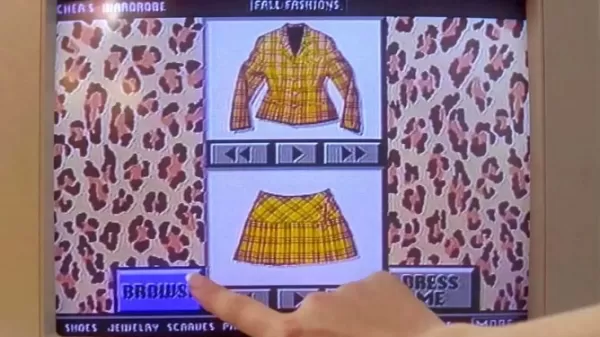 Google Photos brings Clueless's iconic closet to life with AI
Google Photos announced a new AI-powered feature on Wednesday that will soon turn photos of your clothes into a digital closet, letting you create fresh outfit combinations and even virtually try them on. The concept clearly draws inspiration from Ch
Google Photos brings Clueless's iconic closet to life with AI
Google Photos announced a new AI-powered feature on Wednesday that will soon turn photos of your clothes into a digital closet, letting you create fresh outfit combinations and even virtually try them on. The concept clearly draws inspiration from Ch
 Red Fruit Short Drama Accused of Using AI to Steal Ordinary People’s Faces; No Official Response
The short video industry is currently facing a controversy involving AI-related infringement. Red Fruit Short Drama’s production "The Peach Hairpin" has been accused of using AI to "steal faces"—taking the likenesses of ordinary people without permis
Red Fruit Short Drama Accused of Using AI to Steal Ordinary People’s Faces; No Official Response
The short video industry is currently facing a controversy involving AI-related infringement. Red Fruit Short Drama’s production "The Peach Hairpin" has been accused of using AI to "steal faces"—taking the likenesses of ordinary people without permis
 Navigating the New ETSI AI Security Standard
ETSI EN 304 223 establishes foundational security requirements for artificial intelligence that organizations should embed within their governance structures.As enterprises integrate machine learning into core workflows, this European Standard provid
Navigating the New ETSI AI Security Standard
ETSI EN 304 223 establishes foundational security requirements for artificial intelligence that organizations should embed within their governance structures.As enterprises integrate machine learning into core workflows, this European Standard provid
Discover the 2026 best AI architecture design tools on XIX.AI. Our curated, top-rated list features powerful, game-changing solutions to build scalable system architectures using natural language. Compare free vs paid options with real-world insights. Unlock your AI edge and streamline development today.
10 tools
xix.ai

2026 Latest Best AI Character Profile Creators: Discover top-rated tools to generate detailed backstories and visual references for your manga leads. Our curated, weekly-updated list compares free vs paid options based on real-world tests. Find powerful, game-changing solutions to craft compelling characters and streamline your creative workflow. Explore the rankings on XIX.AI and unlock your perfect storytelling ally today.
10 tools
xix.ai

Discover the 2026 best AI pregnancy copilots for safe, personalized trimester-by-trimester workout and nutrition plans. Get top-rated, curated recommendations with free vs paid comparisons and real-world insights. Unlock your healthiest pregnancy journey with XIX.AI's expert guide. Explore now.
10 tools
xix.ai
Discover the 2026 best free undetectable AI writers at XIX.AI. Our top-rated, curated list helps you transform robotic drafts into natural, human-like prose. Compare free vs paid options with real-world tests and weekly updated rankings. Unlock your AI writing edge today.
10 tools
xix.ai

2026 Latest: Discover the best AI art generators for short-drama storyboards. Our curated list features top-rated tools for creating compelling fantasy and urban romance characters. Compare free vs paid options, see real-world test results, and find your perfect creative partner. Get weekly updated rankings and expert insights from XIX.AI. Start visualizing your story today!
10 tools
xix.ai
Discover the 2026 best AI scripting tools for radio & podcasting at XIX.AI. Our curated, top-rated list features powerful, game-changing solutions to write engaging audio commercials fast. Compare free vs paid options with real-world tests and weekly updated rankings. Unlock your creative edge today!
10 tools
xix.ai