


 Home
HomeWhat is the future of Nigerian churches with AI and transformation in 2025?
In a time of rapid technological and social shifts, the nature of faith is changing significantly, especially within churches in Nigeria. This article explores urgent concerns for contemporary Christians, from grappling with difficult doctrines and the potential abuse of authority to the adoption of artificial intelligence (AI) in spiritual learning. It serves as a plea for spiritual wisdom, encouraging believers to pursue an authentic connection with God that transcends the boundaries of religious organizations.
Key Points
The changing function of faith in modern Nigerian society.
Difficulties confronting traditional doctrines and practices in some churches.
The arrival and consequences of AI in religious instruction.
An encouragement for personal spiritual judgment and an individual relationship with God.
The necessity of critically assessing religious instructions and customs.
The Shifting Sands of Faith: Challenges and Controversies
Challenging Doctrines and Practices in Nigerian Churches
Many Nigerian churches are under growing examination due to doctrines and practices that some consider controversial or deceptive. These issues often involve scriptural interpretation, the function of leadership, and a focus on material prosperity. A rising number of people are asking if specific teachings truly reflect Christ's central message, particularly regarding humility, service, and authentic love.
The prosperity gospel, for example, which highlights financial success as evidence of divine favor, has been criticized for possibly encouraging materialism and fostering dependency on religious figures.
It is increasingly vital for believers to approach their faith with a critical but discerning mindset, weighing teachings against the foundational tenets of Christianity found in the Bible. The need to establish a personal connection with and comprehension of God is far more important than institutional obedience and conformity. Some leaders place themselves above scripture, which directly contradicts the biblical encouragement of free will and spiritual independence.
This is particularly relevant as artificial intelligence begins to assist with biblical teaching and interpretation. While innovation is generally positive, it is equally crucial to maintain integrity in one's faith and ensure these new methods are ethically sound.
The Rise of 'Ask Kumuyi AI': AI and Religious Education
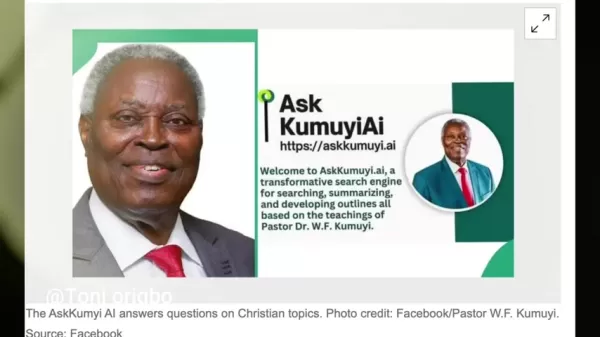
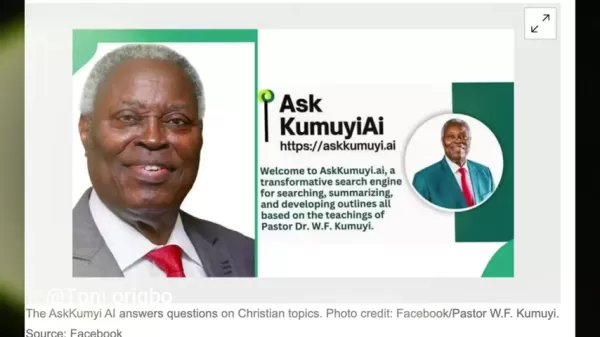
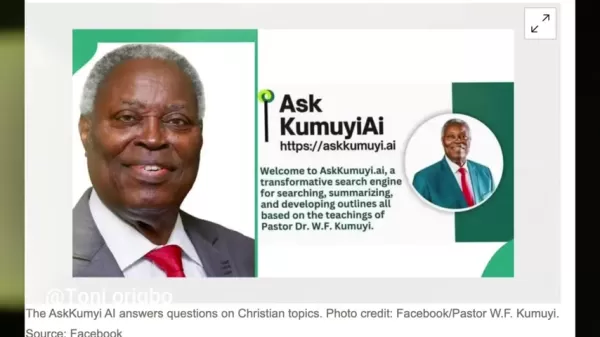
The introduction of AI-powered tools in religious education offers both potential benefits and concerns. A prominent example is "Ask Kumuyi AI," a chatbot designed to answer Christian questions based on the teachings of Pastor W.F. Kumuyi, General Superintendent of the Deeper Christian Life Bible Church. This project aims to deliver quick and accessible responses to complex theological queries, similar to platforms like ChatGPT.
Ask Kumuyi AI can be accessed through the following URL:https://askkumuyi.ai.
While such tools can improve learning and offer convenient access to religious knowledge, several worries emerge. Firstly, dependence on a single source, in this case Pastor Kumuyi's teachings, may restrict exposure to the diverse viewpoints and interpretations found within Christianity. Secondly, AI's inability for critical thought and nuanced contextual understanding could result in oversimplified or incorrect answers. The value of faith lies in free will, and connecting with God through one's own understanding is essential, not merely accepting information at face value. There is a danger that AI may provide incomplete, biased, or inaccurate information, especially on ethical matters without unanimous agreement. The remedy for this is a commitment to forming one's own informed perspective, which some leaders may discourage.
Christians might use AI to gain broader knowledge on topics such as:
- Key Christian Figures: AI could offer detailed biographies of significant individuals like Jesus Christ, the apostles, and influential theologians, including their lives, teachings, and impact on Christian history and thought.
- Biblical Texts: It can aid in studying the Old and New Testaments by providing book summaries, analysis of key passages, and insights into the historical and cultural settings of the scriptures.
- Christian Doctrines: AI can explain core Christian doctrines such as the Trinity, the Incarnation, atonement, grace, and salvation. It can clarify these theological ideas, trace their historical development, and present various viewpoints.
- Christian History: It can provide timelines, narratives, and analysis of major events in Christian history, from the early church to the Reformation and modern times. AI can deliver detailed accounts of pivotal periods, movements, and figures that have shaped the Christian tradition.
- Ethical Issues: AI can help explore ethical questions from a Christian perspective, including topics in bioethics, social justice, environmental care, and personal morality. It can present differing Christian viewpoints and offer resources for ethical decision-making grounded in biblical principles and theological insight. It remains important to stay objective and form one's own conclusions.
A Call to Spiritual Discernment
Seeking a Personal Connection with God
Given these challenges, the need for individual spiritual discernment and a direct relationship with God is crucial. Instead of unquestioningly following religious leaders or relying only on AI-generated answers, believers are urged to actively study scripture, seek direction through prayer, and develop a personal understanding of God's will.
It is essential to cultivate the ability to critically evaluate religious teachings, measuring them against Christianity's core principles to see if they foster genuine love, humility, and service. Achieving this can be assisted by:
- Identifying False Teachers: Recognize the warning signs of misleading teachers and doctrines within Christianity.
- Praying for Discernment: Continuously ask for God's guidance and wisdom to distinguish truth from error.
- Examining the Fruit: Assess teachers and their teachings by evaluating the outcomes they produce, both in their own lives and in their followers. This is a key step in learning to identify false teachings.
- Staying Rooted in Scripture: Develop a deep understanding of the Word of God and remain firmly grounded in its teachings.
The pursuit of knowledge is a noble and necessary part of faith, yet it demands a personal connection with the divine.
This personal spiritual growth can be accelerated through a combination of the following:
Cons
istent prayer and meditation. Maintaining communication with God is vital.- Critical self-reflection to ensure alignment with core Christian values.
- Service to others to embody the essence of Christ's teachings.
These practices help you discern God's true will, even when it conflicts with the influence of other "leaders."
Evaluating the Introduction of AI in Churches
Pros
Greater access to religious information and teachings.
Potential for customized learning experiences.
Efficiency in addressing common faith-related questions.
24/7 availability of religious resources.
Cons
Potential for biased or incorrect interpretations.
Lack of critical thinking and nuanced comprehension.
Risk of over-reliance on AI, weakening one's personal connection with God.
Dependence on AI for knowledge might discourage deeper personal study of faith.
Frequently Asked Questions
What are the key issues facing faith in Nigeria today?
Key issues involve the interpretation of scriptures, the role of church leadership, the misuse of power, and an emphasis on material wealth. Some leaders have also faced scrutiny and controversy over ethical conduct, causing people to question their spiritual sincerity.
Is AI a threat to traditional religious teachings?
AI presents both opportunities and risks. It provides easy access to information but carries the danger of oversimplification, misinterpretation, and bias. Individuals must use discernment and maintain a critical outlook.
How can individuals promote change for corruption or malpractice in Church leadership?
Promote change from within. By staying in the organization, you can work to influence internal reforms and advocate for ethical governance. It is also important to voice concerns against injustice. Addressing abuse and corruption in the church requires courage and determination.
Related Questions
What is the role of a pastor in Nigeria?
A pastor in Nigeria acts as a spiritual leader, teacher, and community organizer within a Christian church. Their duties typically include preaching sermons, offering pastoral care and counseling, conducting religious ceremonies, leading worship, and managing church operations. Pastors are central to interpreting the Bible, providing moral and spiritual guidance, and supporting congregants in times of need. In many Nigerian communities, pastors are influential figures who engage with social issues, promote ethical governance, and contribute to community development through charity and outreach. Nigeria hosts some of the world's largest churches and most influential pastors. These leaders often have significant impact on their congregations, shape public opinion, and participate in political dialogue. Their teachings, leadership approaches, and evangelism methods have profoundly influenced the country's religious landscape, contributing to its dynamic Christian community. With sermons broadcast on national TV and radio, Nigerian pastors have a wide platform to share their messages and mobilize followers on various religious and social matters. Recent controversies surrounding some pastors' personal lives have also led to questions about their motivations.
Related article
 Former OpenAI Researcher Barrett Zoph Returns to Google to Support Gemini Development
Barret Zoph, who previously abruptly left and joined OpenAI due to a disagreement with Thinking Machines Lab CEO Miriam Mularati, has once again changed employers. Alphabet's Google announced that Zoph will return as Vice President of Research, bring
How Recursive Intelligence Raised $335M at $4B Valuation in 4 Months
The co-founders of startup Ricursive Intelligence seemed destined to be co-founders.Anna Goldie, CEO, and Azalia Mirhoseini, CTO, are so well-known in the AI community that they were among those AI engineers who “got those weird emails from Zuckerber
AI race won’t wait, nor will this TechCrunch Disrupt 25% discount
Every founder building in AI right now is asking the same question: Are we moving fast enough, and effectively enough? TechCrunch Disrupt 2026 puts you in the same room as the people wrestling with that existential question at the highest levels. Fro
Related Special Topic Recommendations
Design & Art
Former OpenAI Researcher Barrett Zoph Returns to Google to Support Gemini Development
Barret Zoph, who previously abruptly left and joined OpenAI due to a disagreement with Thinking Machines Lab CEO Miriam Mularati, has once again changed employers. Alphabet's Google announced that Zoph will return as Vice President of Research, bring
How Recursive Intelligence Raised $335M at $4B Valuation in 4 Months
The co-founders of startup Ricursive Intelligence seemed destined to be co-founders.Anna Goldie, CEO, and Azalia Mirhoseini, CTO, are so well-known in the AI community that they were among those AI engineers who “got those weird emails from Zuckerber
AI race won’t wait, nor will this TechCrunch Disrupt 25% discount
Every founder building in AI right now is asking the same question: Are we moving fast enough, and effectively enough? TechCrunch Disrupt 2026 puts you in the same room as the people wrestling with that existential question at the highest levels. Fro
Related Special Topic Recommendations
Design & Art
 Top AI Illustration Tools: Create Editorial Scenes and Cover Art Faster
2026 Latest Top-rated AI Illustration Tools: Our curated list features the best powerfully designed tools for creating stunning editorial scenes and eye-catching cover art quickly. Each option has gone through rigorous real-world tests, offering a free vs paid comparison to help you find the perfect match for your workflow. Try these must-try solutions today to unlock your AI edge and boost your creative productivity. Explore now at XIX.AI.
 10 tools
 xix.ai
Education and Learning
Top AI Tutors for Exam Prep: Practice Math, Science, and English
xix.ai
Education and Learning
Top AI Tutors for Exam Prep: Practice Math, Science, and English
2026 Latest Top-Rated Best AI Tutors for Exam Prep are here on XIX.AI! Our curated list features powerful game-changing tools that offer free vs paid comparison, real-world tests, and weekly updated rankings. They help boost your writing efficiency, simplify complex topic learning, and unlock your academic potential. Explore now to Discover your perfect exam prep tool and Start creating today to Unlock your AI edge!
10 tools
xix.ai
Finance
AI Budget Planning Tools for Personal Money Management
2026 Latest Best Top-Rated AI Budget Planning Tools for Personal Money Management are here on XIX.AI! This curated collection features powerful, game-changing solutions that help you conduct real-world tests, understand spending habits, and create personalized plans to boost productivity. Enjoy a free vs paid comparison along with detailed rankings. Must-try tools designed to simplify money management and unlock your AI edge. Explore now!
11 tools
xix.ai
Health & Wellness
AI Sleep Tracking Assistants: Improve Recovery with Better Bedtime Habits
2026 Latest Best Top-Rated AI Sleep Tracking Assistants curated for ultimate recovery. This fully updated weekly guide features powerful tools that deliver real-world tests, free vs paid comparison, and detailed rankings to help you find the must-try solution that boosts sleep quality and supports better bedtime habits. Explore now at XIX.AI to Unlock your AI edge.
10 tools
xix.ai
Data Analysis
AI SQL Copilots for Product and Revenue Analytics
2026 Latest Best Top-Rated AI SQL Copilots for Product and Revenue Analytics! XIX.AI has curated a powerful, game-changing collection of must-try tools that undergo real-world tests through weekly updated rankings. These tools help users boost productivity significantly by accelerating data analysis, streamlining complex queries, and generating accurate insights to drive smarter business decisions. Explore now to Discover your perfect tool for unlocking your AI edge!
14 tools
xix.ai
Education and Learning
Best AI Homework Helpers That Teach: Learn Concepts, Not Just Answers
2026 Latest Best Top-Rated AI Homework Helpers That Teach Core Concepts Not Just Answers Powerful Tools for Students Must-Try Curated List Weekly Updated Free vs Paid Comparison Real-World Tests Accurate Rankings to Help You Unlock Your Full Learning Potential Explore now to Discover your perfect tool for smarter studying.
10 tools
xix.ai

 Comments (3)
0/500
Comments (3)
0/500
![JohnAllen]()
Wait, so Nigerian churches are embracing AI? That's either a brilliant move or a recipe for robot pastors baptizing people via drone 😂. I'm all for tech, but can an algorithm handle spiritual counseling? Curious to see if this will boost attendance or just create more confusion in 2025.
![AlbertAllen]()
Interesting read! I've always wondered how AI could be integrated into spiritual practices. Maybe it could help with sermon prep or community outreach logistics? But the human touch in faith is irreplaceable. Curious to see how this plays out in Nigeria specifically. 🤔
![DouglasCarter]()
Случайно наткнулся на эту статью. Очень интересно, как технологии изменят религиозные практики в Нигерии. 🤔 Может, скоро появятся AI-пасторы? Но не потеряется ли человеческое общение в церкви? Впрочем, будущее покажет...
In a time of rapid technological and social shifts, the nature of faith is changing significantly, especially within churches in Nigeria. This article explores urgent concerns for contemporary Christians, from grappling with difficult doctrines and the potential abuse of authority to the adoption of artificial intelligence (AI) in spiritual learning. It serves as a plea for spiritual wisdom, encouraging believers to pursue an authentic connection with God that transcends the boundaries of religious organizations.
Key Points
The changing function of faith in modern Nigerian society.
Difficulties confronting traditional doctrines and practices in some churches.
The arrival and consequences of AI in religious instruction.
An encouragement for personal spiritual judgment and an individual relationship with God.
The necessity of critically assessing religious instructions and customs.
The Shifting Sands of Faith: Challenges and Controversies
Challenging Doctrines and Practices in Nigerian Churches
Many Nigerian churches are under growing examination due to doctrines and practices that some consider controversial or deceptive. These issues often involve scriptural interpretation, the function of leadership, and a focus on material prosperity. A rising number of people are asking if specific teachings truly reflect Christ's central message, particularly regarding humility, service, and authentic love.
The prosperity gospel, for example, which highlights financial success as evidence of divine favor, has been criticized for possibly encouraging materialism and fostering dependency on religious figures.
It is increasingly vital for believers to approach their faith with a critical but discerning mindset, weighing teachings against the foundational tenets of Christianity found in the Bible. The need to establish a personal connection with and comprehension of God is far more important than institutional obedience and conformity. Some leaders place themselves above scripture, which directly contradicts the biblical encouragement of free will and spiritual independence.
This is particularly relevant as artificial intelligence begins to assist with biblical teaching and interpretation. While innovation is generally positive, it is equally crucial to maintain integrity in one's faith and ensure these new methods are ethically sound.
The Rise of 'Ask Kumuyi AI': AI and Religious Education
The introduction of AI-powered tools in religious education offers both potential benefits and concerns. A prominent example is "Ask Kumuyi AI," a chatbot designed to answer Christian questions based on the teachings of Pastor W.F. Kumuyi, General Superintendent of the Deeper Christian Life Bible Church. This project aims to deliver quick and accessible responses to complex theological queries, similar to platforms like ChatGPT.
Ask Kumuyi AI can be accessed through the following URL:https://askkumuyi.ai.
While such tools can improve learning and offer convenient access to religious knowledge, several worries emerge. Firstly, dependence on a single source, in this case Pastor Kumuyi's teachings, may restrict exposure to the diverse viewpoints and interpretations found within Christianity. Secondly, AI's inability for critical thought and nuanced contextual understanding could result in oversimplified or incorrect answers. The value of faith lies in free will, and connecting with God through one's own understanding is essential, not merely accepting information at face value. There is a danger that AI may provide incomplete, biased, or inaccurate information, especially on ethical matters without unanimous agreement. The remedy for this is a commitment to forming one's own informed perspective, which some leaders may discourage.
Christians might use AI to gain broader knowledge on topics such as:
- Key Christian Figures: AI could offer detailed biographies of significant individuals like Jesus Christ, the apostles, and influential theologians, including their lives, teachings, and impact on Christian history and thought.
- Biblical Texts: It can aid in studying the Old and New Testaments by providing book summaries, analysis of key passages, and insights into the historical and cultural settings of the scriptures.
- Christian Doctrines: AI can explain core Christian doctrines such as the Trinity, the Incarnation, atonement, grace, and salvation. It can clarify these theological ideas, trace their historical development, and present various viewpoints.
- Christian History: It can provide timelines, narratives, and analysis of major events in Christian history, from the early church to the Reformation and modern times. AI can deliver detailed accounts of pivotal periods, movements, and figures that have shaped the Christian tradition.
- Ethical Issues: AI can help explore ethical questions from a Christian perspective, including topics in bioethics, social justice, environmental care, and personal morality. It can present differing Christian viewpoints and offer resources for ethical decision-making grounded in biblical principles and theological insight. It remains important to stay objective and form one's own conclusions.
A Call to Spiritual Discernment
Seeking a Personal Connection with God
Given these challenges, the need for individual spiritual discernment and a direct relationship with God is crucial. Instead of unquestioningly following religious leaders or relying only on AI-generated answers, believers are urged to actively study scripture, seek direction through prayer, and develop a personal understanding of God's will.
It is essential to cultivate the ability to critically evaluate religious teachings, measuring them against Christianity's core principles to see if they foster genuine love, humility, and service. Achieving this can be assisted by:
- Identifying False Teachers: Recognize the warning signs of misleading teachers and doctrines within Christianity.
- Praying for Discernment: Continuously ask for God's guidance and wisdom to distinguish truth from error.
- Examining the Fruit: Assess teachers and their teachings by evaluating the outcomes they produce, both in their own lives and in their followers. This is a key step in learning to identify false teachings.
- Staying Rooted in Scripture: Develop a deep understanding of the Word of God and remain firmly grounded in its teachings.
The pursuit of knowledge is a noble and necessary part of faith, yet it demands a personal connection with the divine.
This personal spiritual growth can be accelerated through a combination of the following:
Cons
istent prayer and meditation. Maintaining communication with God is vital.- Critical self-reflection to ensure alignment with core Christian values.
- Service to others to embody the essence of Christ's teachings.
These practices help you discern God's true will, even when it conflicts with the influence of other "leaders."
Evaluating the Introduction of AI in Churches
Pros
Greater access to religious information and teachings.
Potential for customized learning experiences.
Efficiency in addressing common faith-related questions.
24/7 availability of religious resources.
Cons
Potential for biased or incorrect interpretations.
Lack of critical thinking and nuanced comprehension.
Risk of over-reliance on AI, weakening one's personal connection with God.
Dependence on AI for knowledge might discourage deeper personal study of faith.
Frequently Asked Questions
What are the key issues facing faith in Nigeria today?
Key issues involve the interpretation of scriptures, the role of church leadership, the misuse of power, and an emphasis on material wealth. Some leaders have also faced scrutiny and controversy over ethical conduct, causing people to question their spiritual sincerity.
Is AI a threat to traditional religious teachings?
AI presents both opportunities and risks. It provides easy access to information but carries the danger of oversimplification, misinterpretation, and bias. Individuals must use discernment and maintain a critical outlook.
How can individuals promote change for corruption or malpractice in Church leadership?
Promote change from within. By staying in the organization, you can work to influence internal reforms and advocate for ethical governance. It is also important to voice concerns against injustice. Addressing abuse and corruption in the church requires courage and determination.
Related Questions
What is the role of a pastor in Nigeria?
A pastor in Nigeria acts as a spiritual leader, teacher, and community organizer within a Christian church. Their duties typically include preaching sermons, offering pastoral care and counseling, conducting religious ceremonies, leading worship, and managing church operations. Pastors are central to interpreting the Bible, providing moral and spiritual guidance, and supporting congregants in times of need. In many Nigerian communities, pastors are influential figures who engage with social issues, promote ethical governance, and contribute to community development through charity and outreach. Nigeria hosts some of the world's largest churches and most influential pastors. These leaders often have significant impact on their congregations, shape public opinion, and participate in political dialogue. Their teachings, leadership approaches, and evangelism methods have profoundly influenced the country's religious landscape, contributing to its dynamic Christian community. With sermons broadcast on national TV and radio, Nigerian pastors have a wide platform to share their messages and mobilize followers on various religious and social matters. Recent controversies surrounding some pastors' personal lives have also led to questions about their motivations.








 Former OpenAI Researcher Barrett Zoph Returns to Google to Support Gemini Development
Barret Zoph, who previously abruptly left and joined OpenAI due to a disagreement with Thinking Machines Lab CEO Miriam Mularati, has once again changed employers. Alphabet's Google announced that Zoph will return as Vice President of Research, bring
Former OpenAI Researcher Barrett Zoph Returns to Google to Support Gemini Development
Barret Zoph, who previously abruptly left and joined OpenAI due to a disagreement with Thinking Machines Lab CEO Miriam Mularati, has once again changed employers. Alphabet's Google announced that Zoph will return as Vice President of Research, bring
 How Recursive Intelligence Raised $335M at $4B Valuation in 4 Months
The co-founders of startup Ricursive Intelligence seemed destined to be co-founders.Anna Goldie, CEO, and Azalia Mirhoseini, CTO, are so well-known in the AI community that they were among those AI engineers who “got those weird emails from Zuckerber
How Recursive Intelligence Raised $335M at $4B Valuation in 4 Months
The co-founders of startup Ricursive Intelligence seemed destined to be co-founders.Anna Goldie, CEO, and Azalia Mirhoseini, CTO, are so well-known in the AI community that they were among those AI engineers who “got those weird emails from Zuckerber
 AI race won’t wait, nor will this TechCrunch Disrupt 25% discount
Every founder building in AI right now is asking the same question: Are we moving fast enough, and effectively enough? TechCrunch Disrupt 2026 puts you in the same room as the people wrestling with that existential question at the highest levels. Fro
AI race won’t wait, nor will this TechCrunch Disrupt 25% discount
Every founder building in AI right now is asking the same question: Are we moving fast enough, and effectively enough? TechCrunch Disrupt 2026 puts you in the same room as the people wrestling with that existential question at the highest levels. Fro

2026 Latest Top-rated AI Illustration Tools: Our curated list features the best powerfully designed tools for creating stunning editorial scenes and eye-catching cover art quickly. Each option has gone through rigorous real-world tests, offering a free vs paid comparison to help you find the perfect match for your workflow. Try these must-try solutions today to unlock your AI edge and boost your creative productivity. Explore now at XIX.AI.
10 tools
xix.ai

2026 Latest Top-Rated Best AI Tutors for Exam Prep are here on XIX.AI! Our curated list features powerful game-changing tools that offer free vs paid comparison, real-world tests, and weekly updated rankings. They help boost your writing efficiency, simplify complex topic learning, and unlock your academic potential. Explore now to Discover your perfect exam prep tool and Start creating today to Unlock your AI edge!
10 tools
xix.ai

2026 Latest Best Top-Rated AI Budget Planning Tools for Personal Money Management are here on XIX.AI! This curated collection features powerful, game-changing solutions that help you conduct real-world tests, understand spending habits, and create personalized plans to boost productivity. Enjoy a free vs paid comparison along with detailed rankings. Must-try tools designed to simplify money management and unlock your AI edge. Explore now!
11 tools
xix.ai

2026 Latest Best Top-Rated AI Sleep Tracking Assistants curated for ultimate recovery. This fully updated weekly guide features powerful tools that deliver real-world tests, free vs paid comparison, and detailed rankings to help you find the must-try solution that boosts sleep quality and supports better bedtime habits. Explore now at XIX.AI to Unlock your AI edge.
10 tools
xix.ai

2026 Latest Best Top-Rated AI SQL Copilots for Product and Revenue Analytics! XIX.AI has curated a powerful, game-changing collection of must-try tools that undergo real-world tests through weekly updated rankings. These tools help users boost productivity significantly by accelerating data analysis, streamlining complex queries, and generating accurate insights to drive smarter business decisions. Explore now to Discover your perfect tool for unlocking your AI edge!
14 tools
xix.ai

2026 Latest Best Top-Rated AI Homework Helpers That Teach Core Concepts Not Just Answers Powerful Tools for Students Must-Try Curated List Weekly Updated Free vs Paid Comparison Real-World Tests Accurate Rankings to Help You Unlock Your Full Learning Potential Explore now to Discover your perfect tool for smarter studying.
10 tools
xix.ai

Wait, so Nigerian churches are embracing AI? That's either a brilliant move or a recipe for robot pastors baptizing people via drone 😂. I'm all for tech, but can an algorithm handle spiritual counseling? Curious to see if this will boost attendance or just create more confusion in 2025.
Interesting read! I've always wondered how AI could be integrated into spiritual practices. Maybe it could help with sermon prep or community outreach logistics? But the human touch in faith is irreplaceable. Curious to see how this plays out in Nigeria specifically. 🤔
Случайно наткнулся на эту статью. Очень интересно, как технологии изменят религиозные практики в Нигерии. 🤔 Может, скоро появятся AI-пасторы? Но не потеряется ли человеческое общение в церкви? Впрочем, будущее покажет...












