


 Home
HomeHow to transform photos into music with Mozart AI in 2026? Guide and safety review.
Artificial Intelligence (AI) is opening up exciting new possibilities in music creation, making it more accessible for people to express their creativity. Leading this innovation is Mozart AI, a tool that uniquely converts visual content into personalized musical pieces. This guide examines Mozart AI's features, real-world uses, pricing, and overall value for musicians of all experience levels. The idea of turning cherished photos into engaging audio tracks is now a reality with Mozart AI.
Key Points
Mozart AI uses sophisticated AI to generate distinctive songs from images.
It supports both text and photo inputs for music generation.
Users can customize style, genre, and vocal elements.
The platform features an intuitive interface suitable for beginners and experts.
Daily free music creation encourages ongoing creative exploration.
Potential limitations include ad-supported free usage and in-app purchases for premium features.
Unveiling Mozart AI: The AI Music Revolution
What is Mozart AI?
Mozart AI is a creative application that enables users to produce music from their photographs.
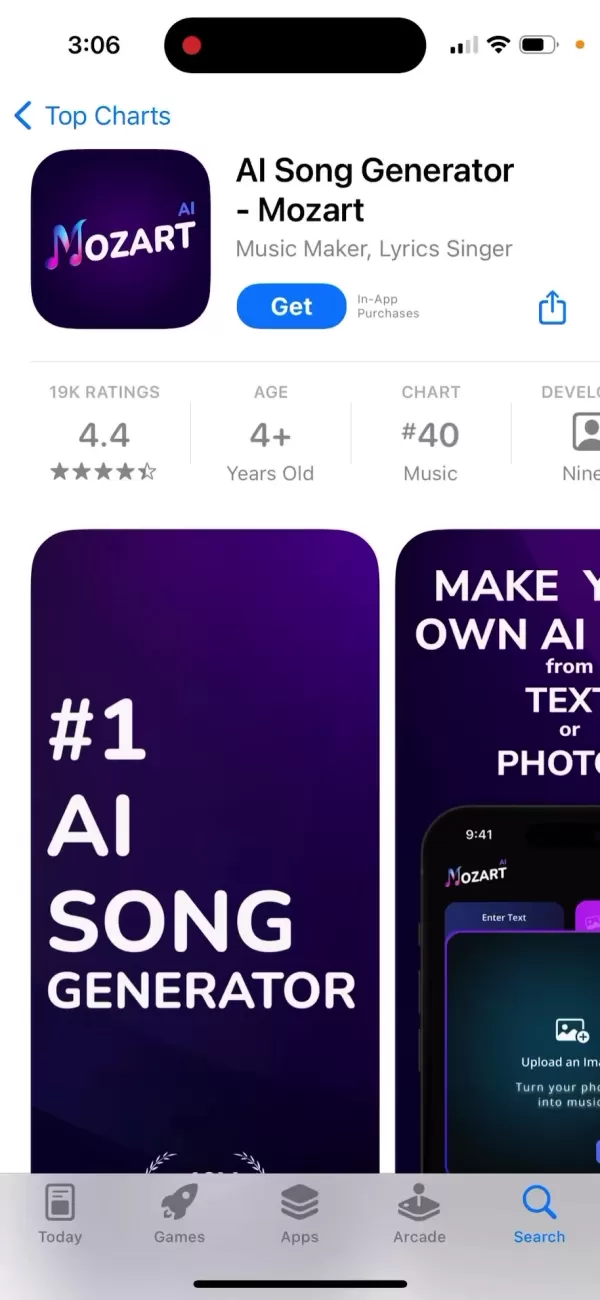
Using advanced Artificial Intelligence, Mozart AI examines visual components in pictures and converts them into musical notes, rhythms, and melodies. Whether you're a budding artist, professional musician, or simply fascinated by the intersection of art and technology, Mozart AI offers an accessible platform to unleash your creative potential. With more than 10 million users already enjoying its capabilities, Mozart AI is clearly expanding the horizons of music production.
The Core Concept: Image-to-Music Transformation
The fundamental principle of Mozart AI is its capacity to interpret images and transform them into auditory experiences. When a user uploads a photo, the AI system detects various image characteristics including colors, textures, and composition. These elements are then converted into musical components such as pitch, tempo, and instrumentation.
Consider this example: A peaceful sunset photograph might generate warm, calming chords, while its smooth textures could inspire a gentle, flowing melody. The sunset's composition—perhaps the sun's position on the horizon—might influence the song's structure and arrangement. This novel approach provides users with a fresh, engaging, and accessible medium for artistic expression.
Mozart AI: A Closer Look at The Technical Aspects
AI Algorithms and Image Analysis
Mozart AI utilizes sophisticated AI algorithms to examine images and produce corresponding music. The technology identifies prominent colors, textures, and objects, translating these visual elements into musical parameters. For example, a bright sunset image might evoke warm, harmonious chords, while a stormy seascape could generate intense, dramatic rhythms. This detailed process maintains a coherent connection between visual inputs and musical results. Image clarity significantly influences the AI's interpretation, with well-defined images producing the most successful musical conversions. The incorporation of machine learning enables continuous refinement of visual interpretation and enhancement of musical composition quality. This ongoing improvement makes each new creation more sophisticated and aligned with user expectations. AI's capacity to interpret and create boosts creativity and personalization, making distinctive music more achievable for everyone. Mozart AI leverages AI's visual interpretation capabilities to produce personalized songs. Through AI-powered features like style customization, users can create compositions that uniquely reflect image characteristics, strengthening their connection to artistic vision. Mozart AI enables users to realize creative concepts more easily than before, blending art and technology for exceptional outcomes. Ultimately, the advanced AI algorithms allow anyone to discover musical landscapes, converting photos into immersive songs. This combination of visual and auditory experiences opens new creative pathways, transforming visual inspiration into original musical works.
Getting Started with Mozart AI: A Step-by-Step Guide
Step 1: Upload Your Photo
Begin your musical journey by uploading an inspiring photo. This could be a personal picture, landscape, or any image that sparks your creativity. For optimal results, choose a clear, well-composed image.
Step 2: Choose Your Preferred Genre and Style
After uploading your photo, select the musical genre and style that best suit the image's atmosphere. Options include pop, rock, jazz, electronic, or reggae. You can also specify a mood such as romantic, energetic, or melancholic to refine the composition.
Step 3: Click 'Create' and Let Mozart AI Work Its Magic
Once you've set your preferences, click 'Create' and allow Mozart AI to analyze your photo and generate music. This typically takes one to two minutes. During this process, the AI algorithms convert visual elements into corresponding musical components.
Step 4: Review and Share Your Masterpiece
Listen to the generated music once it's ready. You can then share it with friends, post on social media, or incorporate it into personal projects. The possibilities are limitless! Mozart AI enables you to produce original, unique music in previously unimaginable ways.
Mozart AI Pricing and Subscription Options [t:28]
Subscription Plans
Mozart AI provides tiered subscription options designed for different user needs:
- Free Version: The complimentary version allows song creation with ad support. This is ideal for testing Mozart AI's capabilities.
- One Week: $6.99, perfect for short-term access requirements.
- One Year: $49.99 (equivalent to $0.96 weekly), offering an 86% discount for regular users.
- Lifetime: $69.99, a single payment for permanent, unlimited access.
Paid subscriptions include these benefits:
- High-Quality AI Music
- Unlimited Credits
- Unlimited Storage
- Create AI Songs
- No Ads
Here is a pricing structure as an overview:
Plan Price Features Free$0.00Ad-supported access to basic features.1 Week$6.99Short-term access with additional features and no ads.1 Year$49.99Cost-effective annual access with enhanced features and no ads.Lifetime$69.99One-time purchase for unlimited, perpetual access with all features and no ads.The Auto Renewable, Cancel Anytime feature provides flexible subscription management:
Users can cancel their subscription to avoid future charges.
Mozart AI: Weighing the Pros
and Cons
Pros
AI Music Creation: Converts images into music using advanced AI technology.
Lyric Generator: Produces lyrics inspired by photos to complement musical themes.
Intuitive Interface: Designed for all expertise levels, simplifying music creation.
AI Art Integration: Merges AI and music to animate images through sound and lyrics.
Free Daily Songs: Daily complimentary music creation encourages continuous creativity.
Cons
Ad-Supported: Free music creation requires viewing advertisements.
In-App Purchases: Additional features and resources available through in-app purchases.
Limited Control: Users might experience restricted control over detailed music creation aspects.
Dependence on AI: Heavy reliance on AI might constrain originality for experienced musicians.
Exploring the Core Features of Mozart AI
AI Music Creation: Transform Images Into Music
Mozart AI's primary function is converting images into unique songs using advanced AI technology. Users upload photos, and the AI analyzes visual content to generate corresponding music. This feature is perfect for anyone looking to create original soundtracks effortlessly.
This involves multiple sophisticated processes:
- Image Analysis: Identifying visual elements including colors, textures, shapes, and overall composition.
- Musical Mapping: Converting visual features into musical parameters like pitch, tempo, melody, and harmony.
- Genre and Style Customization: Users can specify preferred musical genres (e.g., pop, rock, jazz) and styles (e.g., energetic, romantic, melancholic) to customize the output. The AI integrates these preferences into the composition.
- Lyric Generation: Optional lyric generation adds depth to musical pieces, enhancing emotional impact and narrative.
Lyric Generator: Composing with AI-Inspired Lyrics
Beyond music generation, Mozart AI can create lyrics inspired by your uploaded photos. This means you can not only produce music from visuals but also obtain AI-written words that match your image's sentiment and mood. The lyric generator is an excellent way to add narrative depth to your compositions.
Key components of the lyric generator include:
- Theme Extraction: Analyzes images to identify central themes and emotions.
- Lyric
Cons
truction: Creates verses, choruses, and bridges that reflect these themes. - Rhyme and Rhythm: Ensures lyrics flow naturally with the music, following rhythmic and rhyming patterns.
Intuitive Interface: Designed for All Skill Levels
One of Mozart AI's standout features is its user-friendly design.
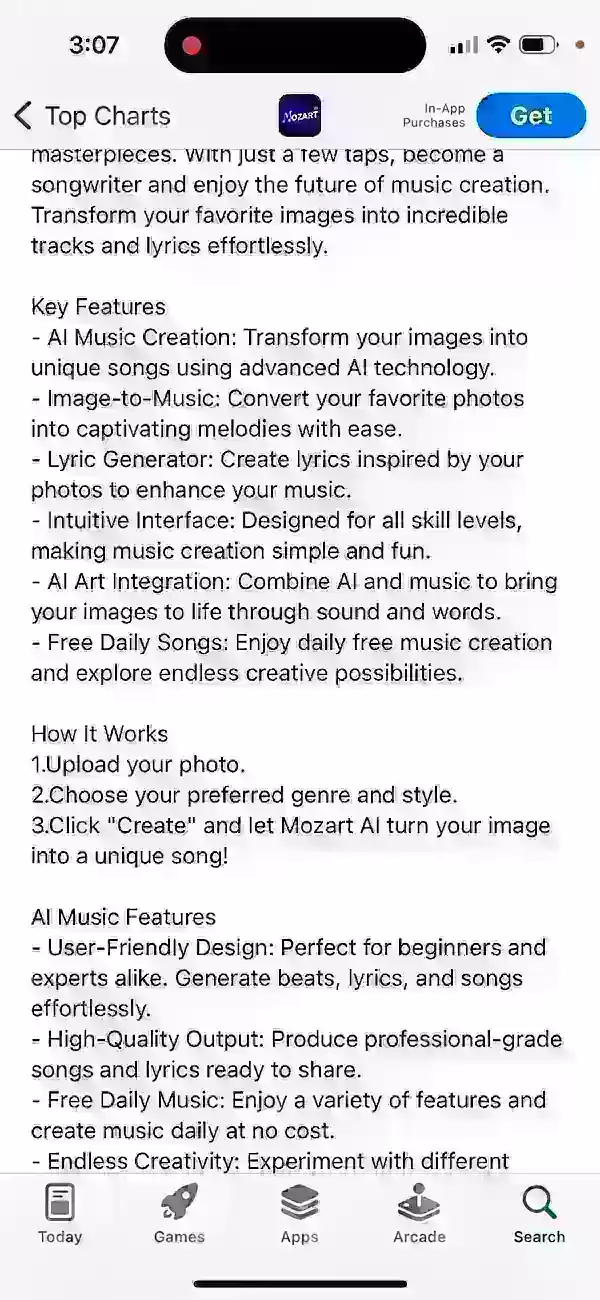
The interface is clean, intuitive, and easy to navigate, making music creation straightforward and enjoyable for novices and professionals alike. Users of all skill levels will appreciate its simplicity. The application guides you through each step, ensuring a smooth and pleasant experience regardless of technical knowledge.
AI Art Integration: Combine AI and Music
Mozart AI incorporates AI art features, allowing users to blend AI-generated images with music. This integration enables creation of distinctive audio-visual pieces where both visuals and music originate from AI, offering boundless creative opportunities.
Free Daily Songs: Enjoy Daily Free Music Creation
To promote exploration and creativity, Mozart AI provides free daily music creation. This feature lets users produce music without cost, experimenting with various images and styles. The daily free creation encourages ongoing engagement and creative growth.
Diverse Use Cases for Mozart AI: Unleashing Musical Creativity
Music Education and Exploration
Mozart AI serves as an excellent resource for music education, assisting beginners in exploring music theory, composition, and creativity. Music educators can utilize it as a teaching aid for demonstrating music creation concepts.
Content Creation for Social Media
Social media influencers and content creators can employ Mozart AI to produce unique, attention-grabbing music for videos and posts. Generating personalized music helps establish a distinctive social media presence.
Personalized Gifts
Creating custom songs from photographs makes for perfect gifts for special occasions. If you're seeking an extraordinary way to show appreciation, generating songs from meaningful photos is an excellent choice!
Therapeutic Applications
Music has long been acknowledged for its therapeutic benefits. Using Mozart AI for music creation can offer a relaxing, creative outlet for individuals seeking stress reduction and emotional expression.
Frequently Asked Questions
What is Mozart AI?
Mozart AI is an application that employs artificial intelligence to transform images into music. It analyzes visual elements in photos and converts them into musical compositions.
How does Mozart AI create music from images?
The AI engine detects features like colors, textures, and composition in images and maps them to musical elements such as pitch, tempo, and instrumentation to create unique songs.
Can I customize the music generated by Mozart AI?
Yes, you can personalize the music by choosing musical genre, style, and vocal preferences to tailor the output to your taste.
Is Mozart AI suitable for users with no musical background?
Yes, Mozart AI features an intuitive interface appropriate for both beginners and seasoned musicians.
Are there any costs associated with using Mozart AI?
Mozart AI offers a free version with advertisements and paid subscription options for ad-free access and premium features like high-quality music and unlimited storage.
Related Questions
How accurate is the AI in translating images to music?
AI accuracy in converting images to music varies depending on image complexity and clarity. Results are also influenced by how effectively visual elements translate into musical parameters. While Mozart AI aims to establish meaningful connections between visuals and music, outcomes represent artistic interpretations rather than precise translations. Users can affect results by carefully selecting images and adjusting style and genre preferences to achieve desired musical expression.
Can I use Mozart AI to create music for commercial purposes?
Mozart AI's terms of use determine whether created music can be utilized commercially. Typically, music produced with free or standard subscriptions may have commercial use restrictions. For commercial applications, review subscription terms or contact Mozart AI regarding licensing options. Securing proper rights for commercial music use protects against potential copyright issues.
How often is Mozart AI updated with new features or improvements?
Update frequency for Mozart AI depends on development plans and user feedback. Update information is typically available in app store descriptions, the official website, or through social media channels. Regular updates generally include AI algorithm enhancements, new musical styles, interface improvements, and bug fixes. Staying informed about updates helps maximize creative potential with the tool.
Related article
 Stripe to Acquire OpenRouter as AI Model Routing Gains Momentum
Stripe has agreed to acquire OpenRouter, an AI model-routing platform that gives developers access to hundreds of models through a single interface. The deal adds model selection and routing to Stripe’s existing work around AI usage and token-based b
Former OpenAI Researcher Barrett Zoph Returns to Google to Support Gemini Development
Barret Zoph, who previously abruptly left and joined OpenAI due to a disagreement with Thinking Machines Lab CEO Miriam Mularati, has once again changed employers. Alphabet's Google announced that Zoph will return as Vice President of Research, bring
How Recursive Intelligence Raised $335M at $4B Valuation in 4 Months
The co-founders of startup Ricursive Intelligence seemed destined to be co-founders.Anna Goldie, CEO, and Azalia Mirhoseini, CTO, are so well-known in the AI community that they were among those AI engineers who “got those weird emails from Zuckerber
Related Special Topic Recommendations
Design & Art
Stripe to Acquire OpenRouter as AI Model Routing Gains Momentum
Stripe has agreed to acquire OpenRouter, an AI model-routing platform that gives developers access to hundreds of models through a single interface. The deal adds model selection and routing to Stripe’s existing work around AI usage and token-based b
Former OpenAI Researcher Barrett Zoph Returns to Google to Support Gemini Development
Barret Zoph, who previously abruptly left and joined OpenAI due to a disagreement with Thinking Machines Lab CEO Miriam Mularati, has once again changed employers. Alphabet's Google announced that Zoph will return as Vice President of Research, bring
How Recursive Intelligence Raised $335M at $4B Valuation in 4 Months
The co-founders of startup Ricursive Intelligence seemed destined to be co-founders.Anna Goldie, CEO, and Azalia Mirhoseini, CTO, are so well-known in the AI community that they were among those AI engineers who “got those weird emails from Zuckerber
Related Special Topic Recommendations
Design & Art
 Top AI Illustration Tools: Create Editorial Scenes and Cover Art Faster
2026 Latest Top-rated AI Illustration Tools: Our curated list features the best powerfully designed tools for creating stunning editorial scenes and eye-catching cover art quickly. Each option has gone through rigorous real-world tests, offering a free vs paid comparison to help you find the perfect match for your workflow. Try these must-try solutions today to unlock your AI edge and boost your creative productivity. Explore now at XIX.AI.
 10 tools
 xix.ai
Education and Learning
Top AI Tutors for Exam Prep: Practice Math, Science, and English
xix.ai
Education and Learning
Top AI Tutors for Exam Prep: Practice Math, Science, and English
2026 Latest Top-Rated Best AI Tutors for Exam Prep are here on XIX.AI! Our curated list features powerful game-changing tools that offer free vs paid comparison, real-world tests, and weekly updated rankings. They help boost your writing efficiency, simplify complex topic learning, and unlock your academic potential. Explore now to Discover your perfect exam prep tool and Start creating today to Unlock your AI edge!
10 tools
xix.ai
Finance
AI Budget Planning Tools for Personal Money Management
2026 Latest Best Top-Rated AI Budget Planning Tools for Personal Money Management are here on XIX.AI! This curated collection features powerful, game-changing solutions that help you conduct real-world tests, understand spending habits, and create personalized plans to boost productivity. Enjoy a free vs paid comparison along with detailed rankings. Must-try tools designed to simplify money management and unlock your AI edge. Explore now!
11 tools
xix.ai
Health & Wellness
AI Sleep Tracking Assistants: Improve Recovery with Better Bedtime Habits
2026 Latest Best Top-Rated AI Sleep Tracking Assistants curated for ultimate recovery. This fully updated weekly guide features powerful tools that deliver real-world tests, free vs paid comparison, and detailed rankings to help you find the must-try solution that boosts sleep quality and supports better bedtime habits. Explore now at XIX.AI to Unlock your AI edge.
10 tools
xix.ai
Data Analysis
AI SQL Copilots for Product and Revenue Analytics
2026 Latest Best Top-Rated AI SQL Copilots for Product and Revenue Analytics! XIX.AI has curated a powerful, game-changing collection of must-try tools that undergo real-world tests through weekly updated rankings. These tools help users boost productivity significantly by accelerating data analysis, streamlining complex queries, and generating accurate insights to drive smarter business decisions. Explore now to Discover your perfect tool for unlocking your AI edge!
14 tools
xix.ai
Education and Learning
Best AI Homework Helpers That Teach: Learn Concepts, Not Just Answers
2026 Latest Best Top-Rated AI Homework Helpers That Teach Core Concepts Not Just Answers Powerful Tools for Students Must-Try Curated List Weekly Updated Free vs Paid Comparison Real-World Tests Accurate Rankings to Help You Unlock Your Full Learning Potential Explore now to Discover your perfect tool for smarter studying.
10 tools
xix.ai

 Comments (0)
0/500
Comments (0)
0/500
Artificial Intelligence (AI) is opening up exciting new possibilities in music creation, making it more accessible for people to express their creativity. Leading this innovation is Mozart AI, a tool that uniquely converts visual content into personalized musical pieces. This guide examines Mozart AI's features, real-world uses, pricing, and overall value for musicians of all experience levels. The idea of turning cherished photos into engaging audio tracks is now a reality with Mozart AI.
Key Points
Mozart AI uses sophisticated AI to generate distinctive songs from images.
It supports both text and photo inputs for music generation.
Users can customize style, genre, and vocal elements.
The platform features an intuitive interface suitable for beginners and experts.
Daily free music creation encourages ongoing creative exploration.
Potential limitations include ad-supported free usage and in-app purchases for premium features.
Unveiling Mozart AI: The AI Music Revolution
What is Mozart AI?
Mozart AI is a creative application that enables users to produce music from their photographs.
Using advanced Artificial Intelligence, Mozart AI examines visual components in pictures and converts them into musical notes, rhythms, and melodies. Whether you're a budding artist, professional musician, or simply fascinated by the intersection of art and technology, Mozart AI offers an accessible platform to unleash your creative potential. With more than 10 million users already enjoying its capabilities, Mozart AI is clearly expanding the horizons of music production.
The Core Concept: Image-to-Music Transformation
The fundamental principle of Mozart AI is its capacity to interpret images and transform them into auditory experiences. When a user uploads a photo, the AI system detects various image characteristics including colors, textures, and composition. These elements are then converted into musical components such as pitch, tempo, and instrumentation.
Consider this example: A peaceful sunset photograph might generate warm, calming chords, while its smooth textures could inspire a gentle, flowing melody. The sunset's composition—perhaps the sun's position on the horizon—might influence the song's structure and arrangement. This novel approach provides users with a fresh, engaging, and accessible medium for artistic expression.
Mozart AI: A Closer Look at The Technical Aspects
AI Algorithms and Image Analysis
Mozart AI utilizes sophisticated AI algorithms to examine images and produce corresponding music. The technology identifies prominent colors, textures, and objects, translating these visual elements into musical parameters. For example, a bright sunset image might evoke warm, harmonious chords, while a stormy seascape could generate intense, dramatic rhythms. This detailed process maintains a coherent connection between visual inputs and musical results. Image clarity significantly influences the AI's interpretation, with well-defined images producing the most successful musical conversions. The incorporation of machine learning enables continuous refinement of visual interpretation and enhancement of musical composition quality. This ongoing improvement makes each new creation more sophisticated and aligned with user expectations. AI's capacity to interpret and create boosts creativity and personalization, making distinctive music more achievable for everyone. Mozart AI leverages AI's visual interpretation capabilities to produce personalized songs. Through AI-powered features like style customization, users can create compositions that uniquely reflect image characteristics, strengthening their connection to artistic vision. Mozart AI enables users to realize creative concepts more easily than before, blending art and technology for exceptional outcomes. Ultimately, the advanced AI algorithms allow anyone to discover musical landscapes, converting photos into immersive songs. This combination of visual and auditory experiences opens new creative pathways, transforming visual inspiration into original musical works.
Getting Started with Mozart AI: A Step-by-Step Guide
Step 1: Upload Your Photo
Begin your musical journey by uploading an inspiring photo. This could be a personal picture, landscape, or any image that sparks your creativity. For optimal results, choose a clear, well-composed image.
Step 2: Choose Your Preferred Genre and Style
After uploading your photo, select the musical genre and style that best suit the image's atmosphere. Options include pop, rock, jazz, electronic, or reggae. You can also specify a mood such as romantic, energetic, or melancholic to refine the composition.
Step 3: Click 'Create' and Let Mozart AI Work Its Magic
Once you've set your preferences, click 'Create' and allow Mozart AI to analyze your photo and generate music. This typically takes one to two minutes. During this process, the AI algorithms convert visual elements into corresponding musical components.
Step 4: Review and Share Your Masterpiece
Listen to the generated music once it's ready. You can then share it with friends, post on social media, or incorporate it into personal projects. The possibilities are limitless! Mozart AI enables you to produce original, unique music in previously unimaginable ways.
Mozart AI Pricing and Subscription Options [t:28]
Subscription Plans
Mozart AI provides tiered subscription options designed for different user needs:
- Free Version: The complimentary version allows song creation with ad support. This is ideal for testing Mozart AI's capabilities.
- One Week: $6.99, perfect for short-term access requirements.
- One Year: $49.99 (equivalent to $0.96 weekly), offering an 86% discount for regular users.
- Lifetime: $69.99, a single payment for permanent, unlimited access.
Paid subscriptions include these benefits:
- High-Quality AI Music
- Unlimited Credits
- Unlimited Storage
- Create AI Songs
- No Ads
Here is a pricing structure as an overview:
The Auto Renewable, Cancel Anytime feature provides flexible subscription management:
Users can cancel their subscription to avoid future charges.
Mozart AI: Weighing the Pros
and Cons
Pros
AI Music Creation: Converts images into music using advanced AI technology.
Lyric Generator: Produces lyrics inspired by photos to complement musical themes.
Intuitive Interface: Designed for all expertise levels, simplifying music creation.
AI Art Integration: Merges AI and music to animate images through sound and lyrics.
Free Daily Songs: Daily complimentary music creation encourages continuous creativity.
Cons
Ad-Supported: Free music creation requires viewing advertisements.
In-App Purchases: Additional features and resources available through in-app purchases.
Limited Control: Users might experience restricted control over detailed music creation aspects.
Dependence on AI: Heavy reliance on AI might constrain originality for experienced musicians.
Exploring the Core Features of Mozart AI
AI Music Creation: Transform Images Into Music
Mozart AI's primary function is converting images into unique songs using advanced AI technology. Users upload photos, and the AI analyzes visual content to generate corresponding music. This feature is perfect for anyone looking to create original soundtracks effortlessly.
This involves multiple sophisticated processes:
- Image Analysis: Identifying visual elements including colors, textures, shapes, and overall composition.
- Musical Mapping: Converting visual features into musical parameters like pitch, tempo, melody, and harmony.
- Genre and Style Customization: Users can specify preferred musical genres (e.g., pop, rock, jazz) and styles (e.g., energetic, romantic, melancholic) to customize the output. The AI integrates these preferences into the composition.
- Lyric Generation: Optional lyric generation adds depth to musical pieces, enhancing emotional impact and narrative.
Lyric Generator: Composing with AI-Inspired Lyrics
Beyond music generation, Mozart AI can create lyrics inspired by your uploaded photos. This means you can not only produce music from visuals but also obtain AI-written words that match your image's sentiment and mood. The lyric generator is an excellent way to add narrative depth to your compositions.
Key components of the lyric generator include:
- Theme Extraction: Analyzes images to identify central themes and emotions.
- Lyric
Cons
truction: Creates verses, choruses, and bridges that reflect these themes. - Rhyme and Rhythm: Ensures lyrics flow naturally with the music, following rhythmic and rhyming patterns.
Intuitive Interface: Designed for All Skill Levels
One of Mozart AI's standout features is its user-friendly design.
The interface is clean, intuitive, and easy to navigate, making music creation straightforward and enjoyable for novices and professionals alike. Users of all skill levels will appreciate its simplicity. The application guides you through each step, ensuring a smooth and pleasant experience regardless of technical knowledge.
AI Art Integration: Combine AI and Music
Mozart AI incorporates AI art features, allowing users to blend AI-generated images with music. This integration enables creation of distinctive audio-visual pieces where both visuals and music originate from AI, offering boundless creative opportunities.
Free Daily Songs: Enjoy Daily Free Music Creation
To promote exploration and creativity, Mozart AI provides free daily music creation. This feature lets users produce music without cost, experimenting with various images and styles. The daily free creation encourages ongoing engagement and creative growth.
Diverse Use Cases for Mozart AI: Unleashing Musical Creativity
Music Education and Exploration
Mozart AI serves as an excellent resource for music education, assisting beginners in exploring music theory, composition, and creativity. Music educators can utilize it as a teaching aid for demonstrating music creation concepts.
Content Creation for Social Media
Social media influencers and content creators can employ Mozart AI to produce unique, attention-grabbing music for videos and posts. Generating personalized music helps establish a distinctive social media presence.
Personalized Gifts
Creating custom songs from photographs makes for perfect gifts for special occasions. If you're seeking an extraordinary way to show appreciation, generating songs from meaningful photos is an excellent choice!
Therapeutic Applications
Music has long been acknowledged for its therapeutic benefits. Using Mozart AI for music creation can offer a relaxing, creative outlet for individuals seeking stress reduction and emotional expression.
Frequently Asked Questions
What is Mozart AI?
Mozart AI is an application that employs artificial intelligence to transform images into music. It analyzes visual elements in photos and converts them into musical compositions.
How does Mozart AI create music from images?
The AI engine detects features like colors, textures, and composition in images and maps them to musical elements such as pitch, tempo, and instrumentation to create unique songs.
Can I customize the music generated by Mozart AI?
Yes, you can personalize the music by choosing musical genre, style, and vocal preferences to tailor the output to your taste.
Is Mozart AI suitable for users with no musical background?
Yes, Mozart AI features an intuitive interface appropriate for both beginners and seasoned musicians.
Are there any costs associated with using Mozart AI?
Mozart AI offers a free version with advertisements and paid subscription options for ad-free access and premium features like high-quality music and unlimited storage.
Related Questions
How accurate is the AI in translating images to music?
AI accuracy in converting images to music varies depending on image complexity and clarity. Results are also influenced by how effectively visual elements translate into musical parameters. While Mozart AI aims to establish meaningful connections between visuals and music, outcomes represent artistic interpretations rather than precise translations. Users can affect results by carefully selecting images and adjusting style and genre preferences to achieve desired musical expression.
Can I use Mozart AI to create music for commercial purposes?
Mozart AI's terms of use determine whether created music can be utilized commercially. Typically, music produced with free or standard subscriptions may have commercial use restrictions. For commercial applications, review subscription terms or contact Mozart AI regarding licensing options. Securing proper rights for commercial music use protects against potential copyright issues.
How often is Mozart AI updated with new features or improvements?
Update frequency for Mozart AI depends on development plans and user feedback. Update information is typically available in app store descriptions, the official website, or through social media channels. Regular updates generally include AI algorithm enhancements, new musical styles, interface improvements, and bug fixes. Staying informed about updates helps maximize creative potential with the tool.








 Stripe to Acquire OpenRouter as AI Model Routing Gains Momentum
Stripe has agreed to acquire OpenRouter, an AI model-routing platform that gives developers access to hundreds of models through a single interface. The deal adds model selection and routing to Stripe’s existing work around AI usage and token-based b
Stripe to Acquire OpenRouter as AI Model Routing Gains Momentum
Stripe has agreed to acquire OpenRouter, an AI model-routing platform that gives developers access to hundreds of models through a single interface. The deal adds model selection and routing to Stripe’s existing work around AI usage and token-based b
 Former OpenAI Researcher Barrett Zoph Returns to Google to Support Gemini Development
Barret Zoph, who previously abruptly left and joined OpenAI due to a disagreement with Thinking Machines Lab CEO Miriam Mularati, has once again changed employers. Alphabet's Google announced that Zoph will return as Vice President of Research, bring
Former OpenAI Researcher Barrett Zoph Returns to Google to Support Gemini Development
Barret Zoph, who previously abruptly left and joined OpenAI due to a disagreement with Thinking Machines Lab CEO Miriam Mularati, has once again changed employers. Alphabet's Google announced that Zoph will return as Vice President of Research, bring
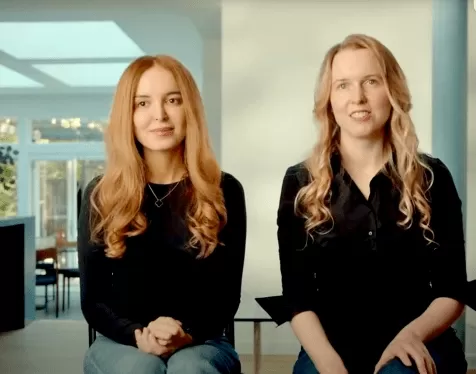 How Recursive Intelligence Raised $335M at $4B Valuation in 4 Months
The co-founders of startup Ricursive Intelligence seemed destined to be co-founders.Anna Goldie, CEO, and Azalia Mirhoseini, CTO, are so well-known in the AI community that they were among those AI engineers who “got those weird emails from Zuckerber
How Recursive Intelligence Raised $335M at $4B Valuation in 4 Months
The co-founders of startup Ricursive Intelligence seemed destined to be co-founders.Anna Goldie, CEO, and Azalia Mirhoseini, CTO, are so well-known in the AI community that they were among those AI engineers who “got those weird emails from Zuckerber

2026 Latest Top-rated AI Illustration Tools: Our curated list features the best powerfully designed tools for creating stunning editorial scenes and eye-catching cover art quickly. Each option has gone through rigorous real-world tests, offering a free vs paid comparison to help you find the perfect match for your workflow. Try these must-try solutions today to unlock your AI edge and boost your creative productivity. Explore now at XIX.AI.
10 tools
xix.ai

2026 Latest Top-Rated Best AI Tutors for Exam Prep are here on XIX.AI! Our curated list features powerful game-changing tools that offer free vs paid comparison, real-world tests, and weekly updated rankings. They help boost your writing efficiency, simplify complex topic learning, and unlock your academic potential. Explore now to Discover your perfect exam prep tool and Start creating today to Unlock your AI edge!
10 tools
xix.ai

2026 Latest Best Top-Rated AI Budget Planning Tools for Personal Money Management are here on XIX.AI! This curated collection features powerful, game-changing solutions that help you conduct real-world tests, understand spending habits, and create personalized plans to boost productivity. Enjoy a free vs paid comparison along with detailed rankings. Must-try tools designed to simplify money management and unlock your AI edge. Explore now!
11 tools
xix.ai

2026 Latest Best Top-Rated AI Sleep Tracking Assistants curated for ultimate recovery. This fully updated weekly guide features powerful tools that deliver real-world tests, free vs paid comparison, and detailed rankings to help you find the must-try solution that boosts sleep quality and supports better bedtime habits. Explore now at XIX.AI to Unlock your AI edge.
10 tools
xix.ai

2026 Latest Best Top-Rated AI SQL Copilots for Product and Revenue Analytics! XIX.AI has curated a powerful, game-changing collection of must-try tools that undergo real-world tests through weekly updated rankings. These tools help users boost productivity significantly by accelerating data analysis, streamlining complex queries, and generating accurate insights to drive smarter business decisions. Explore now to Discover your perfect tool for unlocking your AI edge!
14 tools
xix.ai

2026 Latest Best Top-Rated AI Homework Helpers That Teach Core Concepts Not Just Answers Powerful Tools for Students Must-Try Curated List Weekly Updated Free vs Paid Comparison Real-World Tests Accurate Rankings to Help You Unlock Your Full Learning Potential Explore now to Discover your perfect tool for smarter studying.
10 tools
xix.ai












