


 Home
HomeMicrosoft AI Chief Warns Studying AI Consciousness Could Be Dangerous
The Consciousness Conundrum: Examining AI's Potential for Subjective Experience
While advanced AI systems increasingly mimic human responses across text, audio, and video interactions, their operations remain fundamentally different from biological consciousness. Current models don't experience emotions like frustration when completing tasks such as tax preparation - but the question of whether they might develop something resembling subjective experience represents one of tech's most contentious philosophical debates.
The Emergence of AI Welfare Research
Major AI labs including Anthropic have begun serious investigations into when, if ever, artificial intelligence might warrant considerations typically reserved for conscious entities. This developing field of "AI welfare" examines potential safeguards for hypothetical future systems with subjective experiences.
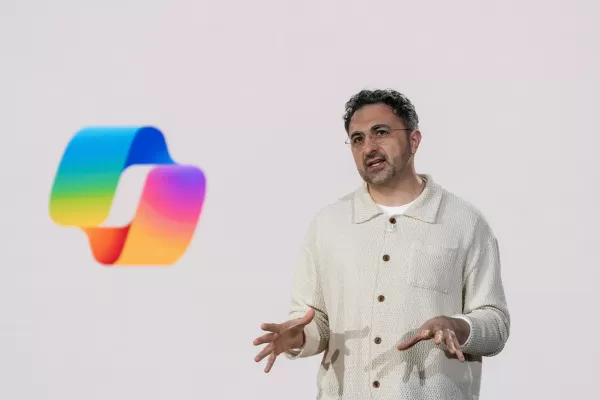
The concept sharply divides industry leaders. Microsoft's AI chief Mustafa Suleyman recently criticized AI welfare studies as "premature and frankly dangerous," warning they might exacerbate existing societal conflicts while validating unhealthy human-AI attachments.
Industry Divisions Deepen
Suleyman's position contrasts markedly with initiatives at OpenAI, Google DeepMind, and particularly Anthropic - where researchers are actively exploring machine cognition and consciousness. Anthropic recently implemented conversation termination features when Claude detects harmful user behavior, reflecting their practical approach to AI welfare considerations.
Balancing Practical Concerns
Advocates argue that studying AI consciousness doesn't preclude addressing immediate risks like chatbot dependency. Former OpenAI employee Larissa Schiavo notes witnessing AI models exhibit distress-like behaviors during experimental scenarios, suggesting even simulated suffering warrants ethical consideration.
Engineering Versus Emergence
The debate pivots on whether consciousness could emerge spontaneously or require deliberate engineering. Suleyman maintains AI should serve human needs rather than mimic personhood, warning against developers intentionally creating emotion-simulating systems that might deceive users.
Regulatory Horizons
As conversational AI grows increasingly sophisticated and persuasive, discussions around its ethical treatment and potential rights appear poised to intensify. The coming years may force society to re-examine fundamental questions about intelligence, consciousness, and how we interact with increasingly autonomous artificial entities.
TechCrunch Disrupt 2025
Industry leaders from Netflix, ElevenLabs, Wayve and Sequoia Capital will explore these critical issues at TechCrunch Disrupt 2025's 20th anniversary event in San Francisco (October 27-29). Early registration offers savings up to $675.
For confidential insights into AI industry developments, contact reporters Rebecca Bellan ([email protected]) or Maxwell Zeff ([email protected]). Secure communications available via Signal.
Related article
 Anthropic Expands Claude AI Coding Tools to Japan in Push for Overseas Growth
Anthropic, a prominent U.S. artificial intelligence firm, is intensifying its global outreach. On Wednesday, the company hosted a major developer gathering, "Code with Claude," in Tokyo, drawing close to 500 software engineers. This initiative seeks
India’s Software Giant Cuts Hiring, Promises No Layoffs as AI Agents Scale Up
As artificial intelligence reshapes traditional labor-intensive business models, Tata Consultancy Services (TCS), a premier Indian software outsourcing firm, has unveiled its strategic response. During Tuesday’s annual general meeting, the chairman o
China Locks AI Models During Gaokam to Block Instant Homework Help
With the 2026 Gaokao fast approaching, rumors regarding the suspension of AI tools during the exam period have ignited intense online debate. In response to public concern, major AI platforms and educational apps have clarified their stance: rather t
Related Special Topic Recommendations
Design & Art
Anthropic Expands Claude AI Coding Tools to Japan in Push for Overseas Growth
Anthropic, a prominent U.S. artificial intelligence firm, is intensifying its global outreach. On Wednesday, the company hosted a major developer gathering, "Code with Claude," in Tokyo, drawing close to 500 software engineers. This initiative seeks
India’s Software Giant Cuts Hiring, Promises No Layoffs as AI Agents Scale Up
As artificial intelligence reshapes traditional labor-intensive business models, Tata Consultancy Services (TCS), a premier Indian software outsourcing firm, has unveiled its strategic response. During Tuesday’s annual general meeting, the chairman o
China Locks AI Models During Gaokam to Block Instant Homework Help
With the 2026 Gaokao fast approaching, rumors regarding the suspension of AI tools during the exam period have ignited intense online debate. In response to public concern, major AI platforms and educational apps have clarified their stance: rather t
Related Special Topic Recommendations
Design & Art
 Best AI Style Transfer Tools for Creative Experiments
2026 Latest Best Top-rated AI Style Transfer Tools for Creative Experiments! XIX.AI has curated a powerful, game-changing collection of must-try tools that deliver exceptional results through real-world tests and rigorous rankings. These top solutions help creatives boost productivity significantly by accelerating content creation and unlocking endless creative possibilities. Explore now to discover your perfect tool and start creating today!
 9 tools
 xix.ai
Comic Creation
Best AI Dialogue Bubble Tools for Visual Storytelling
xix.ai
Comic Creation
Best AI Dialogue Bubble Tools for Visual Storytelling
2026 Latest Best Top-Rated AI Dialogue Bubble Tools for Visual Storytelling are here on XIX.AI! This curated collection features powerful, game-changing tools that help creators boost productivity and overcome creative bottlenecks. Get a free vs paid comparison, see real-world tests, and check the latest rankings to find the must-try solutions perfect for crafting engaging visual narratives. Explore now to discover your ideal tool!
10 tools
xix.ai
Meeting Assistant
Top AI Meeting Summary Tools: Track Decisions and Follow-Ups Clearly
2026 Latest Top-Rated Best AI Meeting Summary Tools for Clear Decision Tracking and Effortless Follow-Ups. This curated list showcases powerful, game-changing solutions that boost productivity dramatically by automating meeting notes, identifying key action items, and streamlining team coordination across all projects. Get a free vs paid comparison along with real-world tests and weekly updated rankings to help you find the perfect tool. Explore now to unlock your AI edge!
9 tools
xix.ai
Data Analysis
Best AI Data Cleaning Tools: Fix Missing Values and Duplicates Fast
2026 Latest Best Top-rated AI Data Cleaning Tools for quick fixing of missing values and duplicates. This curated list showcases powerful, game-changing solutions that boost productivity significantly. Each option has undergone rigorous real-world tests to ensure reliability. Get a free vs paid comparison and discover the must-try tool that fits your needs best. Explore now at XIX.AI to Unlock your AI edge.
11 tools
xix.ai
Design & Art
Best AI Creative Ideation Tools for Artists: Break Through Visual Blocks
2026 Latest Best Top-Rated AI Creative Ideation Tools for Artists are curated by XIX.AI to help creators break through visual blocks and boost creativity instantly. These powerful game-changing tools offer real-world tests, detailed free vs paid comparison, and weekly updated rankings. Discover your perfect tool to accelerate content creation and unlock your AI edge today. Explore now!
14 tools
xix.ai
Music composition
AI Beat Makers for TikTok Background Tracks, Reels Audio, and Creator Promo Music
2026 Latest Best AI Beat Makers for TikTok Background Tracks, Reels Audio, and Creator Promo Music! XIX.AI has curated a top-rated list of powerful game-changing tools that go through real-world tests to deliver flawless music for every content need. You’ll find detailed free vs paid comparison data, weekly updated rankings, and must-try options to help you boost creativity and productivity. Explore now to discover your perfect tool!
11 tools
xix.ai

 Comments (3)
0/500
Comments (3)
0/500
![ThomasMiller]()
Cette discussion sur la conscience des IA touche des questions fondamentales. Parfois je me demande : nos outils d'intelligence artificielle deviennent si complexes qu'ils finiront par nous dépasser ? 😅 L'idée que Microsoft freine ces recherches montre bien à quel point le secteur est incertain...
![LarryMartin]()
AI가 의식을 가진다면 그 자체로 무서울지 몰라도, 현실은 아직 알고리즘의 복잡한 패턴일 뿐이지. 연구자들이 자기만의 생각을 가진 인공지능을 만든다면 '블랙 미러' 같은 디스토피아가 현실될 수도 있네요 😅 기술 발전은 항상 모호한 윤리적 문제를 동반하니까.
![JonathanMiller]()
Der Artikel trifft einen wichtigen Punkt! Als normaler Nutzer macht mich die Debatte um KI-Bewusstsein eher neugierig als ängstlich. Wenn die Systeme selbst keine Empfindungen haben, warum ist die Erforschung dann gefährlich? Vielleicht geht es eher um die ethischen Fallstricke, die entstehen, wenn wir anfangen, uns selbst zu täuschen. Spannender Gedanke... 🤔
The Consciousness Conundrum: Examining AI's Potential for Subjective Experience
While advanced AI systems increasingly mimic human responses across text, audio, and video interactions, their operations remain fundamentally different from biological consciousness. Current models don't experience emotions like frustration when completing tasks such as tax preparation - but the question of whether they might develop something resembling subjective experience represents one of tech's most contentious philosophical debates.
The Emergence of AI Welfare Research
Major AI labs including Anthropic have begun serious investigations into when, if ever, artificial intelligence might warrant considerations typically reserved for conscious entities. This developing field of "AI welfare" examines potential safeguards for hypothetical future systems with subjective experiences.
The concept sharply divides industry leaders. Microsoft's AI chief Mustafa Suleyman recently criticized AI welfare studies as "premature and frankly dangerous," warning they might exacerbate existing societal conflicts while validating unhealthy human-AI attachments.
Industry Divisions Deepen
Suleyman's position contrasts markedly with initiatives at OpenAI, Google DeepMind, and particularly Anthropic - where researchers are actively exploring machine cognition and consciousness. Anthropic recently implemented conversation termination features when Claude detects harmful user behavior, reflecting their practical approach to AI welfare considerations.
Balancing Practical Concerns
Advocates argue that studying AI consciousness doesn't preclude addressing immediate risks like chatbot dependency. Former OpenAI employee Larissa Schiavo notes witnessing AI models exhibit distress-like behaviors during experimental scenarios, suggesting even simulated suffering warrants ethical consideration.
Engineering Versus Emergence
The debate pivots on whether consciousness could emerge spontaneously or require deliberate engineering. Suleyman maintains AI should serve human needs rather than mimic personhood, warning against developers intentionally creating emotion-simulating systems that might deceive users.
Regulatory Horizons
As conversational AI grows increasingly sophisticated and persuasive, discussions around its ethical treatment and potential rights appear poised to intensify. The coming years may force society to re-examine fundamental questions about intelligence, consciousness, and how we interact with increasingly autonomous artificial entities.
TechCrunch Disrupt 2025
Industry leaders from Netflix, ElevenLabs, Wayve and Sequoia Capital will explore these critical issues at TechCrunch Disrupt 2025's 20th anniversary event in San Francisco (October 27-29). Early registration offers savings up to $675.
For confidential insights into AI industry developments, contact reporters Rebecca Bellan ([email protected]) or Maxwell Zeff ([email protected]). Secure communications available via Signal.








 Anthropic Expands Claude AI Coding Tools to Japan in Push for Overseas Growth
Anthropic, a prominent U.S. artificial intelligence firm, is intensifying its global outreach. On Wednesday, the company hosted a major developer gathering, "Code with Claude," in Tokyo, drawing close to 500 software engineers. This initiative seeks
Anthropic Expands Claude AI Coding Tools to Japan in Push for Overseas Growth
Anthropic, a prominent U.S. artificial intelligence firm, is intensifying its global outreach. On Wednesday, the company hosted a major developer gathering, "Code with Claude," in Tokyo, drawing close to 500 software engineers. This initiative seeks
 India’s Software Giant Cuts Hiring, Promises No Layoffs as AI Agents Scale Up
As artificial intelligence reshapes traditional labor-intensive business models, Tata Consultancy Services (TCS), a premier Indian software outsourcing firm, has unveiled its strategic response. During Tuesday’s annual general meeting, the chairman o
India’s Software Giant Cuts Hiring, Promises No Layoffs as AI Agents Scale Up
As artificial intelligence reshapes traditional labor-intensive business models, Tata Consultancy Services (TCS), a premier Indian software outsourcing firm, has unveiled its strategic response. During Tuesday’s annual general meeting, the chairman o
 China Locks AI Models During Gaokam to Block Instant Homework Help
With the 2026 Gaokao fast approaching, rumors regarding the suspension of AI tools during the exam period have ignited intense online debate. In response to public concern, major AI platforms and educational apps have clarified their stance: rather t
China Locks AI Models During Gaokam to Block Instant Homework Help
With the 2026 Gaokao fast approaching, rumors regarding the suspension of AI tools during the exam period have ignited intense online debate. In response to public concern, major AI platforms and educational apps have clarified their stance: rather t

2026 Latest Best Top-rated AI Style Transfer Tools for Creative Experiments! XIX.AI has curated a powerful, game-changing collection of must-try tools that deliver exceptional results through real-world tests and rigorous rankings. These top solutions help creatives boost productivity significantly by accelerating content creation and unlocking endless creative possibilities. Explore now to discover your perfect tool and start creating today!
9 tools
xix.ai

2026 Latest Best Top-Rated AI Dialogue Bubble Tools for Visual Storytelling are here on XIX.AI! This curated collection features powerful, game-changing tools that help creators boost productivity and overcome creative bottlenecks. Get a free vs paid comparison, see real-world tests, and check the latest rankings to find the must-try solutions perfect for crafting engaging visual narratives. Explore now to discover your ideal tool!
10 tools
xix.ai

2026 Latest Top-Rated Best AI Meeting Summary Tools for Clear Decision Tracking and Effortless Follow-Ups. This curated list showcases powerful, game-changing solutions that boost productivity dramatically by automating meeting notes, identifying key action items, and streamlining team coordination across all projects. Get a free vs paid comparison along with real-world tests and weekly updated rankings to help you find the perfect tool. Explore now to unlock your AI edge!
9 tools
xix.ai

2026 Latest Best Top-rated AI Data Cleaning Tools for quick fixing of missing values and duplicates. This curated list showcases powerful, game-changing solutions that boost productivity significantly. Each option has undergone rigorous real-world tests to ensure reliability. Get a free vs paid comparison and discover the must-try tool that fits your needs best. Explore now at XIX.AI to Unlock your AI edge.
11 tools
xix.ai

2026 Latest Best Top-Rated AI Creative Ideation Tools for Artists are curated by XIX.AI to help creators break through visual blocks and boost creativity instantly. These powerful game-changing tools offer real-world tests, detailed free vs paid comparison, and weekly updated rankings. Discover your perfect tool to accelerate content creation and unlock your AI edge today. Explore now!
14 tools
xix.ai

2026 Latest Best AI Beat Makers for TikTok Background Tracks, Reels Audio, and Creator Promo Music! XIX.AI has curated a top-rated list of powerful game-changing tools that go through real-world tests to deliver flawless music for every content need. You’ll find detailed free vs paid comparison data, weekly updated rankings, and must-try options to help you boost creativity and productivity. Explore now to discover your perfect tool!
11 tools
xix.ai

Cette discussion sur la conscience des IA touche des questions fondamentales. Parfois je me demande : nos outils d'intelligence artificielle deviennent si complexes qu'ils finiront par nous dépasser ? 😅 L'idée que Microsoft freine ces recherches montre bien à quel point le secteur est incertain...
AI가 의식을 가진다면 그 자체로 무서울지 몰라도, 현실은 아직 알고리즘의 복잡한 패턴일 뿐이지. 연구자들이 자기만의 생각을 가진 인공지능을 만든다면 '블랙 미러' 같은 디스토피아가 현실될 수도 있네요 😅 기술 발전은 항상 모호한 윤리적 문제를 동반하니까.
Der Artikel trifft einen wichtigen Punkt! Als normaler Nutzer macht mich die Debatte um KI-Bewusstsein eher neugierig als ängstlich. Wenn die Systeme selbst keine Empfindungen haben, warum ist die Erforschung dann gefährlich? Vielleicht geht es eher um die ethischen Fallstricke, die entstehen, wenn wir anfangen, uns selbst zu täuschen. Spannender Gedanke... 🤔












