


 Home
HomeMeta AI's Universal Translation Breakthrough: No Language Left Behind
In an age of rapid technological progress, Meta AI's 'No Language Left Behind' initiative stands out as a transformative force. This pioneering project aims to connect the world by enabling seamless communication across diverse languages. By developing an AI model that translates 200 languages, Meta AI is enhancing global access to information and promoting cross-cultural understanding.
Key Highlights
Meta AI's 'No Language Left Behind' (NLLB) project focuses on building a universal translation system.
The NLLB-200 model supports 200 languages, outperforming current translation tools.
It employs an encoder-decoder framework for precise and context-aware translations.
The system filters out offensive language to ensure safe communication.
NLLB is open-source, encouraging global collaboration and innovation.
The project seeks to eliminate language barriers, making knowledge accessible worldwide.
It has the potential to revolutionize education, commerce, and international communication.
Meta AI's Linguistic Innovation Unveiled
A Vision for Global Communication
Technology is reshaping our world, turning once-imaginary concepts into reality. From robots handling household tasks to advanced systems in industrial settings, innovation knows no bounds. Even smartphones now feature facial recognition, blending science fiction with everyday life.
Meta AI enters this landscape with a bold vision: an AI capable of transforming linguistic communication. But will this technology replace human translators and interpreters? This question looms large as the project unfolds.
While widespread job displacement seems unlikely for now, Meta's initiative is generating excitement, paving the way for a new era of global connectivity. Let’s explore this groundbreaking project and its implications.
What is Meta AI’s Linguistic Initiative?
Meta AI’s initiative redefines how we approach language and communication. It goes beyond mere word translation, capturing cultural nuances to foster meaningful interactions. With over 7,000 languages spoken globally,

the demand for seamless cross-linguistic communication is critical.
Meta’s 'No Language Left Behind' (NLLB) project addresses this need with an AI model that translates across 200 languages. Unlike traditional systems, it bypasses English as an intermediary and includes algorithms to support minority languages, marking a significant advancement in addressing linguistic diversity.
Will AI Replace Human Language Experts?
The rise of AI in translation raises questions about the future of human translators and interpreters. While AI tools have advanced, they still lack the cultural depth and sensitivity that human professionals provide.
Meta AI acknowledges that further data is needed to refine its capabilities. Unlike most AI translation systems that rely heavily on English data,
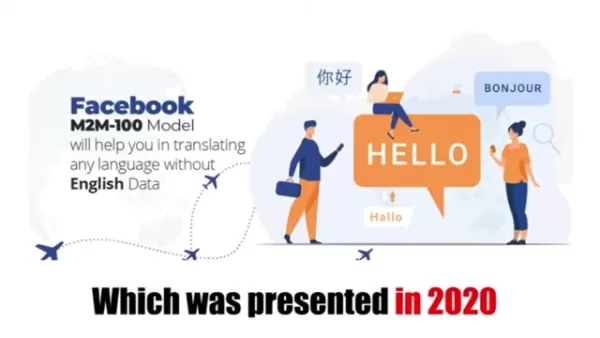
Meta’s approach prioritizes direct translation. This reduces latency and enhances accuracy, enabling the NLLB-200 model to support 200 languages, including minority ones in Africa, Europe, and Asia.
However, concerns about bias and misinformation in translations persist. Can AI effectively manage toxicity across all supported languages? With ongoing improvements, these challenges are likely to be addressed over time.
Benefits of Open-Source AI
A cornerstone of Meta AI’s strategy is releasing NLLB as open-source. This allows developers worldwide to access its code, models, and resources on platforms like GitHub. Key benefits include:
- Global accessibility.
- Accelerated innovation.
- Enhanced transparency.
- Increased trust.
Features of the NLLB-200 Translation Model
The NLLB-200 builds on translation advancements from 2020,

eliminating reliance on English for translation. Its features include:
- Converts input sentences into vector representations for contextual analysis.
- Generates accurate output sentences from these representations.
- Filters profanity across all supported languages.
- Optimizes translations with human-verified data, surpassing tools like Google Translate by supporting 200 languages.
Enhancing Global Communication with NLLB
Impact of the NLLB Model
The NLLB model promises to transform global communication. Here’s how:
- Enables translation for smaller languages and dialects, improving accessibility.
- Expands business opportunities by breaking down language barriers for international clients.
- Supports platforms for developers to create translations, with open-source code ensuring safe, high-quality outputs through testing and documentation.
Meta AI’s Linguistic Model
Pros
Delivers high-quality translations, processing text with human-like precision.
Supports a wide range of languages, simplifying cross-linguistic communication.
Accessible on GitHub, with models, documentation, and tests freely available.
Cons
High development and maintenance costs.
Limited resources for newly added languages, though improvements are expected with use.
Lacks emotional intelligence inherent in human communication.
Frequently Asked Questions about Meta AI’s Translation Model
What is Meta AI’s No Language Left Behind project?
An AI-driven initiative by Meta AI to enhance communication through algorithms supporting 200 languages.
How can the code be modified and run?
The open-source code, available on GitHub, includes tests, models, and documentation for developers to adapt and improve.
Related Questions About Language Translation AI
Will AI Ever Truly Understand Human Language?
The debate over AI’s ability to fully grasp human language is complex. Some experts predict AI could eventually rival human understanding, driven by advances in deep learning and natural language processing. AI excels at:
Language Generation: Producing human-like text.
Speech Recognition: Responding to diverse voice commands.
Sentiment Analysis: Gauging emotions in text for insights.
However, true understanding may require consciousness and emotional depth, which AI currently lacks. Human language involves nuances beyond current AI capabilities, raising concerns about accurate interpretation.
Related article
 Ilya Sutskever Testifies: Ultraman Built OpenAI Network on Lies
Recent court filings reveal that Ilya Sutskever, OpenAI’s former Chief Scientist, testified as a central figure in Elon Musk’s lawsuit against the company. His statements confirmed that the 2023 leadership upheaval was not an impulsive move, but rath
Gemini faces branding challenges, as does the wider AI industry
Google’s Wednesday announcement regarding new Gemini Live voice features makes a valid point: “You shouldn’t have to guess whether a task requires Spark, a Daily Brief, or a quick inbox search.” While Google presents this as a commitment to handling
Claude Adds Multilingual Voice Support, Bringing Real Phone Calls Closer
The voice interaction experience of artificial intelligence is about to undergo a major update. According to the latest news from tech media Android Authority, Anthropic is preparing a significant upgrade for its AI assistant Claude, focusing on brea
Related Special Topic Recommendations
Design & Art
Ilya Sutskever Testifies: Ultraman Built OpenAI Network on Lies
Recent court filings reveal that Ilya Sutskever, OpenAI’s former Chief Scientist, testified as a central figure in Elon Musk’s lawsuit against the company. His statements confirmed that the 2023 leadership upheaval was not an impulsive move, but rath
Gemini faces branding challenges, as does the wider AI industry
Google’s Wednesday announcement regarding new Gemini Live voice features makes a valid point: “You shouldn’t have to guess whether a task requires Spark, a Daily Brief, or a quick inbox search.” While Google presents this as a commitment to handling
Claude Adds Multilingual Voice Support, Bringing Real Phone Calls Closer
The voice interaction experience of artificial intelligence is about to undergo a major update. According to the latest news from tech media Android Authority, Anthropic is preparing a significant upgrade for its AI assistant Claude, focusing on brea
Related Special Topic Recommendations
Design & Art
 Top AI Illustration Tools: Create Editorial Scenes and Cover Art Faster
2026 Latest Top-rated AI Illustration Tools: Our curated list features the best powerfully designed tools for creating stunning editorial scenes and eye-catching cover art quickly. Each option has gone through rigorous real-world tests, offering a free vs paid comparison to help you find the perfect match for your workflow. Try these must-try solutions today to unlock your AI edge and boost your creative productivity. Explore now at XIX.AI.
 10 tools
 xix.ai
Education and Learning
Top AI Tutors for Exam Prep: Practice Math, Science, and English
xix.ai
Education and Learning
Top AI Tutors for Exam Prep: Practice Math, Science, and English
2026 Latest Top-Rated Best AI Tutors for Exam Prep are here on XIX.AI! Our curated list features powerful game-changing tools that offer free vs paid comparison, real-world tests, and weekly updated rankings. They help boost your writing efficiency, simplify complex topic learning, and unlock your academic potential. Explore now to Discover your perfect exam prep tool and Start creating today to Unlock your AI edge!
10 tools
xix.ai
Finance
AI Budget Planning Tools for Personal Money Management
2026 Latest Best Top-Rated AI Budget Planning Tools for Personal Money Management are here on XIX.AI! This curated collection features powerful, game-changing solutions that help you conduct real-world tests, understand spending habits, and create personalized plans to boost productivity. Enjoy a free vs paid comparison along with detailed rankings. Must-try tools designed to simplify money management and unlock your AI edge. Explore now!
11 tools
xix.ai
Health & Wellness
AI Sleep Tracking Assistants: Improve Recovery with Better Bedtime Habits
2026 Latest Best Top-Rated AI Sleep Tracking Assistants curated for ultimate recovery. This fully updated weekly guide features powerful tools that deliver real-world tests, free vs paid comparison, and detailed rankings to help you find the must-try solution that boosts sleep quality and supports better bedtime habits. Explore now at XIX.AI to Unlock your AI edge.
10 tools
xix.ai
Data Analysis
AI SQL Copilots for Product and Revenue Analytics
2026 Latest Best Top-Rated AI SQL Copilots for Product and Revenue Analytics! XIX.AI has curated a powerful, game-changing collection of must-try tools that undergo real-world tests through weekly updated rankings. These tools help users boost productivity significantly by accelerating data analysis, streamlining complex queries, and generating accurate insights to drive smarter business decisions. Explore now to Discover your perfect tool for unlocking your AI edge!
14 tools
xix.ai
Education and Learning
Best AI Homework Helpers That Teach: Learn Concepts, Not Just Answers
2026 Latest Best Top-Rated AI Homework Helpers That Teach Core Concepts Not Just Answers Powerful Tools for Students Must-Try Curated List Weekly Updated Free vs Paid Comparison Real-World Tests Accurate Rankings to Help You Unlock Your Full Learning Potential Explore now to Discover your perfect tool for smarter studying.
10 tools
xix.ai

 Comments (1)
0/500
Comments (1)
0/500
![JoseAdams]()
Incroyable projet ! 💡 Ça me fait penser à Babel tout d'un coup... Mais est-ce que ça va vraiment aider les cultures à se rapprocher, ou juste standardiser la communication ? 🤔 En tout cas, j'espère que les langues minoritaires auront leur place !
In an age of rapid technological progress, Meta AI's 'No Language Left Behind' initiative stands out as a transformative force. This pioneering project aims to connect the world by enabling seamless communication across diverse languages. By developing an AI model that translates 200 languages, Meta AI is enhancing global access to information and promoting cross-cultural understanding.
Key Highlights
Meta AI's 'No Language Left Behind' (NLLB) project focuses on building a universal translation system.
The NLLB-200 model supports 200 languages, outperforming current translation tools.
It employs an encoder-decoder framework for precise and context-aware translations.
The system filters out offensive language to ensure safe communication.
NLLB is open-source, encouraging global collaboration and innovation.
The project seeks to eliminate language barriers, making knowledge accessible worldwide.
It has the potential to revolutionize education, commerce, and international communication.
Meta AI's Linguistic Innovation Unveiled
A Vision for Global Communication
Technology is reshaping our world, turning once-imaginary concepts into reality. From robots handling household tasks to advanced systems in industrial settings, innovation knows no bounds. Even smartphones now feature facial recognition, blending science fiction with everyday life.
Meta AI enters this landscape with a bold vision: an AI capable of transforming linguistic communication. But will this technology replace human translators and interpreters? This question looms large as the project unfolds.
While widespread job displacement seems unlikely for now, Meta's initiative is generating excitement, paving the way for a new era of global connectivity. Let’s explore this groundbreaking project and its implications.
What is Meta AI’s Linguistic Initiative?
Meta AI’s initiative redefines how we approach language and communication. It goes beyond mere word translation, capturing cultural nuances to foster meaningful interactions. With over 7,000 languages spoken globally,
the demand for seamless cross-linguistic communication is critical.
Meta’s 'No Language Left Behind' (NLLB) project addresses this need with an AI model that translates across 200 languages. Unlike traditional systems, it bypasses English as an intermediary and includes algorithms to support minority languages, marking a significant advancement in addressing linguistic diversity.
Will AI Replace Human Language Experts?
The rise of AI in translation raises questions about the future of human translators and interpreters. While AI tools have advanced, they still lack the cultural depth and sensitivity that human professionals provide.
Meta AI acknowledges that further data is needed to refine its capabilities. Unlike most AI translation systems that rely heavily on English data,
Meta’s approach prioritizes direct translation. This reduces latency and enhances accuracy, enabling the NLLB-200 model to support 200 languages, including minority ones in Africa, Europe, and Asia.
However, concerns about bias and misinformation in translations persist. Can AI effectively manage toxicity across all supported languages? With ongoing improvements, these challenges are likely to be addressed over time.
Benefits of Open-Source AI
A cornerstone of Meta AI’s strategy is releasing NLLB as open-source. This allows developers worldwide to access its code, models, and resources on platforms like GitHub. Key benefits include:
- Global accessibility.
- Accelerated innovation.
- Enhanced transparency.
- Increased trust.
Features of the NLLB-200 Translation Model
The NLLB-200 builds on translation advancements from 2020,
eliminating reliance on English for translation. Its features include:
- Converts input sentences into vector representations for contextual analysis.
- Generates accurate output sentences from these representations.
- Filters profanity across all supported languages.
- Optimizes translations with human-verified data, surpassing tools like Google Translate by supporting 200 languages.
Enhancing Global Communication with NLLB
Impact of the NLLB Model
The NLLB model promises to transform global communication. Here’s how:
- Enables translation for smaller languages and dialects, improving accessibility.
- Expands business opportunities by breaking down language barriers for international clients.
- Supports platforms for developers to create translations, with open-source code ensuring safe, high-quality outputs through testing and documentation.
Meta AI’s Linguistic Model
Pros
Delivers high-quality translations, processing text with human-like precision.
Supports a wide range of languages, simplifying cross-linguistic communication.
Accessible on GitHub, with models, documentation, and tests freely available.
Cons
High development and maintenance costs.
Limited resources for newly added languages, though improvements are expected with use.
Lacks emotional intelligence inherent in human communication.
Frequently Asked Questions about Meta AI’s Translation Model
What is Meta AI’s No Language Left Behind project?
An AI-driven initiative by Meta AI to enhance communication through algorithms supporting 200 languages.
How can the code be modified and run?
The open-source code, available on GitHub, includes tests, models, and documentation for developers to adapt and improve.
Related Questions About Language Translation AI
Will AI Ever Truly Understand Human Language?
The debate over AI’s ability to fully grasp human language is complex. Some experts predict AI could eventually rival human understanding, driven by advances in deep learning and natural language processing. AI excels at:
Language Generation: Producing human-like text.
Speech Recognition: Responding to diverse voice commands.
Sentiment Analysis: Gauging emotions in text for insights.
However, true understanding may require consciousness and emotional depth, which AI currently lacks. Human language involves nuances beyond current AI capabilities, raising concerns about accurate interpretation.








 Ilya Sutskever Testifies: Ultraman Built OpenAI Network on Lies
Recent court filings reveal that Ilya Sutskever, OpenAI’s former Chief Scientist, testified as a central figure in Elon Musk’s lawsuit against the company. His statements confirmed that the 2023 leadership upheaval was not an impulsive move, but rath
Ilya Sutskever Testifies: Ultraman Built OpenAI Network on Lies
Recent court filings reveal that Ilya Sutskever, OpenAI’s former Chief Scientist, testified as a central figure in Elon Musk’s lawsuit against the company. His statements confirmed that the 2023 leadership upheaval was not an impulsive move, but rath
 Gemini faces branding challenges, as does the wider AI industry
Google’s Wednesday announcement regarding new Gemini Live voice features makes a valid point: “You shouldn’t have to guess whether a task requires Spark, a Daily Brief, or a quick inbox search.” While Google presents this as a commitment to handling
Gemini faces branding challenges, as does the wider AI industry
Google’s Wednesday announcement regarding new Gemini Live voice features makes a valid point: “You shouldn’t have to guess whether a task requires Spark, a Daily Brief, or a quick inbox search.” While Google presents this as a commitment to handling
 Claude Adds Multilingual Voice Support, Bringing Real Phone Calls Closer
The voice interaction experience of artificial intelligence is about to undergo a major update. According to the latest news from tech media Android Authority, Anthropic is preparing a significant upgrade for its AI assistant Claude, focusing on brea
Claude Adds Multilingual Voice Support, Bringing Real Phone Calls Closer
The voice interaction experience of artificial intelligence is about to undergo a major update. According to the latest news from tech media Android Authority, Anthropic is preparing a significant upgrade for its AI assistant Claude, focusing on brea

2026 Latest Top-rated AI Illustration Tools: Our curated list features the best powerfully designed tools for creating stunning editorial scenes and eye-catching cover art quickly. Each option has gone through rigorous real-world tests, offering a free vs paid comparison to help you find the perfect match for your workflow. Try these must-try solutions today to unlock your AI edge and boost your creative productivity. Explore now at XIX.AI.
10 tools
xix.ai

2026 Latest Top-Rated Best AI Tutors for Exam Prep are here on XIX.AI! Our curated list features powerful game-changing tools that offer free vs paid comparison, real-world tests, and weekly updated rankings. They help boost your writing efficiency, simplify complex topic learning, and unlock your academic potential. Explore now to Discover your perfect exam prep tool and Start creating today to Unlock your AI edge!
10 tools
xix.ai

2026 Latest Best Top-Rated AI Budget Planning Tools for Personal Money Management are here on XIX.AI! This curated collection features powerful, game-changing solutions that help you conduct real-world tests, understand spending habits, and create personalized plans to boost productivity. Enjoy a free vs paid comparison along with detailed rankings. Must-try tools designed to simplify money management and unlock your AI edge. Explore now!
11 tools
xix.ai

2026 Latest Best Top-Rated AI Sleep Tracking Assistants curated for ultimate recovery. This fully updated weekly guide features powerful tools that deliver real-world tests, free vs paid comparison, and detailed rankings to help you find the must-try solution that boosts sleep quality and supports better bedtime habits. Explore now at XIX.AI to Unlock your AI edge.
10 tools
xix.ai

2026 Latest Best Top-Rated AI SQL Copilots for Product and Revenue Analytics! XIX.AI has curated a powerful, game-changing collection of must-try tools that undergo real-world tests through weekly updated rankings. These tools help users boost productivity significantly by accelerating data analysis, streamlining complex queries, and generating accurate insights to drive smarter business decisions. Explore now to Discover your perfect tool for unlocking your AI edge!
14 tools
xix.ai

2026 Latest Best Top-Rated AI Homework Helpers That Teach Core Concepts Not Just Answers Powerful Tools for Students Must-Try Curated List Weekly Updated Free vs Paid Comparison Real-World Tests Accurate Rankings to Help You Unlock Your Full Learning Potential Explore now to Discover your perfect tool for smarter studying.
10 tools
xix.ai

Incroyable projet ! 💡 Ça me fait penser à Babel tout d'un coup... Mais est-ce que ça va vraiment aider les cultures à se rapprocher, ou juste standardiser la communication ? 🤔 En tout cas, j'espère que les langues minoritaires auront leur place !












