

 Home
Lingguang Unveils Next-Gen Flash Apps: A Coding Agent for All
On April 20th, the Ant Lingguang App underwent a significant upgrade to its flash application features, introducing the "Lingguang Circle." This initiative is dedicated to providing an accessible, consumer-grade Coding Agent for all users.
Building upon the original "30-second app creation" capability, Lingguang Flash Applications continue to enhance multi-agent collaboration, multimodal generation, and the integration of native mobile features. It stands as the first platform enabling users to create, distribute, utilize, and iterate AI applications directly from their smartphones using natural language. This truly achieves zero-code, zero-deployment, and barrier-free personalized creation. To date, Lingguang users have created over 30 million flash applications.
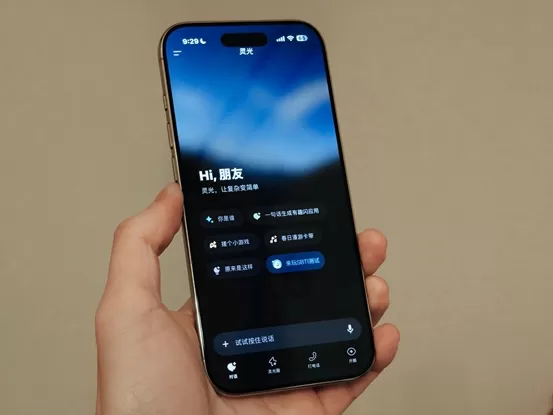
(The Lingguang Circle officially launched on April 20th, enabling one-click sharing of flash applications.)
As an agent-native product, Lingguang's core strength is its full-code generation, which creates an end-to-end closed loop. Users require no development experience; they simply describe their needs on their phone to generate and publish "ready-to-use" mini-applications instantly—eliminating wait times and deployment hurdles, moving directly from "concept" to "usage."
Unlike coding trial tools, the upgraded Lingguang can access native phone capabilities—such as the camera, photo album, gyroscope, location-based services (LBS), and haptic feedback—allowing applications to interact meaningfully with the physical world. It also integrates audio synthesis, LLM calls, text-to-speech, persistent storage, and other interactive features. Consequently, what is generated is not merely a simple content interface but fully functional tools designed for continuous use.
On the same day, Lingguang announced the launch of a new feature: the Lingguang Circle. This circle is a key platform for building a flash application ecosystem and represents the industry's first zero-code application sharing community, complete with support for sharing, liking, commenting, and secondary creation.
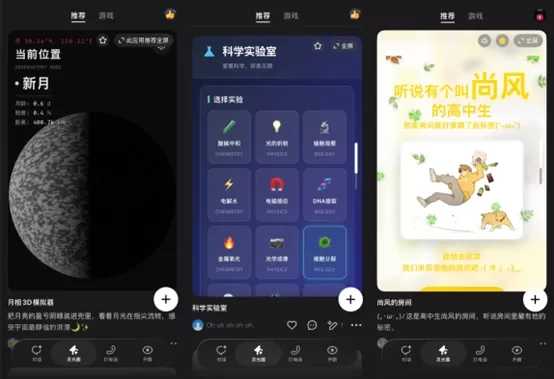
(Flash applications shared by users within the Lingguang Circle.)
Since its launch in November of last year, Lingguang has been met with positive reception. Currently, Lingguang users have successfully created over 30 million flash applications. These range from interactive games and stress-relief tools to language learning check-ins and to-do lists, covering various aspects of daily life. With the introduction of the Lingguang Circle, users can now share their flash applications with one click. Within this space, creativity is discovered, utilized, and shared in the form of AI applications, fostering a brand-new Wish Coding ecosystem.
The Wish Coding concept championed by Lingguang has turned "intention programming" into reality—users describe a desired outcome, and AI directly generates a functional personal application. This "individual application" model has compressed the development cycle from months down to 30 seconds, enabling a single person with a phone and an idea to complete the entire process. As one creator noted, "Previously, collaboration required forking code; now, you simply fork an intention. The journey from concept to product has never been faster."
Related article
 Former OpenAI Researcher Barrett Zoph Returns to Google to Support Gemini Development
Barret Zoph, who previously abruptly left and joined OpenAI due to a disagreement with Thinking Machines Lab CEO Miriam Mularati, has once again changed employers. Alphabet's Google announced that Zoph will return as Vice President of Research, bring
How Recursive Intelligence Raised $335M at $4B Valuation in 4 Months
The co-founders of startup Ricursive Intelligence seemed destined to be co-founders.Anna Goldie, CEO, and Azalia Mirhoseini, CTO, are so well-known in the AI community that they were among those AI engineers who “got those weird emails from Zuckerber
AI race won’t wait, nor will this TechCrunch Disrupt 25% discount
Every founder building in AI right now is asking the same question: Are we moving fast enough, and effectively enough? TechCrunch Disrupt 2026 puts you in the same room as the people wrestling with that existential question at the highest levels. Fro
Related Special Topic Recommendations
Design & Art
 Top AI Illustration Tools: Create Editorial Scenes and Cover Art Faster
2026 Latest Top-rated AI Illustration Tools: Our curated list features the best powerfully designed tools for creating stunning editorial scenes and eye-catching cover art quickly. Each option has gone through rigorous real-world tests, offering a free vs paid comparison to help you find the perfect match for your workflow. Try these must-try solutions today to unlock your AI edge and boost your creative productivity. Explore now at XIX.AI.
 10 tools
 xix.ai
Education and Learning
Top AI Tutors for Exam Prep: Practice Math, Science, and English
2026 Latest Top-Rated Best AI Tutors for Exam Prep are here on XIX.AI! Our curated list features powerful game-changing tools that offer free vs paid comparison, real-world tests, and weekly updated rankings. They help boost your writing efficiency, simplify complex topic learning, and unlock your academic potential. Explore now to Discover your perfect exam prep tool and Start creating today to Unlock your AI edge!
10 tools
xix.ai
Finance
AI Budget Planning Tools for Personal Money Management
2026 Latest Best Top-Rated AI Budget Planning Tools for Personal Money Management are here on XIX.AI! This curated collection features powerful, game-changing solutions that help you conduct real-world tests, understand spending habits, and create personalized plans to boost productivity. Enjoy a free vs paid comparison along with detailed rankings. Must-try tools designed to simplify money management and unlock your AI edge. Explore now!
11 tools
xix.ai
Health & Wellness
AI Sleep Tracking Assistants: Improve Recovery with Better Bedtime Habits
2026 Latest Best Top-Rated AI Sleep Tracking Assistants curated for ultimate recovery. This fully updated weekly guide features powerful tools that deliver real-world tests, free vs paid comparison, and detailed rankings to help you find the must-try solution that boosts sleep quality and supports better bedtime habits. Explore now at XIX.AI to Unlock your AI edge.
10 tools
xix.ai
Data Analysis
AI SQL Copilots for Product and Revenue Analytics
2026 Latest Best Top-Rated AI SQL Copilots for Product and Revenue Analytics! XIX.AI has curated a powerful, game-changing collection of must-try tools that undergo real-world tests through weekly updated rankings. These tools help users boost productivity significantly by accelerating data analysis, streamlining complex queries, and generating accurate insights to drive smarter business decisions. Explore now to Discover your perfect tool for unlocking your AI edge!
14 tools
xix.ai
Education and Learning
Best AI Homework Helpers That Teach: Learn Concepts, Not Just Answers
2026 Latest Best Top-Rated AI Homework Helpers That Teach Core Concepts Not Just Answers Powerful Tools for Students Must-Try Curated List Weekly Updated Free vs Paid Comparison Real-World Tests Accurate Rankings to Help You Unlock Your Full Learning Potential Explore now to Discover your perfect tool for smarter studying.
10 tools
xix.ai

 Comments (1)
0/500
![JuanCarter]()
Finally, a coding agent that doesn't require a PhD in computer science! 😂 I'm curious how well it handles complex tasks though. Hope it's not just another overhyped tool.
On April 20th, the Ant Lingguang App underwent a significant upgrade to its flash application features, introducing the "Lingguang Circle." This initiative is dedicated to providing an accessible, consumer-grade Coding Agent for all users.
Building upon the original "30-second app creation" capability, Lingguang Flash Applications continue to enhance multi-agent collaboration, multimodal generation, and the integration of native mobile features. It stands as the first platform enabling users to create, distribute, utilize, and iterate AI applications directly from their smartphones using natural language. This truly achieves zero-code, zero-deployment, and barrier-free personalized creation. To date, Lingguang users have created over 30 million flash applications.
(The Lingguang Circle officially launched on April 20th, enabling one-click sharing of flash applications.)
As an agent-native product, Lingguang's core strength is its full-code generation, which creates an end-to-end closed loop. Users require no development experience; they simply describe their needs on their phone to generate and publish "ready-to-use" mini-applications instantly—eliminating wait times and deployment hurdles, moving directly from "concept" to "usage."
Unlike coding trial tools, the upgraded Lingguang can access native phone capabilities—such as the camera, photo album, gyroscope, location-based services (LBS), and haptic feedback—allowing applications to interact meaningfully with the physical world. It also integrates audio synthesis, LLM calls, text-to-speech, persistent storage, and other interactive features. Consequently, what is generated is not merely a simple content interface but fully functional tools designed for continuous use.
On the same day, Lingguang announced the launch of a new feature: the Lingguang Circle. This circle is a key platform for building a flash application ecosystem and represents the industry's first zero-code application sharing community, complete with support for sharing, liking, commenting, and secondary creation.
(Flash applications shared by users within the Lingguang Circle.)
Since its launch in November of last year, Lingguang has been met with positive reception. Currently, Lingguang users have successfully created over 30 million flash applications. These range from interactive games and stress-relief tools to language learning check-ins and to-do lists, covering various aspects of daily life. With the introduction of the Lingguang Circle, users can now share their flash applications with one click. Within this space, creativity is discovered, utilized, and shared in the form of AI applications, fostering a brand-new Wish Coding ecosystem.
The Wish Coding concept championed by Lingguang has turned "intention programming" into reality—users describe a desired outcome, and AI directly generates a functional personal application. This "individual application" model has compressed the development cycle from months down to 30 seconds, enabling a single person with a phone and an idea to complete the entire process. As one creator noted, "Previously, collaboration required forking code; now, you simply fork an intention. The journey from concept to product has never been faster."








 Former OpenAI Researcher Barrett Zoph Returns to Google to Support Gemini Development
Barret Zoph, who previously abruptly left and joined OpenAI due to a disagreement with Thinking Machines Lab CEO Miriam Mularati, has once again changed employers. Alphabet's Google announced that Zoph will return as Vice President of Research, bring
 How Recursive Intelligence Raised $335M at $4B Valuation in 4 Months
The co-founders of startup Ricursive Intelligence seemed destined to be co-founders.Anna Goldie, CEO, and Azalia Mirhoseini, CTO, are so well-known in the AI community that they were among those AI engineers who “got those weird emails from Zuckerber
 AI race won’t wait, nor will this TechCrunch Disrupt 25% discount
Every founder building in AI right now is asking the same question: Are we moving fast enough, and effectively enough? TechCrunch Disrupt 2026 puts you in the same room as the people wrestling with that existential question at the highest levels. Fro

2026 Latest Top-rated AI Illustration Tools: Our curated list features the best powerfully designed tools for creating stunning editorial scenes and eye-catching cover art quickly. Each option has gone through rigorous real-world tests, offering a free vs paid comparison to help you find the perfect match for your workflow. Try these must-try solutions today to unlock your AI edge and boost your creative productivity. Explore now at XIX.AI.
10 tools
xix.ai

2026 Latest Top-Rated Best AI Tutors for Exam Prep are here on XIX.AI! Our curated list features powerful game-changing tools that offer free vs paid comparison, real-world tests, and weekly updated rankings. They help boost your writing efficiency, simplify complex topic learning, and unlock your academic potential. Explore now to Discover your perfect exam prep tool and Start creating today to Unlock your AI edge!
10 tools
xix.ai

2026 Latest Best Top-Rated AI Budget Planning Tools for Personal Money Management are here on XIX.AI! This curated collection features powerful, game-changing solutions that help you conduct real-world tests, understand spending habits, and create personalized plans to boost productivity. Enjoy a free vs paid comparison along with detailed rankings. Must-try tools designed to simplify money management and unlock your AI edge. Explore now!
11 tools
xix.ai
2026 Latest Best Top-Rated AI Sleep Tracking Assistants curated for ultimate recovery. This fully updated weekly guide features powerful tools that deliver real-world tests, free vs paid comparison, and detailed rankings to help you find the must-try solution that boosts sleep quality and supports better bedtime habits. Explore now at XIX.AI to Unlock your AI edge.
10 tools
xix.ai
2026 Latest Best Top-Rated AI SQL Copilots for Product and Revenue Analytics! XIX.AI has curated a powerful, game-changing collection of must-try tools that undergo real-world tests through weekly updated rankings. These tools help users boost productivity significantly by accelerating data analysis, streamlining complex queries, and generating accurate insights to drive smarter business decisions. Explore now to Discover your perfect tool for unlocking your AI edge!
14 tools
xix.ai

2026 Latest Best Top-Rated AI Homework Helpers That Teach Core Concepts Not Just Answers Powerful Tools for Students Must-Try Curated List Weekly Updated Free vs Paid Comparison Real-World Tests Accurate Rankings to Help You Unlock Your Full Learning Potential Explore now to Discover your perfect tool for smarter studying.
10 tools
xix.ai

Finally, a coding agent that doesn't require a PhD in computer science! 😂 I'm curious how well it handles complex tasks though. Hope it's not just another overhyped tool.