


 Home
HomeHow to use NHVR Next Generation Route Planner? Complete guide for truck drivers
Navigating Australia's road network with heavy vehicles involves complex regulations and restrictions. The National Heavy Vehicle Regulator (NHVR) has developed the Next Generation Route Planner to simplify this process, providing a powerful tool for efficient and compliant journey planning. This guide offers a detailed overview of the NHVR Next Generation Route Planner, examining its core features, benefits for operators, and the platform's future roadmap.
Key Points
The NHVR Next Generation Route Planner is designed for Australia's heavy vehicle operators.
It uses OpenStreetMap (OSM) data for accurate, up-to-date road information.
The platform includes downloadable route features for greater utility.
An intelligent routing pilot optimizes paths based on heavy vehicle specifications.
A public roadmap outlines planned improvements and updates.
The tool prioritizes user-friendliness and operational efficiency.
Understanding the NHVR Next Generation Route Planner
What is the NHVR Next Generation Route Planner?
The NHVR Next Generation Route Planner is a web-based application developed by the National Heavy Vehicle Regulator (NHVR). Its primary function is to help heavy vehicle operators plan efficient and legally compliant routes across Australia.

It factors in vehicle dimensions, weight limits, road conditions, and permit requirements to recommend optimal routes. This tool is designed to streamline transportation planning for the heavy vehicle industry.
It represents a significant upgrade from previous versions, with a focus on intuitive design. The planner is a key part of the NHVR's commitment to enhancing safety and productivity in the sector.
The Transition to OpenStreetMap (OSM)
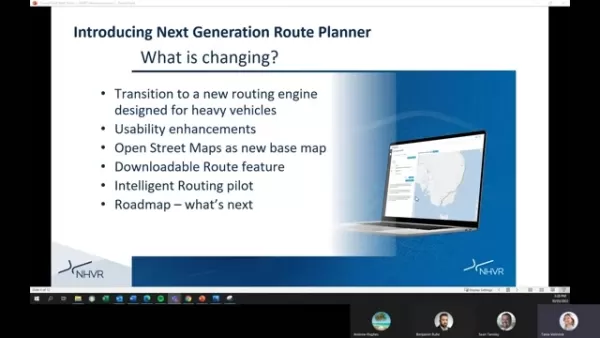
A major upgrade in the Next Generation Route Planner is the shift to OpenStreetMap (OSM) as its foundational map data.
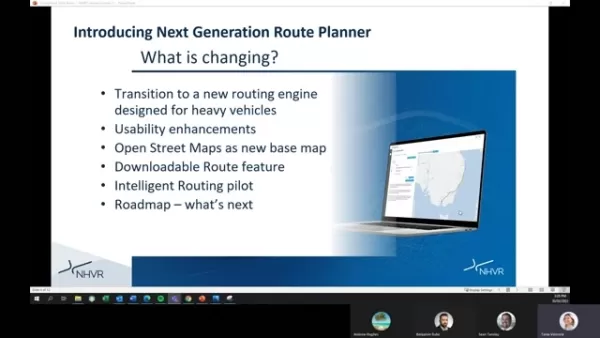
This move away from proprietary commercial mapping offers several key advantages:
- Cost-Effectiveness: Using OSM removes expensive licensing fees, making the platform more sustainable and accessible.
- Data Accuracy: OSM's collaborative, community-driven model allows for rapid error correction and updates, leading to more current and reliable road data.
- Community-Driven Updates: This model ensures map details are continually refined, a significant step forward from basic car navigation. The data is rich and detailed, improving the recognition of routing restrictions.
- Flexibility and Customization: The open-source nature of OSM allows the NHVR to tailor the map data to better suit the specific needs of the heavy vehicle industry.
While OSM is now the default, operators can switch back to the legacy map view if needed, ensuring a smooth transition.
Key Takeaway: The switch to OpenStreetMap enables a more robust routing experience tailored for heavy vehicles, better meeting operator needs.
Key Benefits and Enhancements
The Next Generation Route Planner introduces several improvements for a better user experience and more accurate routing.
- A New Routing Engine:
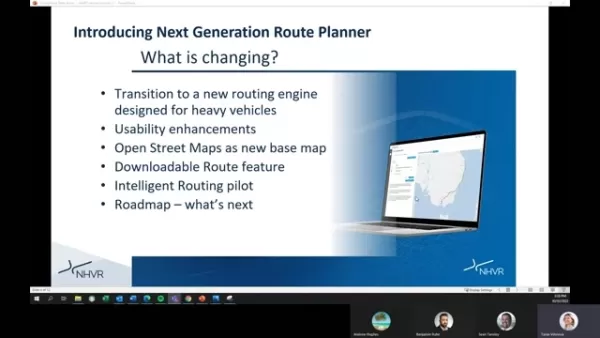
Designed specifically for heavy vehicles, this engine is a major driver of improved routing, accounting for truck characteristics and dimensions.
- Intelligent Routing Pilot: This system calculates the most efficient routes, considering posted road restrictions and permit requirements.
- Downloadable Route Feature: Routes can now be downloaded in useful formats, providing more than just a PDF. Enhanced mapping leads to more accurate heavy vehicle routing.
- Downloadable Routes: Operators can download routes in common formats for seamless integration with other navigation and fleet management systems.
- Usability Enhancements: Planned improvements include a refreshed map visual style for better clarity and toggle functions to simplify map reading.
- Dynamic Traffic Integration: Future potential includes using real-time traffic data to dynamically adjust routes for greater efficiency and safety.
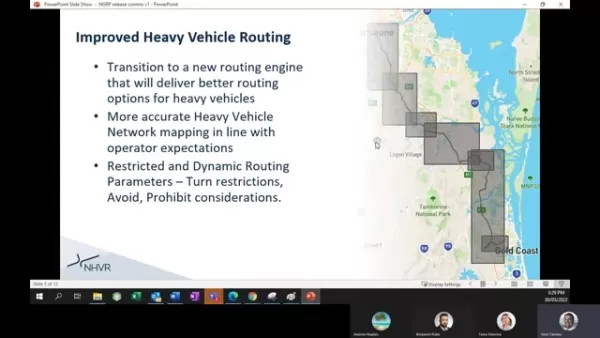
- Improved Heavy Vehicle Access: The system accounts for parameters like turn restrictions and prohibited roads, allowing routes to avoid unsuitable conditions.
- OpenStreetMap Enablement: OSM provides a better foundational experience designed for heavy vehicle routing, aligning outcomes with operator expectations.
The result is a clearer visual interface. Usability enhancements also improve touch and mouse navigation. Quick search functionality has been upgraded.
Deep Dive into Key Features
The Intelligent Routing Pilot: Optimizing Heavy Vehicle Routes
A standout feature of the Next Generation Route Planner is the Intelligent Routing Pilot. It goes beyond basic route calculation by considering factors specific to heavy vehicles to suggest the most efficient and compliant paths.
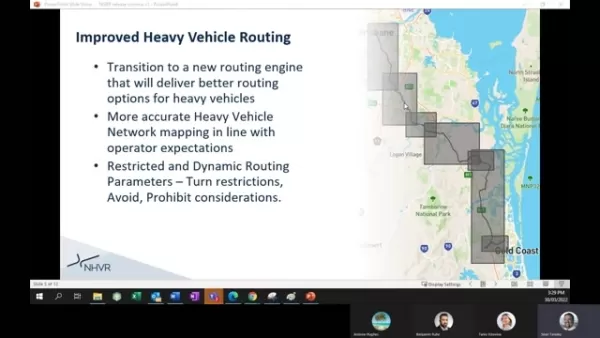
The pilot factors in critical aspects like gazetted roads requiring permits. It prioritizes routes with pre-approved access status and understands dynamic restrictions. The system also accounts for specific vehicle configurations, managing turn and road restrictions effectively.
By considering these elements, the Intelligent Routing Pilot aims to minimize travel time, reduce fuel consumption, and ensure regulatory compliance, boosting the overall efficiency and safety of heavy vehicle operations.
Usability Enhancements: A User-Centric Design
The NHVR has strongly emphasized usability in the Next Generation Route Planner, incorporating several enhancements based on user feedback to create a more intuitive platform.
These include:
Improved interaction for both touch and mouse navigation, making map searches easier.
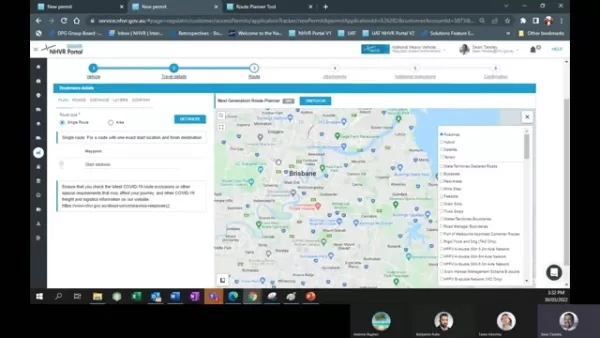
More defined and readable road displays.
Enhanced map detail.
Improved visual clarity.
How To Plan A Trip With the NHVR Next Generation Route Planner
Input Your Start and End Points
To use the NHVR tool, you need a start and end point. The interface provides address input boxes for easy entry of locations, GPS coordinates, or known points.
You can select different route types:
- Single Route: A journey with one specific start and one specific finish location.
- Area: This option displays heavy vehicle information for a selected geographical area.
Plan for Roads, and Select Heavy vehicle Information
Within the planner, carefully review the suggested roads for safety and suitability. Select your vehicle type, as this determines which routes are accessible.
Note any specific COVID-related requirements for your travel area.
Review Route Distances
Using the Distance tab, you can select roads and get a summary to identify the shortest possible trip.
Review and Confirm Routes
After selecting routes, verify all plan details are correct. You can save the route with a unique ID for future reuse.
Pricing: Free Access for All
No Cost to Users
The NHVR Next Generation Route Planner is a free service for heavy vehicle operators. The shift to OpenStreetMap supports a high-quality, sustainable service model.
There are no licensing fees, subscriptions, or usage charges.
Core Features of NHVR Next Generation Route Planner
High Performing Core Features
The Route Planner's core features are beneficial for long-haul heavy transport. The tool is particularly useful for trips requiring specialized heavy vehicle routing.
- Heavy Vehicle Routing: Designed specifically for heavy vehicles.
- Route Download: Enables seamless sharing of created map information.
- Road Network Management: Ability to align with the regulated road network.
- Heavy Vehicle Signage: The planner considers signage and posted restrictions for heavy vehicles.
- Bridges: Accounts for dynamic restrictions on bridges and vehicle dimensions.
- Swept Path Analysis: Uses technology to restrict certain turns based on vehicle movement, incorporating dynamic restrictions.
Use Cases: Optimizing Heavy Vehicle Operations
Use Cases
The NHVR Next Generation Route Planner can be applied in the following scenarios:
- Route Optimization: Identifies the most efficient routes, saving time and fuel costs.
- Compliance: Helps ensure compliance by avoiding restricted areas and adhering to weight and dimension limits.
- Pre-Trip Planning: Facilitates comprehensive journey planning, minimizing potential delays.
- Risk Mitigation: Helps operators mitigate risks and improve safety by accounting for road conditions and hazards.
- Emergency Response: Can be used to route heavy vehicles for emergency services when required.
FAQ
Is the NHVR Next Generation Route Planner free to use?
Yes, the Route Planner is a free service provided by the National Heavy Vehicle Regulator (NHVR).
What mapping data does the Route Planner use?
The planner uses OpenStreetMap (OSM) data. OSM is an open-source project with up-to-date road information, maintained by a collaborative community. A key benefit is that map updates can be implemented quickly to reflect real-world changes.
Can I still switch back to the legacy route planner?
Yes. If needed, you can switch back. Look for a toggle option on the map interface to switch between the Next Generation and the original route planner.
How often is the map updated in the Route Planner?
As the Route Planner uses OpenStreetMap data, map information is typically updated every few minutes. In most cases, updates occur within an hour.
Which routes are used by the heavy vehicle operators?
The Route Planner uses pre-approved routes and also considers a user's specific vehicle configuration. It intelligently determines if a truck can travel on a given route, with this feature currently in a pilot stage.
Related Questions
How does the Next Generation Route Planner compare to other route planning tools?
The Next Generation Route Planner stands out due to its specialized focus on heavy vehicles, integration of OpenStreetMap, and intelligent routing pilot. Other general route planning tools often lack this level of specialization or real-time data focus.
What are the next steps for the NHVR Route Planning tool?
The new maps support downloadable features, improving access for operators. Further integration is planned. A key next step is enabling local road managers to create and manage map conditions specific to their areas, allowing for local real-time updates. This tool will aid in data-driven decisions regarding bridge weights and turning paths to meet all compliance needs. It will benefit not only compliance but also planning for better heavy traffic management. This means councils could improve asset management and make better-informed long-term infrastructure decisions. The NHVR is partnering with Queensland's TMR and Victoria's Department of Transport to enable this functionality.
Related article
 Former OpenAI Researcher Barrett Zoph Returns to Google to Support Gemini Development
Barret Zoph, who previously abruptly left and joined OpenAI due to a disagreement with Thinking Machines Lab CEO Miriam Mularati, has once again changed employers. Alphabet's Google announced that Zoph will return as Vice President of Research, bring
How Recursive Intelligence Raised $335M at $4B Valuation in 4 Months
The co-founders of startup Ricursive Intelligence seemed destined to be co-founders.Anna Goldie, CEO, and Azalia Mirhoseini, CTO, are so well-known in the AI community that they were among those AI engineers who “got those weird emails from Zuckerber
AI race won’t wait, nor will this TechCrunch Disrupt 25% discount
Every founder building in AI right now is asking the same question: Are we moving fast enough, and effectively enough? TechCrunch Disrupt 2026 puts you in the same room as the people wrestling with that existential question at the highest levels. Fro
Related Special Topic Recommendations
Design & Art
Former OpenAI Researcher Barrett Zoph Returns to Google to Support Gemini Development
Barret Zoph, who previously abruptly left and joined OpenAI due to a disagreement with Thinking Machines Lab CEO Miriam Mularati, has once again changed employers. Alphabet's Google announced that Zoph will return as Vice President of Research, bring
How Recursive Intelligence Raised $335M at $4B Valuation in 4 Months
The co-founders of startup Ricursive Intelligence seemed destined to be co-founders.Anna Goldie, CEO, and Azalia Mirhoseini, CTO, are so well-known in the AI community that they were among those AI engineers who “got those weird emails from Zuckerber
AI race won’t wait, nor will this TechCrunch Disrupt 25% discount
Every founder building in AI right now is asking the same question: Are we moving fast enough, and effectively enough? TechCrunch Disrupt 2026 puts you in the same room as the people wrestling with that existential question at the highest levels. Fro
Related Special Topic Recommendations
Design & Art
 Top AI Illustration Tools: Create Editorial Scenes and Cover Art Faster
2026 Latest Top-rated AI Illustration Tools: Our curated list features the best powerfully designed tools for creating stunning editorial scenes and eye-catching cover art quickly. Each option has gone through rigorous real-world tests, offering a free vs paid comparison to help you find the perfect match for your workflow. Try these must-try solutions today to unlock your AI edge and boost your creative productivity. Explore now at XIX.AI.
 10 tools
 xix.ai
Education and Learning
Top AI Tutors for Exam Prep: Practice Math, Science, and English
xix.ai
Education and Learning
Top AI Tutors for Exam Prep: Practice Math, Science, and English
2026 Latest Top-Rated Best AI Tutors for Exam Prep are here on XIX.AI! Our curated list features powerful game-changing tools that offer free vs paid comparison, real-world tests, and weekly updated rankings. They help boost your writing efficiency, simplify complex topic learning, and unlock your academic potential. Explore now to Discover your perfect exam prep tool and Start creating today to Unlock your AI edge!
10 tools
xix.ai
Finance
AI Budget Planning Tools for Personal Money Management
2026 Latest Best Top-Rated AI Budget Planning Tools for Personal Money Management are here on XIX.AI! This curated collection features powerful, game-changing solutions that help you conduct real-world tests, understand spending habits, and create personalized plans to boost productivity. Enjoy a free vs paid comparison along with detailed rankings. Must-try tools designed to simplify money management and unlock your AI edge. Explore now!
11 tools
xix.ai
Health & Wellness
AI Sleep Tracking Assistants: Improve Recovery with Better Bedtime Habits
2026 Latest Best Top-Rated AI Sleep Tracking Assistants curated for ultimate recovery. This fully updated weekly guide features powerful tools that deliver real-world tests, free vs paid comparison, and detailed rankings to help you find the must-try solution that boosts sleep quality and supports better bedtime habits. Explore now at XIX.AI to Unlock your AI edge.
10 tools
xix.ai
Data Analysis
AI SQL Copilots for Product and Revenue Analytics
2026 Latest Best Top-Rated AI SQL Copilots for Product and Revenue Analytics! XIX.AI has curated a powerful, game-changing collection of must-try tools that undergo real-world tests through weekly updated rankings. These tools help users boost productivity significantly by accelerating data analysis, streamlining complex queries, and generating accurate insights to drive smarter business decisions. Explore now to Discover your perfect tool for unlocking your AI edge!
14 tools
xix.ai
Education and Learning
Best AI Homework Helpers That Teach: Learn Concepts, Not Just Answers
2026 Latest Best Top-Rated AI Homework Helpers That Teach Core Concepts Not Just Answers Powerful Tools for Students Must-Try Curated List Weekly Updated Free vs Paid Comparison Real-World Tests Accurate Rankings to Help You Unlock Your Full Learning Potential Explore now to Discover your perfect tool for smarter studying.
10 tools
xix.ai

 Comments (0)
0/500
Comments (0)
0/500
Navigating Australia's road network with heavy vehicles involves complex regulations and restrictions. The National Heavy Vehicle Regulator (NHVR) has developed the Next Generation Route Planner to simplify this process, providing a powerful tool for efficient and compliant journey planning. This guide offers a detailed overview of the NHVR Next Generation Route Planner, examining its core features, benefits for operators, and the platform's future roadmap.
Key Points
The NHVR Next Generation Route Planner is designed for Australia's heavy vehicle operators.
It uses OpenStreetMap (OSM) data for accurate, up-to-date road information.
The platform includes downloadable route features for greater utility.
An intelligent routing pilot optimizes paths based on heavy vehicle specifications.
A public roadmap outlines planned improvements and updates.
The tool prioritizes user-friendliness and operational efficiency.
Understanding the NHVR Next Generation Route Planner
What is the NHVR Next Generation Route Planner?
The NHVR Next Generation Route Planner is a web-based application developed by the National Heavy Vehicle Regulator (NHVR). Its primary function is to help heavy vehicle operators plan efficient and legally compliant routes across Australia.
It factors in vehicle dimensions, weight limits, road conditions, and permit requirements to recommend optimal routes. This tool is designed to streamline transportation planning for the heavy vehicle industry.
It represents a significant upgrade from previous versions, with a focus on intuitive design. The planner is a key part of the NHVR's commitment to enhancing safety and productivity in the sector.
The Transition to OpenStreetMap (OSM)
A major upgrade in the Next Generation Route Planner is the shift to OpenStreetMap (OSM) as its foundational map data.
This move away from proprietary commercial mapping offers several key advantages:
- Cost-Effectiveness: Using OSM removes expensive licensing fees, making the platform more sustainable and accessible.
- Data Accuracy: OSM's collaborative, community-driven model allows for rapid error correction and updates, leading to more current and reliable road data.
- Community-Driven Updates: This model ensures map details are continually refined, a significant step forward from basic car navigation. The data is rich and detailed, improving the recognition of routing restrictions.
- Flexibility and Customization: The open-source nature of OSM allows the NHVR to tailor the map data to better suit the specific needs of the heavy vehicle industry.
While OSM is now the default, operators can switch back to the legacy map view if needed, ensuring a smooth transition.
Key Takeaway: The switch to OpenStreetMap enables a more robust routing experience tailored for heavy vehicles, better meeting operator needs.
Key Benefits and Enhancements
The Next Generation Route Planner introduces several improvements for a better user experience and more accurate routing.
- A New Routing Engine:
Designed specifically for heavy vehicles, this engine is a major driver of improved routing, accounting for truck characteristics and dimensions.
- Intelligent Routing Pilot: This system calculates the most efficient routes, considering posted road restrictions and permit requirements.
- Downloadable Route Feature: Routes can now be downloaded in useful formats, providing more than just a PDF. Enhanced mapping leads to more accurate heavy vehicle routing.
- Downloadable Routes: Operators can download routes in common formats for seamless integration with other navigation and fleet management systems.
- Usability Enhancements: Planned improvements include a refreshed map visual style for better clarity and toggle functions to simplify map reading.
- Dynamic Traffic Integration: Future potential includes using real-time traffic data to dynamically adjust routes for greater efficiency and safety.
- Improved Heavy Vehicle Access: The system accounts for parameters like turn restrictions and prohibited roads, allowing routes to avoid unsuitable conditions.
- OpenStreetMap Enablement: OSM provides a better foundational experience designed for heavy vehicle routing, aligning outcomes with operator expectations.
The result is a clearer visual interface. Usability enhancements also improve touch and mouse navigation. Quick search functionality has been upgraded.
Deep Dive into Key Features
The Intelligent Routing Pilot: Optimizing Heavy Vehicle Routes
A standout feature of the Next Generation Route Planner is the Intelligent Routing Pilot. It goes beyond basic route calculation by considering factors specific to heavy vehicles to suggest the most efficient and compliant paths.
The pilot factors in critical aspects like gazetted roads requiring permits. It prioritizes routes with pre-approved access status and understands dynamic restrictions. The system also accounts for specific vehicle configurations, managing turn and road restrictions effectively.
By considering these elements, the Intelligent Routing Pilot aims to minimize travel time, reduce fuel consumption, and ensure regulatory compliance, boosting the overall efficiency and safety of heavy vehicle operations.
Usability Enhancements: A User-Centric Design
The NHVR has strongly emphasized usability in the Next Generation Route Planner, incorporating several enhancements based on user feedback to create a more intuitive platform.
These include:
Improved interaction for both touch and mouse navigation, making map searches easier.
More defined and readable road displays.
Enhanced map detail.
Improved visual clarity.
How To Plan A Trip With the NHVR Next Generation Route Planner
Input Your Start and End Points
To use the NHVR tool, you need a start and end point. The interface provides address input boxes for easy entry of locations, GPS coordinates, or known points.
You can select different route types:
- Single Route: A journey with one specific start and one specific finish location.
- Area: This option displays heavy vehicle information for a selected geographical area.
Plan for Roads, and Select Heavy vehicle Information
Within the planner, carefully review the suggested roads for safety and suitability. Select your vehicle type, as this determines which routes are accessible.
Note any specific COVID-related requirements for your travel area.
Review Route Distances
Using the Distance tab, you can select roads and get a summary to identify the shortest possible trip.
Review and Confirm Routes
After selecting routes, verify all plan details are correct. You can save the route with a unique ID for future reuse.
Pricing: Free Access for All
No Cost to Users
The NHVR Next Generation Route Planner is a free service for heavy vehicle operators. The shift to OpenStreetMap supports a high-quality, sustainable service model.
There are no licensing fees, subscriptions, or usage charges.
Core Features of NHVR Next Generation Route Planner
High Performing Core Features
The Route Planner's core features are beneficial for long-haul heavy transport. The tool is particularly useful for trips requiring specialized heavy vehicle routing.
- Heavy Vehicle Routing: Designed specifically for heavy vehicles.
- Route Download: Enables seamless sharing of created map information.
- Road Network Management: Ability to align with the regulated road network.
- Heavy Vehicle Signage: The planner considers signage and posted restrictions for heavy vehicles.
- Bridges: Accounts for dynamic restrictions on bridges and vehicle dimensions.
- Swept Path Analysis: Uses technology to restrict certain turns based on vehicle movement, incorporating dynamic restrictions.
Use Cases: Optimizing Heavy Vehicle Operations
Use Cases
The NHVR Next Generation Route Planner can be applied in the following scenarios:
- Route Optimization: Identifies the most efficient routes, saving time and fuel costs.
- Compliance: Helps ensure compliance by avoiding restricted areas and adhering to weight and dimension limits.
- Pre-Trip Planning: Facilitates comprehensive journey planning, minimizing potential delays.
- Risk Mitigation: Helps operators mitigate risks and improve safety by accounting for road conditions and hazards.
- Emergency Response: Can be used to route heavy vehicles for emergency services when required.
FAQ
Is the NHVR Next Generation Route Planner free to use?
Yes, the Route Planner is a free service provided by the National Heavy Vehicle Regulator (NHVR).
What mapping data does the Route Planner use?
The planner uses OpenStreetMap (OSM) data. OSM is an open-source project with up-to-date road information, maintained by a collaborative community. A key benefit is that map updates can be implemented quickly to reflect real-world changes.
Can I still switch back to the legacy route planner?
Yes. If needed, you can switch back. Look for a toggle option on the map interface to switch between the Next Generation and the original route planner.
How often is the map updated in the Route Planner?
As the Route Planner uses OpenStreetMap data, map information is typically updated every few minutes. In most cases, updates occur within an hour.
Which routes are used by the heavy vehicle operators?
The Route Planner uses pre-approved routes and also considers a user's specific vehicle configuration. It intelligently determines if a truck can travel on a given route, with this feature currently in a pilot stage.
Related Questions
How does the Next Generation Route Planner compare to other route planning tools?
The Next Generation Route Planner stands out due to its specialized focus on heavy vehicles, integration of OpenStreetMap, and intelligent routing pilot. Other general route planning tools often lack this level of specialization or real-time data focus.
What are the next steps for the NHVR Route Planning tool?
The new maps support downloadable features, improving access for operators. Further integration is planned. A key next step is enabling local road managers to create and manage map conditions specific to their areas, allowing for local real-time updates. This tool will aid in data-driven decisions regarding bridge weights and turning paths to meet all compliance needs. It will benefit not only compliance but also planning for better heavy traffic management. This means councils could improve asset management and make better-informed long-term infrastructure decisions. The NHVR is partnering with Queensland's TMR and Victoria's Department of Transport to enable this functionality.








 Former OpenAI Researcher Barrett Zoph Returns to Google to Support Gemini Development
Barret Zoph, who previously abruptly left and joined OpenAI due to a disagreement with Thinking Machines Lab CEO Miriam Mularati, has once again changed employers. Alphabet's Google announced that Zoph will return as Vice President of Research, bring
Former OpenAI Researcher Barrett Zoph Returns to Google to Support Gemini Development
Barret Zoph, who previously abruptly left and joined OpenAI due to a disagreement with Thinking Machines Lab CEO Miriam Mularati, has once again changed employers. Alphabet's Google announced that Zoph will return as Vice President of Research, bring
 How Recursive Intelligence Raised $335M at $4B Valuation in 4 Months
The co-founders of startup Ricursive Intelligence seemed destined to be co-founders.Anna Goldie, CEO, and Azalia Mirhoseini, CTO, are so well-known in the AI community that they were among those AI engineers who “got those weird emails from Zuckerber
How Recursive Intelligence Raised $335M at $4B Valuation in 4 Months
The co-founders of startup Ricursive Intelligence seemed destined to be co-founders.Anna Goldie, CEO, and Azalia Mirhoseini, CTO, are so well-known in the AI community that they were among those AI engineers who “got those weird emails from Zuckerber
 AI race won’t wait, nor will this TechCrunch Disrupt 25% discount
Every founder building in AI right now is asking the same question: Are we moving fast enough, and effectively enough? TechCrunch Disrupt 2026 puts you in the same room as the people wrestling with that existential question at the highest levels. Fro
AI race won’t wait, nor will this TechCrunch Disrupt 25% discount
Every founder building in AI right now is asking the same question: Are we moving fast enough, and effectively enough? TechCrunch Disrupt 2026 puts you in the same room as the people wrestling with that existential question at the highest levels. Fro

2026 Latest Top-rated AI Illustration Tools: Our curated list features the best powerfully designed tools for creating stunning editorial scenes and eye-catching cover art quickly. Each option has gone through rigorous real-world tests, offering a free vs paid comparison to help you find the perfect match for your workflow. Try these must-try solutions today to unlock your AI edge and boost your creative productivity. Explore now at XIX.AI.
10 tools
xix.ai

2026 Latest Top-Rated Best AI Tutors for Exam Prep are here on XIX.AI! Our curated list features powerful game-changing tools that offer free vs paid comparison, real-world tests, and weekly updated rankings. They help boost your writing efficiency, simplify complex topic learning, and unlock your academic potential. Explore now to Discover your perfect exam prep tool and Start creating today to Unlock your AI edge!
10 tools
xix.ai

2026 Latest Best Top-Rated AI Budget Planning Tools for Personal Money Management are here on XIX.AI! This curated collection features powerful, game-changing solutions that help you conduct real-world tests, understand spending habits, and create personalized plans to boost productivity. Enjoy a free vs paid comparison along with detailed rankings. Must-try tools designed to simplify money management and unlock your AI edge. Explore now!
11 tools
xix.ai

2026 Latest Best Top-Rated AI Sleep Tracking Assistants curated for ultimate recovery. This fully updated weekly guide features powerful tools that deliver real-world tests, free vs paid comparison, and detailed rankings to help you find the must-try solution that boosts sleep quality and supports better bedtime habits. Explore now at XIX.AI to Unlock your AI edge.
10 tools
xix.ai

2026 Latest Best Top-Rated AI SQL Copilots for Product and Revenue Analytics! XIX.AI has curated a powerful, game-changing collection of must-try tools that undergo real-world tests through weekly updated rankings. These tools help users boost productivity significantly by accelerating data analysis, streamlining complex queries, and generating accurate insights to drive smarter business decisions. Explore now to Discover your perfect tool for unlocking your AI edge!
14 tools
xix.ai

2026 Latest Best Top-Rated AI Homework Helpers That Teach Core Concepts Not Just Answers Powerful Tools for Students Must-Try Curated List Weekly Updated Free vs Paid Comparison Real-World Tests Accurate Rankings to Help You Unlock Your Full Learning Potential Explore now to Discover your perfect tool for smarter studying.
10 tools
xix.ai












