


 Home
HomeWhat is Google's Quantum AI advantage in 2026? Verifiable breakthrough explained.
The drive to understand the natural world fuels human discovery, from the vastness of planetary systems to the microscopic realm of living cells and their molecular engines. Yet, nature's inherent complexity consistently exceeds the capabilities of our current tools. Quantum computing represents the solution to this challenge. This article examines a significant leap forward: Google's Quantum AI and the first demonstration of a verifiable quantum advantage, a pivotal development set to reshape science and computation.
Key Points
Google Quantum AI has demonstrated verifiable quantum advantage using its Willow processor.
Quantum computers are engineered to transcend the limitations of classical computing.
The Willow chip executes specific algorithms 13,000 times faster than the most powerful supercomputers.
The Quantum Echoes algorithm is verifiable across various systems.
Quantum computing enables practical applications, such as determining molecular structures.
This marks a transition for quantum computing from theoretical research to practical scientific utility.
The Quantum Computing Revolution
Bridging the Gap: Quantum Computers Emerge
Humanity's enduring quest to decipher nature's mysteries has propelled innovation for centuries.

From observing the cosmos with telescopes to examining the intricate details of cellular structures with microscopes, our pursuit of knowledge has always driven technological progress. However, the profound complexity of natural phenomena has often outstripped the power of our available instruments.
This is the precise domain where quantum computers hold exceptional promise. These advanced machines are not merely faster versions of the classical computers we use every day; they signify a fundamental shift in how we process information and solve complex problems. Classical computers, which rely on bits representing either 0 or 1, face inherent limitations when simulating and optimizing intricate systems like molecular interactions or complex material properties.
Quantum computers leverage the principles of quantum mechanics through qubits. Qubits can exist in a state of superposition, representing 0, 1, or any combination of both states simultaneously. This property, combined with quantum entanglement, allows quantum computers to explore a solution space that grows exponentially compared to classical systems. This exponential scaling is what establishes quantum computing as a transformative technology across numerous scientific and technical fields.
Google Quantum AI: Leading the Charge
In the rapidly advancing field of quantum computing, Google Quantum AI has established itself as a pioneering force.

Dedicated to unlocking the full potential of quantum computation, Google's team is committed not only to theoretical progress but also to tangible applications and demonstrable quantum advantage. The team comprises some of the world's leading scientists.
Google Quantum AI has now achieved a critical milestone. This is more than a theoretical promise; it is a concrete, validated demonstration of quantum capability that surpasses classical methods in a replicable way. The breakthrough centers on the 'Willow' quantum processor and a specialized algorithm named 'Quantum Echoes.'
This accomplishment goes beyond mere computational speed; it represents a crucial evolution of quantum computing from a subject of scientific inquiry to an active tool for conducting science. It signals a move toward the technology's capacity to address real-world challenges with demonstrable superiority over existing methods. The approach taken by Google Quantum AI opens the door to practical applications that will redefine industries and solve problems previously considered intractable.
Inside the Willow Chip and the Quantum Echoes Algorithm
Google's Willow Chip: A New Era in Quantum Hardware
The core of Google's quantum breakthrough is the Willow chip, a state-of-the-art quantum processor that enabled this recent success.

Willow is not a simple incremental improvement; it constitutes a major leap in quantum processor design, fabrication, and control. The team includes some of the world’s foremost scientists.
Willow is constructed using superconducting integrated circuits. These circuits function at cryogenic temperatures, near absolute zero, which is essential for manifesting and controlling the quantum phenomena that enable qubit operation. This environment allows for highly precise quantum measurements.
Key characteristics of the Willow chip include:
- Enhanced Qubit Coherence: Qubit coherence refers to the length of time a qubit can maintain its quantum superposition state. Extended coherence times are critical for executing more complex quantum calculations, as they allow qubits to retain their information accurately for longer periods.
- Improved Connectivity: The Willow chip's architecture features enhanced connectivity between its qubits. This facilitates easier interaction and entanglement among qubits, enabling the execution of more sophisticated algorithms.
- Scalability: Scaling quantum systems is a primary challenge in the field. While specific architectural details remain proprietary, Google's emphasis on scalability suggests that Willow is designed to integrate a larger number of qubits without compromising performance. The ultimate objective is to process immense amounts of information.
The capabilities of the Willow chip not only provide a quantum advantage but also have tangible applications for real-world use. This advantage positions it at the forefront of the new generation of quantum processors.
The Quantum Echoes Algorithm Explained
The Quantum Echoes algorithm stands as a testament to Google's innovative work in quantum software.

In quantum computing, understanding the interactions between components within a quantum system is fundamental. This algorithm is engineered to probe, measure, and decipher these interactions with remarkable precision.
Vadim Smelyanskiy states, 'Our team has successfully executed an algorithm that investigates how different parts of a quantum system interact, providing a powerful tool for understanding quantum system behavior.' The quantum echo yields detailed functional information about the system.
A helpful analogy for the Quantum Echoes algorithm is to consider how an echo works in a cave, where a sound is emitted to reveal the structure of the space. It is similar to a submarine using sonar to detect underwater objects. This principle allows the Willow chip to engineer a quantum echo.
The Quantum Echoes algorithm utilizes a sequence of quantum gate operations applied across a 105-qubit array. It initiates by sending quantum 'signals' through the system, then introduces a targeted perturbation to specific qubits.
The operational sequence is as follows:
- Execute a series of forward operations.
- Perturb one qubit within the array.
- Run the identical series of operations in reverse.
- Measure the resulting effect.
Applying the forward operations and then reversing them enables researchers to extract hidden information about the quantum system's dynamics. This extracted information can be applied to understand molecular structures and behaviors.
Real-World Applications of Verifiable Quantum Advantage
Molecular Dynamics: Simulating and Understanding Molecular Behavior
One of the most immediate and promising applications of Google's quantum advantage is in molecular dynamics. This field involves simulating the movements and interactions of atoms and molecules over time. Such simulations are vital for understanding and predicting the behavior of complex chemical and biological systems. Google's quantum AI has the potential to accelerate these studies by several orders of magnitude.
The capacity to simulate molecular interactions accurately and efficiently unlocks potential in various areas, including:
- Drug Discovery: Simulating how potential drug molecules interact with target proteins in the body.
- Materials Science: Discovering and understanding the properties of novel materials, such as high-temperature superconductors, which could transform various technologies.
- Catalysis: Quantum simulations can aid in the design of more efficient catalysts for industrial chemical processes.
Nuclear Magnetic Resonance (NMR) Spectroscopy
NMR spectroscopy is a powerful analytical technique used to determine the structure and properties of molecules. It is instrumental in elucidating molecular shape, which is critical to understanding function. Dr. Nicholas Rubin of Google Quantum AI notes its utility in analyzing everything from protein structures to battery components.
The novel development with Google Quantum AI's algorithm helps distill the most significant information from NMR data, effectively reducing background noise in complex scenarios to provide clearer insights.
Pricing
Pricing is Not Yet Announced
Google has not yet disclosed pricing for access to the Willow chip or its quantum computing services. As quantum computing is still an emerging technology, it is understood that Google Quantum AI remains in a developmental phase. Many industry observers estimate that access to these advanced Quantum AI services could cost millions of dollars per year.
Assessing the Google Quantum AI Breakthrough: The Pros
and Cons
Pros
Demonstrates a verifiable quantum advantage, confirming the practical potential of quantum computing.
Executes algorithms at speeds significantly surpassing those of classical supercomputers.
Creates new opportunities for practical applications in molecular dynamics, materials science, drug discovery, and other fields.
Cons
The Quantum Echoes algorithm may be tailored for a specific class of problems, potentially limiting its immediate broad applicability.
Quantum computers are not yet mature enough to impact everyday situations.
The technology currently remains extremely costly to develop and access.
Core Features
Key Characteristics of Willow and Quantum Echoes
Google's quantum computing strategy integrates advanced hardware with innovative algorithms, charting the course for the next computing era.
Core features include:
- Enhanced Qubit Coherence
- Improved connectivity
- Scalability
- Quantum Echoes Algorithm
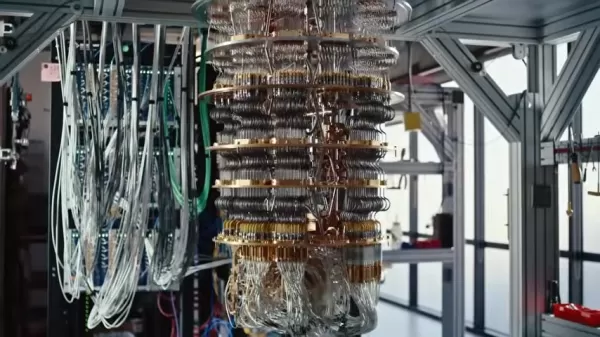
These core features are designed to test molecular properties across real-world applications. They are poised to elevate quantum computing to the next level of capability and utility.
Use Cases
Use Cases
The technology has numerous potential real-world applications.
- Molecular dynamics simulation
- Drug Discovery
- Material Science research
- Catalysis design
- Battery technology development
- NMR Spectroscopy enhancement
FAQ
What is verifiable quantum advantage?
Verifiable quantum advantage refers to a proven demonstration that a quantum computer can perform a specific computational task demonstrably better—for instance, faster or more accurately—than the best-known classical algorithms running on the most powerful supercomputers available, with the results being confirmable through independent verification methods.
What is Google's Quantum Echoes algorithm?
The Quantum Echoes algorithm is an innovative method developed by Google Quantum AI for probing and characterizing the interactions between components within a quantum system. It involves transmitting signals through the system, introducing perturbations to individual qubits, reversing the process, and then measuring the resulting 'echoes.' The data obtained reveals critical insights into the system's functional dynamics. This process is conducted across a 105-qubit array.
How much faster is the 'Willow' chip compared to classical supercomputers?
When running the Quantum Echoes algorithm, the Willow chip operates 13,000 times faster than the best classical algorithm executed on today's leading supercomputers. This represents a substantial achievement in computational performance.
Related Questions
What is quantum computing and how does it differ from classical computing?
Quantum computing is a revolutionary computational paradigm that utilizes the principles of quantum mechanics to solve problems beyond the practical reach of classical computers. Unlike classical computers, which process information using bits that are definitively 0 or 1, quantum computers use qubits. Qubits can exist in a superposition of both 0 and 1 simultaneously. This, combined with quantum entanglement—a phenomenon where qubits become correlated in such a way that the state of one instantly influences the state of another—enables quantum computers to explore a vast number of possibilities in parallel. The implications of this difference are profound, offering the potential to solve previously unsolvable problems in fields like drug discovery, materials science, cryptography, and complex optimization, thereby ushering in a new epoch of scientific and technological advancement.
What implications does verifiable quantum advantage have for the future of technology and scientific discovery?
Verifiable quantum advantage carries profound implications for the future technological landscape. It promises to accelerate scientific breakthroughs by performing computations that would take classical systems months or years in a fraction of the time, dramatically speeding up the pace of discovery. Furthermore, it is poised to revolutionize entire industries by enabling new products, services, and business models, leading to wide-ranging applications and novel discoveries across different scientific disciplines. The achievement of verifiable quantum advantage is a foundational step in this ongoing journey.
Related article
 Stripe to Acquire OpenRouter as AI Model Routing Gains Momentum
Stripe has agreed to acquire OpenRouter, an AI model-routing platform that gives developers access to hundreds of models through a single interface. The deal adds model selection and routing to Stripe’s existing work around AI usage and token-based b
Former OpenAI Researcher Barrett Zoph Returns to Google to Support Gemini Development
Barret Zoph, who previously abruptly left and joined OpenAI due to a disagreement with Thinking Machines Lab CEO Miriam Mularati, has once again changed employers. Alphabet's Google announced that Zoph will return as Vice President of Research, bring
How Recursive Intelligence Raised $335M at $4B Valuation in 4 Months
The co-founders of startup Ricursive Intelligence seemed destined to be co-founders.Anna Goldie, CEO, and Azalia Mirhoseini, CTO, are so well-known in the AI community that they were among those AI engineers who “got those weird emails from Zuckerber
Related Special Topic Recommendations
Design & Art
Stripe to Acquire OpenRouter as AI Model Routing Gains Momentum
Stripe has agreed to acquire OpenRouter, an AI model-routing platform that gives developers access to hundreds of models through a single interface. The deal adds model selection and routing to Stripe’s existing work around AI usage and token-based b
Former OpenAI Researcher Barrett Zoph Returns to Google to Support Gemini Development
Barret Zoph, who previously abruptly left and joined OpenAI due to a disagreement with Thinking Machines Lab CEO Miriam Mularati, has once again changed employers. Alphabet's Google announced that Zoph will return as Vice President of Research, bring
How Recursive Intelligence Raised $335M at $4B Valuation in 4 Months
The co-founders of startup Ricursive Intelligence seemed destined to be co-founders.Anna Goldie, CEO, and Azalia Mirhoseini, CTO, are so well-known in the AI community that they were among those AI engineers who “got those weird emails from Zuckerber
Related Special Topic Recommendations
Design & Art
 Top AI Illustration Tools: Create Editorial Scenes and Cover Art Faster
2026 Latest Top-rated AI Illustration Tools: Our curated list features the best powerfully designed tools for creating stunning editorial scenes and eye-catching cover art quickly. Each option has gone through rigorous real-world tests, offering a free vs paid comparison to help you find the perfect match for your workflow. Try these must-try solutions today to unlock your AI edge and boost your creative productivity. Explore now at XIX.AI.
 10 tools
 xix.ai
Education and Learning
Top AI Tutors for Exam Prep: Practice Math, Science, and English
xix.ai
Education and Learning
Top AI Tutors for Exam Prep: Practice Math, Science, and English
2026 Latest Top-Rated Best AI Tutors for Exam Prep are here on XIX.AI! Our curated list features powerful game-changing tools that offer free vs paid comparison, real-world tests, and weekly updated rankings. They help boost your writing efficiency, simplify complex topic learning, and unlock your academic potential. Explore now to Discover your perfect exam prep tool and Start creating today to Unlock your AI edge!
10 tools
xix.ai
Finance
AI Budget Planning Tools for Personal Money Management
2026 Latest Best Top-Rated AI Budget Planning Tools for Personal Money Management are here on XIX.AI! This curated collection features powerful, game-changing solutions that help you conduct real-world tests, understand spending habits, and create personalized plans to boost productivity. Enjoy a free vs paid comparison along with detailed rankings. Must-try tools designed to simplify money management and unlock your AI edge. Explore now!
11 tools
xix.ai
Health & Wellness
AI Sleep Tracking Assistants: Improve Recovery with Better Bedtime Habits
2026 Latest Best Top-Rated AI Sleep Tracking Assistants curated for ultimate recovery. This fully updated weekly guide features powerful tools that deliver real-world tests, free vs paid comparison, and detailed rankings to help you find the must-try solution that boosts sleep quality and supports better bedtime habits. Explore now at XIX.AI to Unlock your AI edge.
10 tools
xix.ai
Data Analysis
AI SQL Copilots for Product and Revenue Analytics
2026 Latest Best Top-Rated AI SQL Copilots for Product and Revenue Analytics! XIX.AI has curated a powerful, game-changing collection of must-try tools that undergo real-world tests through weekly updated rankings. These tools help users boost productivity significantly by accelerating data analysis, streamlining complex queries, and generating accurate insights to drive smarter business decisions. Explore now to Discover your perfect tool for unlocking your AI edge!
14 tools
xix.ai
Education and Learning
Best AI Homework Helpers That Teach: Learn Concepts, Not Just Answers
2026 Latest Best Top-Rated AI Homework Helpers That Teach Core Concepts Not Just Answers Powerful Tools for Students Must-Try Curated List Weekly Updated Free vs Paid Comparison Real-World Tests Accurate Rankings to Help You Unlock Your Full Learning Potential Explore now to Discover your perfect tool for smarter studying.
10 tools
xix.ai

 Comments (0)
0/500
Comments (0)
0/500
The drive to understand the natural world fuels human discovery, from the vastness of planetary systems to the microscopic realm of living cells and their molecular engines. Yet, nature's inherent complexity consistently exceeds the capabilities of our current tools. Quantum computing represents the solution to this challenge. This article examines a significant leap forward: Google's Quantum AI and the first demonstration of a verifiable quantum advantage, a pivotal development set to reshape science and computation.
Key Points
Google Quantum AI has demonstrated verifiable quantum advantage using its Willow processor.
Quantum computers are engineered to transcend the limitations of classical computing.
The Willow chip executes specific algorithms 13,000 times faster than the most powerful supercomputers.
The Quantum Echoes algorithm is verifiable across various systems.
Quantum computing enables practical applications, such as determining molecular structures.
This marks a transition for quantum computing from theoretical research to practical scientific utility.
The Quantum Computing Revolution
Bridging the Gap: Quantum Computers Emerge
Humanity's enduring quest to decipher nature's mysteries has propelled innovation for centuries.
From observing the cosmos with telescopes to examining the intricate details of cellular structures with microscopes, our pursuit of knowledge has always driven technological progress. However, the profound complexity of natural phenomena has often outstripped the power of our available instruments.
This is the precise domain where quantum computers hold exceptional promise. These advanced machines are not merely faster versions of the classical computers we use every day; they signify a fundamental shift in how we process information and solve complex problems. Classical computers, which rely on bits representing either 0 or 1, face inherent limitations when simulating and optimizing intricate systems like molecular interactions or complex material properties.
Quantum computers leverage the principles of quantum mechanics through qubits. Qubits can exist in a state of superposition, representing 0, 1, or any combination of both states simultaneously. This property, combined with quantum entanglement, allows quantum computers to explore a solution space that grows exponentially compared to classical systems. This exponential scaling is what establishes quantum computing as a transformative technology across numerous scientific and technical fields.
Google Quantum AI: Leading the Charge
In the rapidly advancing field of quantum computing, Google Quantum AI has established itself as a pioneering force.
Dedicated to unlocking the full potential of quantum computation, Google's team is committed not only to theoretical progress but also to tangible applications and demonstrable quantum advantage. The team comprises some of the world's leading scientists.
Google Quantum AI has now achieved a critical milestone. This is more than a theoretical promise; it is a concrete, validated demonstration of quantum capability that surpasses classical methods in a replicable way. The breakthrough centers on the 'Willow' quantum processor and a specialized algorithm named 'Quantum Echoes.'
This accomplishment goes beyond mere computational speed; it represents a crucial evolution of quantum computing from a subject of scientific inquiry to an active tool for conducting science. It signals a move toward the technology's capacity to address real-world challenges with demonstrable superiority over existing methods. The approach taken by Google Quantum AI opens the door to practical applications that will redefine industries and solve problems previously considered intractable.
Inside the Willow Chip and the Quantum Echoes Algorithm
Google's Willow Chip: A New Era in Quantum Hardware
The core of Google's quantum breakthrough is the Willow chip, a state-of-the-art quantum processor that enabled this recent success.
Willow is not a simple incremental improvement; it constitutes a major leap in quantum processor design, fabrication, and control. The team includes some of the world’s foremost scientists.
Willow is constructed using superconducting integrated circuits. These circuits function at cryogenic temperatures, near absolute zero, which is essential for manifesting and controlling the quantum phenomena that enable qubit operation. This environment allows for highly precise quantum measurements.
Key characteristics of the Willow chip include:
- Enhanced Qubit Coherence: Qubit coherence refers to the length of time a qubit can maintain its quantum superposition state. Extended coherence times are critical for executing more complex quantum calculations, as they allow qubits to retain their information accurately for longer periods.
- Improved Connectivity: The Willow chip's architecture features enhanced connectivity between its qubits. This facilitates easier interaction and entanglement among qubits, enabling the execution of more sophisticated algorithms.
- Scalability: Scaling quantum systems is a primary challenge in the field. While specific architectural details remain proprietary, Google's emphasis on scalability suggests that Willow is designed to integrate a larger number of qubits without compromising performance. The ultimate objective is to process immense amounts of information.
The capabilities of the Willow chip not only provide a quantum advantage but also have tangible applications for real-world use. This advantage positions it at the forefront of the new generation of quantum processors.
The Quantum Echoes Algorithm Explained
The Quantum Echoes algorithm stands as a testament to Google's innovative work in quantum software.
In quantum computing, understanding the interactions between components within a quantum system is fundamental. This algorithm is engineered to probe, measure, and decipher these interactions with remarkable precision.
Vadim Smelyanskiy states, 'Our team has successfully executed an algorithm that investigates how different parts of a quantum system interact, providing a powerful tool for understanding quantum system behavior.' The quantum echo yields detailed functional information about the system.
A helpful analogy for the Quantum Echoes algorithm is to consider how an echo works in a cave, where a sound is emitted to reveal the structure of the space. It is similar to a submarine using sonar to detect underwater objects. This principle allows the Willow chip to engineer a quantum echo.
The Quantum Echoes algorithm utilizes a sequence of quantum gate operations applied across a 105-qubit array. It initiates by sending quantum 'signals' through the system, then introduces a targeted perturbation to specific qubits.
The operational sequence is as follows:
- Execute a series of forward operations.
- Perturb one qubit within the array.
- Run the identical series of operations in reverse.
- Measure the resulting effect.
Applying the forward operations and then reversing them enables researchers to extract hidden information about the quantum system's dynamics. This extracted information can be applied to understand molecular structures and behaviors.
Real-World Applications of Verifiable Quantum Advantage
Molecular Dynamics: Simulating and Understanding Molecular Behavior
One of the most immediate and promising applications of Google's quantum advantage is in molecular dynamics. This field involves simulating the movements and interactions of atoms and molecules over time. Such simulations are vital for understanding and predicting the behavior of complex chemical and biological systems. Google's quantum AI has the potential to accelerate these studies by several orders of magnitude.
The capacity to simulate molecular interactions accurately and efficiently unlocks potential in various areas, including:
- Drug Discovery: Simulating how potential drug molecules interact with target proteins in the body.
- Materials Science: Discovering and understanding the properties of novel materials, such as high-temperature superconductors, which could transform various technologies.
- Catalysis: Quantum simulations can aid in the design of more efficient catalysts for industrial chemical processes.
Nuclear Magnetic Resonance (NMR) Spectroscopy
NMR spectroscopy is a powerful analytical technique used to determine the structure and properties of molecules. It is instrumental in elucidating molecular shape, which is critical to understanding function. Dr. Nicholas Rubin of Google Quantum AI notes its utility in analyzing everything from protein structures to battery components.
The novel development with Google Quantum AI's algorithm helps distill the most significant information from NMR data, effectively reducing background noise in complex scenarios to provide clearer insights.
Pricing
Pricing is Not Yet Announced
Google has not yet disclosed pricing for access to the Willow chip or its quantum computing services. As quantum computing is still an emerging technology, it is understood that Google Quantum AI remains in a developmental phase. Many industry observers estimate that access to these advanced Quantum AI services could cost millions of dollars per year.
Assessing the Google Quantum AI Breakthrough: The Pros
and Cons
Pros
Demonstrates a verifiable quantum advantage, confirming the practical potential of quantum computing.
Executes algorithms at speeds significantly surpassing those of classical supercomputers.
Creates new opportunities for practical applications in molecular dynamics, materials science, drug discovery, and other fields.
Cons
The Quantum Echoes algorithm may be tailored for a specific class of problems, potentially limiting its immediate broad applicability.
Quantum computers are not yet mature enough to impact everyday situations.
The technology currently remains extremely costly to develop and access.
Core Features
Key Characteristics of Willow and Quantum Echoes
Google's quantum computing strategy integrates advanced hardware with innovative algorithms, charting the course for the next computing era.
Core features include:
- Enhanced Qubit Coherence
- Improved connectivity
- Scalability
- Quantum Echoes Algorithm
These core features are designed to test molecular properties across real-world applications. They are poised to elevate quantum computing to the next level of capability and utility.
Use Cases
Use Cases
The technology has numerous potential real-world applications.
- Molecular dynamics simulation
- Drug Discovery
- Material Science research
- Catalysis design
- Battery technology development
- NMR Spectroscopy enhancement
FAQ
What is verifiable quantum advantage?
Verifiable quantum advantage refers to a proven demonstration that a quantum computer can perform a specific computational task demonstrably better—for instance, faster or more accurately—than the best-known classical algorithms running on the most powerful supercomputers available, with the results being confirmable through independent verification methods.
What is Google's Quantum Echoes algorithm?
The Quantum Echoes algorithm is an innovative method developed by Google Quantum AI for probing and characterizing the interactions between components within a quantum system. It involves transmitting signals through the system, introducing perturbations to individual qubits, reversing the process, and then measuring the resulting 'echoes.' The data obtained reveals critical insights into the system's functional dynamics. This process is conducted across a 105-qubit array.
How much faster is the 'Willow' chip compared to classical supercomputers?
When running the Quantum Echoes algorithm, the Willow chip operates 13,000 times faster than the best classical algorithm executed on today's leading supercomputers. This represents a substantial achievement in computational performance.
Related Questions
What is quantum computing and how does it differ from classical computing?
Quantum computing is a revolutionary computational paradigm that utilizes the principles of quantum mechanics to solve problems beyond the practical reach of classical computers. Unlike classical computers, which process information using bits that are definitively 0 or 1, quantum computers use qubits. Qubits can exist in a superposition of both 0 and 1 simultaneously. This, combined with quantum entanglement—a phenomenon where qubits become correlated in such a way that the state of one instantly influences the state of another—enables quantum computers to explore a vast number of possibilities in parallel. The implications of this difference are profound, offering the potential to solve previously unsolvable problems in fields like drug discovery, materials science, cryptography, and complex optimization, thereby ushering in a new epoch of scientific and technological advancement.
What implications does verifiable quantum advantage have for the future of technology and scientific discovery?
Verifiable quantum advantage carries profound implications for the future technological landscape. It promises to accelerate scientific breakthroughs by performing computations that would take classical systems months or years in a fraction of the time, dramatically speeding up the pace of discovery. Furthermore, it is poised to revolutionize entire industries by enabling new products, services, and business models, leading to wide-ranging applications and novel discoveries across different scientific disciplines. The achievement of verifiable quantum advantage is a foundational step in this ongoing journey.








 Stripe to Acquire OpenRouter as AI Model Routing Gains Momentum
Stripe has agreed to acquire OpenRouter, an AI model-routing platform that gives developers access to hundreds of models through a single interface. The deal adds model selection and routing to Stripe’s existing work around AI usage and token-based b
Stripe to Acquire OpenRouter as AI Model Routing Gains Momentum
Stripe has agreed to acquire OpenRouter, an AI model-routing platform that gives developers access to hundreds of models through a single interface. The deal adds model selection and routing to Stripe’s existing work around AI usage and token-based b
 Former OpenAI Researcher Barrett Zoph Returns to Google to Support Gemini Development
Barret Zoph, who previously abruptly left and joined OpenAI due to a disagreement with Thinking Machines Lab CEO Miriam Mularati, has once again changed employers. Alphabet's Google announced that Zoph will return as Vice President of Research, bring
Former OpenAI Researcher Barrett Zoph Returns to Google to Support Gemini Development
Barret Zoph, who previously abruptly left and joined OpenAI due to a disagreement with Thinking Machines Lab CEO Miriam Mularati, has once again changed employers. Alphabet's Google announced that Zoph will return as Vice President of Research, bring
 How Recursive Intelligence Raised $335M at $4B Valuation in 4 Months
The co-founders of startup Ricursive Intelligence seemed destined to be co-founders.Anna Goldie, CEO, and Azalia Mirhoseini, CTO, are so well-known in the AI community that they were among those AI engineers who “got those weird emails from Zuckerber
How Recursive Intelligence Raised $335M at $4B Valuation in 4 Months
The co-founders of startup Ricursive Intelligence seemed destined to be co-founders.Anna Goldie, CEO, and Azalia Mirhoseini, CTO, are so well-known in the AI community that they were among those AI engineers who “got those weird emails from Zuckerber

2026 Latest Top-rated AI Illustration Tools: Our curated list features the best powerfully designed tools for creating stunning editorial scenes and eye-catching cover art quickly. Each option has gone through rigorous real-world tests, offering a free vs paid comparison to help you find the perfect match for your workflow. Try these must-try solutions today to unlock your AI edge and boost your creative productivity. Explore now at XIX.AI.
10 tools
xix.ai

2026 Latest Top-Rated Best AI Tutors for Exam Prep are here on XIX.AI! Our curated list features powerful game-changing tools that offer free vs paid comparison, real-world tests, and weekly updated rankings. They help boost your writing efficiency, simplify complex topic learning, and unlock your academic potential. Explore now to Discover your perfect exam prep tool and Start creating today to Unlock your AI edge!
10 tools
xix.ai

2026 Latest Best Top-Rated AI Budget Planning Tools for Personal Money Management are here on XIX.AI! This curated collection features powerful, game-changing solutions that help you conduct real-world tests, understand spending habits, and create personalized plans to boost productivity. Enjoy a free vs paid comparison along with detailed rankings. Must-try tools designed to simplify money management and unlock your AI edge. Explore now!
11 tools
xix.ai

2026 Latest Best Top-Rated AI Sleep Tracking Assistants curated for ultimate recovery. This fully updated weekly guide features powerful tools that deliver real-world tests, free vs paid comparison, and detailed rankings to help you find the must-try solution that boosts sleep quality and supports better bedtime habits. Explore now at XIX.AI to Unlock your AI edge.
10 tools
xix.ai

2026 Latest Best Top-Rated AI SQL Copilots for Product and Revenue Analytics! XIX.AI has curated a powerful, game-changing collection of must-try tools that undergo real-world tests through weekly updated rankings. These tools help users boost productivity significantly by accelerating data analysis, streamlining complex queries, and generating accurate insights to drive smarter business decisions. Explore now to Discover your perfect tool for unlocking your AI edge!
14 tools
xix.ai

2026 Latest Best Top-Rated AI Homework Helpers That Teach Core Concepts Not Just Answers Powerful Tools for Students Must-Try Curated List Weekly Updated Free vs Paid Comparison Real-World Tests Accurate Rankings to Help You Unlock Your Full Learning Potential Explore now to Discover your perfect tool for smarter studying.
10 tools
xix.ai












