


 Home
HomeGoogle Debuts Search Live Worldwide, Powered by Gemini 3.1 Flash Live
Google has rolled out its "Search Live" feature across over 200 countries and territories worldwide. This update signals a major transition for mobile search—moving beyond conventional text and image queries toward real-time multimodal interactions. With the Google app or Google Lens on Android and iOS, users can now hold live AI conversations about their surroundings using just their phone's camera and voice.
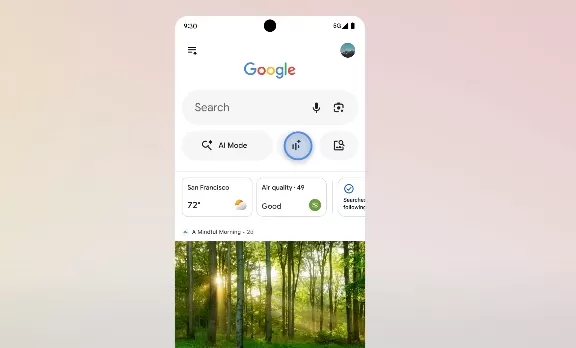
The engine driving Search Live is the new Gemini3.1Flash Live model. As a natively multilingual audio and speech large language model, it brings notable improvements to conversational naturalness and response times. In practice, users can point their camera at an object—say, a piece of furniture with complex assembly instructions, or an unfamiliar plant—and ask questions. The system responds with spoken answers and relevant web links, creating a seamless bridge between the physical world and digital information.

This global rollout is widely regarded as a strategic move by Google to counter growing competition in the AI search space. Rivals such as Luma AI with its Uni-1 model are vying for dominance in image processing, while OpenAI aims to build a super app by merging ChatGPT with browser capabilities. By making Search Live available worldwide, Google capitalizes on the lightweight and responsive nature of the Gemini3.1Flash Live model, strengthening its defenses at the mobile gateway.
Related article
 Amazon Launches Free Alexa+ on Fire TV Without Prime Membership
AI is making its way into your television, whether you’re ready for it or not.On Wednesday, Amazon announced that its AI assistant, Alexa+, will be available on all compatible Fire TV devices in the U.S. at no cost, regardless of Prime subscription s
OpenAI Closes Gap With Anthropic Among Business Users, New Data Shows
With OpenAI and Anthropic still distant from their anticipated IPOs and the release of detailed financial reports, we must turn to alternative indicators to gauge their business performance. Ramp, a corporate credit card and expense management platfo
Nvidia CEO Jensen Huang tells Trump ‘we’re not going to let [an AI slowdown] happen’
During his appearance at the All-In Summit in Los Angeles on Monday, Nvidia CEO Jensen Huang received an unexpected call from President Donald Trump, one he couldn’t simply ignore.“I’m on stage with the besties,” Huang explained to Trump, referencing
Related Special Topic Recommendations
Data Analysis
Amazon Launches Free Alexa+ on Fire TV Without Prime Membership
AI is making its way into your television, whether you’re ready for it or not.On Wednesday, Amazon announced that its AI assistant, Alexa+, will be available on all compatible Fire TV devices in the U.S. at no cost, regardless of Prime subscription s
OpenAI Closes Gap With Anthropic Among Business Users, New Data Shows
With OpenAI and Anthropic still distant from their anticipated IPOs and the release of detailed financial reports, we must turn to alternative indicators to gauge their business performance. Ramp, a corporate credit card and expense management platfo
Nvidia CEO Jensen Huang tells Trump ‘we’re not going to let [an AI slowdown] happen’
During his appearance at the All-In Summit in Los Angeles on Monday, Nvidia CEO Jensen Huang received an unexpected call from President Donald Trump, one he couldn’t simply ignore.“I’m on stage with the besties,” Huang explained to Trump, referencing
Related Special Topic Recommendations
Data Analysis
 AI SQL Analysis Tools for Business Intelligence Teams
2026 Latest Best Top-rated AI SQL Analysis Tools for Business Intelligence Teams! XIX.AI has curated a powerful, game-changing collection that goes through rigorous real-world tests. You’ll find a free vs paid comparison, detailed rankings, and in-depth insights to help you boost productivity significantly. Must-try options are available to unlock your AI edge. Explore now!
 11 tools
 xix.ai
Image editing
Best AI Batch Background Removal Tools for Catalog Images
xix.ai
Image editing
Best AI Batch Background Removal Tools for Catalog Images
2026 Latest Best Top-rated AI Batch Background Removal Tools for Catalog Images are curated by XIX.AI for quick, powerful removal of backgrounds from multiple images at once. These tools offer real-world tests and free vs paid comparison to help you find the most efficient solution that boosts your productivity significantly. Must-try options are regularly updated weekly. Explore now to Discover your perfect tool and Unlock your AI edge.
14 tools
xix.ai
Academic Research
AI Academic Writing Helpers: Improve Abstracts and Paper Structure
2026 Latest Best Top-Rated AI Academic Writing Helpers for Students & Researchers! XIX.AI has curated a powerful, game-changing collection of tools that undergo real-world tests to boost writing efficiency significantly. You’ll find detailed free vs paid comparison, weekly updated rankings, and insights on how these tools can help refine abstracts, structure papers, and overcome common academic writing challenges. Must-try for anyone aiming to unlock their AI edge in academic work. Explore now!
8 tools
xix.ai
Comic Creation
Best AI Comic Generators: Turn Story Ideas into Illustrated Panels
2026 Latest Best Top-rated AI Comic Generators ranked by actual user performance. This curated collection features powerful game-changing tools that help creators turn unique story ideas into polished illustrated panels fast, boosting productivity significantly. XIX.AI offers a detailed free vs paid comparison along with real-world tests to guide your choice. Explore now and Discover your perfect tool to unlock your AI edge in comic creation.
15 tools
xix.ai
Animation Creation
AI Scene Animation Tools for Social Media Content
2026 Latest Best Top-rated AI Scene Animation Tools for Social Media Content are curated here by XIX.AI. These powerful game-changing tools offer real-world tests and detailed free vs paid comparison, helping creators boost productivity significantly. Explore now to unlock your AI edge.
9 tools
xix.ai
Video creation
AI Short-Form Video Hook Generators for Reels, Shorts, and Product Launch Campaigns
2026 Latest Best AI Short-Form Video Hook Generators for Reels Shorts and Product Launch Campaigns! XIX.AI curates top-rated powerful game-changing tools that deliver must-try results through real-world tests. This weekly updated page offers free vs paid comparison rankings to help you find the perfect solution for boosting content creativity and productivity. Explore now to Unlock your AI edge!
11 tools
xix.ai

 Comments (0)
0/500
Comments (0)
0/500
Google has rolled out its "Search Live" feature across over 200 countries and territories worldwide. This update signals a major transition for mobile search—moving beyond conventional text and image queries toward real-time multimodal interactions. With the Google app or Google Lens on Android and iOS, users can now hold live AI conversations about their surroundings using just their phone's camera and voice.
The engine driving Search Live is the new Gemini3.1Flash Live model. As a natively multilingual audio and speech large language model, it brings notable improvements to conversational naturalness and response times. In practice, users can point their camera at an object—say, a piece of furniture with complex assembly instructions, or an unfamiliar plant—and ask questions. The system responds with spoken answers and relevant web links, creating a seamless bridge between the physical world and digital information.
This global rollout is widely regarded as a strategic move by Google to counter growing competition in the AI search space. Rivals such as Luma AI with its Uni-1 model are vying for dominance in image processing, while OpenAI aims to build a super app by merging ChatGPT with browser capabilities. By making Search Live available worldwide, Google capitalizes on the lightweight and responsive nature of the Gemini3.1Flash Live model, strengthening its defenses at the mobile gateway.








 Amazon Launches Free Alexa+ on Fire TV Without Prime Membership
AI is making its way into your television, whether you’re ready for it or not.On Wednesday, Amazon announced that its AI assistant, Alexa+, will be available on all compatible Fire TV devices in the U.S. at no cost, regardless of Prime subscription s
Amazon Launches Free Alexa+ on Fire TV Without Prime Membership
AI is making its way into your television, whether you’re ready for it or not.On Wednesday, Amazon announced that its AI assistant, Alexa+, will be available on all compatible Fire TV devices in the U.S. at no cost, regardless of Prime subscription s
 OpenAI Closes Gap With Anthropic Among Business Users, New Data Shows
With OpenAI and Anthropic still distant from their anticipated IPOs and the release of detailed financial reports, we must turn to alternative indicators to gauge their business performance. Ramp, a corporate credit card and expense management platfo
OpenAI Closes Gap With Anthropic Among Business Users, New Data Shows
With OpenAI and Anthropic still distant from their anticipated IPOs and the release of detailed financial reports, we must turn to alternative indicators to gauge their business performance. Ramp, a corporate credit card and expense management platfo
![Nvidia CEO Jensen Huang tells Trump ‘we’re not going to let [an AI slowdown] happen’](https://img.xix.ai/uploads/79/6aa87327d0e12.webp) Nvidia CEO Jensen Huang tells Trump ‘we’re not going to let [an AI slowdown] happen’
During his appearance at the All-In Summit in Los Angeles on Monday, Nvidia CEO Jensen Huang received an unexpected call from President Donald Trump, one he couldn’t simply ignore.“I’m on stage with the besties,” Huang explained to Trump, referencing
Nvidia CEO Jensen Huang tells Trump ‘we’re not going to let [an AI slowdown] happen’
During his appearance at the All-In Summit in Los Angeles on Monday, Nvidia CEO Jensen Huang received an unexpected call from President Donald Trump, one he couldn’t simply ignore.“I’m on stage with the besties,” Huang explained to Trump, referencing

2026 Latest Best Top-rated AI SQL Analysis Tools for Business Intelligence Teams! XIX.AI has curated a powerful, game-changing collection that goes through rigorous real-world tests. You’ll find a free vs paid comparison, detailed rankings, and in-depth insights to help you boost productivity significantly. Must-try options are available to unlock your AI edge. Explore now!
11 tools
xix.ai

2026 Latest Best Top-rated AI Batch Background Removal Tools for Catalog Images are curated by XIX.AI for quick, powerful removal of backgrounds from multiple images at once. These tools offer real-world tests and free vs paid comparison to help you find the most efficient solution that boosts your productivity significantly. Must-try options are regularly updated weekly. Explore now to Discover your perfect tool and Unlock your AI edge.
14 tools
xix.ai

2026 Latest Best Top-Rated AI Academic Writing Helpers for Students & Researchers! XIX.AI has curated a powerful, game-changing collection of tools that undergo real-world tests to boost writing efficiency significantly. You’ll find detailed free vs paid comparison, weekly updated rankings, and insights on how these tools can help refine abstracts, structure papers, and overcome common academic writing challenges. Must-try for anyone aiming to unlock their AI edge in academic work. Explore now!
8 tools
xix.ai

2026 Latest Best Top-rated AI Comic Generators ranked by actual user performance. This curated collection features powerful game-changing tools that help creators turn unique story ideas into polished illustrated panels fast, boosting productivity significantly. XIX.AI offers a detailed free vs paid comparison along with real-world tests to guide your choice. Explore now and Discover your perfect tool to unlock your AI edge in comic creation.
15 tools
xix.ai
2026 Latest Best Top-rated AI Scene Animation Tools for Social Media Content are curated here by XIX.AI. These powerful game-changing tools offer real-world tests and detailed free vs paid comparison, helping creators boost productivity significantly. Explore now to unlock your AI edge.
9 tools
xix.ai

2026 Latest Best AI Short-Form Video Hook Generators for Reels Shorts and Product Launch Campaigns! XIX.AI curates top-rated powerful game-changing tools that deliver must-try results through real-world tests. This weekly updated page offers free vs paid comparison rankings to help you find the perfect solution for boosting content creativity and productivity. Explore now to Unlock your AI edge!
11 tools
xix.ai












