


 Home
HomeIs Funoppia's FunAI IDE free in 2025 for kids' programming projects?
Dive into the exciting world of Artificial Intelligence and Machine Learning with Funoppia's FunAI IDE. This workshop sparks curiosity in young minds, introducing them to AI's limitless potential. Through its visual programming interface, beginners easily grasp complex ideas and create their own AI applications. The platform's intuitive design makes learning engaging and accessible for all.
Key Points
AI & Machine Learning Education: Introduces young learners to the fundamentals of AI and ML.
FunAI IDE: Leverages Funoppia's user-friendly FunAI IDE platform.
Visual Learning: Uses visual programming to simplify complex topics.
Hands-on Projects: Enables participants to build their own AI applications.
Accessibility: Bridges the gap between advanced AI concepts and young learners.
Collaboration with Experts: Features a partnership between educational institutions and Funoppia.
Demystifying AI & Machine Learning for Young Minds
What is Funoppia's FunAI IDE?
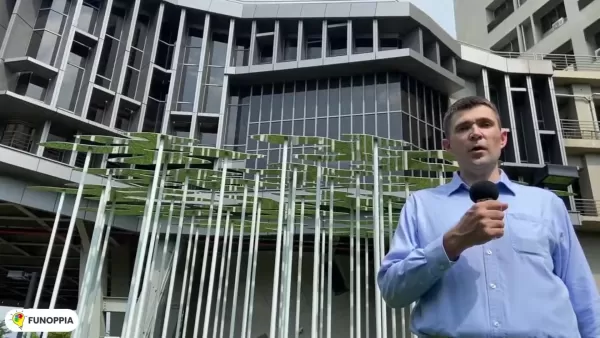
Funoppia's FunAI IDE is a visual platform that makes AI and machine learning accessible to young students. Its drag-and-drop interface simplifies coding, letting learners focus on concepts instead of complex syntax. As Asia’s first visual AI learning environment, it offers a novel educational approach. By combining blocks with code, students understand core principles. Funoppia provides courses and a 'FunZone' for interactive AI learning, all driven by the mission to empower everyone to learn AI visually.
The Power of Visual Learning in AI
Visual learning is key to engaging young minds and simplifying abstract concepts. FunAI IDE transforms intricate code into intuitive, manipulable blocks. This hands-on method fosters exploration, creativity, and a deeper grasp of AI fundamentals, lowering the barrier for those new to coding. The IDE integrates both visual and text-based coding, helping students connect block-based programming to real-world applications. Users can also upload their designs to a project playground and share them with the community.
Key Applications and Concepts Covered
Core Computer Vision Concepts
The workshop covers essential computer vision topics like semantic segmentation, object detection, and image classification. These are foundational AI areas that allow machines to "see" and interpret images, with applications in robotics, autonomous vehicles, and medical imaging.
- Semantic Segmentation: Labels every pixel in an image.
- Classification & Localization: Identifies and pinpoints objects within an image.
- Object Detection: Detects objects in real-world scenes. The OAK-D camera provides live feedback in Funoppia projects.
- Instance Segmentation: A detailed form of object detection that outlines individual object instances.
Unlocking AI with OAK-D Camera
A workshop highlight is the OAK-D camera, a powerful tool for real-time object detection and analysis. It serves as a practical platform for learning AI vision and offers unique visual AI development capabilities.

As Professor Wu noted, students can use the OAK-D camera alongside Funoppia’s Parkinson's disease quantifier to enter the Open CV AI competition. The device provides feedback to the FunAI IDE for testing code. For workshops like the Online Computer Vision & Artificial Intelligence session, the OAK-D is available at a discount, aligning with the goal to democratize AI.
The Relevance of Convolutional Neural Networks (CNNs)
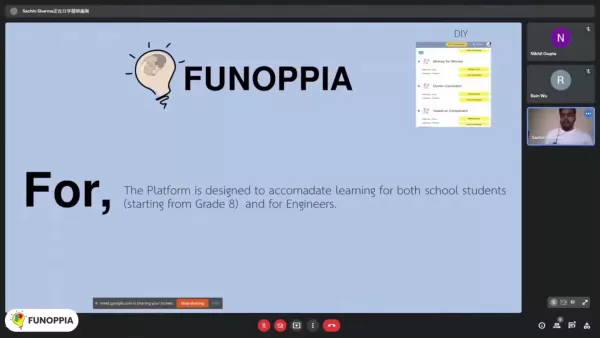
The session provides an introduction to CNNs. A Convolutional Neural Network is a core building block for comprehensive computer vision applications and underpins Funoppia's visual AI platform. Sachin notes that learning AI with Funoppia is as intuitive as children playing with building blocks. CNNs are emphasized for their wide applicability in areas like self-driving cars and object detection.
Getting Started With Funoppia: A Step-by-Step Guide
Accessing Funoppia's FunAI IDE
Go to the Funoppia website:www.funoppia.com
Find the FunAI IDE section.
Sign up for a free account or log in.
Browse the available resources and tutorials to learn the interface.
Embarking on a Beginner's Project: Building a Visual AI Application
- Choose a project from the workshop materials or start your own.
- Drag and drop the necessary blocks to build your application's logic.
- Configure the blocks with the right parameters.
- Test your application in real-time using a webcam or sample images.
- Share your creation with the Funoppia community!
The Cost of Visual AI Learning
Funoppia is Committed To Offering AI At An Affordable Price
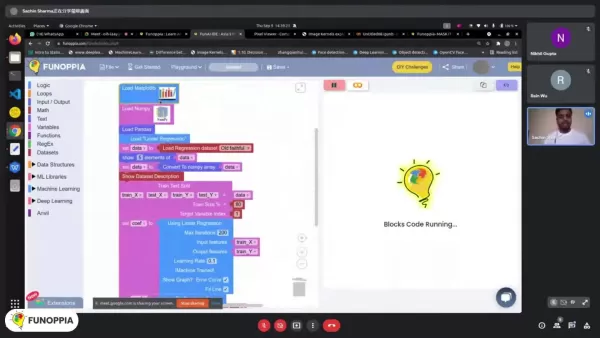
Accessibility is central to Funoppia's mission. The FunAI IDE platform is completely free to use, ensuring anyone can access the tools to learn AI, regardless of background or financial means. This commitment helps democratize AI education and empowers people everywhere to join the AI revolution.
Weighing the Options: Pros
and Cons
of Funoppia
Pros
Accessibility: Makes complex AI concepts easy with a visual interface.
Engagement: Promotes interactive, hands-on learning and experimentation.
Empowerment: Enables students and educators to create their own AI applications.
Cons
Limited Customization: Block-based programming might restrict advanced customization.
Hardware Requirements: Some advanced features and programs need specialized hardware.
Unveiling the Core Features of Funoppia's FunAI IDE
Blocks and Code Integration for Visual AI Design
FunAI IDE stands out by integrating block-based and traditional code. This approach bridges the gap between abstract code and tangible visual creations, building a strong foundation for understanding complex programming concepts.
Custom Datasets & Project Playground Integration
The Funoppia IDE supports various file types for machine learning projects, allowing for custom designs tailored to specific needs. Finished projects can be shared in the Project Playground, fostering collaboration and innovation within the AI community.
Visual AI Development for Education
The FunAI IDE's design tools help students and professionals expand their machine learning knowledge through straightforward processes. The ability to quickly upload and test designs enables rapid prototyping and application development.
AI in Action: Real-World Use Cases for Funoppia's FunAI IDE
Parkinson's Disease Quantifier

A team from National Cheng Kung University in Taiwan developed the Parkinson's Disease Quantifier. This tool, used with the OAK-D camera, aids in the study and treatment of Parkinson’s disease. Its development is further advanced through participation in the OpenCV AI competition, with the goal of improving disease diagnosis.
Mask Detection with Computer Vision
AI and ML also enable applications like face mask detection, where visual AI identifies whether masks are present and worn correctly. This program draws on techniques similar to those used in the OpenCV competition.
Broader Applications of Visual AI
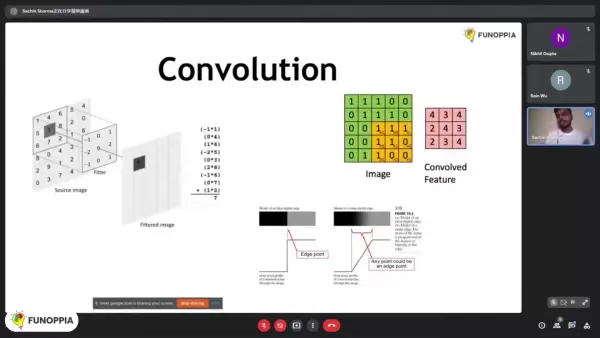
Sachin Sharma highlights real-world uses like visual navigation, optical character recognition, and surveillance, illustrating the wide range of applications for visual AI today. These areas represent potential project categories for Funoppia's design capabilities.
Frequently Asked Questions About Funoppia
What is the target audience for Funoppia's FunAI IDE?
Funoppia primarily targets young learners building AI and ML skills, but its visual, intuitive tools are suitable for anyone interested in AI, regardless of age or experience. The platform caters to a wide range of skill levels, from beginner to advanced.
What kind of computer equipment is needed?
Funoppia runs in a web browser. More advanced applications may require a dedicated GPU for model training. Some projects are also designed to work with the OAK-D camera.
Is Funoppia free?
Yes, the Funoppia system is free to use. However, certain specialized workshops and tutorials may have associated costs.
Related Questions
How can I learn computer vision effectively?
Effective computer vision learning combines theory with practice. Start with foundations like image processing, feature extraction, and basic machine learning. Online courses, tutorials, and workshops like Funoppia's offer structured paths. Hands-on projects, such as object detection or image classification, are crucial for reinforcing understanding and building skills. Consistent practice with both visual and code-based systems is key to mastering the concepts.
Related article
 Inside Details Exposed About Next-Gen Gemini: Strained Computing Power, Internal Teams Disagreed on Development Priorities and Resource Allocation
Reports indicate that the launch of Google’s highly anticipated next-generation Gemini model has been pushed back. Internal disagreements over development priorities and resource allocation, combined with limited computing capacity and complex approv
OpenAI Dismisses Growth Slowdown Concerns, Says Multiple Business Units Accelerating
In response to external scrutiny regarding decelerating sales growth and missed internal benchmarks, AI leader OpenAI issued a confident statement on Tuesday, April 28. The company clarified that its consumer products and enterprise services are adva
Alibaba Super Cup: Qwen3.8-Max Debuts with Boosted Coding and Office Tools
Alibaba has officially unveiled Qwen3.8-Max, a next-generation foundation large model boasting 2.4 trillion parameters. This significant AI advancement delivers substantial performance gains in core areas like coding and professional office tasks, sh
Related Special Topic Recommendations
Music composition
Inside Details Exposed About Next-Gen Gemini: Strained Computing Power, Internal Teams Disagreed on Development Priorities and Resource Allocation
Reports indicate that the launch of Google’s highly anticipated next-generation Gemini model has been pushed back. Internal disagreements over development priorities and resource allocation, combined with limited computing capacity and complex approv
OpenAI Dismisses Growth Slowdown Concerns, Says Multiple Business Units Accelerating
In response to external scrutiny regarding decelerating sales growth and missed internal benchmarks, AI leader OpenAI issued a confident statement on Tuesday, April 28. The company clarified that its consumer products and enterprise services are adva
Alibaba Super Cup: Qwen3.8-Max Debuts with Boosted Coding and Office Tools
Alibaba has officially unveiled Qwen3.8-Max, a next-generation foundation large model boasting 2.4 trillion parameters. This significant AI advancement delivers substantial performance gains in core areas like coding and professional office tasks, sh
Related Special Topic Recommendations
Music composition
 Best AI Melody Writing Tools for Song Drafts
2026 Latest Best Top-Rated AI Melody Writing Tools for Song Drafts! XIX.AI has curated a highly powerful game-changing collection that goes through rigorous real-world tests to deliver the best writing experience. You can find detailed free vs paid comparisons, accurate rankings, and must-try options designed to help you create stunning song drafts effortlessly and boost your creative productivity significantly. Explore now to discover your perfect tool!
 8 tools
 xix.ai
chatbot
Best AI Conversation Trainer Tools for Interview Practice
xix.ai
chatbot
Best AI Conversation Trainer Tools for Interview Practice
2026 Latest Best Top-rated AI Conversation Trainer Tools for Interview Practice are here on XIX.AI! This curated collection features powerful, game-changing tools that go through rigorous real-world tests to deliver accurate feedback. You’ll find a free vs paid comparison and detailed rankings to help you choose the must-try option that boosts your confidence and skills. Explore now to Discover your perfect tool for interview success!
12 tools
xix.ai
Design & Art
Best AI Style Transfer Tools for Creative Experiments
2026 Latest Best Top-rated AI Style Transfer Tools for Creative Experiments! XIX.AI has curated a powerful, game-changing collection of must-try tools that deliver exceptional results through real-world tests and rigorous rankings. These top solutions help creatives boost productivity significantly by accelerating content creation and unlocking endless creative possibilities. Explore now to discover your perfect tool and start creating today!
9 tools
xix.ai
Comic Creation
Best AI Dialogue Bubble Tools for Visual Storytelling
2026 Latest Best Top-Rated AI Dialogue Bubble Tools for Visual Storytelling are here on XIX.AI! This curated collection features powerful, game-changing tools that help creators boost productivity and overcome creative bottlenecks. Get a free vs paid comparison, see real-world tests, and check the latest rankings to find the must-try solutions perfect for crafting engaging visual narratives. Explore now to discover your ideal tool!
10 tools
xix.ai
Meeting Assistant
Top AI Meeting Summary Tools: Track Decisions and Follow-Ups Clearly
2026 Latest Top-Rated Best AI Meeting Summary Tools for Clear Decision Tracking and Effortless Follow-Ups. This curated list showcases powerful, game-changing solutions that boost productivity dramatically by automating meeting notes, identifying key action items, and streamlining team coordination across all projects. Get a free vs paid comparison along with real-world tests and weekly updated rankings to help you find the perfect tool. Explore now to unlock your AI edge!
9 tools
xix.ai
Data Analysis
Best AI Data Cleaning Tools: Fix Missing Values and Duplicates Fast
2026 Latest Best Top-rated AI Data Cleaning Tools for quick fixing of missing values and duplicates. This curated list showcases powerful, game-changing solutions that boost productivity significantly. Each option has undergone rigorous real-world tests to ensure reliability. Get a free vs paid comparison and discover the must-try tool that fits your needs best. Explore now at XIX.AI to Unlock your AI edge.
11 tools
xix.ai

 Comments (3)
0/500
Comments (3)
0/500
![BruceWalker]()
FunAI IDE免費嗎?2025年小朋友學程式設計的好幫手!這個視覺化介面看起來很適合初學者,能引發孩子對AI的興趣真的很棒。不過希望免費版功能夠用,別讓家長負擔太重啦~😊
![GaryGonzalez]()
FunAI IDEって2025年も無料なの?子供向けプログラミングツールって結局有料化されるパターン多いから心配…でもビジュアルインターフェースなら小学生の息子でも楽しめそう。AI教育が当たり前になる時代かもね。🤔
![WillCarter]()
Не знаю почему, но когда читаю про детское программирование с ИИ, чувствую себя растерянно… Как будто скоро мой щенок будет писать код лучше меня? 🤔 Понравилась идея визуального интерфейса – это может действительно помочь детям избежать демотивации от сложного синтаксиса.
Dive into the exciting world of Artificial Intelligence and Machine Learning with Funoppia's FunAI IDE. This workshop sparks curiosity in young minds, introducing them to AI's limitless potential. Through its visual programming interface, beginners easily grasp complex ideas and create their own AI applications. The platform's intuitive design makes learning engaging and accessible for all.
Key Points
AI & Machine Learning Education: Introduces young learners to the fundamentals of AI and ML.
FunAI IDE: Leverages Funoppia's user-friendly FunAI IDE platform.
Visual Learning: Uses visual programming to simplify complex topics.
Hands-on Projects: Enables participants to build their own AI applications.
Accessibility: Bridges the gap between advanced AI concepts and young learners.
Collaboration with Experts: Features a partnership between educational institutions and Funoppia.
Demystifying AI & Machine Learning for Young Minds
What is Funoppia's FunAI IDE?
Funoppia's FunAI IDE is a visual platform that makes AI and machine learning accessible to young students. Its drag-and-drop interface simplifies coding, letting learners focus on concepts instead of complex syntax. As Asia’s first visual AI learning environment, it offers a novel educational approach. By combining blocks with code, students understand core principles. Funoppia provides courses and a 'FunZone' for interactive AI learning, all driven by the mission to empower everyone to learn AI visually.
The Power of Visual Learning in AI
Visual learning is key to engaging young minds and simplifying abstract concepts. FunAI IDE transforms intricate code into intuitive, manipulable blocks. This hands-on method fosters exploration, creativity, and a deeper grasp of AI fundamentals, lowering the barrier for those new to coding. The IDE integrates both visual and text-based coding, helping students connect block-based programming to real-world applications. Users can also upload their designs to a project playground and share them with the community.
Key Applications and Concepts Covered
Core Computer Vision Concepts
The workshop covers essential computer vision topics like semantic segmentation, object detection, and image classification. These are foundational AI areas that allow machines to "see" and interpret images, with applications in robotics, autonomous vehicles, and medical imaging.
- Semantic Segmentation: Labels every pixel in an image.
- Classification & Localization: Identifies and pinpoints objects within an image.
- Object Detection: Detects objects in real-world scenes. The OAK-D camera provides live feedback in Funoppia projects.
- Instance Segmentation: A detailed form of object detection that outlines individual object instances.
Unlocking AI with OAK-D Camera
A workshop highlight is the OAK-D camera, a powerful tool for real-time object detection and analysis. It serves as a practical platform for learning AI vision and offers unique visual AI development capabilities.
As Professor Wu noted, students can use the OAK-D camera alongside Funoppia’s Parkinson's disease quantifier to enter the Open CV AI competition. The device provides feedback to the FunAI IDE for testing code. For workshops like the Online Computer Vision & Artificial Intelligence session, the OAK-D is available at a discount, aligning with the goal to democratize AI.
The Relevance of Convolutional Neural Networks (CNNs)
The session provides an introduction to CNNs. A Convolutional Neural Network is a core building block for comprehensive computer vision applications and underpins Funoppia's visual AI platform. Sachin notes that learning AI with Funoppia is as intuitive as children playing with building blocks. CNNs are emphasized for their wide applicability in areas like self-driving cars and object detection.
Getting Started With Funoppia: A Step-by-Step Guide
Accessing Funoppia's FunAI IDE
Go to the Funoppia website:www.funoppia.com
Find the FunAI IDE section.
Sign up for a free account or log in.
Browse the available resources and tutorials to learn the interface.
Embarking on a Beginner's Project: Building a Visual AI Application
- Choose a project from the workshop materials or start your own.
- Drag and drop the necessary blocks to build your application's logic.
- Configure the blocks with the right parameters.
- Test your application in real-time using a webcam or sample images.
- Share your creation with the Funoppia community!
The Cost of Visual AI Learning
Funoppia is Committed To Offering AI At An Affordable Price
Accessibility is central to Funoppia's mission. The FunAI IDE platform is completely free to use, ensuring anyone can access the tools to learn AI, regardless of background or financial means. This commitment helps democratize AI education and empowers people everywhere to join the AI revolution.
Weighing the Options: Pros
and Cons
of Funoppia
Pros
Accessibility: Makes complex AI concepts easy with a visual interface.
Engagement: Promotes interactive, hands-on learning and experimentation.
Empowerment: Enables students and educators to create their own AI applications.
Cons
Limited Customization: Block-based programming might restrict advanced customization.
Hardware Requirements: Some advanced features and programs need specialized hardware.
Unveiling the Core Features of Funoppia's FunAI IDE
Blocks and Code Integration for Visual AI Design
FunAI IDE stands out by integrating block-based and traditional code. This approach bridges the gap between abstract code and tangible visual creations, building a strong foundation for understanding complex programming concepts.
Custom Datasets & Project Playground Integration
The Funoppia IDE supports various file types for machine learning projects, allowing for custom designs tailored to specific needs. Finished projects can be shared in the Project Playground, fostering collaboration and innovation within the AI community.
Visual AI Development for Education
The FunAI IDE's design tools help students and professionals expand their machine learning knowledge through straightforward processes. The ability to quickly upload and test designs enables rapid prototyping and application development.
AI in Action: Real-World Use Cases for Funoppia's FunAI IDE
Parkinson's Disease Quantifier
A team from National Cheng Kung University in Taiwan developed the Parkinson's Disease Quantifier. This tool, used with the OAK-D camera, aids in the study and treatment of Parkinson’s disease. Its development is further advanced through participation in the OpenCV AI competition, with the goal of improving disease diagnosis.
Mask Detection with Computer Vision
AI and ML also enable applications like face mask detection, where visual AI identifies whether masks are present and worn correctly. This program draws on techniques similar to those used in the OpenCV competition.
Broader Applications of Visual AI
Sachin Sharma highlights real-world uses like visual navigation, optical character recognition, and surveillance, illustrating the wide range of applications for visual AI today. These areas represent potential project categories for Funoppia's design capabilities.
Frequently Asked Questions About Funoppia
What is the target audience for Funoppia's FunAI IDE?
Funoppia primarily targets young learners building AI and ML skills, but its visual, intuitive tools are suitable for anyone interested in AI, regardless of age or experience. The platform caters to a wide range of skill levels, from beginner to advanced.
What kind of computer equipment is needed?
Funoppia runs in a web browser. More advanced applications may require a dedicated GPU for model training. Some projects are also designed to work with the OAK-D camera.
Is Funoppia free?
Yes, the Funoppia system is free to use. However, certain specialized workshops and tutorials may have associated costs.
Related Questions
How can I learn computer vision effectively?
Effective computer vision learning combines theory with practice. Start with foundations like image processing, feature extraction, and basic machine learning. Online courses, tutorials, and workshops like Funoppia's offer structured paths. Hands-on projects, such as object detection or image classification, are crucial for reinforcing understanding and building skills. Consistent practice with both visual and code-based systems is key to mastering the concepts.








 Inside Details Exposed About Next-Gen Gemini: Strained Computing Power, Internal Teams Disagreed on Development Priorities and Resource Allocation
Reports indicate that the launch of Google’s highly anticipated next-generation Gemini model has been pushed back. Internal disagreements over development priorities and resource allocation, combined with limited computing capacity and complex approv
Inside Details Exposed About Next-Gen Gemini: Strained Computing Power, Internal Teams Disagreed on Development Priorities and Resource Allocation
Reports indicate that the launch of Google’s highly anticipated next-generation Gemini model has been pushed back. Internal disagreements over development priorities and resource allocation, combined with limited computing capacity and complex approv
 OpenAI Dismisses Growth Slowdown Concerns, Says Multiple Business Units Accelerating
In response to external scrutiny regarding decelerating sales growth and missed internal benchmarks, AI leader OpenAI issued a confident statement on Tuesday, April 28. The company clarified that its consumer products and enterprise services are adva
OpenAI Dismisses Growth Slowdown Concerns, Says Multiple Business Units Accelerating
In response to external scrutiny regarding decelerating sales growth and missed internal benchmarks, AI leader OpenAI issued a confident statement on Tuesday, April 28. The company clarified that its consumer products and enterprise services are adva
 Alibaba Super Cup: Qwen3.8-Max Debuts with Boosted Coding and Office Tools
Alibaba has officially unveiled Qwen3.8-Max, a next-generation foundation large model boasting 2.4 trillion parameters. This significant AI advancement delivers substantial performance gains in core areas like coding and professional office tasks, sh
Alibaba Super Cup: Qwen3.8-Max Debuts with Boosted Coding and Office Tools
Alibaba has officially unveiled Qwen3.8-Max, a next-generation foundation large model boasting 2.4 trillion parameters. This significant AI advancement delivers substantial performance gains in core areas like coding and professional office tasks, sh

2026 Latest Best Top-Rated AI Melody Writing Tools for Song Drafts! XIX.AI has curated a highly powerful game-changing collection that goes through rigorous real-world tests to deliver the best writing experience. You can find detailed free vs paid comparisons, accurate rankings, and must-try options designed to help you create stunning song drafts effortlessly and boost your creative productivity significantly. Explore now to discover your perfect tool!
8 tools
xix.ai

2026 Latest Best Top-rated AI Conversation Trainer Tools for Interview Practice are here on XIX.AI! This curated collection features powerful, game-changing tools that go through rigorous real-world tests to deliver accurate feedback. You’ll find a free vs paid comparison and detailed rankings to help you choose the must-try option that boosts your confidence and skills. Explore now to Discover your perfect tool for interview success!
12 tools
xix.ai

2026 Latest Best Top-rated AI Style Transfer Tools for Creative Experiments! XIX.AI has curated a powerful, game-changing collection of must-try tools that deliver exceptional results through real-world tests and rigorous rankings. These top solutions help creatives boost productivity significantly by accelerating content creation and unlocking endless creative possibilities. Explore now to discover your perfect tool and start creating today!
9 tools
xix.ai

2026 Latest Best Top-Rated AI Dialogue Bubble Tools for Visual Storytelling are here on XIX.AI! This curated collection features powerful, game-changing tools that help creators boost productivity and overcome creative bottlenecks. Get a free vs paid comparison, see real-world tests, and check the latest rankings to find the must-try solutions perfect for crafting engaging visual narratives. Explore now to discover your ideal tool!
10 tools
xix.ai

2026 Latest Top-Rated Best AI Meeting Summary Tools for Clear Decision Tracking and Effortless Follow-Ups. This curated list showcases powerful, game-changing solutions that boost productivity dramatically by automating meeting notes, identifying key action items, and streamlining team coordination across all projects. Get a free vs paid comparison along with real-world tests and weekly updated rankings to help you find the perfect tool. Explore now to unlock your AI edge!
9 tools
xix.ai

2026 Latest Best Top-rated AI Data Cleaning Tools for quick fixing of missing values and duplicates. This curated list showcases powerful, game-changing solutions that boost productivity significantly. Each option has undergone rigorous real-world tests to ensure reliability. Get a free vs paid comparison and discover the must-try tool that fits your needs best. Explore now at XIX.AI to Unlock your AI edge.
11 tools
xix.ai

FunAI IDE免費嗎?2025年小朋友學程式設計的好幫手!這個視覺化介面看起來很適合初學者,能引發孩子對AI的興趣真的很棒。不過希望免費版功能夠用,別讓家長負擔太重啦~😊
FunAI IDEって2025年も無料なの?子供向けプログラミングツールって結局有料化されるパターン多いから心配…でもビジュアルインターフェースなら小学生の息子でも楽しめそう。AI教育が当たり前になる時代かもね。🤔
Не знаю почему, но когда читаю про детское программирование с ИИ, чувствую себя растерянно… Как будто скоро мой щенок будет писать код лучше меня? 🤔 Понравилась идея визуального интерфейса – это может действительно помочь детям избежать демотивации от сложного синтаксиса.












