


 Home
HomeHelix AI System by Figure Set to Transform Robotics Industry in 2025
The robotics field is undergoing unprecedented transformation as artificial intelligence redefines operational capabilities. Figure AI's groundbreaking Helix system demonstrates performance that potentially eclipses human abilities in specific applications. This in-depth exploration examines Helix's technical innovations, practical implementations, and the profound implications for automated systems across multiple sectors - from industrial supply chains to advanced manufacturing environments.
Key Takeaways: Revolutionizing Robotics with Figure's Helix AI System
Implicit Stereo Vision: Provides comprehensive environmental modeling through advanced three-dimensional perception.
Multi-Scale Visual Representation: Simultaneously processes microscopic details and macroscopic contextual information.
Learned Visual Proprioception: Enables consistent deployment across robot fleets without individual recalibration.
Sport Mode: Delivers operational speeds exceeding human physical capabilities for select applications.
Cost-Effective Deployment: Innovative business models aim to increase accessibility of humanoid robotics solutions.
Cross-Industry Impact: Potential applications extend beyond core logistics into diverse professional sectors.
Unveiling Figure AI's Helix System: A New Era in Robotics
The Dawn of Superhuman AI Robots
We stand at the threshold where robotic systems not only replicate human activities but achieve superior operational benchmarks. Figure AI's Helix technology represents this evolutionary leap, translating science fiction concepts into tangible automation solutions. The second-generation demonstration showcases four foundational technological advancements that collectively redefine expectations for autonomous systems. These innovations carry significant implications for both industrial applications and broader societal integration of robotics.
What is HELIX AI System?
The HELIX AI platform represents a paradigm shift in humanoid robotics, integrating multiple breakthrough technologies:
- Advanced Vision System: Combines stereo depth perception with comprehensive environmental analysis
- Adaptive Proprioception: Automated self-calibration maintains consistent performance standards
- Performance Optimization: Specialized modes enhance operational efficiency
- Flexible Deployment Models: Alternative business approaches facilitate wider adoption
This integrated platform enables seamless human-environment interaction, potentially transforming operations across logistics networks, production facilities, and specialized professional environments.

Pricing and Availability: A Vision for Accessibility
A Glimpse at Potential Pricing Models
While official pricing structures remain undisclosed, Figure AI is developing innovative commercialization strategies. Current considerations include subscription-based service models that implement robotics-as-a-service (RaaS) for operational flexibility. Alternative approaches explore data monetization frameworks that could subsidize adoption costs, potentially making advanced automation accessible to smaller enterprises and institutional users.
How to Integrate Helix AI into Logistics
Step 1: Planning and Assessment
Conduct comprehensive operational analysis to identify automation opportunities within existing logistics frameworks. Key evaluation criteria should include material flow patterns, throughput bottlenecks, and ergonomic constraints. Establish quantifiable performance benchmarks aligned with operational KPIs to measure integration success.
Step 2: Robot Placement
Strategic positioning of robotic assets requires careful consideration of workflow dynamics. Optimal deployment locations typically include high-frequency material handling nodes, precision sorting stations, and loading interface points. System configuration should balance task specialization with overall process cohesion.
Step 3: Monitoring and Optimization
Implement continuous performance tracking with emphasis on cycle times, processing accuracy, and system reliability. Utilize predictive analytics to anticipate maintenance requirements and optimize operational parameters. Establish feedback loops between robotic performance data and process engineering teams for iterative system improvements.
The Promise and Challenges of the Helix AI System
Pros
Performance Advantages: Specialized operational modes demonstrate measurable productivity improvements over manual alternatives.
Operational Autonomy: Advanced cognitive capabilities minimize supervisory requirements while maintaining process integrity.
Scalable Implementation: Flexible deployment models accommodate varying organizational scales and budgetary constraints.
Cons
Capital Requirements: Initial investment thresholds may represent adoption barriers for certain market segments.
Workforce Implications: Potential labor displacement necessitates thoughtful transition strategies.
System Dependencies: Over-reliance on automated solutions requires robust contingency planning.
Four Revolutionary Breakthroughs of the Helix AI System
Implicit Stereo Vision: A 3D World in Sight
The Helix S1 implements sophisticated binocular vision processing that fundamentally transforms environmental interpretation. This advanced perception system integrates dual-camera inputs through a specialized neural architecture, creating unified spatial understanding with unprecedented precision.
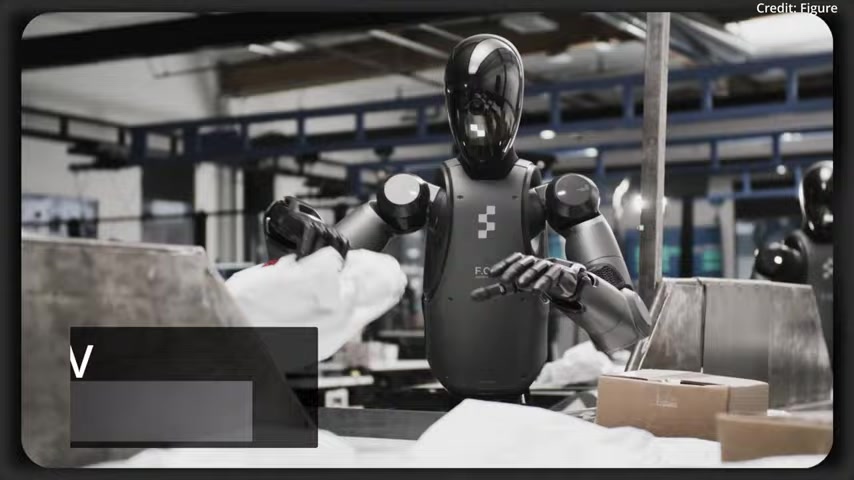
Key technical elements include cross-attention transformer integration and multi-spectral feature mapping, enabling simultaneous micro and macro environmental analysis. Practical applications range from precise part identification to complex spatial navigation in dynamic industrial environments.
Multi-Scale Visual Representation: Detail and Context in Harmony
The system's hierarchical visual processing architecture represents a significant advancement in machine perception. Rather than sequential analysis scales, Helix implements parallel processing streams that maintain both granular detail awareness and comprehensive situational context.

This technical approach yields substantial improvements in operational reliability, particularly for precision manipulation tasks within cluttered workspaces or variable lighting conditions.
Learned Visual Proprioception: Scaling Intelligence Across the Fleet
Helix addresses a critical challenge in robotic fleet deployment through innovative self-calibration methodologies. The system continuously auto-configures by analyzing relative end-effector positioning through integrated vision systems, eliminating manual calibration requirements.

This autonomous adaptation capability ensures consistent performance standards across heterogeneous hardware platforms, significantly simplifying large-scale operational deployments.
Sport Mode: Achieving Superhuman Speed and Efficiency
The system's performance optimization framework demonstrates remarkable efficiency gains through intelligent motion compression. By dynamically adjusting temporal execution parameters while maintaining kinematic accuracy, Helix achieves operation cycle times that surpass human physical capabilities in controlled applications.

Controlled testing has demonstrated up to 50% productivity improvements for repetitive manipulation tasks, with maintained precision standards and reduced fatigue factors compared to manual alternatives.
Use Cases: Transforming Industries with Versatile AI Robots
Logistics: Streamlining Package Handling and Warehouse Operations
Helix demonstrates particular efficacy in modern distribution environments, addressing critical challenges in parcel processing. Its advanced manipulation capabilities handle diverse packaging formats with consistent reliability, while adaptive vision systems maintain operational accuracy across variable lighting and spatial conditions.
Manufacturing: Enhancing Production Efficiency and Automation
Production environments benefit from Helix's precision assembly capabilities and quality inspection functionalities. The system's multi-modal perception enables complex component handling tasks traditionally requiring specialized fixturing or manual intervention.
Healthcare: Improving Patient Care and Support
While requiring rigorous validation, Helix shows promising potential in clinical support applications. Its sterile environment compatibility and delicate manipulation precision could assist in material handling, equipment preparation, and logistical support functions within healthcare facilities.
Frequently Asked Questions About Figure's Helix AI System
What are the key features of the Helix AI system?
The platform combines four core technical innovations: advanced three-dimensional perception, hierarchical visual processing, autonomous self-calibration, and dynamic performance optimization modes collectively enabling superior operational capabilities.
What industries can benefit from the Helix AI system?
Primary adoption sectors include commercial logistics, industrial manufacturing, and specialized service environments, with potential applications expanding as platform capabilities continue developing.
When can we expect to see widespread deployment of these robots?
Figure AI projects initial commercial availability within targeted verticals, with broader market penetration anticipated as production capacity scales to meet projected demand curves.
Related Questions on the Future of Robotics and AI
How will AI impact the future of work?
Advanced automation will likely transform rather than replace human roles, shifting workforce emphasis toward creative problem-solving, system oversight, and specialized cognitive tasks while automating routine physical operations.
What are the ethical considerations surrounding AI and robotics?
Critical discussions must address responsible automation deployment, workforce transition strategies, algorithmic transparency, and maintaining human oversight in safety-critical applications.
What are the long-term implications of superhuman AI?
While presenting significant productivity opportunities, advanced AI systems require careful governance frameworks to ensure beneficial integration, emphasizing human-machine collaboration rather than competition.
Related article
 Stripe to Acquire OpenRouter as AI Model Routing Gains Momentum
Stripe has agreed to acquire OpenRouter, an AI model-routing platform that gives developers access to hundreds of models through a single interface. The deal adds model selection and routing to Stripe’s existing work around AI usage and token-based b
Former OpenAI Researcher Barrett Zoph Returns to Google to Support Gemini Development
Barret Zoph, who previously abruptly left and joined OpenAI due to a disagreement with Thinking Machines Lab CEO Miriam Mularati, has once again changed employers. Alphabet's Google announced that Zoph will return as Vice President of Research, bring
How Recursive Intelligence Raised $335M at $4B Valuation in 4 Months
The co-founders of startup Ricursive Intelligence seemed destined to be co-founders.Anna Goldie, CEO, and Azalia Mirhoseini, CTO, are so well-known in the AI community that they were among those AI engineers who “got those weird emails from Zuckerber
Related Special Topic Recommendations
Design & Art
Stripe to Acquire OpenRouter as AI Model Routing Gains Momentum
Stripe has agreed to acquire OpenRouter, an AI model-routing platform that gives developers access to hundreds of models through a single interface. The deal adds model selection and routing to Stripe’s existing work around AI usage and token-based b
Former OpenAI Researcher Barrett Zoph Returns to Google to Support Gemini Development
Barret Zoph, who previously abruptly left and joined OpenAI due to a disagreement with Thinking Machines Lab CEO Miriam Mularati, has once again changed employers. Alphabet's Google announced that Zoph will return as Vice President of Research, bring
How Recursive Intelligence Raised $335M at $4B Valuation in 4 Months
The co-founders of startup Ricursive Intelligence seemed destined to be co-founders.Anna Goldie, CEO, and Azalia Mirhoseini, CTO, are so well-known in the AI community that they were among those AI engineers who “got those weird emails from Zuckerber
Related Special Topic Recommendations
Design & Art
 Top AI Illustration Tools: Create Editorial Scenes and Cover Art Faster
2026 Latest Top-rated AI Illustration Tools: Our curated list features the best powerfully designed tools for creating stunning editorial scenes and eye-catching cover art quickly. Each option has gone through rigorous real-world tests, offering a free vs paid comparison to help you find the perfect match for your workflow. Try these must-try solutions today to unlock your AI edge and boost your creative productivity. Explore now at XIX.AI.
 10 tools
 xix.ai
Education and Learning
Top AI Tutors for Exam Prep: Practice Math, Science, and English
xix.ai
Education and Learning
Top AI Tutors for Exam Prep: Practice Math, Science, and English
2026 Latest Top-Rated Best AI Tutors for Exam Prep are here on XIX.AI! Our curated list features powerful game-changing tools that offer free vs paid comparison, real-world tests, and weekly updated rankings. They help boost your writing efficiency, simplify complex topic learning, and unlock your academic potential. Explore now to Discover your perfect exam prep tool and Start creating today to Unlock your AI edge!
10 tools
xix.ai
Finance
AI Budget Planning Tools for Personal Money Management
2026 Latest Best Top-Rated AI Budget Planning Tools for Personal Money Management are here on XIX.AI! This curated collection features powerful, game-changing solutions that help you conduct real-world tests, understand spending habits, and create personalized plans to boost productivity. Enjoy a free vs paid comparison along with detailed rankings. Must-try tools designed to simplify money management and unlock your AI edge. Explore now!
11 tools
xix.ai
Health & Wellness
AI Sleep Tracking Assistants: Improve Recovery with Better Bedtime Habits
2026 Latest Best Top-Rated AI Sleep Tracking Assistants curated for ultimate recovery. This fully updated weekly guide features powerful tools that deliver real-world tests, free vs paid comparison, and detailed rankings to help you find the must-try solution that boosts sleep quality and supports better bedtime habits. Explore now at XIX.AI to Unlock your AI edge.
10 tools
xix.ai
Data Analysis
AI SQL Copilots for Product and Revenue Analytics
2026 Latest Best Top-Rated AI SQL Copilots for Product and Revenue Analytics! XIX.AI has curated a powerful, game-changing collection of must-try tools that undergo real-world tests through weekly updated rankings. These tools help users boost productivity significantly by accelerating data analysis, streamlining complex queries, and generating accurate insights to drive smarter business decisions. Explore now to Discover your perfect tool for unlocking your AI edge!
14 tools
xix.ai
Education and Learning
Best AI Homework Helpers That Teach: Learn Concepts, Not Just Answers
2026 Latest Best Top-Rated AI Homework Helpers That Teach Core Concepts Not Just Answers Powerful Tools for Students Must-Try Curated List Weekly Updated Free vs Paid Comparison Real-World Tests Accurate Rankings to Help You Unlock Your Full Learning Potential Explore now to Discover your perfect tool for smarter studying.
10 tools
xix.ai

 Comments (1)
0/500
Comments (1)
0/500
![TimothyWalker]()
Figure AI的Helix系統真的能超越人類能力嗎?這篇文章讓我既期待又擔憂,畢竟AI機器人如果全面取代人力,會不會引發大規模失業問題啊?不過技術進步確實驚人,2025年機器人產業看來要徹底洗牌了🤖
The robotics field is undergoing unprecedented transformation as artificial intelligence redefines operational capabilities. Figure AI's groundbreaking Helix system demonstrates performance that potentially eclipses human abilities in specific applications. This in-depth exploration examines Helix's technical innovations, practical implementations, and the profound implications for automated systems across multiple sectors - from industrial supply chains to advanced manufacturing environments.
Key Takeaways: Revolutionizing Robotics with Figure's Helix AI System
Implicit Stereo Vision: Provides comprehensive environmental modeling through advanced three-dimensional perception.
Multi-Scale Visual Representation: Simultaneously processes microscopic details and macroscopic contextual information.
Learned Visual Proprioception: Enables consistent deployment across robot fleets without individual recalibration.
Sport Mode: Delivers operational speeds exceeding human physical capabilities for select applications.
Cost-Effective Deployment: Innovative business models aim to increase accessibility of humanoid robotics solutions.
Cross-Industry Impact: Potential applications extend beyond core logistics into diverse professional sectors.
Unveiling Figure AI's Helix System: A New Era in Robotics
The Dawn of Superhuman AI Robots
We stand at the threshold where robotic systems not only replicate human activities but achieve superior operational benchmarks. Figure AI's Helix technology represents this evolutionary leap, translating science fiction concepts into tangible automation solutions. The second-generation demonstration showcases four foundational technological advancements that collectively redefine expectations for autonomous systems. These innovations carry significant implications for both industrial applications and broader societal integration of robotics.
What is HELIX AI System?
The HELIX AI platform represents a paradigm shift in humanoid robotics, integrating multiple breakthrough technologies:
- Advanced Vision System: Combines stereo depth perception with comprehensive environmental analysis
- Adaptive Proprioception: Automated self-calibration maintains consistent performance standards
- Performance Optimization: Specialized modes enhance operational efficiency
- Flexible Deployment Models: Alternative business approaches facilitate wider adoption
This integrated platform enables seamless human-environment interaction, potentially transforming operations across logistics networks, production facilities, and specialized professional environments.
Pricing and Availability: A Vision for Accessibility
A Glimpse at Potential Pricing Models
While official pricing structures remain undisclosed, Figure AI is developing innovative commercialization strategies. Current considerations include subscription-based service models that implement robotics-as-a-service (RaaS) for operational flexibility. Alternative approaches explore data monetization frameworks that could subsidize adoption costs, potentially making advanced automation accessible to smaller enterprises and institutional users.
How to Integrate Helix AI into Logistics
Step 1: Planning and Assessment
Conduct comprehensive operational analysis to identify automation opportunities within existing logistics frameworks. Key evaluation criteria should include material flow patterns, throughput bottlenecks, and ergonomic constraints. Establish quantifiable performance benchmarks aligned with operational KPIs to measure integration success.
Step 2: Robot Placement
Strategic positioning of robotic assets requires careful consideration of workflow dynamics. Optimal deployment locations typically include high-frequency material handling nodes, precision sorting stations, and loading interface points. System configuration should balance task specialization with overall process cohesion.
Step 3: Monitoring and Optimization
Implement continuous performance tracking with emphasis on cycle times, processing accuracy, and system reliability. Utilize predictive analytics to anticipate maintenance requirements and optimize operational parameters. Establish feedback loops between robotic performance data and process engineering teams for iterative system improvements.
The Promise and Challenges of the Helix AI System
Pros
Performance Advantages: Specialized operational modes demonstrate measurable productivity improvements over manual alternatives.
Operational Autonomy: Advanced cognitive capabilities minimize supervisory requirements while maintaining process integrity.
Scalable Implementation: Flexible deployment models accommodate varying organizational scales and budgetary constraints.
Cons
Capital Requirements: Initial investment thresholds may represent adoption barriers for certain market segments.
Workforce Implications: Potential labor displacement necessitates thoughtful transition strategies.
System Dependencies: Over-reliance on automated solutions requires robust contingency planning.
Four Revolutionary Breakthroughs of the Helix AI System
Implicit Stereo Vision: A 3D World in Sight
The Helix S1 implements sophisticated binocular vision processing that fundamentally transforms environmental interpretation. This advanced perception system integrates dual-camera inputs through a specialized neural architecture, creating unified spatial understanding with unprecedented precision.
Key technical elements include cross-attention transformer integration and multi-spectral feature mapping, enabling simultaneous micro and macro environmental analysis. Practical applications range from precise part identification to complex spatial navigation in dynamic industrial environments.
Multi-Scale Visual Representation: Detail and Context in Harmony
The system's hierarchical visual processing architecture represents a significant advancement in machine perception. Rather than sequential analysis scales, Helix implements parallel processing streams that maintain both granular detail awareness and comprehensive situational context.
This technical approach yields substantial improvements in operational reliability, particularly for precision manipulation tasks within cluttered workspaces or variable lighting conditions.
Learned Visual Proprioception: Scaling Intelligence Across the Fleet
Helix addresses a critical challenge in robotic fleet deployment through innovative self-calibration methodologies. The system continuously auto-configures by analyzing relative end-effector positioning through integrated vision systems, eliminating manual calibration requirements.
This autonomous adaptation capability ensures consistent performance standards across heterogeneous hardware platforms, significantly simplifying large-scale operational deployments.
Sport Mode: Achieving Superhuman Speed and Efficiency
The system's performance optimization framework demonstrates remarkable efficiency gains through intelligent motion compression. By dynamically adjusting temporal execution parameters while maintaining kinematic accuracy, Helix achieves operation cycle times that surpass human physical capabilities in controlled applications.
Controlled testing has demonstrated up to 50% productivity improvements for repetitive manipulation tasks, with maintained precision standards and reduced fatigue factors compared to manual alternatives.
Use Cases: Transforming Industries with Versatile AI Robots
Logistics: Streamlining Package Handling and Warehouse Operations
Helix demonstrates particular efficacy in modern distribution environments, addressing critical challenges in parcel processing. Its advanced manipulation capabilities handle diverse packaging formats with consistent reliability, while adaptive vision systems maintain operational accuracy across variable lighting and spatial conditions.
Manufacturing: Enhancing Production Efficiency and Automation
Production environments benefit from Helix's precision assembly capabilities and quality inspection functionalities. The system's multi-modal perception enables complex component handling tasks traditionally requiring specialized fixturing or manual intervention.
Healthcare: Improving Patient Care and Support
While requiring rigorous validation, Helix shows promising potential in clinical support applications. Its sterile environment compatibility and delicate manipulation precision could assist in material handling, equipment preparation, and logistical support functions within healthcare facilities.
Frequently Asked Questions About Figure's Helix AI System
What are the key features of the Helix AI system?
The platform combines four core technical innovations: advanced three-dimensional perception, hierarchical visual processing, autonomous self-calibration, and dynamic performance optimization modes collectively enabling superior operational capabilities.
What industries can benefit from the Helix AI system?
Primary adoption sectors include commercial logistics, industrial manufacturing, and specialized service environments, with potential applications expanding as platform capabilities continue developing.
When can we expect to see widespread deployment of these robots?
Figure AI projects initial commercial availability within targeted verticals, with broader market penetration anticipated as production capacity scales to meet projected demand curves.
Related Questions on the Future of Robotics and AI
How will AI impact the future of work?
Advanced automation will likely transform rather than replace human roles, shifting workforce emphasis toward creative problem-solving, system oversight, and specialized cognitive tasks while automating routine physical operations.
What are the ethical considerations surrounding AI and robotics?
Critical discussions must address responsible automation deployment, workforce transition strategies, algorithmic transparency, and maintaining human oversight in safety-critical applications.
What are the long-term implications of superhuman AI?
While presenting significant productivity opportunities, advanced AI systems require careful governance frameworks to ensure beneficial integration, emphasizing human-machine collaboration rather than competition.








 Stripe to Acquire OpenRouter as AI Model Routing Gains Momentum
Stripe has agreed to acquire OpenRouter, an AI model-routing platform that gives developers access to hundreds of models through a single interface. The deal adds model selection and routing to Stripe’s existing work around AI usage and token-based b
Stripe to Acquire OpenRouter as AI Model Routing Gains Momentum
Stripe has agreed to acquire OpenRouter, an AI model-routing platform that gives developers access to hundreds of models through a single interface. The deal adds model selection and routing to Stripe’s existing work around AI usage and token-based b
 Former OpenAI Researcher Barrett Zoph Returns to Google to Support Gemini Development
Barret Zoph, who previously abruptly left and joined OpenAI due to a disagreement with Thinking Machines Lab CEO Miriam Mularati, has once again changed employers. Alphabet's Google announced that Zoph will return as Vice President of Research, bring
Former OpenAI Researcher Barrett Zoph Returns to Google to Support Gemini Development
Barret Zoph, who previously abruptly left and joined OpenAI due to a disagreement with Thinking Machines Lab CEO Miriam Mularati, has once again changed employers. Alphabet's Google announced that Zoph will return as Vice President of Research, bring
 How Recursive Intelligence Raised $335M at $4B Valuation in 4 Months
The co-founders of startup Ricursive Intelligence seemed destined to be co-founders.Anna Goldie, CEO, and Azalia Mirhoseini, CTO, are so well-known in the AI community that they were among those AI engineers who “got those weird emails from Zuckerber
How Recursive Intelligence Raised $335M at $4B Valuation in 4 Months
The co-founders of startup Ricursive Intelligence seemed destined to be co-founders.Anna Goldie, CEO, and Azalia Mirhoseini, CTO, are so well-known in the AI community that they were among those AI engineers who “got those weird emails from Zuckerber

2026 Latest Top-rated AI Illustration Tools: Our curated list features the best powerfully designed tools for creating stunning editorial scenes and eye-catching cover art quickly. Each option has gone through rigorous real-world tests, offering a free vs paid comparison to help you find the perfect match for your workflow. Try these must-try solutions today to unlock your AI edge and boost your creative productivity. Explore now at XIX.AI.
10 tools
xix.ai

2026 Latest Top-Rated Best AI Tutors for Exam Prep are here on XIX.AI! Our curated list features powerful game-changing tools that offer free vs paid comparison, real-world tests, and weekly updated rankings. They help boost your writing efficiency, simplify complex topic learning, and unlock your academic potential. Explore now to Discover your perfect exam prep tool and Start creating today to Unlock your AI edge!
10 tools
xix.ai

2026 Latest Best Top-Rated AI Budget Planning Tools for Personal Money Management are here on XIX.AI! This curated collection features powerful, game-changing solutions that help you conduct real-world tests, understand spending habits, and create personalized plans to boost productivity. Enjoy a free vs paid comparison along with detailed rankings. Must-try tools designed to simplify money management and unlock your AI edge. Explore now!
11 tools
xix.ai

2026 Latest Best Top-Rated AI Sleep Tracking Assistants curated for ultimate recovery. This fully updated weekly guide features powerful tools that deliver real-world tests, free vs paid comparison, and detailed rankings to help you find the must-try solution that boosts sleep quality and supports better bedtime habits. Explore now at XIX.AI to Unlock your AI edge.
10 tools
xix.ai

2026 Latest Best Top-Rated AI SQL Copilots for Product and Revenue Analytics! XIX.AI has curated a powerful, game-changing collection of must-try tools that undergo real-world tests through weekly updated rankings. These tools help users boost productivity significantly by accelerating data analysis, streamlining complex queries, and generating accurate insights to drive smarter business decisions. Explore now to Discover your perfect tool for unlocking your AI edge!
14 tools
xix.ai

2026 Latest Best Top-Rated AI Homework Helpers That Teach Core Concepts Not Just Answers Powerful Tools for Students Must-Try Curated List Weekly Updated Free vs Paid Comparison Real-World Tests Accurate Rankings to Help You Unlock Your Full Learning Potential Explore now to Discover your perfect tool for smarter studying.
10 tools
xix.ai

Figure AI的Helix系統真的能超越人類能力嗎?這篇文章讓我既期待又擔憂,畢竟AI機器人如果全面取代人力,會不會引發大規模失業問題啊?不過技術進步確實驚人,2025年機器人產業看來要徹底洗牌了🤖












