


 Home
HomeHow to find hope in 2026? Mark Manson's Everything is F*cked summary.
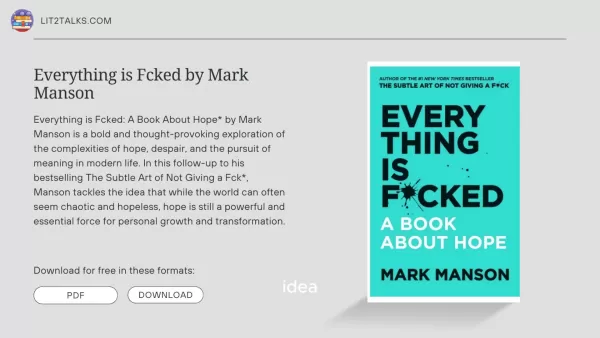
In 'Everything is F*cked: A Book About Hope,' Mark Manson tackles the intricate relationship between hope, despair, and the search for purpose in a world that can seem overwhelming. This compelling read questions the societal demand for perpetual optimism and presents a grounded strategy for genuine self-improvement. Learn how to confront difficult feelings, establish healthy limits, and uncover hope even during life's toughest moments.
Key Points
Acknowledge that difficult emotions are just as valid as positive ones.
Focus on your personal journey instead of measuring yourself against others.
Differentiate between what's within your control and what isn't, and direct your energy accordingly.
Develop a kinder inner dialogue and learn to shift your perspective.
Learn to say no and make your well-being a priority.
Build a sense of belonging by contributing to the lives of others.
Cultivate gratitude and learn to appreciate the here and now.
Understanding 'Everything is F*cked'
The Core Idea: Why Everything Sucks
Mark Manson's 'Everything is F*cked: A Book About Hope' pushes back against the modern expectation to maintain a cheerful facade at all times
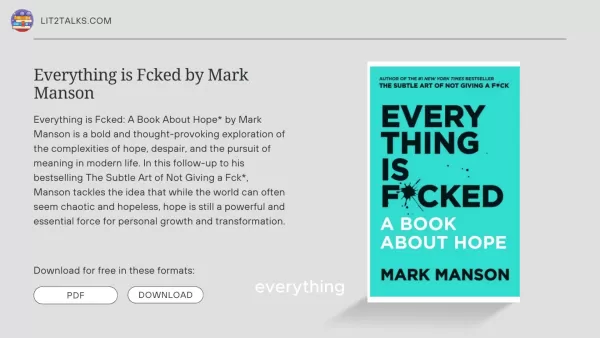
. It confronts the uncomfortable truth that struggle is an inherent part of life and that genuine progress comes from learning to cope with this reality. The bold title is intentionally attention-grabbing, signaling a frank conversation about the world's challenges and our personal reactions to them.
Manson posits that we are often inundated with a relentless stream of information, societal pressures, and personal worries. This constant influx can result in exhaustion, a sense of hopelessness, and the feeling that we have little agency. He believes that recognizing this predicament is the crucial first step toward taking back control and discovering substantial hope.
He explains that a significant portion of our distress originates from the internal narratives we construct and the principles we choose to emphasize. By scrutinizing these stories and adjusting our values to align with what is truly important, we can start to find our way through the turmoil and uncover a sense of direction. Manson's goal is not to provide simplistic solutions but to offer a structure for re-evaluating our interaction with the world and our own lives.
Ultimately, the central premise is that welcoming life's inherent difficulties and discomforts is fundamental to building resilience and fostering personal development. Adopting this outlook allows us to move past shallow optimism and nurture a more profound and enduring form of hope.
Keywords: Mark Manson, Everything is F*cked, hope, despair, meaning, suffering, chaos, values, personal growth, resilience, burnout, negative emotions.
Challenging the Culture of Cons
tant Positivity
Manson critiques the widespread culture of forced optimism that is prevalent in today's society
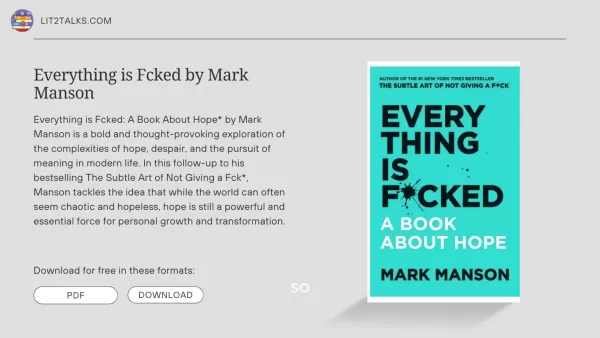
. This mindset, often reinforced by social media and the self-improvement industry, suggests that we should relentlessly pursue happiness and shun any negative feelings. Manson contends that this is not only unattainable but also harmful to our psychological and emotional health.
The expectation to remain constantly upbeat can foster feelings of incompetence and guilt when we naturally encounter sorrow, frustration, or worry. It establishes a misleading binary where unpleasant emotions are viewed as personal shortcomings rather than integral components of being human. Manson stresses that these feelings are critical for our development and self-preservation, offering crucial insights into our requirements, limits, and core beliefs.
When we stifle or reject difficult emotions, we risk losing touch with our authentic selves and impair our ability to handle life's obstacles effectively. Manson promotes a more nuanced and truthful approach to our feelings, accepting that both pleasant and unpleasant emotions have their place and enrich a complete and purposeful life.
He urges readers to scrutinize the narratives that advocate for endless cheerfulness and to foster a greater acceptance of their own emotional landscape. This means acquiring the skills to recognize and healthily process difficult emotions instead of evading them. Manson's viewpoint provides a revitalizing and necessary alternative to the often harmful positivity that saturates modern culture.
Keywords: constant positivity, negative emotions, Mental Health, emotional health, social media, self-help, anxiety, sadness, anger, human experience, self-acceptance, Mark Manson, Everything is F*cked.
The Importance of Accepting Negative Emotions
Mark Manson highlights the critical role of recognizing and welcoming difficult emotions as a key element of emotional equilibrium
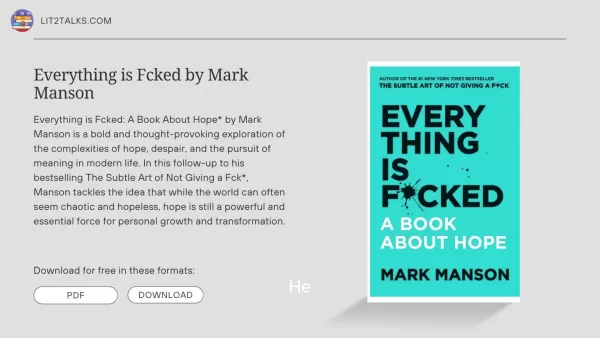
. Rather than viewing feelings like grief, irritation, or nervousness as enemies to be defeated, he contends they perform essential roles. These emotions offer valuable clues about our needs, personal boundaries, and deeply held values, acting as internal alarms that warn us of possible dangers or unfulfilled aspirations.
Trying to disregard or reject difficult emotions can create a rift between us and our true selves, impairing our capacity to navigate life's complexities. By learning to identify and work through these feelings constructively, we can achieve a more profound self-awareness and a clearer understanding of our situation. Manson champions a practical approach to emotions, acknowledging that both positive and negative feelings are part of a complex and meaningful life.
Additionally, Manson points out that dealing with difficult emotions is a shared human experience. He motivates readers to view their struggles as normal and to resist comparing their internal state to the seemingly constant happiness of others. This entails disputing the misleading stories that promote never-ending positivity and fostering self-kindness when facing hardship.
In short, Manson's philosophy invites us to welcome the entire range of human emotion, understanding that both joy and sorrow are indispensable for our development, strength, and overall health.
Keywords: negative emotions, emotional life, mental health, sadness, anger, anxiety, human condition, self-compassion, resilience, well-being, Mark Manson, Everything is F*cked.
Overcoming the Comparison Trap
Manson explores the common problem of measuring ourselves against others and its damaging effect on our contentment and self-esteem
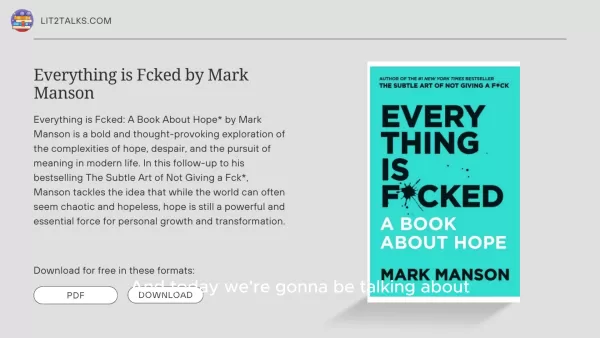
. In our digitally saturated age, we are continuously exposed to portrayals of apparently flawless lives, achievements, and connections, especially on social platforms. This persistent visibility can trigger feelings of not being good enough, jealousy, and a warped perception of our own worth.
Manson argues that falling into the comparison trap is a pointless endeavor because each person is on a distinct path, confronting their own unique obstacles and situations. He encourages readers to concentrate on their own principles, objectives, and personal advancement, rather than judging themselves by outside benchmarks.
He emphasizes that surface appearances are often misleading, and the content we see online is frequently a filtered and perfected representation of reality. Behind the glossy exterior, every individual deals with their own uncertainties, questions, and difficulties. By acknowledging this shared experience, we can develop increased empathy and kindness for ourselves and those around us.
Manson advises redirecting our attention from seeking external approval to cultivating internal contentment. This means establishing significant goals that resonate with our values, acknowledging our successes, and gaining wisdom from our mistakes. By emphasizing our own development and satisfaction, we can escape the comparison cycle and build a more genuine and lasting sense of happiness.
Keywords: comparison trap, happiness, self-worth, social media, unique journey, external validation, internal satisfaction, empathy, compassion, insecurities, Mark Manson, Everything is F*cked.
Practical Tools and Techniques for Hope
Reframing Your Thoughts for a New Perspective
Cognitive reframing is a powerful mental strategy Manson discusses for altering how you interpret events and situations
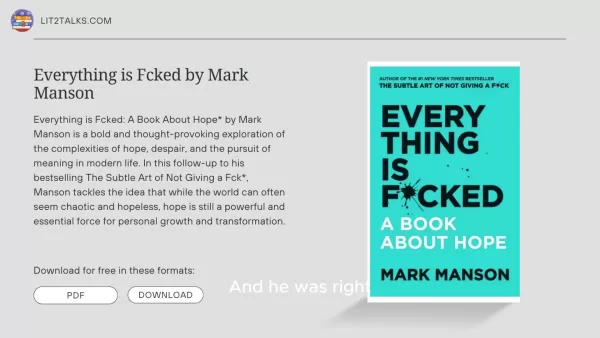
. It entails questioning pessimistic or unproductive thought habits and substituting them with more constructive or balanced alternatives. By modifying our thought processes about our circumstances, we can transform our emotional responses and behaviors.
Manson proposes several methods for reframing your thinking, such as:
- Spotting unhelpful thought patterns: The initial phase is to become conscious of the negative thoughts affecting your feelings and actions. This requires monitoring your internal monologue and noticing when you fall into self-criticism, worst-case scenario thinking, or other counterproductive patterns.
- Questioning negative thoughts: After identifying a pessimistic thought, test its accuracy. Ask yourself if any factual evidence supports the thought or if it's rooted in preconceptions or distortions.
Cons
ider different interpretations of the situation and look for information that contradicts the negative assumption. - Substituting negative thoughts with balanced alternatives: Once you've challenged a negative thought, replace it with a more positive or realistic one. This involves highlighting favorable elements of the situation, identifying chances for development, and accepting that obstacles are a normal aspect of life.
Thought reframing isn't about ignoring or suppressing difficult emotions. Instead, it's about gaining a more well-rounded and practical viewpoint on your experiences and building a more robust mentality. With consistent practice, it can become an effective method for handling stress, conquering challenges, and fostering a stronger sense of hope.
Keywords: reframing thoughts, cognitive technique, perception, negative thoughts, positive thoughts, realistic thoughts, self-criticism, catastrophizing, stress management, resilience, mindset, Mark Manson, Everything is F*cked.
Cultivating Self-Compassion for Emotional Well-being
Self-compassion is a fundamental element in Mark Manson's blueprint for hope, highlighting the significance of treating yourself with gentleness, empathy, and acceptance, especially during periods of difficulty or failure
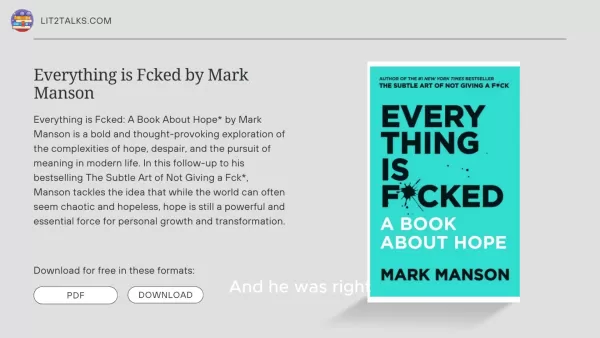
. It involves understanding that being imperfect is a universal human trait and that you are not isolated in your struggles.
Manson asserts that self-compassion is vital for emotional health because it enables us to face challenges with increased resilience and self-acceptance. It consists of:
- Acknowledging your own pain: The first step is to recognize that you are going through a hard time. This means tuning into your emotions and permitting yourself to experience them without self-judgment.
- Being kind to yourself: Instead of engaging in self-criticism or blame, extend to yourself the same compassion and support you would offer a close friend. This includes using encouraging self-talk, engaging in self-care practices, and avoiding destructive internal dialogue.
- Recognizing shared human experience: Remember that flaws and struggles are part of the universal human condition and that you are not alone in your suffering. This means connecting with others who have similar experiences and understanding that everyone encounters difficulties in their lives.
Self-compassion is not about self-indulgence or wallowing in self-pity. Rather, it's about fostering a more balanced and accepting relationship with yourself, which can lead to greater emotional strength, self-worth, and overall wellness.
Keywords: self-compassion, emotional well-being, kindness, understanding, acceptance, imperfection, human experience, resilience, self-esteem, self-pity, Mark Manson, Everything is F*cked.
How to Apply Manson's Philosophy in Daily Life
Setting Boundaries for a Healthier Life
Establishing clear boundaries is an essential move toward regaining command of your life and making your own needs a priority
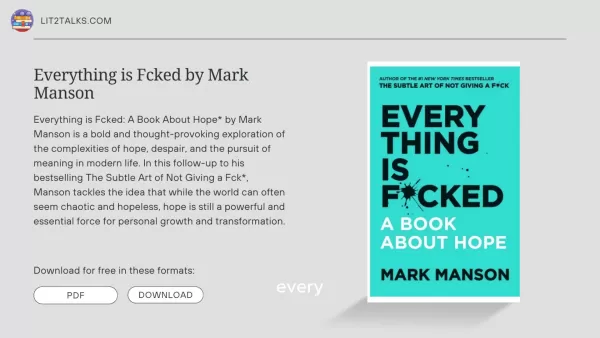
. Boundaries mark the separation between yourself and others, safeguarding your time, energy, and emotional health. Manson stresses that setting boundaries is an act of self-respect, not selfishness.
To set effective boundaries, think about the following:
- Determine your limits: Figure out what you are and aren't comfortable with in your relationships, career, and other life areas. This requires introspection about your values, requirements, and what matters most to you.
- Articulate your boundaries directly: Express your boundaries to others in a straightforward and confident way. Steer clear of ambiguity or apologies. Use statements that focus on your own experience to communicate your needs and emotions without assigning blame.
- Maintain your boundaries consistently: Once you've established a boundary, uphold it regularly. This means being prepared to decline requests, say no, and take measures when your boundaries are crossed. Expect some resistance from others, but stay committed to protecting your own wellness.
Setting boundaries can be difficult, particularly if you're used to accommodating others or steering clear of confrontation. However, it's a necessary step toward creating a more satisfying and authentic life.
Keywords: setting boundaries, self-care, emotional well-being, limits, values, needs, priorities, communication, enforcement, assertiveness, conflict, Mark Manson, Everything is F*cked.
Finding Meaning Through Helping Others
Manson proposes that assisting others is a potent method to feel connected to humanity and develop a sense of purpose
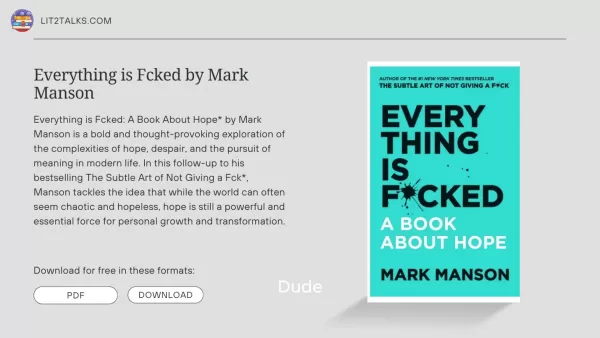
. When we concentrate on supporting something bigger than ourselves, we gain a wider outlook on our personal challenges and unearth a deeper significance in our existence.
To find purpose through helping others:
- Clarify your values: Identify which causes or issues resonate with you and what abilities or assets you can provide.
- Seek out ways to contribute: Look for opportunities to make a difference in your community, whether through voluntary work, financial support, or simply providing assistance to those requiring help.
- Concentrate on the effect: Instead of pursuing acknowledgment or compensation, focus on the beneficial influence you're creating in others' lives. This will help you develop a more profound sense of mission and satisfaction.
Helping others doesn't mean neglecting your own well-being. Rather, it's about striking a balance between meeting your personal needs and contributing to the collective good. By participating in acts of service, you can cultivate a more meaningful and rewarding life.
Keywords: helping others, humanity, purpose, values, community, volunteering, donating, service, fulfillment, Mark Manson, Everything is F*cked.
Where to Buy 'Everything is F*cked'
Availability and Formats
Everything is F*cked: A Book About Hope is readily accessible in multiple formats to suit various reading preferences. It can be purchased at most major book retailers, online stores, and borrowed from libraries. Here's a brief overview of where you can obtain the book:
- Hardcover: Perfect for readers who prefer physical books, the hardcover version is long-lasting and makes a handsome addition to any bookshelf.
- Paperback: A budget-friendly and easy-to-carry choice, the paperback edition is ideal for reading while traveling.
- E-book: Accessible on services like Kindle, Apple Books, and Google Play Books, the digital version provides flexibility, enabling you to read on your preferred devices.
- Audiobook: Performed by a skilled narrator, the audio version is excellent for listening during travel, exercise, or other activities. It's offered on platforms such as Audible and Spotify.
- Independent Bookshops: Shopping at local bookstores not only gives you instant access but also supports businesses in your neighborhood.
Given its broad availability and multiple format choices, obtaining Mark Manson's insightful work is more convenient than ever.
Keywords: Everything is F*cked, Mark Manson, book, hardcover, paperback, e-book, audiobook, Audible, Spotify, Kindle, local bookstores, formats, availability.
Weighing the Value of 'Everything is F*cked'
Pros
Presents an authentic and straightforward view of life's difficulties.
Supplies useful methods for handling emotions and creating boundaries.
Questions common assumptions and promotes independent thought.
Advocates for self-kindness and self-acceptance.
Written in an approachable and captivating style.
Cons
The bold language might not appeal to all readers.
The emphasis on difficult emotions could be heavy for those seeking purely uplifting content.
Some philosophical ideas may need careful consideration to fully understand.
The book avoids offering simple solutions or fast answers.
Key Concepts in 'Everything is F*cked'
Core Philosophies Explored
'Everything is F*cked: A Book About Hope' by Mark Manson stands apart from conventional self-help literature. It presents a candid examination of the human experience and provides a distinctive viewpoint on discovering hope in a frequently baffling world.
- Facing Unpleasant Realities: The book begins by recognizing life's harsh truths. Rather than softening the message, Manson prompts readers to address these issues directly.
This establishes the groundwork for developing a tougher psychological framework.
- Hope Contrasted with Happiness: Manson differentiates hope from happiness, suggesting that hope is more durable because it's founded on proactive steps rather than momentary feelings. This central philosophy highlights personal accountability for one's life path.
- Emotional Authenticity: A substantial part of the book focuses on emotional honesty. Instead of chasing constant positivity, Manson encourages readers to welcome and comprehend their difficult emotions as valuable indicators.
- Personal Value Systems: Manson questions standard measures of success and motivates readers to establish their own principles. This assists people in harmonizing their behaviors with their genuine priorities, resulting in a more satisfying existence.
- The Significance of Initiative: The book underscores that hope is active, not passive. It is nurtured through purposeful action, even when confronting daunting obstacles. This philosophy inspires readers to seize control and create positive change.
In summary, 'Everything is F*cked' delivers a fresh, practical method for managing the intricacies of contemporary life and fostering a lasting sense of hope.
Keywords: Mark Manson, Everything is F*cked, core philosophies, hope, happiness, emotional honesty, values, action, resilient mindset, self-help, pragmatic approach.
Who Should Read 'Everything is F*cked'?
Ideal Readers and Scenarios
'Everything is F*cked: A Book About Hope' is an adaptable book that appeals to diverse readers and situations. However, it especially connects with specific audiences:
- People Experiencing Overload: Those dealing with feelings of exhaustion, worry, or disappointment will find Manson's practical methodology especially beneficial.
- Individuals Pursuing Self-Development: The book is intended to challenge standard beliefs and prompt readers to reevaluate their current viewpoints.
- People in Times of Change: 'Everything is F*cked' can be an excellent resource during life transitions, offering advice on reassessing values and discovering fresh direction.
- Those with Philosophical Interests: Manson incorporates philosophical ideas, making the book intellectually engaging and thought-provoking.
- Readers Wanting an Alternative to Standard Self-Help: If you're disillusioned with excessively hopeful or impractical guidance, Manson's candid approach will strike a chord.
The book's accessible style and applicable recommendations make it a worthwhile tool for anyone aiming to navigate modern life's complexities and develop a more genuine feeling of hope.
Keywords: Everything is F*cked, Mark Manson, personal growth, overwhelming, anxiety, disillusionment, life transitions, philosophy, self-help, pragmatic approach.
Frequently Asked Questions About 'Everything is F*cked'
Is 'Everything is F*cked' a self-help book?
Although it provides direction and wisdom for self-development, 'Everything is F*cked' isn't a conventional self-help book. It's more of a philosophical inquiry into hope, despair, and the human experience, offering a practical outlook rather than instant solutions.
What are the main themes explored in the book?
The book investigates themes including the essence of hope, the value of difficult emotions, the risks of forced positivity, and the quest for meaning in a disordered world. It also addresses personal accountability, boundary setting, and redefining personal principles.
How does Mark Manson's writing style contribute to the book?
Manson's writing approach is informal, witty, and easy to relate to. He incorporates personal stories and plain language to engage readers, making sophisticated philosophical ideas understandable and interesting.
What is the key takeaway from 'Everything is F*cked'?
The primary lesson is that hope involves proactive engagement with life's challenges rather than merely feeling optimistic. It's about accepting life's realities, welcoming difficult emotions, and discovering purpose through contributing to something beyond oneself.
Related Questions About Finding Hope
How can I cultivate hope in difficult times?
Developing hope during challenging periods requires several key approaches that Mark Manson outlines in 'Everything is F*cked.' These include:Accepting Circumstances: Recognize the difficulties you're experiencing instead of avoiding or minimizing them. This enables you to deal with them more efficiently.Taking Practical Steps: Implement small, achievable actions toward your objectives, even when feeling overwhelmed. Action generates progress and a feeling of agency.Clarifying Personal Principles: Identify what genuinely matters to you and ensure your behaviors reflect those values. This offers direction and meaning.Practicing Self-Kindness: Be gentle and understanding with yourself, particularly during setbacks. Remember that facing challenges is universal.Staying Connected: Reach out to friends, family, or community groups. Sharing your experiences can lessen feelings of loneliness.Managing Information Intake: Reduce your exposure to distressing news and social media. Concentrate on sources that motivate and encourage you.Acknowledging Progress: Recognize and appreciate your achievements, however minor they may appear. This strengthens positive habits and builds confidence.Seeking Expert Guidance: Consider consulting a therapist or counselor if you're finding it hard to manage. They can offer valuable support and strategies.By applying these methods, you can foster a more resilient and hopeful outlook, even when facing adversity.Keywords: cultivate hope, difficult times, resilience, mindset, self-compassion, seeking support, limiting negativity, celebrating wins, professional help, Mark Manson, Everything is F*cked.
Related article
 Stripe to Acquire OpenRouter as AI Model Routing Gains Momentum
Stripe has agreed to acquire OpenRouter, an AI model-routing platform that gives developers access to hundreds of models through a single interface. The deal adds model selection and routing to Stripe’s existing work around AI usage and token-based b
Former OpenAI Researcher Barrett Zoph Returns to Google to Support Gemini Development
Barret Zoph, who previously abruptly left and joined OpenAI due to a disagreement with Thinking Machines Lab CEO Miriam Mularati, has once again changed employers. Alphabet's Google announced that Zoph will return as Vice President of Research, bring
How Recursive Intelligence Raised $335M at $4B Valuation in 4 Months
The co-founders of startup Ricursive Intelligence seemed destined to be co-founders.Anna Goldie, CEO, and Azalia Mirhoseini, CTO, are so well-known in the AI community that they were among those AI engineers who “got those weird emails from Zuckerber
Related Special Topic Recommendations
Design & Art
Stripe to Acquire OpenRouter as AI Model Routing Gains Momentum
Stripe has agreed to acquire OpenRouter, an AI model-routing platform that gives developers access to hundreds of models through a single interface. The deal adds model selection and routing to Stripe’s existing work around AI usage and token-based b
Former OpenAI Researcher Barrett Zoph Returns to Google to Support Gemini Development
Barret Zoph, who previously abruptly left and joined OpenAI due to a disagreement with Thinking Machines Lab CEO Miriam Mularati, has once again changed employers. Alphabet's Google announced that Zoph will return as Vice President of Research, bring
How Recursive Intelligence Raised $335M at $4B Valuation in 4 Months
The co-founders of startup Ricursive Intelligence seemed destined to be co-founders.Anna Goldie, CEO, and Azalia Mirhoseini, CTO, are so well-known in the AI community that they were among those AI engineers who “got those weird emails from Zuckerber
Related Special Topic Recommendations
Design & Art
 Top AI Illustration Tools: Create Editorial Scenes and Cover Art Faster
2026 Latest Top-rated AI Illustration Tools: Our curated list features the best powerfully designed tools for creating stunning editorial scenes and eye-catching cover art quickly. Each option has gone through rigorous real-world tests, offering a free vs paid comparison to help you find the perfect match for your workflow. Try these must-try solutions today to unlock your AI edge and boost your creative productivity. Explore now at XIX.AI.
 10 tools
 xix.ai
Education and Learning
Top AI Tutors for Exam Prep: Practice Math, Science, and English
xix.ai
Education and Learning
Top AI Tutors for Exam Prep: Practice Math, Science, and English
2026 Latest Top-Rated Best AI Tutors for Exam Prep are here on XIX.AI! Our curated list features powerful game-changing tools that offer free vs paid comparison, real-world tests, and weekly updated rankings. They help boost your writing efficiency, simplify complex topic learning, and unlock your academic potential. Explore now to Discover your perfect exam prep tool and Start creating today to Unlock your AI edge!
10 tools
xix.ai
Finance
AI Budget Planning Tools for Personal Money Management
2026 Latest Best Top-Rated AI Budget Planning Tools for Personal Money Management are here on XIX.AI! This curated collection features powerful, game-changing solutions that help you conduct real-world tests, understand spending habits, and create personalized plans to boost productivity. Enjoy a free vs paid comparison along with detailed rankings. Must-try tools designed to simplify money management and unlock your AI edge. Explore now!
11 tools
xix.ai
Health & Wellness
AI Sleep Tracking Assistants: Improve Recovery with Better Bedtime Habits
2026 Latest Best Top-Rated AI Sleep Tracking Assistants curated for ultimate recovery. This fully updated weekly guide features powerful tools that deliver real-world tests, free vs paid comparison, and detailed rankings to help you find the must-try solution that boosts sleep quality and supports better bedtime habits. Explore now at XIX.AI to Unlock your AI edge.
10 tools
xix.ai
Data Analysis
AI SQL Copilots for Product and Revenue Analytics
2026 Latest Best Top-Rated AI SQL Copilots for Product and Revenue Analytics! XIX.AI has curated a powerful, game-changing collection of must-try tools that undergo real-world tests through weekly updated rankings. These tools help users boost productivity significantly by accelerating data analysis, streamlining complex queries, and generating accurate insights to drive smarter business decisions. Explore now to Discover your perfect tool for unlocking your AI edge!
14 tools
xix.ai
Education and Learning
Best AI Homework Helpers That Teach: Learn Concepts, Not Just Answers
2026 Latest Best Top-Rated AI Homework Helpers That Teach Core Concepts Not Just Answers Powerful Tools for Students Must-Try Curated List Weekly Updated Free vs Paid Comparison Real-World Tests Accurate Rankings to Help You Unlock Your Full Learning Potential Explore now to Discover your perfect tool for smarter studying.
10 tools
xix.ai

 Comments (3)
0/500
Comments (3)
0/500
![JamesLopez]()
I've read Manson's book and honestly, it's a punch in the gut. The way he deconstructs the 'hope' we're sold is refreshing. But finding hope in 2026? Maybe it's about accepting the chaos rather than fixing it. 🤔
![RaymondBaker]()
Ich hab das Buch letztes Jahr gelesen und fand Mansons Ansatz, Hoffnung nicht als naiven Optimismus, sondern als bewusste Entscheidung zu sehen, echt erfrischend. In Zeiten von KI und ständigem News-Overload fühlt sich dieser Gedanke manchmal wie ein Rettungsring an. Aber ich frage mich, ob diese 'Entscheidung' für Menschen in wirklich hoffnungslosen Situationen überhaupt zugänglich ist. 🤔
![CarlHill]()
この記事を読んで、希望と絶望の関係について考えさせられた。現代社会では常にポジティブであることが求められるけど、マーク・マンソンの本はそのプレッシャーを逆説的に解きほぐす感じがするね。特に2026年という近未来を題材にしているのが興味深い。AIが発達する中で、人間の「希望」の形も変わっていくのかな?🤔 個人的には、テクノロジーと精神性のバランスについてもっと議論が深まると面白いかも。
In 'Everything is F*cked: A Book About Hope,' Mark Manson tackles the intricate relationship between hope, despair, and the search for purpose in a world that can seem overwhelming. This compelling read questions the societal demand for perpetual optimism and presents a grounded strategy for genuine self-improvement. Learn how to confront difficult feelings, establish healthy limits, and uncover hope even during life's toughest moments.
Key Points
Acknowledge that difficult emotions are just as valid as positive ones.
Focus on your personal journey instead of measuring yourself against others.
Differentiate between what's within your control and what isn't, and direct your energy accordingly.
Develop a kinder inner dialogue and learn to shift your perspective.
Learn to say no and make your well-being a priority.
Build a sense of belonging by contributing to the lives of others.
Cultivate gratitude and learn to appreciate the here and now.
Understanding 'Everything is F*cked'
The Core Idea: Why Everything Sucks
Mark Manson's 'Everything is F*cked: A Book About Hope' pushes back against the modern expectation to maintain a cheerful facade at all times
. It confronts the uncomfortable truth that struggle is an inherent part of life and that genuine progress comes from learning to cope with this reality. The bold title is intentionally attention-grabbing, signaling a frank conversation about the world's challenges and our personal reactions to them.
Manson posits that we are often inundated with a relentless stream of information, societal pressures, and personal worries. This constant influx can result in exhaustion, a sense of hopelessness, and the feeling that we have little agency. He believes that recognizing this predicament is the crucial first step toward taking back control and discovering substantial hope.
He explains that a significant portion of our distress originates from the internal narratives we construct and the principles we choose to emphasize. By scrutinizing these stories and adjusting our values to align with what is truly important, we can start to find our way through the turmoil and uncover a sense of direction. Manson's goal is not to provide simplistic solutions but to offer a structure for re-evaluating our interaction with the world and our own lives.
Ultimately, the central premise is that welcoming life's inherent difficulties and discomforts is fundamental to building resilience and fostering personal development. Adopting this outlook allows us to move past shallow optimism and nurture a more profound and enduring form of hope.
Keywords: Mark Manson, Everything is F*cked, hope, despair, meaning, suffering, chaos, values, personal growth, resilience, burnout, negative emotions.
Challenging the Culture of Cons
tant Positivity
Manson critiques the widespread culture of forced optimism that is prevalent in today's society
. This mindset, often reinforced by social media and the self-improvement industry, suggests that we should relentlessly pursue happiness and shun any negative feelings. Manson contends that this is not only unattainable but also harmful to our psychological and emotional health.
The expectation to remain constantly upbeat can foster feelings of incompetence and guilt when we naturally encounter sorrow, frustration, or worry. It establishes a misleading binary where unpleasant emotions are viewed as personal shortcomings rather than integral components of being human. Manson stresses that these feelings are critical for our development and self-preservation, offering crucial insights into our requirements, limits, and core beliefs.
When we stifle or reject difficult emotions, we risk losing touch with our authentic selves and impair our ability to handle life's obstacles effectively. Manson promotes a more nuanced and truthful approach to our feelings, accepting that both pleasant and unpleasant emotions have their place and enrich a complete and purposeful life.
He urges readers to scrutinize the narratives that advocate for endless cheerfulness and to foster a greater acceptance of their own emotional landscape. This means acquiring the skills to recognize and healthily process difficult emotions instead of evading them. Manson's viewpoint provides a revitalizing and necessary alternative to the often harmful positivity that saturates modern culture.
Keywords: constant positivity, negative emotions, Mental Health, emotional health, social media, self-help, anxiety, sadness, anger, human experience, self-acceptance, Mark Manson, Everything is F*cked.
The Importance of Accepting Negative Emotions
Mark Manson highlights the critical role of recognizing and welcoming difficult emotions as a key element of emotional equilibrium
. Rather than viewing feelings like grief, irritation, or nervousness as enemies to be defeated, he contends they perform essential roles. These emotions offer valuable clues about our needs, personal boundaries, and deeply held values, acting as internal alarms that warn us of possible dangers or unfulfilled aspirations.
Trying to disregard or reject difficult emotions can create a rift between us and our true selves, impairing our capacity to navigate life's complexities. By learning to identify and work through these feelings constructively, we can achieve a more profound self-awareness and a clearer understanding of our situation. Manson champions a practical approach to emotions, acknowledging that both positive and negative feelings are part of a complex and meaningful life.
Additionally, Manson points out that dealing with difficult emotions is a shared human experience. He motivates readers to view their struggles as normal and to resist comparing their internal state to the seemingly constant happiness of others. This entails disputing the misleading stories that promote never-ending positivity and fostering self-kindness when facing hardship.
In short, Manson's philosophy invites us to welcome the entire range of human emotion, understanding that both joy and sorrow are indispensable for our development, strength, and overall health.
Keywords: negative emotions, emotional life, mental health, sadness, anger, anxiety, human condition, self-compassion, resilience, well-being, Mark Manson, Everything is F*cked.
Overcoming the Comparison Trap
Manson explores the common problem of measuring ourselves against others and its damaging effect on our contentment and self-esteem
. In our digitally saturated age, we are continuously exposed to portrayals of apparently flawless lives, achievements, and connections, especially on social platforms. This persistent visibility can trigger feelings of not being good enough, jealousy, and a warped perception of our own worth.
Manson argues that falling into the comparison trap is a pointless endeavor because each person is on a distinct path, confronting their own unique obstacles and situations. He encourages readers to concentrate on their own principles, objectives, and personal advancement, rather than judging themselves by outside benchmarks.
He emphasizes that surface appearances are often misleading, and the content we see online is frequently a filtered and perfected representation of reality. Behind the glossy exterior, every individual deals with their own uncertainties, questions, and difficulties. By acknowledging this shared experience, we can develop increased empathy and kindness for ourselves and those around us.
Manson advises redirecting our attention from seeking external approval to cultivating internal contentment. This means establishing significant goals that resonate with our values, acknowledging our successes, and gaining wisdom from our mistakes. By emphasizing our own development and satisfaction, we can escape the comparison cycle and build a more genuine and lasting sense of happiness.
Keywords: comparison trap, happiness, self-worth, social media, unique journey, external validation, internal satisfaction, empathy, compassion, insecurities, Mark Manson, Everything is F*cked.
Practical Tools and Techniques for Hope
Reframing Your Thoughts for a New Perspective
Cognitive reframing is a powerful mental strategy Manson discusses for altering how you interpret events and situations
. It entails questioning pessimistic or unproductive thought habits and substituting them with more constructive or balanced alternatives. By modifying our thought processes about our circumstances, we can transform our emotional responses and behaviors.
Manson proposes several methods for reframing your thinking, such as:
- Spotting unhelpful thought patterns: The initial phase is to become conscious of the negative thoughts affecting your feelings and actions. This requires monitoring your internal monologue and noticing when you fall into self-criticism, worst-case scenario thinking, or other counterproductive patterns.
- Questioning negative thoughts: After identifying a pessimistic thought, test its accuracy. Ask yourself if any factual evidence supports the thought or if it's rooted in preconceptions or distortions.
Cons
ider different interpretations of the situation and look for information that contradicts the negative assumption. - Substituting negative thoughts with balanced alternatives: Once you've challenged a negative thought, replace it with a more positive or realistic one. This involves highlighting favorable elements of the situation, identifying chances for development, and accepting that obstacles are a normal aspect of life.
Thought reframing isn't about ignoring or suppressing difficult emotions. Instead, it's about gaining a more well-rounded and practical viewpoint on your experiences and building a more robust mentality. With consistent practice, it can become an effective method for handling stress, conquering challenges, and fostering a stronger sense of hope.
Keywords: reframing thoughts, cognitive technique, perception, negative thoughts, positive thoughts, realistic thoughts, self-criticism, catastrophizing, stress management, resilience, mindset, Mark Manson, Everything is F*cked.
Cultivating Self-Compassion for Emotional Well-being
Self-compassion is a fundamental element in Mark Manson's blueprint for hope, highlighting the significance of treating yourself with gentleness, empathy, and acceptance, especially during periods of difficulty or failure
. It involves understanding that being imperfect is a universal human trait and that you are not isolated in your struggles.
Manson asserts that self-compassion is vital for emotional health because it enables us to face challenges with increased resilience and self-acceptance. It consists of:
- Acknowledging your own pain: The first step is to recognize that you are going through a hard time. This means tuning into your emotions and permitting yourself to experience them without self-judgment.
- Being kind to yourself: Instead of engaging in self-criticism or blame, extend to yourself the same compassion and support you would offer a close friend. This includes using encouraging self-talk, engaging in self-care practices, and avoiding destructive internal dialogue.
- Recognizing shared human experience: Remember that flaws and struggles are part of the universal human condition and that you are not alone in your suffering. This means connecting with others who have similar experiences and understanding that everyone encounters difficulties in their lives.
Self-compassion is not about self-indulgence or wallowing in self-pity. Rather, it's about fostering a more balanced and accepting relationship with yourself, which can lead to greater emotional strength, self-worth, and overall wellness.
Keywords: self-compassion, emotional well-being, kindness, understanding, acceptance, imperfection, human experience, resilience, self-esteem, self-pity, Mark Manson, Everything is F*cked.
How to Apply Manson's Philosophy in Daily Life
Setting Boundaries for a Healthier Life
Establishing clear boundaries is an essential move toward regaining command of your life and making your own needs a priority
. Boundaries mark the separation between yourself and others, safeguarding your time, energy, and emotional health. Manson stresses that setting boundaries is an act of self-respect, not selfishness.
To set effective boundaries, think about the following:
- Determine your limits: Figure out what you are and aren't comfortable with in your relationships, career, and other life areas. This requires introspection about your values, requirements, and what matters most to you.
- Articulate your boundaries directly: Express your boundaries to others in a straightforward and confident way. Steer clear of ambiguity or apologies. Use statements that focus on your own experience to communicate your needs and emotions without assigning blame.
- Maintain your boundaries consistently: Once you've established a boundary, uphold it regularly. This means being prepared to decline requests, say no, and take measures when your boundaries are crossed. Expect some resistance from others, but stay committed to protecting your own wellness.
Setting boundaries can be difficult, particularly if you're used to accommodating others or steering clear of confrontation. However, it's a necessary step toward creating a more satisfying and authentic life.
Keywords: setting boundaries, self-care, emotional well-being, limits, values, needs, priorities, communication, enforcement, assertiveness, conflict, Mark Manson, Everything is F*cked.
Finding Meaning Through Helping Others
Manson proposes that assisting others is a potent method to feel connected to humanity and develop a sense of purpose
. When we concentrate on supporting something bigger than ourselves, we gain a wider outlook on our personal challenges and unearth a deeper significance in our existence.
To find purpose through helping others:
- Clarify your values: Identify which causes or issues resonate with you and what abilities or assets you can provide.
- Seek out ways to contribute: Look for opportunities to make a difference in your community, whether through voluntary work, financial support, or simply providing assistance to those requiring help.
- Concentrate on the effect: Instead of pursuing acknowledgment or compensation, focus on the beneficial influence you're creating in others' lives. This will help you develop a more profound sense of mission and satisfaction.
Helping others doesn't mean neglecting your own well-being. Rather, it's about striking a balance between meeting your personal needs and contributing to the collective good. By participating in acts of service, you can cultivate a more meaningful and rewarding life.
Keywords: helping others, humanity, purpose, values, community, volunteering, donating, service, fulfillment, Mark Manson, Everything is F*cked.
Where to Buy 'Everything is F*cked'
Availability and Formats
Everything is F*cked: A Book About Hope is readily accessible in multiple formats to suit various reading preferences. It can be purchased at most major book retailers, online stores, and borrowed from libraries. Here's a brief overview of where you can obtain the book:
- Hardcover: Perfect for readers who prefer physical books, the hardcover version is long-lasting and makes a handsome addition to any bookshelf.
- Paperback: A budget-friendly and easy-to-carry choice, the paperback edition is ideal for reading while traveling.
- E-book: Accessible on services like Kindle, Apple Books, and Google Play Books, the digital version provides flexibility, enabling you to read on your preferred devices.
- Audiobook: Performed by a skilled narrator, the audio version is excellent for listening during travel, exercise, or other activities. It's offered on platforms such as Audible and Spotify.
- Independent Bookshops: Shopping at local bookstores not only gives you instant access but also supports businesses in your neighborhood.
Given its broad availability and multiple format choices, obtaining Mark Manson's insightful work is more convenient than ever.
Keywords: Everything is F*cked, Mark Manson, book, hardcover, paperback, e-book, audiobook, Audible, Spotify, Kindle, local bookstores, formats, availability.
Weighing the Value of 'Everything is F*cked'
Pros
Presents an authentic and straightforward view of life's difficulties.
Supplies useful methods for handling emotions and creating boundaries.
Questions common assumptions and promotes independent thought.
Advocates for self-kindness and self-acceptance.
Written in an approachable and captivating style.
Cons
The bold language might not appeal to all readers.
The emphasis on difficult emotions could be heavy for those seeking purely uplifting content.
Some philosophical ideas may need careful consideration to fully understand.
The book avoids offering simple solutions or fast answers.
Key Concepts in 'Everything is F*cked'
Core Philosophies Explored
'Everything is F*cked: A Book About Hope' by Mark Manson stands apart from conventional self-help literature. It presents a candid examination of the human experience and provides a distinctive viewpoint on discovering hope in a frequently baffling world.
- Facing Unpleasant Realities: The book begins by recognizing life's harsh truths. Rather than softening the message, Manson prompts readers to address these issues directly.
This establishes the groundwork for developing a tougher psychological framework.
- Hope Contrasted with Happiness: Manson differentiates hope from happiness, suggesting that hope is more durable because it's founded on proactive steps rather than momentary feelings. This central philosophy highlights personal accountability for one's life path.
- Emotional Authenticity: A substantial part of the book focuses on emotional honesty. Instead of chasing constant positivity, Manson encourages readers to welcome and comprehend their difficult emotions as valuable indicators.
- Personal Value Systems: Manson questions standard measures of success and motivates readers to establish their own principles. This assists people in harmonizing their behaviors with their genuine priorities, resulting in a more satisfying existence.
- The Significance of Initiative: The book underscores that hope is active, not passive. It is nurtured through purposeful action, even when confronting daunting obstacles. This philosophy inspires readers to seize control and create positive change.
In summary, 'Everything is F*cked' delivers a fresh, practical method for managing the intricacies of contemporary life and fostering a lasting sense of hope.
Keywords: Mark Manson, Everything is F*cked, core philosophies, hope, happiness, emotional honesty, values, action, resilient mindset, self-help, pragmatic approach.
Who Should Read 'Everything is F*cked'?
Ideal Readers and Scenarios
'Everything is F*cked: A Book About Hope' is an adaptable book that appeals to diverse readers and situations. However, it especially connects with specific audiences:
- People Experiencing Overload: Those dealing with feelings of exhaustion, worry, or disappointment will find Manson's practical methodology especially beneficial.
- Individuals Pursuing Self-Development: The book is intended to challenge standard beliefs and prompt readers to reevaluate their current viewpoints.
- People in Times of Change: 'Everything is F*cked' can be an excellent resource during life transitions, offering advice on reassessing values and discovering fresh direction.
- Those with Philosophical Interests: Manson incorporates philosophical ideas, making the book intellectually engaging and thought-provoking.
- Readers Wanting an Alternative to Standard Self-Help: If you're disillusioned with excessively hopeful or impractical guidance, Manson's candid approach will strike a chord.
The book's accessible style and applicable recommendations make it a worthwhile tool for anyone aiming to navigate modern life's complexities and develop a more genuine feeling of hope.
Keywords: Everything is F*cked, Mark Manson, personal growth, overwhelming, anxiety, disillusionment, life transitions, philosophy, self-help, pragmatic approach.
Frequently Asked Questions About 'Everything is F*cked'
Is 'Everything is F*cked' a self-help book?
Although it provides direction and wisdom for self-development, 'Everything is F*cked' isn't a conventional self-help book. It's more of a philosophical inquiry into hope, despair, and the human experience, offering a practical outlook rather than instant solutions.
What are the main themes explored in the book?
The book investigates themes including the essence of hope, the value of difficult emotions, the risks of forced positivity, and the quest for meaning in a disordered world. It also addresses personal accountability, boundary setting, and redefining personal principles.
How does Mark Manson's writing style contribute to the book?
Manson's writing approach is informal, witty, and easy to relate to. He incorporates personal stories and plain language to engage readers, making sophisticated philosophical ideas understandable and interesting.
What is the key takeaway from 'Everything is F*cked'?
The primary lesson is that hope involves proactive engagement with life's challenges rather than merely feeling optimistic. It's about accepting life's realities, welcoming difficult emotions, and discovering purpose through contributing to something beyond oneself.
Related Questions About Finding Hope
How can I cultivate hope in difficult times?
Developing hope during challenging periods requires several key approaches that Mark Manson outlines in 'Everything is F*cked.' These include:Accepting Circumstances: Recognize the difficulties you're experiencing instead of avoiding or minimizing them. This enables you to deal with them more efficiently.Taking Practical Steps: Implement small, achievable actions toward your objectives, even when feeling overwhelmed. Action generates progress and a feeling of agency.Clarifying Personal Principles: Identify what genuinely matters to you and ensure your behaviors reflect those values. This offers direction and meaning.Practicing Self-Kindness: Be gentle and understanding with yourself, particularly during setbacks. Remember that facing challenges is universal.Staying Connected: Reach out to friends, family, or community groups. Sharing your experiences can lessen feelings of loneliness.Managing Information Intake: Reduce your exposure to distressing news and social media. Concentrate on sources that motivate and encourage you.Acknowledging Progress: Recognize and appreciate your achievements, however minor they may appear. This strengthens positive habits and builds confidence.Seeking Expert Guidance: Consider consulting a therapist or counselor if you're finding it hard to manage. They can offer valuable support and strategies.By applying these methods, you can foster a more resilient and hopeful outlook, even when facing adversity.Keywords: cultivate hope, difficult times, resilience, mindset, self-compassion, seeking support, limiting negativity, celebrating wins, professional help, Mark Manson, Everything is F*cked.








 Stripe to Acquire OpenRouter as AI Model Routing Gains Momentum
Stripe has agreed to acquire OpenRouter, an AI model-routing platform that gives developers access to hundreds of models through a single interface. The deal adds model selection and routing to Stripe’s existing work around AI usage and token-based b
Stripe to Acquire OpenRouter as AI Model Routing Gains Momentum
Stripe has agreed to acquire OpenRouter, an AI model-routing platform that gives developers access to hundreds of models through a single interface. The deal adds model selection and routing to Stripe’s existing work around AI usage and token-based b
 Former OpenAI Researcher Barrett Zoph Returns to Google to Support Gemini Development
Barret Zoph, who previously abruptly left and joined OpenAI due to a disagreement with Thinking Machines Lab CEO Miriam Mularati, has once again changed employers. Alphabet's Google announced that Zoph will return as Vice President of Research, bring
Former OpenAI Researcher Barrett Zoph Returns to Google to Support Gemini Development
Barret Zoph, who previously abruptly left and joined OpenAI due to a disagreement with Thinking Machines Lab CEO Miriam Mularati, has once again changed employers. Alphabet's Google announced that Zoph will return as Vice President of Research, bring
 How Recursive Intelligence Raised $335M at $4B Valuation in 4 Months
The co-founders of startup Ricursive Intelligence seemed destined to be co-founders.Anna Goldie, CEO, and Azalia Mirhoseini, CTO, are so well-known in the AI community that they were among those AI engineers who “got those weird emails from Zuckerber
How Recursive Intelligence Raised $335M at $4B Valuation in 4 Months
The co-founders of startup Ricursive Intelligence seemed destined to be co-founders.Anna Goldie, CEO, and Azalia Mirhoseini, CTO, are so well-known in the AI community that they were among those AI engineers who “got those weird emails from Zuckerber

2026 Latest Top-rated AI Illustration Tools: Our curated list features the best powerfully designed tools for creating stunning editorial scenes and eye-catching cover art quickly. Each option has gone through rigorous real-world tests, offering a free vs paid comparison to help you find the perfect match for your workflow. Try these must-try solutions today to unlock your AI edge and boost your creative productivity. Explore now at XIX.AI.
10 tools
xix.ai

2026 Latest Top-Rated Best AI Tutors for Exam Prep are here on XIX.AI! Our curated list features powerful game-changing tools that offer free vs paid comparison, real-world tests, and weekly updated rankings. They help boost your writing efficiency, simplify complex topic learning, and unlock your academic potential. Explore now to Discover your perfect exam prep tool and Start creating today to Unlock your AI edge!
10 tools
xix.ai

2026 Latest Best Top-Rated AI Budget Planning Tools for Personal Money Management are here on XIX.AI! This curated collection features powerful, game-changing solutions that help you conduct real-world tests, understand spending habits, and create personalized plans to boost productivity. Enjoy a free vs paid comparison along with detailed rankings. Must-try tools designed to simplify money management and unlock your AI edge. Explore now!
11 tools
xix.ai

2026 Latest Best Top-Rated AI Sleep Tracking Assistants curated for ultimate recovery. This fully updated weekly guide features powerful tools that deliver real-world tests, free vs paid comparison, and detailed rankings to help you find the must-try solution that boosts sleep quality and supports better bedtime habits. Explore now at XIX.AI to Unlock your AI edge.
10 tools
xix.ai

2026 Latest Best Top-Rated AI SQL Copilots for Product and Revenue Analytics! XIX.AI has curated a powerful, game-changing collection of must-try tools that undergo real-world tests through weekly updated rankings. These tools help users boost productivity significantly by accelerating data analysis, streamlining complex queries, and generating accurate insights to drive smarter business decisions. Explore now to Discover your perfect tool for unlocking your AI edge!
14 tools
xix.ai

2026 Latest Best Top-Rated AI Homework Helpers That Teach Core Concepts Not Just Answers Powerful Tools for Students Must-Try Curated List Weekly Updated Free vs Paid Comparison Real-World Tests Accurate Rankings to Help You Unlock Your Full Learning Potential Explore now to Discover your perfect tool for smarter studying.
10 tools
xix.ai

I've read Manson's book and honestly, it's a punch in the gut. The way he deconstructs the 'hope' we're sold is refreshing. But finding hope in 2026? Maybe it's about accepting the chaos rather than fixing it. 🤔
Ich hab das Buch letztes Jahr gelesen und fand Mansons Ansatz, Hoffnung nicht als naiven Optimismus, sondern als bewusste Entscheidung zu sehen, echt erfrischend. In Zeiten von KI und ständigem News-Overload fühlt sich dieser Gedanke manchmal wie ein Rettungsring an. Aber ich frage mich, ob diese 'Entscheidung' für Menschen in wirklich hoffnungslosen Situationen überhaupt zugänglich ist. 🤔
この記事を読んで、希望と絶望の関係について考えさせられた。現代社会では常にポジティブであることが求められるけど、マーク・マンソンの本はそのプレッシャーを逆説的に解きほぐす感じがするね。特に2026年という近未来を題材にしているのが興味深い。AIが発達する中で、人間の「希望」の形も変わっていくのかな?🤔 個人的には、テクノロジーと精神性のバランスについてもっと議論が深まると面白いかも。












