


 Home
HomeHistorian Examines the Link Between Digital Golems and AI
This fascinating exploration delves into the world of Artificial Intelligence (AI) and its intersection with culture and history. More than just another tech piece, this article examines AI through the metaphor of digital golems, considering its inherent biases, ethical dimensions, and potential societal influence. Embark on a journey into the complex realm of neural networks and their surprising role in shaping our perception of both the past and future. This exploration is essential for grasping the dynamic relationship between AI, digital history, and ourselves.
Key Points
AI as a Cultural Artifact: Viewing AI models as reflections of the cultures that develop them.
Digital Golems: Investigating the concept of AI as digital golems—incomplete entities molded by their creators.
Neural Network Biases: Analyzing how biases are embedded into AI systems and influence their results.
Ethics in AI: Addressing the ethical consequences of AI, including safety concerns and societal effects.
Importance of Digital Archaeology: Stressing the necessity to actively test and probe AI to understand its constraints.
Understanding the Context Window: Acknowledging the limits of current AI models in handling extensive information.
Unveiling the Digital Golem: AI as a Product of Culture
The Core Concept: Digital Golems
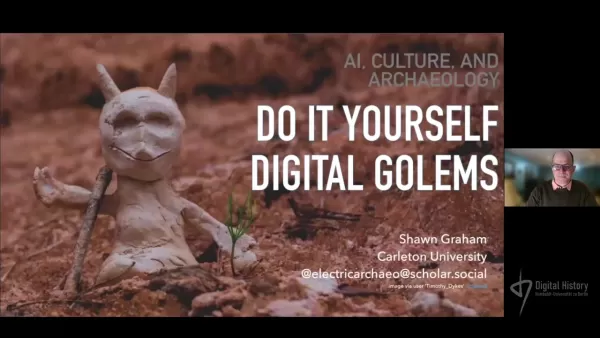
The term "digital golem" provides a powerful metaphor for understanding artificial intelligence. Like a mythological golem, an AI is an incomplete entity, shaped entirely by its creator. Consequently, AI models mirror the biases and values of the cultures that produce them.This doesn't imply that AI possesses genuine consciousness, but rather that its outputs stem directly from its training data—data meticulously selected by people. To properly evaluate AI, it's crucial to acknowledge this origin. As AI integrates deeper into our daily lives, understanding the preconceptions woven into its foundation becomes increasingly critical. Imagine AI systems as intricate LEGO constructions, carefully assembled by individuals from diverse cultural and historical backgrounds; every piece of data incorporated shapes the final model.
Keyword Stuffing: digital golem, AI models, biases, values, cultures
Understanding Neural Networks
Let's examine the mechanics powering these digital golems. Neural networks, the core of most modern AI, operate by statistically analyzing information. They detect patterns within data and subsequently use those patterns to make predictions or create content. However, this entire procedure is fundamentally influenced by the data used for training. An AI model's accuracy is only as reliable as the information it was given. This reality underscores the importance of AI safety and bias research.
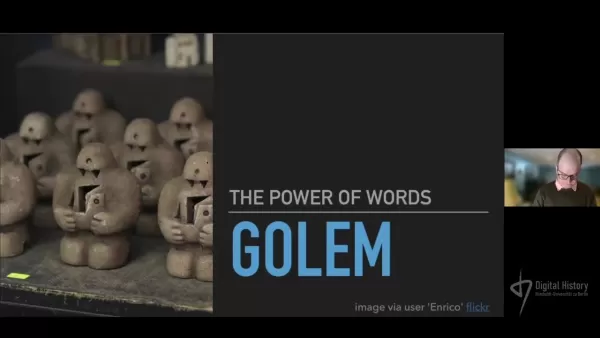
This process requires enormous quantities of training data. Crucially, these datasets and their processing algorithms are not neutral. They can unintentionally encode the cultural perspectives of their developers and the wider society.
To simplify this idea, neural networks learn patterns from their datasets, which can lead to the AI adopting unintentional biases present in that data. For this reason, we must scrutinize both the information fed into these models and the resulting models themselves.
Keyword Stuffing: neural networks, data, information, biases.
AI in Digital History
How does this perspective on AI apply to the field of digital history?
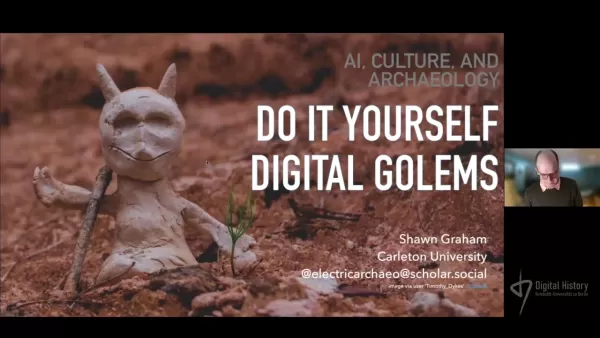
Teaching, a central activity in digital history, now overlaps with the ascent of AI. Recognizing the inherent biases, values, and assumptions programmed into AI leads to a more nuanced interpretation of its conclusions. Using AI in digital history isn't merely about task automation. The discipline must ensure a deep comprehension of its tools to use them both effectively and responsibly. By actively working with AI, digital historians can uncover new narratives and analyze historical data with greater efficiency.
This engagement can enhance:
- Data Analysis
- Pattern Recognition
- New Research Directions
Teaching students to investigate novel applications of AI in their studies also carries significant ethical responsibilities.
Keyword Stuffing: digital history, teaching, AI, biases
AI Safety and Ethical Considerations for Everyone
Why Ethics Matter in AI Development
If so many people are developing AI, how can ethical standards be maintained? How can an individual become aware of their own inherent biases and assumptions, which are then built into the model? This question remains paramount. Since AI development is often a process of trial and error aimed at achieving better outcomes, public trust in these evolving models is essential. Approaching AI with this ethical framework can make the exploration more engaging and meaningful.Instilling the right values in students helps build trust in the technology and in those creating it. However, this isn't always achieved, and after a course, students might still have only a superficial understanding of the subject.
- Need strong metaphor to capture interest
- The digital golem
- What is AI even?
- Cultural significance to Golem? What does it all mean?
- Ethics? Should we even do anything at all?
Keyword Stuffing: ethic, values, students, models
Understanding the Context Window
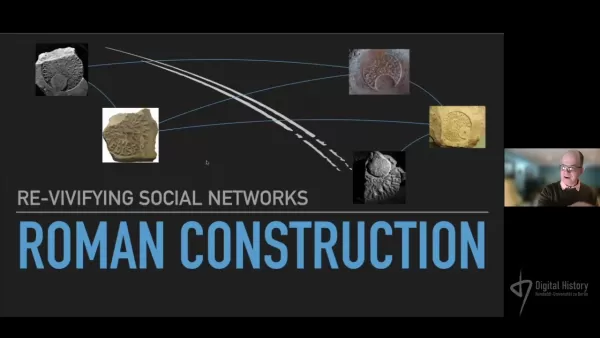
A key concept discussed is the "context window." This is important because it defines the limits of a model's immediate knowledge and capabilities. All the information it processes at any given moment is confined to this window; it only has access to that specific data. This is similar to a historian who can only consult a limited number of sources at once, and their interpretation of those sources directly influences their findings.
The model's understanding is derived from language. It's also observed that corrupted or "noisy" messages can be processed, potentially reducing their intended meaning and rendering them unclear.
When considering the topics a model can handle, it starts with a relatively small, predefined set of information. What specific context informs its responses?
- Current events
- Pop culture
- Other topics from the internet
Introducing this information means the model's foundational premises may not always align with our intentions. Therefore, involving history students and fostering a deep understanding of a dataset's true composition allows for a more thorough investigation of all these elements.
Keyword Stuffing: digital history, ethic, values, students, models
How To Use the Learnings
Exploring Historical Datasets
As part of the teaching process, here are practical steps you can take to deepen your understanding of digital history:
- Grasp the fundamentals of digital history. A good starting point is understanding how neural networks function.
- Actively seek to identify any cultural or inherent biases that might be present.
- Learn about the various limitations inherent in any model.
- Investigate how AI can be best utilized to discover new information and the appropriate contexts for its application. This process will likely reveal numerous opportunities and lessons.
By following these steps, digital historians can more confidently and safely navigate the complexities they encounter, leading to a more comprehensive understanding.
Keyword Stuffing: ethic, values, students, models
The Upside & Downside: Weighing the Value of AI Tools
Pros
Increased efficiency in research and data analysis
New insights and interpretations of historical data
Potential for democratizing access to digital history tools and resources
Automation of some tasks
Cons
Risk of perpetuating biases and misinformation
Potential for job displacement and economic inequality
Concerns about data privacy and security
Over-reliance on technology
Difficulty in fact-checking with a flawed model
FAQ
What is a digital golem?
A digital golem is a metaphor describing an AI system, emphasizing its man-made nature and its potential for unexpected or unintended behavior.
How do AI biases affect digital history?
AI biases can distort historical data analysis, potentially reinforcing existing stereotypes or silencing marginalized perspectives.
What is a context window in AI?
A context window refers to the fixed amount of text an AI model can consider at one time. A limited context window can cause a loss of broader context and coherence in the output.
What are ethical considerations for using AI in research?
Key ethical considerations involve data privacy, actively working to reduce bias, promoting responsible AI development, and maintaining transparency.
How do I begin exploring attractors within AI models?
Start by using online platforms to interact directly with various AI models, and engage in hands-on projects to gain practical experience.
Related Questions
What are the Long-Term Social Implications of Widespread AI Use?
The widespread adoption of AI holds transformative potential while simultaneously posing critical questions about our collective future. From employment to human connection, the proliferation of AI technologies could fundamentally reshape core aspects of society. Here are a few of the most pressing issues to consider:Job Displacement: A primary concern involves the large-scale automation and potential job losses as AI takes over tasks currently performed by humans. This could create disparities in labor markets, where some roles are enhanced by AI while others are eliminated, potentially leading to significant social and economic disruption that governments must address.Bias and Fairness: AI systems, trained on data created by humans, are prone to perpetuating societal biases, which could lead to discrimination based on age, race, or geography. This affects access to opportunities and makes the establishment of robust ethical guidelines imperative. We must develop methods to ensure AI acts equitably and does not amplify societal prejudices.Privacy and Surveillance: These powerful tools can be utilized for mass surveillance. Strong privacy protections are necessary to safeguard individual rights and freedoms.
Related article
 Stripe to Acquire OpenRouter as AI Model Routing Gains Momentum
Stripe has agreed to acquire OpenRouter, an AI model-routing platform that gives developers access to hundreds of models through a single interface. The deal adds model selection and routing to Stripe’s existing work around AI usage and token-based b
Former OpenAI Researcher Barrett Zoph Returns to Google to Support Gemini Development
Barret Zoph, who previously abruptly left and joined OpenAI due to a disagreement with Thinking Machines Lab CEO Miriam Mularati, has once again changed employers. Alphabet's Google announced that Zoph will return as Vice President of Research, bring
How Recursive Intelligence Raised $335M at $4B Valuation in 4 Months
The co-founders of startup Ricursive Intelligence seemed destined to be co-founders.Anna Goldie, CEO, and Azalia Mirhoseini, CTO, are so well-known in the AI community that they were among those AI engineers who “got those weird emails from Zuckerber
Related Special Topic Recommendations
Design & Art
Stripe to Acquire OpenRouter as AI Model Routing Gains Momentum
Stripe has agreed to acquire OpenRouter, an AI model-routing platform that gives developers access to hundreds of models through a single interface. The deal adds model selection and routing to Stripe’s existing work around AI usage and token-based b
Former OpenAI Researcher Barrett Zoph Returns to Google to Support Gemini Development
Barret Zoph, who previously abruptly left and joined OpenAI due to a disagreement with Thinking Machines Lab CEO Miriam Mularati, has once again changed employers. Alphabet's Google announced that Zoph will return as Vice President of Research, bring
How Recursive Intelligence Raised $335M at $4B Valuation in 4 Months
The co-founders of startup Ricursive Intelligence seemed destined to be co-founders.Anna Goldie, CEO, and Azalia Mirhoseini, CTO, are so well-known in the AI community that they were among those AI engineers who “got those weird emails from Zuckerber
Related Special Topic Recommendations
Design & Art
 Top AI Illustration Tools: Create Editorial Scenes and Cover Art Faster
2026 Latest Top-rated AI Illustration Tools: Our curated list features the best powerfully designed tools for creating stunning editorial scenes and eye-catching cover art quickly. Each option has gone through rigorous real-world tests, offering a free vs paid comparison to help you find the perfect match for your workflow. Try these must-try solutions today to unlock your AI edge and boost your creative productivity. Explore now at XIX.AI.
 10 tools
 xix.ai
Education and Learning
Top AI Tutors for Exam Prep: Practice Math, Science, and English
xix.ai
Education and Learning
Top AI Tutors for Exam Prep: Practice Math, Science, and English
2026 Latest Top-Rated Best AI Tutors for Exam Prep are here on XIX.AI! Our curated list features powerful game-changing tools that offer free vs paid comparison, real-world tests, and weekly updated rankings. They help boost your writing efficiency, simplify complex topic learning, and unlock your academic potential. Explore now to Discover your perfect exam prep tool and Start creating today to Unlock your AI edge!
10 tools
xix.ai
Finance
AI Budget Planning Tools for Personal Money Management
2026 Latest Best Top-Rated AI Budget Planning Tools for Personal Money Management are here on XIX.AI! This curated collection features powerful, game-changing solutions that help you conduct real-world tests, understand spending habits, and create personalized plans to boost productivity. Enjoy a free vs paid comparison along with detailed rankings. Must-try tools designed to simplify money management and unlock your AI edge. Explore now!
11 tools
xix.ai
Health & Wellness
AI Sleep Tracking Assistants: Improve Recovery with Better Bedtime Habits
2026 Latest Best Top-Rated AI Sleep Tracking Assistants curated for ultimate recovery. This fully updated weekly guide features powerful tools that deliver real-world tests, free vs paid comparison, and detailed rankings to help you find the must-try solution that boosts sleep quality and supports better bedtime habits. Explore now at XIX.AI to Unlock your AI edge.
10 tools
xix.ai
Data Analysis
AI SQL Copilots for Product and Revenue Analytics
2026 Latest Best Top-Rated AI SQL Copilots for Product and Revenue Analytics! XIX.AI has curated a powerful, game-changing collection of must-try tools that undergo real-world tests through weekly updated rankings. These tools help users boost productivity significantly by accelerating data analysis, streamlining complex queries, and generating accurate insights to drive smarter business decisions. Explore now to Discover your perfect tool for unlocking your AI edge!
14 tools
xix.ai
Education and Learning
Best AI Homework Helpers That Teach: Learn Concepts, Not Just Answers
2026 Latest Best Top-Rated AI Homework Helpers That Teach Core Concepts Not Just Answers Powerful Tools for Students Must-Try Curated List Weekly Updated Free vs Paid Comparison Real-World Tests Accurate Rankings to Help You Unlock Your Full Learning Potential Explore now to Discover your perfect tool for smarter studying.
10 tools
xix.ai

 Comments (0)
0/500
Comments (0)
0/500
This fascinating exploration delves into the world of Artificial Intelligence (AI) and its intersection with culture and history. More than just another tech piece, this article examines AI through the metaphor of digital golems, considering its inherent biases, ethical dimensions, and potential societal influence. Embark on a journey into the complex realm of neural networks and their surprising role in shaping our perception of both the past and future. This exploration is essential for grasping the dynamic relationship between AI, digital history, and ourselves.
Key Points
AI as a Cultural Artifact: Viewing AI models as reflections of the cultures that develop them.
Digital Golems: Investigating the concept of AI as digital golems—incomplete entities molded by their creators.
Neural Network Biases: Analyzing how biases are embedded into AI systems and influence their results.
Ethics in AI: Addressing the ethical consequences of AI, including safety concerns and societal effects.
Importance of Digital Archaeology: Stressing the necessity to actively test and probe AI to understand its constraints.
Understanding the Context Window: Acknowledging the limits of current AI models in handling extensive information.
Unveiling the Digital Golem: AI as a Product of Culture
The Core Concept: Digital Golems
The term "digital golem" provides a powerful metaphor for understanding artificial intelligence. Like a mythological golem, an AI is an incomplete entity, shaped entirely by its creator. Consequently, AI models mirror the biases and values of the cultures that produce them.This doesn't imply that AI possesses genuine consciousness, but rather that its outputs stem directly from its training data—data meticulously selected by people. To properly evaluate AI, it's crucial to acknowledge this origin. As AI integrates deeper into our daily lives, understanding the preconceptions woven into its foundation becomes increasingly critical. Imagine AI systems as intricate LEGO constructions, carefully assembled by individuals from diverse cultural and historical backgrounds; every piece of data incorporated shapes the final model.
Keyword Stuffing: digital golem, AI models, biases, values, cultures
Understanding Neural Networks
Let's examine the mechanics powering these digital golems. Neural networks, the core of most modern AI, operate by statistically analyzing information. They detect patterns within data and subsequently use those patterns to make predictions or create content. However, this entire procedure is fundamentally influenced by the data used for training. An AI model's accuracy is only as reliable as the information it was given. This reality underscores the importance of AI safety and bias research.
This process requires enormous quantities of training data. Crucially, these datasets and their processing algorithms are not neutral. They can unintentionally encode the cultural perspectives of their developers and the wider society.
To simplify this idea, neural networks learn patterns from their datasets, which can lead to the AI adopting unintentional biases present in that data. For this reason, we must scrutinize both the information fed into these models and the resulting models themselves.
Keyword Stuffing: neural networks, data, information, biases.
AI in Digital History
How does this perspective on AI apply to the field of digital history?
Teaching, a central activity in digital history, now overlaps with the ascent of AI. Recognizing the inherent biases, values, and assumptions programmed into AI leads to a more nuanced interpretation of its conclusions. Using AI in digital history isn't merely about task automation. The discipline must ensure a deep comprehension of its tools to use them both effectively and responsibly. By actively working with AI, digital historians can uncover new narratives and analyze historical data with greater efficiency.
This engagement can enhance:
- Data Analysis
- Pattern Recognition
- New Research Directions
Teaching students to investigate novel applications of AI in their studies also carries significant ethical responsibilities.
Keyword Stuffing: digital history, teaching, AI, biases
AI Safety and Ethical Considerations for Everyone
Why Ethics Matter in AI Development
If so many people are developing AI, how can ethical standards be maintained? How can an individual become aware of their own inherent biases and assumptions, which are then built into the model? This question remains paramount. Since AI development is often a process of trial and error aimed at achieving better outcomes, public trust in these evolving models is essential. Approaching AI with this ethical framework can make the exploration more engaging and meaningful.Instilling the right values in students helps build trust in the technology and in those creating it. However, this isn't always achieved, and after a course, students might still have only a superficial understanding of the subject.
- Need strong metaphor to capture interest
- The digital golem
- What is AI even?
- Cultural significance to Golem? What does it all mean?
- Ethics? Should we even do anything at all?
Keyword Stuffing: ethic, values, students, models
Understanding the Context Window
A key concept discussed is the "context window." This is important because it defines the limits of a model's immediate knowledge and capabilities. All the information it processes at any given moment is confined to this window; it only has access to that specific data. This is similar to a historian who can only consult a limited number of sources at once, and their interpretation of those sources directly influences their findings.
The model's understanding is derived from language. It's also observed that corrupted or "noisy" messages can be processed, potentially reducing their intended meaning and rendering them unclear.
When considering the topics a model can handle, it starts with a relatively small, predefined set of information. What specific context informs its responses?
- Current events
- Pop culture
- Other topics from the internet
Introducing this information means the model's foundational premises may not always align with our intentions. Therefore, involving history students and fostering a deep understanding of a dataset's true composition allows for a more thorough investigation of all these elements.
Keyword Stuffing: digital history, ethic, values, students, models
How To Use the Learnings
Exploring Historical Datasets
As part of the teaching process, here are practical steps you can take to deepen your understanding of digital history:
- Grasp the fundamentals of digital history. A good starting point is understanding how neural networks function.
- Actively seek to identify any cultural or inherent biases that might be present.
- Learn about the various limitations inherent in any model.
- Investigate how AI can be best utilized to discover new information and the appropriate contexts for its application. This process will likely reveal numerous opportunities and lessons.
By following these steps, digital historians can more confidently and safely navigate the complexities they encounter, leading to a more comprehensive understanding.
Keyword Stuffing: ethic, values, students, models
The Upside & Downside: Weighing the Value of AI Tools
Pros
Increased efficiency in research and data analysis
New insights and interpretations of historical data
Potential for democratizing access to digital history tools and resources
Automation of some tasks
Cons
Risk of perpetuating biases and misinformation
Potential for job displacement and economic inequality
Concerns about data privacy and security
Over-reliance on technology
Difficulty in fact-checking with a flawed model
FAQ
What is a digital golem?
A digital golem is a metaphor describing an AI system, emphasizing its man-made nature and its potential for unexpected or unintended behavior.
How do AI biases affect digital history?
AI biases can distort historical data analysis, potentially reinforcing existing stereotypes or silencing marginalized perspectives.
What is a context window in AI?
A context window refers to the fixed amount of text an AI model can consider at one time. A limited context window can cause a loss of broader context and coherence in the output.
What are ethical considerations for using AI in research?
Key ethical considerations involve data privacy, actively working to reduce bias, promoting responsible AI development, and maintaining transparency.
How do I begin exploring attractors within AI models?
Start by using online platforms to interact directly with various AI models, and engage in hands-on projects to gain practical experience.
Related Questions
What are the Long-Term Social Implications of Widespread AI Use?
The widespread adoption of AI holds transformative potential while simultaneously posing critical questions about our collective future. From employment to human connection, the proliferation of AI technologies could fundamentally reshape core aspects of society. Here are a few of the most pressing issues to consider:Job Displacement: A primary concern involves the large-scale automation and potential job losses as AI takes over tasks currently performed by humans. This could create disparities in labor markets, where some roles are enhanced by AI while others are eliminated, potentially leading to significant social and economic disruption that governments must address.Bias and Fairness: AI systems, trained on data created by humans, are prone to perpetuating societal biases, which could lead to discrimination based on age, race, or geography. This affects access to opportunities and makes the establishment of robust ethical guidelines imperative. We must develop methods to ensure AI acts equitably and does not amplify societal prejudices.Privacy and Surveillance: These powerful tools can be utilized for mass surveillance. Strong privacy protections are necessary to safeguard individual rights and freedoms.








 Stripe to Acquire OpenRouter as AI Model Routing Gains Momentum
Stripe has agreed to acquire OpenRouter, an AI model-routing platform that gives developers access to hundreds of models through a single interface. The deal adds model selection and routing to Stripe’s existing work around AI usage and token-based b
Stripe to Acquire OpenRouter as AI Model Routing Gains Momentum
Stripe has agreed to acquire OpenRouter, an AI model-routing platform that gives developers access to hundreds of models through a single interface. The deal adds model selection and routing to Stripe’s existing work around AI usage and token-based b
 Former OpenAI Researcher Barrett Zoph Returns to Google to Support Gemini Development
Barret Zoph, who previously abruptly left and joined OpenAI due to a disagreement with Thinking Machines Lab CEO Miriam Mularati, has once again changed employers. Alphabet's Google announced that Zoph will return as Vice President of Research, bring
Former OpenAI Researcher Barrett Zoph Returns to Google to Support Gemini Development
Barret Zoph, who previously abruptly left and joined OpenAI due to a disagreement with Thinking Machines Lab CEO Miriam Mularati, has once again changed employers. Alphabet's Google announced that Zoph will return as Vice President of Research, bring
 How Recursive Intelligence Raised $335M at $4B Valuation in 4 Months
The co-founders of startup Ricursive Intelligence seemed destined to be co-founders.Anna Goldie, CEO, and Azalia Mirhoseini, CTO, are so well-known in the AI community that they were among those AI engineers who “got those weird emails from Zuckerber
How Recursive Intelligence Raised $335M at $4B Valuation in 4 Months
The co-founders of startup Ricursive Intelligence seemed destined to be co-founders.Anna Goldie, CEO, and Azalia Mirhoseini, CTO, are so well-known in the AI community that they were among those AI engineers who “got those weird emails from Zuckerber

2026 Latest Top-rated AI Illustration Tools: Our curated list features the best powerfully designed tools for creating stunning editorial scenes and eye-catching cover art quickly. Each option has gone through rigorous real-world tests, offering a free vs paid comparison to help you find the perfect match for your workflow. Try these must-try solutions today to unlock your AI edge and boost your creative productivity. Explore now at XIX.AI.
10 tools
xix.ai

2026 Latest Top-Rated Best AI Tutors for Exam Prep are here on XIX.AI! Our curated list features powerful game-changing tools that offer free vs paid comparison, real-world tests, and weekly updated rankings. They help boost your writing efficiency, simplify complex topic learning, and unlock your academic potential. Explore now to Discover your perfect exam prep tool and Start creating today to Unlock your AI edge!
10 tools
xix.ai

2026 Latest Best Top-Rated AI Budget Planning Tools for Personal Money Management are here on XIX.AI! This curated collection features powerful, game-changing solutions that help you conduct real-world tests, understand spending habits, and create personalized plans to boost productivity. Enjoy a free vs paid comparison along with detailed rankings. Must-try tools designed to simplify money management and unlock your AI edge. Explore now!
11 tools
xix.ai

2026 Latest Best Top-Rated AI Sleep Tracking Assistants curated for ultimate recovery. This fully updated weekly guide features powerful tools that deliver real-world tests, free vs paid comparison, and detailed rankings to help you find the must-try solution that boosts sleep quality and supports better bedtime habits. Explore now at XIX.AI to Unlock your AI edge.
10 tools
xix.ai

2026 Latest Best Top-Rated AI SQL Copilots for Product and Revenue Analytics! XIX.AI has curated a powerful, game-changing collection of must-try tools that undergo real-world tests through weekly updated rankings. These tools help users boost productivity significantly by accelerating data analysis, streamlining complex queries, and generating accurate insights to drive smarter business decisions. Explore now to Discover your perfect tool for unlocking your AI edge!
14 tools
xix.ai

2026 Latest Best Top-Rated AI Homework Helpers That Teach Core Concepts Not Just Answers Powerful Tools for Students Must-Try Curated List Weekly Updated Free vs Paid Comparison Real-World Tests Accurate Rankings to Help You Unlock Your Full Learning Potential Explore now to Discover your perfect tool for smarter studying.
10 tools
xix.ai












