

 Home
Datadog's AI Code Reviews Drastically Reduce IT Incident Risks
Integrating AI into code review workflows enables engineering leaders to systematically identify systemic risks that often go unnoticed by human reviewers.
For engineering leaders overseeing distributed systems, balancing deployment velocity with operational stability often determines platform success. Datadog, which provides observability for complex global infrastructures, operates under significant pressure to maintain this equilibrium.
When client systems experience failures, they depend on Datadog's platform for root cause analysis—making reliability essential well before software reaches production environments.
Scaling this reliability presents operational challenges. Code reviews have traditionally served as the primary quality gate, where senior engineers attempt to catch errors during this critical phase. However, as engineering teams expand, maintaining deep contextual awareness across the entire codebase becomes increasingly difficult for human reviewers.
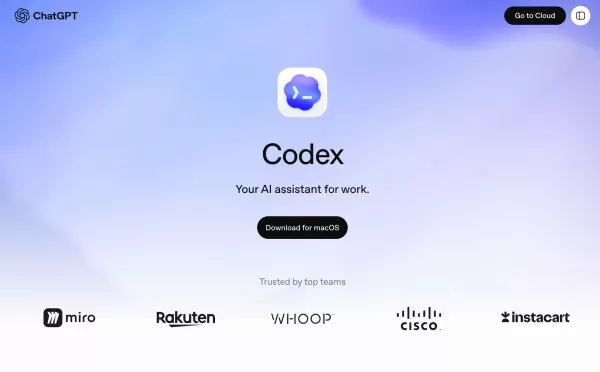
To address this limitation, Datadog's AI Development Experience (AI DevX) team integrated OpenAI's Codex to automate the detection of risks that human reviewers commonly overlook.
Why static analysis falls short
Enterprises have long employed automated tools to support code reviews, though their effectiveness has historically been constrained.
Early AI code review tools often functioned as sophisticated linters, catching surface-level syntax issues but failing to comprehend broader system architecture. Without contextual understanding, Datadog's engineers frequently dismissed these tools' suggestions as irrelevant noise.
The fundamental challenge involved understanding how specific code changes might affect interconnected systems, rather than simply detecting isolated errors. Datadog needed a solution capable of reasoning about codebase relationships and dependencies, not just identifying style violations.
The team deployed the new agent directly into one of their most active repositories, enabling automatic review of every pull request. Unlike conventional static analysis, this system compares developer intent with actual code changes, executing tests to verify behavior.
For technology leaders, demonstrating generative AI's value beyond theoretical efficiency remains challenging. Datadog circumvented standard productivity metrics by creating an "incident replay harness" to test the tool against historical system outages.
Rather than using hypothetical scenarios, the team reconstructed past pull requests known to have caused incidents. They then evaluated whether the AI agent would have flagged the issues that human reviewers originally missed.
The results delivered concrete risk mitigation data: the agent identified over 10 cases (approximately 22% of examined incidents) where its feedback would have prevented errors. These were pull requests that had already passed human review, demonstrating the AI's ability to detect risks invisible to engineers.
This validation shifted internal perceptions about the tool's utility. Brad Carter, who leads the AI DevX team, observed that while efficiency improvements are valuable, "preventing incidents carries far greater importance at our scale."
How AI code reviews are changing engineering culture
Deploying this technology to more than 1,000 engineers has transformed code review culture within the organization. Rather than replacing human judgment, the AI serves as a collaborative partner that manages the cognitive load of cross-service interactions.
Engineers reported the system consistently identified non-obvious issues within code changes. It detected missing test coverage in cross-service integration points and highlighted impacts on modules not directly modified by developers.
This analytical depth changed how engineering teams engage with automated feedback.
"A Codex comment feels like working with the most brilliant engineer who has unlimited time for bug detection. It recognizes connections that my brain can't simultaneously process," Carter explains.
The AI system's capacity to contextualize changes enables human reviewers to focus less on bug detection and more on evaluating architectural and design considerations.
From bug hunting to reliability
For enterprise leaders, Datadog's implementation demonstrates how code review's purpose is evolving. It's transitioning from merely an error-checking checkpoint or cycle-time metric to becoming a fundamental reliability system.
By revealing risks beyond individual comprehension, this technology supports strategies where code deployment confidence scales with team growth. This aligns with Datadog leadership's perspective, which considers reliability essential to maintaining customer trust.
"We're the platform companies depend on when their systems fail," Carter states. "Preventing incidents reinforces the trust our customers place in us."
The successful AI integration into code review pipelines suggests the technology's greatest enterprise value may lie in enforcing complex quality standards that directly impact business outcomes.
See also: Agentic AI scaling requires new memory architecture

Interested in learning more about AI and big data from industry experts? Visit the AI & Big Data Expo in Amsterdam, California, and London. This comprehensive event is part of TechEx and runs alongside other leading technology conferences. Click here for additional details.
AI News is powered by TechForge Media. Discover other upcoming enterprise technology events and webinars here.
Related article
 Stripe to Acquire OpenRouter as AI Model Routing Gains Momentum
Stripe has agreed to acquire OpenRouter, an AI model-routing platform that gives developers access to hundreds of models through a single interface. The deal adds model selection and routing to Stripe’s existing work around AI usage and token-based b
Former OpenAI Researcher Barrett Zoph Returns to Google to Support Gemini Development
Barret Zoph, who previously abruptly left and joined OpenAI due to a disagreement with Thinking Machines Lab CEO Miriam Mularati, has once again changed employers. Alphabet's Google announced that Zoph will return as Vice President of Research, bring
How Recursive Intelligence Raised $335M at $4B Valuation in 4 Months
The co-founders of startup Ricursive Intelligence seemed destined to be co-founders.Anna Goldie, CEO, and Azalia Mirhoseini, CTO, are so well-known in the AI community that they were among those AI engineers who “got those weird emails from Zuckerber
Related Special Topic Recommendations
Design & Art
 Top AI Illustration Tools: Create Editorial Scenes and Cover Art Faster
2026 Latest Top-rated AI Illustration Tools: Our curated list features the best powerfully designed tools for creating stunning editorial scenes and eye-catching cover art quickly. Each option has gone through rigorous real-world tests, offering a free vs paid comparison to help you find the perfect match for your workflow. Try these must-try solutions today to unlock your AI edge and boost your creative productivity. Explore now at XIX.AI.
 10 tools
 xix.ai
Education and Learning
Top AI Tutors for Exam Prep: Practice Math, Science, and English
2026 Latest Top-Rated Best AI Tutors for Exam Prep are here on XIX.AI! Our curated list features powerful game-changing tools that offer free vs paid comparison, real-world tests, and weekly updated rankings. They help boost your writing efficiency, simplify complex topic learning, and unlock your academic potential. Explore now to Discover your perfect exam prep tool and Start creating today to Unlock your AI edge!
10 tools
xix.ai
Finance
AI Budget Planning Tools for Personal Money Management
2026 Latest Best Top-Rated AI Budget Planning Tools for Personal Money Management are here on XIX.AI! This curated collection features powerful, game-changing solutions that help you conduct real-world tests, understand spending habits, and create personalized plans to boost productivity. Enjoy a free vs paid comparison along with detailed rankings. Must-try tools designed to simplify money management and unlock your AI edge. Explore now!
11 tools
xix.ai
Health & Wellness
AI Sleep Tracking Assistants: Improve Recovery with Better Bedtime Habits
2026 Latest Best Top-Rated AI Sleep Tracking Assistants curated for ultimate recovery. This fully updated weekly guide features powerful tools that deliver real-world tests, free vs paid comparison, and detailed rankings to help you find the must-try solution that boosts sleep quality and supports better bedtime habits. Explore now at XIX.AI to Unlock your AI edge.
10 tools
xix.ai
Data Analysis
AI SQL Copilots for Product and Revenue Analytics
2026 Latest Best Top-Rated AI SQL Copilots for Product and Revenue Analytics! XIX.AI has curated a powerful, game-changing collection of must-try tools that undergo real-world tests through weekly updated rankings. These tools help users boost productivity significantly by accelerating data analysis, streamlining complex queries, and generating accurate insights to drive smarter business decisions. Explore now to Discover your perfect tool for unlocking your AI edge!
14 tools
xix.ai
Education and Learning
Best AI Homework Helpers That Teach: Learn Concepts, Not Just Answers
2026 Latest Best Top-Rated AI Homework Helpers That Teach Core Concepts Not Just Answers Powerful Tools for Students Must-Try Curated List Weekly Updated Free vs Paid Comparison Real-World Tests Accurate Rankings to Help You Unlock Your Full Learning Potential Explore now to Discover your perfect tool for smarter studying.
10 tools
xix.ai

 Comments (2)
0/500
![DouglasMitchell]()
¿Y si la IA en las revisiones de código comienza a sesgarse hacia ciertos patrones de programación? 🤔 A veces me preocupa que estas herramientas optimicen 'lo predecible' en lugar de 'lo correcto'. Buen artículo para reflexionar.
![WalterLewis]()
AI code review tools sound great for catching those subtle bugs that sneak past human eyes 👀, but I wonder about the long-term effect on developer skills. Are we going to become too reliant on AI to spot our own mistakes? Still, anything that reduces IT incidents is probably worth exploring, especially with complex distributed systems. Interested to see how this stacks up against other tools in the market!
Integrating AI into code review workflows enables engineering leaders to systematically identify systemic risks that often go unnoticed by human reviewers.
For engineering leaders overseeing distributed systems, balancing deployment velocity with operational stability often determines platform success. Datadog, which provides observability for complex global infrastructures, operates under significant pressure to maintain this equilibrium.
When client systems experience failures, they depend on Datadog's platform for root cause analysis—making reliability essential well before software reaches production environments.
Scaling this reliability presents operational challenges. Code reviews have traditionally served as the primary quality gate, where senior engineers attempt to catch errors during this critical phase. However, as engineering teams expand, maintaining deep contextual awareness across the entire codebase becomes increasingly difficult for human reviewers.
To address this limitation, Datadog's AI Development Experience (AI DevX) team integrated OpenAI's Codex to automate the detection of risks that human reviewers commonly overlook.
Why static analysis falls short
Enterprises have long employed automated tools to support code reviews, though their effectiveness has historically been constrained.
Early AI code review tools often functioned as sophisticated linters, catching surface-level syntax issues but failing to comprehend broader system architecture. Without contextual understanding, Datadog's engineers frequently dismissed these tools' suggestions as irrelevant noise.
The fundamental challenge involved understanding how specific code changes might affect interconnected systems, rather than simply detecting isolated errors. Datadog needed a solution capable of reasoning about codebase relationships and dependencies, not just identifying style violations.
The team deployed the new agent directly into one of their most active repositories, enabling automatic review of every pull request. Unlike conventional static analysis, this system compares developer intent with actual code changes, executing tests to verify behavior.
For technology leaders, demonstrating generative AI's value beyond theoretical efficiency remains challenging. Datadog circumvented standard productivity metrics by creating an "incident replay harness" to test the tool against historical system outages.
Rather than using hypothetical scenarios, the team reconstructed past pull requests known to have caused incidents. They then evaluated whether the AI agent would have flagged the issues that human reviewers originally missed.
The results delivered concrete risk mitigation data: the agent identified over 10 cases (approximately 22% of examined incidents) where its feedback would have prevented errors. These were pull requests that had already passed human review, demonstrating the AI's ability to detect risks invisible to engineers.
This validation shifted internal perceptions about the tool's utility. Brad Carter, who leads the AI DevX team, observed that while efficiency improvements are valuable, "preventing incidents carries far greater importance at our scale."
How AI code reviews are changing engineering culture
Deploying this technology to more than 1,000 engineers has transformed code review culture within the organization. Rather than replacing human judgment, the AI serves as a collaborative partner that manages the cognitive load of cross-service interactions.
Engineers reported the system consistently identified non-obvious issues within code changes. It detected missing test coverage in cross-service integration points and highlighted impacts on modules not directly modified by developers.
This analytical depth changed how engineering teams engage with automated feedback.
"A Codex comment feels like working with the most brilliant engineer who has unlimited time for bug detection. It recognizes connections that my brain can't simultaneously process," Carter explains.
The AI system's capacity to contextualize changes enables human reviewers to focus less on bug detection and more on evaluating architectural and design considerations.
From bug hunting to reliability
For enterprise leaders, Datadog's implementation demonstrates how code review's purpose is evolving. It's transitioning from merely an error-checking checkpoint or cycle-time metric to becoming a fundamental reliability system.
By revealing risks beyond individual comprehension, this technology supports strategies where code deployment confidence scales with team growth. This aligns with Datadog leadership's perspective, which considers reliability essential to maintaining customer trust.
"We're the platform companies depend on when their systems fail," Carter states. "Preventing incidents reinforces the trust our customers place in us."
The successful AI integration into code review pipelines suggests the technology's greatest enterprise value may lie in enforcing complex quality standards that directly impact business outcomes.
See also: Agentic AI scaling requires new memory architecture
Interested in learning more about AI and big data from industry experts? Visit the AI & Big Data Expo in Amsterdam, California, and London. This comprehensive event is part of TechEx and runs alongside other leading technology conferences. Click here for additional details.
AI News is powered by TechForge Media. Discover other upcoming enterprise technology events and webinars here.








 Stripe to Acquire OpenRouter as AI Model Routing Gains Momentum
Stripe has agreed to acquire OpenRouter, an AI model-routing platform that gives developers access to hundreds of models through a single interface. The deal adds model selection and routing to Stripe’s existing work around AI usage and token-based b
 Former OpenAI Researcher Barrett Zoph Returns to Google to Support Gemini Development
Barret Zoph, who previously abruptly left and joined OpenAI due to a disagreement with Thinking Machines Lab CEO Miriam Mularati, has once again changed employers. Alphabet's Google announced that Zoph will return as Vice President of Research, bring
 How Recursive Intelligence Raised $335M at $4B Valuation in 4 Months
The co-founders of startup Ricursive Intelligence seemed destined to be co-founders.Anna Goldie, CEO, and Azalia Mirhoseini, CTO, are so well-known in the AI community that they were among those AI engineers who “got those weird emails from Zuckerber

2026 Latest Top-rated AI Illustration Tools: Our curated list features the best powerfully designed tools for creating stunning editorial scenes and eye-catching cover art quickly. Each option has gone through rigorous real-world tests, offering a free vs paid comparison to help you find the perfect match for your workflow. Try these must-try solutions today to unlock your AI edge and boost your creative productivity. Explore now at XIX.AI.
10 tools
xix.ai

2026 Latest Top-Rated Best AI Tutors for Exam Prep are here on XIX.AI! Our curated list features powerful game-changing tools that offer free vs paid comparison, real-world tests, and weekly updated rankings. They help boost your writing efficiency, simplify complex topic learning, and unlock your academic potential. Explore now to Discover your perfect exam prep tool and Start creating today to Unlock your AI edge!
10 tools
xix.ai

2026 Latest Best Top-Rated AI Budget Planning Tools for Personal Money Management are here on XIX.AI! This curated collection features powerful, game-changing solutions that help you conduct real-world tests, understand spending habits, and create personalized plans to boost productivity. Enjoy a free vs paid comparison along with detailed rankings. Must-try tools designed to simplify money management and unlock your AI edge. Explore now!
11 tools
xix.ai

2026 Latest Best Top-Rated AI Sleep Tracking Assistants curated for ultimate recovery. This fully updated weekly guide features powerful tools that deliver real-world tests, free vs paid comparison, and detailed rankings to help you find the must-try solution that boosts sleep quality and supports better bedtime habits. Explore now at XIX.AI to Unlock your AI edge.
10 tools
xix.ai

2026 Latest Best Top-Rated AI SQL Copilots for Product and Revenue Analytics! XIX.AI has curated a powerful, game-changing collection of must-try tools that undergo real-world tests through weekly updated rankings. These tools help users boost productivity significantly by accelerating data analysis, streamlining complex queries, and generating accurate insights to drive smarter business decisions. Explore now to Discover your perfect tool for unlocking your AI edge!
14 tools
xix.ai

2026 Latest Best Top-Rated AI Homework Helpers That Teach Core Concepts Not Just Answers Powerful Tools for Students Must-Try Curated List Weekly Updated Free vs Paid Comparison Real-World Tests Accurate Rankings to Help You Unlock Your Full Learning Potential Explore now to Discover your perfect tool for smarter studying.
10 tools
xix.ai

¿Y si la IA en las revisiones de código comienza a sesgarse hacia ciertos patrones de programación? 🤔 A veces me preocupa que estas herramientas optimicen 'lo predecible' en lugar de 'lo correcto'. Buen artículo para reflexionar.
AI code review tools sound great for catching those subtle bugs that sneak past human eyes 👀, but I wonder about the long-term effect on developer skills. Are we going to become too reliant on AI to spot our own mistakes? Still, anything that reduces IT incidents is probably worth exploring, especially with complex distributed systems. Interested to see how this stacks up against other tools in the market!