


 Home
HomeGoogle.org Accelerator Unveils New Generative AI Cohort
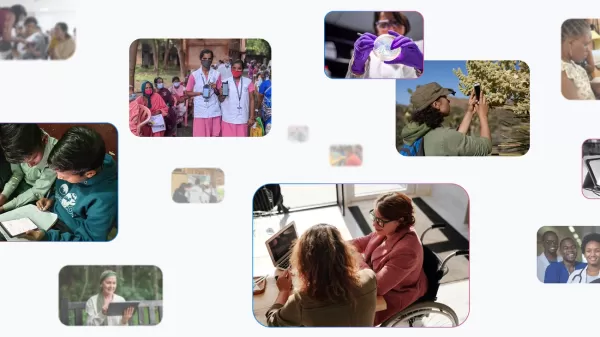
Google recently unveiled the 20 innovators selected for its latest Google.org Accelerator: Generative AI program. These forward-thinking organizations will leverage AI technology to tackle pressing global challenges spanning emergency response, healthcare accessibility, youth mental health support, and environmental protection. Chosen through a competitive application process open to nonprofits, academic institutions, and social enterprises, each recipient will benefit from $30 million in collective funding, six months of intensive AI training sessions, mentorship from Google AI specialists, and valuable Google Cloud resources.
The Generative AI Accelerator initiative launched in 2024 to democratize artificial intelligence solutions for social good. Research underscores the program's importance - a recent Google.org study found that 65% of nonprofits utilizing AI tools report enhanced confidence in fulfilling their missions through AI-powered applications1. However, adoption rates remain low, with only 20% of organizations reporting widespread generative AI usage internally. Early success stories like Tabiya demonstrate the program's transformative potential; their AI-powered job matching platform Compass, developed using Gemini technology, has assisted over 8,000 job seekers while reducing operational costs by 75% and halving service delivery timelines.
Meet the 2025 Generative AI Accelerator Cohort
- 3iS: Enhances emergency response systems with real-time risk assessment and resource allocation tools serving hundreds of thousands
- Aga Khan University: Develops AI clinical decision support to mitigate Kenya's physician shortage through evidence-based diagnostic assistance
- ARMMAN: Supports frontline maternal healthcare workers with adaptive training modules for high-risk pregnancy management
- CETA Global: Scales mental health professional training through AI-powered simulation environments with personalized feedback
- Children's Health Council: Empowers educators with real-time student support tools addressing learning and mental health needs
- Darsel: Personalizes mathematics instruction globally through AI tutoring tailored to individual student requirements
- Day of AI Australia: Builds AI literacy through hands-on educational programming for students and teachers
- Earth Genome: Transforms complex satellite data into actionable environmental monitoring insights
- iNaturalist: Enhances biodiversity research by generating natural language explanations from ecological observations
- Lenny Learning: Provides educators with AI-curated behavioral health lesson plans and intervention strategies
- Lit: Revolutionizes early literacy instruction through speech-recognition powered personalized learning
- Nava PBC: Automates social services casework to reduce administrative burdens and improve efficiency
- One Degree: Simplifies access to critical social services through intelligent referral systems
- Paritii: Optimizes student support services across campus networks through workflow automation
- Phare Bio: Accelerates antibiotic discovery research through open-source AI drug design platforms
- Red de Innovación Local: Delivers data-driven policy insights to municipal leaders across Latin America
- Signverse: Bridges communication gaps for deaf communities through real-time sign language avatar technology
- SkillUp Coalition: Partners with workforce organizations to provide career development tools for underserved Americans
- Technical University of Munich: Democratizes access to personalized cancer treatment guidelines
- Visilant: Enhances vision care accessibility in India through AI-powered eye screening and consultation
Discover more about these groundbreaking initiatives at g.co/Accelerator/GenAI, and explore Google's full range of accelerator programs at g.co/Accelerator/Programs.
Related article
 Warner Music acquires AI attribution startup Sureel AI
Warner Music Group (WMG) confirmed on Wednesday that it is acquiring Sureel AI, an artificial intelligence attribution startup. Sureel’s proprietary technology generates “AI DNA” for musical tracks, deconstructing them into constituent elements to tr
Amazon introduces Alexa for Shopping while pushing Rufus to the background
Amazon has launched Alexa for Shopping, merging its Rufus shopping chatbot with Alexa+ across the app, website, and Echo Show devices.The assistant answers product queries, compares items, tracks prices, and supports shopping reminders. It also handl
Microsoft, Azure and AI Tech Combat California Wildfire Risks
Microsoft invests in AI-driven wildfire detection, with Juan Lavista Ferres, CVP and Chief Data Scientist, discussing strategies to mitigate environmental damage.According to NASA, climate change impacts everyone on Earth, manifesting as rising tempe
Related Special Topic Recommendations
Design & Art
Warner Music acquires AI attribution startup Sureel AI
Warner Music Group (WMG) confirmed on Wednesday that it is acquiring Sureel AI, an artificial intelligence attribution startup. Sureel’s proprietary technology generates “AI DNA” for musical tracks, deconstructing them into constituent elements to tr
Amazon introduces Alexa for Shopping while pushing Rufus to the background
Amazon has launched Alexa for Shopping, merging its Rufus shopping chatbot with Alexa+ across the app, website, and Echo Show devices.The assistant answers product queries, compares items, tracks prices, and supports shopping reminders. It also handl
Microsoft, Azure and AI Tech Combat California Wildfire Risks
Microsoft invests in AI-driven wildfire detection, with Juan Lavista Ferres, CVP and Chief Data Scientist, discussing strategies to mitigate environmental damage.According to NASA, climate change impacts everyone on Earth, manifesting as rising tempe
Related Special Topic Recommendations
Design & Art
 Best AI Style Transfer Tools for Creative Experiments
2026 Latest Best Top-rated AI Style Transfer Tools for Creative Experiments! XIX.AI has curated a powerful, game-changing collection of must-try tools that deliver exceptional results through real-world tests and rigorous rankings. These top solutions help creatives boost productivity significantly by accelerating content creation and unlocking endless creative possibilities. Explore now to discover your perfect tool and start creating today!
 9 tools
 xix.ai
Comic Creation
Best AI Dialogue Bubble Tools for Visual Storytelling
xix.ai
Comic Creation
Best AI Dialogue Bubble Tools for Visual Storytelling
2026 Latest Best Top-Rated AI Dialogue Bubble Tools for Visual Storytelling are here on XIX.AI! This curated collection features powerful, game-changing tools that help creators boost productivity and overcome creative bottlenecks. Get a free vs paid comparison, see real-world tests, and check the latest rankings to find the must-try solutions perfect for crafting engaging visual narratives. Explore now to discover your ideal tool!
10 tools
xix.ai
Meeting Assistant
Top AI Meeting Summary Tools: Track Decisions and Follow-Ups Clearly
2026 Latest Top-Rated Best AI Meeting Summary Tools for Clear Decision Tracking and Effortless Follow-Ups. This curated list showcases powerful, game-changing solutions that boost productivity dramatically by automating meeting notes, identifying key action items, and streamlining team coordination across all projects. Get a free vs paid comparison along with real-world tests and weekly updated rankings to help you find the perfect tool. Explore now to unlock your AI edge!
9 tools
xix.ai
Data Analysis
Best AI Data Cleaning Tools: Fix Missing Values and Duplicates Fast
2026 Latest Best Top-rated AI Data Cleaning Tools for quick fixing of missing values and duplicates. This curated list showcases powerful, game-changing solutions that boost productivity significantly. Each option has undergone rigorous real-world tests to ensure reliability. Get a free vs paid comparison and discover the must-try tool that fits your needs best. Explore now at XIX.AI to Unlock your AI edge.
11 tools
xix.ai
Design & Art
Best AI Creative Ideation Tools for Artists: Break Through Visual Blocks
2026 Latest Best Top-Rated AI Creative Ideation Tools for Artists are curated by XIX.AI to help creators break through visual blocks and boost creativity instantly. These powerful game-changing tools offer real-world tests, detailed free vs paid comparison, and weekly updated rankings. Discover your perfect tool to accelerate content creation and unlock your AI edge today. Explore now!
14 tools
xix.ai
Music composition
AI Beat Makers for TikTok Background Tracks, Reels Audio, and Creator Promo Music
2026 Latest Best AI Beat Makers for TikTok Background Tracks, Reels Audio, and Creator Promo Music! XIX.AI has curated a top-rated list of powerful game-changing tools that go through real-world tests to deliver flawless music for every content need. You’ll find detailed free vs paid comparison data, weekly updated rankings, and must-try options to help you boost creativity and productivity. Explore now to discover your perfect tool!
11 tools
xix.ai

 Comments (2)
0/500
Comments (2)
0/500
![BillyThomas]()
Me intriga ver cómo organizaciones sin fines de lucro aplicarán la IA generativa en áreas críticas como la respuesta a emergencias. ¿Podrían herramientas como los modelos de lenguaje ayudar a coordinar rescates o traducir información vital en tiempo real? Sería un gran paso, aunque también me pregunto sobre la transparencia y los sesgos en estos sistemas. ¡Espero que compartan resultados concretos pronto! 🤔
![HenryBrown]()
Je suis impressionné par la diversité des projets sélectionnés ! L'IA générative appliquée aux urgences médicales pourrait vraiment sauver des vies, même si j'espère que les données seront bien protégées 🚑. Certaines initiatives me font un peu penser à Black Mirror...
Google recently unveiled the 20 innovators selected for its latest Google.org Accelerator: Generative AI program. These forward-thinking organizations will leverage AI technology to tackle pressing global challenges spanning emergency response, healthcare accessibility, youth mental health support, and environmental protection. Chosen through a competitive application process open to nonprofits, academic institutions, and social enterprises, each recipient will benefit from $30 million in collective funding, six months of intensive AI training sessions, mentorship from Google AI specialists, and valuable Google Cloud resources.
The Generative AI Accelerator initiative launched in 2024 to democratize artificial intelligence solutions for social good. Research underscores the program's importance - a recent Google.org study found that 65% of nonprofits utilizing AI tools report enhanced confidence in fulfilling their missions through AI-powered applications1. However, adoption rates remain low, with only 20% of organizations reporting widespread generative AI usage internally. Early success stories like Tabiya demonstrate the program's transformative potential; their AI-powered job matching platform Compass, developed using Gemini technology, has assisted over 8,000 job seekers while reducing operational costs by 75% and halving service delivery timelines.
Meet the 2025 Generative AI Accelerator Cohort
- 3iS: Enhances emergency response systems with real-time risk assessment and resource allocation tools serving hundreds of thousands
- Aga Khan University: Develops AI clinical decision support to mitigate Kenya's physician shortage through evidence-based diagnostic assistance
- ARMMAN: Supports frontline maternal healthcare workers with adaptive training modules for high-risk pregnancy management
- CETA Global: Scales mental health professional training through AI-powered simulation environments with personalized feedback
- Children's Health Council: Empowers educators with real-time student support tools addressing learning and mental health needs
- Darsel: Personalizes mathematics instruction globally through AI tutoring tailored to individual student requirements
- Day of AI Australia: Builds AI literacy through hands-on educational programming for students and teachers
- Earth Genome: Transforms complex satellite data into actionable environmental monitoring insights
- iNaturalist: Enhances biodiversity research by generating natural language explanations from ecological observations
- Lenny Learning: Provides educators with AI-curated behavioral health lesson plans and intervention strategies
- Lit: Revolutionizes early literacy instruction through speech-recognition powered personalized learning
- Nava PBC: Automates social services casework to reduce administrative burdens and improve efficiency
- One Degree: Simplifies access to critical social services through intelligent referral systems
- Paritii: Optimizes student support services across campus networks through workflow automation
- Phare Bio: Accelerates antibiotic discovery research through open-source AI drug design platforms
- Red de Innovación Local: Delivers data-driven policy insights to municipal leaders across Latin America
- Signverse: Bridges communication gaps for deaf communities through real-time sign language avatar technology
- SkillUp Coalition: Partners with workforce organizations to provide career development tools for underserved Americans
- Technical University of Munich: Democratizes access to personalized cancer treatment guidelines
- Visilant: Enhances vision care accessibility in India through AI-powered eye screening and consultation
Discover more about these groundbreaking initiatives at g.co/Accelerator/GenAI, and explore Google's full range of accelerator programs at g.co/Accelerator/Programs.








 Warner Music acquires AI attribution startup Sureel AI
Warner Music Group (WMG) confirmed on Wednesday that it is acquiring Sureel AI, an artificial intelligence attribution startup. Sureel’s proprietary technology generates “AI DNA” for musical tracks, deconstructing them into constituent elements to tr
Amazon introduces Alexa for Shopping while pushing Rufus to the background
Amazon has launched Alexa for Shopping, merging its Rufus shopping chatbot with Alexa+ across the app, website, and Echo Show devices.The assistant answers product queries, compares items, tracks prices, and supports shopping reminders. It also handl
Warner Music acquires AI attribution startup Sureel AI
Warner Music Group (WMG) confirmed on Wednesday that it is acquiring Sureel AI, an artificial intelligence attribution startup. Sureel’s proprietary technology generates “AI DNA” for musical tracks, deconstructing them into constituent elements to tr
Amazon introduces Alexa for Shopping while pushing Rufus to the background
Amazon has launched Alexa for Shopping, merging its Rufus shopping chatbot with Alexa+ across the app, website, and Echo Show devices.The assistant answers product queries, compares items, tracks prices, and supports shopping reminders. It also handl
 Microsoft, Azure and AI Tech Combat California Wildfire Risks
Microsoft invests in AI-driven wildfire detection, with Juan Lavista Ferres, CVP and Chief Data Scientist, discussing strategies to mitigate environmental damage.According to NASA, climate change impacts everyone on Earth, manifesting as rising tempe
Microsoft, Azure and AI Tech Combat California Wildfire Risks
Microsoft invests in AI-driven wildfire detection, with Juan Lavista Ferres, CVP and Chief Data Scientist, discussing strategies to mitigate environmental damage.According to NASA, climate change impacts everyone on Earth, manifesting as rising tempe

2026 Latest Best Top-rated AI Style Transfer Tools for Creative Experiments! XIX.AI has curated a powerful, game-changing collection of must-try tools that deliver exceptional results through real-world tests and rigorous rankings. These top solutions help creatives boost productivity significantly by accelerating content creation and unlocking endless creative possibilities. Explore now to discover your perfect tool and start creating today!
9 tools
xix.ai

2026 Latest Best Top-Rated AI Dialogue Bubble Tools for Visual Storytelling are here on XIX.AI! This curated collection features powerful, game-changing tools that help creators boost productivity and overcome creative bottlenecks. Get a free vs paid comparison, see real-world tests, and check the latest rankings to find the must-try solutions perfect for crafting engaging visual narratives. Explore now to discover your ideal tool!
10 tools
xix.ai
2026 Latest Top-Rated Best AI Meeting Summary Tools for Clear Decision Tracking and Effortless Follow-Ups. This curated list showcases powerful, game-changing solutions that boost productivity dramatically by automating meeting notes, identifying key action items, and streamlining team coordination across all projects. Get a free vs paid comparison along with real-world tests and weekly updated rankings to help you find the perfect tool. Explore now to unlock your AI edge!
9 tools
xix.ai

2026 Latest Best Top-rated AI Data Cleaning Tools for quick fixing of missing values and duplicates. This curated list showcases powerful, game-changing solutions that boost productivity significantly. Each option has undergone rigorous real-world tests to ensure reliability. Get a free vs paid comparison and discover the must-try tool that fits your needs best. Explore now at XIX.AI to Unlock your AI edge.
11 tools
xix.ai

2026 Latest Best Top-Rated AI Creative Ideation Tools for Artists are curated by XIX.AI to help creators break through visual blocks and boost creativity instantly. These powerful game-changing tools offer real-world tests, detailed free vs paid comparison, and weekly updated rankings. Discover your perfect tool to accelerate content creation and unlock your AI edge today. Explore now!
14 tools
xix.ai

2026 Latest Best AI Beat Makers for TikTok Background Tracks, Reels Audio, and Creator Promo Music! XIX.AI has curated a top-rated list of powerful game-changing tools that go through real-world tests to deliver flawless music for every content need. You’ll find detailed free vs paid comparison data, weekly updated rankings, and must-try options to help you boost creativity and productivity. Explore now to discover your perfect tool!
11 tools
xix.ai

Me intriga ver cómo organizaciones sin fines de lucro aplicarán la IA generativa en áreas críticas como la respuesta a emergencias. ¿Podrían herramientas como los modelos de lenguaje ayudar a coordinar rescates o traducir información vital en tiempo real? Sería un gran paso, aunque también me pregunto sobre la transparencia y los sesgos en estos sistemas. ¡Espero que compartan resultados concretos pronto! 🤔
Je suis impressionné par la diversité des projets sélectionnés ! L'IA générative appliquée aux urgences médicales pourrait vraiment sauver des vies, même si j'espère que les données seront bien protégées 🚑. Certaines initiatives me font un peu penser à Black Mirror...












